


PLACE OF WORSHIP · BUKOVINA
Voroneț Monastery

Suceava, Suceava County
Add location to your trip planner.

Practical access information

VISITING HOURS
Zilnic: 08:30 - 20:00 (vara) / 09:00 - 17:00 (iarna)

TICKET PRICE
Adulți: 10 RON, Elevi/Studenți: 5 RON; Taxă foto exterior: 10 RON

RECOMMENDED VISIT DURATION
1 - 1.5 ore


Visitor information and guide
 Navigate with Google Maps

ABOUT VORONEȚ MONASTERY
Captivating Introduction and Universal Value
In the heart of Bukovina, at the foot of the Carpathians, in a green valley surrounded by fir forests, rises one of the most astonishing achievements of medieval Christian art in Europe: the Voroneț Monastery, rightly nicknamed the "Sistine Chapel of the East." This monument, included in the UNESCO World Heritage list since 1993, represents not only a jewel of Orthodox spirituality but also an extraordinary meeting point between the civilizations of Europe — a place where Byzantine tradition, Western Gothic influences, and indigenous artistic genius merged into a unique synthesis that continues to fascinate millions of visitors from around the world.
What impresses from the very first visual contact is that intense, deep, almost electric blue color that covers the exterior walls of the church — the "Voroneț Blue," a shade considered by art specialists to be unique in the world, as famous as Rubens' red or Veronese's green. This mysterious pigment, whose exact formula could not be faithfully reproduced even after more than five centuries of scientific research, has heroically withstood the elements, rains, frosts, and sun, preserving its vivid brilliance today, just as on the day it was applied to the walls.
The Voroneț Monastery is located in the village of Voroneț, today a component locality of the town of Gura Humorului, only 4 kilometers from the center of this tourist resort and 36 kilometers from the municipality of Suceava. Its geographical position, on the valley of the Voroneț River, in a landscape of profound tranquility, contributes to the contemplative atmosphere that envelops the entire monastic complex.
Historical Roots and Major European Connections
The story of Voroneț Monastery is inseparably linked to one of the most impressive figures of medieval European history: Stephen the Great (Stephen III), voivode of Moldavia between 1457 and 1504, who built a spiritual and military empire in the face of Ottoman expansion. His reign coincided with a period of profound transformation in Europe: the fall of Constantinople in 1453, the consolidation of the Ottoman Empire under Mehmed II the Conqueror, and his continuous attempts to extend domination over the entire Balkan and Central European space.
The context of the monastery's founding is charged with historical drama. In 1475, at the Battle of Vaslui (also known as the Battle of Podu Înalt or Racova), fought on January 10, 1475, Stephen the Great defeated the Ottoman army led by Hadım Suleiman Pasha, governor of Rumelia. The victory was so categorical that contemporaries described it as "the greatest defeat ever suffered by an Ottoman army in its history." Pope Sixtus IV, impressed by this success of a Christian prince in the face of Muslim expansion, granted Stephen the honorary title of "Athleta Christi" — "Champion of Christ" — recognizing him as one of the main defenders of Christianity in Eastern Europe.
However, the road to this victory was not without moments of profound crisis. According to the chronicler Ion Neculce, in the "Chronicle of the Land of Moldavia," after a defeat suffered in the first phase of the confrontation with the Turks at Războieni (Valea Albă, July 26, 1476), where the Ottoman army led personally by Sultan Mehmed II had managed to defeat him, Stephen the Great withdrew northward, gathering a new army. On his way, he passed through Voroneț, where a hermit father lived, named Daniil, a monk who had carved a cell into a rock and who was considered a saint even during his lifetime.
Legend says that Stephen, desperate and not knowing whether to submit to the Turks or continue the fight, asked Daniil what he should do. And the hermit answered him not to surrender the country to the Turks, for he would win the battle, on condition that after victory he would raise a monastery in that place, in the name of Saint George. Stephen gathered the army, defeated the Turks, and, keeping his promise, raised the Voroneț Monastery. Construction work began on May 26, 1488, and was completed on September 14, 1488 — in just three months and three weeks, an extraordinary record for that time, proving the remarkable organization of the Moldavian state and the devotion of the founder.
The church was built on a trilobed plan, with three apses, having a narthex, a nave with a tower and Moldavian vault, and an altar. It took the patronage of "Saint and Glorious Great Victory-Bearer George" — Saint George, the spiritual patron of the army and of victory. On the original door of the church, preserved today in the enclosed porch, is the following inscription in Slavonic, placed by Stephen the Great himself: "I, Stephen voivode, by the grace of God lord of the Land of Moldavia, son of Bogdan, began to build the Voroneț monastery in the glory of Saint and great martyr George, in the year 6996, in the month of May, 26, on a Monday, after Pentecost, and I completed it in the same year, in September."
Even during the reign of Stephen the Great, but especially after 1488, Voroneț Monastery became an important center of faith and culture in medieval Moldavia. Daniil the Hermit, after a period of stay at Putna Monastery (which Stephen had also built at his urging in 1466) and of hermitage, withdrew to Voroneț, where he lived for another two decades, being elected abbot of the monastery. He died in 1496 and was buried in the narthex of the church, his tomb being preserved to this day. In 1992, the Romanian Orthodox Church canonized Daniil the Hermit, celebrated on December 18.
The monastery was continuously supported by Stephen's successors on the throne: Bogdan III, Petru Rareș, and Alexandru Lăpușneanu, who donated estates, books, and church vestments. In 1490, a scriptorium (school of copyists) was established at Voroneț where the monk Pahomie copied a Tetraevangelion — a particularly valuable manuscript, preserved today. The monastery also housed a school of Slavonic, where children of boyars and priests were instructed, future priests, copyists, deacons, teachers. The discovery of the Voroneț Psalter and the Voroneț Codex — two of the oldest Romanian translations of the Bible, preserved today at the Romanian Academy — proves the cultural importance of this center.
A crucial period in the monastery's history was the annexation of Bukovina by the Habsburg Empire in 1774-1775. After the northwest of the Principality of Moldavia passed under the rule of the Austrian monarchy (which from 1804 would become the Austrian Empire, and from 1867 Austria-Hungary), Emperor Joseph II initiated a series of radical reforms that also targeted the Orthodox Church. On November 13, 1782, the abbots of seven monasteries, including Innocent of Voroneț, met to elect two delegates to present their requests to Emperor Joseph II, asking for recognition of the old privileges. Ultimately, the response came in the form of a compromise that provided for the abolition of sketes and the reduction of the number of monks. In 1785, Voroneț Monastery was closed, after 297 years of uninterrupted monastic life. The church remained functioning as a parish church until 1991, and a large part of the monastery's relics and vestments were transferred to the Dragomirna, Sucevița, and Putna monasteries.
After 1918, when Bukovina united with Romania, the church of the former Voroneț Monastery was declared a state historical monument. During the socialist period, archaeological excavations and restorations were carried out, some appreciated, others controversial. Only after the fall of communism, by decision no. 1 of March 14, 1991, signed by His Eminence Pimen, Archbishop of Suceava and Rădăuți, did Voroneț Monastery resume monastic life after 206 years of interruption, this time being a community of nuns. The first abbess was stavrophora Irina Pântescu, a remarkable personality who led the monastery with devotion until her passing.
In 1993, the United Nations Educational, Scientific and Cultural Organization (UNESCO) included the Church of "St. George" of Voroneț Monastery, together with seven other churches in northern Moldavia (Arbore, Pătrăuți, Moldovița, Probota, "St. John the New" of Suceava, Humor, and, from 2010, Sucevița), on the World Cultural Heritage list, in the group "Painted Churches of Northern Moldavia." This international recognition underlines the exceptional universal value of these monuments, considered "masterpieces of mural painting, of remarkable aesthetic value due to their refined chromaticism and the remarkable elegance of the figures."
Architectural Masterpiece and Artistic Heritage
The architecture of the Church of "St. George" at Voroneț represents an original and specific synthesis of the Moldavian style, characterized by specialists as a unique fusion between elements of Byzantine origin and elements belonging to the late Gothic, to which characteristics of indigenous art are added. The trilobed plan, with the three semicircular apses, the division into altar, nave, and narthex, the system of arches — all these refer to the Byzantine architectural tradition, while the height of the church, the exterior buttresses, the frames of doors and windows in broken arch, and the way the dressed stone is treated belong to the late Gothic, influenced by Transylvanian and Central European architecture.
Above the nave rises the tower with a Moldavian vault — a specific architectural element developed in Moldavia in the 15th-17th centuries, which allows the reduction of the diameter and weight of the tower through an ingenious system of arches and pendentives. The roof, in tent shape, is made of wooden shingles, just like the peasant houses in the area, a solution that, besides its aesthetic aspect, also has a practical role: snow slides more easily off the sloping roof, protecting the exterior frescoes.
On the north facade, the original decoration of the church is still preserved: rows of enameled ceramic discs in yellow, brown, and green, decorated in relief. These include heraldic motifs — the rampant lion and the aurochs head from the coat of arms of Moldavia — as well as creatures inspired by Western medieval literature, such as two-tailed mermaids. The tower is decorated with sixteen tall niches, in four of which there are windows, and a row of small niches surrounds the tower above them.
Inside the church, 16th-century stalls and choir stalls are preserved, including a princely stall — a true masterpiece of wood carving — and the tomb of Metropolitan Grigore Roșca in the porch, as well as the tomb of the hermit Daniil in the narthex. These funerary monuments, with sculptural decorations of exquisite finesse, add an additional dimension of artistic value to the ensemble.
The interior painting of the church dates mostly from the time of Stephen the Great, the year 1496. In the scenes in the altar and in the nave, the anonymous artist sought above all to render the theological meaning of the images, creating a solemn ensemble, but with a marked character of monumentality. Among these interior paintings, the following attract attention especially: the Last Supper, the Communion of the Apostles, the Washing of the Feet (in the altar), the Cycle of the Passion, and the votive painting of Prince Stephen the Great with his family (in the nave). The style is inspired by archaic Byzantine iconography, but with a clarity and rigor of iconographic arrangement, a vigorous drawing, and an expressiveness of the characters far from being stereotypical or conventional.
However, the true artistic glory of Voroneț is constituted by the exterior painting, made in 1547, at the initiative of Metropolitan Grigore Roșca, cousin of Petru Rareș (the illegitimate son of Stephen the Great, prince between 1527-1538 and 1541-1546). He added at the western end of the church an enclosed porch (exonarthex), for which he adopted a unique solution: the west wall of the porch is a solid wall, without any opening, and the entire construction is painted from foundation to eaves. The architecture is visibly subordinated to the painted decoration — a revolutionary conception for that time.
Metropolitan Grigore Roșca, an erudite with vast concerns and spiritual counselor of Petru Rareș, personally coordinated the iconographic program. The presumed author of this Renaissance ensemble in southeastern Europe is considered to be the painter Marcu (Marcu the steward). The exterior frescoes, made only a year after the death of Petru Rareș, actually belong to the era of this prince, along with those of Probota, Humor, Moldovița, and Arbore.
The most impressive of these frescoes is the scene of the Last Judgment on the west wall, a huge composition organized in four registers (or five, according to some interpretations), which occupies the entire west wall, uninterrupted by any door or window opening — unique in the art of the entire Christian East. In the upper register appears God the Father, surrounded by holy angels. The second register includes the scene of the Deesis, with Christ enthroned between the Mother of God and Saint John the Baptist, framed by apostles seated on thrones. From the feet of the Savior flows a river of fire in which sinners find their torments. The third register presents the Etimasia of the Holy Spirit, symbolized in the form of a dove, the Holy Gospel, and the forefathers of the nation — Abraham, Isaac, and Jacob — having to the north a group of believers guided by Saint Apostle Paul, and to the south groups of unbelievers who receive the reproach of Moses. In the fourth register, in the middle, appears the scale that weighs good and evil deeds, the struggle between angels and demons for souls; in the northern zone paradise, and in the southern zone hell.
An extraordinarily characteristic note of these frescoes is the rich creative imagination of their creators, who introduce into the composition profoundly local, folkloric elements: archangels blowing from buciums (an instrument specific to mountain shepherds, related to the Swiss alpenhorn), King David playing the cobza (Romanian lute), Adam plowing with a wooden plow drawn by oxen, Eve spinning wool like a housewife, Abel shepherding the sheep, angels with faces of Moldavian women, souls carried to heaven wrapped in traditional towels, and condemned souls wearing turbans like the Turks — the mortal enemies of Moldavia of those times. The animals of the region — deer, wild boars, wolves, squirrels, bears — take part in the judgment, and the flowers (snowdrops, bluebells) are those of the local flora.
On the south facade, on the intense blue background of the "Voroneț Blue," is painted the Tree of Jesse (the genealogy of Jesus Christ), and on the columns are represented Greek and Latin philosophers, including Plato and Aristotle — a remarkable iconographic innovation. On the north facade appears the "Hymn of the Dead" and the scene of the soul's passage after death.
The "Voroneț Blue" remains one of the greatest mysteries of art history. Although chemical analyses have revealed that the basis of the pigment is azurite — a natural basic copper carbonate extracted from local rocks — the exact formula of the masters, including possible organic additions or special application techniques, could not be faithfully reconstituted. This blue shifts from blue to green depending on the ambient humidity, creating a living, almost organic effect. Art specialists compare it to Rubens' red and Veronese's green, and some researchers have suggested possible influences or techniques similar to those used by the Venetian school or by the Sienese painters, who used azurite as a base layer under glazes of ultramarine (lapis lazuli). The fact that this pigment, applied outdoors, exposed to rain, snow, and sun for more than 475 years, preserves its intensity and brilliance, remains an enigma that adds an additional layer of fascination to the monument.
Legends, Personalities, and Turning Points
The story of Voroneț Monastery is closely linked to two exceptional personalities of Romanian history: Stephen the Great and Daniil the Hermit. The founding legend, recorded by Ion Neculce in the "Chronicle of the Land of Moldavia," presents the meeting between a desperate voivode and a visionary hermit, at a moment of profound crisis for the destiny of a nation. Daniil, who had lived twenty years in hermitage at Voroneț, after previously carving a cell into a rock at Putna, became the first abbot of the monastery and imprinted on it a particularly high level of spiritual life. Considered a saint even during his lifetime, for the miracles performed and for his wisdom, he was canonized in 1992, and his tomb in the narthex remains a place of pilgrimage.
The third essential figure is Metropolitan Grigore Roșca, cousin of Petru Rareș, who in 1547 added the enclosed porch and commissioned the exterior painting. Having been formed as a priest under the guidance of the monks of Voroneț — as he himself testifies in a note on a Tetraevangelion from 1550/1551 donated to the monastery: "... where from tender childhood I dedicated myself to God, with the prayer of our holy father Daniil the New, and where I received the angelic rank, and where I labored much with my soul" — Grigore Roșca was a true erudite of his time, with vast concerns in the field of theology, history, and art. He is considered, after Stephen the Great and Daniil the Hermit, the third founder of Voroneț Monastery.
Petru Rareș, the illegitimate son of Stephen the Great, was the one who gave a new artistic impulse to the monasteries of Moldavia, commissioning the exterior painting of several churches. Although the frescoes of Voroneț were made a year after his death, they belong to the era and artistic vision of this prince, being considered the most successful ensemble of Moldavian feudal art.
After 206 years of interruption, in 1991, Voroneț Monastery was reborn as a nuns' monastery. The first abbess, stavrophora Irina Pântescu, led the community with wisdom and devotion for decades, developing missionary and cultural activities. Currently, the monastery is led by Abbess Gabriela Platon, and the community of nuns — approximately 20 members — harmoniously combines the life of prayer with household work, the care of the heritage, and the reception of pilgrims and tourists. The nuns organize a painting workshop and offer free guided tours to visitors, generously sharing the story and spirituality of this holy place.
Practical Visitor Guide and Today's Tourist Experience
Voroneț Monastery is open to visitors daily, from Monday to Sunday. The visiting schedule varies according to the season: in the summer period (approximately May-September), the schedule is from 08:30 to 20:00, while in the winter season it is from 09:00 to 17:00. It is recommended to check the updated schedule on the monastery's official website (www.manastireavoronet.ro) or to call directly at (+40 230 235 323 / +40 230 232 413), as the schedule may undergo changes during religious holidays.
The entrance fees are: 10 RON for adults, 5 RON for pupils and students (with valid ID/student card). There is also an exterior photo fee of 10 RON. Photography inside the church is prohibited, while in the outer courtyard and at the exterior frescoes you can photograph freely. At the entrance, skirts and headscarves are offered for visitors who need them, and modest dress is mandatory — shoulders and knees must be covered for all visitors, regardless of gender.
Access to the monastery is from Gura Humorului, on the county road DJ177D, over a distance of approximately 4 kilometers. From Suceava, the distance is 36 kilometers, and the journey takes approximately 40-50 minutes by car. There is also the possibility of reaching Gura Humorului by bus or minibus, and from there one can continue on foot (approximately 3.5 kilometers) or by local taxi. The GPS coordinates are: 47°31'2.36"N, 25°51'51.09"E.
The best time to visit is early in the morning, when the sunlight falls beautifully on the exterior frescoes and the crowds are smaller. It is recommended to allocate at least an hour and a half for the visit, time in which you can admire both the exterior frescoes — especially the monumental Last Judgment on the west wall and the Tree of Jesse on the south facade — and the interior of the church, with the paintings from 1496, the princely stall, the tombs of Daniil the Hermit and Grigore Roșca, and the atmosphere of profound tranquility.
At the entrance you can request a free guide — the nuns offer detailed explanations about the symbolism of the frescoes, the history of the monastery, and the spirituality of the place. Do not refuse this opportunity: the difference between looking for 10 minutes and understanding for an hour is exactly this guided tour. During religious services, visiting is done discreetly or one waits until their conclusion.
Inside the church, men stand on the right, women on the left — the traditional Orthodox rule, respected in all places of worship. Visiting is done only in the marked and permitted areas. The monastery does not offer accommodation, but in Gura Humorului there are numerous guesthouses and hotels, from those with traditional Bukovina character to modern 3-4 star establishments.
Nearby there are also other UNESCO painted monasteries, forming an extraordinary circuit: Humor Monastery (5 km away), Moldovița Monastery (approximately 25 km), Sucevița Monastery (approximately 20 km), Putna Monastery (approximately 30 km). Each of these monasteries has its own dominant color — Humor has red, Moldovița yellow, Sucevița green — and Voroneț, with its unmistakable blue, remains the crown jewel of this ensemble unique in the world.
The local gastronomy is worth exploring: Rădăuți soup, smoked trout, Bukovina sarmale in clay pots, cheese and blueberry pies, all prepared according to traditional recipes passed down from generation to generation. The shops in the area offer local products: honey, blueberry jam, dried mushrooms, traditional craft objects.
Voroneț Monastery is not just a monument to visit, but a place of encounter with history, with art, and with spirituality in a pure form. Whether you are pilgrims, art lovers, historians, or simply travelers in search of beauty, this place will profoundly mark you. The "Voroneț Blue," with its unresolved mystery, with its story of faith and resistance in the face of empires, with its forest tranquility, remains a symbol of the fact that the beautiful and the sacred can endure forever, if they are rooted in truth and love.
Media gallery
Discover Voroneț Monastery in pictures

34 photos · Architecture, courtyards and captivating details


Image source: Wikimedia Commons · Public domain photos · Free license
STAY A FEW DAYS, DISCOVER THE MAGIC
Stays near Voroneț Monastery

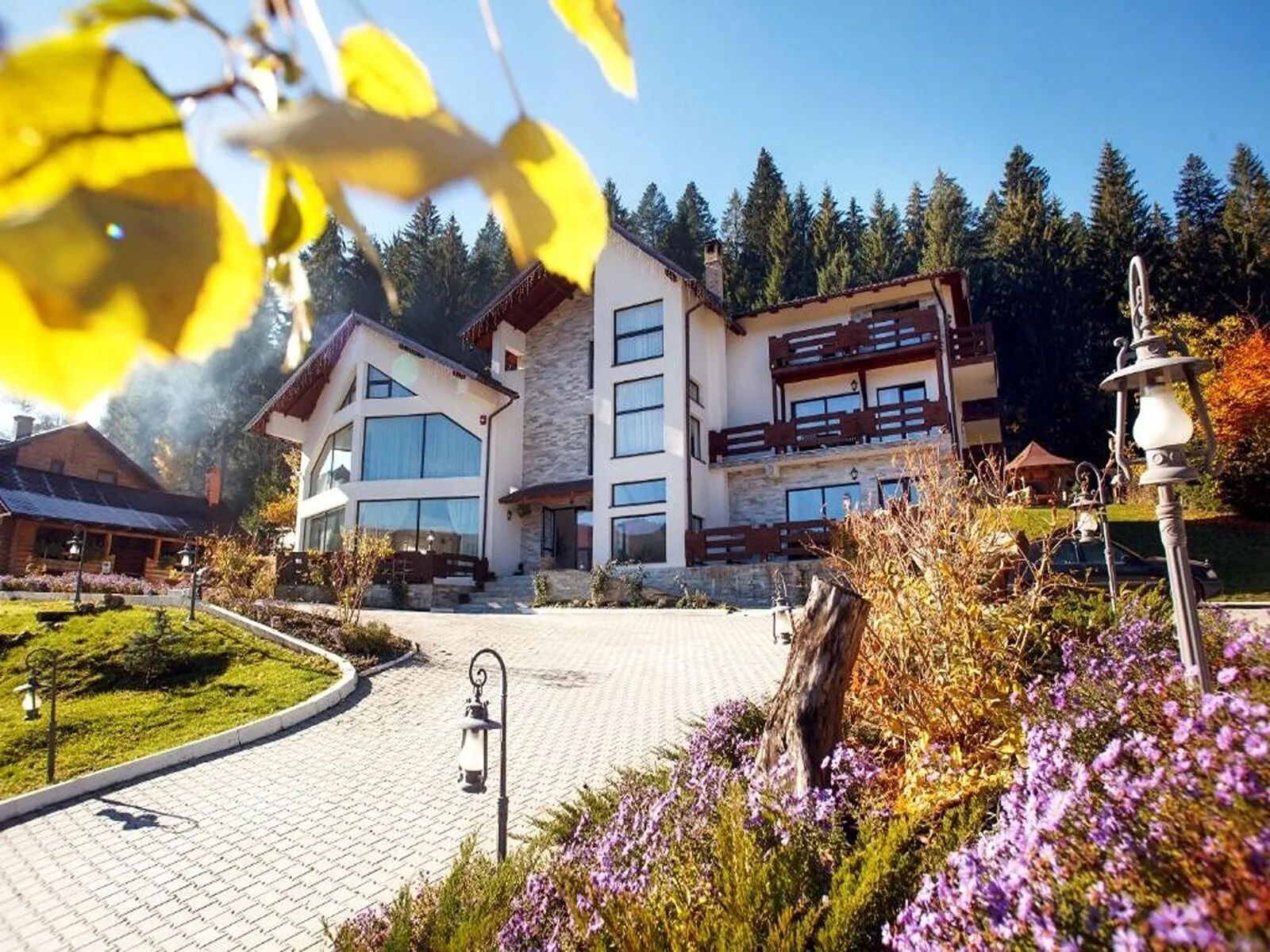
Pensiune · 3 stars

Gura Humorului, Gura Humorului County · 0.2 km
Pensiunea Perla Bucovinei Gura Humorului
Pensiunea Perla Bucovinei este localizata in vecinatatea Manastirii Voronet (200 m), din statiunea turistica Gura Humorului si la 2 km de partia de schi Soimul din Gura Humorului, pe crestetul unui deal, langa padure, deasupra satului. Aici vei descoperi ospitalitatea bucovineana intr-un ambient ce imbina rusticul cu modernul, asigurand confortul unei locatii de 4****.Locatia pensiunii Perla Bucovinei, intr-o zona care face faima Romaniei, a fost aleasa cu gandul la dorintele dumneavoastra: la emotia rasaritului de soare, la dorul de liniste si aer curat, la placerea apropierii de legende, dar si la dorinta de a avea la indemana beneficiile civilizatiei, fara de care nu puteti trai. Daca vizitati Bucovina, va invitam din toata inima sa popositi la PERLA BUCOVINEI. Va asteapta un restaurant cu meniuri selecte si apetisante, 10 camere pentru odihna bine-meritata, servicii de buna calitate, toate la preturi accesibile.Natura a fost extrem de generoasa cu aceste locuri: trasee montane incantatoare de vara si iarna, paduri seculare, partie de schi, vestigii istorice medievale. Aici te invaluie o liniste de clestar, iar orizontul privirilor se adanceste in semetia padurilor de brad si foioase.In aceasta locatie se pot organiza activitati de team-building si training.Intr-o atmosfera care sigur va va destinde si reface fortele, veti cunoaste balsamul naturii in intimitatea ei. Facilitatile oferite: - 10 camere spatioase (8 duble si 2 triple, cu posibilitatea de a introduce pat suplimentar sau canapea extensibila ) cu pat matrimonial sau twin, cu baie cu dus, minibar, TV-LCD, balcon (cu exceptia camerei de la parter).- atat mancaruri traditionale si proaspete din Bucovina cat si meniu international;- transfer de la gara, autogara sau aeroport;- pensiunea dispune de toate utilitatile, inclusiv apa rece si apa calda in permanenta;- foisor in curte amenajat cu: gratar, cuptor de copt paine si sarmale in oale de lut;- foisor intim de 12 persoane amplasat in gradina.- 2 foisoare, 2 terase:- leagan 2 – 3 persoane;- parcare 15 masini, siguranta maxima;- posibilitati de plata directa a serviciilor cu cardul;- acces gratuit la Internet;- semineu in restaurant si la receptie;- rezervari online.
FROM
240 RON / night

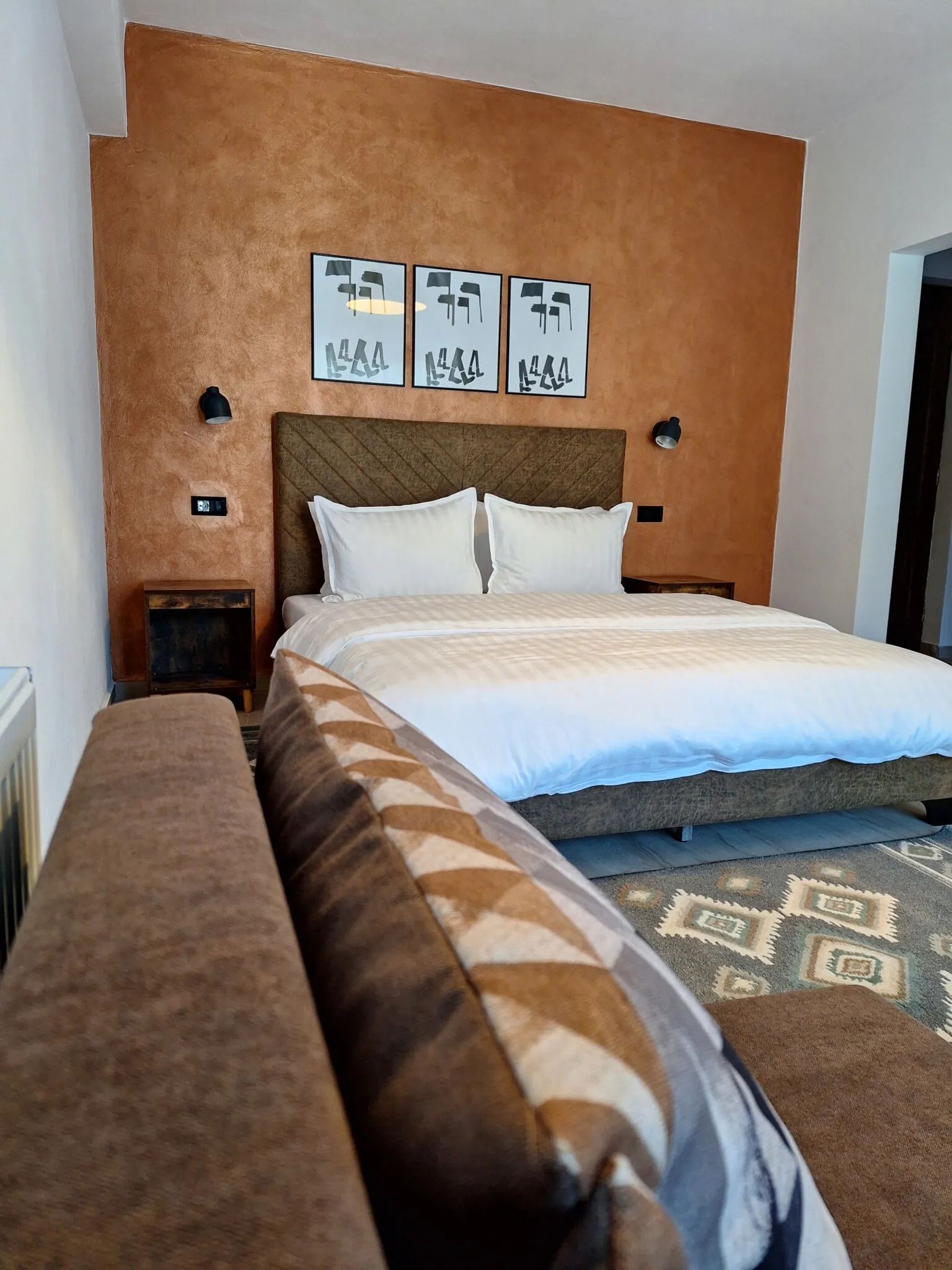
Boutique Hotel · 3 stars
Voroneţ, Voroneţ County · 0.4 km
Hotel Boutique Danifeld Inn Voroneț
Danifeld Inn, vă pune la dispoziție apartamente si camere duble sau triple. În apartamente se pot caza doi adulți si doi copii, cu vârsta maximă de 14 ani.
FROM
290 RON / night
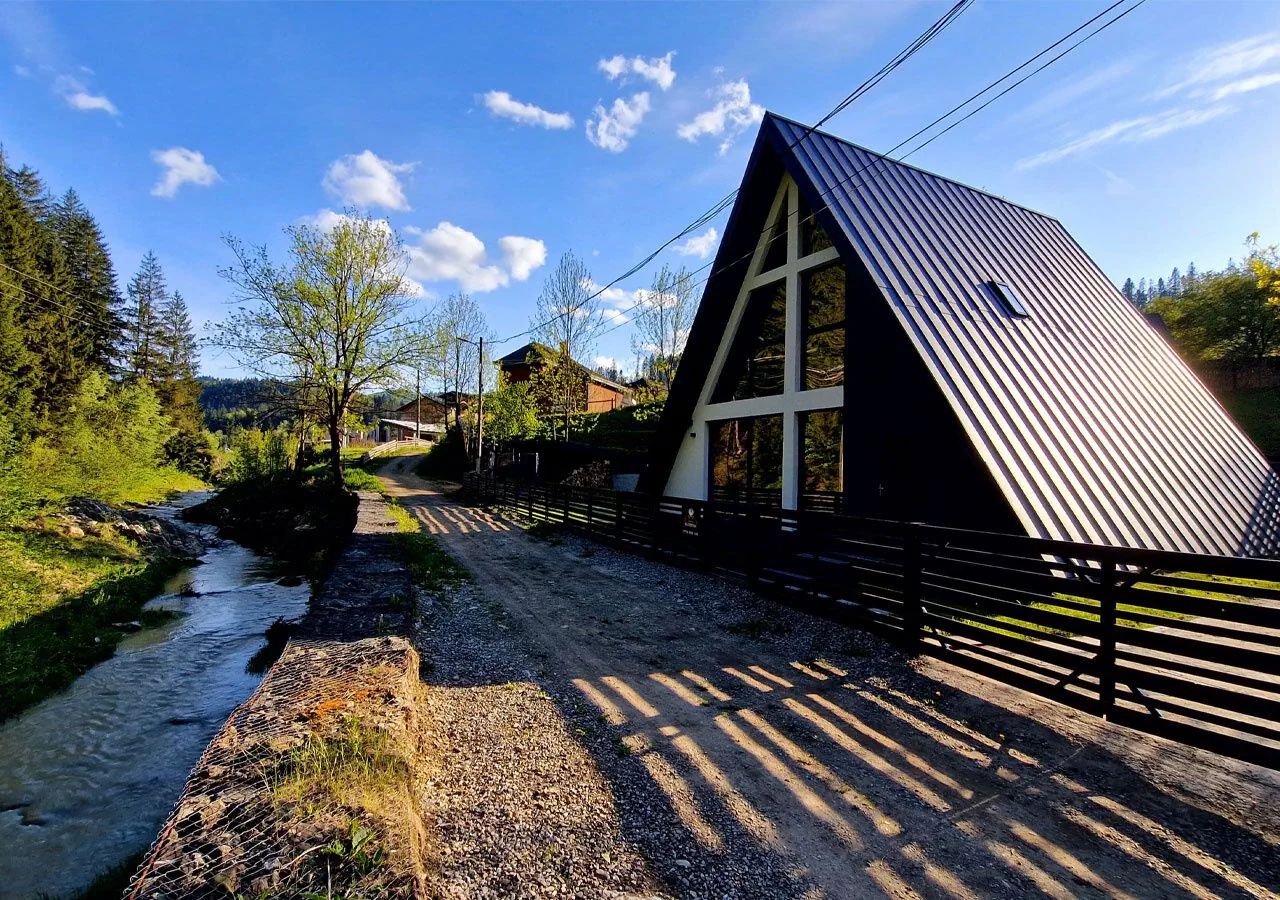
Apartament · 1 star
Voroneţ, Voroneţ County · 0.5 km
Gloriosa Chalet Voroneț
Cabana Gloriosa Chalet este o cabana superba de tip A Frame situată într-un cadru natural pitoresc din Bucovina, mai precis în satul Voronet ,la 4 km de Gura Humorului din județul Suceava. Mănăstirea Voroneț este una dintre cele mai frumoase mănăstiri din Bucovina, fiind inclusă în Patrimoniul UNESCO din România. Situata intr-un peisaj montan de la poalele Vf Obcina Voronet ce face parte din Muntii Stanisoarei, marginit de padure, Cabana A-frame Gloriosa Chalet va asteapta sa va bucurati de o evadare perfecta din agitatia cotidiana, intr-un cadru natural de vis. Cabana Gloriosa imbina armonios confortul modern cu frumusetea naturii, oferindu-ti tot ce ai nevoie pentru o vacanta de neuitat. Cabana Gloriosa are o suprafata de 150 mp fiind prevazuta cu 3 dormitoare cu pat matrimonial fiecare cu baie proprie, living generos cu semineu si canapea extensibila, bucatarie open space complet utilata, zona de luat masa. Aceasta poate gazdui pana la 6 adulti si 3 copii - pat pliabil si într-o altă cameră punem la dispoziție canapea extensibilă. Cabana este dotată cu un șemineu pe lemne cu tubulatura de aer cald, care îți va asigura încălzirea uniformă a întregii cabane, pentru un ambient plăcut și călduros chiar și în cele mai friguroase zile de iarnă!
FROM
230 RON / night
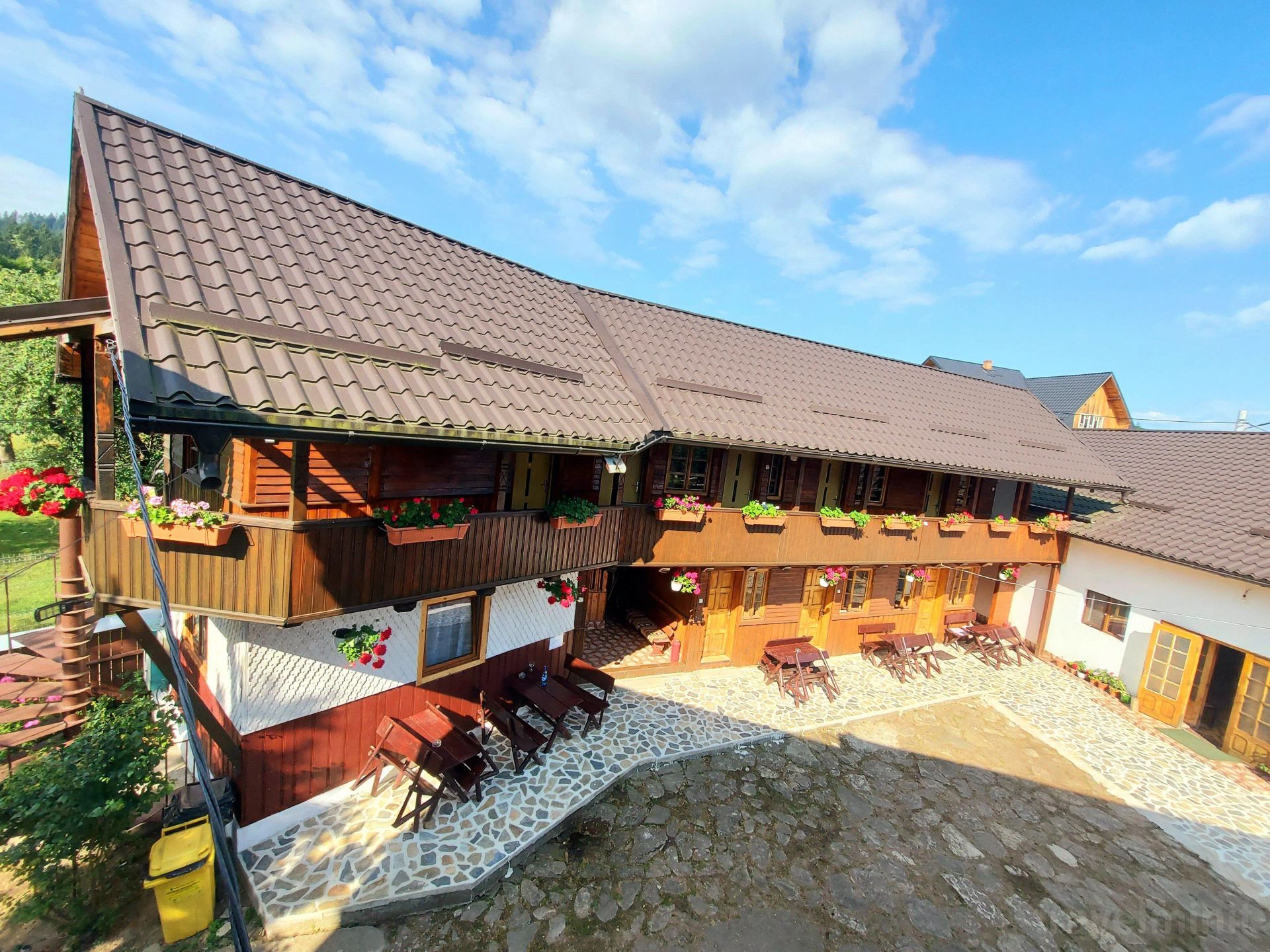
Pensiune · 3 stars
Voroneţ, Voroneţ County · 0.5 km
Pensiunea Boca Voroneț
Pensiunea Boca este plasata intr-un cadru mirific, inconjurata de peisaje deosebite precum si de obiective accesibile, datorita diverselor trasee turistice. Oferim 20 de locuri de cazare, foisor, gradina, bucatarie, sala de mese, loc de joaca pentru copii, bai in camere , parcare, acces la internet!Va asiguram linistea si confortul necesar unei vacante perfecte in Bucovina, dar si intimitatea si buna dispozitie necesare unei petreceri private!Din pacate, NU PRIMIM TICHETE DE VACANTA! Va asteptam cu drag!
FROM
240 RON / night
Pensiune · 3 stars
Gura Humorului, Gura Humorului County · 0.6 km
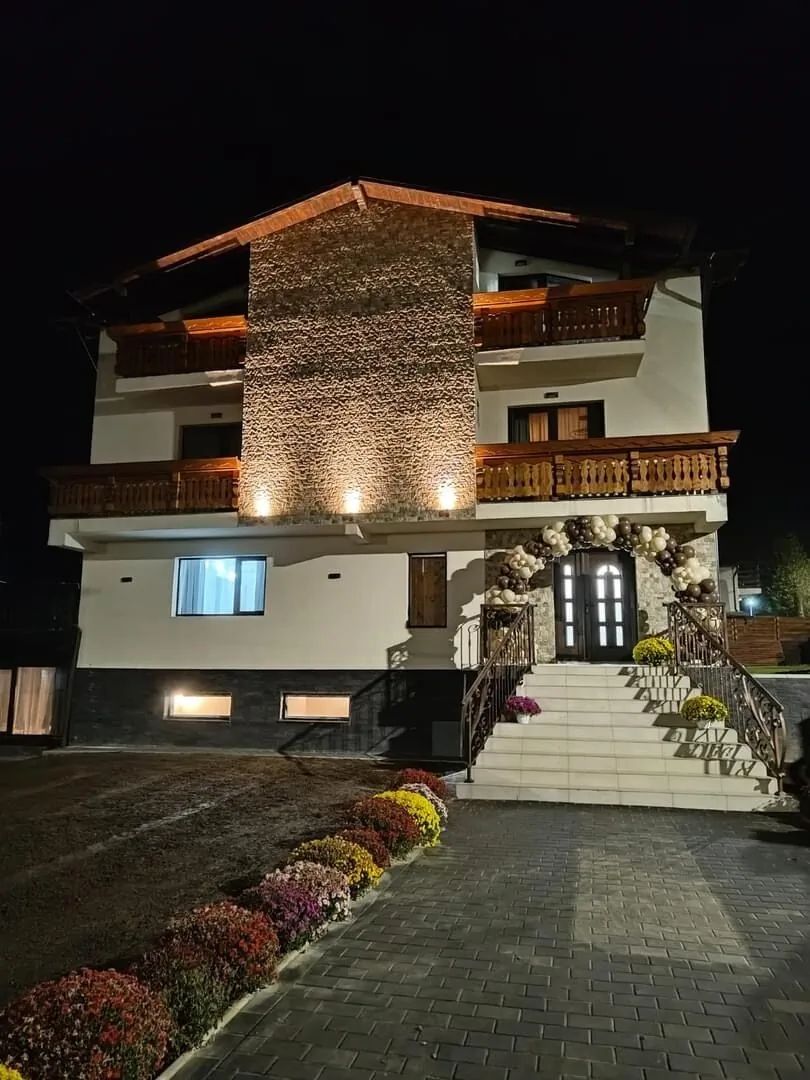
Pensiunea La Ancuța în Bucovina
Pensiune situată la 200 m de Mănăstirea Voroneț, dispune de 8 dormitoare cu baie proprie și balcon, pat dublu,smart tv, wi -fi. Pensiunea mai dispune de un living generos pentru relaxare și studiu,cu șemineu,cu ieșire pe terasă și curtea Interioară a pensiunii, baie de serviciu, iar la demisol veți găsi un spațiu generos cu o capacitate de 60 persoane,dotat cu bar, smart tv, grătar,plită și bucătărie echipată. Spațiul verde este completat de un foișor deschis,ciubăr și saună. Proprietatea dispune de parcare proprie. La cererea clienților putem oferi mese cu diferite preparate tradiționale specifice zonei.
FROM
240 RON / night
Vilă · 3 stars
Gura Humorului, Gura Humorului County · 0.6 km
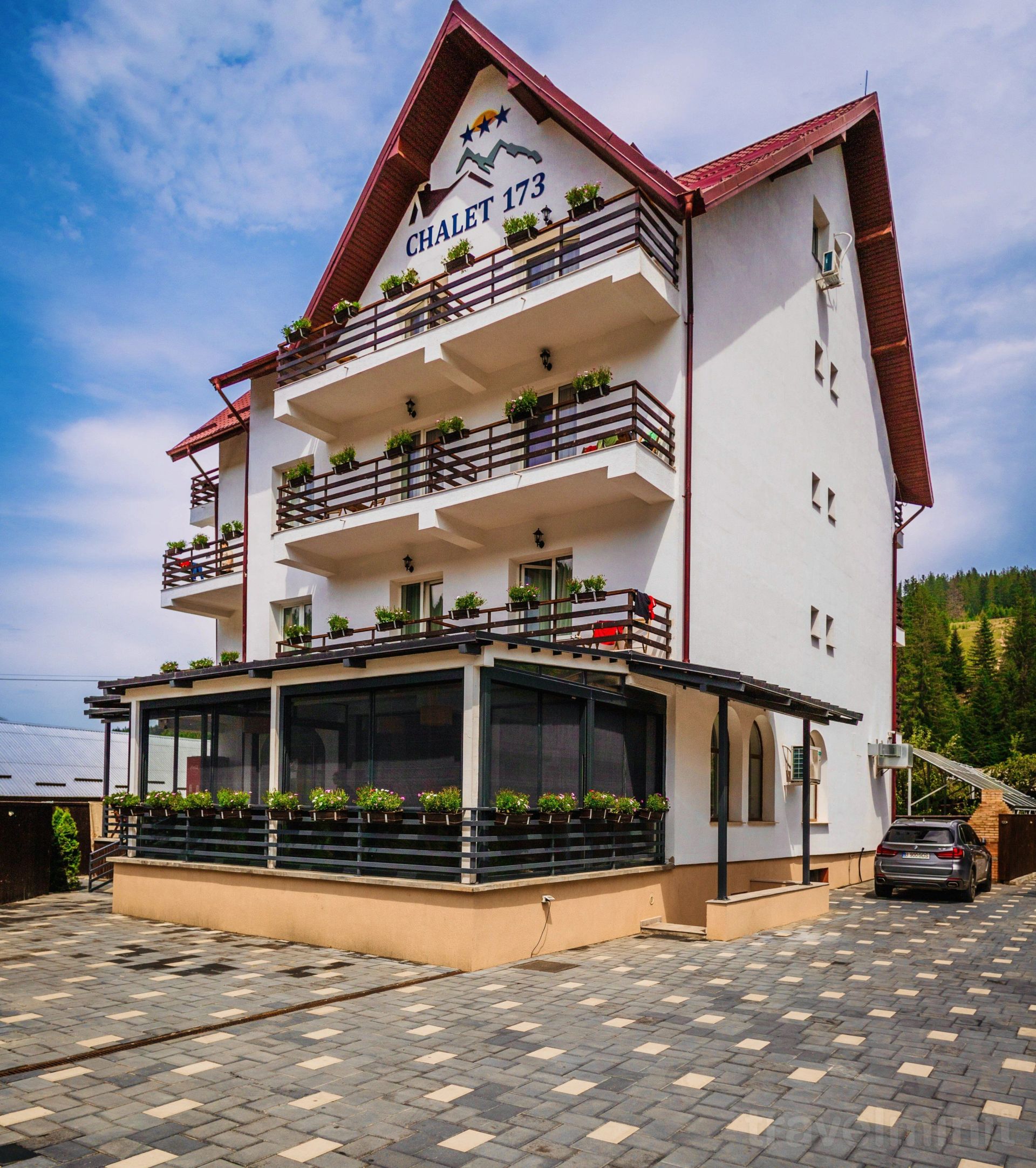
Chalet 173 Gura Humorului
Camere, serviciiChalet 173 Gura Humorului Gura Humorului va intampina cu 18 camere confortabile si placut amenajate. La restaurant puteti servi unui pranz consistent sau o cina romantica. Se ofera parcare gratuita. Unitatea este prevazuta cu internet wireless. Daca doriti sa obtineti mai multe informatii despre facilitatile oferite la aceasta unitate de cazare (inclusiv cele contra cost) si despre echiparea camerelor, consultati fisa de mai jos. Servicii de masăTarifele afisate se refera numai la cazare. PlatăPlata se poate efectua prin urmatoarele modalitati: numerar, card bancar, transfer bancar, card de vacanță, avans travelminit, voucher travelminit. Pentru garantarea rezervarii se percepe un avans de 100%. Sosire, programCheck-in se face incepand cu ora 14:00 si check-out pana la ora 11:00. Personalul de la vilă vorbeste limba: engleză, română, nepaleză.
FROM
280 RON / night
BEFORE YOU HIT THE ROAD
Weather conditions in Suceava
Local forecast for Voroneț Monastery, Suceava, Suceava

Real-time updated weather data
Much more to explore in this area
Nearby tourist attractions

0.1 km


Sucevita, Suceava County
Sucevița Monastery
Situata in comuna Sucevita, la 19 km sud-vest de Radauti si 37 km nord-vest de Suceava; accesul se poate face din Suceava, spre Radauti, pe DN2/E85, 35 km,...
31.1 km

Suceava, Suceava County
Mănăstirea Moldovița
Situata in localitatea Vatra Moldovitei, la 27 km nord de Campulung Moldovenesc; accesul se poate face din Campulung Moldovenesc, pe DN17A, 23km, sau din...
26.9 km

Suceava, Suceava County
Mănăstirea Humor
Situata in localitatea Manastirea Humorului, la aproximativ 5 km de orasul Gura Humorului, pe DJ177; prima biserica a Manastirii a fost constuita in timpul lui...
8.5 km

Suceava, Suceava County
Mănăstirea Sfântul Ioan cel Nou din Suceava
Situata pe strada Ion Voda Viteazul nr. 2, Suceava; inceputa de voievodul Bogdan al III-lea, fiul lui Stefan cel Mare, in 1514, constructia a fost terminata in...
32.9 km

Neamt, Neamț County
Mănăstirea Neamț
Situata pe raza comunei Vanatori-Neamt, la 15 km nord-vest de Targu Neamt; atestata documentar pentru prima data in 1407, pe vremea lui Alexandru cel Bun; in...
37.5 km

Neamt, Neamț County
Cetatea Neamț
Situata pe strada Arcasului nr. 1, pe un platou al dealului Plesu, la 480 m altitudine, in apropierea orasului Targu Neamt, in partea de nord-est a judetului;...
49.4 km

Neamt, Neamț County
Mănăstirea Agapia (Agapia Nouă sau Agapia din Vale)
Manastirea Agapia este situata pe valea paraului Agapia, la poalele culmii Magura, pe raza comunei Agapia, localizata la 12 km sud de municipiul Targu Neamt;...
47.9 km

Putna, Suceava County
Mănăstirea Putna
Situata in comuna Putna, la 72 km de Suceava; accesul se face din Radauti, pe DJ178C, spre nord, 24 km, stanga in Vicovul de Sus, pe DN2H, 12 km, pana in Putna;...
43.6 km

Suceava, Suceava County
Stațiunea Gura Humorului
Situata in partea estica a Obcinilor Bucovinei, in depresiunea cu acelasi nume; amplasata la altitudinea de 470 m; prima mentionare documentara dateaza din 26...
4.4 km

Arbore, Suceava County
Biserica fostei Mănăstiri Arbore
Situata in comuna Arbore; ridicata in anul 1503, de catre Hatmanul Luca Arbore, unul dintre marii boieri ai lui Stefan cel Mare, sfetnicul lui Bogdan al III-lea...
24.8 km

Suceava, Suceava County
Cetatea de Scaun a Sucevei
Situata la capatul Aleei Cetatii, municipiul Suceava; mentionata pentru prima data la 10 februarie 1388, intr-un document al voievodului Petru I Musat;...
33.6 km
Cultural life and traditions
Events near Voroneț Monastery
Medieval festivals, traditional fairs, concerts and recommended local activities in Bukovina.

Istorie și Patrimoniu Voievodal

Suceava, Jud. Suceava
Festivalul Medieval al Cetății Neamț
Reconstituiri ale bătăliilor ștefaniene, tir cu arcul răzășesc, straje domnească și muzică veche de curte.
WHEN
3 - 5 Iulie 2026


Meșteșuguri Preistorice și Artă
Suceava, Jud. Suceava
Târgul Național al Olarilor „Cucuteni 5000”
Cei mai mari meșteri ceramiști reproduc motivele spectaculoase ale celei mai vechi civilizații europene.
WHEN
26 - 28 Iunie 2026

Gastronomie și Vinuri
Suceava, Jud. Suceava
Sărbătoarea Tradițională a Vinului Moldovenesc
Târg cu degustare din podgoriile Cotnari, Bucium și Panciu, plăcinte „poale-n brâu” și fripturi la proțap.
WHEN
2 - 4 Octombrie 2026
On foot, exploration gains depth
Discover the surroundings and local geography
Explore trails, terrain and natural landmarks around Voroneț Monastery.

Guides and practical tips
Useful travel articles
Travel guides, practical tips and itineraries for Bukovina.

Travel guide
Top 5 Atracții Turistice și Trasee Montane în Zona Moieciu - Bran
Descoperă cele mai spectaculoase peisaje carstice, chei adânci și cetăți medievale din imediata apropiere a stațiunii Moieciu.

Travel guide
Ghid de Drumeție: Traseul Moieciu de Sus spre Platoul Bucegi
Un itinerariu montan de o frumusețe rară ce urcă din Valea Băngăleasa spre Poiana Guțanu și crestele maiestuoase ale Bucegilor.

Travel guide
Castelul Bran: Istorie, Legende și Secrete Medievale
Află adevărata poveste a fortăreței medievale din Pasul Bran, reședința de suflet a Reginei Maria a României.
THE JOURNEY STARTS WITH AN IDEA
The next story is on the way.
From the first stop to the last stay, make room for a new Romania.
