


MUSEUM · MARAMURES
Sighet Memorial Museum

Maramures, Maramureș County
Add location to your trip planner.

Practical access information

VISITING HOURS
Mon: 12:00–17:00 · Tue–Sun: 09:00–17:00 (summer until 20:00)

TICKET PRICE
Adults: 45 RON · Students: 11 RON · Seniors: 23 RON · Guided tour included

RECOMMENDED VISIT DURATION
2–3.5 hours
Visitor information and guide
 Navigate with Google Maps

ABOUT SIGHET MEMORIAL MUSEUM
The Sighet Memorial of the Victims of Communism and of the Resistance: A Cathedral of European Memory in the Heart of Maramureș
In the northernmost extremity of Romania, where the Carpathian Mountains meet the plains of Ukraine and where the Iza River pours its waters into the Tisza, stands the city of Sighetu Marmației — former capital of the Maramureș county within the Austro-Hungarian Empire, today one of the most history-laden points of Eastern Europe. Here, on Corneliu Coposu Street, in a building that once bore the seal of terror, stands today the world's first museum dedicated to the victims of communism: the Memorial of the Victims of Communism and of the Resistance. This place is not merely a museum, but a true cathedral of European memory, a sacred space where the painful past of half a century meets the hope of renewed democracy, where the walls of a former political prison have become temples of truth and freedom. In 1998, the Council of Europe placed the Sighet Memorial among the three most important places of memory preservation on the continent, alongside the Auschwitz Memorial and the Normandy Peace Memorial — a recognition that places this institution not only in Romanian heritage, but in the very heart of European historical consciousness.
Historical Roots: From the Austro-Hungarian Prison to the Romanian Gulag
The building that houses the Memorial today was built between 1896 and 1897 by the authorities of the Austro-Hungarian Empire, on the occasion of the celebration of the "first Hungarian millennium" — that period of national fervor when the Kingdom of Hungary, part of the Habsburg Dual Monarchy, erected administrative monuments throughout Transylvania. The architecture of the building reflected the spirit of the era: a T-shaped construction, with ground floor and two upper floors, 108 cells (36 individual and the rest for groups of four or six people), walls six meters thick, fir wood doors, and watchtowers. Built after the model of prisons in Satu Mare, Oradea, Arad, Aiud, and Gherla, the building represented the expression of a Central European legal order, inspired by the Austrian practice of placing penitentiaries in the immediate vicinity of courts to facilitate the transport of prisoners.
Until 1944, the prison functioned as a common-law penitentiary, housing convicts sentenced to terms between six months and two years. But its destiny was to change radically with the advance of European history toward the catastrophe of the Second World War. In November 1944, after the Vienna Dictate of 1940 had annexed northern Transylvania to Horthy's Hungary, the city of Sighet came under Soviet military administration, and the prison was used for the internment of Soviet deserters and German prisoners of war, some sent to forced labor in the USSR, others repatriated. This period marks the building's first contact with the terror of the totalitarian systems that would define the European twentieth century.
After the end of the war and the restoration of Romanian administration, Sighet became a transit point for the repatriation of prisoners and deportees from the Soviet Union — a somber prelude to the episodes of repression that were to follow. In August 1948, with the consolidation of the communist regime installed in Romania under Soviet influence, the prison was reserved for political prisoners. The first were eighteen students from the "Dragoș Vodă" High School, accused of demonstrating against the new regime, followed by peasants from Maramureș who had refused to hand over agricultural quotas to the state, and by young members of the "Crusader Brotherhoods" — youth organizations with roots in the Iron Guard tradition, now considered "enemies of the people." These prisoners, many of them still alive and living today in Sighet, represent living witnesses of the first waves of communist repression.
The definitive turning point came on the night of May 5-6, 1950, when an operation of the Securitate, carried out by 228 agents in 38 teams, led to the arrest of approximately 80 high dignitaries from the 1918-1945 period, mostly from the National Peasants' Party and the National Liberal Party. Among them were former ministers, academicians, economists, military officers, historians, journalists, and politicians — the true elite of interwar Romania. After a brief stay at the Ministry of Internal Affairs in Bucharest, they were transported in vans to Sighet, where they arrived on May 7. The prison had been chosen for its geographical isolation and for its proximity to the border with the Soviet Union — in case of an anti-communist revolt, the prisoners could be quickly evacuated across the border. The cellular structure facilitated individual isolation, and the lack of transparency of the regime made any contact with the outside impossible.
On May 26, 1950, the Greek-Catholic bishops and priests arrested in October 1948 also arrived at Sighet, brought from the Dragoslavele and Căldărușani monasteries. In October-November 1950, another 45-50 Greek-Catholic and Roman-Catholic bishops and priests were transported there. In August 1951, members of the group condemned in the Maniu-Iorga-Mihalache trial of November 1947 joined them. By August 1952, the number of prisoners had reached 89. Only the prisoners from the Maniu-Mihalache trial had been publicly judged; the rest were detained by order of the Ministry of Internal Affairs or the Securitate, without formal charges, in a state of "temporary preventive arrest."
Between 1950 and 1955, the Sighet prison became a place of slow extermination of the elites. The conditions were designed to cause death: prisoners were kept in unheated cells, fed miserably, forced to stand for hours, and the windows were eventually covered with shutters to limit their view to only the sky. Those who revolted were punished with isolation in the "blackness" and the "fog" — cells without light where prisoners were chained and forced to stand. Most of the prisoners were over 60 years old. Among them were Iuliu Maniu, president of the National Peasants' Party and former prime minister, who died in prison in 1953; Gheorghe I. Brătianu, historian and former minister; Daniel Ciugureanu, Bessarabian leader and former president of the Council of Ministers of the Democratic Moldavian Republic; the Greek-Catholic bishop Alexandru Rusu; General Henri Cihoski; the economist Gheorghe Tașcă; Constantin Titel Petrescu, Social Democratic leader; and many others.
Between 1950 and 1955, 54 prisoners died at Sighet — out of a total of approximately 200 who passed through this prison. Their bodies were buried at night, in secret, by common-law prisoners, in the city cemetery or on the hospital grounds, in anonymous graves. No death certificates were issued, and families were not notified. Death certificates were only issued in 1957 and kept in personal files, without being sent to families. This practice of hiding the dead recalls the Nazi methods at Auschwitz or the Soviet ones in the Gulag, placing Sighet in a European network of totalitarian terror that marked the twentieth century.
In 1955, as a result of the Geneva Convention and the admission of communist Romania to the UN, a partial amnesty took place. Some of the political prisoners were released, others transferred to other prisons or placed under compulsory residence. But at Sighet, of the approximately 200 prisoners, 54 had already died. The prison became a common-law penitentiary again, although political prisoners continued to pass through here, often "in transit" toward psychiatric internment — dissent being considered a psychiatric pathology. In 1977, the prison was decommissioned, and the building entered an advanced process of degradation. The Revolution of 1989 found it in a state of ruin, abandoned and forgotten.
The European context of Sighet is, however, even broader. The city itself was witness to one of the greatest tragedies of the Holocaust in Central Europe. In the spring of 1944, when northern Transylvania had been occupied by Horthy's Hungary, approximately 38,000 Jews from Maramureș, including those from Sighet, were deported to Auschwitz. Among them was the family of Elie Wiesel, Nobel Peace Prize laureate in 1986, born in Sighet in 1928. Today, the "Elie Wiesel" Memorial House in Sighet, located on Dragoș Vodă Street, preserves the memory of the destroyed Jewish community, thus completing the picture of a history marked by two totalitarianisms — the Nazi and the communist — that devastated this border region. This double trauma, the Holocaust and communism, makes Sighet a unique place in Europe, a symbol of human resilience in the face of the darkest chapters of history.
Architectural Masterpiece and Artistic Heritage: Transforming a Prison into a Temple of Memory
The transformation of the Sighet prison into a memorial was initiated in 1993 by the poet Ana Blandiana, president of the Civic Alliance, and by her husband, the writer and historian Romulus Rusan. They presented the Council of Europe with a project requesting the creation of a Memorial of the Victims of Communism and of the Resistance on the site of the former prison. In 1994, the Council of Europe took the project under its aegis, and the Civic Academy Foundation took over the ruined building. The rehabilitation and arrangement works lasted until the year 2000, requiring the reconstruction of foundations, insulation, and roof, as the century-old building was ruined and full of damp. The interior walls, which had been repainted during the communist period and no longer preserved the memory of the 1950s, were whitewashed, letting the space itself speak.
Each of the 88 cells of the former prison was transformed into a museum room, each with a distinct theme — politics, war, religion, art, life in prison, punishments, resistance, women, children, ethnic persecutions, partisans, forced labor, deportations, propaganda. Together, these rooms present the chronology of the totalitarian system in communist Romania, but also in the other countries of Central and Eastern Europe. Some rooms are dedicated to resistance movements in Poland, Czechoslovakia, Hungary, and East Germany — the East Berlin uprising of June 1953, the movements in Czechoslovakia, the Hungarian Revolution of 1956 — placing the Romanian experience in a broader European context. A few cells were preserved unaltered, for authenticity — among them, the rooms where Iuliu Maniu and Gheorghe I. Brătianu died.
The Museum extends over three levels and is organized chronologically, beginning with the establishment of communism, the fraudulent elections of 1946, the destruction of historical political parties, collectivization, anti-communist resistance in the mountains, repression against the Church and culture, the destruction and communization of Romanian society, documents of deportations, women in prison, children in prison, and many others. Walking through a corridor wallpapered with thousands of portraits of political prisoners creates the almost physical sensation of being overwhelmed by the multitude of photographs — each representing a destroyed destiny and a curtailed life.
The artistic heritage of the Memorial is of special value and complements the scientific dimension of the exhibition with emotion and artistic suggestion. The collection of visual arts includes works donated by prestigious Romanian artists: the tapestry "Freedom, We Love You" by Șerbana Dragoescu, the painting "Resurrection" by Christian Paraschiv, the bronze sculpture "The Black Sea" dedicated by Ovidiu Maitec to the historian Gheorghe I. Brătianu, the two large-scale sculptures by Camilian Demetrescu titled "Homage to the Political Prisoner," the relief "Seen in Fall" by Peter Jacobi — a German artist of Romanian origin, author of reference works dedicated to European memory — placed in the Hall of Maps, and the portrait series "The Martyrs of Communist Prisons" by Silvia Radu.
The most impressive work, however, is the sculptural group "Procession of the Sacrificed," created by the sculptor Aurel I. Vlad and inaugurated in 1997. It consists of eighteen human silhouettes in bronze, frail, despairing, advancing toward a wall that closes their horizon — just as communism had blocked the lives of millions of people. Placed in the second courtyard of the former prison, this sculptural group has become emblematic for the Memorial, symbolizing the endless procession of victims toward death and the assumed sacrifice of those who resisted.
Another essential space is the Space of Contemplation and Prayer, built in 1997 in one of the inner courtyards of the former prison, following a project competition in which 50 architects and artists participated. The winning project, realized by architect Radu Mihăilescu, combines ancient style — the suggestion of the Greek tholos and the Christian catacomb — with a modern vision. It is an underground chapel, surmounted by an impluvium, through the cross cut out in the center of the dome penetrating the light. On the walls of the ramp descending into the underground space were engraved in smoky andesite the names of almost eight thousand dead from the prisons, camps, and places of deportation in Romania — an operation that required ten years of work within the International Center for the Study of Communism. The theme of the competition had been a phrase present in all prison memoirs: "I would not have survived if I had not believed in God."
A final essential component of the Memorial is the Paupers' Cemetery, located 2.5 kilometers from the museum, at the exit from the city toward Bârsana, less than 50 meters from the Romanian-Ukrainian border. Here, between 1950 and 1954, the 54 dead from the political prison were secretly buried, at night — either individually or in common graves. The graves could not be identified among the thousands of graves before and after the 1950s, so that, for the celebration of the sacrifice of these victims, a unique landscape project was imagined in 1999: on the 14,000 square meter surface of the cemetery, the outline of Romania was drawn, made of fir trees and conifers. On the place of Sighet on this map, an altar-cenotaph was raised, dominated by a massive limestone cross decorated in Byzantine style, on which the words of the Ninth Beatitude are sculpted. Under the altar table were placed urns with earth brought from prison cemeteries, execution sites, places where victims of detention, deportation, or compulsory residence rest. In 2008, the ensemble was completed with a stone altar at which commemorative services are officiated. The triptych "Requiem" by Victor Cupșa, dedicated to the victims of communism in all countries where communism exercised power, is placed in the reception room of visitors at the Paupers' Cemetery.
In 2018, the Sighet Memorial received the European Heritage Label, becoming the first institution in Romania to receive this title. The distinction recognizes the fundamental role of this place in the history and culture of Europe, integrating Romanian suffering into the common European heritage.
Legends, Personalities, and Turning Points: Voices from the Darkness
The story of the Sighet Memorial is inseparable from the personalities who made possible the transformation of a ruin into an institution of world-class memory. Ana Blandiana — her real name Otilia Valeria Coman — is the soul of this project. A former dissident, poet banned during the communist period, president of the Civic Alliance in 1993, she had the vision of transforming the Sighet prison into a memorial. Her father had been a priest, considered an "enemy of the people," and she herself had known persecution. Together with her husband, Romulus Rusan — historian, essayist, and former political prisoner — she laid the foundations of the International Center for the Study of Communism in 1993, an institution that was to become the scientific engine of the Memorial. Romulus Rusan led the collection of oral history, photographs, documents, objects, letters, newspapers, books, recordings — the raw material from which the museum was built. He died in 2016, leaving behind a monumental work.
Among the famous prisoners who passed through the Sighet prison are figures who marked the history of Romania and Europe. Iuliu Maniu (1873-1953), president of the National Peasants' Party, former prime minister of Romania, one of the architects of the Great Union of 1918, was brought to Sighet in May 1950 and died in prison on February 5, 1953, after years of torture and starvation. The cell where he died is preserved in the museum as a silent witness. Gheorghe I. Brătianu (1898-1953), historian, former Minister of Foreign Affairs, descendant of an illustrious family in Romanian history (son of Ion I.C. Brătianu), died in the same prison. Daniel Ciugureanu, Bessarabian leader, president of the Council of Ministers of the Democratic Moldavian Republic at the time of the Union of 1918, minister of state in four governments of Romania, diplomat at the Paris Peace Conference, died at Sighet on May 19, 1950, only a few days after arriving at the prison.
The Greek-Catholic bishops brought to Sighet in 1950 represent a separate chapter of religious repression. Among them were Alexandru Rusu, bishop of Baia Mare, and other prelates of the Romanian Church United with Rome, victim of the policy of abolition of the Greek-Catholic Church in 1948. They were kept in inhuman conditions, many dying in prison. One of the imprisoned priests was canonized under the name Alexei the Carpathian, a twentieth-century saint recognized by the Orthodox Church.
The number of the 54 dead at Sighet between 1950 and 1955 represents only the tip of the iceberg of communist repression in Romania. The International Center for the Study of Communism has identified, to date, over 8,000 names of political prisoners who died in Romanian communist prisons — a figure that, far from covering the true scope of repression, speaks of the dimensions of a Romanian Gulag that functioned for 45 years. Estimates vary between 118,000 and 600,000 people who passed through prisons, forced labor camps, deportation colonies, and compulsory residences.
In 1997, by Law no. 95 of June 10, 1997, the complex formed by the Sighet prison, the Cearda cemetery, and the adjacent land was declared an "ensemble of national interest" — an official recognition of the historical and symbolic value of this place. In October 1998, the Council of Europe nominated the Sighet Memorial among the first three places of cultivation of European memory, alongside the Auschwitz Memorial and the Normandy Peace Memorial. This placement is not merely honorific, but expresses the recognition that the communist experience in Romania is an integral part of European history, just like the Holocaust or the Cold War.
Stéphane Courtois, editor of "The Black Book of Communism" and rector of the Sighet Summer School, declared: "I have not discovered in any other former communist country initiatives of the scope of that of Sighet. There are, obviously, related initiatives, but which, for the moment, are far from reaching the quality of what has been done at Sighet." This appreciation underlines the unique character of the Memorial, which is not only a museum, but a complex institution — research institute, museography, and education — that reconstitutes and preserves the memory of peoples to whom, for half a century, a false history was instilled into their consciousness.
Practical Visitor Guide and the Tourist Experience of Today
The Memorial of the Victims of Communism and of the Resistance is located in the historic center of the city of Sighetu Marmației, on Corneliu Coposu Street no. 4, in an easily accessible pedestrian area. For visitors in the year 2026, the visiting schedule is as follows: in the period April 15 – October 14, the Memorial is open daily between 9:30 AM and 6:30 PM (last entry 30 minutes before closing); in the winter period, from Tuesday to Sunday between 9:30 AM and 4:30 PM, Monday being closed. The average recommended duration for a complete visit is a minimum of two hours, but in order to read the informative panels in each room and to fully feel the atmosphere of the place, it is recommended to allocate three hours. Visitors can also benefit from guided tours, available on request at the entrance, which offer additional context and transform the experience into an even deeper one.
Entrance tickets are affordably priced, and free parking is available for visitors on Gheorghe Șincai Street, perpendicular to Corneliu Coposu Street, right behind the museum. For school and university groups, the Memorial offers dedicated educational programs, and the Sighet Summer School, organized annually since 1998, brings together over 800 young people from Romania, the Republic of Moldova, and other European countries to learn the history of communism directly in the place where it unfolded.
The experience of visiting the Memorial is profoundly emotional and cannot be fully described in words. From the entrance, the visitor is greeted by the motto "And you shall know the truth, and the truth shall make you free" — a biblical verse that acquires here a profound political and human significance. Walking through the introductory hall, dominated by a huge map of Romania on which all the penitentiaries and labor colonies of the communist regime are marked, prepares the visitor for what is to come. The corridor with thousands of portraits of prisoners creates a sensation of being overwhelmed — each photograph representing a destroyed destiny. Then, contact with the prison itself, with the cells transformed into museum rooms, is even harsher. Each room reveals a facet of the totalitarian system: from communist propaganda and the cult of personality, to religious repression, deportations to the Bărăgan, the Danube-Black Sea Canal, and resistance in the mountains.
Foreign visitors — especially Europeans — will find in the Sighet Memorial a bridge of understanding with their own history. The rooms dedicated to resistance in Poland, Czechoslovakia, Hungary, and East Germany create a dialogue between national experiences, showing that communist repression was a European phenomenon, not only Romanian. The comparison with Auschwitz, constantly present in the Memorial's discourse, is not one of equating suffering, but of placing the communist experience in a broader context of twentieth-century European history — a history marked by two great totalitarianisms that devastated the continent.
After visiting the museum, the journey must continue toward the Paupers' Cemetery, 2.5 kilometers away. There, the map of Romania drawn in fir trees, the altar-cenotaph with the cross in Byzantine style, and the urns with earth from places of repression create a space of profound meditation. It is a place where memory becomes prayer, and the sacrifice of the victims acquires meaning.
In Sighet one can also visit the "Elie Wiesel" Memorial House — the birthplace of the Nobel Peace Prize laureate, today the Museum of Jewish Culture in Maramureș — and the Maramureș Village Museum, outdoors on Dobăieș Hill, which presents traditional households, wooden churches, and carved gates brought from the villages of Maramureș. Only 18 kilometers away is the Merry Cemetery in Săpânța, with its famous colored crosses and ironic poems about the dead, and approximately 20 kilometers away is the Bârsana Monastery, an impressive monastic complex with wooden churches over 50 meters high.
The Memorial of the Victims of Communism and of the Resistance of Sighet is, in essence, more than a museum. It is a place where memory becomes a form of justice, where historical truth is restored, where the suffering of the past becomes teaching for the present. For the European visitor, whether French, German, British, Polish, or of any other nationality, this place offers a profound understanding of what communism meant in Eastern Europe, of the price of freedom and the value of democracy. It is a pilgrimage to the roots of modern European consciousness, a place where history speaks, where victims are no longer silenced, and the future is built on truth.
Media gallery
Discover Sighet Memorial Museum in pictures

5 photos · Architecture, courtyards and captivating details


Image source: Wikimedia Commons · Public domain photos · Free license
STAY A FEW DAYS, DISCOVER THE MAGIC
Stays near Sighet Memorial Museum

Hotel · 3 stars

Sighetu Marmației, Sighetu Marmației County · 0.2 km
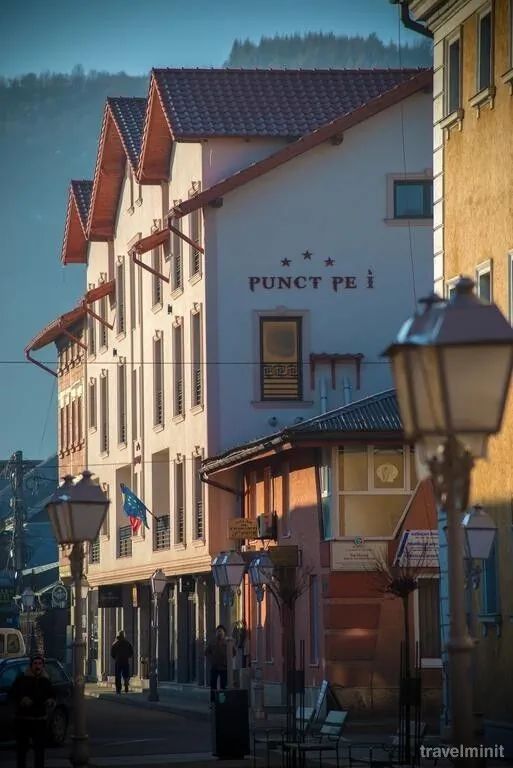
Aparthotel Punct pe I Sighetu Marmației
Camere, serviciiAparthotel Punct pe I Sighetu Marmației Sighetu Marmației ofera 6 camere dotate cu bun gust. Cateva camere sunt prevazute cu aer conditionat. (Pentru mai multe informatii consultati la fiecare tip de camera rubrica "detalii"). Unitatea este prevazuta cu internet wireless. O lista detaliata despre facilitatile unitatii de cazare (inclusiv cele contra cost), cat si despre amenajarea camerelor gasiti in fisa de mai jos. Servicii de masăPreturile camerelor nu contin masa. PlatăPlata se poate efectua prin urmatoarele modalitati: card bancar, transfer bancar, numerar, card de vacanță, avans travelminit, voucher travelminit. Sosire, programZiua de cazare incepe la ora 14:00. Eliberarea camerei se face la ora 11:00. Limbile vorbite la receptie: engleză, română.
FROM
290 RON / night

Motel · 3 stars
Sighetu Marmației, Sighetu Marmației County · 0.2 km
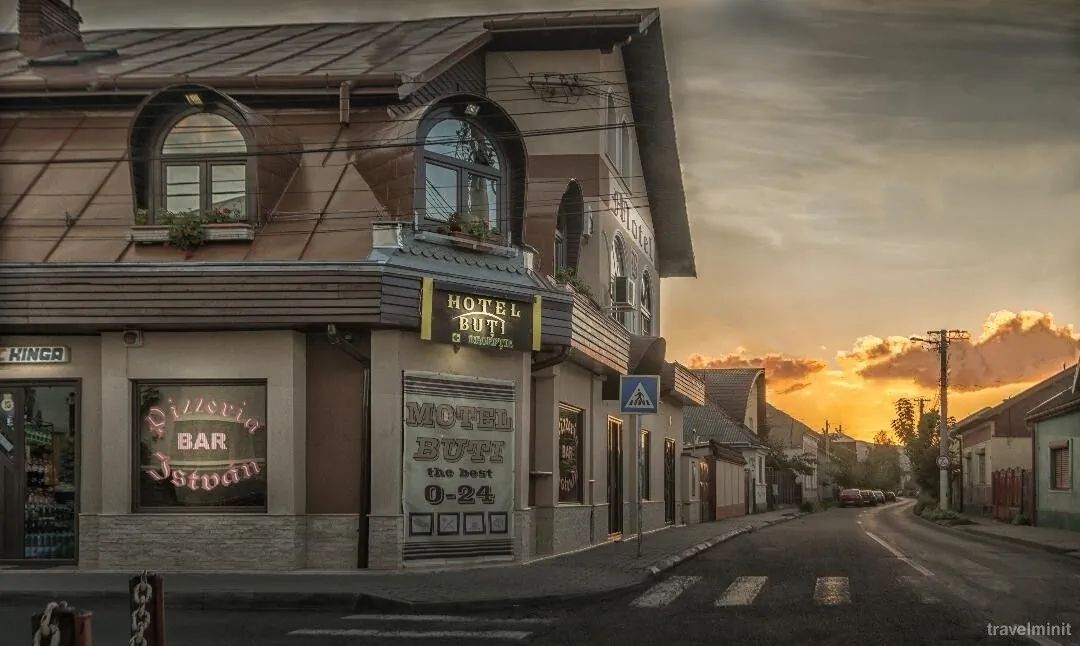
Motel Buti Sighetu Marmației
Motel Buti este situat in centrul orasului Sighetu Marmatiei langa zidurile inchisorii Memorial Sighet, motel Buti va ofera confortul , linistea si relaxarea de care aveti nevoie. Un restaurant de 80 locuri va sta la dispozitie intr-un cadru intim si primitor. Motelul detine o parcare cu 8 locuri inchisa. Motel Buti ofera parcarea inchisa pentru motociclisti.
FROM
170 RON / night
Hotel · 3 stars
Sighetu Marmației, Sighetu Marmației County · 0.2 km
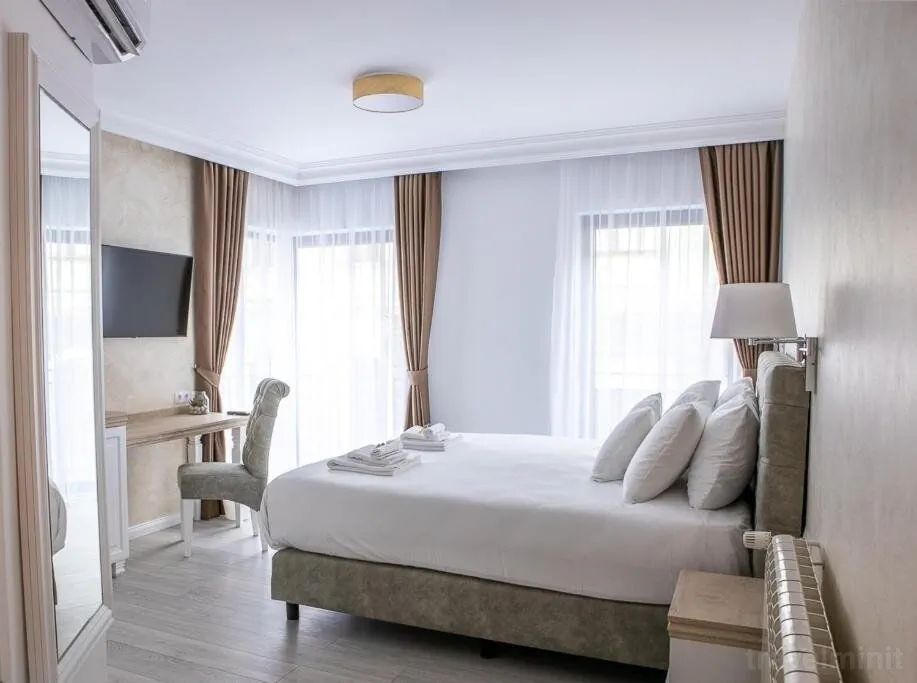
Hotel City Rooms Sighetu Marmației
Camere, serviciiHotel City Rooms Sighetu Marmației Sighetu Marmației ofera cazare in 7 camere placut mobilate si confortabile. Exista parcare contra cost. Cateva camere sunt prevazute cu aer conditionat. (Pentru mai multe informatii consultati la fiecare tip de camera rubrica "detalii"). Acces la internet wireless este disponibil la hotel. Pentru a obtine mai multe detalii despre facilitatile locatiei (inclusiv cele contra cost) si despre dotarile camerelor, va rugam consultati fisa de mai jos. Servicii de masăTarifele afisate se refera numai la cazare. Cand rezervati cazare aveti posibilitatea de a comanda mic dejun contra cost. PlatăPlata serviciilor se poate efectua prin urmatoarele modalitati: numerar, card bancar, transfer bancar, card de vacanță, avans travelminit, voucher travelminit. Pentru finalizarea rezervarii se achita un avans de 100%. Sosire, programCamera poate fi ocupata de la ora 15:00 iar predarea ei se face pana la ora 11:00. Personalul de la hotel vorbeste limba: spaniolă, română.
FROM
290 RON / night
Pensiune · 3 stars
Sighetu Marmației, Sighetu Marmației County · 0.4 km
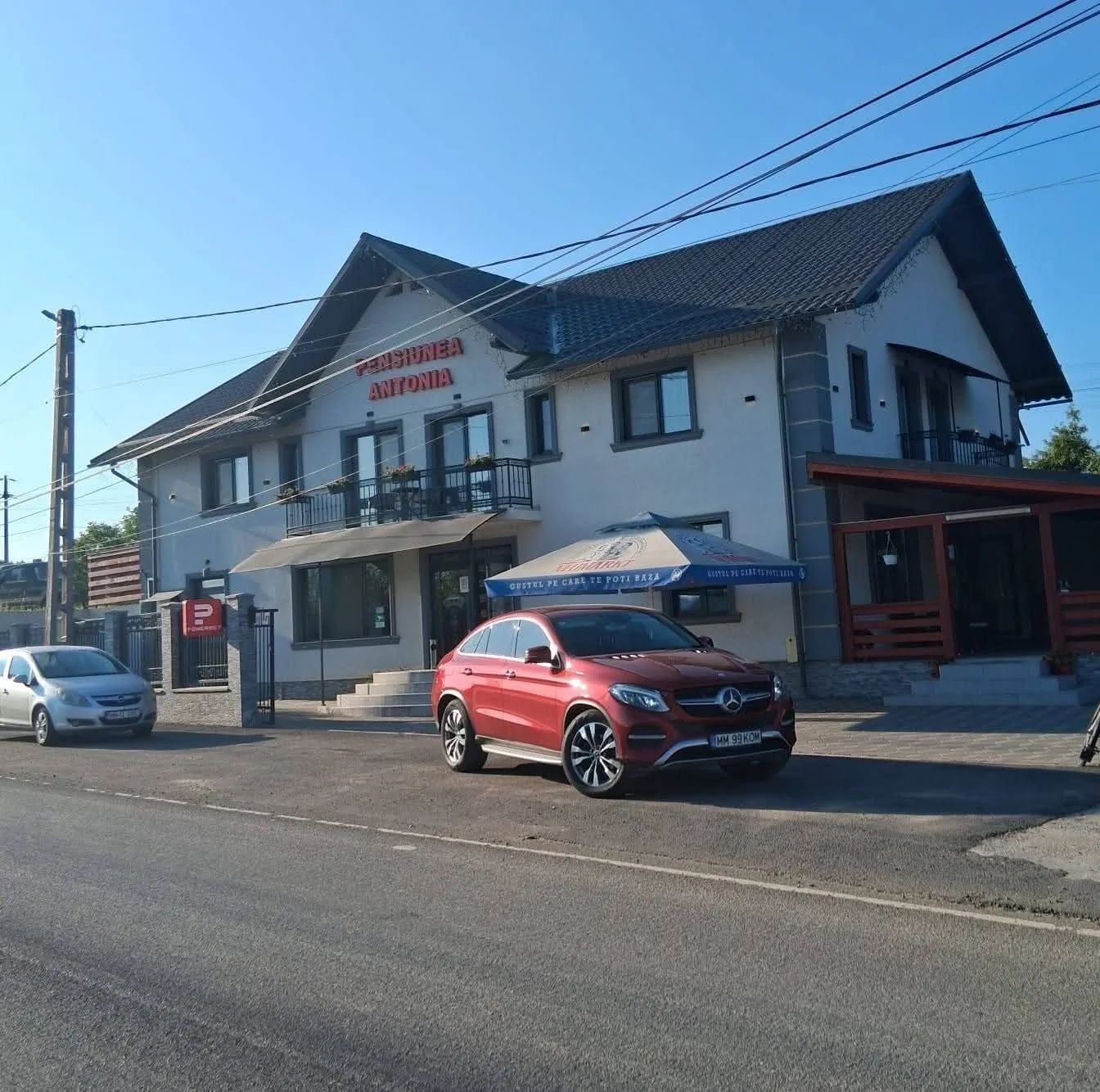
Pensiunea Antonia Sighetu Marmației
Camere, serviciiPensiunea Antonia Sighetu Marmației Sighetu Marmației dispune de 7 camere modern mobilate. La restaurant puteti servi preparate culinare traditionale. Este disponibila o parcare gratuita. Unele camere sunt dotate cu aer conditionat. (Pentru mai multe informatii consultati la fiecare tip de camera rubrica "detalii"). Va puteti conecta la internet prin reteaua wireless disponibila in pensiune Daca doriti sa aflati mai multe detalii despre facilitatile disponibile la Pensiunea Antonia Sighetu Marmației, respectiv despre amenajarea camerelor, va rugam consultati informatiile de mai jos. Servicii de masăTarifele camerelor nu includ nici o masa. La efectuarea rezervarii puteti solicita mic dejun contra cost. PlatăPuteti face plata cazarii cu/prin: numerar, transfer bancar, card bancar, card de vacanță, avans travelminit, voucher travelminit. Sosire, programCamera poate fi ocupata de la ora 13:00 iar predarea ei se face pana la ora 11:00. Personal vorbitor de limba română.
FROM
240 RON / night
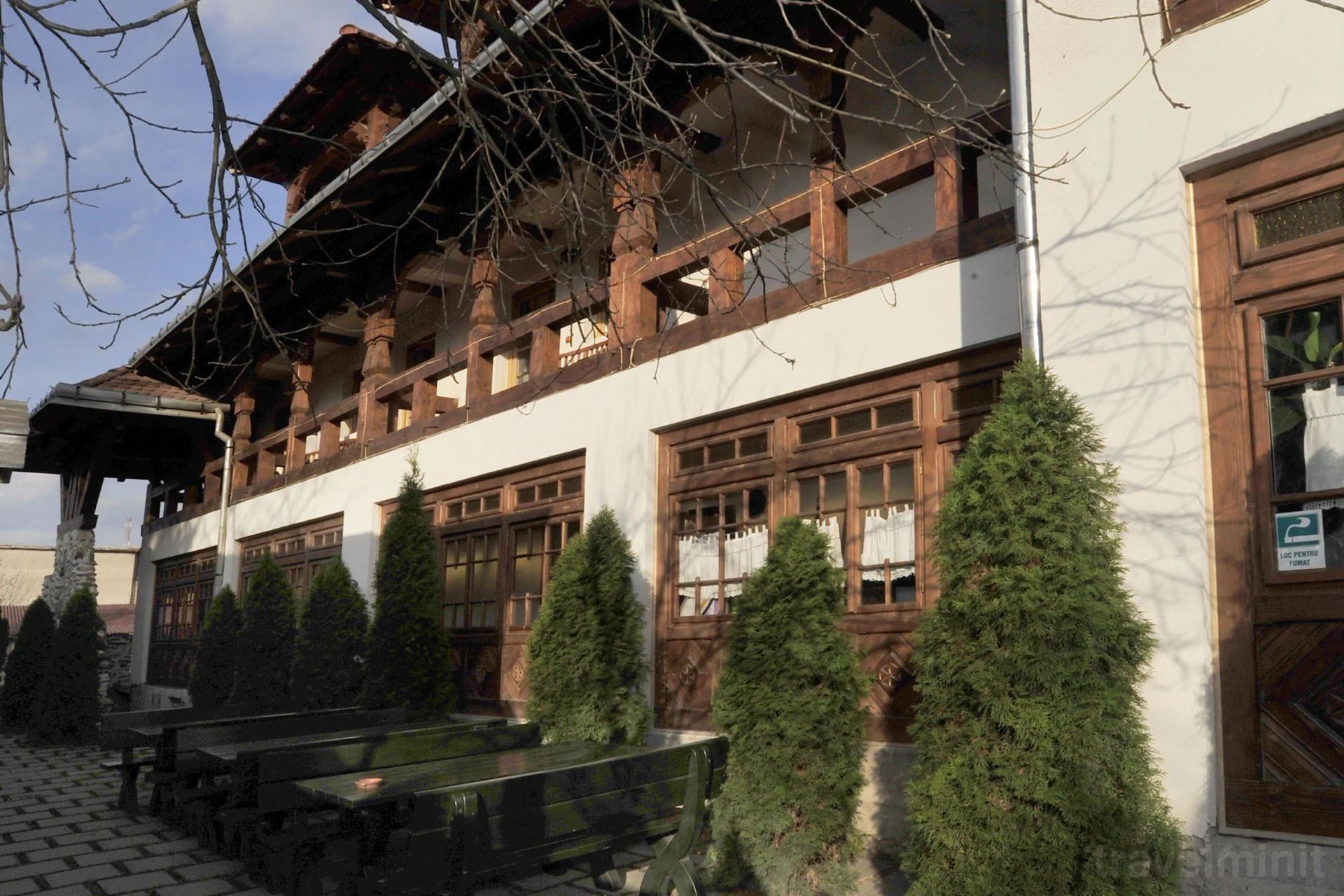
Pensiune · 3 stars
Sighetu Marmației, Sighetu Marmației County · 0.4 km
Pensiunea Casa Iurca Sighetu Marmației
Camere, serviciiPensiunea Casa Iurca Sighetu Marmației Sighetu Marmației ofera cazare in 5 camere frumos amenajate. Este permis accesul cu animale de companie (gratuit). La restaurant puteti servi preparate delicioase. Accesul la internetul wireless este disponibil la unitatea de cazare. O lista detaliata despre facilitatile unitatii de cazare (inclusiv cele contra cost), cat si despre amenajarea camerelor gasiti in fisa de mai jos. Servicii de masăTarifele afisate contin mic dejun. PlatăPlata o puteti efectua cu/prin: numerar, card bancar, transfer bancar, card de vacanță, avans travelminit, voucher travelminit. Sosire, programZiua de cazare incepe la ora 15:00. Eliberarea camerei se face la ora 12:00. Personal vorbitor de limba: engleză, română.
FROM
240 RON / night
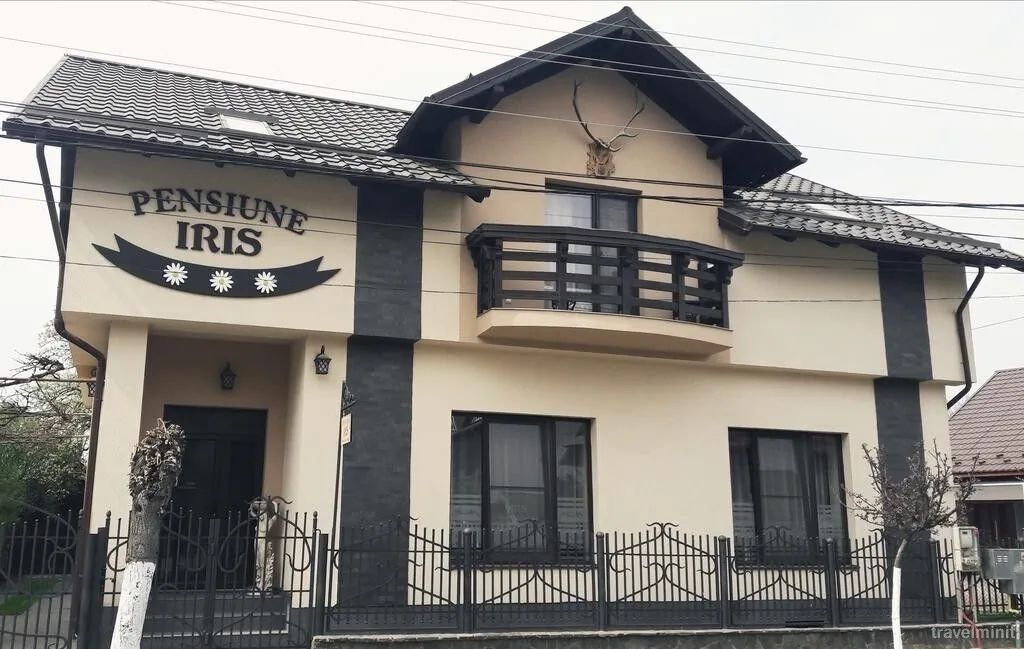
Pensiune · 3 stars
Sighetu Marmației, Sighetu Marmației County · 1.1 km
Pensiunea Iris Sighetu Marmației
Camere, serviciiPensiunea Iris Sighetu Marmației Sighetu Marmației ofera cazare in 4 camere frumos amenajate. Este disponibila o parcare gratuita. In unitate exista conexiune la internet wireless. Mai multe detalii despre facilitatile oferite la pensiune (inclusiv cele contra cost), cat si despre dotarile camerelor veti gasi mai jos. Servicii de masăPreturile afisate includ mic dejun. PlatăPlata se face prin urmatoarele metode: transfer bancar, card de vacanță, avans travelminit, voucher travelminit. Sosire, programZiua hoteliera incepe de la ora 14:30 si se termina la ora 11:00. Personalul de la receptie este cunoscator a mai multor limbi: maghiară, engleză, română.
FROM
240 RON / night
BEFORE YOU HIT THE ROAD
Weather conditions in Maramures
Local forecast for Sighet Memorial Museum, Maramures, Maramureș

Real-time updated weather data
Much more to explore in this area
Nearby tourist attractions


Săpânța, Maramureș County
The Merry Cemetery of Săpânța
Situat in localitatea Sapanta, localizata pe malul drept al Tisei, in dreptul Vaii Tarasaului, aproape de confluenta raurilor Sapanta si Tisa,la aproximativ 18...
15.3 km

0.2 km

Maramures, Maramureș County
Muzeul Satului Maramureșean din Sighetu Marmației
Situat la intrarea in orasul Sighet, pe drumul dinspre Baia Mare; s-a constituit ca o rezervatie de monumente de arhitectura taraneasca; prin structura,...
2.8 km

Surdesti, Maramureș County
Biserica de lemn din Șurdești
Situata in satul Surdesti; construita in anul 1766; a fost construita de catre mesterul Ion Macareie, pentru comunitatea greco-catolica din zona; poarta hramul...
37.9 km

16.8 km

25.8 km
31.6 km
36.6 km

15.7 km

Maramures, Maramureș County
Ieud Wooden Church
Situata in localitatea Ieud; este cea mai veche biserica din Maramures, fiind construita in anul 1364, de catre familia nobiliara Balea;poarta hramul "Nasterea...
37.5 km

Maramures, Maramureș County
Wooden Church of Desești
Situata in localitatea Desesti; construita in anul 1770; poarta hramul "Sfanta Cuvioasa Paraschiva"; ridicata din barne groase de stejar slefuit; Victor...
17.2 km

Plopis, Maramureș County
Wooden Church of Plopiș
Situata in satul Plopis, pe teritoriul administrativ al comunei Sisesti; construita in anul 1798; poarta hramul "Sfintii Arhanegheli Mihail si Gavriil"; este...
38.7 km
Cultural life and traditions
Events near Sighet Memorial Museum
Medieval festivals, traditional fairs, concerts and recommended local activities in Maramures.

Tradiții și Meșteșuguri

Maramures, Jud. Maramureș
Zilele Culturii Locale și Turismului Tradițional
Ateliere deschise de olărit, sculptură în lemn și folclor autentic prezentate de meșteri populari locali.
WHEN
15 - 17 Mai 2026

Gastronomie Tradițională
Maramures, Jud. Maramureș
Târgul Produselor Tradiționale și al Gastronomiei Locale
Produse atestate tradițional, brânzeturi maturate, miere de munte și bunătăți locale pregătite după rețete străvechi.
WHEN
În fiecare final de săptămână

Cultură și Fotografie
Maramures, Jud. Maramureș
Tur Ghidat Tematic și Fotografic de Patrimoniu
Explorare ghidată dedicată iubitorilor de istorie, natură și fotografie pe cele mai spectaculoase perspective ale zonei.
WHEN
Program zilnic la cerere
On foot, exploration gains depth
Discover the surroundings and local geography
Explore trails, terrain and natural landmarks around Sighet Memorial Museum.

Guides and practical tips
Useful travel articles
Travel guides, practical tips and itineraries for Maramures.

Travel guide
Top 5 Atracții Turistice și Trasee Montane în Zona Moieciu - Bran
Descoperă cele mai spectaculoase peisaje carstice, chei adânci și cetăți medievale din imediata apropiere a stațiunii Moieciu.

Travel guide
Ghid de Drumeție: Traseul Moieciu de Sus spre Platoul Bucegi
Un itinerariu montan de o frumusețe rară ce urcă din Valea Băngăleasa spre Poiana Guțanu și crestele maiestuoase ale Bucegilor.

Travel guide
Castelul Bran: Istorie, Legende și Secrete Medievale
Află adevărata poveste a fortăreței medievale din Pasul Bran, reședința de suflet a Reginei Maria a României.
THE JOURNEY STARTS WITH AN IDEA
The next story is on the way.
From the first stop to the last stay, make room for a new Romania.
