


CASTLE · MUNTENIA (WALLACHIA)
Peleș Castle

Sinaia, Prahova County
Add location to your trip planner.

Practical access information

VISITING HOURS
Marți: 09:15 - 17:00, Miercuri - Duminică: 09:15 - 17:00 (Luni închis)

TICKET PRICE
Tur de bază (parter): Adulți 50 RON, Copii/Elevi 12.5 RON, Pensionari 25 RON; Tur complet (parter + etaj): 100 RON

RECOMMENDED VISIT DURATION
2 - 3 ore


Visitor information and guide
For group bookings or access verification, you can call this number.

PHONE NUMBER
+40 244 310 918 Navigate with Google Maps

ABOUT PELEȘ CASTLE
Peleș Castle: The Crown Jewel of Romania and a Masterpiece of European Romanticism in the Heart of the Carpathians
Above the town of Sinaia, where the rushing waters of the Peleș River descend from the Bucegi Massif of the Carpathians, rises one of the most fascinating buildings of 19th-century Europe: Peleș Castle. Viewed from its terraces adorned with statues and fountains of Carrara marble, the castle seems torn from a German fairy tale, a structure of stone and carved wood that blends Gothic turrets, Renaissance loggias, and facades decorated with wooden lacework, in an Alpine landscape worthy of Switzerland or Bavaria. For the European traveler, Peleș is not only Romania's most visited historical monument after Bran Castle, but a true bridge between the civilizations of Europe: here, the German Hohenzollern-Sigmaringen dynasty gave Romania its first modern king, Carol I, and he raised, between 1873 and 1914, a residence that was simultaneously the first fully electrified castle in Europe, a laboratory of technical modernity, and a declaration of belonging of the young kingdom to the great family of the continent's imperial courts. With over 160 rooms decorated in styles ranging from German Renaissance to Hispano-Moorish Baroque, from Art Nouveau to Alpine Romanticism, and with a collection of over 60,000 heritage objects — paintings signed by El Greco, Titian, Rembrandt, Rubens or Gustav Klimt, over 4,000 European and Oriental weapons and armors, stained glass from Munich, furniture from Vienna, Hamburg and Mainz — Peleș Castle is, in essence, a museum of Europe itself, preserved in the heart of the Carpathians and offered to the world as an integral part of universal cultural heritage.
Historical Roots: From the German Prince to the Kingdom of Romania and the Great Empires of Europe
The story of Peleș Castle begins long before its first stone. In 1866, after the great European powers — Napoleon III's France, the Tsars' Russia, and the Kingdom of Prussia — decided, following the Paris Convention, to recognize the union of the Romanian Principalities under a foreign prince, the Romanian political elites chose as ruler the young Prince Karl of Hohenzollern-Sigmaringen, an officer in the Prussian army and cousin of King Wilhelm I of Prussia. Arriving in Romania in May 1866, Carol crossed the country and remained deeply impressed by the picturesque Prahova Valley. He returned there in August 1866, and the landscape remained in his heart. When, in 1872, he purchased at Podul Neagului — a locality that, in 1874, would receive, also at his initiative, the name of Sinaia — an expanse of about 1,000 paces of land on the bank of the Peleș River, he was not buying just land, but founding a dynastic dream. Carol I was to become King of Romania in 1881, after the proclamation of full independence and the transformation of the country into a kingdom, and Peleș was to become the summer residence of a dynasty that was to link, through marriages and alliances, the Romanian royal house to the most illustrious thrones of Europe: Carol's mother, Josephine of Baden, belonged to a Catholic branch of the House of Baden; his wife, Elisabeth of Wied, was a German princess; his daughter-in-law, Maria, was the daughter of Duke Alfred of Edinburgh and Grand Duchess Maria Alexandrovna of Russia, thus granddaughter of Queen Victoria of Great Britain and Tsar Alexander II. Thus, when Princess Maria of Edinburgh married Crown Prince Ferdinand on December 29, 1892, in Sinaia, not only two destinies met, but two of the most powerful dynasties in the world: Saxe-Coburg and Gotha and Hohenzollern, Great Britain and Russia, with the Romanian Royal House in the middle.
The European context of the construction is equally dense. Romania had just emerged from the War of Independence (1877–1878) — in which Prince Carol had personally commanded the Romanian troops alongside the Russian ones at Plevna, Plevna being conquered in November 1877 — and the Treaty of Berlin of 1878 recognized the country's full independence. For a king whose throne rested on the alliance with the Central Powers, Germany and Austria-Hungary, it was natural that his residence should bear the imprint of German architecture. And the alliance treaties — the Alliance Treaty of 1883 between Romania, Germany and Austria-Hungary — were to be renewed right at Peleș Castle, in 1892 and again in 1896, in the context of the official visit of Emperor Franz Joseph I of Austria-Hungary, the most important state visit ever hosted in Sinaia. For one day, in August 1896, the Carpathians witnessed the meeting between two of the oldest empires of Europe: the Habsburg one, stretching from the Alps to Galicia and Bukovina, and the young Romanian kingdom, its ally on the eastern frontier of "civilized Europe" against the Ottoman Empire and Russian expansion. This visit determined the arrangement, in 1906, of the Imperial Apartment at Peleș, prepared for a second coming of the old emperor on the occasion of the 40th anniversary of Carol I's reign — a visit that, unfortunately, never took place.
The actual construction began in 1873 and was marked by the ambition of an impossible-to-please sovereign. The first architect called, Professor Wilhelm von Doderer of Vienna from the Polytechnic School, presented the king with three projects inspired by the French Renaissance castles of the Loire Valley and the buildings on Vienna's Ringstrasse — the same models that had impressed the monarchs of Central Europe, from the Loire to Vienna. Carol I rejected all three in 1876, considering them lacking in originality and too costly. Doderer's place was taken by the German Johannes Schultz, initially his assistant on the site, originally from Lemberg (now Lviv), who proposed a more modest but more adapted solution to the steep terrain and budget. The cornerstone was laid on August 10/22, 1875, in a festive ceremony under which dozens of 20-lei gold coins were buried — the first Romanian coins bearing Carol I's effigy — alongside two sealed parchments in glass and lead tubes. The building was officially inaugurated on October 7, 1883, but the works continued, in a succession of stages, until 1914: the French architect Émile André Lecomte du Noüy, disciple of the famous Eugène Viollet-le-Duc, created the Moorish Hall in 1890; the Czech architect Karel Liman took over coordination from 1893/1896, raising the 66-meter central tower, completing the Hall of Honor in 1911 and building, on the same estate, Pelișor Castle (1899–1902) for Crown Prince Ferdinand and Maria, as well as Foișor, the king's former hunting lodge. Between 1908 and 1911, after the plans of Liman and the Bavarian Ferdinand de Tiersch — adviser to King Ludwig II of Bavaria, the same king who had built the mad Neuschwanstein — the Armory Halls and the decoration of the Florentine Hall were completed. In 1911–1914, the terrace was decorated with busts of Roman emperors, and on the south-east wing the Council Chamber was designed by Liman and the Viennese decorator Bernhard Ludwig. The total cost of the entire estate, calculated at the time, reached about 16 million gold lei, the equivalent of over 120 million euros today — a colossal sum for a new country, which spoke of the king's ambition to anchor Romania in the cultural and technical elite of Europe.
Architectural Masterpiece: A Dialogue with the Great Styles of Europe
Viewed from the outside, Peleș Castle is a lesson in the history of 19th-century European architecture, a building in which German Romanticism and Historicism — the same current that gave birth to Neuschwanstein in Bavaria, to Miramare near Trieste or to the castles on the Rhine — meet Italian, French, Swiss and Oriental influences. The dominant style is German Neo-Renaissance, deliberately chosen by Carol I to evoke his origins in the House of Hohenzollern-Sigmaringen, but the facades are dotted with Gothic turrets with sharp metal spires, balconies with carved balustrades, open loggias and seven levels of terraces in Italian Neo-Renaissance style, decorated with statues, columns and fountains. The inner courtyard presents Saxon influences, with half-timbered facades and manually painted allegorical frescoes, reminiscent of North European Alpine architecture. The 66-meter central tower is visible from tens of kilometers and was, at the time, a signal of modernity in a still wild landscape. The entire ensemble — Peleș, Pelișor, Foișor, the Guard Corps, the Economat, the Royal Stables, the Power Plant and Vila Șipot — forms a royal estate stretching over hundreds of hectares, surrounded by beech and spruce forests, with gardens designed by European landscape architects, including a fountain created in 1894 by Pietro Axerio from Florentine marble.
What distinguishes Peleș, however, from any other European castle is its interior: a universe of 160 rooms (some sources indicate 168), each conceived as a "journey" into another civilization or era, a true anthology of the artistic tastes of a cosmopolitan royal court. The Hall of Honor, the main reception hall, impresses with its double height, walnut wood paneling carved with bas-reliefs and statuettes, and with the movable glass ceiling, electrically or manually operated — a technical innovation that allowed the king's guests to admire the clear sky on summer nights, an element of surprise worthy of the most refined salons of Europe. The Moorish Hall, the work of French architect Lecomte du Noüy, is a jewel in Hispano-Moorish style inspired by the Alhambra of Granada: gilded arabesque stuccoes, geometric mosaics, niches with horseshoe arches and an interior fountain of Carrara marble, a copy of a piece from Cairo, while the furniture was brought from Damascus and Cairo — an evocation of the Ottoman Empire and the European fascination with the Orient. The Florentine Hall, or Great Salon, recreates the atmosphere of an Italian Renaissance palace: coffered ceiling carved in gilded linden wood, two large Murano glass chandeliers, marble floor and portraits of the Medici Family and the Doges of Venice, recalling the dynastic ties of Mediterranean Europe. The Council Chamber strikingly resembles one of the halls of the Lucerne Town Hall, Switzerland — a reference to Swiss democracy and sobriety in a space destined for state decisions. The Turkish Salon houses a collection of Turkish and Persian brass vessels, and the royal bedroom is lit by a Bohemian crystal chandelier. The royal library, with rare volumes bound in leather and engraved with gold letters, hides a secret door behind a bookshelf, through which the king could move discreetly to the private apartments, and the stained glass windows depict the castles of Sigmaringen and Hohenzollern in Germany — the birthplace of the dynasty. The Concert Hall houses a 1621 harpsichord made in Antwerp and a Rieger organ, and the castle theater, with 60 seats and a royal box, was decorated after sketches by Gustav Klimt, the master of Viennese Secession.
The castle's collections are of a richness that rivals those of the great European museums. The royal picture gallery includes original works signed by El Greco, Zurbarán, Murillo, Velázquez, Titian, Tintoretto, Rembrandt, Rubens, Van Dyck, Carpaccio, Raphael, Bruegel, Correggio, Tiepolo, Jacques-Louis David, as well as works by Gustav and Ernst Klimt — one of the most refined collections in Central and Eastern Europe, assembled by Carol I, a great art lover, and continued by his successors. The Armory Halls, arranged between 1903 and 1911, house over 4,000 European and Oriental pieces from the 14th–17th centuries — armors, helmets, swords, sabers, crossbows, rifles — with marks of renowned workshops such as Solingen, Toledo, Saint-Étienne, Lazzaro Lazzarini or Peter Danner, and the absolute star is a complete armor for horse and knight, of the Maximilian type, weighing about 80–100 kg, unique in Romania. The collection started from two nuclei: the Oriental weapons acquired by the young Prince Carol, at 23, during his trip to Algeria in 1862, and the weapons inherited from his father, Prince Karl Anton of Hohenzollern, the last sovereign prince of the House of Sigmaringen, from the Arsenal of Hohenzollern Castle in Germany. The Viennese expert Julius Ernst Scheurer was however tasked with completing the collection through purchases at auctions and private collections throughout Europe. In total, the castle houses over 60,000 heritage objects: paintings, sculptures, period furniture from workshops in Mainz, Munich, Vienna and Hamburg, tapestries, Oriental carpets, silverware, porcelain, stained glass made in the Zettler workshops of Munich, rare books and manuscripts. By will, Carol I donated the entire collection to the Romanian people — a gesture of rare nobility, which transformed Peleș into a national and European treasure alike.
Technologically, the castle was at the vanguard of Europe. Besides being the first fully electrified castle on the continent — having its own power plant, built on the bank of the Peleș River, one of the first hydroelectric plants in Europe, installed in 1884 and expanded in 1897 — Peleș benefited as early as 1883 from central heating, installed by the Polish inventor Franciszek Rychnowski, who received for this work the first-class gold medal of merit from King Carol I, from a central dust suction system, from an interior elevator and from the movable ceiling of the Hall of Honor. The French press was to call it "the most modern castle in Europe of its founder's time". The construction materials were, for the most part, Romanian — gravel from the Prahova River, stone from the Piatra Arsă massif, wood from the forests of the Prahova Valley, brick fired on site — while the workforce was cosmopolitan: Italian masons, German and Hungarian carpenters, Albanians and Greeks at the quarry, Turks at brick firing, Romanians at earthworks.
Legends, Personalities and Turning Points: The Castle as Witness to the History of Europe
Peleș Castle bears in its stones the memory of a personal tragedy that gave it its name. Carol I and Elisabeth of Wied had a single daughter, Maria — nicknamed Măriuca — born in 1870, who died in April 1874, at only three or four years old, struck down by scarlet fever. In the delirium of fever, the child is said to have asked her father: "I want to go to Sinaia, to drink water from the Peleș". Grief-stricken, Carol I transformed this last wish into a personal impetus: he baptized the new castle after the name of his daughter's favorite river, and the construction of the residence at Sinaia became a tribute to the memory of the lost child. Legend says that the king saw in the raising of the castle "the cradle of my dynasty, of the national dynasty" — and, indeed, in 1893, at Peleș was born the future King Carol II, the first monarch of the dynasty born on Romanian soil and the first baptized in the Orthodox rite. In 1921, at Foișor, the adjacent residence, was born King Michael I, the last sovereign of Romania.
Another personality who marked the castle's destiny was Queen Elisabeth, Carol I's wife, known in the literary world under the pseudonym Carmen Sylva. Poet, prose writer and memoirist, she published verses and stories in several European languages, and at Peleș she created a true cultural salon, receiving writers, musicians and artists from all over Europe. The castle's legends — some intertwined with the tradition of the "White Lady" (Weiße Frau) of the House of Hohenzollern, a spirit linked to the German dynasty that announced misfortunes — are interwoven with the memory of the queen, who used to spend her nights reading and writing in her apartments, dressed in white gowns, in an atmosphere of romantic melancholy. Queen Maria, her daughter-in-law, granddaughter of Queen Victoria and Tsar Alexander II, was in turn an "artist queen": painter, poet, fashion creator and patron of the "Artistic Youth", the movement of debutant Romanian artists. For her and for Ferdinand, Carol I built Pelișor (1899–1902), a more intimate castle, in Art Nouveau style, the only one of its kind in Romania, with the Bedroom and the Golden Room, with furniture designed by the queen herself and with the painted manuscript on parchment that Maria gave to Ferdinand in 1906. After Queen Maria's death, on July 18, 1938, her heart was placed, after an impressive ceremony, in the Golden Salon of Pelișor, under the flags of Romania and Great Britain, where it remains to this day.
The turning points of European history were decided between the walls of this castle. On August 3, 1914, in the Council Chamber — similar to that of the Lucerne Town Hall — the Crown Council convened by King Carol I took place to decide Romania's entry into the First World War, which had broken out only a few days earlier, with the assassination in Sarajevo and Germany's declaration of war on France. Although Carol I, faithful to the alliance with the Central Powers — Germany, Austria-Hungary and the Ottoman Empire —, supported immediate entry into the war, the Council voted with an overwhelming majority for neutrality, the only one who supported the king's point of view being Petre P. Carp. On the council table were displayed the alliance treaties, including the one renewed at Peleș in 1896 in the presence of Franz Joseph. Romania was to enter the war only on August 27, 1916, on the side of the Entente, at the Crown Council of Cotroceni. Also at Peleș took place the Crown Council of 1925, and in July 1931 here took place the last royal wedding in the history of Romania: the marriage of Princess Ileana to Archduke Anton of Habsburg-Lorraine — a union that symbolically linked the young Romanian kingdom to the oldest imperial dynasty of Europe, the House of Habsburg.
After Carol I's death, on September 27, 1914 — occurring right in the castle he had loved so much — Peleș hosted the king's funerals and remained the royal summer residence until the forced abdication of King Michael I, on December 30, 1947. In 1948, the communists nationalized the estate, and in 1953 the castle was opened as a state museum. Between 1975 and 1990, Nicolae Ceaușescu banned public access, transforming the estate into a strictly supervised protocol zone; it is said that the museographers scared the Ceaușescus by telling them that inside the castle there was a mushroom dangerous to humans, when in reality it was a mushroom that attacked the wooden beams due to moisture. After the December 1989 Revolution, Peleș and Pelișor were reintegrated into the tourist circuit. In February 2007, after five years of negotiations, the property was restituted to the Royal Family of Romania — one of the few restitutions of goods confiscated by the communist regime — the castle however remaining a state museum, administered by the Ministry of Culture, the royal family leasing it to the state. King Michael I returned to Peleș in June 2008 and lived here until his death, on December 5, 2017. On May 10, 2016, on the occasion of Independence Day and the 150th anniversary of the dynasty's existence, the personal standard of Crown Princess Margareta fluttered for the first time in almost 70 years on the highest flagpole of the castle.
Practical Visitor Guide: The Tourist Experience Today
Peleș Castle is located approximately 1.5 kilometers north-west of the center of Sinaia, at an altitude of about 800–1,000 meters, on Peleșului Alley no. 2, Prahova County. Sinaia is accessible by train from Bucharest (Gara de Nord) in approximately one and a half hours, the journey through the Prahova Valley being in itself a picturesque experience, on the historic route linking the capital to Transylvania, passing by Bran Castle and the medieval city of Brașov. By car, it is reached on DN1/E60 from Bucharest in approximately two hours, and from Sinaia station one can go up either by taxi or on foot, through the town park, in a walk of about 15–40 minutes, depending on pace.
The visiting schedule for 2026 is from Wednesday to Sunday, with Monday and Tuesday closed for conservation: Wednesday between 10:00 and 17:00, and from Thursday to Sunday between 09:15 and 17:00. Access is made in scheduled hourly intervals — Wednesday: 10:00–12:45, 12:45–14:30, 14:30–16:00; Thursday–Sunday: 09:15–11:00, 11:00–12:45, 12:45–14:30, 14:30–16:00 — the last tickets being sold at 15:45, and the last entry at 16:00. Attention: in the period November 2 – December 1, 2026, Peleș Castle will be closed for general cleaning and preventive conservation (and Pelișor between September 28 and November 3, 2026). From December 3, 2025, tickets are purchased exclusively online, on the bilete.peles.ro platform, or from SelfPay automatic payment stations in the area adjacent to the two monuments — there are no longer ticket offices with human operators. Tickets are nominal and for a specific time slot; they cannot be rescheduled or refunded, and access is made in order of arrival, within the interval for which the ticket was purchased. To protect the exceptional heritage, the daily capacity is limited to 2,000 visitors for Peleș Castle and 1,500 for Pelișor, which makes booking several days — or even weeks — in advance absolutely necessary in the summer season and on weekends.
The visiting fees reflect the route options. The basic tour, which includes the castle's ground floor — the Hall of Honor with its movable ceiling, the Moorish Hall, the Turkish Salon, the Armory Hall and the Florentine Hall — costs 50 RON for adults, 25 RON for pensioners and 12.5 RON for children, pupils and students (with ID), Euro <26 card holders benefiting from the same reduced rate of 12.5 RON. The tour that includes the ground floor and the first floor — where the Royal Library with the secret door, the Imperial Apartment, the Concert Hall and the Klimt-decorated theater are located — costs 100 RON for adults, 50 RON for pensioners and 25 RON for pupils and students, and the complete tour, which also adds the second floor, costs 150 RON, respectively 75 RON and 37.5 RON. Children under 7 have free access, and pupils under 18 benefit from free admission during school holidays. Guides are included in the price, with tours available in Romanian — Wednesday hourly between 10:30 and 15:30, and Thursday–Sunday between 09:45 and 15:15 — as well as in foreign languages. The recommended duration of the visit is 1.5–2 hours. At the entrance, visitors are offered disposable shoe covers for the protection of the original 19th-century wooden floors; comfortable and flat footwear is strongly recommended, and the temperatures inside remain cool even in summer, given the altitude of approximately 1,000 meters. Photography for personal purposes is allowed outside and in the interior spaces, in compliance with the museum regulations; the use of tripods is prohibited.
At only about 300 meters from Peleș, on the same royal estate, is Pelișor Castle — "Little Peleș" — the intimate residence of King Ferdinand and Queen Maria, with Art Nouveau interiors unique in Romania, with the Golden Room and with the Golden Salon where Queen Maria's heart rests. Pelișor has a separate ticket and schedule (same hours: Wednesday–Sunday, Monday and Tuesday closed), and the combination of the two castles offers a complete picture of Romanian court life and the artistic tastes of an era that linked Bucharest to London, Vienna and Paris. In the immediate vicinity is also Sinaia Monastery, founded also by the royal family in the 17th century, so that a whole day can be dedicated to the royal heritage of the Prahova Valley.
Peleș Castle remains, more than 140 years after its inauguration, what it has always been for Europe: a place where German, Italian, French, Swiss and Oriental history intertwine in a single construction, in which the first king of Romania dreamed of bringing the future into the heart of the mountains, and in which every room, every detail — from the gold coins buried under the cornerstone to the glass ceiling that opens to the sky — tells of a country that knew how to assert itself, from the very beginning, as part of the great family of European nations. For today's traveler, a visit to Peleș is not just an excursion to a beautiful castle, but a meeting with the common memory of Europe itself.
Media gallery
Discover Peleș Castle in pictures

27 photos · Architecture, courtyards and captivating details


Image source: Wikimedia Commons · Public domain photos · Free license
STAY A FEW DAYS, DISCOVER THE MAGIC
Stays near Peleș Castle

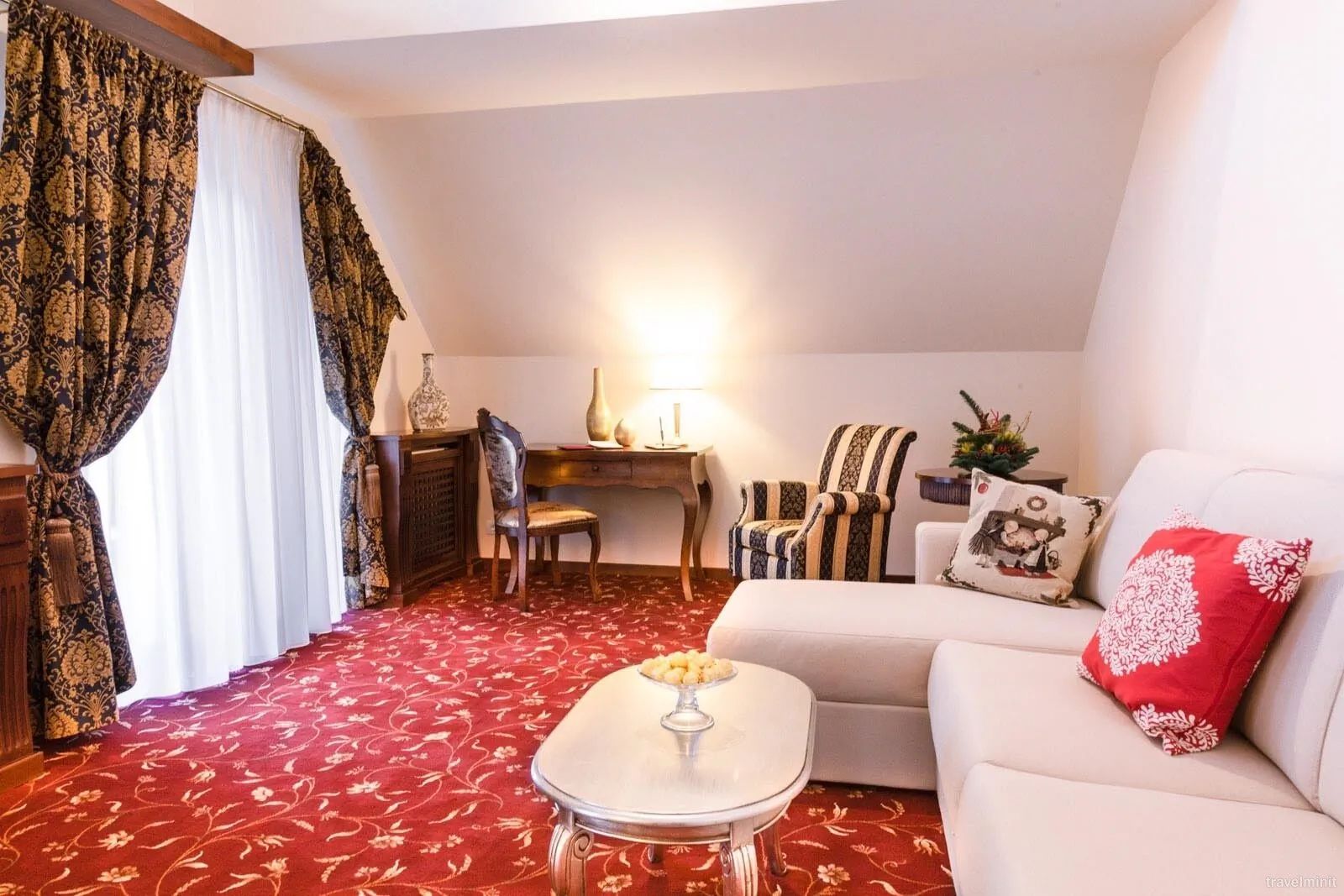
Boutique Hotel · 4 stars

Sinaia, Sinaia County · 0.2 km
Hotel Boutique Belvedere Sinaia
Hotel Boutique Belvedere Sinaia situat la 800 m de castelul Peles si la 1 km de central orasului, aduce in turismul din zona un inalt standard al industriei ospitalitatii, fiind un simbol si reprezentant de onoare al clasei de patru stele extra. Apartamentele spatioase si elegant mobilate, bine izolate fonic, beneficiaza de o zona de de relaxare, un dormitor cu dressing propriu, 2 Tv LCD si doua balcoane generoase cu vedere la munte si padure.Toate apartamentele includ wifi gratuit, acces la spa (maxi –jacuzzi si hammam )Oaspetii nostri beneficiaza de facilitatea de preparare ceai/cafea si de un cos cu fructe.Micul dejun in sistem bufet suedez este alcatuit din produse de casa si produse premium.Restaurantul Noel-Local Modern Cuisine, foloseste pe cat posibil ingrediente locale, produse romanesti de calitate.Pentru copii am pregatit un meniu special dar daca este nevoie satisfacem orice cerinta o micilor critici culinari.La cerere este disponibil si serviciul de transfer in localitate si in afara ei.
FROM
420 RON / night

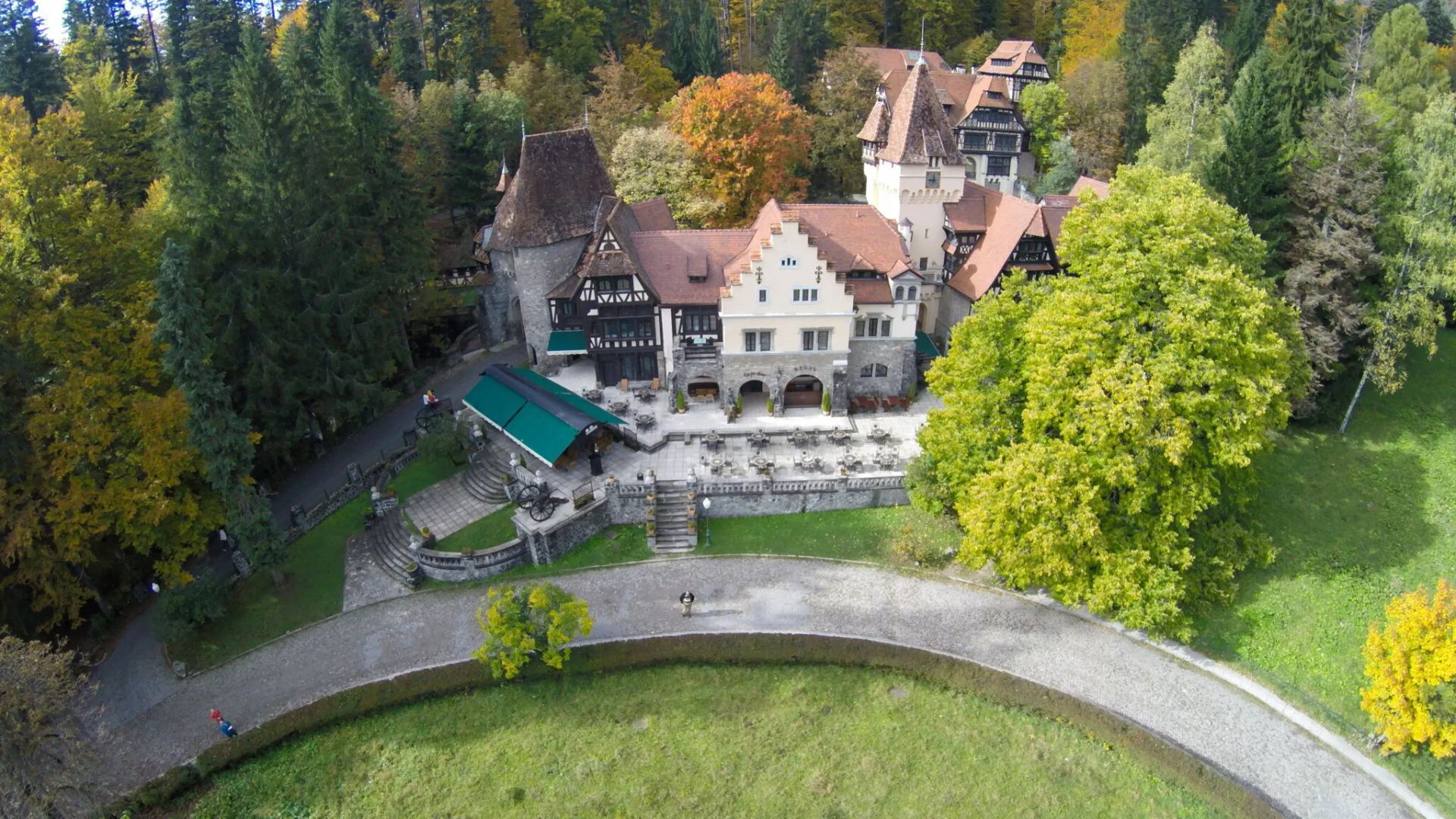
Resort · 4 stars
Sinaia, Sinaia County · 0.3 km
Complex La Tunuri - Vila Economat Sinaia
Complexul “La Tunuri-Vila Economat” este situat pe Domeniul Regal Peleş, in curtea celor 2 castele celebre: Peleş si Pelişor.Pe vremea regilor, aceasta cladire purta numele de Corpul de Gardă, fiind construită in aceeasi perioadă cu castelul Peleş, intre anii 1880-1883, iar astăzi, după mai bine de 130 de ani de la construirea ei, fiind renovată cu bun gust, este pregatită pentru a satisface cele mai sofisticate pretentii. Pe lângă castelul Peleş au fost construite Pelişorul, Corpul de Gardă, Economatul, Casa de Vânătoare Foişor, Grajdurile, Uzina Electrică şi Vila Sipot. Până la terminarea Peleşului (1883), Regele Carol I şi Regina Elisabeta, au locuit la casa de vânătoare, terminată înaintea castelului. Datorită uzinei electrice proprii, Peleşul a fost primul castel electrificat din Europa.Corpul de Gardã reprezenta clãdirea destinatã gãrzilor regale. Aici dormeau ofiţerii de pazã, tot aici erau garajele, dar şi centrala telefonicã a castelului Peleş. Dupã o lungã perioadã de timp cât a fost închisã clãdirea în perioada comunismulu dar şi dupã revoluţie, a fost redeschisã ca unitate de cazare, iar acum dispune de 16 spaţii de cazare, majoritatea avand vedere catre cel mai frumos muzeu din Europa. Arhitectura in stil elveţian, aleile dintre castele, decorul istoric, toate acestea dau impresia intoarcerii in timp, departe de urbanismul din oraşele aglomerate.Comfortul camerelor, cadrul intim, peisajul ce poate fi admirat in fiecare dimineaţã pe fereastrã, discreţia personalului şi calitatea serviciilor vã promit un sejur de neuitat!Restaurantul serveşte oaspeţiilor cazaţi mic dejun a la carte, iar preparatele fac parte din bucataria internaţionalã. Pe vremea când aceasta clãdire purta numele de Corpul de Gardã, in locul restaurantului de acum se aflau garajele.Complexul dispune şi de un café-bar situat in partea din spate a clãdirii, cu o terasã genroasã deschisã spre castelul Peles, iar oaspeţii se pot rãsfãţa cu delicii de cofetãrie-patiserie atent pregatite in laboratorul propriu. Denumirea “La Tunuri” este reprezentatã de tunurile autentice amplasate pe terasa café- bar-ului, achiziţionate de cãtre regele Carol I şi folosite în Rãzboiul de Independenţã din 1877 împotriva Turciei. Cele douã tunuri sunt simbolul acestui complex turistic, dar şi o atracţie pentru turişti.In apropierea complexului, in afarã de cele 2 celebre castele, se aflã si principalele puncte de atracţie ale oraşului: Manãstirea Sinaia, Partiile de ski, Telegondola, drumul cãtre Poiana Stanii, drumul Cotei.
FROM
490 RON / night
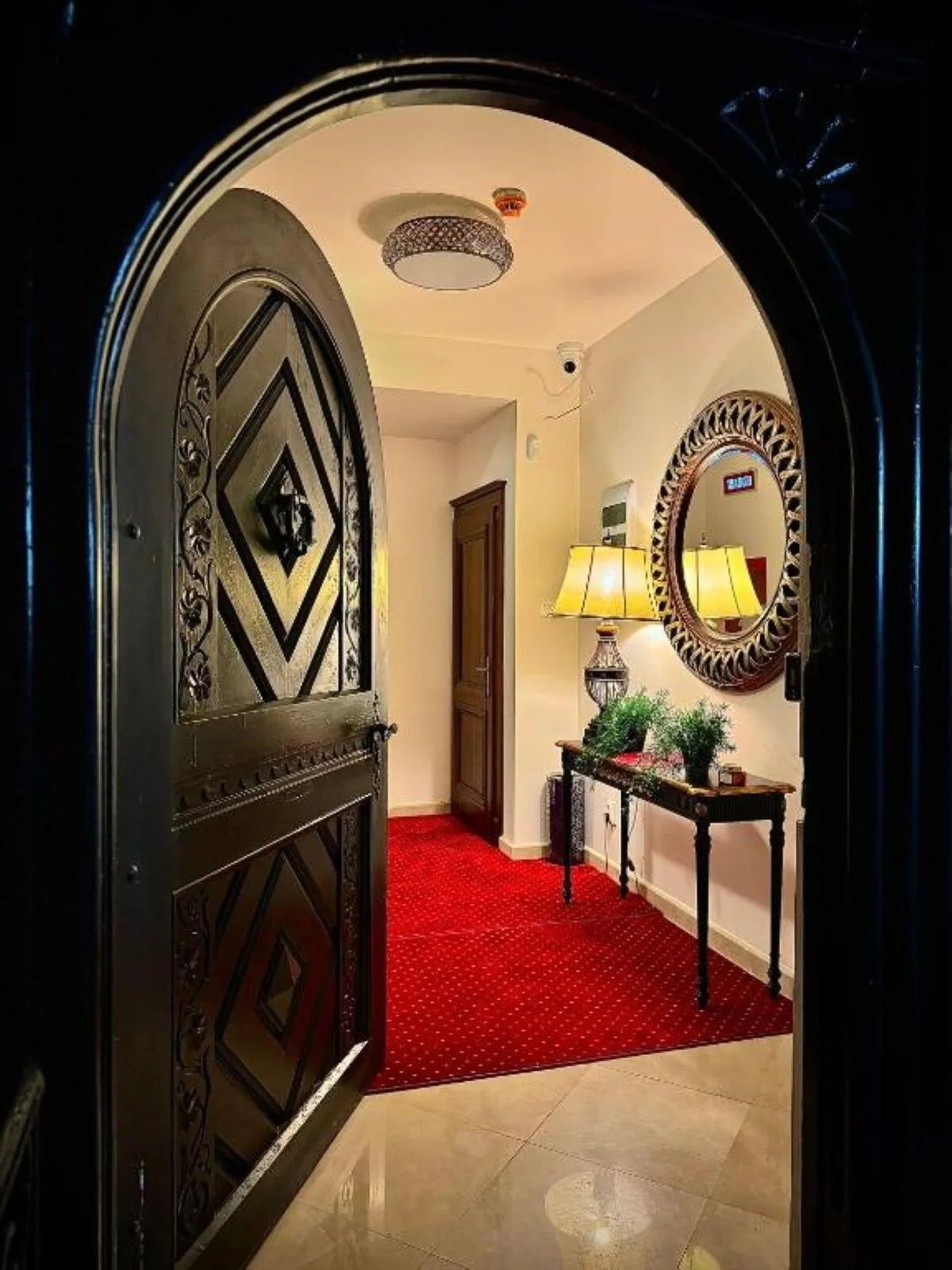
Vilă · 3 stars
Sinaia, Sinaia County · 0.3 km
Vila Șipot Sinaia
Vila Șipot - Casa Arhitecților este o vila monument istoric, situată pe Domeniul Regal Peleș, lângă Castelul Pelișor. Aceasta a fost proiectată în 1900 de Karel Liman, arhitectul principal al Familiei Regale și a găzduit până în anul 1948 biroul de arhitectură și reședința arhitecților Peleșului. Vila a fost complet renovată și utilată la standarde moderne la începutul anului 2024.Vila Șipot este locul ideal pentru a explora Sinaia, indiferent că îți dorești un weekwnd relaxant la Peleș, sau vrei să petreci mai multe zile pentru a explora cochetul oraș de la poalele munților Bucegi.
FROM
280 RON / night
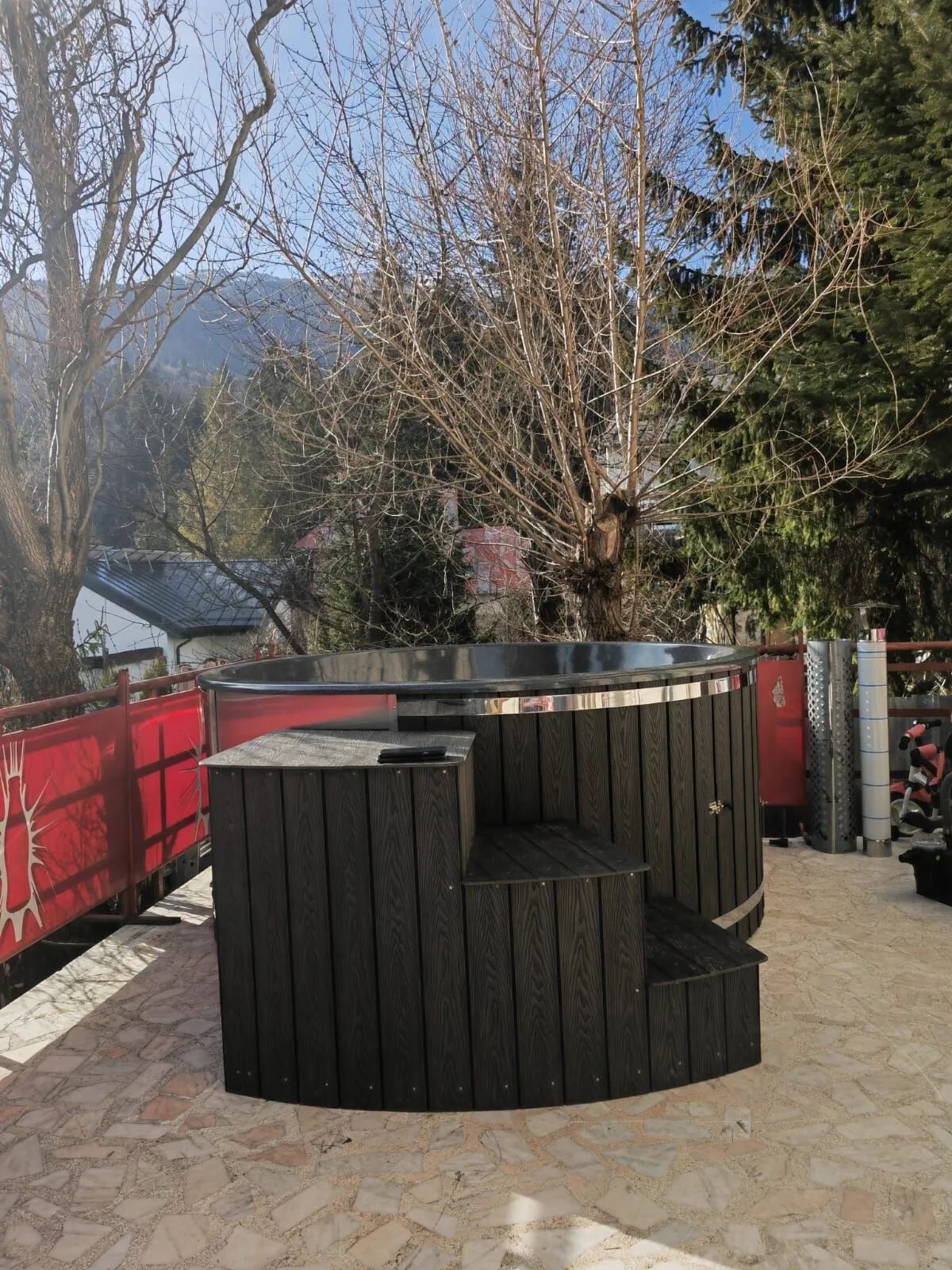
Pensiune · 3 stars
Sinaia, Sinaia County · 0.4 km
Pensiunea Nicolas Sinaia
Camere, serviciiPensiunea Nicolas Sinaia Sinaia ofera cazare in camere placut mobilate si confortabile. Puteti beneficia de servicii wellness la pensiune. Pentru mai multe informatii consultati pagina de date. Daca doriti sa obtineti mai multe informatii despre serviciile disponibile (inclusiv cele contra cost) in cadrul unitatii de cazare si despre echiparea camerelor, consultati fisa de mai jos. LocațiaȘtrand Sinaia se afla la 900 m. Servicii de masăTarifele camerelor nu includ nici o masa. Cand rezervati cazare aveti posibilitatea de a comanda mic dejun contra cost. PlatăModalitati de plata acceptate: numerar, card bancar, transfer bancar, card de vacanță, avans travelminit, voucher travelminit. Rezervarea devine ferma numai dupa efectuarea platii unui avans de 100%. Sosire, programCheck-in se face incepand cu ora 15:00 si check-out pana la ora 11:00. Personal vorbitor de limba: engleză, română.
FROM
240 RON / night
Vilă · 3 stars
Sinaia, Sinaia County · 0.4 km
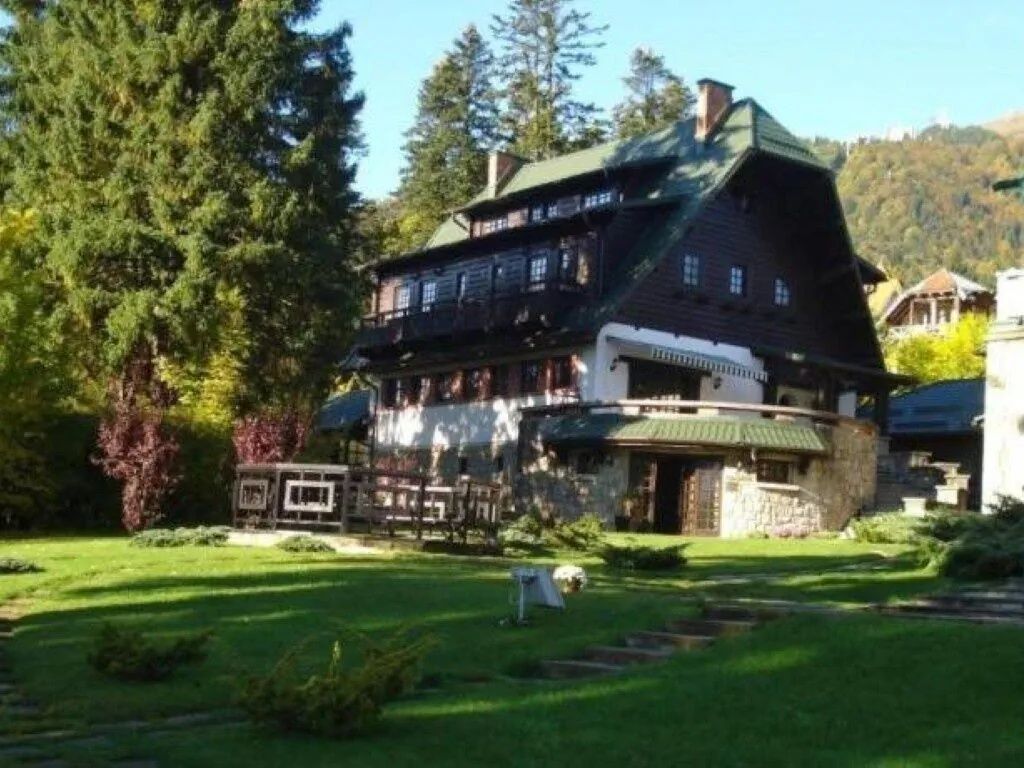
Vilele Lucia Sinaia
Camere, serviciiVilele Lucia Luxury Mens Sana Sinaia dispune de 13 camere modern mobilate. Mai multe detalii despre facilitatile oferite de Vilele Lucia Luxury Mens Sana Sinaia (inclusiv cele contra cost), cat si despre dotarile camerelor veti gasi mai jos. Servicii de masăTarifele afisate nu contin masa. PlatăPuteti face plata cu/prin: transfer bancar. Sosire, programCamera poate fi ocupata de la ora 15:00 iar predarea ei se face pana la ora 12:00. Personal vorbitor de limba română.
FROM
280 RON / night
Hotel · 3 stars
Sinaia, Sinaia County · 0.4 km
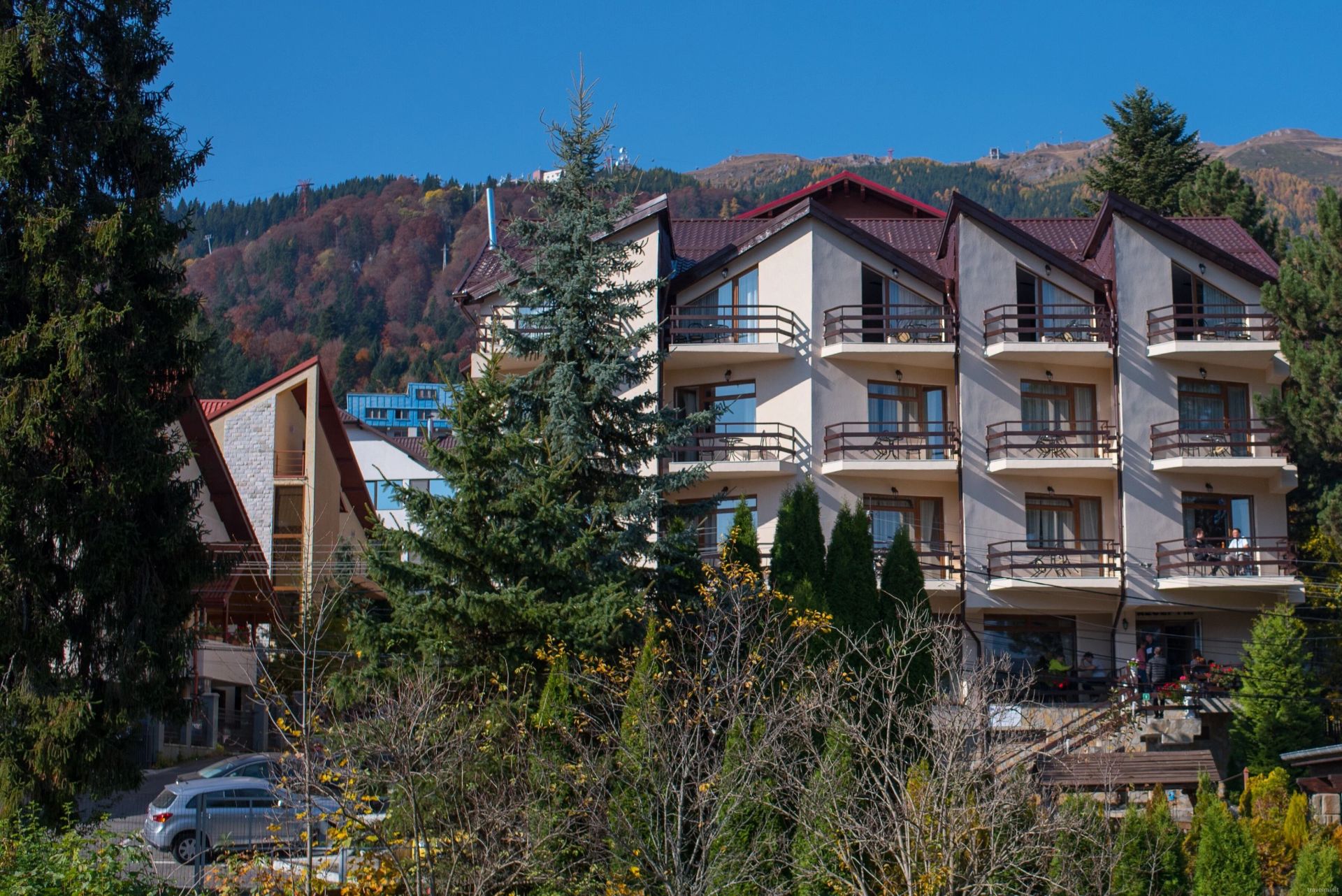
Hotel Marea Neagra Sinaia
RELAXARE SI CONFORT LA INALTIME! Daca doriti sa petreceti momente de relaxare, admirand spectaculoasa priveliste a Muntilor Bucegi, sau sa respirati aerul proaspat de munte, Hotel Marea Neagra reprezinta, cu siguranta, alegerea perfecta.Hotelul reuseste sa impresioneze, atat prin calitatea serviciilor sale, cat si prin calitatea si promptitudinea personalului, care va fi mereu la dispozitia dumneavoastra; serviciu receptie 24h din 24.Hotelul Marea Neagră este situat in cartierul Furnica, la o plimbare de 9 minute de Castelul Peleș și Grădinile Regale, precum și la o plimbare de 15 minute de Mănăstirea Sinaia. Oaspeții au la dispoziție unități de cazare cu baie privată, precum și WiFi gratuit în întreaga proprietate.Toate camerele spațioase de la Hotelul Marea Neagră au minibar, TV cu canale internaționale, baie privată cu duș și balcon. Majoritatea unităților oferă vedere la munții Bucegi.Oaspeții își pot savura micul dejun în confortul propriei camere sau într-un lounge de luat masa. Barul proprietății și recepția sunt deschise nonstop. Alte facilități includ o sală de conferințe și parcare gratuită, oferită în funcție de disponibilitate.Punctul de plecare al telecabinei către teleschiul Cota 1400 este situat la 1 km de clădire. O stație de autobuz se află la doar 25 de metri de proprietate, iar centrul stațiunii este la 1,5 km. Capacitatea de cazare este de 68 de locuri, dispuse in 34 camere (17 camere double matrimoniale si 17 camere double twin). La cerere putem oferi si paturi suplimentare. Copii pana la 7 ani beneficieaza de gratuitate, daca sunt folosite paturile existente, cu varsta peste 7 ani este obligatoriu patul suplimentar la costul de 90.00 RON/zi (mic dejun inclus). Fiecare camera dispune de: balcon, baie prevazuta cu cabina de dus si uscator de par, cablu tv, minibar, internet wireless; toate intr-un decor intim si calduros. Pentru ca ideile dumneavoastra sa prinda contur, chiar aici, in inima muntilor, sala de conferinte a hotelului este locul ideal; modern utilata (videoproiector, ecran proiectie, flipchart, consumabile, internet wireless, acces copiator) are o capacitate de 60 locuri. Hotelul beneficiaza si de o sala de mese de 70 locuri unde, la cerere, se pot organiza mese festive. Pretul camerei nu include taxa de salvamont in valoare de 6 lei/ persoana/ sejur, taxa de promovare turistica de 2% pentru serviciile de cazare si 0.5% pentru serviciile de alimentatie publica.Asteptam cu drag sa va petreceti vacanta alaturi de noi. Taxa de salvamont este fixă, 6 ron de persoană/sejur, indiferent de numărul de nopți.
FROM
290 RON / night
BEFORE YOU HIT THE ROAD
Weather conditions in Sinaia
Local forecast for Peleș Castle, Sinaia, Prahova

Real-time updated weather data
Much more to explore in this area
Nearby tourist attractions


Bran, Brașov County
Bran Castle
Situat pe strada General Traian Mosoiu nr. 28 din localitatea Bran, la 30 km de municipiul Brasov; construit in anul 1377 in scop militar; in anul 1395, este...
22.0 km

Prahova, Prahova County
Sinaia Resort
Situata pe valea superioara a Prahovei, la poalele Muntilor Bucegi (Carpatii Meridionali), la o altitudine ce variaza intre 798-971 m; este una din cele mai...
1.0 km

Brasov, Brașov County
Black Church
Situata in curtea Honterus nr. 2 din municipiul Brasov; construita intre secolele XIV - XV; o inscriptie din interior il atesta ca prim ctitor pe Thomas; din...
32.1 km

Brasov, Brașov County
Prejmer Fortified Church
Situata in localitatea Prejmer, la 15 km de municipiul Brasov; cea mai mare biserica fortificata din sud-estul Europei; construita in secolul al XIII-lea; are...
44.1 km

Prahova, Prahova County
Castelul Pelișor
Situat in parcul Castelului Peles, pe Valea Prahovei; ridicat intre anii 1899 si 1902; in 1903 a devenit resedinta de vara a principilor mostenitori;...
0.3 km

Brasov, Brașov County
Parcul natural Munții Bucegi
Situat in Muntii Bucegi, se intinde pe raza comunelor Rasnov, Bran, Moeciu; zona Muntilor Bucegi a fost propusa pentru protejare in anul 1936, dar initiativa s-...
17.0 km

Râșnov, Brașov County
Cetatea Râșnov
Situata in orasul Rasnov, la 15 km de municipiul Brasov; construita in secolele XIII - XIV de catre locuitorii zonei, in scopul apararii impotriva atacurilor...
26.3 km

Prahova, Prahova County
Salina Slănic Prahova
Situata in localitatea Slanic Prahova; lucrarile miniere de deschidere a minei "Unirea" au inceput in anul 1938, iar exploatarea sarii din aceasta mina s-a...
34.1 km

Brasov, Brașov County
Stațiunea Poiana Brașov
Situata la poalele muntelui Postavaru, la 12 km de municipiul Brasov; amplasata la altitudinea de 1.030 m, statiunea turistica Poiana Brasov a fost infiintata...
26.1 km

Brasov, Brașov County
Parcul Național Piatra Craiului
Situat in Carpatii Meridionali;include Creasta Pietrei Craiului in totalitate si spatiile din culoarele intramontane limitrofe, Rucar - Bran si Rucar -...
31.8 km

Brasov, Brașov County
Stațiunea Predeal
Situata pe Valea Prahovei, intre raurile Prahova si Timis, la 25 km de municipiul Brasov; amplasata la 1.100 m, este cea mai inalta asezare urbana din Romania;...
16.4 km

Prahova, Prahova County
Cazinoul din Sinaia
Situat in parcul "Dimitrie Ghica" din localitatea Sinaia; reprezinta si astazi unul dintre edificiile - simbol ale statiunii; construit in timp record, intre...
1.0 km
Cultural life and traditions
Events near Peleș Castle
Medieval festivals, traditional fairs, concerts and recommended local activities in Muntenia (Wallachia).

Istorie și Arhitectură Regală

Sinaia, Jud. Prahova
Zilele Regalității și Patrimoniului Văii Prahovei
Conferințe istorice deschise, tururi tematice de arhitectură regală, proiecții documentare și expoziții foto de epocă.
WHEN
10 - 12 Mai 2026


Gastronomie și Oenologie
Dealu Mare, Jud. Prahova
Festivalul Vinului Prahovean pe Drumul Vinului
Degustări ghidate de Fetească Neagră pe faimosul Drum al Vinului, vizite în crame istorice și întâlniri cu oenologi de top.
WHEN
În fiecare weekend (Septembrie - Octombrie)
Drumeții și Aventură
Masivul Bucegi, Jud. Prahova
Tur Ghidat Montan în Masivul Bucegi
Trasee montane ghidate de salvamontiști către punctele panoramice emblematice și cascade alpine spectaculoase.
WHEN
Zilnic în sezon (Iunie - Octombrie)
On foot, exploration gains depth
Discover the surroundings and local geography
Explore trails, terrain and natural landmarks around Peleș Castle.

Guides and practical tips
Useful travel articles
Travel guides, practical tips and itineraries for Muntenia (Wallachia).

Travel guide
Top 5 Atracții Turistice și Trasee Montane în Zona Moieciu - Bran
Descoperă cele mai spectaculoase peisaje carstice, chei adânci și cetăți medievale din imediata apropiere a stațiunii Moieciu.

Travel guide
Ghid de Drumeție: Traseul Moieciu de Sus spre Platoul Bucegi
Un itinerariu montan de o frumusețe rară ce urcă din Valea Băngăleasa spre Poiana Guțanu și crestele maiestuoase ale Bucegilor.

Travel guide
Castelul Bran: Istorie, Legende și Secrete Medievale
Află adevărata poveste a fortăreței medievale din Pasul Bran, reședința de suflet a Reginei Maria a României.
THE JOURNEY STARTS WITH AN IDEA
The next story is on the way.
From the first stop to the last stay, make room for a new Romania.
