


PLACE OF WORSHIP · OLTENIA (LESSER WALLACHIA)
Horezu Monastery

Valcea, Vâlcea County
Add location to your trip planner.

Practical access information

VISITING HOURS
Mon: 12:00–17:00 · Tue–Sun: 09:00–17:00 (summer until 20:00)

TICKET PRICE
Adults: 45 RON · Students: 11 RON · Seniors: 23 RON · Guided tour included

RECOMMENDED VISIT DURATION
2–3.5 hours
Visitor information and guide
 Navigate with Google Maps

ABOUT HOREZU MONASTERY
Captivating Introduction and Universal Value
In the heart of Oltenia, where the Căpățânii Mountains raise their peaks toward the sky and where the silence of a wide meadow is disturbed only by the song of the little owls — those nocturnal birds whose cry gave the place its name — rises one of the most brilliant achievements of European art from the late 17th century: Hurezi Monastery, also known as Horezu Monastery. Located in the village of Romanii de Jos, just a few kilometers north of the town of Horezu and approximately fifty kilometers west of Râmnicu Vâlcea, on national road DN 67 connecting Râmnicu Vâlcea to Târgu Jiu, this foundation represents not only the most remarkable achievement of the martyr prince Constantin Brâncoveanu, but also a unique monument in world cultural heritage, inscribed in 1993 on the prestigious UNESCO World Heritage List.
For the European traveler stepping through the massive wooden gate for the first time, reinforced with iron and preserved in its original 17th-century form, the experience is overwhelming. Before the eyes unfolds an architectural ensemble of exceptional coherence and elegance, combining the millennial Byzantine tradition with the refinement of the Italian Renaissance and the decorative exuberance of the Baroque, in a synthesis that art historians have rightly called the "Wallachian Renaissance" or the "Romanian Renaissance." UNESCO, through the inscription of this monument in 1993, officially recognized what travelers and European scholars had known for centuries: Hurezi Monastery is a masterpiece of human creation, remarkable for the purity and balance of its architecture, the richness of its carved details, the treatment of religious compositions, the votive portraits, and the decorative painting works.
The universal value of this place, however, is not limited to its artistic dimension. Hurezi Monastery is the living witness of an era when South-Eastern Europe was the battleground of great empires — Ottoman, Habsburg, and Russian — and in which a Wallachian prince, Constantin Brâncoveanu, succeeded, through diplomacy and culture, in transforming a vassal province into a spiritual and artistic center of European stature. Here was born the Brâncovenesc style, the only truly original artistic style of Romania, which influenced architecture, painting, and sculpture throughout Wallachia until after 1800. Here operated a school of painting that polarized all the creative forces of the era, a school of copyists that produced exceptional manuscripts, and a humanist library unique in South-Eastern Europe at the beginning of the 18th century — a library that housed works printed in Basel and Paris, Greco-Latin editions from the time of Louis XIV, and manuscripts that linked the Byzantine tradition with the great humanist currents of Western Europe.
Historical Roots and Major European Connections
To fully understand the grandeur of Hurezi Monastery, one must delve into the historical context of Europe at the turn of the 17th-18th centuries, a period marked by profound political, religious, and cultural transformations. At that time, Wallachia — a Christian Orthodox principality under the suzerainty of the Ottoman Empire — was ruled by Constantin Brâncoveanu, one of the most skilled diplomats of his era. His reign, which extended from 1688 to 1714, represented an epoch of glory and unprecedented cultural flourishing in Romanian history, comparable to the golden age of the Italian Renaissance or the Elizabethan era in England.
Constantin Brâncoveanu was a man of the world, raised in the spirit of European humanism by the stolnic Constantin Cantacuzino, one of the greatest scholars of the time, belonging to a family with roots in the Byzantine imperial dynasty of the Cantacuzino. Through his mother, Stanca, daughter of postelnic Constantin Cantacuzino, the young prince was related to the Byzantine emperors, and through his education, to the great European courts. His correspondence, partially preserved, reveals diplomatic relations with the emperors of Vienna (Habsburgs), with the Tsar of Russia, with the King of France (Louis XIV), with the King of Poland, with the Venetian Republic, with the Sovereign Pontiff of Rome, with the Orthodox patriarchates of Constantinople, Alexandria, Antioch, and Jerusalem, with Greek scholars, and with ambassadors of the great powers (English, Dutch, Habsburg, and Venetian) accredited in Constantinople.
Strategically located on the border between the Ottoman Empire and the Western Christian world, Wallachia played a crucial role in European politics. Brâncoveanu pursued a remarkably balanced policy between the Ottoman Porte, which demanded tribute and submission, and the Christian powers — especially the Habsburg Monarchy, which had just recovered Hungary and Transylvania from the Ottomans, and Tsarist Russia, expanding toward the Black Sea. This subtle diplomacy, based on an extensive network of agents and couriers, transformed Brâncoveanu into a master of foreign policy, nicknamed the "prince of gold" (altın bey) for the huge sums he offered to Ottoman officials to secure his throne.
The place chosen for the foundation was an estate of the Brâncoveanu family, purchased by Constantin in 1685, three years before ascending the throne, when he held the office of Great Spătar. There already existed a small hermitage with the patron saint Saint John the Baptist, cared for by the hegumen Ioan. In the second year of his reign, in 1690, Brâncoveanu laid the foundation of the new monastery, as the founding charter states: "In the second year of our reign, we laid the foundation and began to build a monastery..." The works were carried out between 1690 and 1697, supervised by relatives of the founder: first Pârvu Cantacuzino, great stolnic and at the same time architect and church painter, who, dying in 1691, was succeeded by Cernica Știrbei, former great armaș.
The craftsmen who created this masterpiece — Manea, the foreman of the masons, Istrate the carpenter, and Vucasin Caragea the stonemason — are immortalized through painting in the porch of the main church, a proof of the founder's gratitude toward their art. They were inspired by the universalist spirit of Brâncoveanu and his desire to create a "princely lavra" that would rival the great monasteries of the Christian East — with Mount Athos, with Mount Sinai, with the monasteries of Constantinople and Jerusalem.
Brâncoveanu's generosity knew no bounds. His money and donations flowed to all the Orthodox patriarchates and monasteries of the East. On Mount Athos, he granted financial aid to nine of the twenty Athonite monasteries, including the Great Lavra. He built or restored churches on Mount Sinai (Saint Catherine, 1700), in Constantinople (Saint Nicholas in the Galata district, Panaghia, 1697; Panaghia Camariotissa on the island of Halki), on the island of Proti (Transfiguration, 1703), in Trebizond (Sumela monastery), in Georgia, in Epirus, in Lebanon. This patronage activity places Brâncoveanu among the great Christian founders of Eastern Europe, alongside the Tsars of Moscow or the kings of Poland, defending Orthodoxy against Ottoman pressures, but also against Catholic unionism and Reformed Protestantism from Transylvania.
What makes Hurezi Monastery a truly European monument is precisely this cultural synthesis it embodies. The Brâncovenesc style, born here, is a bridge between West and East. Its architecture combines the ordering principles of the Italian Renaissance — proportionality, clear geometry, symmetry — with the typology of the great monasteries of Mount Athos and with Venetian and Ottoman influences. The strongest influence enriching the post-Byzantine tradition of the era is exerted by the so-called Italo-Cretan School, developed in Crete during Venetian domination, which brought elements of the late Renaissance and Western Baroque into Orthodox art.
The porch of the main church, with its ten carved stone columns and capitals inspired by the Renaissance style, recalls the loggias of Venetian palaces on the Canal Grande — of Ca' d'Oro or of the palaces on the lagoon shore — while the decoration with trilobed arches and intertwined vegetal motifs betrays Ottoman and Persian influences. The mural painting, executed between 1692 and 1694 by the Greek master Constantinos — founder of the famous Hurezi school of painting — together with Ioan, Andrei, Stan, Neagoe, and Ioachim, presents a unique fusion between the Byzantine iconographic tradition and the aesthetic of the Italian Renaissance, with figures dressed in garments inspired by Cretan art, enriched with vegetal ornaments of Western Baroque influence.
This Hurezi school of painting polarized at one point all local creative forces, giving birth to a current and an artistic community within which the Brâncovenesc style crystallized. From here, the masters trained at Hurezi went on to paint the monasteries of Polovragi, Mamu, Surpatele, Cozia, Govora, as well as the hermitages of Feldelșoiu and Sărăcinești, spreading throughout Oltenia and Muntenia the artistic language born in this sub-Carpathian meadow.
The monastery library, gathered by the founder and the resident scholars, was at the beginning of the 18th century one of the richest and most valuable in South-Eastern Europe. It contained classical works of antiquity — Homer's Odyssey (printed in Basel in 1541), Euripides' Tragedies (Basel, 1551), the Novellae added by Justinian I the Great to his Codex (Paris, 1568) —, works by Byzantine historians (Anna Comnena, Laonic Chalcocondil, Ioan Zonaras, Constantin Manasses), Greco-Latin editions from Du Cange's collection printed under Louis XIV, as well as 38 manuscripts and 393 printed books in various languages, raised by the scholar Gr. A. Tocilescu in 1885 for the National Museum. Among these were the famous Brâncoveanu calendars from the years 1693, 1695, 1701, and 1703, as well as a beautiful memorial book. An inscription from 1708, above the door of the library building, states: "Library of desired spiritual nourishment, this house of books invites to wise abundance." This library was unique in South-Eastern Europe at the beginning of the 18th century, a true center of humanism that linked the Byzantine tradition with the great intellectual currents of Western Europe.
Not least, the direct Western artistic contribution must be mentioned: the portrait of Brâncoveanu painted by the Venetian Alessandro dalla Via, active in Venice, represents the prince in the typical posture of monarchs from the early Baroque era, with Oriental elements in the clothing — a proof of the interest that European courts showed toward this Wallachian prince. Moreover, Brâncoveanu had connections with numerous European artists and intellectuals, and at his court in Bucharest and at Hurezi, masters brought from Italy, Greece, and the Romanian Lands were active.
Architectural Masterpiece and Artistic Heritage
The monastic complex of Hurezi extends over an area of approximately three hectares and represents the most extensive ensemble of medieval architecture preserved in Wallachia, unique not only in Romanian architecture but also in that of South-Eastern Europe. The ensemble comprises several components, each of exceptional artistic value, arranged in a unitary architectural conception that forms almost a cross — the main church being in the center, and the other places of worship on the four sides.
The main church, with the patron saints the Holy Emperors Constantine and Helen — celebrated on May 21, the choice of patron being closely linked to the founder's name —, was built between 1690 and 1693 on a trilobed plan, developing the model of the Episcopal Church of Curtea de Argeș toward more slender forms. The consecration took place on September 8, 1693, in the presence of Metropolitan Teodosie. The church has a length of 32 meters and a height of 14 meters, with two tall polygonal turrets — one on the naos and one on the narthex. The specific and innovative element is the open porch, supported on ten short stone columns, with Corinthian capitals inspired by the Renaissance style, united in arches connected by wooden cords. Above the arches is a vault composed of three spherical calottes, and above the entrance rises the bell tower, which houses four historic bells, weighing between 300 and 1000 kilograms, three of them bearing the prince's name inscribed.
The church façades are decorated with superimposed frames, separated by a rich band, and windows adorned with the twisted rope motif. The doorway frame is of carved marble, and the inscription contains the coat of arms of Wallachia and that of the Cantacuzino family. The interior of the church houses a valuable ensemble of mural painting executed between 1692 and 1694, considered one of the most important post-Byzantine fresco ensembles in South-Eastern Europe. The painting includes scenes from the Old and New Testaments, ecumenical councils, saints, and, remarkably, votive paintings that represent the founder Constantin Brâncoveanu and his entire family — on the east wall of the narthex, the Brâncoveni boyars on the west wall to the right, and the Cantacuzino boyars on the west wall to the left. The unique gallery of these votive portraits presents people with a broad political horizon and scholars, from Șerban Voievod and Constantin Cantacuzino the Stolnic, to Constantin Brâncoveanu and his learned sons.
Inside the church is the priceless iconostasis carved in linden wood and gilded with gold, a piece of unparalleled value due to the fact that the original icons from the founder's time have been preserved. The monumental altar screen, made in 1694, is a donation of Lady Maria Brâncoveanu, the prince's wife. Alongside the iconostasis, the beautifully carved wooden princely chair (throne) stands out, bearing the Cantacuzino coat of arms, the stalls, and a rich chandelier, all from the founder's time. The silver candlesticks — one brought from Venice, another from Vienna — are also donations of Lady Maria, each arm bearing an ostrich egg. In the church there is also a silver casket worked with precious stones containing the relics of some saints — Saint Panteleimon, Saint Andrew the Apostle, Saint Procopius, Saint Merunia — brought by the prince himself or by Filip the Deacon.
The church was destined to become the necropolis of the Brâncoveanu family and its lineage. In the narthex is an impressive tomb, made of marble and covered with a carved slab, prepared for the princely founder, but which never fulfilled its purpose — Brâncoveanu being secretly buried at the Saint George Church in Bucharest (and part of his relics were brought to Hurezi in 2014, on the occasion of the 300th anniversary of his martyrdom). The first hegumen of the monastery, Archimandrite Ioan, is buried in the main church.
The Infirmary (hospital church), founded by Lady Maria in 1696 and finished in 1699, was painted by the Romanian masters Preda Nicolae and Ianache. It has a simple rectangular plan, with a polygonal altar apse and a polygonal turret on a cubic base. On the west side is an open porch supported on stone columns, and the fresco painting, executed by Preda and Marin in 1696-1697, is preserved in optimal conditions. The iconographic theme does not lack the Holy Emperors Constantine and his mother Helen, as well as representations of the Brâncoveanu family.
The Hermitage of the Holy Apostles, located about 50 meters north of the main church, was founded in 1698 by the great hegumen Ioan the Archimandrite and painted by Iosif and Ioan in 1700. The Hermitage of Saint Stephen, raised in 1703 after the name of the prince's eldest son, was painted by Ianache, Istrate, and Harinte. The Paraclete, situated in the middle of the west side and raised in 1697, is considered one of the most representative monuments of the Brâncovenesc era, having a remarkable fresco painting executed by the masters Preda and Marin.
A special architectural ornament, unique in all Romanian monasteries, is the Belvedere of Dionisie Bălăcescu, built between 1725 and 1753 by the hegumen Dionisie Bălăcescu, a capable abbot and a true founder, a lover of art. Made by the stonemason Iosif, the belvedere is placed on the west side of the cells, toward the southern extremity, and is decorated with columns and balustrades carved in stone, richly ornamented with vegetal motifs — a true stone lacework, in which heraldic insignia are inlaid. Resolved volumetrically and sculpturally in the Baroque spirit, the belvedere has become a model illustrating post-Brâncovenesc art and architecture.
In the former princely houses — situated on the south side, on the upper floor, composed of rooms beautifully vaulted with spherical calottes on long arches, supported on monumental stone columns with carved capitals and bases — an exceptional museum collection is exhibited today. The Ecclesiastical Museum of Hurezi Monastery, arranged in three rooms, houses old icons painted on wood, rare books, silver candlesticks, liturgical textiles, embroideries, and other cult objects, mostly dating from the 16th-19th centuries. Among the exceptional pieces is an epitrachelion worked in the Hurezi embroidery workshop, decorated with six registers illustrating the Deesis and the Mother of God on the throne, the Apostles Peter and Paul alongside the Holy Emperors Constantine and Helen, hierarchs of the Church, the four evangelists and military saints, as well as Constantin Brâncoveanu with his sons Constantin and Ștefan and Lady Maria with her sons Radu and Matei — a sumptuous piece, richly decorated with vegetal and floral motifs, made with gilded silver thread and pearls.
Legends, Personalities, and Turning Points
The story of Hurezi Monastery is inseparably linked to the tragic destiny of its founder, Constantin Brâncoveanu, whose life and death profoundly marked the European consciousness of the Christian East. According to local tradition, the name "Hurezi" comes from huhurezi — nocturnal birds with particularly colorful plumage — which sang on the nights when the craftsmen paid by Brâncoveanu worked on raising the monastery. It is said that, because of the vigilance of the Turks, the builders were forced to work more at night, when only the cries of these birds could be heard, and the silence of the place was disturbed only by their song.
The inscription above the door of the main church, partially preserved, expresses the holy wish of the founder, borrowing the words of the Psalmist: "I will not enter into the tent of my house, I will not go up onto the couch of my bed, I will not give sleep to my eyes and slumber to my eyelids and rest to my temples, until I find a place for the Lord and a dwelling for the God of Jacob." This prayer, uttered by a prince who knew that his destiny was uncertain in the face of Ottoman suspicions, acquires a prophetic dimension.
The drama of Brâncoveanu's life was consummated in Constantinople, capital of the Ottoman Empire. In April 1714, around the Easter holiday — a moment with strong symbolic charge — the prince was deposed (mazilit) and taken to Constantinople together with his entire family and his faithful counselor, Ianache Văcărescu. There he was subjected to interrogation, torture, and humiliation, being accused of secret relations with the enemies of the Porte — with the Habsburgs of Vienna, with Tsarist Russia, with Poland, and with Venice — of correspondence with Vienna and Moscow to which he would have provided information about the Ottomans, of purchasing estates and building palaces abroad, of depositing money in the banks of Vienna and Venice, and even of minting coins bearing his image.
On August 15, 1714, on the day he turned 60 — and which coincided with the feast of the Dormition of the Mother of God, the patroness of his Hurezi foundation — Constantin Brâncoveanu was executed by beheading in Constantinople, together with his four sons: Constantin (20 years old), Ștefan (18 years old), Radu (11 years old), and Matei (3 years old), as well as with the counselor Ianache Văcărescu. Before the execution, they were offered pardon if they accepted to convert to Islam — an offer they refused with dignity, remaining firm in the Orthodox faith. Their bodies were thrown into the sea, and a few faithful fishermen managed to recover the prince's body, which was secretly buried at his foundation on the island of Halki.
This martyrdom transformed the Brâncoveanu family into a symbol of Christian resistance in the face of Ottoman oppression, and his memory remained alive in the European consciousness of the Orthodox East. In June 1992, the Romanian Orthodox Church canonized Constantin Brâncoveanu and his four sons, together with the counselor Ianache, establishing August 16 as the feast day in the Orthodox Calendar. In 2014, on the occasion of the 300th anniversary of the martyrdom in Constantinople, part of the prince's relics were brought to Hurezi Monastery, thus marking his spiritual return to the foundation he had loved so much.
After the founder's death, the monastery experienced troubled periods. During the Austro-Turkish war of 1716-1718, then following the earthquake of 1738, and especially during the Russo-Turkish war of 1787-1789, when the Romanian Principalities were transformed into a battlefield, the Hurezi ensemble was occupied by Ottoman troops who transformed the church, the infirmary, and the other hermitages into a prison and horse stable. The original frescoes were blackened by the smoke of fires lit by soldiers, requiring subsequent meticulous restorations.
After 1827, when the great ban Grigore Brâncoveanu, the prince's great-grandnephew, undertook the necessary repairs, and after the extensions carried out by the hegumen Hrisant between 1829 and 1854, the monastery was restored in 1907-1912 and again in 1954-1964. A major restoration took place between 1960 and 1978, when the former princely houses were transformed into a museum. In 1872, the monastery passed from the community of monks to the community of nuns, remaining to this day an active female monastic settlement, cared for with holiness by the community of nuns.
A remarkable personality was the hegumen Dionisie Bălăcescu (1753), to whom is owed the Belvedere that bears his name — a unique construction in Romanian monastic architecture, a brilliant example of Baroque art in stone. Another memorable abbot was Archimandrite Ioan, the first hegumen of the monastery, who had a direct participation in the construction of the ensemble and who founded the Hermitage of the Holy Apostles.
Practical Visiting Guide and Today's Tourist Experience
Hurezi Monastery is today an active monastic settlement, a community of nuns, open to visitors from all over the world. For the European traveler who wishes to discover this world heritage monument, the experience begins even on national road DN 67, which connects Râmnicu Vâlcea to Târgu Jiu. At the exit from the town of Horezu — known throughout the world for its ceramic tradition, also included in UNESCO's intangible heritage — signs lead toward the village of Romanii de Jos and toward Strada Mănăstirii. Access is facilitated for any car, and parking is available in the access area, although on weekends, holidays, and in the tourist season it can become crowded.
Entry to the monastery courtyard is free, and voluntary donations are welcome and contribute to the maintenance of the complex. A small fee is charged for photography inside (approximately 5 lei). The visiting hours are usually daily between 8:00-20:00 in summer and 9:00-17:00 in winter, and the museum schedule — located in the former princely houses on the south side, on the upper floor — is indicative between 09:00 and 19:00, it being recommended to check upon arrival. For additional information, you can contact the monastery by phone at 0250.860.071 (contact person: Mother Ecaterina).
The recommended time for a complete visit is a minimum of 60-90 minutes, however, to fully savor the entire complex — the main church, the infirmary, the two hermitages, the paraclete, Dionisie's belvedere, and the museum — it is advisable to allocate between one and a half and two hours. Visitors are asked to maintain decent attire, appropriate for an active Orthodox place of worship, and to respect the photography rules displayed on site. Participation in religious services — especially at Vespers or the Liturgy — offers a special spiritual experience, allowing the listening of Byzantine chants in a 17th-century architectural setting.
The visitor's experience begins by passing under the vault of the bell tower, through the great wooden gate reinforced with iron, preserved in its original form. In the inner courtyard, a slow walk reveals the exceptional coherence of the ensemble: the porches with arches, the carved columns, the windows with twisted rope motifs, the polygonal turrets rising toward the sky. The main church, with the patron saints the Holy Emperors Constantine and Helen, impresses through its harmonious proportions and the decorative richness of the façades. Inside, the original frescoes from 1692-1694 create an atmosphere of profound piety, while the gilded linden iconostasis, the princely chair with the Cantacuzino coat of arms, and the silver candlesticks — brought from Venice and Vienna — reveal the refined taste of the founder and his connections with the great cultural centers of Europe.
Visiting the infirmary, less known but equally artistically valuable, offers the opportunity to admire the fresco painting of the masters Preda and Marin. The Hermitage of the Holy Apostles and the Hermitage of Saint Stephen, located nearby, complete the image of a monastic complex of exceptional scope. Dionisie's Belvedere, with its stone lacework and inlaid heraldic insignia, is an architectural surprise that delights the eye of any art lover. The museum, arranged in three rooms in the former princely houses, houses collections of icons on wood, rare books, cult objects, and pieces of liturgical embroidery, mostly dating from the 16th-19th centuries, offering a perspective on the patrimonial richness accumulated over the centuries.
The main feasts worth attending are the monastery's patronal feast — May 21, the Holy Emperors Constantine and Helen — and the day of Saint Constantin Brâncoveanu — August 16, when he is celebrated together with his sons and the counselor Ianache. Also, participation in the Vespers service or the Liturgy offers the opportunity to listen to Byzantine chants in an authentic setting, away from tourist crowds.
Hurezi Monastery integrates into an exceptional cultural route of Sub-Carpathian Oltenia. Nearby are numerous other monasteries and hermitages of value: Cozia Monastery, Govora Monastery, Bistrița Monastery, Arnota Monastery, Dintr-un Lemn Monastery (with the first stone church built of wood in the world), Pătrunsa Monastery, Polovragi Monastery, Băile Olănești Resort, and Băile Govora Resort. The town of Horezu, with its ceramic tradition inscribed in UNESCO's intangible heritage, offers the opportunity to purchase traditional ceramic objects, made by local masters using secular techniques.
For those who wish to explore more deeply the European connections of this place, it is recommended to visit the city of Râmnicu Vâlcea (approximately 50 km east), with the County History Museum and numerous other historical monuments, or the city of Târgu Jiu, with the sculptural ensemble created by Constantin Brâncuși — another giant of Romanian culture who, like Brâncoveanu, succeeded in creating a bridge between local tradition and universal art.
Hurezi Monastery remains, after all these centuries, a place where the history of Europe — with its great empires, with its Renaissance, with its Baroque, with its religious drama and its humanist aspirations — meets the profound spirituality of the Orthodox East. For today's European visitor, stepping through the gate of this monastery means entering a sanctuary of common cultural memory, where every stone, every fresco, every icon, and every old book speaks of a civilization that knew how to combine faith with beauty, tradition with innovation, East with West.
Media gallery
Discover Horezu Monastery in pictures

2 photos · Architecture, courtyards and captivating details


Image source: Wikimedia Commons · Public domain photos · Free license
STAY A FEW DAYS, DISCOVER THE MAGIC
Stays near Horezu Monastery

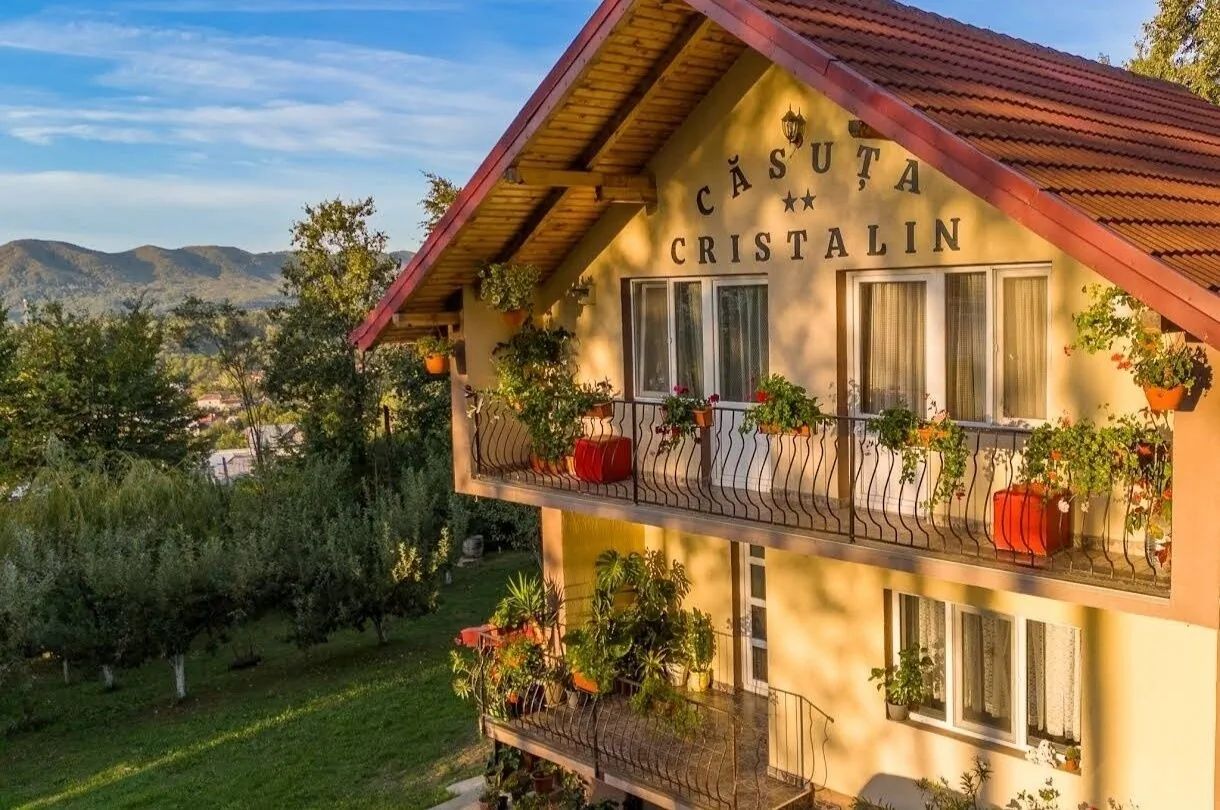
Casă de Vacanță · 2 stars

Horezu, Horezu County · 2.4 km
Căsuța Cristalin Horezu
Rezervă un sejur la Casuța Cristalin și ai propria ta casuță în mijlocul naturii! Evadează din atmosfera agitată a orașului și alege să te trezești cu triluri de păsări să te încarci cu energie pozitivă. Căsuța Cristalin este o oază de liniște la poale de munte în Oltenia, Depresiunea Horezu, jud. Vâlcea, un loc creat cu suflet, pasiune și drag în care să vă simțiți ca acasă. Se închiriază doar integral (minim 2 nopți) Oferim INTIMITATE fiind o inchiriere la cheie a întregii locații veți sta singuri fără proprietari, fără alți turiști sau vecini apropiați 950 lei/noapte/întreaga căsuță (închiriere la cheie) fără proprietari în locație sau alți turiști Plata poate fi făcută și cu card de vacanță/vouchere. Suntem o unitate clasificată de către Ministerul Turismului și emitem factură sau bon fiscal. Locația este pet-friendly, acceptăm orice animăluț indiferent de talie fară costuri suplimentare Vă punem la dispoziție: 3 dormitoare duble, două cu ieșire pe balcon (paturi mari, TV în cameră, prosoape, ventilatoare pentru confort maxim in sezonul cald) La cerere, vă punem la dispoziție paturi suplimentare în dormitoare (fără costuri suplimentare) Living spațios cu Smart TV, canapea mare (la cerere, mai pot să doarmă 2 persoane pe canapea) Bucătărie open space complet mobilată și utilată (veți găsi absolut tot ce este nevoie într-o bucătărie) Două băi unde veți găsi produse de curățenie și de igienă personală de cea mai bună calitate (una pe fiecare etaj) Foișor acoperit cu grătar, chiuvetă, TV, boxe, router wireless, veselă, masă cu scaune și fotolii Ceaun și un loc special amenajat pentru el cu vatră refractară și pirostrie / lemne pentru grătar și ceaun la discreție din partea casei (nu asigurăm cărbuni pentru grătar) Livadă cu pomi fructiferi (se pot culege fructe pentru consum) Balansoar rustic mare și foarte încăpător confecționat din bușteni de brad / Șezlonguri confortabile pentru relaxare Diverse jucării care să țină copiii afară la joacă (, , , ) Mobilier rustic de grădină (măsuțe, băncuțe etc.) O curte mare și îngrijită ideală pentru copiii dornici de joacă în aer liber Traficul auto în zonă este aproape inexistent astfel oaspeții se pot bucura în liniște de natură și peisaj Semnal Wi-Fi în toată locația (interior, foișor, curte) Încălzire centrală cu setarea temperaturii dorite în fiecare cameră (centrală proprie) Informații despre obiectivele turistice din zonă Obiective turistice în zona: Horezu este o localitate de munte ce se află poziționată la mică distanță de două stațiuni montane ️ (Rânca și Vârful Roman) cu foarte multe obiective turistice și mănăstiri cea ce face ca această zonă să fie o destinație de concediu ideală atât iarna cât și vara. Stațiunea montană Vârful Roman (21 km) ️ Stațiunea montană Rânca (55 km) ️ Transalpina - Drumul Regelui (60 km) Ceramica de Horezu (1 km) cu posibilitatea de a vedea cum lutul prinde viață și chiar de a experimenta această tehnică Muzeul Trovanților (6 km) Căsuța Răsturnată (17 km) Castelul Vrăjitoarelor (17 km) Pădurea Colorată (16 km) Cosmobaza Arca(26 km ) Cula Duca (5 km) Salina Ocnele Mari (45 km) Parc aventura Cerna (18 km) Defileul Cheile Bistriței (13 km) Peștera Muierilor (28 km) Peștera Polovragi (29 km) Peștera Liliecilor (16 km) Ștrandul cu apă iodată Băile Govora (23 km) Ștrandul cu apă sărată Ocnele Mari (34 km) Poarta Sărutului (70 km) Coloana Infinitului (68 km) Mănăstiri în zonă: Mănăstirea Horezu (3 km) Mănăstirea Bistrița (15 km) Mănăstirea Arnota (17 km) Mănăstirea Surupatele (28 km) Mănăstirea Polovragi (29 km) Mănăstirea Pătrunsa (30 km) Mănăstirea Govora (33 km) Mânăstirea Dintr-un Lemn (33 km) Vă așteptăm cu drag!
FROM
280 RON / night

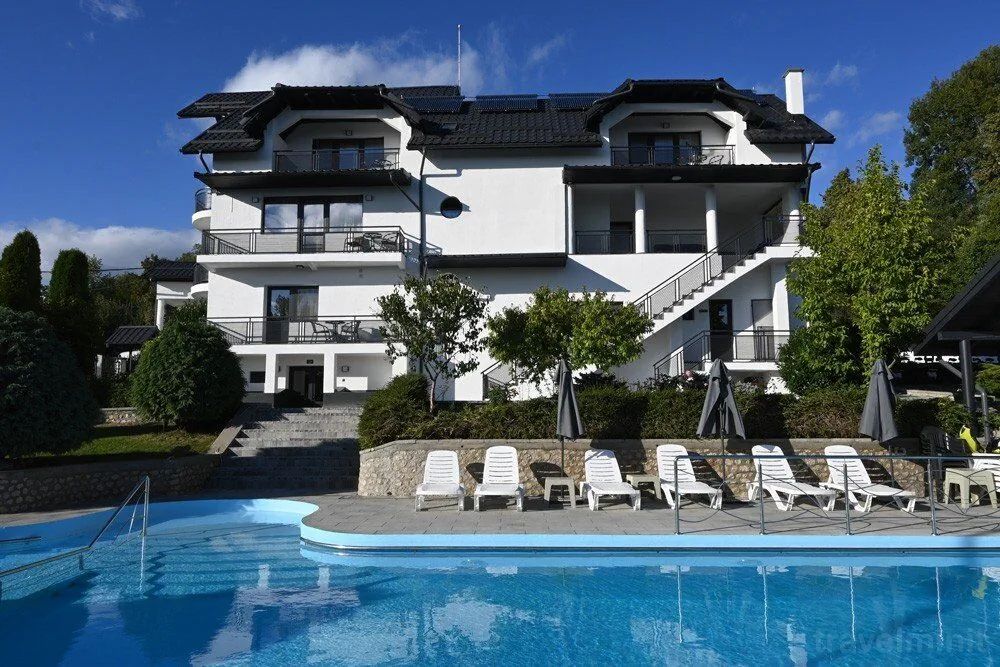
Pensiune · 3 stars
Horezu, Horezu County · 2.5 km
Pensiunea Casa YDA Horezu
Pensiunea Casa YDA din Horezu, Vâlcea, vă oferă o experiență de cazare deosebită într-un cadru modern și primitor. Cu o capacitate de 98 de locuri, dispunem de camere duble, camere deluxe, apartamente și căsuțe unice în copac, fiecare cu baie proprie și dotări complete. În cadrul pensiunii veți găsi o piscină exterioară, teren de tenis și fotbal, loc de joacă pentru copii, saună, ciubăr și restaurantul nostru Sara Cafe. Indiferent de anotimp, Casa YDA vă oferă tot confortul de care aveți nevoie pentru o vacanță de neuitat în inima județului Vâlcea, la câțiva pași de Mănăstirea Horezu, monument UNESCO.
FROM
240 RON / night
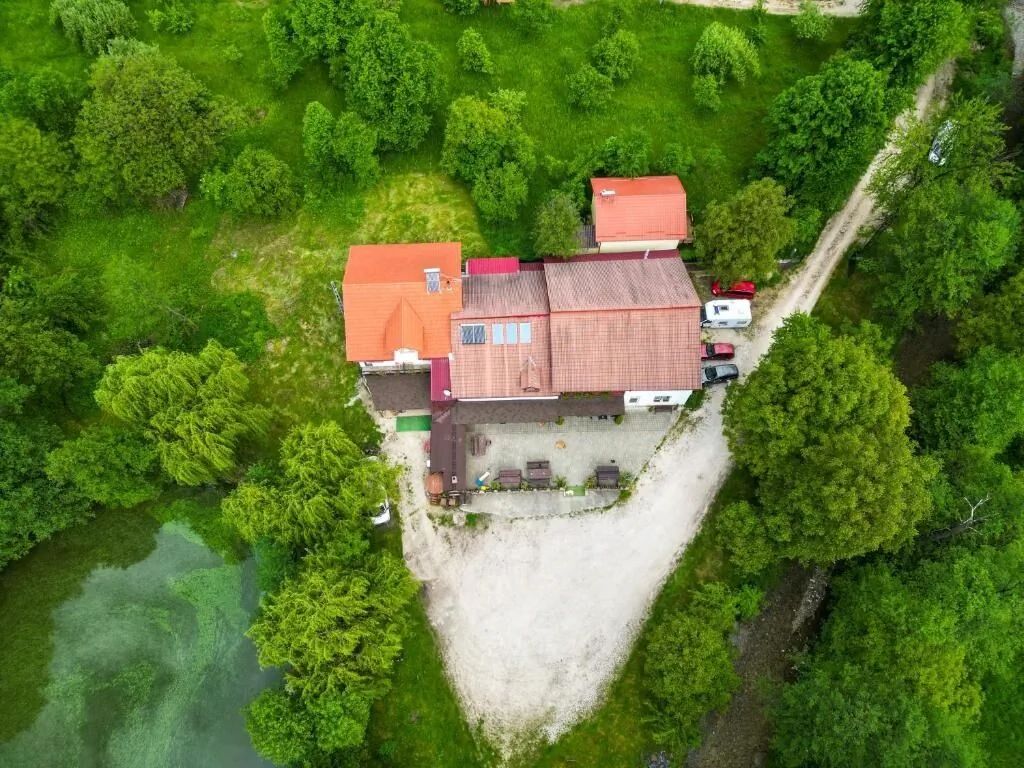
Pensiune · 2 stars
Horezu, Horezu County · 2.8 km
Pensiunea Broscuța Horezu Vechi
Camere, serviciiPensiunea Broscuța Horezu Vechi Horezu va intampina cu 6 camere confortabile si placut amenajate. Proprietatea ofera parcare gratuita. Clientii pot beneficia de servicii wellness. Pentru detalii va rugam consultati pagina de date. Acces la internet wireless este disponibil la pensiune. Mai multe informatii despre serviciile unitatii de cazare (inclusiv cele contra cost) si despre dotarea camerelor gasiti in fisa de mai jos. Servicii de masăTarifele afisate se refera numai la cazare. PlatăPlata se poate efectua prin urmatoarele modalitati: numerar, card de vacanță, card de vacanță, avans travelminit, voucher travelminit. Pentru asigurarea rezervarii este necesar sa achitati un avans de 100%. Sosire, programPreluarea camerei se face de la ora 14:00 si iesirea pana la ora 11:30. Personal vorbitor de limba română.
FROM
190 RON / night
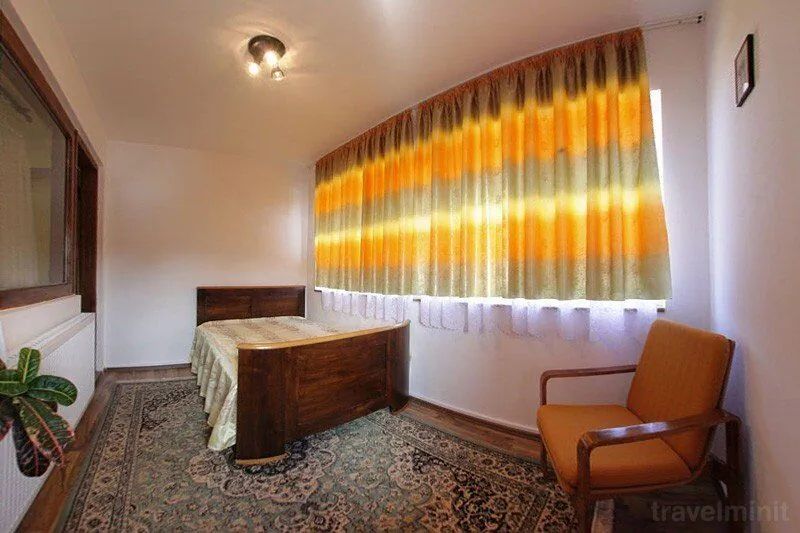
Pensiune · 3 stars
Horezu, Horezu County · 3.0 km
Pensiunea Ioana Horezu
Amplasata intr-un loc pitoresc, pe malul raului Ursani , la poalele muntilor Capatanei, in depresiunea Horezu , pensiunea Ioana Horezu, ofera intimitatea unui spatiu inconjurat de multa verdeata si culoare. Spatiul detasat de oras intins si generos , dotarile pensiunii cit si gazdele primitoare creaza conditii excelente pentru un sejur placut. Pensiunea ofera toate conditiile de cazare pentru petrecerea unei vacante departe de zgomotul si agitatia cotidiana. Caldura si amabilitatea cu care sunteti primiti, dar si conditiile de cazare si facilitatile oferite, stau la baza celor trei margarete cu care este clasificata pensiunea.Obiectivele turistice ce se pot vizita in zona orasului Horezu sunt: Manastirea Hurezi, Manastirea si cheile Bistrita, Manastirea Arnota, Parcul National Buila-Vanturarita, Izvoare de ape minerale, Pestera Muierilor si Polovragi ,Cheile Oltetului, Manastirea dintr-un Lemn, Culele Duca si Greceanu , Ceramica de Horez si Satul Olari, Manastirea Govora ,Transalpina si altele.
FROM
240 RON / night
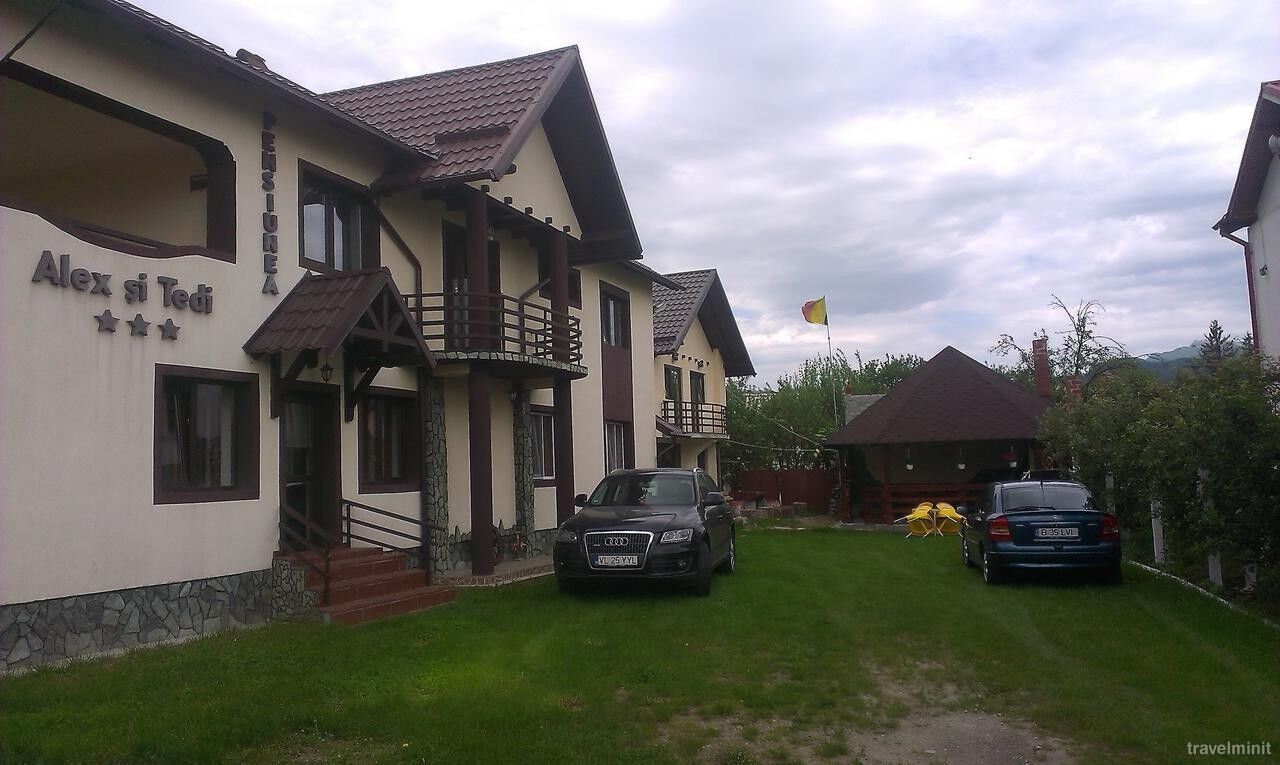
Pensiune · 3 stars
Horezu, Horezu County · 3.1 km
Pensiunea Alex și Tedi Horezu
Camere, serviciiPensiunea Alex și Tedi Horezu Horezu ofera 8 camere dotate cu bun gust. Animalele de companie sunt binevenite (gratuit). Proprietatea pune la dispozitia oaspetilor parcare gratuita. Oaspetii pot beneficia de accesul la internet wireless disponibil la pensiune. Mai multe detalii despre facilitatile oferite de Pensiunea Alex și Tedi Horezu (inclusiv cele contra cost), cat si despre dotarile camerelor veti gasi mai jos. LocațiaMănăstirea Horzeu se situeaza la 3.1 km distanta fata de pensiune. Servicii de masăPreturile camerelor nu contin masa. La efectuarea rezervarii puteti solicita mic dejun contra cost. PlatăPlata se face prin urmatoarele metode: transfer bancar, numerar, card de vacanță, avans travelminit, voucher travelminit. Sosire, programCamera poate fi ocupata de la ora 13:00 iar predarea ei se face pana la ora 12:00. Limba vorbita la receptie română.
FROM
240 RON / night
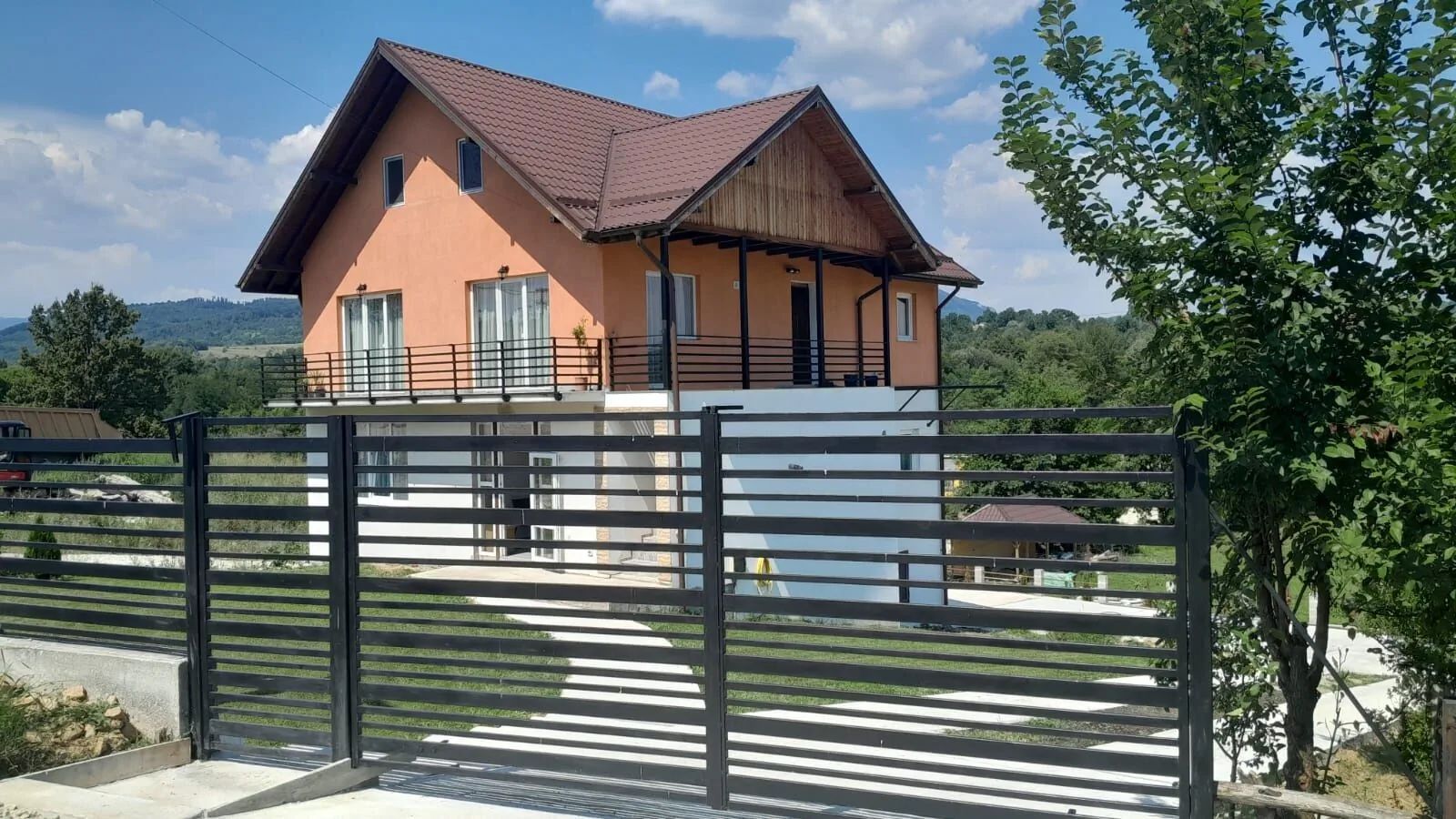
Pensiune · 3 stars
Horezu, Horezu County · 3.8 km
Pensiunea Heaven Horezu
Pensiunea Heaven oferă cazare în localitatea Horezu, la 3 km fata Mănăstirea Horezu, inclusă în Patrimoniului Mondial UNESCO, 17km fata de Statiunea montana Varful lui Roman, 26 km de Mănăstirea Polovragi, iar stațiunea de schi Rânca-Transalpina este la 45 de minute de mers cu mașina. Oaspeții pot lua lecții de olărit, satul Olari se afla la o distanta de 5 km. Camerele au TV, acces gratuit la internet WiFi, iar unele unități de cazare au terasă sau balcon. Toate camerele au baie privată. La proprietate există o bucătărie comună. Proprietatea se afla la 20 km de statiunea Baile Govora, 42 km de Băile Olănești și la 62 km de Călimănești. Cel mai apropiat aeroport este Aeroportul Internațional Craiova, situat la 117 km, iar Aeroportul Sibiu, situat la 155 km. Parcarea privată este gratuită.
FROM
240 RON / night
BEFORE YOU HIT THE ROAD
Weather conditions in Valcea
Local forecast for Horezu Monastery, Valcea, Vâlcea

Real-time updated weather data
Much more to explore in this area
Nearby tourist attractions


Alba, Alba County
Transalpina (Transalpina Highway / King's Road)
Este o sosea (DN 67C) din Muntii Parang, in Carpatii Meridionali, ce face legatura intre Oltenia si Transilvania (orasele Novaci din judetul Gorj si Sebes din...
28.5 km

Valcea, Vâlcea County
Stațiunea Băile Govora
Situata in nord-estul Olteniei, intr-o depresiune subcarpatica, la 21 de km de Ramnicu Valcea;este traversata de raul Hinta si inconjurata de dealuri acoperite...
16.9 km

Gorj, Gorj County
Pârtiile din Rânca
Situate in zona Muntilor Parang, in statiunea Ranca; in fiecare an, aceasta statiune este din ce in ce mai cautata, oferind partii excelente pentru iubitorii...
27.8 km

38.2 km
41.1 km
49.1 km

Valcea, Vâlcea County
Stațiunea Băile Olănești
Se afla in partea de nord-est a Olteniei, pe Valea raului Olanesti, la 18 km de Ramnicu Valcea, in zona subcarpatica a Muntilor Capatanii, judetul Valcea;locali...
18.9 km

Valcea, Vâlcea County
Călimănești-Căciulata Spa Resort
Este asezata pe malul drept al raului Olt, la baza muntelui Cozia, in depresiunea subcarpatica Jiblea-Calimanesti, la 18 km de Ramnicu Valcea si 81 km de Sibiu,...
27.5 km

Sibiu, Sibiu County
Great Iezer Lake
Situat pe versantul nordic al platoului Cindrel, la 1.998 m altitudine; a luat nastere dintr-un circ glaciar; are o suprafata de 3.4 ha, este lung de 320 m si...
49.0 km

Gorj, Gorj County
Women's Cave
Situata in Depresiunea Getica a Olteniei, pe teritoriul comunei Baia de Fier, DN 67 Targu-Jiu - Ramnicu Valcea, km 47, in versantul drept al Cheilor Galbenului,...
20.0 km

Valcea, Vâlcea County
Voineasa Resort
Se afla la poalele Muntilor Lotru, pe valea raului Lotru, la 80 km de Ramnicu Valcea;amplasata la o altitudine de 600-800 m;reprezinta cea mai veche asezare de...
27.7 km

Valcea, Vâlcea County
Vidra Resort
Situata in Muntele Puru, Muntii Lotrului, la o distanta de aproximativ 100 km de Ramnicu Valcea si 25 km de Voineasa;amplasatra la o altitudine de 1.400-1.450...
35.7 km
Cultural life and traditions
Events near Horezu Monastery
Medieval festivals, traditional fairs, concerts and recommended local activities in Oltenia (Lesser Wallachia).

Tradiții și Meșteșuguri

Valcea, Jud. Vâlcea
Zilele Culturii Locale și Turismului Tradițional
Ateliere deschise de olărit, sculptură în lemn și folclor autentic prezentate de meșteri populari locali.
WHEN
15 - 17 Mai 2026

Gastronomie Tradițională
Valcea, Jud. Vâlcea
Târgul Produselor Tradiționale și al Gastronomiei Locale
Produse atestate tradițional, brânzeturi maturate, miere de munte și bunătăți locale pregătite după rețete străvechi.
WHEN
În fiecare final de săptămână

Cultură și Fotografie
Valcea, Jud. Vâlcea
Tur Ghidat Tematic și Fotografic de Patrimoniu
Explorare ghidată dedicată iubitorilor de istorie, natură și fotografie pe cele mai spectaculoase perspective ale zonei.
WHEN
Program zilnic la cerere
On foot, exploration gains depth
Discover the surroundings and local geography
Explore trails, terrain and natural landmarks around Horezu Monastery.

Guides and practical tips
Useful travel articles
Travel guides, practical tips and itineraries for Oltenia (Lesser Wallachia).

Travel guide
Top 5 Atracții Turistice și Trasee Montane în Zona Moieciu - Bran
Descoperă cele mai spectaculoase peisaje carstice, chei adânci și cetăți medievale din imediata apropiere a stațiunii Moieciu.

Travel guide
Ghid de Drumeție: Traseul Moieciu de Sus spre Platoul Bucegi
Un itinerariu montan de o frumusețe rară ce urcă din Valea Băngăleasa spre Poiana Guțanu și crestele maiestuoase ale Bucegilor.

Travel guide
Castelul Bran: Istorie, Legende și Secrete Medievale
Află adevărata poveste a fortăreței medievale din Pasul Bran, reședința de suflet a Reginei Maria a României.
THE JOURNEY STARTS WITH AN IDEA
The next story is on the way.
From the first stop to the last stay, make room for a new Romania.
