


PLACE OF WORSHIP · MARAMURES
The Merry Cemetery of Săpânța

Săpânța, Maramureș County
Add location to your trip planner.

Practical access information

VISITING HOURS
Zilnic: 08:00 - 20:00

TICKET PRICE
Adulți: 10 RON, Copii/Elevi: 5 RON; Taxă foto: 10 RON

RECOMMENDED VISIT DURATION
1 - 1.5 ore


Visitor information and guide
 Navigate with Google Maps

ABOUT THE MERRY CEMETERY OF SĂPÂNȚA
Captivating Introduction and Universal Value
In a picturesque corner of Eastern Europe, where the Carpathians meet the great Pannonian plain and where the Tisa River separates two worlds, there lies a place that defies the funerary conventions of the entire continent. The Merry Cemetery of Săpânța, in Maramureș County, is not merely a final resting place, but an open-air museum of folk art, a living chronicle of a community, and above all, a profound human statement about how life deserves to be lived and remembered. Here, death is not dressed in somber mourning, but in vivid colors, witty verses, and unsweetened truths that few European cultures have dared to speak aloud.
For the European traveler accustomed to the solemnity of Western cemeteries — with the manicured avenues of Père Lachaise in Paris, the Gothic melancholy of English churchyards, or the Protestant sobriety of German ones — Săpânța represents a revelation. Over 800 oak crosses, painted in the unmistakable "Săpânța Blue," rise toward the sky like living panels, each bearing the portrait of the deceased and a poem written in the first person, in the archaic dialect of Maramureș. This place was included by the French publication L'Express among the most beautiful cemeteries in the world, and at the 1998 International Symposium of Funerary Monuments, held in the United States, it was ranked first in Europe and second in the world, after the Valley of the Kings in Egypt. It is, without doubt, the most publicized and recognized cultural brand of Maramureș, attracting annually approximately 50,000 visitors from 69 countries, from Western tourists to Asian pilgrims in search of authentic spirituality.
The universal value of the Merry Cemetery lies in its unique capacity to transform grief into a celebration of life, to treat death not as a definitive end, but as a natural passage, worthy of being told with sincerity, humor, and poetry. In a Europe that has forgotten how to speak about death, Săpânța keeps alive an open dialogue with eternity, a dialogue rooted in the ancient beliefs of the free Dacians, in the funerary traditions of a community isolated for centuries between mountains, and in the genius of a single man who knew how to transform a piece of wood into a work of art capable of moving millions.
Historical Roots and Major European Connections
The story of the Merry Cemetery cannot be understood outside the complex historical context of Maramureș, a region that for centuries was a meeting point and confrontation zone between the great empires of Europe. Located in the northern extremity of present-day Romania, at the confluence of the Săpânța and Tisa rivers, less than one kilometer from the border with Ukraine, the commune of Săpânța was part, at the time of the birth of master Stan Ioan Pătraș in 1908, of the Austro-Hungarian Empire, more precisely of the Kingdom of Hungary, part of the Habsburg Monarchy. This belonging to a multinational and multiconfessional empire left deep imprints on local identity, influencing both the architecture and the spirituality of the community.
Historical Maramureș was, over the centuries, an autonomous Romanian voivodeship, documented since the 12th century, which preserved relative autonomy under the rule of the Kingdom of Hungary, then of the Principality of Transylvania, and from the 17th century, of the Habsburg Empire. This autonomy allowed the preservation of archaic traditions, including a conception of death different from that imposed by the Western Roman Catholic Church. In the 18th century, the religious policy of the Habsburgs led to the establishment of the Romanian Greek Catholic Church United with Rome, a unique experiment in Eastern Europe through which the Byzantine rite was preserved, but under the authority of the Pope. Father Grigore Rițiu, who would inspire the birth of the Merry Cemetery, belonged precisely to this Greek Catholic community, a community that would be martyred by the communist regime after 1948.
The broader European context is essential for understanding the spirit of Săpânța. Unlike Western cultures dominated by the romantic melancholy of death — from the medieval Danse Macabre, with macabre dances painted on the walls of cemeteries in Paris, Basel, or Lübeck, to the Baroque "memento mori" — the Maramureș tradition preserves a vision closer to that of late antiquity. The Greek historian Herodot, relating in the 5th century BC about the Getae, mentioned that they "consider themselves immortal," for their belief was that they do not die, but go to the supreme god Zalmoxis. This conception of immortality, of death as a simple "change of dwelling," was evoked by the philosopher Plato and impressed the ancient world with the courage with which the Dacians faced death. Researchers have hypothesized that Stan Ioan Pătraș may have drawn inspiration, consciously or not, from this ancient tradition of the "free Dacians," inhabitants of Maramureș who were never conquered by the Roman Empire, preserving their identity and spirituality unaltered.
In parallel, the tradition of humorous epitaphs from Săpânța fits into a long European tradition of popular funerary poetry. The two-verse poetic form, called "strigătură" in Maramureș and "țipuritură" in neighboring Țara Oașului, was performed at weddings, celebrations, and especially at funerals, being a means through which the community expressed its real, unfiltered feelings. This tradition has correspondents throughout Europe: in medieval France, satirical funerary "fabliaux"; in Ireland, "keening" — ritual lamentations with elements of improvisation and black humor; in the Balkans, "gusle" and songs of valor for the dead. What makes the Merry Cemetery unique is the transposition of this oral tradition into a permanent material form, carved in oak and painted for eternity.
Another level of European connection, more recent and surprising, is the Irish one. Starting in 2009, through the initiative of the Irishman Peter Hurley, settled in Romania for over two decades, and composer Shaun Davey, Săpânța entered into a cultural dialogue with Ireland. Davey, inspired by the epitaphs on the crosses, composed the suite "Voices from the Merry Cemetery," a work for choir and orchestra that blends traditional Irish and Maramureș music, with Scottish bagpipes and church choir. This creation was presented at the Romanian Athenaeum in Bucharest, at St. Patrick's Cathedral in Dublin, and within the annual festival "The Long Road to the Merry Cemetery" in Săpânța. The connection between the two cultures — both isolated, both keepers of strong oral traditions, both marked by a history of resistance in the face of empires — proves that the cheerful spirit of death at Săpânța resonates deeply with other European cultures that have refused to accept death as a taboo.
Architectural Masterpiece and Artistic Heritage
The Merry Cemetery is, in essence, the work of a single man, continued then by a dynasty of folk masters, and represents a remarkable example of European naive art, classified by specialists as "art brut" or "outsider art." Stan Ioan Pătraș (1908-1977), born into a family with a tradition in woodworking, began carving oak crosses from the age of 14. Until 1935, these were traditional, simple crosses, without inscriptions. The turning point came in that year, at the suggestion of the Greek Catholic priest Grigore Rițiu (1892-1969), professor of Romanian and Latin, who proposed to widen the vertical part of the cross to make room for an epitaph.
The first cross with an epitaph dates from 1935 and commemorated the death of a young man drowned in the Tisa, a friend of the master. From this cross began a tradition that would transform a simple village cemetery into an open-air museum unique in the world. Pătraș gradually developed his own style: the crosses became narrower, sculpted figures in relief appeared, and in 1936 he introduced color, obtained from mineral pigments and natural binders. Each cross is made from a single oak trunk, cut, dried, and hand-worked with chisel and knife, in a process that lasts between six months and six years, depending on the complexity of the work.
The dominant visual element is "Săpânța Blue," an intense shade of azure that has become emblematic and internationally recognized. This blue, probably obtained from mixtures of blue stone (copper sulfate) with vegetable pigments, symbolizes in local tradition the sky, hope, freedom, and the world beyond to which the soul departs. On this blue background unfolds a consecrated symbolic palette: green represents life, yellow fecundity and fertility, red passion, white the purity of the soul, and black — death. Each color, each decorative motif, each painted scene has its meaning, building a complex visual language that speaks about the values and beliefs of the community.
The upper part of each cross presents a painted bas-relief depicting a scene from the life of the deceased — his occupation, a significant moment, the manner of his death — while on the widened vertical part unfolds the epitaph: a poem written in the first person, in the archaic Maramureș dialect, with phonetic spelling and verbal forms that have disappeared from literary language. Many crosses are painted on both sides: on one side is described the life of the buried person, on the other — the cause of death. This narrative structure, which combines image and text in an accessible and moving manner, brings the Merry Cemetery close to the medieval iconographic tradition of the "Biblia pauperum," but also to the contemporary art of narrative installations.
Stan Ioan Pătraș's art fits into the European current of naive art, alongside artists such as Henri Rousseau in France or Alfred Wallis in Great Britain, but with an additional dimension: the profound human authenticity of the message. Each cross is unique, personalized, reflecting the personality of the one commemorated. Pătraș had no academic training, but developed a style that was recognized and appreciated by ethnologists, art historians, and international critics. Until his death in 1977, he made approximately 700 crosses, transforming both cemeteries of Săpânța into an ensemble of over 800 funerary monuments.
Besides crosses, Pătraș was a versatile master of folk art in wood: he made jugs, spoons, carved furniture, monumental Maramureș gates, and decorated his own house with colored sculptures. His house, located about 200 meters from the cemetery, became after his death the "Stan Ioan Pătraș" Memorial House, a museum that preserves the original workshop, working tools, and personal objects, offering visitors the possibility to understand the creative process in its intimacy.
Legends, Personalities, and Turning Points
The story of the Merry Cemetery is inseparable from the personalities who forged it and from the historical moments that marked it. The central figure remains Stan Ioan Pătraș, a simple man, deeply religious, anchored in popular tradition, but open to innovation. On his own cross, located near the entrance to the cemetery, he left an autobiography in verse that summarizes his entire philosophy of life: "From when I was a young child / I was Stan Ion Pătraș / Listen to me, good people / What I will say are not lies / As many days as I lived / I wished evil on no one / But good as much as I could / To anyone who asked me / Alas, my poor world / For I lived hard in it." This cross, painted by two of his apprentices, Turda Toader Sepe and Stan Vasile Colțun, after the master's death, is a spiritual and artistic testament that encapsulates the essence of the entire work.
Father Grigore Rițiu, the initiator of the idea of widening the crosses for epitaphs, represents another tragic figure in this story. Professor of Romanian and Latin, Romanian patriot, delegate with voting rights at the Great National Assembly of Alba Iulia on December 1, 1918, Rițiu paid dearly for his attachment to Romanian identity and to the Greek Catholic Church. After the establishment of the communist regime, in 1948, the Greek Catholic cult was banned, churches confiscated, and priests persecuted. Rițiu was arrested several times, the first time in February 1945 for "attitude of opposition to the annexation of Maramureș to the Soviet Union," then in the following years. His wife, the priestess Laura Rițiu, ill, died in Oradea prison on January 5, 1954. His daughter, Melania, was arrested for almost a year. Despite these persecutions, the priest's initiative survived and conquered the world, demonstrating the spiritual resistance of a community in the face of oppression. The only "sad" grave in the cemetery — a black marble funerary stone, without a painted cross — belongs, according to one account, to the Rițiu family, being a sign of permanent mourning for those martyred.
The continuer of Pătraș's work was Dumitru Pop, nicknamed Tincu (1955-2022), who entered the master's apprenticeship at the age of only 9 and who, at his death in 1977, was 14 years old. Pop Tincu took over the workshop and the memorial house, carrying the tradition forward for 45 years. In 2021, he was honored with the title of "Living Human Treasure," a recognition of the value of the intangible cultural heritage he represented. He was an ambassador of Maramureș culture, presenting the art of the crosses at exhibitions from Tel Aviv to Warsaw, from Tokyo to Paris, giving interviews for the New York Times, BBC, and other international publications. At his death, in December 2022, "Săpânța Blue" was described as "darker, sadder," symbolizing the loss of an era.
Today, the tradition is continued by the third generation: Stan Ioan Pătraș Jr., the great-grandson of the founder and son-in-law of Dumitru Pop Tincu, together with Gheorghe Stan Colțun and his wife Ana Maria. They keep the recipe and technique sacred, working only on commission, each cross being unique and personalized. The process remains the same: the oak is cut in winter, when the sap is withdrawn, then left to dry for several years, after which it is sculpted and painted by hand, without preliminary sketches, directly from the memory and story of the deceased's family.
The epitaphs themselves are literary works in miniature, some of them become famous and translated into numerous languages. The "mother-in-law" cross is probably the most quoted: "Under this heavy cross / Lies my poor mother-in-law / Three more days she would live / I would lie down and she would read / You who pass by here / Try not to wake her / For if she comes home / She'll be on my back again / But this is how I'll bear it / For she won't come back / Stay here, dear mother-in-law." This epitaph, with its specific black humor, has become a symbol of the brutal sincerity with which the Săpânța community views human relationships. Other epitaphs recall the young men who died in wars, those persecuted by the communist regime, the disappeared craftsmen, unfulfilled loves, legendary drunkenness, or unusual virtues, together building a social and emotional chronicle of the village over almost a century.
Practical Visitor Guide and Today's Tourist Experience
Visiting the Merry Cemetery is an experience that remains in the memory of any traveler, regardless of their cultural origin. The cemetery is open daily, from Monday to Sunday, between 08:00 and 20:00, offering twenty hours of light in which the blue crosses can be admired in all their splendor. The entrance fee is 10 lei for adults and 5 lei for children and students, to which is added a photo fee of 10 lei for those who wish to photograph professionally. These modest fees contribute to the maintenance of the monuments and to the support of the masters who continue the tradition.
The cemetery is located in the center of the commune of Săpânța, in the courtyard of the Orthodox parish church, at the address Strada Cimitirul Vesel no. 517. The locality is situated approximately 18 kilometers west of Sighetu Marmației, the historical capital of Maramureș, and about 4 kilometers from the border with Ukraine, on the left bank of the Tisa River. Access is via national road DN19, which connects Oradea to Sighetu Marmației, or by train to Sighet, followed by local bus or taxi. From Baia Mare, the distance is approximately 85 kilometers, and from Cluj-Napoca, the nearest international airport, the journey takes about three and a half hours by car.
A complete visit lasts between 45 minutes and two hours, depending on how many epitaphs you wish to read and photograph. It is recommended to arrive as early in the morning as possible, especially in the summer season and on weekends, when the cemetery can receive up to 300,000 visitors annually and can become crowded. The morning light, when the sun beats on the blue crosses, offers the best conditions for photography and an atmosphere of contemplative tranquility. Many foreign tourists hire local guides to translate and explain the epitaphs for them, often leaving with tears in their eyes, although they did not understand a single syllable in Romanian upon arrival.
Just a few hundred meters from the cemetery is the "Stan Ioan Pătraș" Memorial House, a traditional wooden house with a porch, courtyard, and workshop, where visitors can see the master's tools, can discuss with the continuers of the tradition, and can order a cross for a future deceased. Nearby, about five minutes by car to the west, rises the Săpânța-Peri Monastery, an impressive construction begun in 1997, after the model of the old Peri Monastery from the 14th century, now in Ukraine. The monastery church, built from over 400 cubic meters of oak and fir wood, has a spire 78 meters high — the tallest wooden church in the world — and is covered with 12.5 kilograms of gold. Together with the Merry Cemetery, this forms a unique spiritual and cultural complex, a gate between the world below and the one above, between past and present.
In August, around the feast of the Dormition of the Mother of God, Săpânța hosts the intercultural festival "The Long Road to the Merry Cemetery," initiated in 2009 by the Irishman Peter Hurley. For a week, the villages of Maramureș become stages for traditional music concerts, craft workshops, meetings with artists and local people, culminating with the "Hora around the Merry Cemetery" and with the suite "Voices from the Merry Cemetery" by Irish composer Shaun Davey, performed by 120 musicians from Romania, Ireland, Scotland, and Spain. This festival, although with precarious funding, has put Maramureș on the cultural map of Europe, demonstrating that authentic traditions can become bridges between nations.
For those who wish to explore more deeply, in Săpânța one can also visit the traditional fulling mills on the Săpânța valley — popular hydraulic installations for washing wool and processing cloth —, the nearby Jewish Cemetery, with stone funerary monuments, witness to a vanished community, and the Șipot Waterfall on the Nadoșa valley. The agritourism guesthouses in the area offer accommodation and traditional Maramureș meals, allowing a complete immersion in the culture of a region that has resisted time.
The experience of visiting the Merry Cemetery transcends simple tourist attraction. For many visitors, especially those coming from Western cultures marked by the repression of emotions in the face of death, this place represents a liberation. Laughter in the face of death, the sincerity with which the defects and virtues of those who have departed are exposed, the color that conquers darkness — all these speak of a popular wisdom that refuses to let death have the last word. Each cross is a lesson in humanity, a reminder that life, however ephemeral, deserves to be lived with passion and told with truth. In Săpânța Blue, the sky itself seems to descend to earth to embrace those who have departed, offering those who remain the strength to continue, to laugh, and to love, even in the face of the most inevitable of certainties.
The Merry Cemetery is, ultimately, a masterpiece of European cultural resilience, proof that in a constantly changing world, authenticity, sincerity, and folk art can survive and can conquer the hearts of people from all continents. It is a place where Eastern Europe reveals its deep soul, where personal history becomes universal history, and where death, finally, teaches the living to live more fully.
Media gallery
Discover The Merry Cemetery of Săpânța in pictures

26 photos · Architecture, courtyards and captivating details


Image source: Wikimedia Commons · Public domain photos · Free license
STAY A FEW DAYS, DISCOVER THE MAGIC
Stays near The Merry Cemetery of Săpânța

Pensiune · 3 stars

Săpânţa, Săpânţa County · 0.2 km
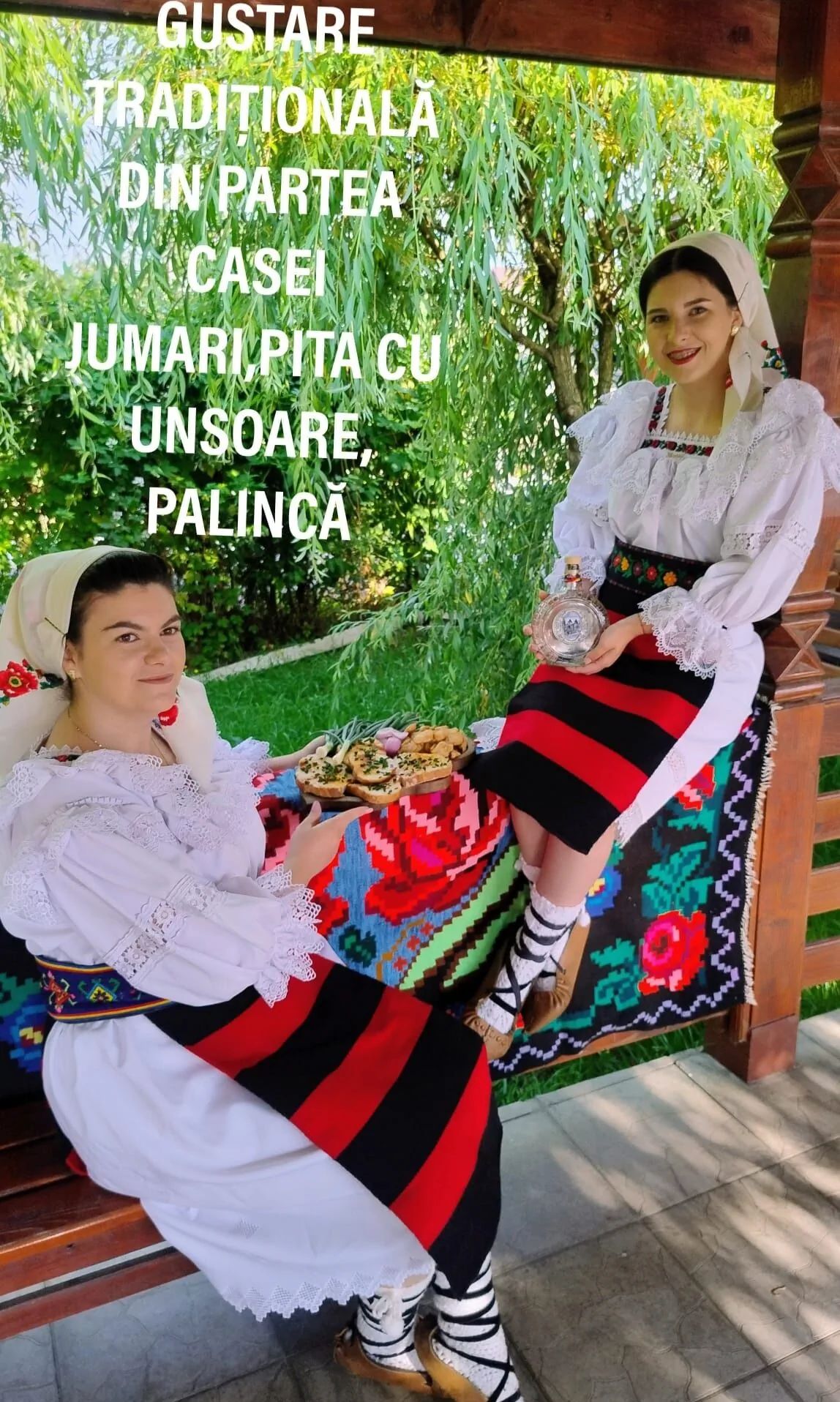
Pensiunea Cris-Mona Săpânța
Pensiunea Cris-Mona situata la soseaua principala dispune de cazare in 16 camere matrimoniale cu bai proprii, terase, parcare auto, curte, gradina cu livada, loc de joaca pentru copiii. - o curte larga umbrita de vie, o oaza de liniste cu vedere spre gradina. - livada si gradina, spatiu ideal de joaca pentru copii- spatii de parcare pazita pentru masini- pensiunea este incalzita cu o centrala termica de mare putere- apa calda- televizoare conectate la reteaua de cablu locala- aparatura audio- jocuri de societate (carti, rummy, etc).
FROM
240 RON / night

Pensiune · 3 stars
Săpânţa, Săpânţa County · 0.5 km
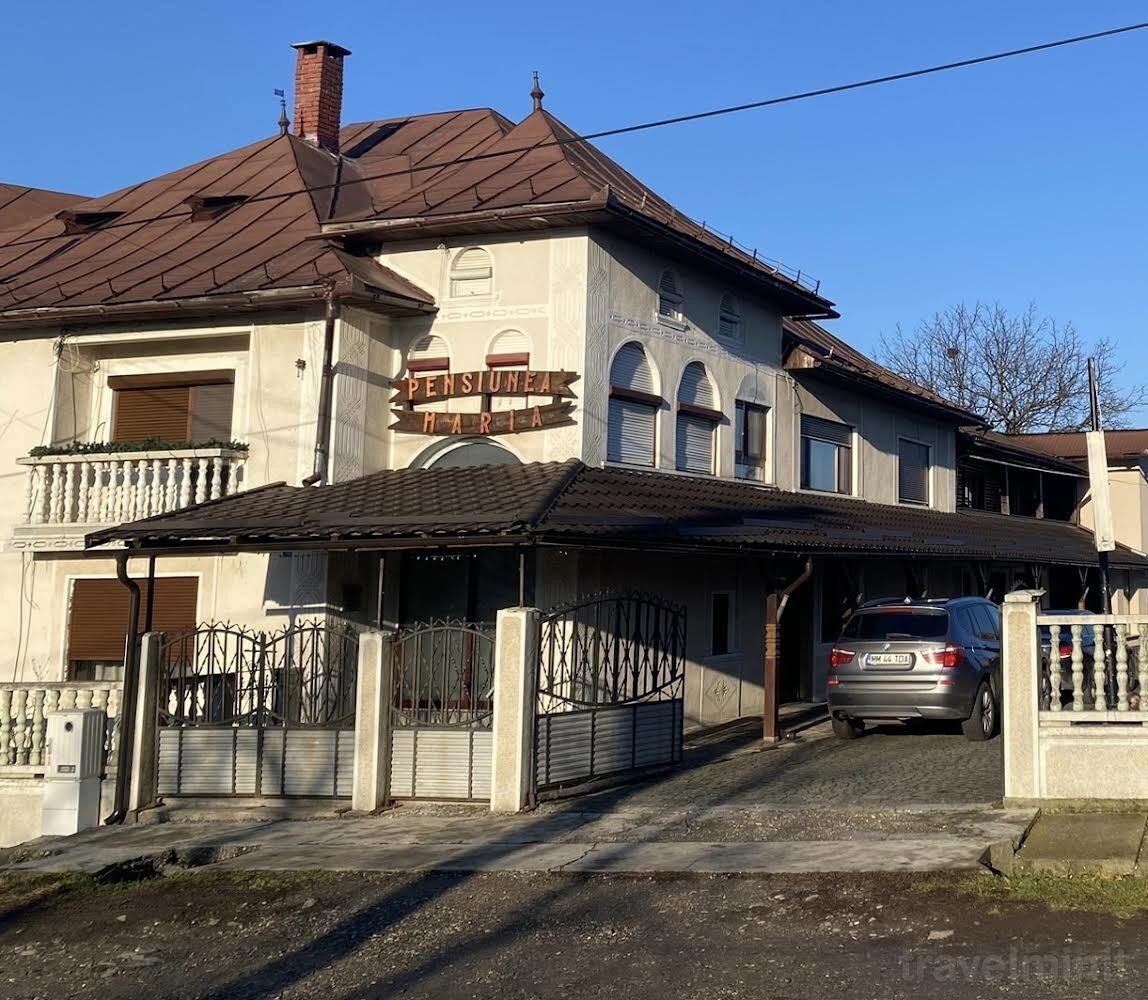
Casa Maria Săpânța
Camere, serviciiCasa Maria Săpânța Săpânţa ofera cazare in 5 camere frumos amenajate. Este permis accesul cu animale de companie (gratuit). Pentru a obtine mai multe detalii despre facilitatile locatiei (inclusiv cele contra cost) si despre dotarile camerelor, va rugam consultati fisa de mai jos. LocațiaCimitirul Vesel se afla la 1.1 km distanta fata de pensiune. Servicii de masăTarifele afisate nu contin masa. PlatăPlata se face prin urmatoarele metode: numerar, transfer bancar, card de vacanță, avans travelminit, voucher travelminit. Rezervarea se considera finalizata numai dupa plata unui avans de 100%. Sosire, programZiua de cazare incepe la ora 12:00. Eliberarea camerei se face la ora 10:00. Limbile vorbite la receptie: engleză, română.
FROM
240 RON / night
Pensiune · 4 stars
Săpânţa, Săpânţa County · 0.7 km
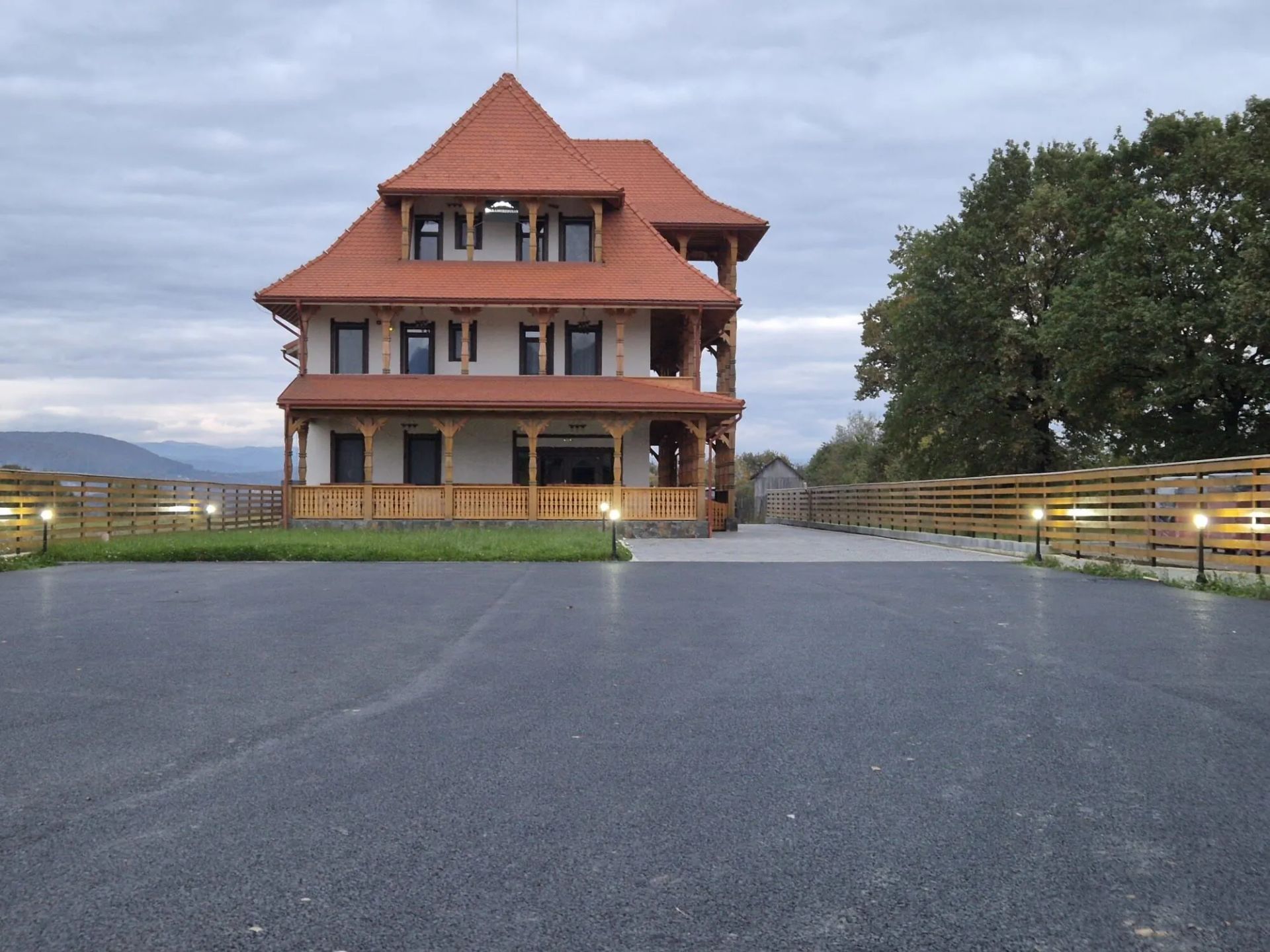
Pensiunea Zestrea Maramureșului Săpânța
Pensiunea Zestrea Maramureșului Săpânța, clasificată la patru margarete, construită într-un stil arhitectural cu specific local, îmbinând stilul arhitectural tradițional maramureşean cu tehnologii inovative şi facilităţi moderne, oferă un număr de cinci camere, un restaurant, o grădină, un lounge comun, și două terase. Oaspeții au la dispoziție gratuit : WiFi în întreaga proprietate, biciclete mountain bike pentru drumeții și binocluri pentru bird - watching. Fiecare cameră oferă climatizare, birou, televizor cu ecran plat, baie proprie, lenjerie de pat, prosoape și balcon cu vedere superbă. Baia proprie oferă un duș, articole de toaletă gratuite și uscător de păr. Camerele includ mini frigider. Oaspeții cazați au la dispoziție un mic dejun tip bufet sau continental. Proprietatea pune la dispoziție parcare privată gratuită precum și o recepție deschisă non-stop. Această proprietate oferă facilități de grătar, jacuzii de exterior, iar în apropiere oaspeții pot desfășura activități precum ciclism și drumeții. Pensiunea Zestrea Maramureșului Săpânța se află la 100 m de Centrul de Recuperare și Regenerare Săpânța - Ciuberele lui Solomon, la 1,4 km de Cimitirul Vesel, la 1,6 km de Casa Memorială Stan Ioan Pătraș, la 2,1 km de Mănăstirea Săpânţa – Peri, și la 6,2 km de Aventura Park Săpânța. Municipiul Sighetu Marmației se află la 18 km iar Aeroportul Internațional Maramureș la 81 km. Pentru mai multe informații, vă rugăm să ne căutați pe Google ca Zestrea Maramuresului și veți găsi mai multe review-uri și detalii.(Pentru mai multe informatii consultati la fiecare tip de camera rubrica "detalii"). Mai multe detalii despre facilitatile oferite la pensiune (inclusiv cele contra cost), cat si despre dotarile camerelor veti gasi mai jos. Servicii de masăPreturile afisate nu includ masa. La efectuarea rezervarii puteti solicita mic dejun contra cost. PlatăPlata serviciilor se poate efectua prin urmatoarele modalitati: transfer bancar, card de vacanță, avans travelminit, voucher travelminit. Pentru finalizarea rezervarii se achita un avans de 100%. Sosire, programCamera poate fi ocupata de la ora 16:00 iar predarea ei se face pana la ora 12:00 . Limba vorbita la receptie română.
FROM
310 RON / night
Pensiune · 3 stars
Săpânţa, Săpânţa County · 0.9 km
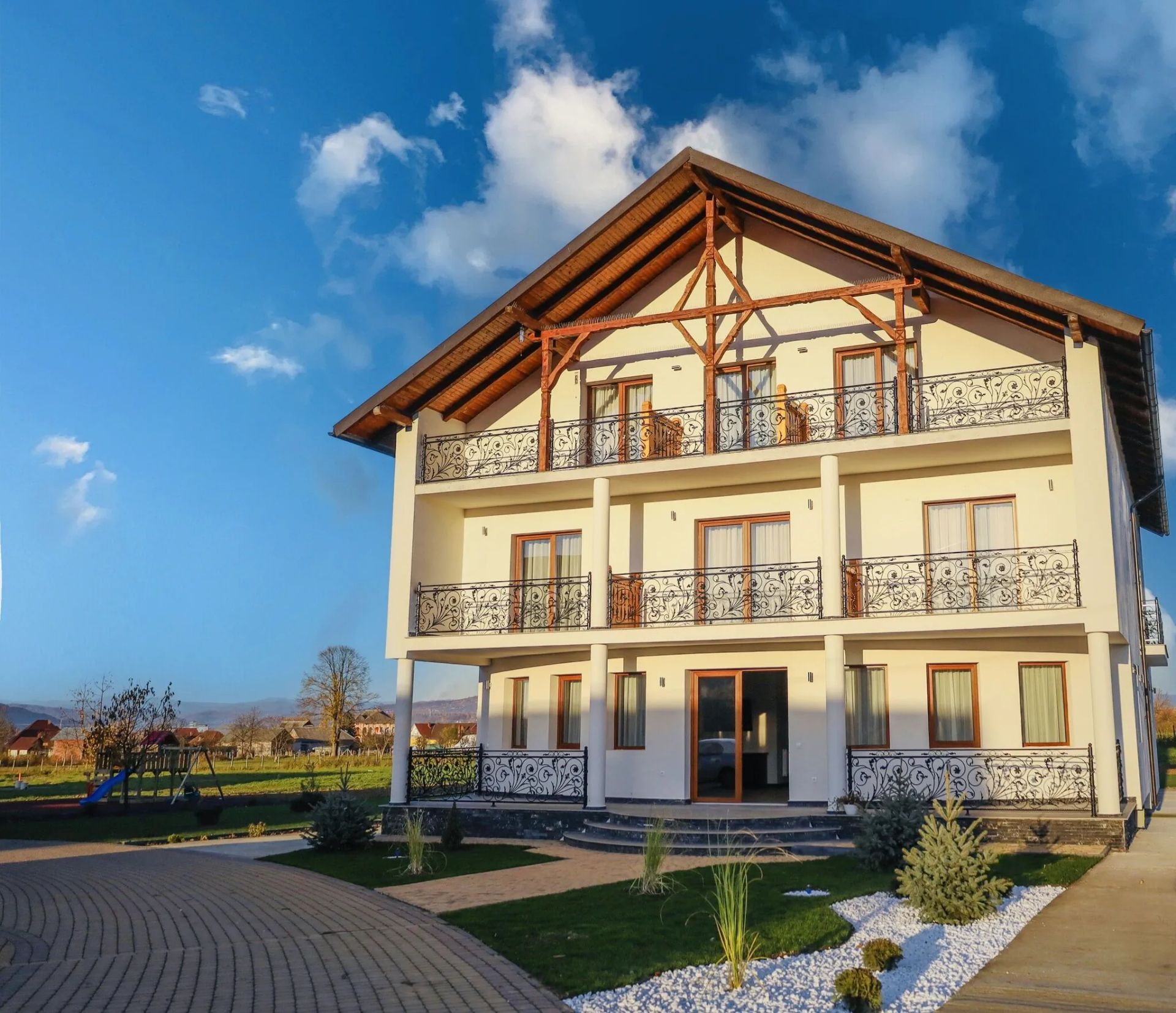
Pensiunea La Sofiia Săpânţa
Pensiunea La Sofiia situată în comuna Săpânța Judetul Maramureș ,la doar 400 m de mers pe jos de centru satului pitoresc , foarte accesibil la punctele turistice ,facilitând vizitarea lor pe jos.Scapa de agitatia din oras, respira aerul curat si relaxeaza-te ! Aici găsiți liniște cât cuprinde și unde veți avea toate condițiile pentru un sejur de vis, a fost finalizată recent, și are o priveliște de vis spre munții din apropiere. Facilități unitate : Cazare și Confort: Camere cu baie proprie, vedere ,minibar, televizor, încălzire și balcon ,vedere la munți din apropiere,vedere în natură ,vedere centru satului . Relaxare și Divertisment: Ciubăr , spații de relaxare, locuri de joacă pentru copii, karaoke,living și sufragerie spațioasa cu șemineu. Servicii culinare: Bucătărie complet utilată la dispoziția turiștilor,grătar/barbeque ,zona de luat masa Utilități și Servicii: Internet wireless, parcare privată, locuri de parcare sigură Locație: Poziționată în zonă pitorească ‘aproape de Cimitirul Vesel . Oferă cazare într-un loc camere moderne cu WiFi gratuit, grădină , terase, loc de joaca pentru copii, acces ciubar, bucatarii utilate corespunzator . Se oferă la locație parcare gratuită pentru
FROM
240 RON / night
Pensiune · 3 stars
Sarasău, Sarasău County · 10.2 km
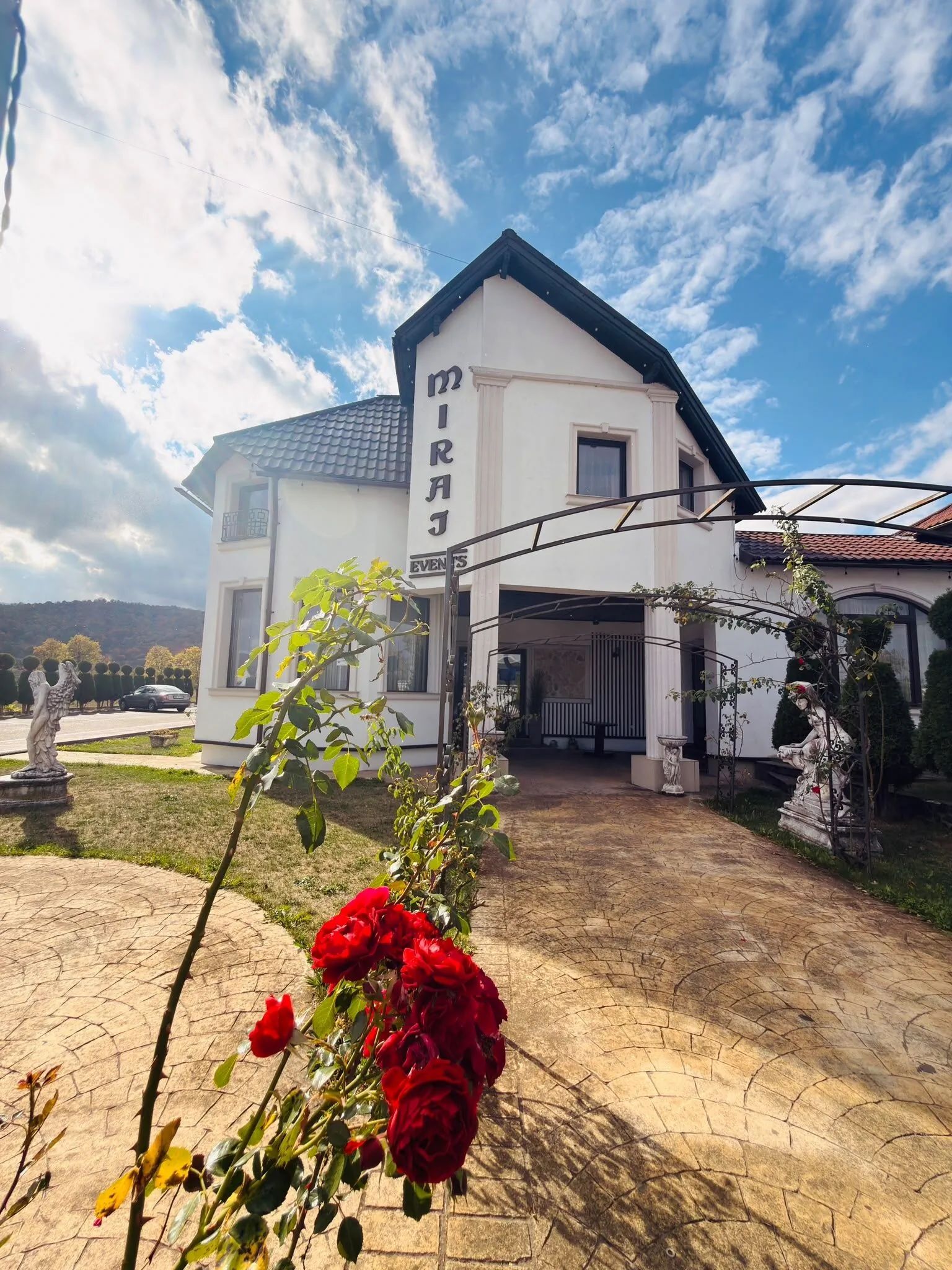
Pensiunea Miraj Sarasău
Camere, serviciiPensiunea Miraj Sarasău Sarasău ofera cazare in 13 camere frumos amenajate. Se admit animale de companie (contra cost). Exista parcare privata gratuita. Accesul la internetul wireless este disponibil la unitatea de cazare. Mai multe informatii despre serviciile unitatii de cazare (inclusiv cele contra cost) si despre dotarea camerelor gasiti in fisa de mai jos. Servicii de masăPreturile afisate se refera la cazare cu mic dejun. La trimiterea rezervarii se poate solicita urmatoarele mese: mic dejun, fără servicii de masă, demipensiune. PlatăPuteti face plata cazarii cu/prin: numerar, card bancar, transfer bancar, card de vacanță, avans travelminit, voucher travelminit. Pentru garantarea ferma a rezervarii se solicita un avans de 100%. Sosire, programCamera poate fi ocupata de la ora 13:00 iar predarea ei se face pana la ora 11:00. Personalul de la receptie vorbeste limba: engleză, română, italiană.
FROM
240 RON / night
Cabană · 3 stars
Iapa, Iapa County · 10.6 km
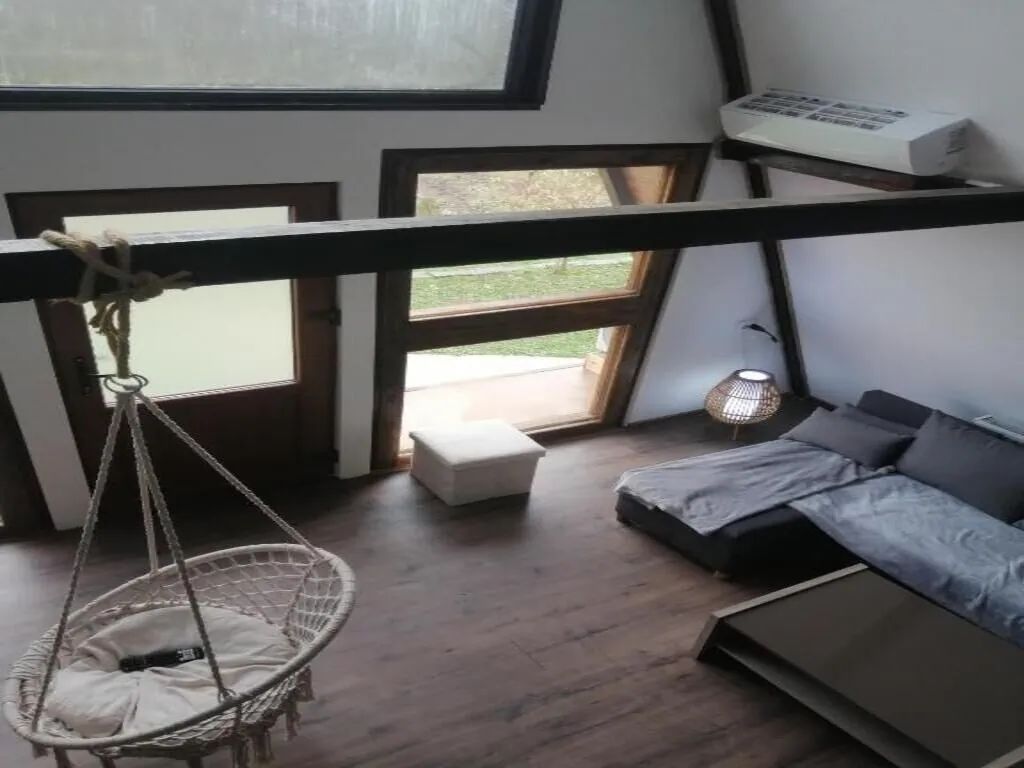
Căsuța de pe Vale Iapa
Camere, serviciiCăsuța de pe Vale Iapa Iapa dispune de o camera modern mobilata. Daca doriti sa aflati mai multe detalii despre facilitatile disponibile la Căsuța de pe Vale Iapa, respectiv despre amenajarea camerelor, va rugam consultati informatiile de mai jos. Servicii de masăPreturile afisate nu includ masa. PlatăPlata serviciilor se face prin urmatoarea metoda: transfer bancar. Pentru asigurarea rezervarii este necesar sa achitati un avans de 30%. Sosire, programPreluarea camerei se face de la ora 15:00 si iesirea pana la ora 11:00. Personalul de la cabană vorbeste limba română.
FROM
270 RON / night
BEFORE YOU HIT THE ROAD
Weather conditions in Săpânța
Local forecast for The Merry Cemetery of Săpânța, Săpânța, Maramureș

Real-time updated weather data
Much more to explore in this area
Nearby tourist attractions


15.1 km


Maramures, Maramureș County
Sighet Memorial Museum
Situat pe strada Corneliu Coposu nr. 4, in fosta inchisoare politica din Sighetu Marmatiei; fiecare celula a devenit o sala de muzeu, in care, urmand o ordine...
15.3 km

Maramures, Maramureș County
Muzeul Satului Maramureșean din Sighetu Marmației
Situat la intrarea in orasul Sighet, pe drumul dinspre Baia Mare; s-a constituit ca o rezervatie de monumente de arhitectura taraneasca; prin structura,...
18.1 km

Surdesti, Maramureș County
Biserica de lemn din Șurdești
Situata in satul Surdesti; construita in anul 1766; a fost construita de catre mesterul Ion Macareie, pentru comunitatea greco-catolica din zona; poarta hramul...
42.1 km
21.6 km

31.3 km
32.5 km
43.1 km

1.1 km

Maramures, Maramureș County
Wooden Church of Desești
Situata in localitatea Desesti; construita in anul 1770; poarta hramul "Sfanta Cuvioasa Paraschiva"; ridicata din barne groase de stejar slefuit; Victor...
24.9 km

Plopis, Maramureș County
Wooden Church of Plopiș
Situata in satul Plopis, pe teritoriul administrativ al comunei Sisesti; construita in anul 1798; poarta hramul "Sfintii Arhanegheli Mihail si Gavriil"; este...
43.0 km

Maramures, Maramureș County
Wooden Church of Budești Josani
Situata in localitatea Budesti-Josani; ridicata in anul 1643; poarta hramul "Sfantul Nicolae"; este o constructie formidabila si indrazneata pentru acea epoca;...
33.4 km
Cultural life and traditions
Events near The Merry Cemetery of Săpânța
Medieval festivals, traditional fairs, concerts and recommended local activities in Maramures.

Tradiții și Meșteșuguri

Săpânța, Jud. Maramureș
Zilele Culturii Locale și Turismului Tradițional
Ateliere deschise de olărit, sculptură în lemn și folclor autentic prezentate de meșteri populari locali.
WHEN
15 - 17 Mai 2026

Gastronomie Tradițională
Săpânța, Jud. Maramureș
Târgul Produselor Tradiționale și al Gastronomiei Locale
Produse atestate tradițional, brânzeturi maturate, miere de munte și bunătăți locale pregătite după rețete străvechi.
WHEN
În fiecare final de săptămână

Cultură și Fotografie
Săpânța, Jud. Maramureș
Tur Ghidat Tematic și Fotografic de Patrimoniu
Explorare ghidată dedicată iubitorilor de istorie, natură și fotografie pe cele mai spectaculoase perspective ale zonei.
WHEN
Program zilnic la cerere
On foot, exploration gains depth
Discover the surroundings and local geography
Explore trails, terrain and natural landmarks around The Merry Cemetery of Săpânța.

Guides and practical tips
Useful travel articles
Travel guides, practical tips and itineraries for Maramures.

Travel guide
Top 5 Atracții Turistice și Trasee Montane în Zona Moieciu - Bran
Descoperă cele mai spectaculoase peisaje carstice, chei adânci și cetăți medievale din imediata apropiere a stațiunii Moieciu.

Travel guide
Ghid de Drumeție: Traseul Moieciu de Sus spre Platoul Bucegi
Un itinerariu montan de o frumusețe rară ce urcă din Valea Băngăleasa spre Poiana Guțanu și crestele maiestuoase ale Bucegilor.

Travel guide
Castelul Bran: Istorie, Legende și Secrete Medievale
Află adevărata poveste a fortăreței medievale din Pasul Bran, reședința de suflet a Reginei Maria a României.
THE JOURNEY STARTS WITH AN IDEA
The next story is on the way.
From the first stop to the last stay, make room for a new Romania.
