


CASTLE · MUNTENIA (WALLACHIA)
Cotroceni Palace

Bucuresti, București County
Add location to your trip planner.

Practical access information

VISITING HOURS
Consultă programul local de vizitare

TICKET PRICE
Informații disponibile la casierie

RECOMMENDED VISIT DURATION
1 - 2 ore
Sources and external references
Wikipedia Encyclopedia (EN)
Visitor information and guide
 Navigate with Google Maps

ABOUT COTROCENI PALACE
A fortress of power and spirit in the heart of South-Eastern Europe
On a gentle hill, at the western edge of old Bucharest, once surrounded by the endless forests of Vlăsia and watched over by the waters of the Dâmbovița, stands today one of the most fascinating historical ensembles in Europe: Cotroceni Palace. It is not merely a monument, but a true palimpsest of European history, a place where, layer upon layer, meet the Byzantine spirituality of Greek exiles after the fall of Constantinople, the Baroque splendour of the Romanian boyars, the ambition of the Hohenzollern dynasty, French and British Belle Époque elegance, the drama of twentieth-century totalitarianism, and the democratic renaissance after 1989. For nearly three hundred and fifty years, without interruption, Cotroceni has been a space of power — monastery and princely residence, royal palace and, today, the seat of the Presidency of Romania — making it the residence with the longest and uninterrupted use in the entire country. For the cultivated European traveller, a visit to Cotroceni means stepping, within a few hours, through entire epochs of the continent's civilisation: from the crusade and from the negotiations between Vienna and Constantinople, to the Louis XVI-style salons, to the decision of Romania's entry into the First World War, and to the reconstruction of a church demolished by a dictatorship, raised again through a gesture of architectural resistance unique in Europe.
From the forests of Vlăsia to Mount Athos: Byzantine and Ottoman roots
Between legend and history: the name of Cotroceni
The story begins with the very meaning of the name. The word "cotrocean" comes, according to researchers, from the archaism "a (se) cotroci", that is, to hide, to take refuge. The meaning gains depth when we think of the geography of the place: in the times before modern Bucharest, the Cotroceni hill was enveloped by the dense forests of Vlăsia, woods so thick that they offered shelter to those fleeing the wrath of the princely court. On the summit there was a wooden skete, called by the monks "Upper Cotroceni", as opposed to "Lower Cotroceni", the village of brickmakers at the foot of the hill. The village and estate are documented for the first time in a princely charter of 27 November 1614, in the form "Cotroceni", although they certainly existed before 1600: the first owners mentioned in documents — Stoica, Preda and Istfan — testified that, before becoming the princely property of Michael the Brave, they held "Cotroceni". This continuity of an estate at the edge of the capital, passed from the hand of a voivode to a family of boyars and then into the property of the dynasty, lies at the foundation of the entire subsequent history of the place.
Șerban Cantacuzino: a Byzantine prince on the throne of Wallachia
The turning point occurs in the second half of the seventeenth century, when the Cantacuzino family — of Byzantine origin, having come to the Romanian Lands in the first decades of the century after the fall of Constantinople into Ottoman hands (1453) — carves out a princely destiny. The most distinguished representative of the family, Șerban Cantacuzino (1640–1688), gradually climbs all the dignities of the princely court, proving sharpness, discretion, knowledge of foreign languages and talent for building. In 1660, as a reward for services rendered to Prince Gheorghe Ghica, he receives the Cotroceni estate, effectively taking possession of it only on 18 November 1671, after years of persecution and intrigue at court. Legend says that, in the autumn of 1678, being pursued by Duca Vodă, who wanted to get rid of a pretender to the throne, Șerban took refuge at Cotroceni, where he stayed hidden for three days and prayed to Saints Sergius and Bacchus to intercede for his salvation, promising that, if he escaped unharmed, he would raise a magnificent church there. He escaped, fled to Constantinople, bought the princedom for 600,000 lei and, in the spring of 1679, ascended the throne. On 26 May 1679 work began on the monastery, and the church, with the patron saints of the Dormition of the Mother of God and Saints Sergius and Bacchus — chosen in connection with events from the personal life of the founder — was completed in October 1682.
Șerban Cantacuzino was not only a founder, but also a man of European diplomacy. He negotiated with the court of Vienna the passage of Wallachia into the Christian camp, aspiring to the position of protector of the Christians in the Balkans, and the Habsburgs promised him, in return, the imperial throne of a Constantinople liberated from the Ottomans. This ambition — to transform a small vassal voivodeship into a Christian kingdom allied with Central Europe — places the figure of Șerban in a constellation common with that of other Balkan princes of the era, from Dimitrie Cantemir to the Byzantine emperors in exile. His reign was, moreover, an era of cultural splendour: at the printing house installed at Cotroceni appeared the Gospel (1682) and the Apostle (1683), and in 1688 — shortly before the death of the founder — the Bucharest Bible, the first complete Bible printed in the Romanian language, a monument of language and national culture whose role in the formation of Romanian literary language is comparable to that of Luther's Bible for the German language. Șerban Cantacuzino died on 28 October 1688, at only 54 years of age, and was buried in the nave of the church he founded, alongside his brothers Matei and Iordache and other members of the dynasty, transforming Cotroceni into a necropolis of the family.
The richest monastery of Wallachia and the connection with Athos
The donations made by the founder rapidly transformed Cotroceni Monastery into the richest monastery of Wallachia. An inventory from 1716 recorded 20 large estates (in Ilfov, Dâmbovița, Muscel, Teleorman, Ialomița), 10 villages of Roma, 18 shops in Bucharest, the Hanul Șerban Vodă inn, the right over customs duties on salt, drinks, fish and wood, plus revenues from 20 monasteries and sketes throughout the country. In 1682, Șerban dedicated the monastery to the monastic community of Mount Athos, through the Protaton — a gesture unprecedented through the conditions he imposed: the hegumen was to be a good administrator, only the surplus of revenues was to reach Athos, nothing of the sacred vessels was to leave the monastery, the hegumen was to give account once every three years, the Athonite typikon was to be followed, the day of Saints Sergius and Bacchus (7 October) was to be celebrated in a special way, and the founder and his kin were to be commemorated and he was to be buried there. The Trei Ierarhi Monastery in Moldavia, the foundation of Vasile Lupu, was in the same situation — a parallel that shows how closely the Romanian Orthodox world was tied to the great centres of Orthodoxy, from Athos to Kiev and Moscow. The architecture of the church, in Brâncovenesc style, with the porch supported on ten octagonal stone columns, with the 12 columns carved from the interior and with the carved and gilded wooden iconostasis, was a replica, in perfect proportions, of the episcopal church at the Curtea de Argeș founded by Neagoe Basarab; the coordinator of the works, Mihai Cantacuzino, had been trained as an architect in Padua and Ravenna, and the painting of the church was entrusted to the famous painter Pârvu Mutu — a true creator of a school, canonised in 2017 by the Holy Synod of the Romanian Orthodox Church. The Brâncovenesc style thus inaugurated lies at the confluence of post-Byzantine tradition, the influence of the Italo-Cretan school and Central European Baroque — the same cultural roots that shaped, in the same era, the palaces of Prague, Vienna or Kraków. Foreign travellers such as the Englishman Edmund Chishull (1702), the Italian Anton Maria Del Chiaro — musician and secretary to the founder, later chronicler of Brâncoveanu —, Domenico Sestini, the Austrian Franz Joseph Sulzer or the Greek Dapontes left testimonies about the beauty of the ensemble, placing it firmly on the cultural map of Europe.
A strategic place of the great empires
Throughout the centuries, the Cotroceni plateau was a strategic point of prime importance, and its military history mirrors the history of the wars between the empires that disputed the Balkans. In July 1737, Austrian troops led by General Ghilany set up camp here; in 1739, the Ottoman troops of General Suleiman Pasha; in 1800–1802, Turkish and Russian troops; in 1806, the Russians of General Miloradovici. These encampments reflect the Austro-Russo-Turkish wars of the eighteenth century, concluded with the treaties of Kuciuk-Kainargi (1774) and, later, with the peace of Bucharest (1812), moments when the map of South-Eastern Europe was rewritten at the negotiating table between Saint Petersburg, Vienna and Constantinople. The devastating earthquake of 1802 destroyed the church and the cells; their reconstruction entailed such great debts that, in 1816, the General Assembly of the country had to intervene, either for the Protaton to pay the debts, or for the sale of 18 shops in Bucharest. In 1821, during the revolution of Tudor Vladimirescu, the monastery became the headquarters of the revolutionaries, who dug defence ditches and strengthened positions with redoubts and cannons — an episode that links Cotroceni to the great national movements of Europe of the era, from the revolutions of 1821 in Greece and in the Romanian Lands. In 1848, the monastery was occupied by Ottoman troops who arrested the revolutionaries. And in 1862–1863, under Alexandru Ioan Cuza — the ruler who established his residence here and who unified, in 1859, the two Romanian provinces — a military training camp was established on the Cotroceni plateau, in parallel with the renovations and refurnishings of the princely houses, financed by the Ministry of Foreign Affairs with a credit line of 4,000 gold coins. Thus, before becoming a royal palace, Cotroceni had already been, for two centuries, a living witness of the confrontations and transformations that made modern Europe.
Between Venice, Paris and London: the royal palace of the Hohenzollern dynasty
Carol I and the French architect Paul Gottereau
The leap towards European modernity occurs at the end of the nineteenth century. Prince Carol of Hohenzollern-Sigmaringen — who had ascended the throne of Romania in 1866 and had just won full independence in 1877–1878, following the Russo-Turkish war and the Treaty of Berlin — used from June 1866 the princely palace of Cotroceni, living there for almost two decades alongside his wife, Queen Elisabeth (known in the literary world under the pseudonym Carmen Sylva), until the inauguration, in 1885, of the Royal Palace on Calea Victoriei (today the National Museum of Art of Romania). In the spring of 1889, Carol I decided on the demolition of the old princely houses and the construction of a modern palace, destined for the heir prince Ferdinand, his nephew. Construction began in 1888, and between 1893 and 1895 the palace was rebuilt according to the plans of the French architect Paul Gottereau, an exponent of beaux-arts academicism, trained at the École des Beaux-Arts in Paris, who had already signed the Royal Palace on Calea Victoriei, the Palace of the Savings Bank and Consignments, the Carol I University Foundation (Central University Library) and the Art Museum of Craiova. Gottereau, born in Perpignan in 1843, conceived Cotroceni in Venetian classical style — a reference to the Serenissima that spoke of the European aspirations of the new kingdom —, with steps and balustrades of Cipollino Italian marble and stucco, in an architectural language that brought it close to the palaces of the Italian Renaissance and those of the Low Countries. For his work, the French architect was decorated with the Order of the Crown of Romania in the rank of Officer and, in 1897, appointed Knight of the French Legion of Honour.
The interiors conceived by Gottereau — and refined later — are a veritable itinerary through the decorative art of Europe: the palace dining room was restored in the German Renaissance style, and the rooms bear the imprints of distinct styles, from Louis XIV to Louis XV and Louis XVI, from English Rococo to Byzantine accents. This "museum" of European styles in miniature reflects the ambition of the Hohenzollern-Sigmaringen dynasty to anchor Romania in the concert of the great continental monarchies, alongside France, Germany and Great Britain.
Queen Maria: Queen Victoria's granddaughter at Cotroceni
On 29 December 1892 (10 January 1893, new style), Ferdinand married at Sinaia Princess Maria of Edinburgh and Saxe-Coburg and Gotha, born on 29 October 1875 at Eastwell Park, in the county of Kent — granddaughter of Queen Victoria of Great Britain and of Tsar Alexander II of Russia. The princely couple moved to Cotroceni in 1896, and the palace became their permanent residence until the queen's death, in 1938. Here, Queen Maria — British princess, writer and artist — put her unmistakable mark on the decorations, between 1900 and 1910: the Golden Salon (1901), the Silver Bedroom (1905) and the Norwegian Salon (1911), realised according to the plans of the Czech architect Karel Líman, architect of the Royal House, alongside the Green Salon — a reinterpretation of the Louis XVI style with English accents — and the Painting and Pyrography Salon. The Queen confessed that the "dream of her life" was to transform Cotroceni into a "dream house", and in the pages of her memoirs she describes with emotion how she "changed Cotroceni according to what I had learned about Romanian architecture and ornamentation". After the First World War, under her guidance, the Romanian architect Grigore Cerchez reconceived the northern wing of the palace (1913–1915) in national romantic style, adding a large hall with a terrace above and two gazebos with columns — one of them being a faithful replica of the famous gazebo of Hurezi Monastery —, and in the years 1925–1929 he refurbished the Great White Salon and the queen's bedroom. Thus, at Cotroceni coexist, within a single ensemble, Viennese Art Nouveau (Secession), French neoclassicism, Romanian national romanticism and the Brâncovenesc tradition — a dialogue of styles that mirrors, on a reduced scale, the entire evolution of European art from 1880 to 1930.
A European court: guests, alliances and historical decisions
Cotroceni Palace was, in the interwar period, a stage of European diplomacy. Here were received King Alexander of Yugoslavia (February 1922), Italian Marshal Pietro Badoglio (May 1922), the Federal Chancellor of Austria, Monsignor Ignaz Seipel (February 1924), the foreign ministers Edvard Beneš of Czechoslovakia and Momčilo Ninčić of Serbia (May 1925) — figures who, in the following years, were to play decisive roles in the destiny of Europe, from the Munich Conference to the formation of the Little Entente. But the gravest moment in the history of the palace as a European political stage was consumed in August 1916: the Crown Council of 14 August 1916, reunited in the Dining Room of Cotroceni Palace, decided on Romania's renunciation of neutrality and entry into the First World War on the side of the Entente — a decision that was to change the map of Europe forever and that was to lead to the Great Union of 1918. Queen Maria, present at those deliberations, was to become the symbol of Romanian resistance in the hard years of the war, and her memory — of a Briton become Queen of Romania and mother of a nation — links Cotroceni, in a unique way, to the history of the crowns of Europe.
Legends, personalities and turning points
The communist era: the Pioneers' Palace and the drama of the church
After the abdication of King Michael (30 December 1947) and the establishment of the people's republic, Cotroceni Palace came under state administration, and in 1948 the church of the monastery was closed to worship for "ideological considerations". Between 1949/1950 and 1976, the building functioned as the Pioneers' Palace — an institution inspired by the Soviet model of pioneers' houses and pioneers' palaces throughout the Eastern bloc, from the Pionierpalast in East Berlin to the pioneers' houses of Moscow or Warsaw. Many generations of Bucharesters stepped then, without knowing, through the rooms where kings and queens had lived: Queen Maria's Norwegian Salon became the pioneers' storytelling room, the Painting Salon became the ballet room, and the books of King Ferdinand's library were burned in the palace courtyard — a barbaric gesture that mirrors the fate of libraries and royal heritage throughout communist Europe. In 1976, the palace was taken over by the State Protocol, and the devastating earthquake of 4 March 1977 brought down a large part of the buildings of the ensemble. After 1977, Nicolae Ceaușescu used the palace as a guest house, and in 1984 he decided on the demolition of the church founded by Șerban Cantacuzino — a decision that fits into the logic of ideological destructions of the communist regimes in Europe, from the demolition of the Royal Palace (Stadtschloss) in Berlin, in 1950, by the German Democratic Republic, to the urban systematisations that razed entire neighbourhoods of East European capitals.
Salvation through a diversion of funds
The story of the church's salvation is, in itself, a page of European resistance. Since no funds were allocated for the demolition, the architect Camil Roguski — responsible for raising the new wing of the palace — resorted to a diversion of funds: he used money destined for other works to remove the stone, columns, profiles and frescoes of the church and transport them to Cernica Monastery, to a depot, convinced that the church would one day be rebuilt. Moreover, when Elena Ceaușescu asked that a swimming pool be arranged in place of the church, Roguski had to convince her — through a trick worthy of the most ingenious court intrigues in the history of Europe — that a pool would flood the palace basement. Thus, the foundation of the church remained intact, preserving its original form, and approximately 80 square metres of the original fresco — the wall with the portraits of the founders in the narthex, work of Pârvu Mutu —, together with the carved and gilded iconostasis and part of the liturgical treasure, were saved. After the 1977 earthquake, the restoration of the historical palace was coordinated by the architect Nicolae Vlădescu, who respected the style of Gottereau and that of Cerchez, and between 1980 and 1986 the new wing was raised — today the seat of the Presidential Administration —, whose architecture resumes, in spirit, traditional Romanian elements; the monumental staircase of the new wing, with the sumptuous door and the decorative band above, is inspired even by the band that surrounded the demolished church.
Renaissance: from the Revolution to the reconsecration of 2009
After the Revolution of December 1989 — that 1989 which brought down the communist regimes throughout Europe, from Berlin to Sofia and from Prague to Bucharest — Cotroceni Palace became the seat of the Presidency of Romania. By Government Decision of 10 July 1991 the Cotroceni National Museum was established, officially inaugurated for the public on 27 December 1991, in the historical body of the palace. In 1994, the museum was distinguished with the European Museum of the Year Award — Special Commendation, awarded by the Council of Europe, a recognition that places the institution on the map of the great museums of the continent, alongside laureates such as the Van Gogh Museum in Amsterdam or the Rijksmuseum. Regarding the church, reconstruction works began in 2003–2004, in the mandate of President Ion Iliescu, when the place of worship was partially rebuilt on the old foundations, in the form of a "Cantacuzino Memorial", in the nave being embedded a few fragments from the original frescoes of Pârvu Mutu. Between 2008 and 2009, in the mandate of President Traian Băsescu, the reconstruction was fully completed: the altar was completed by bringing and fixing the original gilded wooden altarpiece, a bell of over one tonne was installed, cast in a specialised factory in the Diocese of Maramureș, and on 11 October 2009 Patriarch Daniel reconsecrated the church, which thus entered the visiting route of the museum. Today, the faithful attend Sunday services in the reborn church, while the palace courtyard hosts, periodically, concerts and cultural events — a return of the sacred to a space of power, unique in the former communist bloc.
The Cotroceni National Museum: an artistic treasure at the intersection of Europe
In the historical wing of the palace, the Cotroceni National Museum houses collections that illustrate the artistic evolution of Romania in a European context. The art gallery comprises works signed by masters of Romanian painting — Theodor Aman, Nicolae Grigorescu, Ioan Andreescu, Ștefan Luchian, Nicolae Tonitza, Theodor Pallady, Gheorghe Petrașcu, Gheorghe Tattarescu, Corneliu Baba, Dimitrie Paciurea, Constantin Brâncuși — artists trained in the great schools of Europe (Paris, Munich, Vienna), whose works dialogue with French academicism, with Impressionism and with the avant-gardes of the twentieth century. Alongside these, the museum preserves European and Japanese graphics, period French furniture, Oriental carpets, folk icons from Transylvania, liturgical silverware and embroideries, porcelain and crystal belonging to the former royal family, as well as collections of numismatics and medieval art. The specificity of the museum consists in the combination of the character of memorial space — with its history of almost 350 years — with that of decorative arts museum, in an architectural setting that is itself an exhibit: the hall of honour, the cellars, the kitchen of the former monastery, the inner courtyard, the gardens and, from 2009, the rebuilt church. The exhibition route traverses the royal apartments — King Ferdinand's library, his bedroom, Queen Maria's apartment with the Norwegian Salon —, the reception salons and protocol spaces, offering the visitor an incursion into the intimate life and taste of a dynasty that knew how to combine Western refinement with national identity. Starting from 2025, under the impulse of interim presidents Ilie Bolojan and Nicușor Dan, the palace has known an unprecedented opening to the public, through the permanent programme "Open Gates at Cotroceni Palace": at weekends, the gardens, the Ceremonial Plateau, the Baroque Plateau, the inner courtyards and the Palace Church can be visited free of charge, through the main gate on Bulevardul Profesor Doctor Gheorghe Marinescu, while the paid routes also include spaces of the Presidential Administration such as the Union Hall, the Basarab Gallery and the Performance Hall — rooms which, during the rest of the week, are reserved for representation and state protocol.
Practical visiting guide: the European traveller's experience
Programme, access and fees
Cotroceni Palace is located in sector 6 of Bucharest, on Bulevardul Geniului no. 1–3, with access also from Șoseaua Cotroceni, near the "Dimitrie Brândză" Botanical Garden (founded in 1860) and the Eroilor metro station. The Cotroceni National Museum is open to the public from Tuesday to Sunday, between 09:00 and 17:00, with the last entry around 16:00 (the programme may vary depending on the season and institutional events — from 15 July 2026, visitor access is scheduled between 09:00 and 16:00, with the last entry at the same time). On Monday, the museum is closed. The visit takes place either in guided tours — in Romanian, English, French, Italian, Spanish and German, with departures at 09:30, 10:30, 11:30, 12:30, 13:30, 14:30 and 15:30 —, or without a guide, in certain intervals, or on the exhibition route. The fees practised at the time of writing this guide are differentiated: the complete tour (about 100 minutes, including the kitchen, inner courtyard, church, hall of honour, cellar and floors I and II) costs 30 lei for resident adults and 50 lei for foreign visitors, with reductions for pupils, students (10–12.5 lei) and pensioners (15–25 lei); the classic tour (60 minutes) costs 20–40 lei; the weekend route, which also includes the representation spaces of the Presidential Administration, is priced at 70 lei, with a 75% reduction for pupils and students and 50% for pensioners; there is also the option of a VIP tour for private groups of maximum six people. Tickets can be purchased online, on the official website muzeulcotroceni.ro and on the IaBilet and BookTes platforms, or at the box office, and for guided tours prior booking is recommended by telephone (021-317.31.07, 0725.518.381) or by e-mail ([email protected]), at least 24 hours in advance. Free access is granted to preschoolers, persons with disabilities, war veterans, heroes of the Revolution, ICOM members and specialists from cultural institutions. Photography is permitted in the museum, with the exception of the church and certain areas indicated by the guide, and visitors are asked to respect the code of conduct specific to a space that remains, at the same time, an active seat of a presidential institution.
What you will discover, step by step
A visit to Cotroceni unfolds as a journey through time. It usually begins, in the inner courtyard and the kitchen of the former monastery — a space that preserves the memory of the seventeenth century —, then you ascend towards the floors of the royal palace: the hall of honour with its Italian marble, Queen Maria's Golden Salon, the Green Salon in the spirit of Louis XVI, the Silver Bedroom, the Norwegian Salon — intimate refuge of a British princess —, King Ferdinand's library and the dining room in the German Renaissance style. The historical cellars, with their vaults, recall the storage function of the old monastery, and the church, reconsecrated in 2009, impresses through the porch with columns, through the fragments of Pârvu Mutu's fresco embedded in the nave and through the original altarpiece, brought back to its place after 25 years of exile at Cernica Monastery. The palace gardens — with their avenues, rare vegetation and perspective towards the city — offer, in the end, a moment of respite, inviting reflection on a history that, at Cotroceni, never stopped: from the prayer of a Byzantine prince hidden in the forests, to the splendour of a European royal court, to the silent resistance of an architect who saved a church through a pious lie and to the reopening, after 1989, of the gates of a fortress of power to citizens and to the world. For the European traveller, Cotroceni remains what it has always been: a place where the history of the continent can be read, in stone, in fresco and in gold, only a few steps from the heart of a Bucharest in full European transformation.
Media gallery
Discover Cotroceni Palace in pictures

28 photos · Architecture, courtyards and captivating details


Image source: Wikimedia Commons · Public domain photos · Free license
STAY A FEW DAYS, DISCOVER THE MAGIC
Stays near Cotroceni Palace

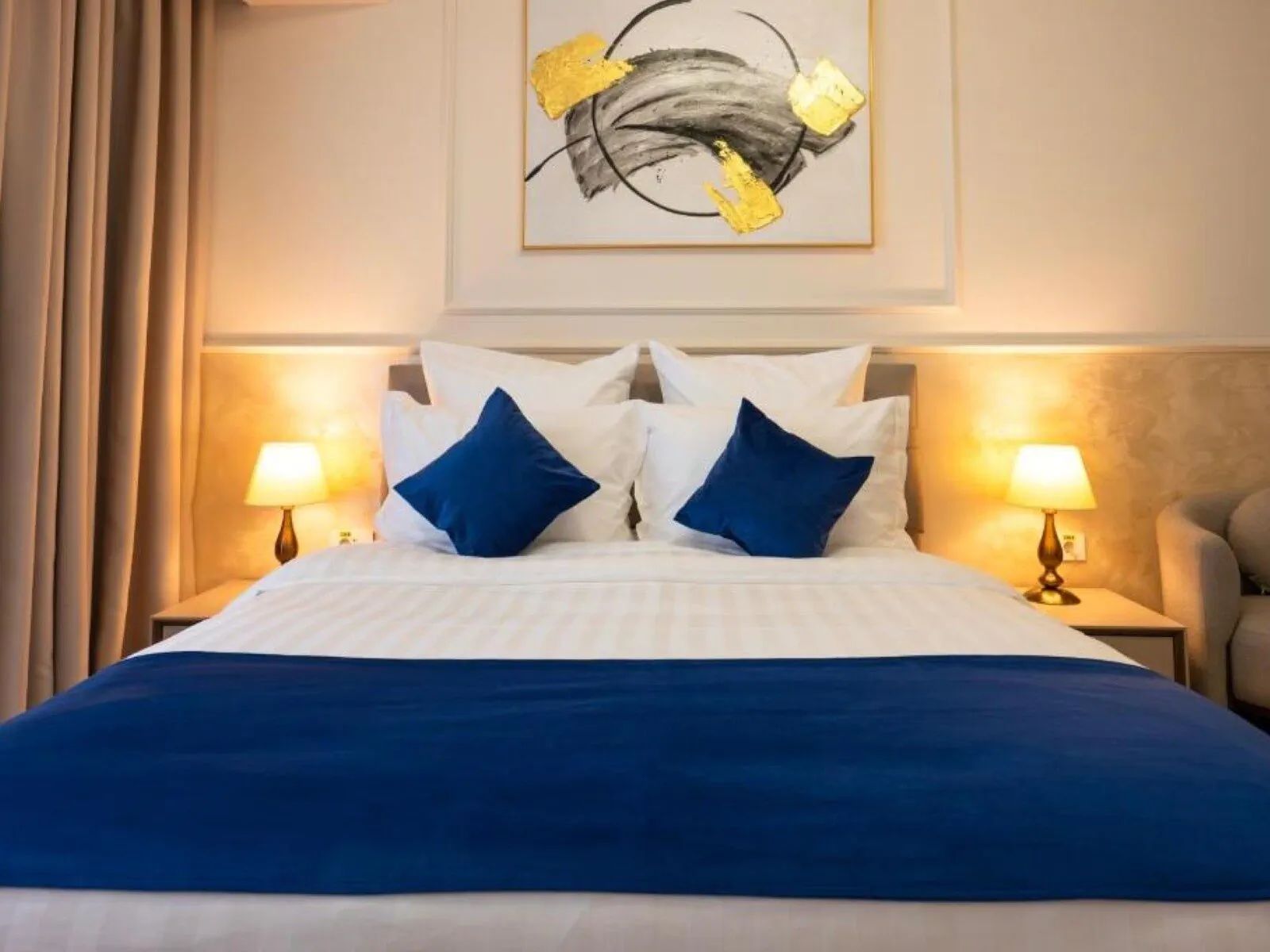
Hotel · 4 stars

București, București County · 0.8 km
Hotel Le Blanc Cotroceni București
Hotel Le Blanc Cotroceni oferă o oază de eleganță și confort în inima cartierului istoric Cotroceni din București. Cu 48 de camere amenajate cu grijă, fiecare dotată cu aparat de cafea și duș modern walk-in, hotelul nostru asigură o ședere relaxantă și plină de confort. Bucurați-vă de priveliști pitorești asupra râului Dâmbovița din anumite camere și descoperiți farmecul unuia dintre cele mai prestigioase cartiere ale orașului. Situat pe Splaiul Independenței 201, hotelul se află la doar câțiva pași de Grădina Botanică din București, oferind o escapadă liniștită în mijlocul naturii. Fie că ne vizitați pentru afaceri sau pentru relaxare, Hotel Le Blanc Cotroceni îmbină rafinamentul, confortul și o locație ideală pentru o experiență memorabilă.
FROM
420 RON / night

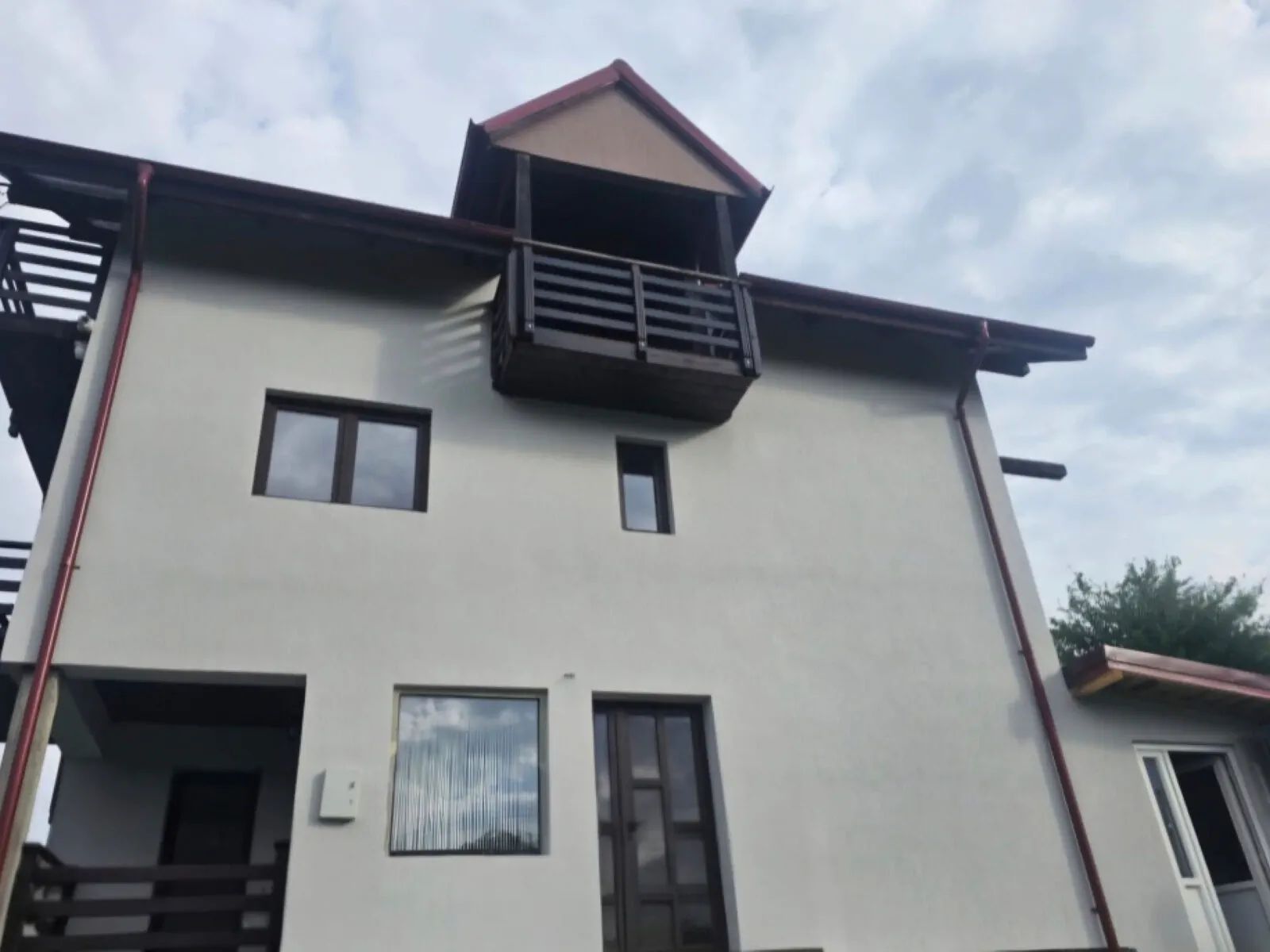
Casă de Vacanță · 1 star
Grozăvești, Grozăvești County · 0.8 km
Casa La Constanța Grozăvești
Descoperă un refugiu montan autentic, foarte aproape de malul Lacului Bicaz, unde liniștea pădurii întâlnește confortul modern. Am creat acest spațiu pentru a fi departe de agitația orașului și pentru a admira o priveliște spectaculoasă asupra masivului Ceahlău.
FROM
280 RON / night
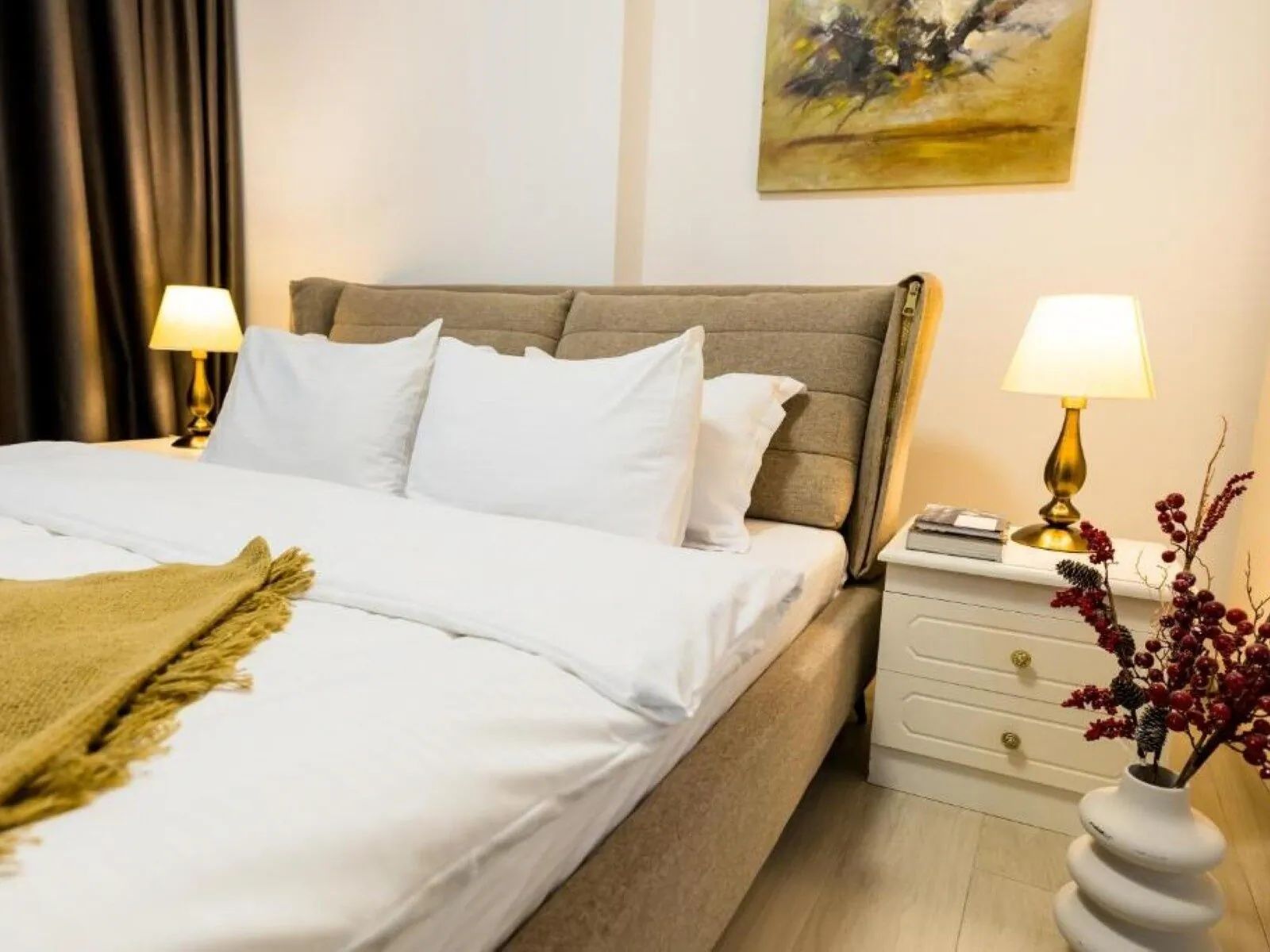
Hotel · 4 stars
București, București County · 1.0 km
Le Blanc Aparthotel București
Cu un design modern si servicii prompte, de inalta calitate, Le Blanc Aparthotel din Bucuresti va intampina cu ospitalitate si profesionalism, oferindu-va sprijin si increderea ca solutiile noastre sunt intotdeauna cele mai avantajoase pentru fiecare oaspete. Alege o cazare inedita: un apartament care iti ofera senzatia de acasa, completat cu facilitati de 4 stele. O locatie aproape de centrul Bucurestiului, pozitionata strategic langa puncte de interes precum Palatul Cotroceni sau centrul comercial AFI Cotroceni. Statia de metrou Grozavesti se afla la doar cateva minute distanta, astfel ca orice deplasare devine simpla si eficienta.
FROM
420 RON / night
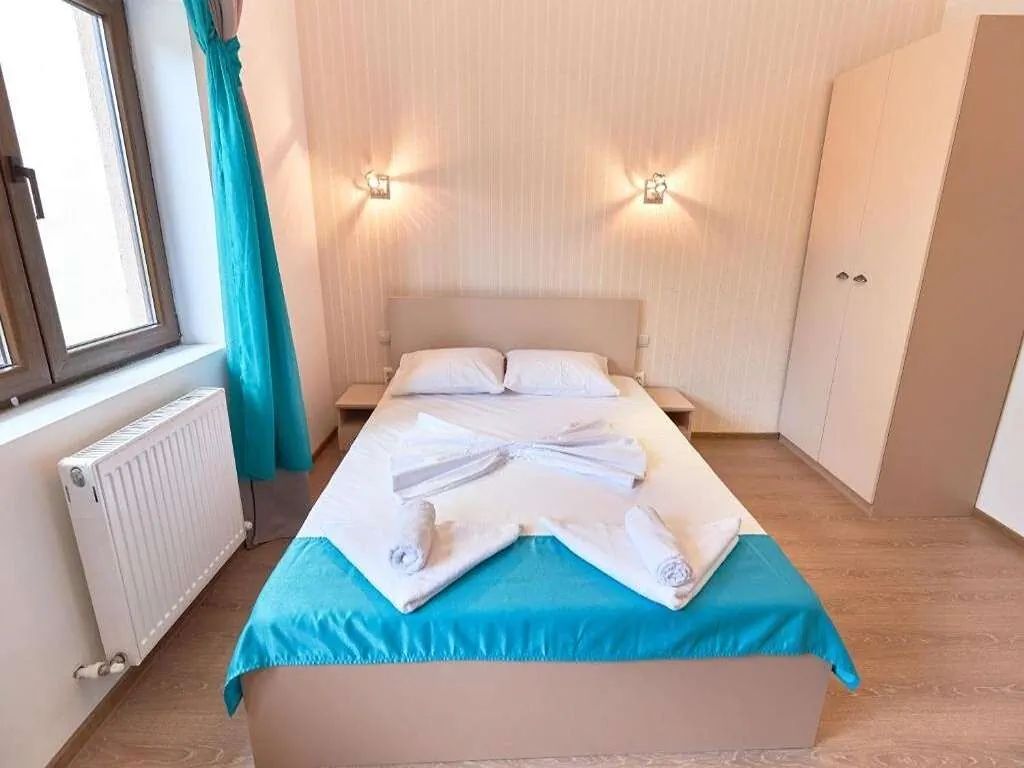
Vilă · 2 stars
București, București County · 1.2 km
Stanford Apartments Gara de Nord Bucuresti
Camere, serviciiStanford Apartments Gara de Nord Bucuresti București ofera cazare in 12 camere placut mobilate si confortabile. Animalele de companie sunt binevenite (contra cost). Exista parcare privata gratuita. Anumite camere sunt echipate cu aer conditionat, pentru a va asigura tot confortul cuvenit pe perioada sejurului. (Pentru mai multe informatii consultati la fiecare tip de camera rubrica "detalii"). Unitatea va pune la dispozitie internet wireless. Mai multe detalii despre facilitatile oferite la vilă (inclusiv cele contra cost), cat si despre dotarile camerelor veti gasi mai jos. Servicii de masăTarifele camerelor nu includ nici o masa. PlatăPlata o puteti face cu/prin: transfer bancar, card de vacanță, avans travelminit, voucher travelminit. Sosire, programZiua de cazare incepe la ora 16:00. Eliberarea camerei se face la ora 11:00. La receptie se vorbeste limba: engleză, română.
FROM
280 RON / night
Hotel · 3 stars
București, București County · 1.2 km
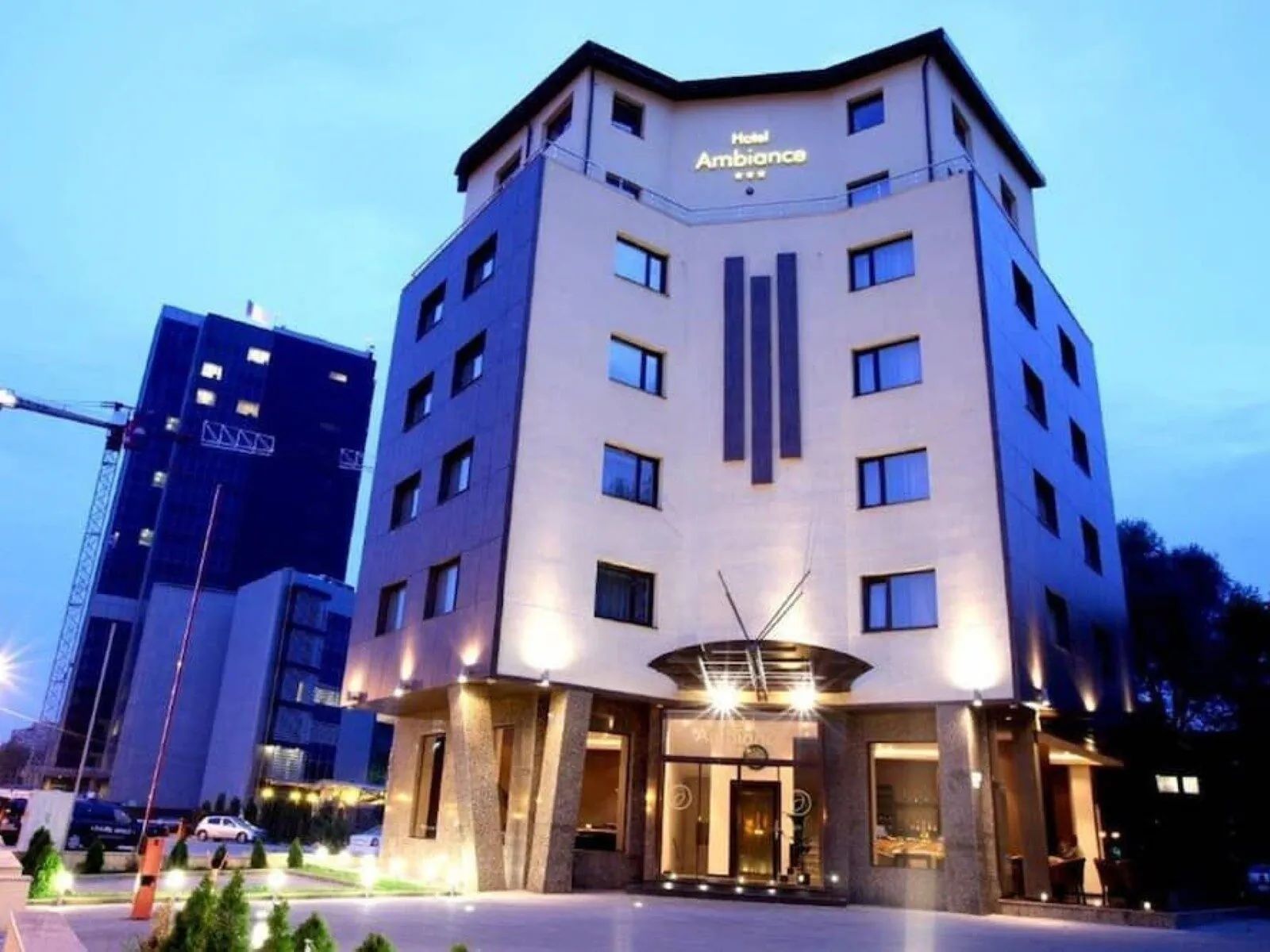
Hotel Ambiance București
Hotelul Ambiance din București, situat chiar pe malul râului Dâmbovița, oferă camere cu aer condiționat și WiFi gratuit. Hotelul oferă un restaurant, un bar și o terasă. Camerele moderne au TV cu ecran plat, minibar și baie cu duș, articole de toaletă gratuite și uscător de păr. Unele camere au, de asemenea, o zonă de relaxare. Recepția Hotelului Ambiance este deschisă 24 de ore pe zi. Micul dejun tip bufet servit zilnic poate fi consumat și în cameră. Este posibilă parcare privată cu plată, cu un număr limitat de locuri disponibile, iar la cerere sunt disponibile servicii de transfer. Restaurante și baruri sunt la 100 de metri, iar stația de metrou Grozăvești este la 5 minute de mers pe jos de hotel. Piața Unirii este la 5 km, iar Lacul Morii este la 1,7 km. Parcul de afaceri Sema este la 400 de metri. Aeroportul București este la 20 km de Hotelul Ambiance.
FROM
290 RON / night
Pensiune · 3 stars
București, București County · 1.2 km
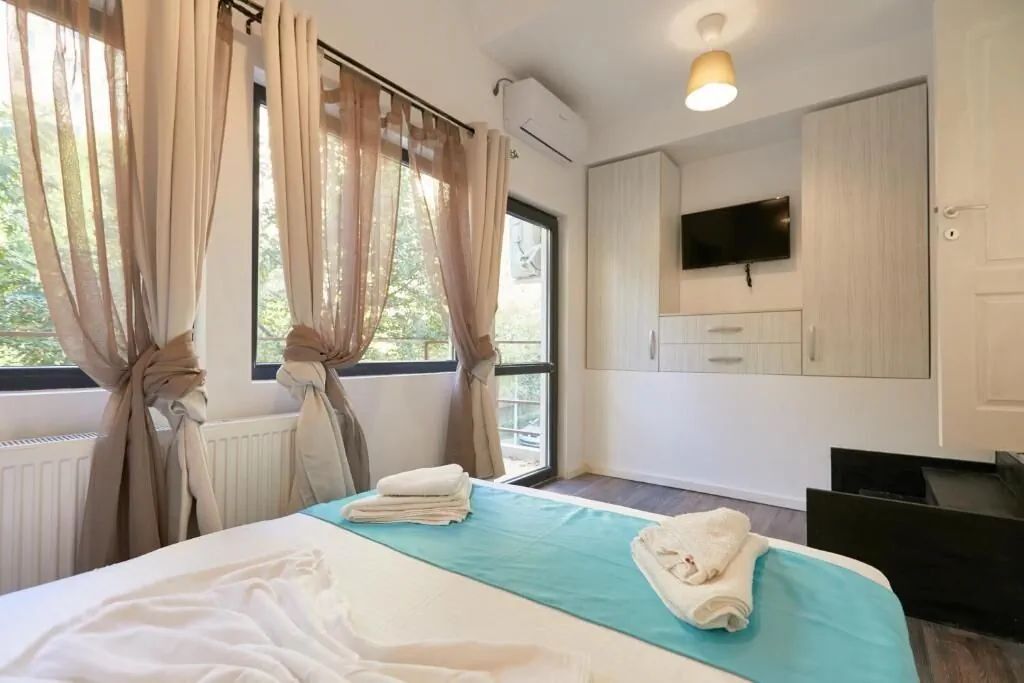
Stanford Apartments Bucuresti
Camere, serviciiStanford Apartments Bucuresti ofera 12 camere si apartamente, fiecare cu grup sanitar propriu, bucatarie proprie dotate, frigider mare, aer conditionat, masina de spalat,tv,internet. Mai multe detalii despre facilitatile oferite de Stanford Apartments (inclusiv cele contra cost), cat si despre dotarile camerelor veti gasi mai jos. Tarifele afisate se refera numai la cazare. PlatăPlata rezervarii se poate face cu/prin: transfer bancar. Sosire, programCheck-in se face incepand cu ora 16:00 si check-out pana la ora 11:00. Personal vorbitor de limba: engleză, română.
FROM
240 RON / night
BEFORE YOU HIT THE ROAD
Weather conditions in Bucuresti
Local forecast for Cotroceni Palace, Bucuresti, București

Real-time updated weather data
Much more to explore in this area
Nearby tourist attractions


Bucuresti, Bucharest
Palace of the Parliament
Situat pe strada Izvor nr.3, sector 5, localitatea Bucuresti; in perioada comunista a fost cunoscut sub numele de "Casa Poporului"; considerata una dintre cele...
2.1 km

București, Bucharest
People's Salvation Cathedral (National Cathedral of Romania)
Catedrală ortodoxă din București
1.9 km

Bucuresti, Bucharest
Royal Palace of Bucharest
Situat pe Calea Victoriei nr. 49-53, sector 1, localitatea Bucuresti; construit intre anii 1812-1815 a apartinut marelui logofat Dinicu Golescu, dar a fost...
2.8 km

Bucuresti, Bucharest
Dimitrie Gusti National Village Museum
Situat pe Soseaua Kiseleff nr.28-30, sectorul 1; a fost inaugurat in 1936; expozitia permanenta cuprinde 121 de complexe distincte, totalizand 338 de monumente,...
4.4 km

Bucuresti, Bucharest
Romanian Peasant Museum (Muzeul Național al Țăranului Român)
Situat pe soseaua Kiseleff nr.3, sector 1, localitatea Bucuresti; constructia intregului edificiu a durat 29 de ani, fiind finalizat in 1941; cladirea muzeului...
2.9 km

Bucuresti, Bucharest
Muzeul Național de Istorie Naturală Grigore Antipa
Situat pe soseaua Kiseleff nr. 1, sector 1, localitatea Bucuresti; fondat in 1834 la initiativa lui Mihalache Ghica; are un bogat patrimoniu format din...
3.0 km

Bucuresti, Bucharest
Palatul Patriarhal
Situat pe aleea Dealul Mitropoliei nr.25, sector 4, localitatea Bucuresti; construit de statul roman, la inceputul secolului al XX-lea, pe locul fostei sali a...
3.1 km

Bucuresti, Bucharest
Muzeul Național de Istorie a României
Situat pe Calea Victoriei nr.12, sector 3, localitatea Bucuresti; adapostit de Palatul Postelor; a fost inaugurat in anul 1970 fiind cel dintai muzeu de...
2.8 km

Bucuresti, Bucharest
Muzeul Național de Artă al României
Situat pe Calea Victoriei nr. 49-53, sector 1; deschis in 1948, in vremea lui Alexandru Ioan Cuza;cladirea era pe atunci locuinta domneasca, in timpul lui...
2.8 km
2.4 km

Bucuresti, Bucharest
Palatul Cantacuzino
Situat pe Calea Victoriei nr.141, sector 1, localitatea Bucuresti; construit intre anii 1898-1900, in stil baroc francez al epocii Ludovic al XVI-lea, pentru...
2.7 km

Bucuresti, Bucharest
Biserica Stavropoleos
Situata pe strada Stavropoleos nr.4, localitatea Bucuresti; poarta hramurile: "Sfintii Arhangheli Mihail si Gavriil", "Sfantul Atanasie cel Mare", "Sfantul...
3.0 km
Cultural life and traditions
Events near Cotroceni Palace
Medieval festivals, traditional fairs, concerts and recommended local activities in Muntenia (Wallachia).

Istorie și Arhitectură Regală

Bucuresti, Jud. București
Zilele Regalității și Patrimoniului Văii Prahovei
Conferințe istorice deschise, tururi tematice de arhitectură regală, proiecții documentare și expoziții foto de epocă.
WHEN
10 - 12 Mai 2026


Gastronomie și Oenologie
Dealu Mare, Jud. București
Festivalul Vinului Prahovean pe Drumul Vinului
Degustări ghidate de Fetească Neagră pe faimosul Drum al Vinului, vizite în crame istorice și întâlniri cu oenologi de top.
WHEN
În fiecare weekend (Septembrie - Octombrie)
Drumeții și Aventură
Masivul Bucegi, Jud. București
Tur Ghidat Montan în Masivul Bucegi
Trasee montane ghidate de salvamontiști către punctele panoramice emblematice și cascade alpine spectaculoase.
WHEN
Zilnic în sezon (Iunie - Octombrie)
On foot, exploration gains depth
Discover the surroundings and local geography
Explore trails, terrain and natural landmarks around Cotroceni Palace.

Guides and practical tips
Useful travel articles
Travel guides, practical tips and itineraries for Muntenia (Wallachia).

Travel guide
Top 5 Atracții Turistice și Trasee Montane în Zona Moieciu - Bran
Descoperă cele mai spectaculoase peisaje carstice, chei adânci și cetăți medievale din imediata apropiere a stațiunii Moieciu.

Travel guide
Ghid de Drumeție: Traseul Moieciu de Sus spre Platoul Bucegi
Un itinerariu montan de o frumusețe rară ce urcă din Valea Băngăleasa spre Poiana Guțanu și crestele maiestuoase ale Bucegilor.

Travel guide
Castelul Bran: Istorie, Legende și Secrete Medievale
Află adevărata poveste a fortăreței medievale din Pasul Bran, reședința de suflet a Reginei Maria a României.
THE JOURNEY STARTS WITH AN IDEA
The next story is on the way.
From the first stop to the last stay, make room for a new Romania.
