


MUSEUM · MUNTENIA (WALLACHIA)
Dimitrie Gusti National Village Museum

Bucuresti, București County
Add location to your trip planner.

Practical access information

VISITING HOURS
Consultă programul local de vizitare

TICKET PRICE
Informații disponibile la casierie

RECOMMENDED VISIT DURATION
1 - 2 ore
Sources and external references
Wikipedia Encyclopedia (EN)
Visitor information and guide
 Navigate with Google Maps

ABOUT DIMITRIE GUSTI NATIONAL VILLAGE MUSEUM
Captivating Introduction and Universal Value
On the shores of Lake Herăstrău, in the heart of Bucharest, stretches an entire village—not a set, not a reconstruction, but an authentic rural world, dismantled piece by piece from Romania's villages and revived in the capital. The Dimitrie Gusti National Village Museum is, nearly nine decades after its founding, one of the oldest and most prestigious open-air museums in Europe, a true "village-museum" that shelters over 120 ethnographic complexes and more than 340 monuments of vernacular architecture, spread across approximately 14 hectares. For the European traveler, this place represents an open window onto the rural civilization of South-Eastern Europe, a space where Romanian traditions meet those of the Saxon, Székely, Lipovan, or Jewish minorities, in a cultural dialogue that reflects the complex history of a space situated at the frontier between the Ottoman Empire, the Habsburg Monarchy, and the Slavic world.
The universal value of this museum resides precisely in its absolute authenticity: every house, every wooden church, every windmill or technical installation is an original, dismantled from its village of origin and reassembled with meticulous care on the lake shore, under the coordination of craftsmen brought especially from rural communities. This approach, revolutionary for the year 1936, places the Bucharest institution in a unique position in the European cultural landscape, alongside the pioneer Skansen in Stockholm or the Bygdøy museum in Norway, but with a particular specificity—the presentation of an entire nation, with all its historical provinces and all its ethnic layers, in a living and breathable synthesis.
Historical Roots and Major European Connections
The idea of an open-air museum in Romania has its roots as far back as the second half of the 19th century, when all of Europe was experiencing an unprecedented surge of interest in folk architecture and in national "roots," in the full era of Romanticism and the construction of national identities. In 1867, at the Universal Exhibition in Paris, Alexandru Odobescu proposed the presentation of Romanian folk architecture monuments, thus anticipating the direction that all of Europe would take. Later, the scholar Alexandru Tzigara-Samurcaș would exhibit, in 1909, in the Ethnographic Museum in Bucharest, the first complete peasant house brought from the Gorj area, paving the way toward the concept of the "authentic household."
The European context of the 1930s was marked by the existence of only two open-air museums on the continent: Skansen in Stockholm, founded in 1891 by the Swedish philologist and folklorist Artur Hazelius, quickly becoming the model for all of Northern Europe, and the Bygdøy Museum in Lillehammer, Norway. In Romania, the Ethnographic Museum of Transylvania in Hoia Park in Cluj was already functioning, from 1929, with a regional character, founded by Professor Romulus Vuia. In this restricted landscape, the appearance of the Village Museum in Bucharest, in 1936, represented a contribution of European scope, being the fourth museum of this kind in the world and the first with a national character in South-Eastern Europe.
The museum's founder, Dimitrie Gusti (1880-1955), was himself a product of intellectual Europe. He had studied at the University of Iași, then in Berlin and Leipzig, where he had been influenced by the great German sociologists Wilhelm Wundt, Karl Bücher, Georg Simmel, Ferdinand Tönnies, and Max Weber, obtaining his doctorate in 1904 with the thesis "Egoism and Altruism." In 1908, he had perfected himself in Paris, at the Sorbonne, under the guidance of Émile Durkheim, the father of French sociology, and approaching the work of Herbert Spencer. This solid European formation, which combined the German tradition of empirical sociology with the French one of social solidarity, made Gusti conceive the museum not as a simple repository of ethnographic objects, but as a "sociological museum of the Romanian village of today," an instrument of social pedagogy and cultural action.
The year 1936, when the museum was inaugurated, was a moment of cultural flourishing for interwar Romania, under the reign of King Carol II (1930-1940). The sovereign, son of King Ferdinand and Queen Marie—the latter being a granddaughter of Queen Victoria of Great Britain—was a great supporter of culture, and the Royal Cultural Foundation "Prince Carol" ensured the financing of the project. Carol II had visited the construction site four times, wishing for the inauguration to coincide with the fulfillment of 70 years since the founding of the dynasty. The European context of those years was tumultuous: Europe was preparing for major ideological confrontations, and Romania, through this museum, affirmed its belonging to the values of European culture, at a moment when aggressive nationalisms were beginning to dominate political discourse.
Interestingly, Dimitrie Gusti declared in his inaugural speech that the Nordic museums of Skansen, Bygdøy, or Lillehammer had not been a direct source of inspiration for him, because he considered them "too romantic and ethnographic," preoccupied more with museum pieces than with the problems of contemporary man. He wanted a museum that "should please not only the eye, but also show true things," a "village-museum," synthesis of all the villages of all Romania, in which should be reflected "the wealth and variety of peasant life, the ideas so often profound, of peasant architectural style, the great science of adaptation to the environment and of processing the environment."
Architectural Masterpiece and Artistic Heritage
The National Village Museum is organized according to the geographical principle of Romania's historical provinces, offering a remarkable comparative analysis of vernacular architecture. Each ethnographic region—Transylvania, Banat, Oltenia, Muntenia, Dobrogea, and Moldova—is represented through complete households, with houses, annexes, churches, technical installations, and craft workshops, all authentic and dismantled from their villages of origin.
Transylvania and Banat—the Habsburg and Saxon Heritage
Transylvania, the best-represented region in the museum, brings an extraordinary diversity of constructions from Maramureș, Țara Oașului, Bistrița-Năsăud, Hunedoara, and Sibiu. Here are found the most valuable monuments of wooden architecture, reflecting centuries of coexistence between Romanians, Saxons (German colonists brought beginning with the 12th century under the kings of Hungary), and Székelys (Hungarians). The Maramureș households—such as those from Ieud (1890), Șurdești (18th century), or Berbești (1775)—are distinguished by monumental carved gates, true works of art in wood, and by massive houses built of oak beams, with high shingle roofs. This architecture reflects both the geographical isolation of the Carpathian valleys and the late Gothic influences brought by the Saxon craftsmen of Transylvania, part of the Habsburg Empire and, later, of Austria-Hungary.
The point of resistance of the entire museum is the Wooden Church from Dragomirești, Maramureș County, built in the year 1722 and brought to Bucharest in 1936. This Greek-Catholic church, with the patronage of the Dormition of the Mother of God, was raised on the site of another destroyed by Tatars in the incursion of 1717—a historical episode that illustrates the confrontation between the Ottoman Empire, supported by the Crimean Khanate, and the Habsburg Empire of Emperor Charles VI. The church's architecture, of the "hall" type, with an elongated rectangular plan toward the east and its slender tower, represents a unique "Transylvanian vernacular Gothic" in Europe, being stylistically related to the eight wooden churches of Maramureș included in the UNESCO World Heritage in 1999. The interior preserves mural paintings made by local painters, representing biblical scenes and elements from the social life of the time.
From Banat come households influenced by Central European architecture, with lower houses and well-organized annexes, reflecting the period of Habsburg administration and later Austro-Hungarian rule over this region. A water mill and a fulling mill—an installation for processing wool—illustrate the pre-industrial techniques specific to the area.
Oltenia and Muntenia—Archaicism and Resistance to Invasions
Oltenia brings to the museum the most archaic forms of dwellings: the semi-underground bordei houses from Drăghiceni and Castranova, constructions of earth and wood that recall prehistoric forms of habitation, adapted to the need for defense against frequent invasions. These dwellings, with low foundations or partially buried in the ground, reflect a survival strategy in a plain area exposed to Ottoman raids. Alongside these, the house from Curțișoara (early 19th century) stands out, typical for hill settlements, with a wide porch and well-organized household annexes.
Muntenia is represented through five households, an inn, and a wayside cross, and the folk architecture of this region is illustrated by the emblematic household from Chiojdu, built of river stones and having a gazebo with carved pillars and a pierced plank balustrade. Another household, from Tătărani-Prahova, was even illustrated on the Romanian 10 lei banknote, underlining the recognition of its artistic value.
Moldova—Antiquity and Oriental Influences
Moldova is excellently represented, and here is found the oldest monument in the entire museum: the single-cell house from Zăpodeni, Vaslui County, built in the 17th century (circa 1650). This serf's dwelling, with walls of massive oak beams joined in straight "cheutori," with a four-sided roof and reed covering, and with a single room that served as bedroom, kitchen, and living room, is an exceptional document of Moldavian vernacular architecture. Transferred to the museum in 1961, it offers a palpable image of the way of life from the period when Moldova was a vassal principality of the Ottoman Empire, but preserved a distinct cultural autonomy.
Other Moldavian households, such as those from Straja (1760) or Fundu Moldovei, with gazebos and wide porches, reflect the influences of Polish and Russian architecture, as well as the specificity of a contact zone between the Latin and Slavic worlds. A church from the village of Răpciuni, Neamț County (1773), completes the religious picture of the region, with its interior mural painting representing the Byzantine tradition perpetuated in Romanian art.
Dobrogea—the Meeting of East and West
Dobrogea, a former Ottoman province until 1878, brings to the museum three spectacular windmills—from Enisala, Sarichioi, and Valea Nucarilor—which illustrate the Oriental technical influence on the rural architecture of this steppe and coastal region. The Lipovan household from Jurilovca (1898), belonging to the community of Lipovan Russians—religious refugees from Tsarist Russia, arrived in Dobrogea in the 18th century—presents a specific architecture, with adobe walls and a reed roof. A caravanserai and a shed for fishing boats evoke the economic life linked to the Danube Delta and the Black Sea.
Ethnic Minorities—a European Mosaic
A remarkable aspect of the museum is the representation of minority dwellings, which transforms the institution into a true museum of European cultural diversity. The Székely household from Bancu, Harghita County, reflects Hungarian architecture in Transylvania, with carved gates and well-organized annexes. The Jewish house from Poienile Izei, Maramureș, and the new Jewish house brought in 2016 illustrate the presence of Jewish communities in Romanian villages. In the wing extended in 2016, there is also a Saxon house from the Sibiu area, representing the cultural heritage of the German colonists, whose Gothic and Renaissance architecture profoundly influenced Transylvanian folk art.
Technical Installations and Workshops
On approximately 20% of the museum's surface are technical installations and craft workshops that illustrate the practical genius of the Romanian peasantry: water mills from Teregova, Bucesos, and Plăvișevița, fulling mills and water-powered washing machines, a pottery workshop from Horezu (famous for its ceramics included in UNESCO heritage), an oil press from Gura Râului (Sibiu), traditional wells, and a traditional swing. These installations demonstrate "the great science of adaptation to the environment," as Gusti said, and the capacity of rural communities to valorize local resources in a sustainable way, centuries before this concept entered the contemporary European vocabulary.
Legends, Personalities, and Turning Points
Dimitrie Gusti and the Bucharest School of Sociology
Dimitrie Gusti was not only the founder of the museum, but also the creator of the Bucharest School of Sociology, one of the most influential schools of sociology in interwar Europe. Between 1925 and 1935, he organized, together with his collaborators—Henri H. Stahl, Victor Ion Popa, Mihai Pop, Mac Constantinescu, Traian Herseni—a series of interdisciplinary monographic researches in Romanian villages: Goicea (Dolj, 1925), Rușețu (Brăila, 1926), Nereju (Vrancea, 1927), Fundu Moldovei (1928), Drăguș (Făgăraș, 1929), Runcu (Gorj, 1930), Cornova (Bessarabia, 1931). These campaigns, carried out with teams of sociologists, geographers, ethnographers, doctors, and agronomists, represented a methodological innovation in European social science, being among the first systematic field researches in the world.
Gusti used to call the museum "the sad sound of the bells of Romania's history"—a metaphor that suggested both the melancholy of the passing of time and the duty to preserve the memory of an agrarian civilization on the verge of disappearing. His vision was profoundly European: he saw in the Romanian village not a simple object of ethnographic study, but a living laboratory of humanity, capable of offering lessons about social solidarity, ecological adaptation, and artistic creation.
Victor Ion Popa and the "Scenography" of the Village
The museum's layout plans were made by Victor Ion Popa (1895-1946), writer, playwright, director, and set designer, a polymathic figure of interwar Romanian culture. Popa treated the museum's arrangement as a true staging: the houses were not placed randomly, but grouped according to the geographical principle, forming "streets" and "squares" that recreated the atmosphere of an authentic village. This scenographic approach, which combined scientific rigor with artistic sensitivity, was unique in Europe of those years and influenced the way visitors perceive the museum space.
King Carol II and the "Month of Bucharest"
The official inauguration took place on May 10, 1936, in the presence of King Carol II, Patriarch Miron Cristea, the ambassadors accredited to Bucharest, and the intellectual elite of the time. For the public, the museum opened on May 17, 1936, within the framework of the "Month of Bucharest" manifestation, a cultural celebration initiated by Carol II to celebrate the modernization of the capital. The king had visited the construction site four times and had personally contributed to the arrangement of Herăstrău Park, through the draining of the Colentina marshes and the creation of the Băneasa, Herăstrău, and Floreasca lakes, under the direction of engineer Nicolae Caranfil—an urban planning work comparable to those in the great European capitals of the time.
The Drama of Refugees and War
In 1940, with the Soviet occupation of Bessarabia, Bukovina, and the Herța Land, dozens of families of Bukovinian and Bessarabian refugees were housed in the museum's households. This period, although humanitarian, had a negative impact on the heritage, the houses being deteriorated by the prolonged presence of inhabitants. Only in 1942 was the evacuation of the constructions requested.
After the war, in 1948, Gheorghe Focșa was appointed director, former assistant of Dimitrie Gusti and participant in the monographic researches. His appointment marked the definitive transformation of the museum from a sociological museum into an ethnographic one, with an emphasis on the conservation and research of material heritage. Under his leadership (1948-1978), the museum experienced considerable development, becoming a model for many countries that were beginning to organize open-air museums after the war.
The Fires of 1997 and 2002—Tragic Turning Points
The museum's recent history was marked by two catastrophes: the fire of September 5, 1997, which destroyed five households from the 16th-18th centuries from Maramureș and Brașov (Berbești, Șurdești, Chereluș, Drăguș, Dumitra), and that of February 20, 2002, which consumed 19 constructions from the Moldova and Dobrogea areas (Voitinel, Straja, Fundu Moldovei, Jurilovca, the caravanserais, the small mill, the wine press from Ostrov, and the boats). The causes of the fires—especially that of 2002, provoked by a "criminal hand" according to some sources—remain partially mysterious, but the restoration efforts, supported by the Ministry of Culture, other museums in the country, and private sponsors, allowed the reintegration of these sectors into the visiting circuit.
The 2016 Expansion and Rebirth
In 2016, the museum expanded with a new wing of 3.5 hectares, near the Elisabeta Palace—the Bucharest residence of Princess Margareta, Custodian of the Romanian Crown. This expansion, on which work had been done for ten years, brought 30 new monuments: a traditional dance hall, dwellings of craftsmen (a beekeeper's house and a forester's cabin from Valea Doftanei), as well as houses of minorities—a Jewish house from Maramureș and a Saxon one from the Sibiu area. This expansion consolidated the museum's position as a living institution, in continuous development, and completed the image of Romania's cultural diversity.
Practical Visiting Guide and Today's Tourist Experience
Access and Program in 2026
The Dimitrie Gusti National Village Museum is located on Șoseaua Pavel Dimitrievici Kiseleff no. 28-30, sector 1, Bucharest, in Herăstrău Park (today King Michael I Park). Access is facilitated by public transport: the metro (Aviatorilor station, line M2, approximately 10-15 minutes' walk on Șoseaua Kiseleff), buses (lines 131, 205, 282, 330, 331, 335, 783, N113—"Arcul de Triumf" or "Muzeul Satului" station), and the tram (line 41—"Institutul Agronomic" station).
The visiting program for the open-air exhibition is as follows: in the summer season (April-October), Wednesday-Sunday between 9:00-19:00, and in the winter season (November-March), Wednesday-Sunday between 9:00-17:00. The main gate on Șoseaua Kiseleff no. 28 is open Monday between 9:00-17:00, and Tuesday-Sunday between 9:00-19:00 (summer). There are also entrances from Herăstrău Park: the "Miorița" Gate (Debarcadere) and the "Transilvania" Gate (Arcul de Triumf).
Fees and Services
In 2026, the entrance fees are: adults—40 lei, pensioners (with supporting documents)—20 lei, pupils and students (with documents validated for the current year)—10 lei. Preschoolers benefit from free entry. No booking is necessary for individual visits, and the last ticket is issued 30 minutes before the museum closes. Guiding for groups (maximum 30 people) is requested in writing at [email protected] at least 72 hours in advance.
The museum has a souvenir shop with creations of folk craftsmen, CDs and books, rooms for temporary exhibitions (the "Gheorghe Focșa" Hall at no. 28), conservation-restoration laboratories, and a rich specialized library. Audio guides are available in several European languages, and the institution is a member of the "Spring of Museums" network (Printemps des Musées), initiated by the Museums Directorate of France, and of the European Association of Open-Air Museums.
The Visitor Experience
A complete visit to the museum requires between two and four hours, depending on interest in details. Our recommendation is to start with the Transylvania sector, dominated by the Church from Dragomirești—a moment of spiritual and aesthetic contemplation—and to continue toward the Maramureș households with their carved gates. Then, cross toward the Moldova sector to see the oldest house, the bordei from Zăpodeni, and continue toward Oltenia to discover the semi-underground bordei houses, witnesses of an era when man lived in harmony with the earth.
The Dobrogea sector, with its windmills, offers a surprisingly Mediterranean atmosphere in the middle of the capital, and the new wing from 2016, with the dance hall and the minority houses, completes the portrait of a multiethnic society. Do not miss the interiors of the households—the carved furniture, colored textiles, ceramics, and icons on wood or glass offer an incursion into traditional Romanian aesthetics, related to the folk art of the Balkans, but also to the craft traditions of Central Europe.
On holidays and summer weekends, the museum becomes the stage for cultural events: fairs of folk craftsmen, pottery and weaving workshops for children, traditional music concerts, seasonal festivals such as "Florile dalbe" (at the winter holidays) or "Vara pe uliță." These moments transform the visit into a living experience, in which the past is not only contemplated, but also lived.
Connections with Other European Destinations
For the European traveler who wishes to deepen the theme, the Village Museum fits into a broader cultural circuit. It can be compared with Skansen in Stockholm (Sweden), with Norsk Folkemuseum in Oslo (Norway), with the ASTRA Open-Air Museum from Sibiu (the largest in Romania, with over 400 monuments on 96 hectares), or with the Maramureș Village Museum from Sighetu Marmației. Also, the church from Dragomirești, located in the museum, belongs to the same family of monuments as the eight wooden churches of Maramureș inscribed in the UNESCO World Heritage in 1999.
In conclusion, the Dimitrie Gusti National Village Museum is not only a tourist objective, but a living institution, a "village-museum" that preserves and transmits the memory of a European rural civilization, located at the intersection between the Latin tradition, Byzantine influences, Ottoman and Habsburg heritage. For today's visitor, whether European or from any corner of the world, this place offers a profound lesson about diversity, resilience, and the simple beauty of life in harmony with nature—values that defined rural Europe for centuries and which, behold, continue to live on the shores of Lake Herăstrău.
Media gallery
Discover Dimitrie Gusti National Village Museum in pictures

32 photos · Architecture, courtyards and captivating details


Image source: Wikimedia Commons · Public domain photos · Free license
STAY A FEW DAYS, DISCOVER THE MAGIC
Stays near Dimitrie Gusti National Village Museum

Pensiune · 3 stars

București, București County · 0.9 km
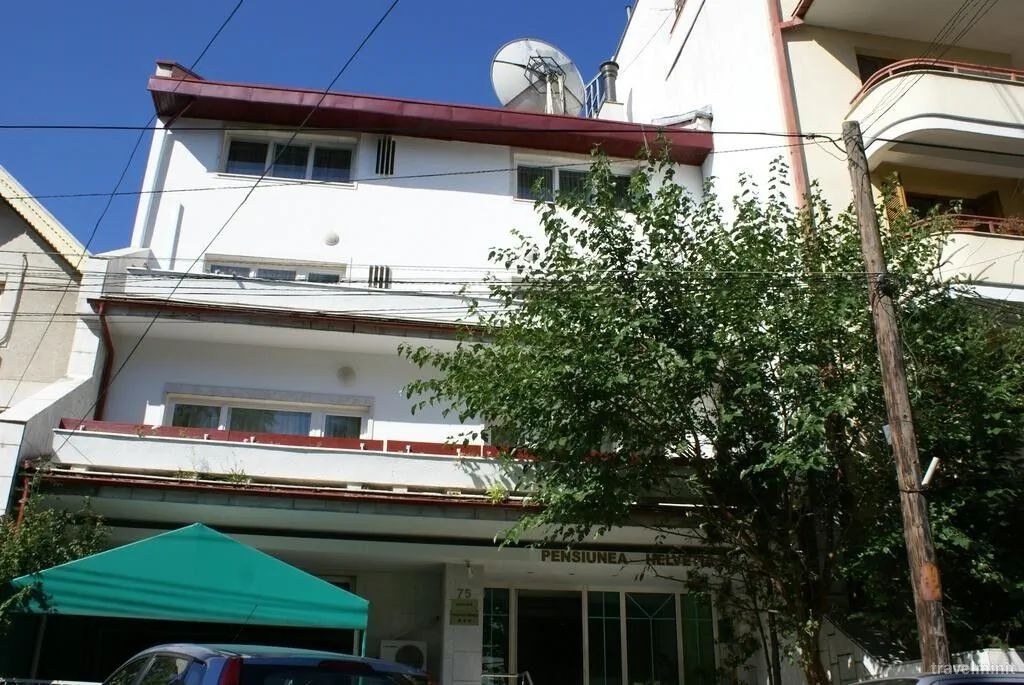
Pensiunea Helvetia București
Camere, serviciiPensiunea Helvetia București București va pune la dispozitie o camera frumos mobilata si confortabila. Vi se pune la dispozitie camere dotate cu aer conditionat. In fiecare camera aveti posibilitatea de a accesa internetul. Fiecare camera are grup sanitar propriu. Mai multe informatii despre serviciile unitatii de cazare (inclusiv cele contra cost) si despre dotarea camerelor gasiti in fisa de mai jos. LocațiaMuzeul Satelor Romănești se situeaza la o distanta de 1.6 km , . Servicii de masăTarifele contin numai cazare. PlatăPlata o puteti efectua cu/prin: transfer bancar, numerar, card bancar, card de vacanță, avans travelminit, voucher travelminit. Rezervarea se considera finalizata numai dupa plata unui avans de 30%. Sosire, programCheck-in se face incepand cu ora 14:00 si check-out pana la ora 12:00. Limbi straine vorbite la receptie: engleză, română.
FROM
240 RON / night

Apartament · 3 stars
București, București County · 0.9 km
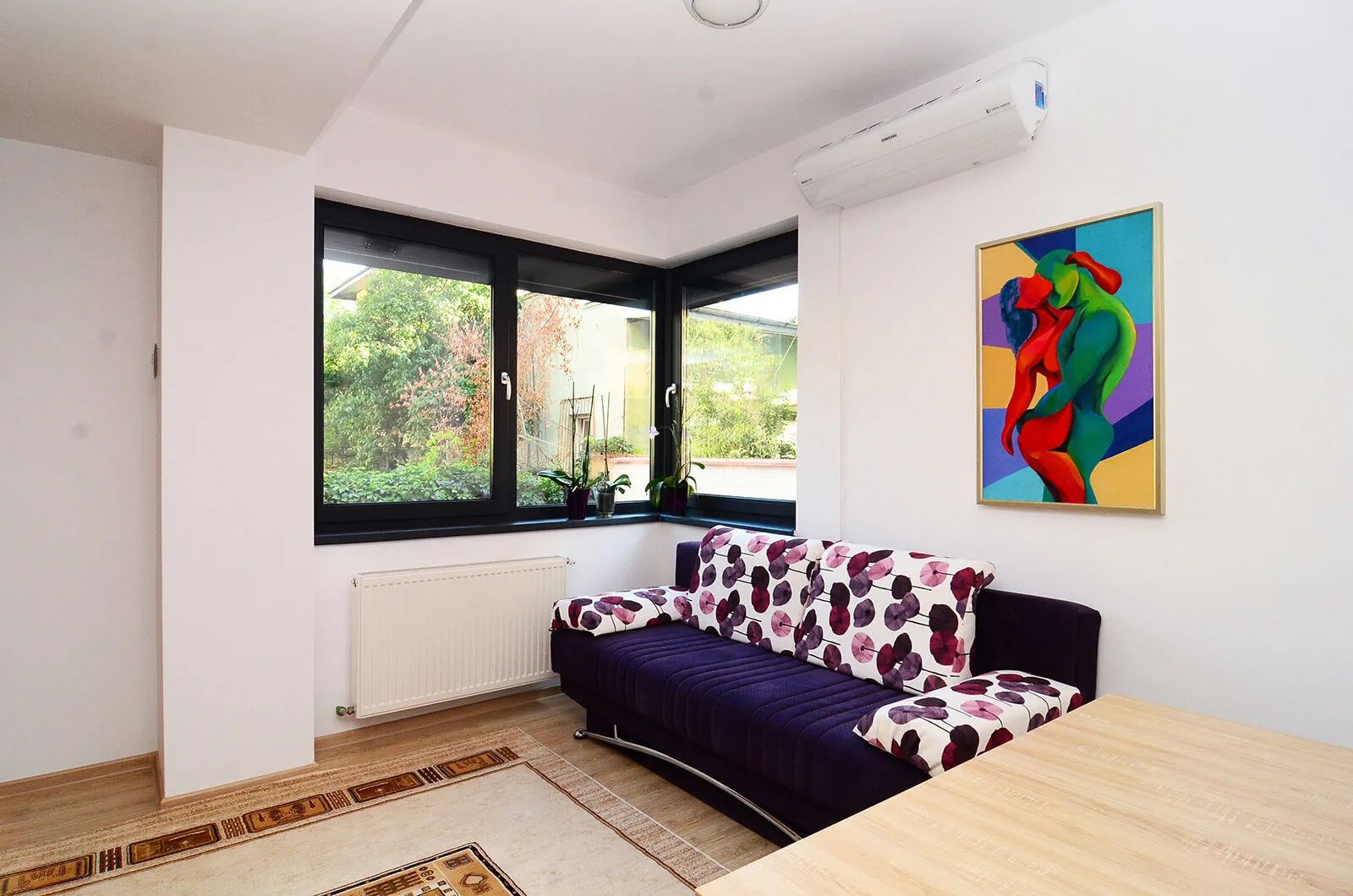
Luxury Apartment by the Park / Arch of Triumph București
Luxury apartment by the park / Arch of Triumph
FROM
230 RON / night
Apartament · 3 stars
București, București County · 1.0 km
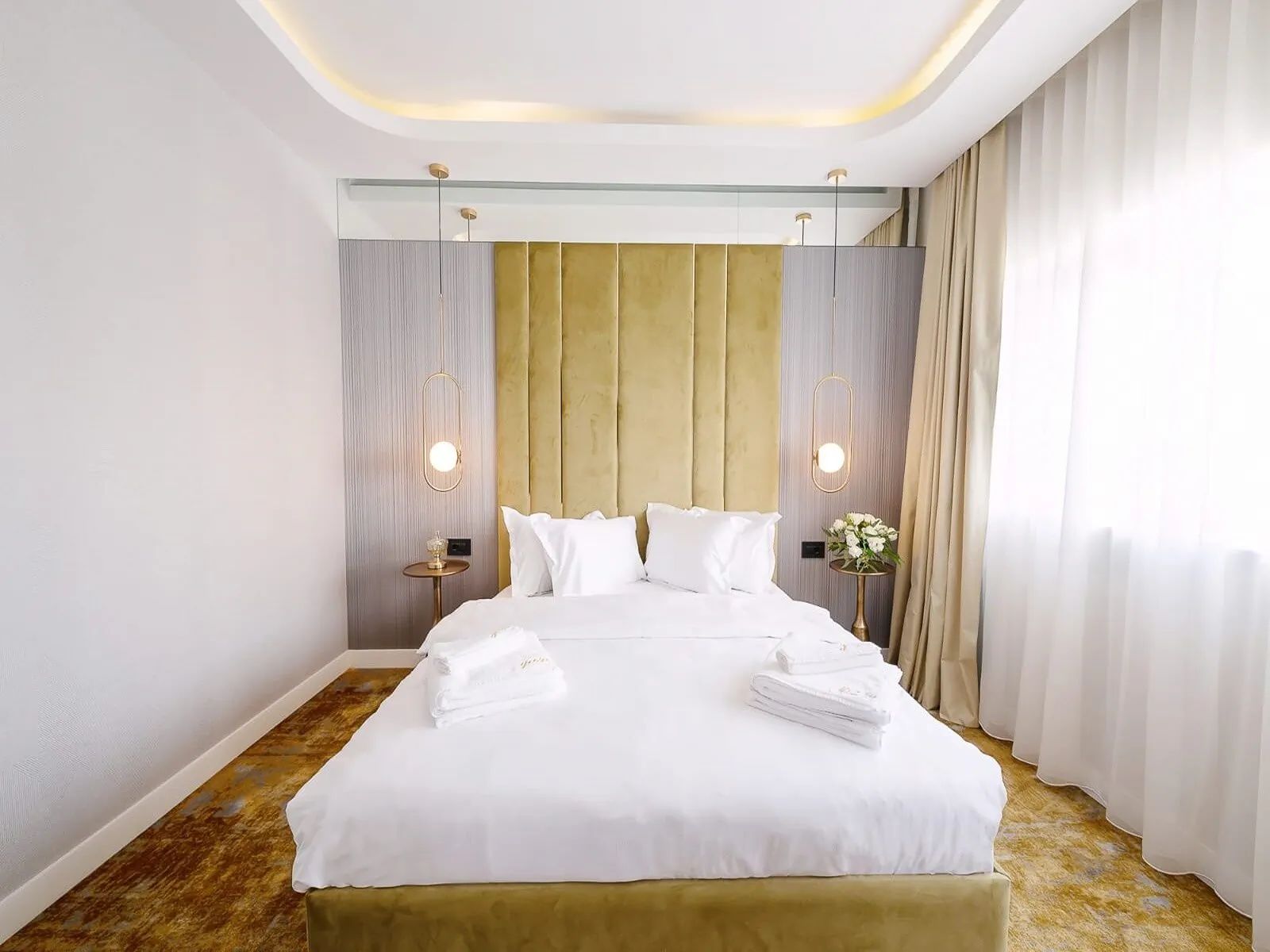
Yasu Luxury Rooms București
Yasu Luxury Rooms se află în București, aproape de Vila lui Ceaușescu, Arcul de Triumf din București și Muzeul Satului Dimitrie Gusti, și are un lounge comun. Se oferă la locație WiFi gratuit în toată proprietatea și parcare privată. Fiecare unitate include o baie proprie cu cadă, climatizare, un televizor cu ecran plat și un minibar. Acest apartament se află la 16 minute de mers pe jos de Muzeul Țăranului Român și la 1,5 km de Muzeul Național de Istorie Naturală Grigore Antipa. Aeroportul internațional București Băneasa - Aurel Vlaicu se află la 3 km.
FROM
230 RON / night
Apartament · 3 stars
București, București County · 1.2 km
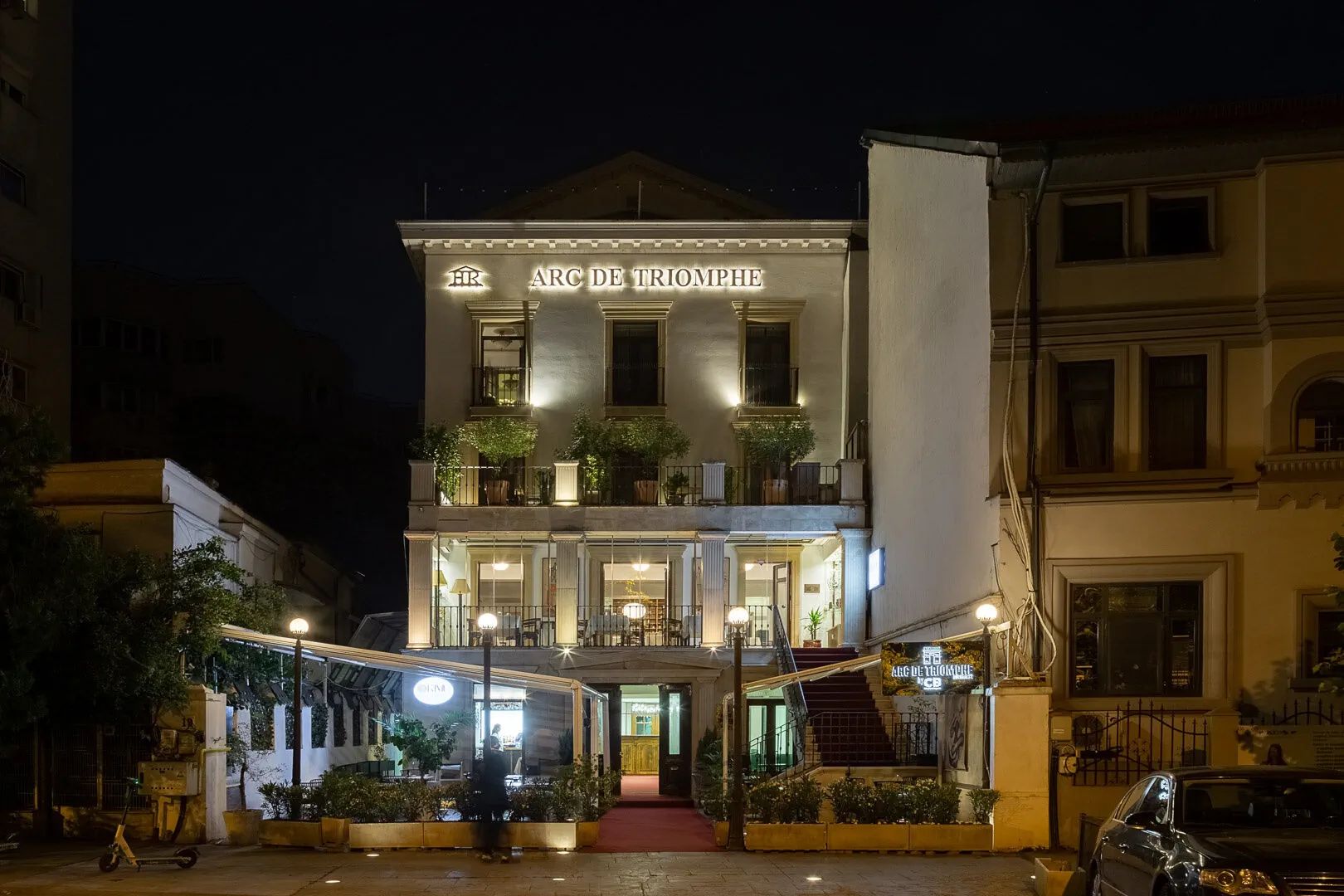
Arc de Triomphe by CityBookings București
Arc de Triomphe by CityBookings se află în București, la mai puțin de 1 km de Arcul de Triumf din București, și pune la dispoziție unități de cazare cu climatizare și WiFi gratuit. Acest apartament oferă un televizor cu ecran plat și o baie proprie cu articole de toaletă gratuite, un uscător de păr și duș. Printre punctele de atracție populare situate în apropiere de Arc de Triomphe by CityBookings se numără Muzeul Țăranului Român, Muzeul Național de Istorie Naturală Grigore Antipa și Muzeul Satului Dimitrie Gusti. Cel mai apropiat aeroport este Aeroportul internațional București Băneasa - Aurel Vlaicu, situat la 5 km de acest apartament.
FROM
230 RON / night
Apartament · 1 star
București, București County · 1.2 km
Arc de Triomphe Studios București
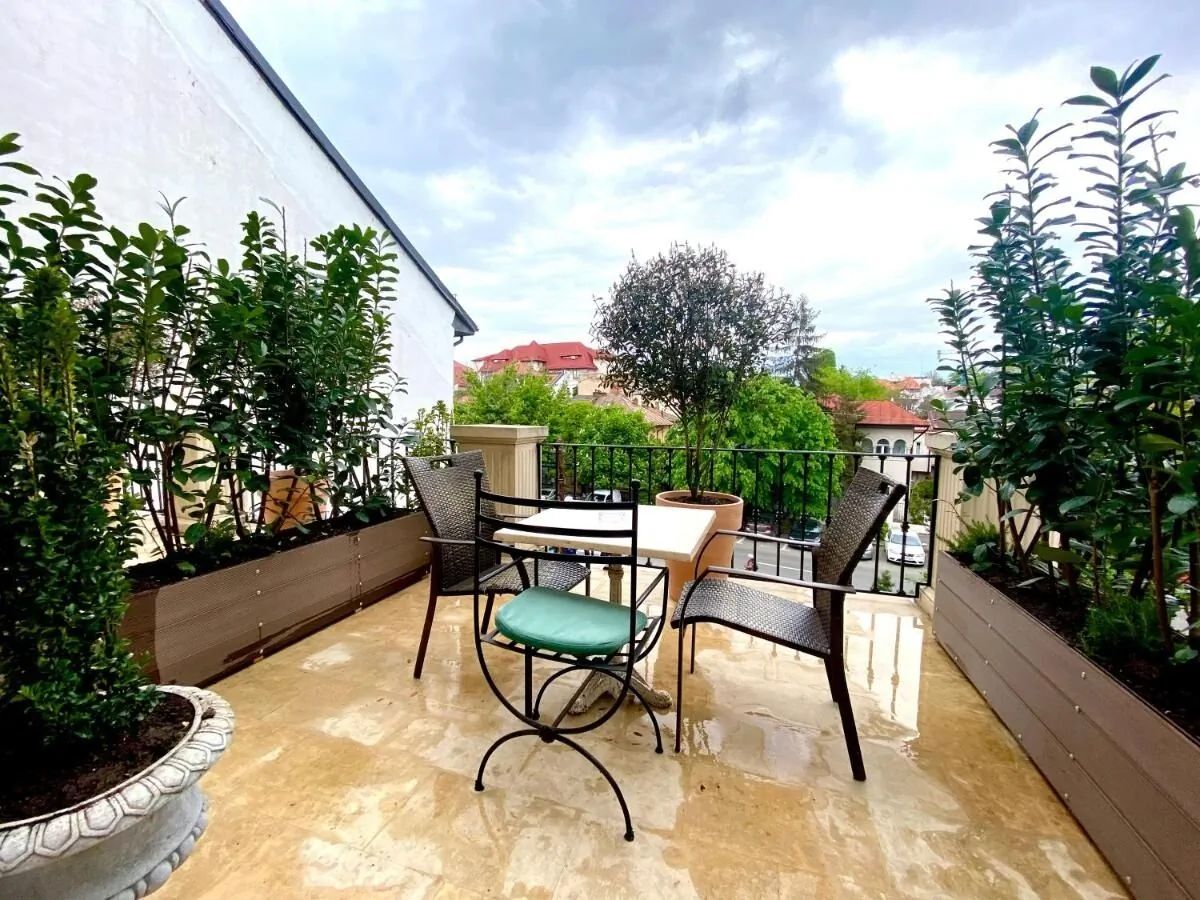
Situată într-o zonă rezidențială minunată, chiar lângă Arcul de Triumf și Parcul Herăstrău, ''Little Paris Boutique” este proprietatea care vă va transforma călătoria într-o experiență minunată, indiferent de tipul de vizită pe care o efectuați, oferind un spațiu intim și atmosfera relaxanta. De asemenea, apartamentul dispune de o terasa superba unde va puteti bucura de petrecerea timpului intr-un mediu linistit si insorit, oferind un mediu propice activitatilor preferate. Ce are de oferit Little Paris Boutique: - Internet Wi-Fi rapid nelimitat gratuit; - Situat central, astfel încât să puteți explora totul la distanță de mers pe jos; - o camera minunata cu un pat pentru pana la doi oaspeti; - un Birou - atingerea perfectă dacă călătorești pentru serviciu; - o bucătărie complet utilată, cu aragaz, frigider, aparat de cafea și ceainic; - o baie cu duș, uscător de păr și mașină de spălat - încălzire, aer condiționat și servicii excelente de curățenie; - prosoape și lenjerie de pat proaspete; - articole de toaletă și articole de bază pentru bucătărie; - Asistență clienți disponibilă 24/7. Aveți acces privat la întregul apartament și la dotările acestuia. Toate caracteristicile apartamentului sunt acolo pentru a vă bucura. - Este oferit WiFi rapid, gratuit și nelimitat
FROM
230 RON / night
Hotel · 3 stars
Năvodari, Năvodari County · 1.2 km
Body Hotel Năvodari
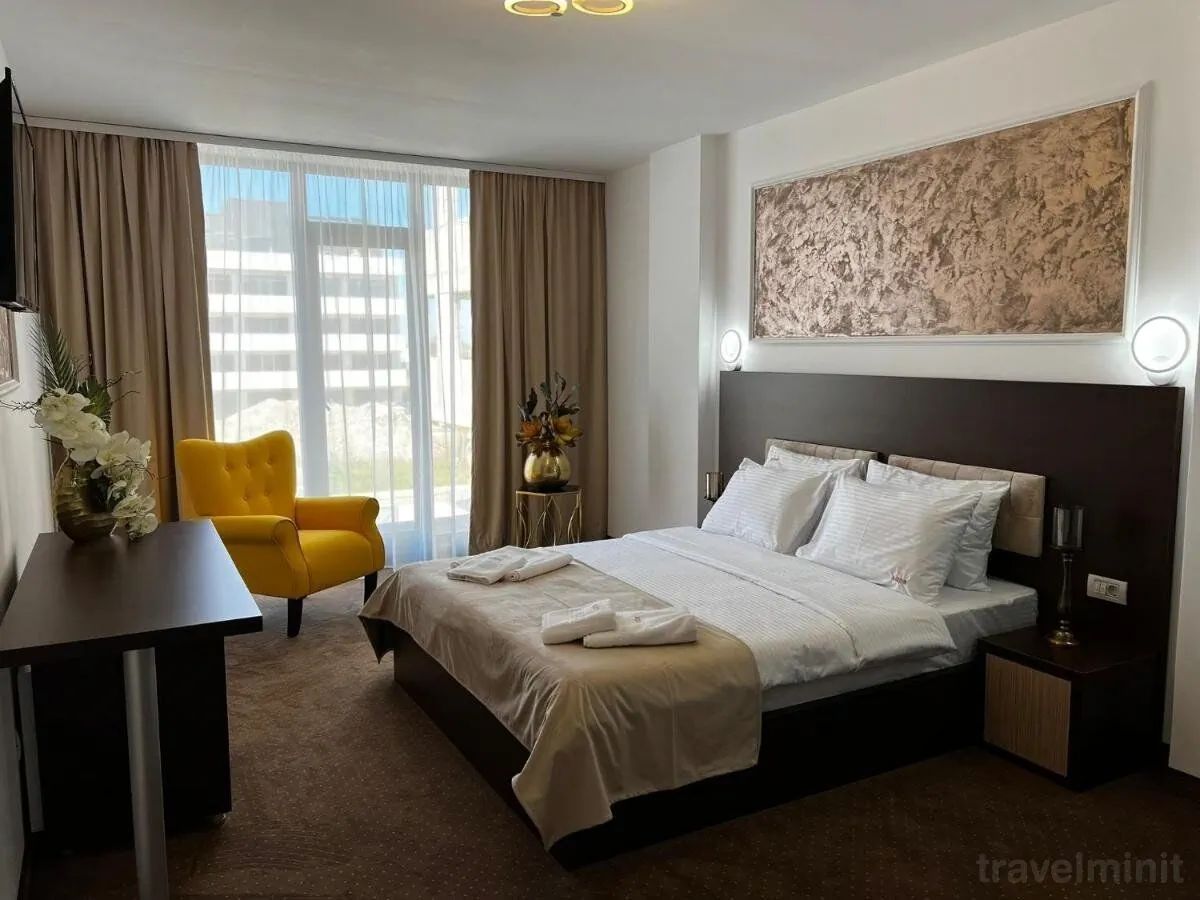
Camere, serviciiBody Hotel Năvodari Năvodari ofera 27 camere confortabile si placut amenajate. Proprietatea pune la dispozitia oaspetilor parcare gratuita. Puteti beneficia de servicii wellness la hotel. Pentru mai multe informatii consultati pagina de date. Acces la internet wireless este disponibil la hotel. O lista detaliata despre facilitatile unitatii de cazare (inclusiv cele contra cost), cat si despre amenajarea camerelor gasiti in fisa de mai jos. Servicii de masăTarifele afisate contin mic dejun. PlatăPlata se face prin urmatoarele metode: numerar, card bancar, transfer bancar, card de vacanță, avans travelminit, voucher travelminit. Rezervarea devine ferma numai dupa efectuarea platii unui avans de 30%. Sosire, programCamera poate fi ocupata de la ora 16:00 iar predarea ei se face pana la ora 11:30 . Personalul de la receptie este cunoscator a mai multor limbi: engleză, română.
FROM
290 RON / night
BEFORE YOU HIT THE ROAD
Weather conditions in Bucuresti
Local forecast for Dimitrie Gusti National Village Museum, Bucuresti, București

Real-time updated weather data
Much more to explore in this area
Nearby tourist attractions


Bucuresti, Bucharest
Palace of the Parliament
Situat pe strada Izvor nr.3, sector 5, localitatea Bucuresti; in perioada comunista a fost cunoscut sub numele de "Casa Poporului"; considerata una dintre cele...
5.0 km

București, Bucharest
People's Salvation Cathedral (National Cathedral of Romania)
Catedrală ortodoxă din București
5.1 km

Bucuresti, Bucharest
Royal Palace of Bucharest
Situat pe Calea Victoriei nr. 49-53, sector 1, localitatea Bucuresti; construit intre anii 1812-1815 a apartinut marelui logofat Dinicu Golescu, dar a fost...
3.9 km

Bucuresti, Bucharest
Romanian Peasant Museum (Muzeul Național al Țăranului Român)
Situat pe soseaua Kiseleff nr.3, sector 1, localitatea Bucuresti; constructia intregului edificiu a durat 29 de ani, fiind finalizat in 1941; cladirea muzeului...
1.9 km

Bucuresti, Bucharest
Cotroceni Palace
Situat pe bulevardul Geniului nr.2, sector 6, localitatea Bucuresti; in anul 1679, domnitorul Serban Cantacuzino incepe constructia unei manastiri; opera sa a...
4.4 km

Bucuresti, Bucharest
Muzeul Național de Istorie Naturală Grigore Antipa
Situat pe soseaua Kiseleff nr. 1, sector 1, localitatea Bucuresti; fondat in 1834 la initiativa lui Mihalache Ghica; are un bogat patrimoniu format din...
4.6 km

Bucuresti, Bucharest
Palatul Patriarhal
Situat pe aleea Dealul Mitropoliei nr.25, sector 4, localitatea Bucuresti; construit de statul roman, la inceputul secolului al XX-lea, pe locul fostei sali a...
5.5 km

Bucuresti, Bucharest
Muzeul Național de Istorie a României
Situat pe Calea Victoriei nr.12, sector 3, localitatea Bucuresti; adapostit de Palatul Postelor; a fost inaugurat in anul 1970 fiind cel dintai muzeu de...
4.8 km

Bucuresti, Bucharest
Muzeul Național de Artă al României
Situat pe Calea Victoriei nr. 49-53, sector 1; deschis in 1948, in vremea lui Alexandru Ioan Cuza;cladirea era pe atunci locuinta domneasca, in timpul lui...
3.9 km
2.6 km

Bucuresti, Bucharest
Palatul Cantacuzino
Situat pe Calea Victoriei nr.141, sector 1, localitatea Bucuresti; construit intre anii 1898-1900, in stil baroc francez al epocii Ludovic al XVI-lea, pentru...
3.6 km

Bucuresti, Bucharest
Biserica Stavropoleos
Situata pe strada Stavropoleos nr.4, localitatea Bucuresti; poarta hramurile: "Sfintii Arhangheli Mihail si Gavriil", "Sfantul Atanasie cel Mare", "Sfantul...
4.8 km
Cultural life and traditions
Events near Dimitrie Gusti National Village Museum
Medieval festivals, traditional fairs, concerts and recommended local activities in Muntenia (Wallachia).

Istorie și Arhitectură Regală

Bucuresti, Jud. București
Zilele Regalității și Patrimoniului Văii Prahovei
Conferințe istorice deschise, tururi tematice de arhitectură regală, proiecții documentare și expoziții foto de epocă.
WHEN
10 - 12 Mai 2026


Gastronomie și Oenologie
Dealu Mare, Jud. București
Festivalul Vinului Prahovean pe Drumul Vinului
Degustări ghidate de Fetească Neagră pe faimosul Drum al Vinului, vizite în crame istorice și întâlniri cu oenologi de top.
WHEN
În fiecare weekend (Septembrie - Octombrie)
Drumeții și Aventură
Masivul Bucegi, Jud. București
Tur Ghidat Montan în Masivul Bucegi
Trasee montane ghidate de salvamontiști către punctele panoramice emblematice și cascade alpine spectaculoase.
WHEN
Zilnic în sezon (Iunie - Octombrie)
On foot, exploration gains depth
Discover the surroundings and local geography
Explore trails, terrain and natural landmarks around Dimitrie Gusti National Village Museum.

Guides and practical tips
Useful travel articles
Travel guides, practical tips and itineraries for Muntenia (Wallachia).

Travel guide
Top 5 Atracții Turistice și Trasee Montane în Zona Moieciu - Bran
Descoperă cele mai spectaculoase peisaje carstice, chei adânci și cetăți medievale din imediata apropiere a stațiunii Moieciu.

Travel guide
Ghid de Drumeție: Traseul Moieciu de Sus spre Platoul Bucegi
Un itinerariu montan de o frumusețe rară ce urcă din Valea Băngăleasa spre Poiana Guțanu și crestele maiestuoase ale Bucegilor.

Travel guide
Castelul Bran: Istorie, Legende și Secrete Medievale
Află adevărata poveste a fortăreței medievale din Pasul Bran, reședința de suflet a Reginei Maria a României.
THE JOURNEY STARTS WITH AN IDEA
The next story is on the way.
From the first stop to the last stay, make room for a new Romania.
