


NATURE AND WILDLIFE · TRANSYLVANIA
Turda Salt Mine

Turda, Cluj County
Add location to your trip planner.

Practical access information

VISITING HOURS
Luni - Duminică: 09:00 - 18:00 (ultima intrare la 17:00)

TICKET PRICE
Adulți: 60 RON (zile lucrătoare) / 70 RON (weekend); Pensionari/Copii/Studenți: 35 RON / 40 RON

RECOMMENDED VISIT DURATION
2.5 - 3.5 ore


Visitor information and guide
For group bookings or access verification, you can call this number.

PHONE NUMBER
+40 364 260 940 Navigate with Google Maps

ABOUT TURDA SALT MINE
A Subterranean Cathedral in the Heart of Europe: Turda Salt Mine, the Masterpiece of Transylvania's Salt
Deep beneath the Transylvanian earth, 120 meters below the city of Turda, stretches one of the most impressive achievements of human engineering in all of Europe: Turda Salt Mine. Here, where for two millennia people have carved cathedral-like chambers of dizzying dimensions into salt, the history of Europe is reflected in a crystal of salt. This mine is not merely an industrial monument of the past, but a living, unique place in the world, where Roman heritage, the ambitions of the Habsburg dynasty, Central European mining tradition, and contemporary tourism innovation meet in an unparalleled underground spectacle. Ranked by Business Insider as the most beautiful underground place in the world, included in the Michelin Green Guide with two stars — the only salt mine in Romania with this distinction — and recognized by CNN as the world's number one underground attraction, Turda Salt Mine represents a bridge between Europe's imperial past and the future of European cultural tourism.
Ancient Roots: From Roman Legions to the European Salt Road
The story of Turda Salt Mine begins long before the birth of modern Europe, in a period when the Roman Empire extended its dominion into the heart of Dacia. The ancient city of Potaissa — the Roman name for today's Turda — represented one of the most important strategic points of the province of Dacia, and the salt resources of the area were systematically exploited from the 2nd century AD. Secure archaeological evidence attests to salt exploitation at Durgău-Turda from the pre-Roman period (50 BC–106 AD), and once Dacia was conquered by Trajan in 106, Potaissa became a vital center of Roman administration. The Roman castrum of Potaissa, built in 168 under Emperor Marcus Aurelius and headquarters of the Fifth Macedonian Legion, watched over the salt exploitations, being the largest military castrum in all of Roman Dacia and one of the best preserved in Europe. The Romans extracted salt in pyramidal chambers 17–34 meters deep, working at the surface in quadrangular pits up to 12–15 meters, after which they abandoned the excavations, which transformed into salt lakes.
After the Aurelian withdrawal in 274, salt exploitation entered a period of mystery, until in 1075, the Hungarian chancellery issued the first known document mentioning the salt mine customs of Turda (Torda) in a place by the Arieș River called Aranyos (Aureus in Latin). This document marks Transylvania's entry into the orbit of the Kingdom of Hungary, and salt quickly became the second source of revenue for the royal treasury, after gold. In 1271, the Hungarian king granted the chapter of the Transylvanian Episcopate the "salt mines of Durgău-Turda," and in the 15th–18th centuries, under Hungarian rule, four ogival underground salt mines were opened at Durgău: the Katalin Mine, the Horizont Mine (Durgăul Mare), the Felső-Akna Mine (Ocna Mare), and the Iosif Mine. These exploitations were part of a broader European network of salt trade, which connected Transylvania to the great commercial roads of Central Europe. Salt from Turda was transported by ox-drawn carts to the landing stage at Mirăslău, from where it was loaded onto rafts on the Mureș River towards Alba Iulia — a route that was part of the vast system of "Salt Roads," parallel to the Via Salaria in Roman Italy, the Alte Salzstraße in northern Germany (which connected Lüneburg to Lübeck and the Hanseatic League), and the salt roads of France and Poland. Thus, Turda Salt Mine stands in the continuity of a millennial European tradition of exploiting and trading in "white gold," which shaped the economies, cities, and even national identities of the continent.
The Habsburg Era: Imperial Architecture Beneath the Earth
The turning point in the history of Turda Salt Mine comes at the end of the 17th century, when the establishment of Habsburg power in Transylvania radically transformed salt exploitation. The Austrian emperors, aware of the strategic value of salt — "salt can easily replace the renowned gold of this country," as a contemporary wrote — took direct administration of the salt mine and inaugurated an era of unprecedented technical development. Beginning in the second half of the 17th century and continuing into the 19th century, under Austrian and then Austro-Hungarian domination, five new underground salt mines were opened, each bearing the name of a member of the imperial dynasty: the Terezia Mine (established in 1690, initially after Saint Teresa of Ávila, later renamed in honor of Empress Maria Theresa, 1717–1780), the Anton Mine (after Saint Anthony of Padua), the Cojocneană Mine, the Rudolf Mine (1864–1932, named after Crown Prince Rudolf, son of Emperor Franz Joseph I), and the Ghizela Mine (1857, named after Princess Gisela, daughter of Franz Joseph).
This period marks the technological leap toward modernity. Between 1853 and 1870, the Franz Josef Gallery was excavated, a 917-meter access tunnel (of which 526 meters in sterile rock and 391 meters in the salt massif), named in honor of Emperor Franz Joseph I (1830–1916), the last great prince of Transylvania. On the left wall of the gallery, an acrostic inlaid during excavation is preserved: "K. F. J. Fü. Sb." (König Franz Josef Fürst von Siebenbürgen — King Franz Josef, Prince of Transylvania). The gallery revolutionized salt transport, reducing costs and allowing more efficient exploitation of deposits. The Terezia Mine, the first bell-shaped salt mine opened under Austrian administration, was followed by the Anton and Cojocneană Mines (both bell-shaped), then by the Rudolf and Ghizela Mines with modern trapezoidal profiles. These engineering works fit into the broader context of the European industrial revolution, being comparable to the great salt exploitations of the time: Wieliczka in Poland (UNESCO heritage since 1978), Hallstatt in Austria (the world's oldest mining village, UNESCO heritage), Berchtesgaden in Bavaria, or Hallein in the Salzburg region.
In 1767, the Jesuit mineralogist Johann Fridvaldszky described the salt mines of Turda as "worthy of the greatest admiration and curiosity, so famous that they almost have no equal in the entire East." He recorded that the Upper Salt Mine had a diameter of 85 meters and a height of 104 meters, being excavated by 87 salt cutters (fossores) assisted by 18 volunteers. The Josephine Map from the period 1769–1773 — part of the first systematic military topographic survey of Europe, carried out at the order of Emperor Joseph II — records the five active salt mines of Turda. This period represents the apogee of Turda Salt Mine as an imperial enterprise, and the princely names of the mines reflect the deep dynastic ties between Transylvania and the center of power in Vienna, in an era when the Habsburg Monarchy was consolidating its domination over Central and Southeastern Europe.
A fascinating chapter of this period is the involvement of the Fugger family, the most powerful banking dynasty of the European Renaissance, based in Augsburg. King Ferdinand I of the Habsburgs granted the Fugger family rights over the salt mines of Turda, thus linking the Transylvanian salt mine to the financial and commercial network that controlled European trade in precious metals and goods. This connection illustrates the strategic role of salt in the early European economy, when control over salt mines was equivalent to political and financial power.
The Architectural Masterpiece: Salt Cathedrals and Unique Mining Technology
Turda Salt Mine represents a true living museum of European mining architecture and engineering, preserving in their original location unique machinery and structures on the continent. Each mine has a distinct architectural personality, reflecting the evolution of exploitation techniques over the centuries.
The Terezia Mine, the oldest of those visitable, is a bell-shaped chamber of colossal dimensions: 90 meters in height, 87 meters in diameter at the base, and 112 meters deep from the mouth of the shafts to the floor. On the northern wall unfolds a spectacular salt cascade, formed by the deposition of salt from the saline solution seeping from the upper galleries. In the center of the chamber stretches an underground lake of supersaturated salt water — with a salinity eight times greater than that of the Adriatic Sea — up to 6–8 meters deep, covering approximately 80% of the floor surface. In the middle of the lake, an island formed from residual salt deposited after 1880 (the year exploitation ceased in this chamber) completes the surrealist landscape. Salt stalactites, some reaching 3 meters in length, and crystalline efflorescences create a landscape of particular beauty, a "white hell" that recalls karst caves, but is entirely the work of human hands.
The Rudolf Mine, opened in 1864 and closed in 1932 (being the last mine in which salt was extracted at Turda), has a modern trapezoidal profile: 80 meters long, 50 meters wide, and 42 meters deep. On its walls, at each of the 13 "floors" or exploitation levels, the years in which each level was opened are marked, offering a visual chronology of technological progress. Here are found medieval and modern mining machinery unique in Europe: the crivac (gepel), a rudimentary machine for lifting salt blocks powered by horses, dating from 1881 and replacing a smaller installation from 1864 — the only machine of this kind preserved in its original location in all salt mines in Romania and probably in Europe. Likewise, the forge and the salt mill are preserved, witnesses of pre-industrial technology. In the Rudolf Mine is also the "Staircase of the Rich" (Staircase of the Emperors), a finely crafted fir wood staircase, the oldest wooden structure in the salt mine, on which it is said that Emperor Franz Joseph himself descended; since then, no miner has been allowed to use it, being reserved for nobles — hence the name.
The Iosif (Joseph) Mine, opened around 1740 and named in honor of Emperor Joseph II (1741–1790), is a conical bell-shaped chamber 112 meters deep and 67 meters in diameter at the base. Due to its shape and the lack of communications with other major exploitation points, this chamber has a strong echo, high sounds being reproduced up to 20 times, hence the name "Hall of Echoes." Currently, the Iosif Mine can only be admired from the balconies carved into salt at the level of the transport gallery, being beneath them, at 80 meters depth.
The Ghizela Mine, opened in 1857 and intended to be similar to the Rudolf Mine, remained only at the preparatory works stage. In 1992, with the reopening of the salt mine for treatment, the octagonal hall was extended and transformed into the Treatment Station, benefiting from the ideal saline microclimate for speleotherapy. The underground gallery of this mine constitutes a geological reserve, with access forbidden to tourists, located 15 meters above the Franz Josef transport gallery.
The technique of opening salt mines in the medieval and modern period was an art in itself. Before opening a new salt mine, exploratory drillings were made; if salt was not intercepted within 36 meters, the project was abandoned. The shafts were excavated with a square profile, each side having 2.8 meters, down to 4 meters below the sterile-salt contact, then gradually widened. The "foundation" of interlocked wooden beams was executed in salt, then the shaft was reinforced with a mixture of clay, chaff, and sheep's wool for waterproofing, followed by wooden beams. The walls were lined with buffalo hide to prevent direct contact of water with the salt walls. The mine took a conical-ogival shape and was declared ready for exploitation only when an agent of the salt administration, standing on a lump of salt in the middle of the salt mine, could no longer reach the ceiling with a hammer. The costs of opening exceeded 5,000 silver florins.
The Transformation: From Industrial Mine to European Cultural Destination
After the end of the Second World War, Turda Salt Mine entered a period of decline and unexpected transformations. Salt exploitation definitively ceased in 1932, due to primitive technical equipment, low yield, and competition from other Transylvanian salt mines (especially Ocna Mureș, which took over the role of coordinator of salt exploitation after 1840). During the war, the salt mine was used as an anti-aircraft shelter for the city's population, and between 1948 and 1992, the first 500 meters of the Franz Josef Gallery were used as a cheese warehouse — an unprecedented use, but one that contributed to the conservation of the structures.
The reopening of Turda Salt Mine in 1992, for tourism and curative purposes, marks the beginning of a new era. The underground microclimate — with a constant temperature of 10–12°C, humidity of 75–80%, and optimal concentration of sodium chloride aerosols — is recognized for its beneficial effects on respiratory ailments. Speleotherapy (from the Greek "speleos" — cave) and halotherapy (from "halos" — salt) are practiced here, fitting into a European tradition dating from the 19th century, when German and Austrian doctors began to officially recognize the therapeutic properties of saline air. Similar speleotherapy centers operate in Poland (Wieliczka, with the underground hospital at Kopalnia Soli), in the Czech Republic (Ostrava), in Germany (Berchtesgaden), in Hungary (Tapolca), and in Slovenia (Škocjanske jame), forming a European network of underground treatment stations.
However, the true renaissance of Turda Salt Mine takes place between 2008 and 2010, when, with the financial support of the European Union through the PHARE 2005 ESC program, extensive modernization works worth approximately 6 million euros (5,888,000 euros) are carried out. The project, led by architect Dumitru Iosif, with the participation of architects Marius Danciu, Cornelia Danciu, and Ioana-Olivia Danciu, transforms the salt mine into a world-class tourism complex. The inauguration in January 2010 marks Turda Salt Mine's entry into the international tourism circuit, and recognition does not delay: in 2013, Business Insider ranks it among "the 25 hidden gems of the world worth the trip," CNN designates it as the most beautiful underground place in the world, and the Michelin Green Guide awards it two stars — the only salt mine in Romania with this distinction.
The 2010 modernization was an example of contemporary design integrated into a historical monument. In the Rudolf Mine, an ultra-modern panoramic elevator and a 20-meter-high Ferris wheel were installed — probably the only functional Ferris wheel underground in the world — offering a 360-degree view of the trapezoidal cavity. An amphitheater with 80–180 seats (with heated chairs) was arranged for concerts and shows, sports fields, bowling, mini-golf, billiards, table tennis, and a children's playground. In the Terezia Mine, the underground lake was equipped with a landing stage and rowing boats, allowing tourists to row on the supersaturated salt waters in a unique setting. These amenities, although controversial among some purists of industrial heritage, have transformed Turda Salt Mine into a European model of reconversion of industrial heritage into a cultural destination, similar to the strategies applied at Zollverein in Germany (UNESCO heritage), at Tate Modern in London, or at the industrial museums of Manchester and Birmingham.
In 2012, Turda Salt Mine was declared "Tourism Project of the Year" in Romania. In 2015, the salt mine was inscribed on the list of historical monuments in Cluj County (code LMI CJ-II-m-A-07801). Between 2012 and 2014, a connecting tunnel between the Terezia Mine and the Iosif Mine was executed, 50 meters long, allowing the inclusion of the Iosif Mine in the tourism circuit.
Legends, Personalities, and Turning Points
Turda Salt Mine is steeped in legends and stories that give it a mythical aura. One of the most famous is the legend according to which salt was exploited only by free people, not by slaves or convicts — a rarity in the history of European mining. Miners were employed for periods of one year, beginning on January 7 (Boboteaza), and received an annual salary of 12 florins, plus community gifts at the four major holidays: a barrel of wine, an ox, and 100 loaves of bread. This work organization recalls the guild system of medieval Hanseatic cities or German mining centers.
The "Staircase of the Rich" (also called the "Staircase of the Emperors") is shrouded in mystery. The legend says that Emperor Franz Joseph I himself would have descended this fir wood staircase during a visit to the salt mine, and since then no miner has been allowed to use it, being reserved exclusively for nobles and distinguished guests. The staircase, the oldest wooden structure in the salt mine, has a finely crafted execution and presents the advantage of being resistant in the saline environment, fir wood being impermeable to humidity.
The altar carved into the salt wall in the Hall of Appeal (Registration Chamber) represents a unique spiritual element. The miners, believers, carved into the salt wall an altar where, every morning, the salt mine's priest held the service so that all workers would be protected in the depths. This religious practice underground recalls the chapels carved into salt at Wieliczka (Poland), where Saint Kinga — a Hungarian princess who became the patron saint of miners — is venerated, or the underground church in Hallstatt.
A crucial historical moment was the interception, in 1857, during the excavation of the tracing gallery of the Ghizela Mine, of an old unknown mining work — probably a shaft from the Roman period or the early Middle Ages. This discovery revealed the continuity of salt exploitation at Turda over two millennia, linking the Roman era to the Habsburg era.
The personality of the Jesuit mineralogist Johann Fridvaldszky, who in 1767 described the salt mines of Turda as "so famous that they almost have no equal in the entire East," illustrates the European prestige of the salt mine as early as the 18th century. His detailed description of the construction system of the salt mines, of a larger and older salt mine closed in 1762 due to the danger of collapse (today lake no. 2 Durgău), as well as of the exploitation procedures with the horse-powered crivac, constitutes a document of inestimable value for European technical history.
Industrial Heritage and Contemporary European Connections
Turda Salt Mine is part of the European Route of Industrial Heritage (ERIH), an initiative that promotes the most important industrial heritage sites in Europe, recognized since 2019 as a Cultural Route of the Council of Europe. In this network, Turda Salt Mine stands alongside sites such as Wieliczka and Bochnia (Poland, UNESCO heritage), Hallstatt (Austria, UNESCO heritage), Zeche Zollverein (Germany, UNESCO heritage), or the coal mines of Belgium and Great Britain.
The comparison with other major European salt mines is illuminating. If Wieliczka impresses with its salt sculptures, underground chapels, and artistic galleries (being "a work of art," as visitors describe it), and Hallstatt with its antiquity (exploited since the Bronze Age, with miner mummies preserved in salt), Turda Salt Mine distinguishes itself through the colossal dimensions of its chambers, through the unique combination of authentic industrial heritage and modern tourism facilities, and through its therapeutic microclimate. The underground Ferris wheel, the lake with boats, the amphitheater, and the leisure area in the Rudolf Mine have no equivalent in other European salt mines, transforming the visit into a multisensory experience.
The tradition of speleotherapy at Turda Salt Mine fits into a broader European current. In Germany, the treatment stations of Berchtesgaden and Bad Reichenhall developed health programs based on saline aerosols as early as the 19th century. In Poland, the underground hospital in Wieliczka treats thousands of patients with respiratory ailments annually. In the Czech Republic, centers in Ostrava and Kúpele Kyselka offer speleotherapy cures. In Hungary, the Tapolca Cave (Tavas-barlang) is used for the treatment of bronchial asthma. Turda Salt Mine, with its Station in the Ghizela Mine and its air of the highest purity (with only 4–10 microbial bodies per cubic meter in certain areas), joins this European circuit of medical tourism and wellness, benefiting from the recognition of the World Health Organization regarding the effectiveness of halotherapy.
Practical Visiting Guide and Today's Tourist Experience
Visiting Turda Salt Mine in 2026 offers a complete experience, combining historical discovery, relaxation, and adventure. The salt mine is open daily, from Monday to Sunday, between 09:00 and 18:00 (last entry at 17:00), being visitable all year round, regardless of season. The underground temperature remains constant between 10 and 12 degrees Celsius, and the humidity is 75–80%, which makes warm clothing and comfortable footwear indispensable, even in the middle of summer.
Access is through two entrances: the modern main entrance, from the Salina-Durgău tourism center (Durgău Alley no. 7, GPS: 46.588833°N, 23.787632°E), and the old entrance through the Franz Josef Gallery (Salinelor Street no. 54B, Turda Nouă neighborhood, GPS: 46.583742°N, 23.776267°E), the latter also being accessible for people with neuromotor disabilities. From the center of the city of Turda, bus line 17 provides the connection with the salt mine, albeit with low frequency; one can also reach it on foot (about 30 minutes) or by taxi. The salt mine is located approximately 30 kilometers from Cluj-Napoca and can easily be included in a day trip from the university city, alongside the Turda Gorge or the historic center of Cluj.
Entrance fees for 2026 are: adults 60 RON on working days and 70–90 RON on weekends (depending on period), and for pensioners, children, pupils, and students 35–40 RON on working days and 40–59 RON on weekends. Children under 3 years benefit from free entry. Organized groups of at least 20 people benefit from a free guide, with prior booking. Tickets can be purchased online through the official platform salinaturda.eu, which allows avoiding queues, especially in the summer season and during the holiday period.
The visiting route begins with the Franz Josef Gallery, an 850-meter tunnel excavated in a horseshoe shape, which offers a first impression of the massiveness of the mining works. Along the gallery, stone slabs ("pegs") marked every 10 fathoms measured the length of the galleries. The passage through the gallery reveals the fine alveolar karst and the salt efflorescences that clothe the walls. At the end of the gallery, visitors reach the Iosif Mine ("Hall of Echoes"), where they can test the unique acoustics of the chamber from the balconies carved into salt. Next comes the Crivac Hall, which houses the 1881 extraction machine, unique in Europe, and the Registration Hall (Hall of Appeal) with the Altar carved into salt and the Staircase of the Rich.
The descent into the Rudolf Mine is done either by the panoramic elevator or on the 172 steps (13 "floors" marked with the years of exploitation). At the base of the mine, at 120 meters depth, the world of underground leisure unfolds: the 20-meter Ferris wheel (8-minute tour, additional fee), the amphitheater, sports fields, bowling, mini-golf, billiards, and table tennis. All these activities are paid separately and only in cash (there is no ATM underground). The last stage of the route is the Terezia Mine, with its underground lake, salt cascade, stalactites, and central island. Here, rowing boats can be rented (maximum 3 people per boat) for a ride on the supersaturated waters, in an almost mystical silence, interrupted only by the echo of the oars.
For those interested in the therapeutic component, the Station in the Ghizela Mine offers speleotherapy sessions, recommended for chronic respiratory ailments: bronchial asthma, chronic bronchitis, allergic rhinosinusitis, hypertrophic rhinitis. The cure is preferably carried out in the time interval 9:00–14:00, for a duration of 14–18 days (7–10 days for children), with a stay in the Ghizela Station. People with cardiac ailments enter only with a medical recommendation, and children under 3 years need a medical opinion.
The Future: The Expansion of the Iosif Mine and the UNESCO Project
Turda Salt Mine stands on the threshold of a new era of development. In October 2026, local authorities officially presented an ambitious expansion project, financed from European funds through the North-West Regional Program 2021–2027, worth 126.72 million lei (approximately 25–27 million euros). The financing contract was signed on May 26, 2025, and the implementation period is 56 months, with completion estimated for the end of 2029.
The project, entitled "Tourism Development of Turda Salt Mine through the Arrangement of the Iosif Mine and the Modernization of the Treatment Base," provides for the introduction of the Iosif Mine ("Hall of Echoes") into the tourism circuit on an area of approximately 10,000 square meters. A connecting tunnel between the Iosif Mine and the Terezia Mine will be built, four panoramic elevators, suspended walkways, an underground cinema, sports fields, and a balneary treatment base modernized to international standards. The Iosif Mine, with its bell shape, 67-meter diameter, and 115-meter depth, will thus become an "underground city" dedicated to relaxation, sports, and health. It is estimated that the investment will increase the number of visitors by at least 20% in the first year after implementation and will double the reception capacity of the salt mine.
The Mayor of the Municipality of Turda, Cristian Matei, announced the intention to submit all necessary studies for Turda Salt Mine to enter the UNESCO World Heritage, a status it deserves through its uniqueness, through the universal value of the industrial heritage it represents, and through its contribution to the cultural memory of Europe. This ambition places Turda Salt Mine among the great European industrial heritage sites, alongside Wieliczka (Poland), Hallstatt (Austria), Zollverein (Germany), or Blaenavon (Wales), all included in the UNESCO World Heritage list.
Conclusion: A Living European Heritage
Turda Salt Mine is much more than a former salt mine transformed into an underground amusement park. It is a living monument of European history, where 13.5-million-year-old geological layers meet the historical layers of civilization: from the Roman engineering of the Fifth Macedonian Legion, through the ambitions of the Habsburg dynasty and the Austrian industrial revolution, to the contemporary tourism innovation financed by the European Union. Each chamber, each gallery, each machine preserved in its place speaks of a Europe of commerce, technology, and culture, a Europe in which salt — "white gold" — shaped economies, financed wars and empires, and created bonds between peoples.
For the cultivated European traveler, the visit to Turda Salt Mine offers a profound experience: the descent to 120 meters underground, into a space where artificial light reveals salt cathedrals 90 meters high, the boat ride on a salt lake in a bell-shaped chamber, the ascent on the Ferris wheel to see from above the grandeur of the mining works, and the breathing of the therapeutic air that has healed generations of miners and tourists. It is an experience that places Romania and Transylvania in the heart of Europe, demonstrating that the cultural heritage of this corner of the world is an integral part of the continent's common memory. Turda Salt Mine is not just the most beautiful underground place in the world — it is a living lesson of European history, sculpted in salt, open to the future.
Media gallery
Discover Turda Salt Mine in pictures

27 photos · Architecture, courtyards and captivating details
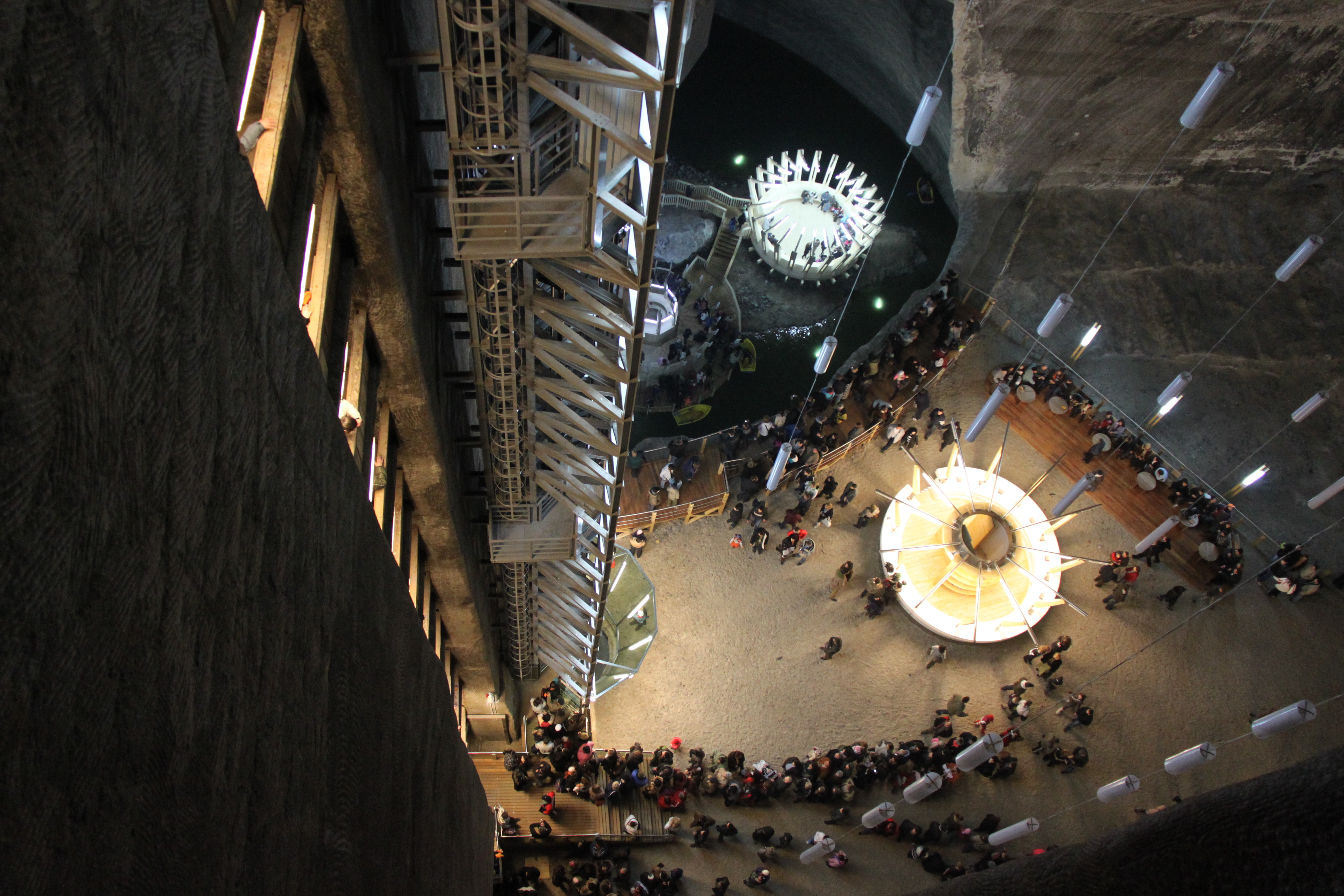


Image source: Wikimedia Commons · Public domain photos · Free license
STAY A FEW DAYS, DISCOVER THE MAGIC
Stays near Turda Salt Mine

Apartament · 3 stars

Turda, Turda County · 0.0 km
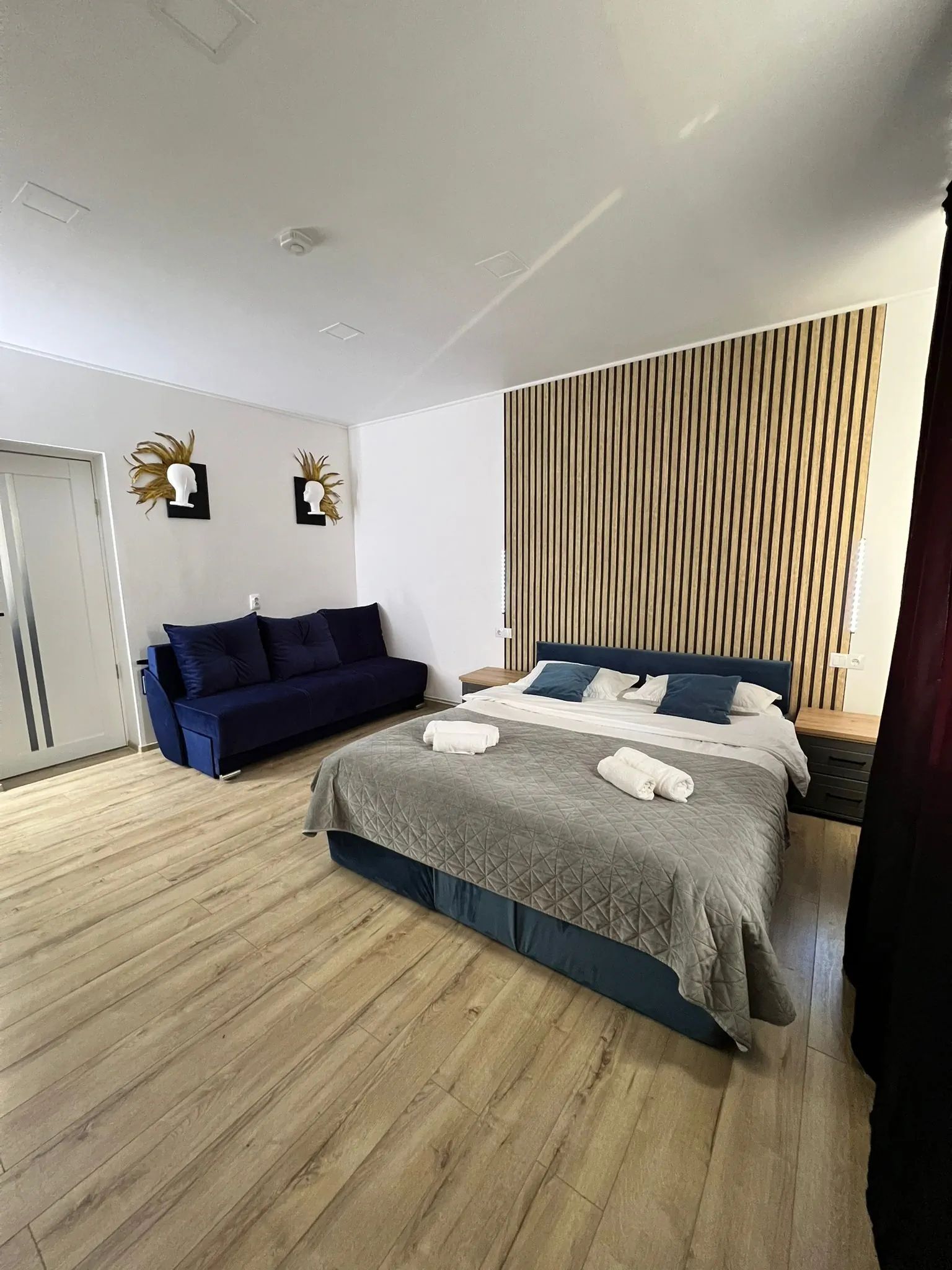
Apartament Maysa Turda
Apartamentul se afla la 30 de metri de intarea in Salina Turda, ideala pentru persoanele care vin la tratament si doresc o locatie cat mai apropiata Apartamentul se afla la parter si dispune de loc de parcare gratuit public in fata geamului.
FROM
230 RON / night


Apartament · 3 stars
Turda, Turda County · 0.1 km
Magio Apartments Turda
Camere, serviciiMagio Apartments Turda Turda va pune la dispozitie doua camere amenajate placut si cu rafinament. Puteti beneficia de parcare gratuita. Fiecare camera este dotata cu aer conditionat. Unitatea este prevazuta cu internet wireless. Fiecare camera are baie proprie. Daca doriti sa obtineti mai multe informatii despre facilitatile oferite la aceasta unitate de cazare (inclusiv cele contra cost) si despre echiparea camerelor, consultati fisa de mai jos. Servicii de masăTarifele camerelor nu includ nici o masa. PlatăPuteti face plata cazarii cu/prin: numerar, card bancar, transfer bancar. Pentru finalizarea rezervarii se achita un avans de 40%. Sosire, programZiua de cazare incepe la ora 14:00. Eliberarea camerei se face la ora 10:00. Personalul de la receptie este cunoscator a mai multor limbi: engleză, franceză, română, italiană.
FROM
230 RON / night
Casă de Vacanță · 3 stars
Turda, Turda County · 0.3 km
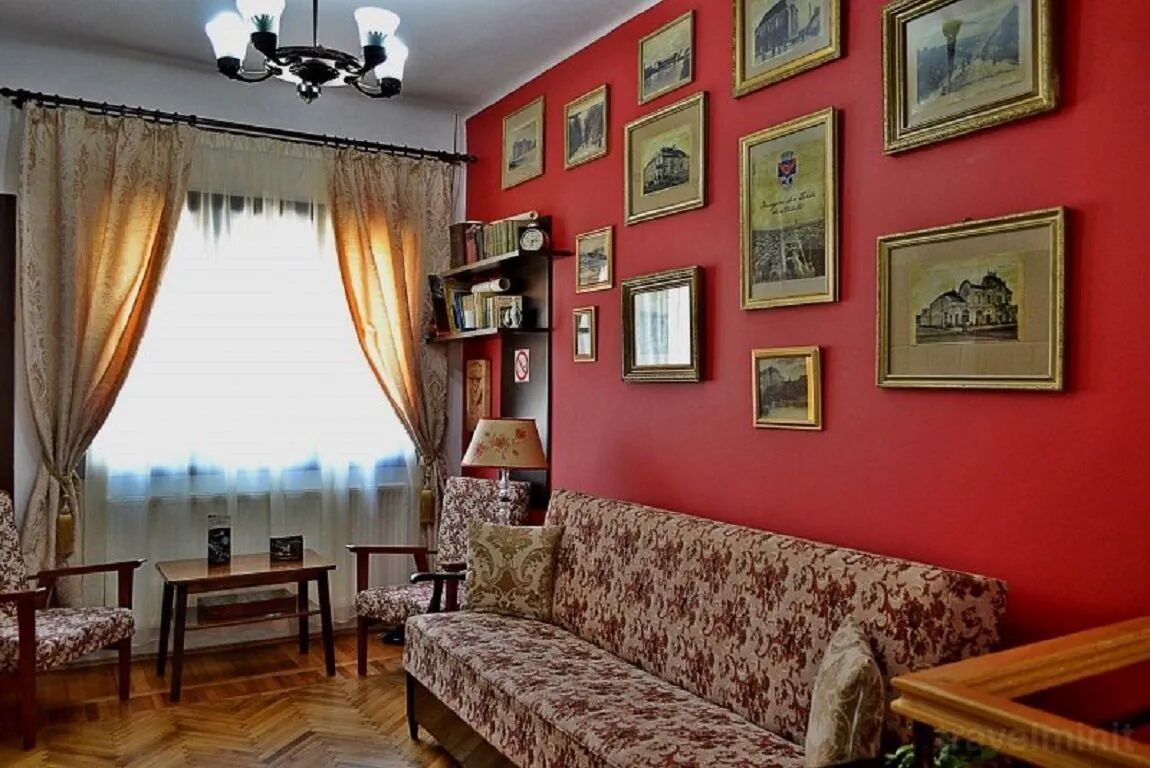
Casa Nobilium Turda
Camere, serviciiCasa Nobilium Turda Turda va intampina cu doua camere confortabile si placut amenajate. Proprietatea pune la dispozitia oaspetilor parcare gratuita. Oaspetii pot beneficia de accesul la internet wireless disponibil la casă de oaspeți. Mai multe informatii despre serviciile unitatii de cazare (inclusiv cele contra cost) si despre dotarea camerelor gasiti in fisa de mai jos. Servicii de masăTarifele camerelor nu includ nici o masa. PlatăPlata o puteti efectua cu/prin: card bancar, numerar, transfer bancar, card de vacanță, avans travelminit, voucher travelminit. Pentru asigurarea rezervarii este necesar sa achitati un avans de 100%. Sosire, programZiua de cazare incepe la ora 14:00. Eliberarea camerei se face la ora 11:00. Personalul de la receptie vorbeste limba: maghiară, engleză, română.
FROM
280 RON / night
Pensiune · 3 stars
Turda, Turda County · 0.3 km
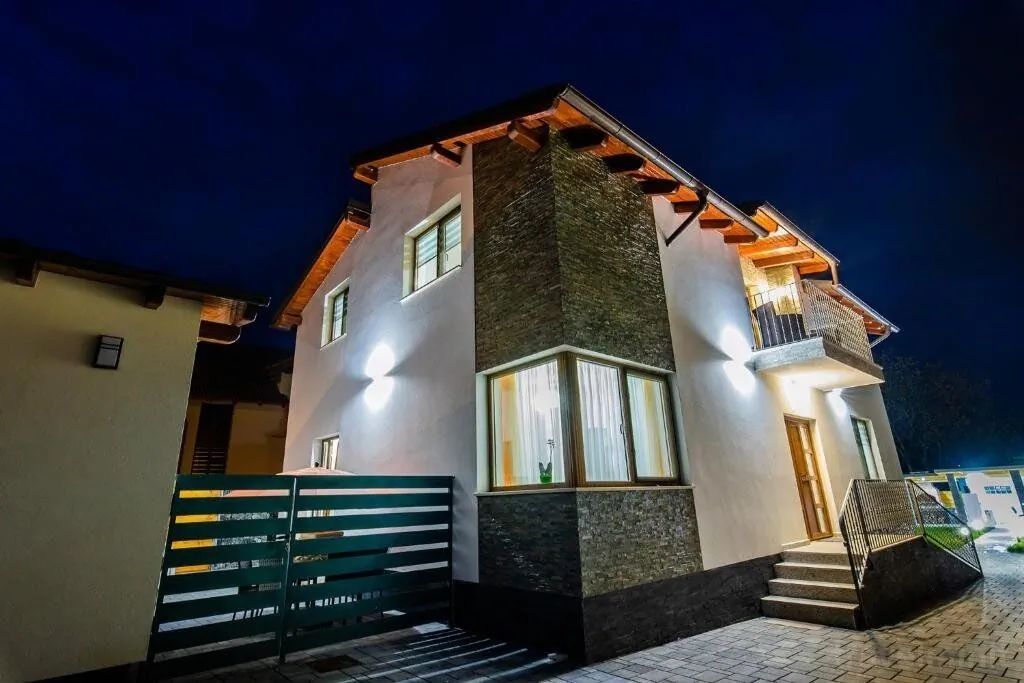
Casa Sorriso Turda
Camere, serviciiCasa Sorriso Turda Turda ofera 7 camere confortabile si placut amenajate. Oaspetii au la dispozitie parcare gratuita. Pentru a satisface nevoile si celor mai exigenti clienti, anumite camere sunt dotate cu aer conditionat. (Pentru mai multe informatii consultati la fiecare tip de camera rubrica "detalii"). Va puteti conecta la internet prin reteaua wireless disponibila in pensiune Mai multe informatii despre serviciile unitatii de cazare (inclusiv cele contra cost) si despre dotarea camerelor gasiti in fisa de mai jos. Servicii de masăTarifele afisate se refera numai la cazare. La efectuarea rezervarii aveti posibilitatea de a cere mic dejun contra cost. PlatăPlata se face prin urmatoarele metode: numerar, card bancar, transfer bancar, card de vacanță, avans travelminit, voucher travelminit. Sosire, programCamera poate fi ocupata de la ora 14:00 iar predarea ei se face pana la ora 10:00 . Limbile vorbite la receptie: engleză, română, italiană.
FROM
240 RON / night
Pensiune · 3 stars
Turda, Turda County · 0.3 km
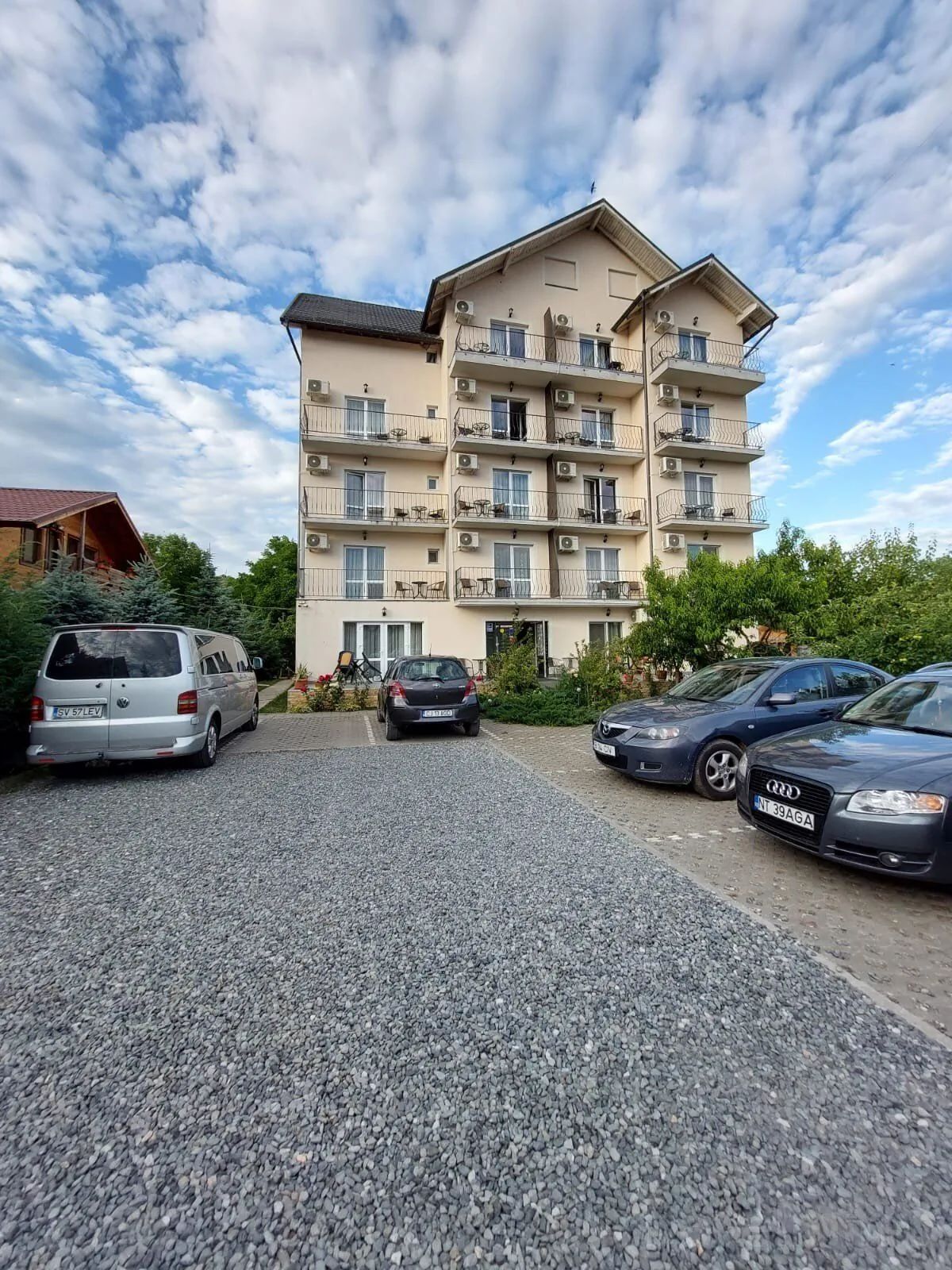
Pensiunea Daiana Residence Turda
Camere, serviciiPensiunea Daiana Residence Turda Turda va intampina cu 24 camere confortabile si placut amenajate. Este disponibila o parcare gratuita. O parte din camere sunt dotate cu aer conditionat pentru a satisface nevoile si celor mai exigenti clienti. (Pentru mai multe informatii consultati la fiecare tip de camera rubrica "detalii"). Unitatea va pune la dispozitie internet wireless. Mai multe detalii despre facilitatile oferite la pensiune (inclusiv cele contra cost), cat si despre dotarile camerelor veti gasi mai jos. LocațiaSalina Turda este la o distanta de 300 m , . Servicii de masăTarifele afisate nu contin masa. PlatăPlata se face prin urmatoarele metode: transfer bancar, numerar, card bancar, card de vacanță, avans travelminit, voucher travelminit. Pentru garantarea rezervarii se percepe un avans de 30%. Sosire, programZiua de cazare incepe la ora 15:00. Eliberarea camerei se face la ora 10:00. Limbile vorbite la receptie: engleză, română, italiană.
FROM
240 RON / night
Vilă · 3 stars
Turda, Turda County · 0.4 km
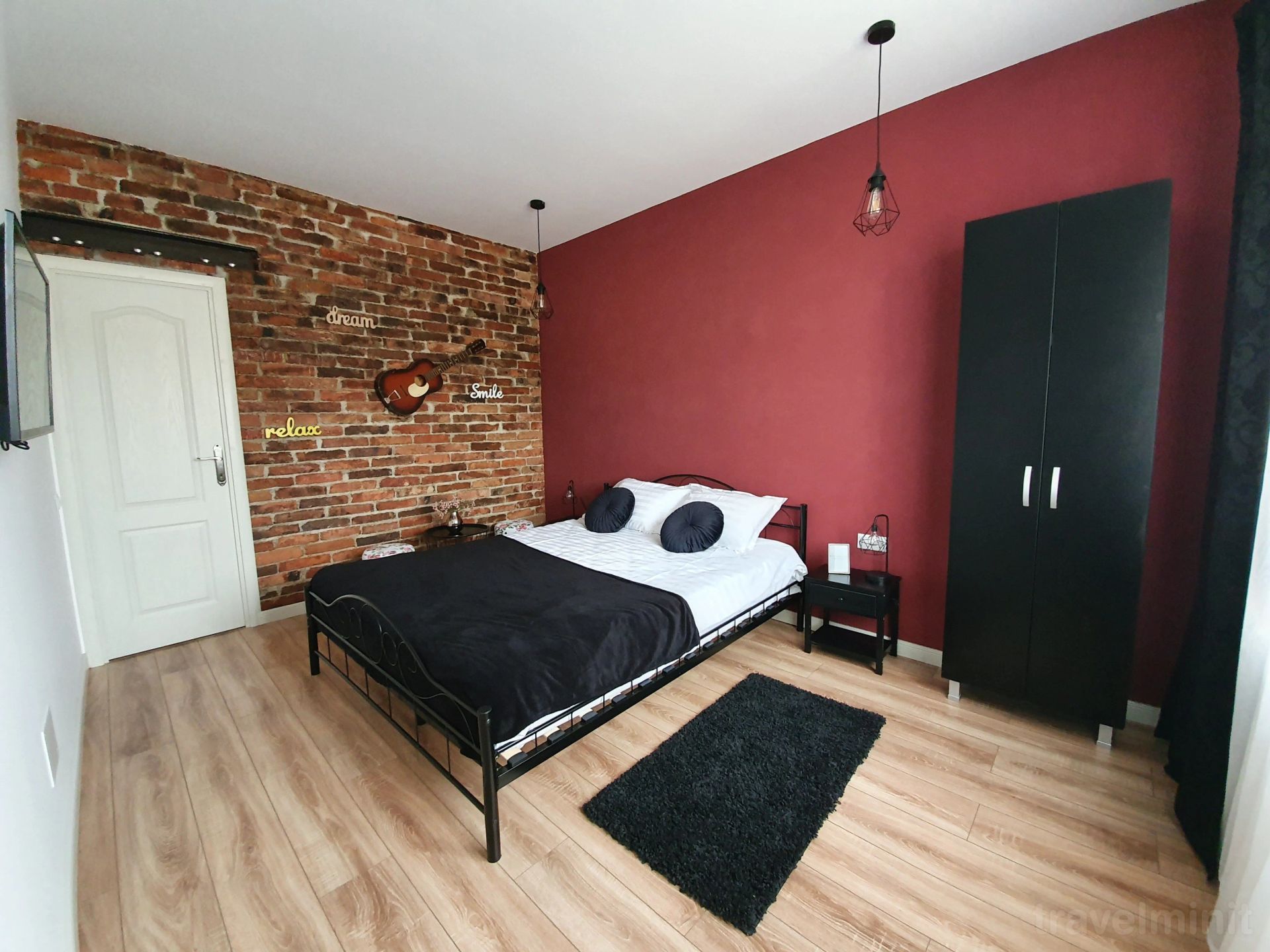
Edith's House Turda
Camere, serviciiEdith's House Turda Turda dispune de 5 camere modern mobilate. Exista parcare privata gratuita. O parte din camere sunt dotate cu aer conditionat pentru a satisface nevoile si celor mai exigenti clienti. (Pentru mai multe informatii consultati la fiecare tip de camera rubrica "detalii"). In unitate exista conexiune la internet wireless. Daca doriti sa obtineti mai multe informatii despre facilitatile oferite la aceasta unitate de cazare (inclusiv cele contra cost) si despre echiparea camerelor, consultati fisa de mai jos. Servicii de masăPreturile camerelor nu contin masa. PlatăPlata o puteti face cu/prin: numerar, transfer bancar. Sosire, programPreluarea camerei se face de la ora 15:00 si iesirea pana la ora 11:00. Personalul de la receptie vorbeste limba: engleză, română.
FROM
280 RON / night
BEFORE YOU HIT THE ROAD
Weather conditions in Turda
Local forecast for Turda Salt Mine, Turda, Cluj

Real-time updated weather data
Much more to explore in this area
Nearby tourist attractions


Apahida, Cluj County
Turda Gorge
Situate la o distanta de 6 km vest de Turda, de-a lungul Vaii Hasdate; ocupa o suprafata de 324 ha si s-au format prin erodarea rocii de calcar jurasic;...
8.1 km

Apahida, Cluj County
St. Michael's Church, Cluj-Napoca
Situata in Piata Unirii, Cluj-Napoca; istoria bisericii Sfantul Mihail coincide cu inceputurile Clujului ca si oras; biserica a fost inaltata pe un teren care...
25.3 km

Apahida, Cluj County
Muzeul Național de Istorie Cluj-Napoca
Situat pe strada Constantin Daicoviciu 2, Cluj-Napoca; cunoscuta si drept Casa Petrechevich-Horvath drept, este continuatorul primei asociatii muzeale din...
25.5 km

Apahida, Cluj County
Muzeul de Artă Cluj Napoca
Situat in Piata Unirii 30, Cluj Napoca; infiintat ca institutie in anul 1951, muzeul functioneaza din anul 1956 in Palatul Banffy, o cladire baroca construita...
25.9 km

Apahida, Cluj County
Cetatea Clujului
Pentru a construi cetatea romanii au folosit ca si hotare ale cetatii in primul rand Canalul Morilor si Paraul Tiganilor, care trece prin Gradina Botanica si...
24.6 km

Apahida, Cluj County
Cetățuia din Cluj
La fel ca si Cetatea din Alba Iulia, Cetatuia a fost proiectata de arhitectul militar italian Giovanni Morandi Visconti, in timpul guvernarii militare a...
26.1 km

Nicula, Cluj County
Mănăstirea Nicula
Situata in localitatea Nicula, orasul Gherla; manastire de calugari; poarta urmatoarele hramuri: Adormirea Maicii Domnului, Sfantul Nicolae, Buna Vestire;...
26.2 km

Apahida, Cluj County
Rezervația Naturală Cheile Turzii
Situate de-a lungul Vaii Hasdate; reprezinta una dintre cele mai cunoscute atractii turistice din Romania -privelistea, peretii inalti de stanca, vegetatia si...
7.6 km

25.1 km

Apahida, Cluj County
Muzeul Etnografic al Transilvaniei
Situat pe strada Memorandului nr. 21 din Cluj-Napoca; infiintat in 1922, detine colectii cu piese extrem de valoroase, achizitionate pe baza unor cercetari de...
25.3 km

48.5 km

25.5 km
Cultural life and traditions
Events near Turda Salt Mine
Medieval festivals, traditional fairs, concerts and recommended local activities in Transylvania.

Patrimoniu și Istorie

Turda, Jud. Cluj
Festivalul Cetăților Medievale și Zilele Porților Deschise
Tururi ghidate nocturne, ateliere de meșteșuguri tradiționale și reconstituiri istorice cu cavaleri și domnițe.
WHEN
15 - 17 Mai 2026

Tradiții și Gastronomie
Turda, Jud. Cluj
Târgul Tradițiilor Săsești și Gastronomie Locală
Descoperă producătorii locali, plăcintele săsești coapte pe vatră, siropurile artizanale și dulceața de rubarbă.
WHEN
În fiecare weekend (Mai - Octombrie)

Ecoturism și Natură
Colinele Transilvaniei, Jud. Cluj
Drumeții Ghidate pe Traseul Colinele Transilvaniei
Excursii pe poteci nemarcate printre fânețe seculare, stejari multiseculari și sate cu biserici fortificate UNESCO.
WHEN
Vineri - Duminică (Sezon 2026)
On foot, exploration gains depth
Discover the surroundings and local geography
Explore trails, terrain and natural landmarks around Turda Salt Mine.

Guides and practical tips
Useful travel articles
Travel guides, practical tips and itineraries for Transylvania.

Travel guide
Top 5 Atracții Turistice și Trasee Montane în Zona Moieciu - Bran
Descoperă cele mai spectaculoase peisaje carstice, chei adânci și cetăți medievale din imediata apropiere a stațiunii Moieciu.

Travel guide
Ghid de Drumeție: Traseul Moieciu de Sus spre Platoul Bucegi
Un itinerariu montan de o frumusețe rară ce urcă din Valea Băngăleasa spre Poiana Guțanu și crestele maiestuoase ale Bucegilor.

Travel guide
Castelul Bran: Istorie, Legende și Secrete Medievale
Află adevărata poveste a fortăreței medievale din Pasul Bran, reședința de suflet a Reginei Maria a României.
THE JOURNEY STARTS WITH AN IDEA
The next story is on the way.
From the first stop to the last stay, make room for a new Romania.
