


MUSEUM · MARAMURES
Sighet Memorial

Sighetu Marmației, Maramureș County
Add location to your trip planner.

Practical access information

VISITING HOURS
Consultă programul local de vizitare

TICKET PRICE
Informații disponibile la casierie

RECOMMENDED VISIT DURATION
30 - 60 min


Visitor information and guide
 Navigate with Google Maps

ABOUT SIGHET MEMORIAL
The Memorial of the Victims of Communism and of the Resistance: A Temple of European Memory at the Gates of Maramureș
In the northern heart of Romania, where the Tisza River separates Europe from the former Soviet space, rises from the ruins of a former prison one of the most moving and important places of memory preservation on the continent. The Memorial of the Victims of Communism and of the Resistance in Sighetu Marmației is not merely a museum about the painful past of a nation, but a European sanctuary of human dignity, a point where Romania's history is indissolubly intertwined with the great tragedies and great struggles for freedom that marked the European twentieth century. Viewed from the perspective of a journey through Europe's memory, Sighet represents the essential link that completes a symbolic triad of continental consciousness: alongside the Auschwitz-Birkenau Memorial, witness to racial hatred, and the Normandy Peace Memorial, celebrating victory over totalitarian war, the Sighet Memorial embodies the struggle against class hatred and communist ideological repression, having been recognized by the Council of Europe since 1998 as one of the three great sites of European memory cultivation.
What makes this place truly unique in the European memorial landscape is the fact that it represents the world's first museum dedicated exclusively to the victims of communism, opened as early as 2000, at a time when most former communist states still hesitated to face their own past. The initiative belongs to writer Ana Blandiana and her husband, Romulus Rusan, who transformed an unsanitary ruin, a former Stalinist political prison, into a living institute of research, museography, and civic education. Today, the Sighet Memorial holds the European Heritage Label, awarded in 2017, and attracts annually a number of visitors that exceeds twice the population of the city, becoming a true pilgrimage of European consciousness for historians, artists, politicians, and travelers from all over the world.
Historical Roots and Major European Connections
An Austro-Hungarian Prison on the Frontier of Empires
The building that houses the Memorial today has its origins in a period of profound political transformations in Central Europe. Built between 1896 and 1897 by the Austro-Hungarian authorities, in the full era of the "First Hungarian Millennium" celebrated with pomp by the Dual Monarchy, the Sighet prison was part of an extensive network of modern penitentiaries erected throughout Transylvania under Hungarian administration. The building, realized in the same style and with the same functions as the penitentiaries in Satu Mare, Oradea, Arad, Aiud, or Gherla, followed the Austrian model of the era, which provided for the placement of prisons in proximity to courts to facilitate the transport of prisoners. Its architecture, in a T-shape, unfolded over three levels and comprised 108 cells, of which 36 individual and the rest for four to six persons, being built of brick and reinforced concrete, with massive doors of fir wood and thick walls six meters high, provided with watchtowers.
This Austro-Hungarian foundation places the Sighet Memorial in a broader European context, that of the penitentiary system of the Habsburg Empire, whose principles of organization and social control influenced all of Central Europe at the end of the nineteenth century. For over two decades, until 1918, the prison functioned as a common-law penitentiary for those sentenced to punishments of six months to two years. During the First World War, it housed diverse political prisoners, from Polish revolutionaries and priests of the national churches to deserters from the Hungarian army, reflecting the geopolitical complexity of a border zone where empires met and clashed.
From the Holocaust to the Gulag: Sighet, a City of European Tragedies
After the Great Union of 1918, Sighet became part of Greater Romania, and the prison continued to function as a civil penitentiary. But the city's history was to be profoundly marked by the events of the Second World War and the tragedy of the Holocaust. In August 1940, through the Vienna Dictate, arbitrated by Nazi Germany and Fascist Italy, Northern Transylvania, including Sighet, was re-annexed to Horthy's Hungary. During this period, the city's Jewish population, which represented a significant part of the local community, was subjected to systematic antisemitic measures. In April-May 1944, the Hungarian authorities, under pressure from Nazi Germany, organized two ghettos in the city and deported approximately 13,000 Jews from Sighet and the surroundings to the Auschwitz-Birkenau extermination camp. Among the survivors were Elie Wiesel, future laureate of the Nobel Peace Prize in 1986, and physician Gisella Perl. This tragedy places Sighet on the map of Europe's Holocaust memory, alongside the great witness cities of Eastern Europe, and Elie Wiesel's birthplace, transformed into a museum, today completes the city's memorial landscape.
After liberation from Hungarian occupation and the establishment of the communist regime in Romania, supported by the Soviet Red Army, the Sighet prison underwent a new tragic metamorphosis. Beginning in August 1948, it became a place of detention for opponents of the new regime. The first political prisoners were 18 students from the "Dragoș Vodă" High School, accused of demonstrating against the communist regime, followed by students and Maramureș peasants who opposed collectivization and compulsory agricultural quotas. But the historical turning point was the night of May 5-6, 1950, when, in an operation coordinated by the Securitate with 228 agents divided into 38 teams, over one hundred dignitaries from across the country were brought to the Sighet penitentiary. Among them were former ministers, academicians, economists, military men, historians, journalists, and politicians, some sentenced to heavy punishments, others imprisoned without any trial, through discretionary administrative decisions. In the following months, in October-November 1950, 45-50 Greek-Catholic and Roman-Catholic bishops and priests were also brought, arrested for refusing to convert to Orthodoxy.
The choice of Sighet as a place of detention for the political, intellectual, and religious elites of interwar Romania was not accidental. Located only a few kilometers from the former border with the Soviet Union, in an isolated and difficult-to-access zone, the city offered ideal conditions for the complete isolation of prisoners. Historians consider that, in the case of an anti-communist revolt, the prisoners could be quickly transferred across the border into the USSR. Between 1950 and 1955, approximately 200 political prisoners passed through the Sighet prison, and 54 of them died in detention, victims of a regime of systematic extermination based on starvation, cold, untreated diseases, humiliation, and total isolation.
From the Ruin of Oblivion to European Recognition
After 1955, as a result of the Geneva Convention and the admission of the Romanian People's Republic to the United Nations, a partial amnesty took place. Some prisoners were released, others transferred to other penitentiaries or placed under compulsory residence. The prison returned to the status of common-law penitentiary, although political prisoners still appeared sporadically, especially "in transit" to the psychiatric hospital in the locality. In 1977, the penitentiary was definitively decommissioned and entered a process of accentuated degradation, being used sporadically as a warehouse for salt, vegetables, and tires.
The rebirth of this place as a space of memory was the visionary work of poet Ana Blandiana, president of the Civic Alliance, who, on January 30, 1993, within a conference on human rights in Strasbourg, presented to the Council of Europe the project of a Memorial of the Victims of Communism. After two delegations of experts who visited Sighet, the Council of Europe drew up a study-report in 1995 and took the Memorial under its aegis. In April 1994, the Civic Academy Foundation was established, which took over the ruin of the former prison, and the rehabilitation and arrangement works lasted until the year 2000. On June 12, 1997, through a special law, the Romanian Parliament declared the Memorial an "ensemble of national interest."
European recognition came in October 1998, when the Council of Europe nominated the Sighet Memorial among the first three sites of European memory cultivation, alongside the Auschwitz Memorial and the Normandy Peace Memorial. This symbolic triad commemorates the three forms of historical hatred that devastated the continent: racial hatred (Auschwitz), class hatred (Sighet), and war (Normandy). In 2017, the Sighet Memorial received the European Heritage Label, a distinction awarded by the European Union to sites with major symbolic value for Europe's history and culture, thus recognizing that the trauma suffered by the peoples of Eastern Europe under communist regimes represents an integral part of the common European heritage.
Architectural Masterpiece and Artistic Heritage
The Architecture of Detention Transformed into the Architecture of Memory
The Memorial building preserves the original structure of the 1897 Austro-Hungarian penitentiary: a T-shaped construction, developed on the ground floor and two upper floors, with massive walls six meters high and watchtowers. The rehabilitation works, carried out between 1994 and 2000, had to face an enormous challenge: the building, a century old, was ruined and full of dampness, requiring the redoing of foundations, insulation, and roof. The interior walls, which had been repainted over time and no longer preserved traces of the 1950s period, were whitewashed, thus creating a neutral background for the presentation of history.
Each of the 108 cells of the former prison was transformed into a museum room, organized in chronological order presenting the evolution of the totalitarian communist system in Romania and Eastern Europe. This architectural transformation represents a profoundly symbolic act: the prison space, conceived for isolation and punishment, becomes an open space for education and reflection. The visitor follows the same route that the prisoners followed, entering cells that now house photographs, documents, personal objects, and testimonies, recreating the atmosphere of repression, but also human resistance in the face of it.
The Space of Recollection and Prayer: A Contemporary Masterpiece
In one of the interior courtyards of the former prison is perhaps the most moving architectural realization of the Memorial: the Space of Recollection and Prayer, designed by architect Radu Mihăilescu. The work was the winner of an international competition in which 50 architects and artists participated, launched in 1996, having as its theme a phrase present in all prisoners' memoirs: "I would not have resisted if I had not believed in God." The architecture brilliantly combines ancient style with a modern vision, suggesting both the Greek tholos and the early Christian catacomb, also evoking the Byzantine tradition of sacred underground spaces.
The Space consists of a descending ramp that leads to an underground place, where the walls of smoky andesite house the engraved names of almost eight thousand dead from Romania's prisons, camps, and places of deportation. The operation of collecting these names required ten years of work within the International Center for Studies on Communism, and the figure is far from covering the true extent of the repression. Most of the names were established by historian Cicerone Ionițoiu and by Eugen Sahan, both historians by vocation and former political prisoners. The expenses for the design and construction of this space were borne by Mișu Cârciog, a British businessman of Romanian origin, who remains to this day the Memorial's main donor.
The Artistic Heritage: Works That Breathe Suffering and Hope
The Sighet Memorial distinguishes itself through an impressive collection of works of plastic art donated by Romanian and international artists, which complete the scientific dimension of the museum with the emotional and aesthetic one. The idea of aesthetically punctuating the unfolding of the museum's over 50 rooms was born from the need to add to the historical content the suggestion of the suffering that repression generated and the emotion in the face of violence and the absurdity of evil.
Among the most valuable works are the tapestries and sculptures of Camilian Demetrescu, a Romanian artist settled in Italy, whose two large-scale sculptures entitled "Homage to the Political Prisoner," one subtitled "Resurrection," give the atmosphere dramatic and uplifting features. Demetrescu, who in the 1980s was a supporter of the European movement that led to the fall of the Berlin Wall, created works with profound Christian inspiration, which he considered a spiritual therapy for European man. His biblical-philosophical tapestries decorate even the audience hall of the Sovereign Pontiff at the Vatican.
Another reference work is the triptych "Requiem" by Victor Cupșa, dedicated to the victims of communism in all countries where communism exercised power, placed in the reception room of visitors at the Paupers' Cemetery. The relief "Seen in Falling" by Peter Jacobi, an Austrian artist author of reference works dedicated to European memory, is placed in the Hall of Maps, suggesting through the distortion of the visual field the moment of an involuntary, accidental fall, a metaphor for human collapse under ideological terror.
The sculptural group "Procession of the Sacrificed," realized by sculptor Aurel I. Vlad, has become one of the museum's emblems. Initially presented in 1997 in wood and cast the following year in bronze, the work represents eighteen human silhouettes walking toward a wall that closes their horizon, as communism walled off the lives of millions of people. Placed in another interior courtyard of the former prison, this work of great scale in dimension and artistic breath impresses through its universal symbolic force.
The collection is completed by the tapestry "Freedom, We Love You" by Șerbana Dragoescu, the painting "Resurrection" by Christian Paraschiv, and the bronze sculpture "The Black Sea" dedicated by Ovidiu Maitec to historian Gheorghe I. Brătianu. All these works, donated by their authors, impress through the symbolism of accepted sacrifice that characterizes them, giving the Memorial a special personality among the history museums of the world.
The Paupers' Cemetery: The Necropolis of Those Without a Grave
At 2.5 kilometers from the museum, at the exit of the city toward Satu Mare, is the Paupers' Cemetery, an essential final component of the Memorial. Here, according to the legends of the time, the 54 dead from the political prison were secretly buried, at night. The communist authorities did not draw up death certificates, and the bodies were thrown into anonymous graves, without coffin, without priest, and without name, by common-law prisoners. Death was recorded in a report signed by the doctor and the prison commander, and death certificates were issued only in 1957, being placed in the prisoners' personal files, without being sent to the families.
In 1999, the Civic Academy Foundation imagined a landscape project for the celebration of the sacrifice of these victims. On the surface of 14,500 square meters of the cemetery, an outline of Romania was drawn. Outside the outline, saplings were planted, mainly conifers — junipers, dwarf pines, firs, and spruces — which, through growth, will become a vegetal amphitheater, within which "the country" will remain as an open clearing. In the place on the map corresponding to the city of Sighet, considered an epicenter of repression, an altar-cenotaph was raised. The profound idea of this project is that the homeland holds its martyrs in its arms and mourns them through the repeated generations of vegetation. From a belvedere placed on a raised place, on the bank of the Tisza — which is the current border with Ukraine — visitors can see this symbolic drawing of the country, ever clearer as nature completes the project. Besides the central altar, the ensemble also includes several dozen andesite plaques on which are sculpted names of Romanian citizens who died in the deportations to the Soviet Union, thus completing the names of the dead from prisons and camps.
Legends, Personalities, and Turning Points
The Elites of Interwar Romania: A Pantheon of Resistance
Among the cold walls of the Sighet prison passed and died some of the most illustrious figures of interwar Romania, people who contributed to the founding of the modern Romanian state, to European culture, and to resistance against totalitarianism. Among the 54 who died in detention, personalities such as Iuliu Maniu, president of the National Peasants' Party and three-time Prime Minister of Romania, represent the supreme symbol of democratic resistance. Doctor of law, architect of the Great Union of 1918, Maniu was almost 75 years old when he was arrested and died in Sighet prison on February 5, 1953, after years of physical and moral suffering.
Alongside him, historian Gheorghe I. Brătianu, former minister and member of the Romanian Academy, died on April 24, 1953, only a few days after Maniu's death. The Brătianu family paid a heavy tribute to the communist regime, both through Constantin I.C. Brătianu, president of the National Liberal Party, and through Gheorghe, both deceased in detention. Other illustrious martyrs include Constantin Argetoianu, physician, graduate in law and letters, former Minister of Justice, Finance, and Interior; Sebastian Bornemisa, philosopher and journalist, former mayor of Cluj; Mihail Manoilescu, internationally renowned economist, professor at the Bucharest Polytechnic and former governor of the National Bank; and Daniel Ciugureanu, Bessarabian leader, one of the promoters of the Union of Bessarabia with Romania, doctor of medicine, deputy in the Sfatul Țării of Chișinău and president of the Council of Ministers of the Democratic Moldavian Republic at the time of the Union of 1918.
The religious dimension of the repression is illustrated by the presence of numerous bishops and priests. The Greek-Catholic Bishop Ioan Suciu of Oradea, apostolic administrator of the Metropolitan See of Blaj, Bishop Tit-Liviu Chinezu, Bishop Traian Valeriu Frențiu of Lugoj and Oradea, the Roman-Catholic Bishop Anton Durcovici of Iași, as well as the Greek-Catholic canon Augustin Maghiar, vicar general of the Diocese of Oradea, died in prison for refusing to submit to pressures of conversion to Orthodoxy. They represent the martyrs of the Churches United with Rome, whose spiritual resistance remained a symbol of religious freedom in the face of communist state atheism.
Among the prisoners who survived and were able to testify later were Áron Márton, Roman-Catholic Bishop of Alba Iulia, and Alexandru Todea, protopop of Reghin, later archbishop and cardinal, who carried in soul and body the memory of this prison until the end of their lives. Their testimonies, alongside those of other survivors such as Cicerone Ionițoiu or Eugen Sahan, stood at the basis of the historical research that documented communist terror.
The Legends of the Place: Humiliation as a Program of Extermination
The memoirs of survivors and archive documents paint a picture of the inhuman conditions in Sighet prison. Prisoners were kept in unsanitary conditions, miserably fed, forbidden to lie down during the day on the beds in the cells, without heating. They were not allowed to look out the window, and those who did not comply were punished to stay in "the black" and "the hole," cell-type solitary confinement without light. Eventually, shutters were put on the windows, so that only the sky could be seen. Humiliation and mockery were part of the systematic program of physical and psychic extermination.
A shattering legend speaks of the way the dead were buried: at night, in silence, by common-law prisoners, in anonymous graves in the Paupers' Cemetery or on the territory of the hospital. No coffins were used starting in 1951, for lack of wood. Death certificates were drawn up later, and families were notified arbitrarily, without receiving the bodies or knowing the place of burial. This "death without a name" represented the last humiliation imposed on the victims, an erasure of identity that characterized totalitarian regimes.
Ana Blandiana and Romulus Rusan: The Architects of Memory
The central figure in the transformation of the prison into a Memorial is Ana Blandiana, internationally renowned poet, anti-communist dissident, and president of the Civic Alliance. She had the vision of transforming the ruin of the former prison into a place of memory, presenting the project to the Council of Europe in 1993. Together with her husband, writer Romulus Rusan, she founded the International Center for Studies on Communism and the Civic Academy Foundation, institutions that made possible the rigorous scientific research of the communist period and the creation of the museum. Their vision, expressed in the phrase "When justice fails to be a form of memory, memory alone can be a form of justice," became the motto of the entire memorial endeavor at Sighet.
Practical Visitor Guide and the Experience of Today's Tourist
How to Get There and Visiting Hours
The Memorial of the Victims of Communism and of the Resistance is located in the center of the city of Sighetu Marmației, on Corneliu Coposu Street number 4, at the intersection of painful history and the vibrant present of a city that lies at the confluence of the Iza and Tisza rivers, on the border with Ukraine. The city is the historical capital of Maramureș and can be accessed by car from Baia Mare (approximately 70 km), from Satu Mare (100 km), or from Cluj-Napoca. There are regular railway connections, and the Sighet station is a departure point for exploring the Iza Valley and the villages with wooden churches of UNESCO heritage.
For the year 2026, the visiting hours are as follows: in the summer period, between April 15 and October 14, the Memorial is open daily between 9:30 AM and 6:30 PM, the last entry being allowed 30 minutes before closing. In the winter season, between October 15 and April 14, the hours are from Tuesday to Sunday, between 9:30 AM and 4:30 PM, closed on Monday. The average recommended duration for a complete visit is approximately two hours, but to carefully go through all the rooms, to visit the Space of Recollection and Prayer, the Procession of the Sacrificed, and the Paupers' Cemetery located 2.5 km away, it is recommended to allocate half a day.
Admission fees are affordable and can be consulted at the museum box office or on the official website. There are reduced fees for children, pupils, students, and pensioners, and organized groups benefit from discounts. Entry to the Paupers' Cemetery is included in the museum ticket. Free parking is available for visitors on Gheorghe Șincai Street, perpendicular to Corneliu Coposu Street, right behind the museum.
The Visitor Experience: A Journey Through European History
The visit to the Sighet Memorial is a profoundly emotional and educational experience, which begins from the moment of entering the building of the former prison. The first impact is architectural: the thick walls, dark colors, massive wooden doors, and oppressive atmosphere instantly recreate the sensation of captivity. Each cell becomes a museum room that presents, in chronological order, the stages of the establishment and consolidation of the communist regime in Romania, but also the broader European context of the Cold War, the Iron Curtain, and the repression throughout the Soviet bloc.
The museographic route comprises over 50 thematic rooms, organized on three levels, which treat subjects such as: the installation of communism in Romania, the collectivization of agriculture, the repression of armed resistance in the mountains, the persecution of the Churches United with Rome, political prisons, forced labor camps, deportations to the USSR, and cultural resistance. The exhibitions include archival photographs, original documents, personal objects of prisoners, reconstructions of Securitate interrogation cells, and video testimonies of survivors. Special attention is given to prominent personalities, with rooms dedicated to Iuliu Maniu, Gheorghe I. Brătianu, the martyr bishops, and intellectual resistance.
After going through the interior rooms, the visitor reaches the interior courtyards where two of the most impressive works of art are located: the Space of Recollection and Prayer, with its ramp descending toward an underground sanctuary engraved with thousands of names, and the Procession of the Sacrificed, the eighteen bronze figures advancing toward a blind wall. These spaces invite silence, meditation, and recollection, offering a strong emotional contrast with the historical agitation of the exhibition rooms.
The visit ends, for many, at the Paupers' Cemetery, 2.5 kilometers from the museum. Here, in the silence of a clearing surrounded by forest, unfolds the symbolic landscape of Romania, drawn in vegetation, with the altar-cenotaph in the center of "the country" and with Victor Cupșa's triptych "Requiem" watching over the entrance. The belvedere on the bank of the Tisza, which offers an overview of the entire ensemble, is located right on the border with Ukraine, a symbol of the fact that the memory of communist repression crosses borders and is shared by all the peoples of Eastern Europe.
The European Context of the Visit: Maramureș and the Memory of the Continent
The visit to the Sighet Memorial integrates organically into a broader route of discovery of the European heritage in northern Romania. Sighetu Marmației is surrounded by the villages of Maramureș, where there are eight wooden churches included in the UNESCO World Heritage, with their tall towers and specific Gothic architecture. Only a few kilometers away is the Sighet Holocaust Memorial and the birthplace of Elie Wiesel, thus completing the image of a city that knew both the tragedy of Nazi deportations and that of communist repression.
For the European traveler, Sighet offers a unique perspective on the way twentieth-century history was lived on the periphery of empires, in a border zone where borders changed several times between 1918, 1940, 1944, and 1947. Here, at the northern end of Romania, on the bank of the Tisza that was once the border between the free world and the Soviet world, the Sighet Memorial bears witness to the fact that the memory of suffering knows no borders and that the struggle for human dignity is universal.
Every year, starting in 1998, the Memorial organizes the Sighet Summer School, in which pupils and history teachers from Romania and other European countries participate, transforming this place into a living center of civic education and intercultural dialogue. Also, on the day of the Ascension of the Lord, the Memorial becomes a place of pilgrimage for former political prisoners, their families, and descendants, who come to commemorate the memory of the departed.
The Memorial of the Victims of Communism and of the Resistance in Sighet is not merely a museum, but a temple of European memory, a place where the painful past of a nation is transformed into a universal lesson about human dignity, freedom, and resistance in the face of totalitarianism. For any traveler who wishes to understand twentieth-century Europe in its depth, a visit to Sighet is essential, a necessary pilgrimage through our common history.
Media gallery
Discover Sighet Memorial in pictures

16 photos · Architecture, courtyards and captivating details


Image source: Wikimedia Commons · Public domain photos · Free license
STAY A FEW DAYS, DISCOVER THE MAGIC
Stays near Sighet Memorial

Motel · 3 stars

Sighetu Marmației, Sighetu Marmației County · 0.1 km
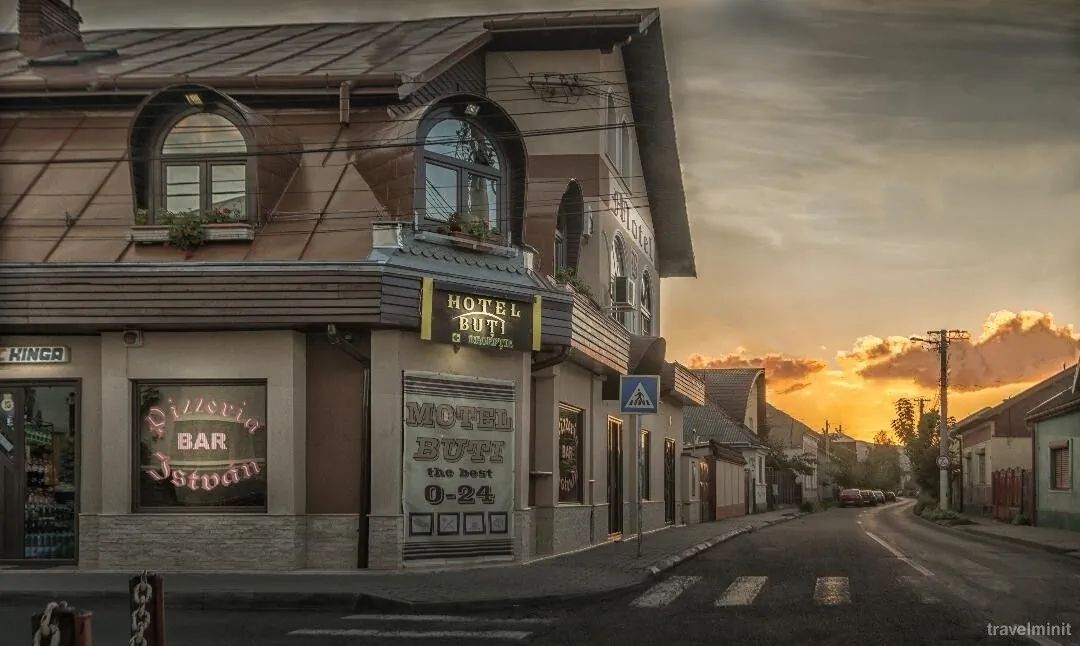
Motel Buti Sighetu Marmației
Motel Buti este situat in centrul orasului Sighetu Marmatiei langa zidurile inchisorii Memorial Sighet, motel Buti va ofera confortul , linistea si relaxarea de care aveti nevoie. Un restaurant de 80 locuri va sta la dispozitie intr-un cadru intim si primitor. Motelul detine o parcare cu 8 locuri inchisa. Motel Buti ofera parcarea inchisa pentru motociclisti.
FROM
170 RON / night

Hotel · 3 stars
Sighetu Marmației, Sighetu Marmației County · 0.2 km
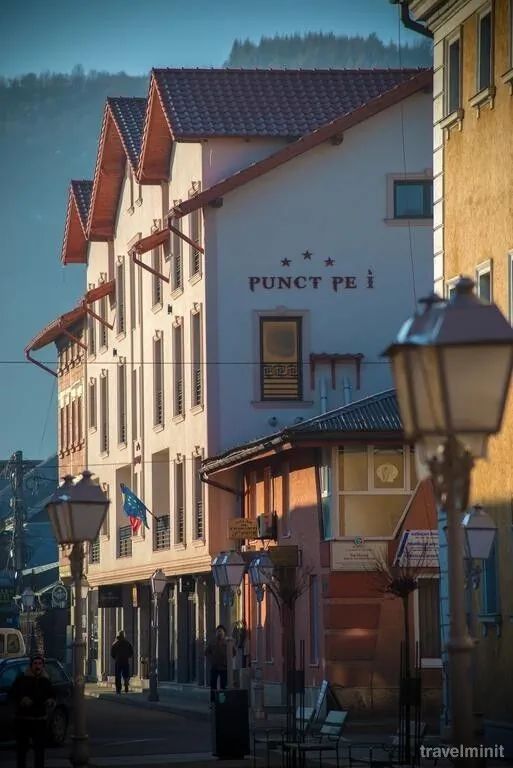
Aparthotel Punct pe I Sighetu Marmației
Camere, serviciiAparthotel Punct pe I Sighetu Marmației Sighetu Marmației ofera 6 camere dotate cu bun gust. Cateva camere sunt prevazute cu aer conditionat. (Pentru mai multe informatii consultati la fiecare tip de camera rubrica "detalii"). Unitatea este prevazuta cu internet wireless. O lista detaliata despre facilitatile unitatii de cazare (inclusiv cele contra cost), cat si despre amenajarea camerelor gasiti in fisa de mai jos. Servicii de masăPreturile camerelor nu contin masa. PlatăPlata se poate efectua prin urmatoarele modalitati: card bancar, transfer bancar, numerar, card de vacanță, avans travelminit, voucher travelminit. Sosire, programZiua de cazare incepe la ora 14:00. Eliberarea camerei se face la ora 11:00. Limbile vorbite la receptie: engleză, română.
FROM
290 RON / night
Hotel · 3 stars
Sighetu Marmației, Sighetu Marmației County · 0.2 km
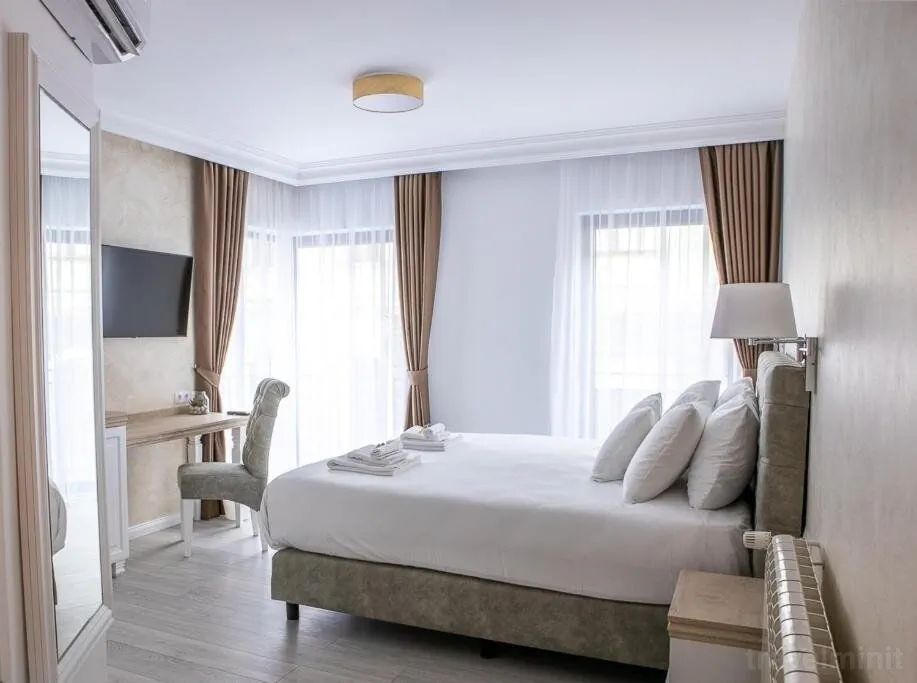
Hotel City Rooms Sighetu Marmației
Camere, serviciiHotel City Rooms Sighetu Marmației Sighetu Marmației ofera cazare in 7 camere placut mobilate si confortabile. Exista parcare contra cost. Cateva camere sunt prevazute cu aer conditionat. (Pentru mai multe informatii consultati la fiecare tip de camera rubrica "detalii"). Acces la internet wireless este disponibil la hotel. Pentru a obtine mai multe detalii despre facilitatile locatiei (inclusiv cele contra cost) si despre dotarile camerelor, va rugam consultati fisa de mai jos. Servicii de masăTarifele afisate se refera numai la cazare. Cand rezervati cazare aveti posibilitatea de a comanda mic dejun contra cost. PlatăPlata serviciilor se poate efectua prin urmatoarele modalitati: numerar, card bancar, transfer bancar, card de vacanță, avans travelminit, voucher travelminit. Pentru finalizarea rezervarii se achita un avans de 100%. Sosire, programCamera poate fi ocupata de la ora 15:00 iar predarea ei se face pana la ora 11:00. Personalul de la hotel vorbeste limba: spaniolă, română.
FROM
290 RON / night
Pensiune · 3 stars
Sighetu Marmației, Sighetu Marmației County · 0.4 km
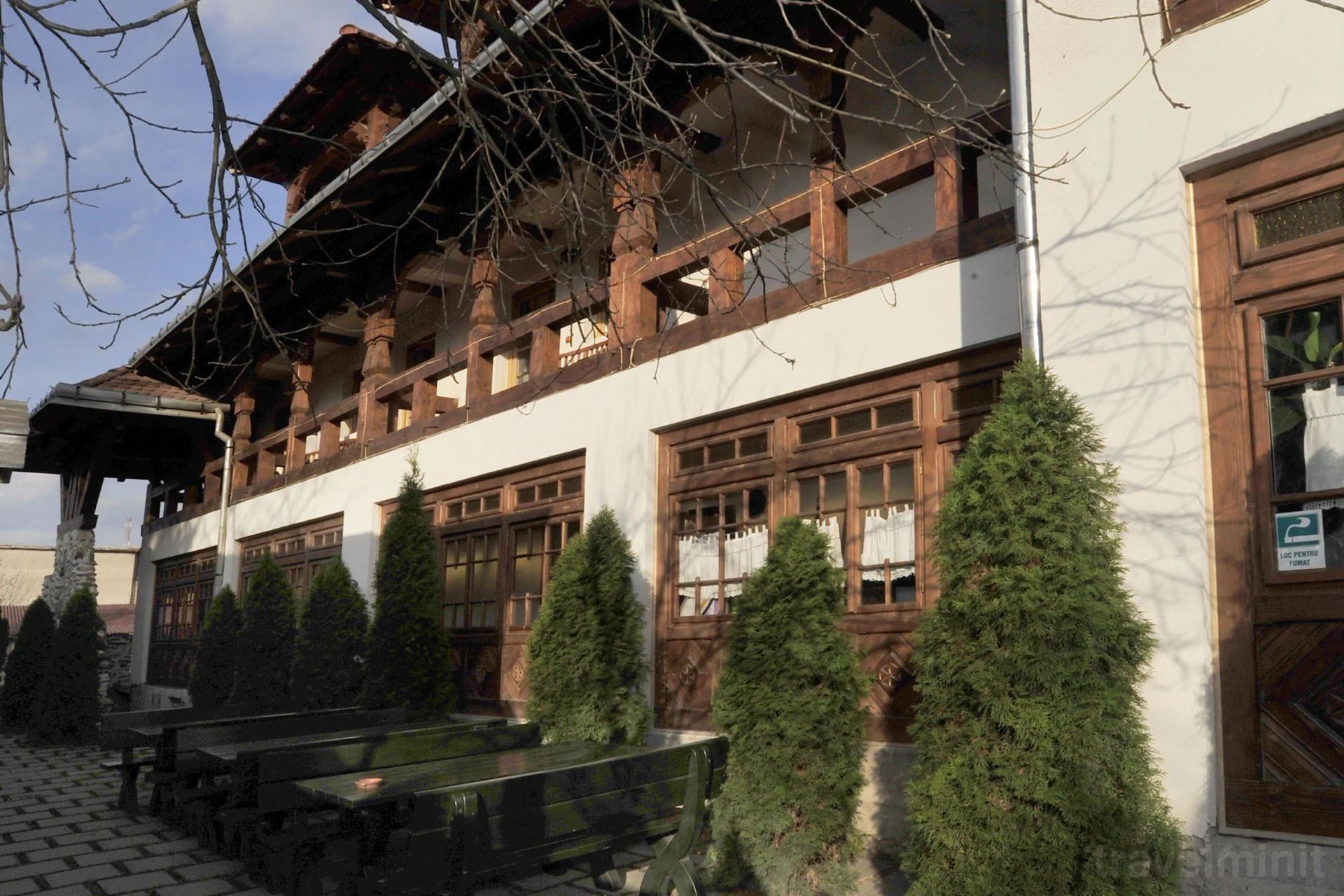
Pensiunea Casa Iurca Sighetu Marmației
Camere, serviciiPensiunea Casa Iurca Sighetu Marmației Sighetu Marmației ofera cazare in 5 camere frumos amenajate. Este permis accesul cu animale de companie (gratuit). La restaurant puteti servi preparate delicioase. Accesul la internetul wireless este disponibil la unitatea de cazare. O lista detaliata despre facilitatile unitatii de cazare (inclusiv cele contra cost), cat si despre amenajarea camerelor gasiti in fisa de mai jos. Servicii de masăTarifele afisate contin mic dejun. PlatăPlata o puteti efectua cu/prin: numerar, card bancar, transfer bancar, card de vacanță, avans travelminit, voucher travelminit. Sosire, programZiua de cazare incepe la ora 15:00. Eliberarea camerei se face la ora 12:00. Personal vorbitor de limba: engleză, română.
FROM
240 RON / night
Pensiune · 3 stars
Sighetu Marmației, Sighetu Marmației County · 0.5 km
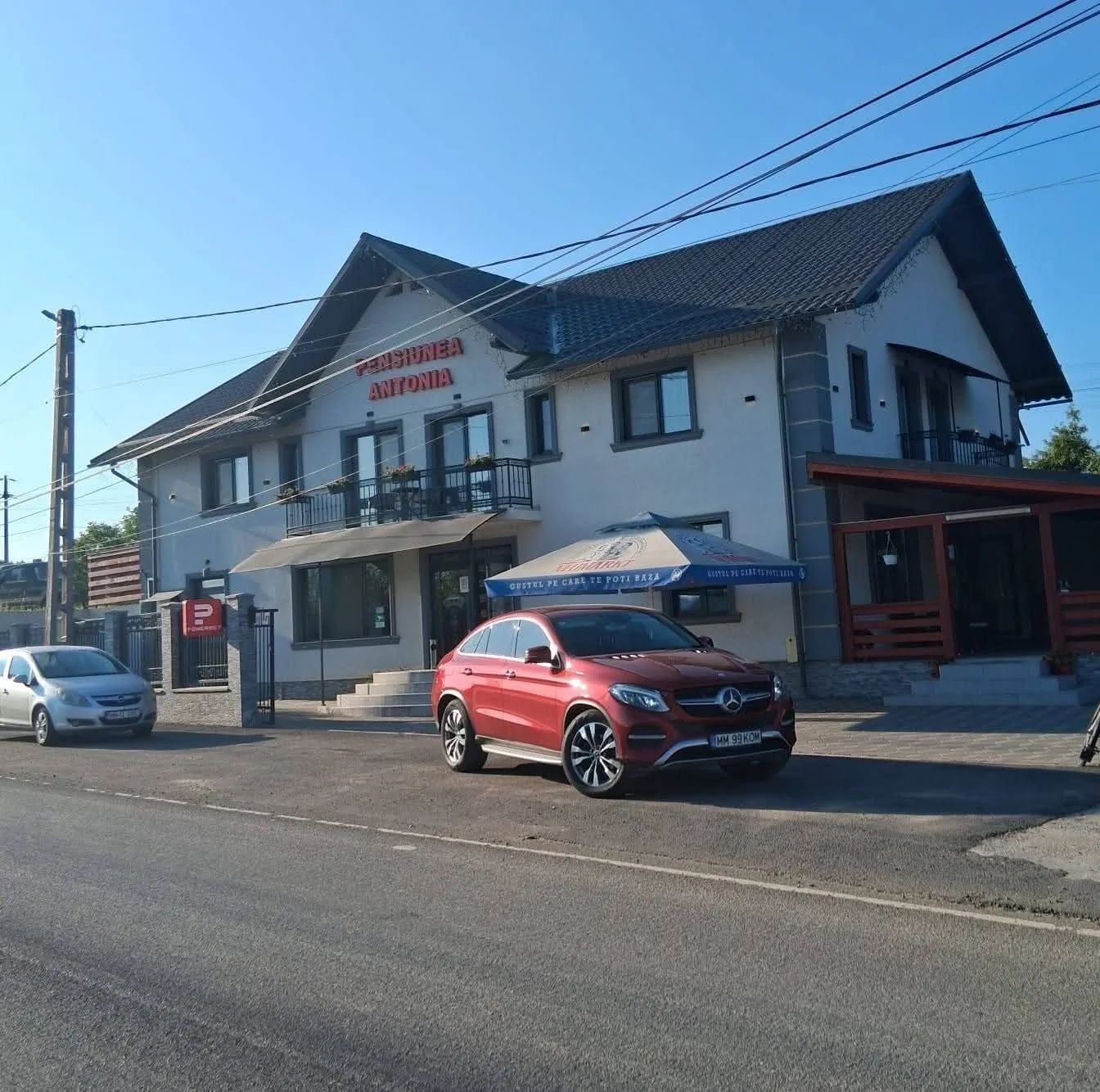
Pensiunea Antonia Sighetu Marmației
Camere, serviciiPensiunea Antonia Sighetu Marmației Sighetu Marmației dispune de 7 camere modern mobilate. La restaurant puteti servi preparate culinare traditionale. Este disponibila o parcare gratuita. Unele camere sunt dotate cu aer conditionat. (Pentru mai multe informatii consultati la fiecare tip de camera rubrica "detalii"). Va puteti conecta la internet prin reteaua wireless disponibila in pensiune Daca doriti sa aflati mai multe detalii despre facilitatile disponibile la Pensiunea Antonia Sighetu Marmației, respectiv despre amenajarea camerelor, va rugam consultati informatiile de mai jos. Servicii de masăTarifele camerelor nu includ nici o masa. La efectuarea rezervarii puteti solicita mic dejun contra cost. PlatăPuteti face plata cazarii cu/prin: numerar, transfer bancar, card bancar, card de vacanță, avans travelminit, voucher travelminit. Sosire, programCamera poate fi ocupata de la ora 13:00 iar predarea ei se face pana la ora 11:00. Personal vorbitor de limba română.
FROM
240 RON / night
Pensiune · 3 stars
Sighetu Marmației, Sighetu Marmației County · 0.9 km
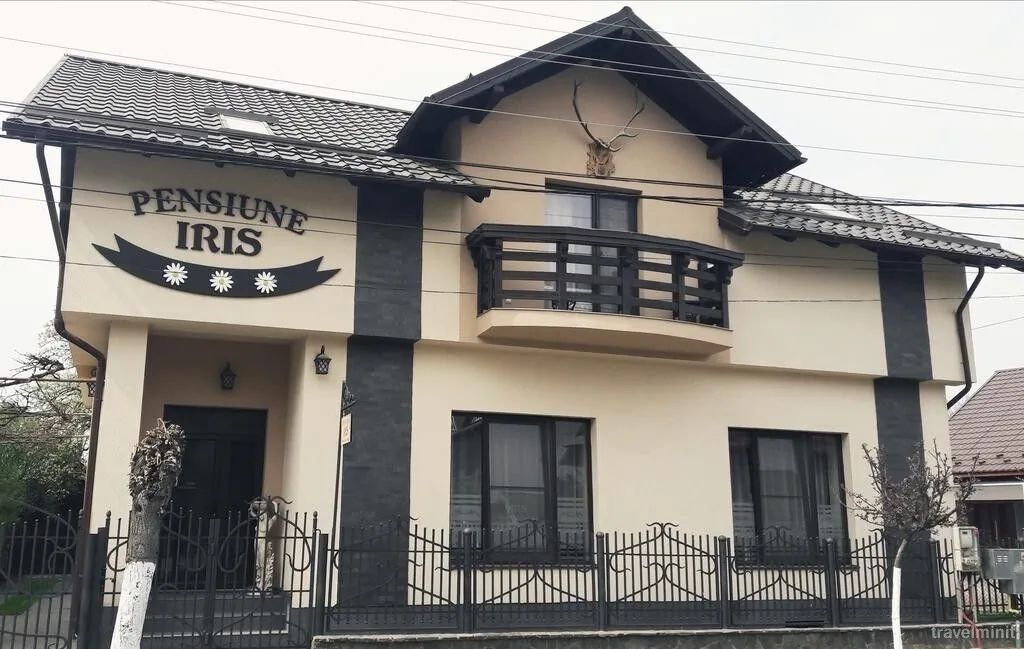
Pensiunea Iris Sighetu Marmației
Camere, serviciiPensiunea Iris Sighetu Marmației Sighetu Marmației ofera cazare in 4 camere frumos amenajate. Este disponibila o parcare gratuita. In unitate exista conexiune la internet wireless. Mai multe detalii despre facilitatile oferite la pensiune (inclusiv cele contra cost), cat si despre dotarile camerelor veti gasi mai jos. Servicii de masăPreturile afisate includ mic dejun. PlatăPlata se face prin urmatoarele metode: transfer bancar, card de vacanță, avans travelminit, voucher travelminit. Sosire, programZiua hoteliera incepe de la ora 14:30 si se termina la ora 11:00. Personalul de la receptie este cunoscator a mai multor limbi: maghiară, engleză, română.
FROM
240 RON / night
BEFORE YOU HIT THE ROAD
Weather conditions in Sighetu Marmației
Local forecast for Sighet Memorial, Sighetu Marmației, Maramureș

Real-time updated weather data
Much more to explore in this area
Nearby tourist attractions


Săpânța, Maramureș County
The Merry Cemetery of Săpânța
Situat in localitatea Sapanta, localizata pe malul drept al Tisei, in dreptul Vaii Tarasaului, aproape de confluenta raurilor Sapanta si Tisa,la aproximativ 18...
15.1 km

Maramures, Maramureș County
Sighet Memorial Museum
Situat pe strada Corneliu Coposu nr. 4, in fosta inchisoare politica din Sighetu Marmatiei; fiecare celula a devenit o sala de muzeu, in care, urmand o ordine...
0.2 km

Maramures, Maramureș County
Muzeul Satului Maramureșean din Sighetu Marmației
Situat la intrarea in orasul Sighet, pe drumul dinspre Baia Mare; s-a constituit ca o rezervatie de monumente de arhitectura taraneasca; prin structura,...
3.0 km

Surdesti, Maramureș County
Biserica de lemn din Șurdești
Situata in satul Surdesti; construita in anul 1766; a fost construita de catre mesterul Ion Macareie, pentru comunitatea greco-catolica din zona; poarta hramul...
37.8 km

16.9 km

25.8 km
31.6 km
36.4 km

15.5 km

Maramures, Maramureș County
Ieud Wooden Church
Situata in localitatea Ieud; este cea mai veche biserica din Maramures, fiind construita in anul 1364, de catre familia nobiliara Balea;poarta hramul "Nasterea...
37.7 km

Maramures, Maramureș County
Wooden Church of Desești
Situata in localitatea Desesti; construita in anul 1770; poarta hramul "Sfanta Cuvioasa Paraschiva"; ridicata din barne groase de stejar slefuit; Victor...
17.2 km

Plopis, Maramureș County
Wooden Church of Plopiș
Situata in satul Plopis, pe teritoriul administrativ al comunei Sisesti; construita in anul 1798; poarta hramul "Sfintii Arhanegheli Mihail si Gavriil"; este...
38.6 km
Cultural life and traditions
Events near Sighet Memorial
Medieval festivals, traditional fairs, concerts and recommended local activities in Maramures.

Tradiții și Meșteșuguri

Sighetu Marmației, Jud. Maramureș
Zilele Culturii Locale și Turismului Tradițional
Ateliere deschise de olărit, sculptură în lemn și folclor autentic prezentate de meșteri populari locali.
WHEN
15 - 17 Mai 2026

Gastronomie Tradițională
Sighetu Marmației, Jud. Maramureș
Târgul Produselor Tradiționale și al Gastronomiei Locale
Produse atestate tradițional, brânzeturi maturate, miere de munte și bunătăți locale pregătite după rețete străvechi.
WHEN
În fiecare final de săptămână

Cultură și Fotografie
Sighetu Marmației, Jud. Maramureș
Tur Ghidat Tematic și Fotografic de Patrimoniu
Explorare ghidată dedicată iubitorilor de istorie, natură și fotografie pe cele mai spectaculoase perspective ale zonei.
WHEN
Program zilnic la cerere
On foot, exploration gains depth
Discover the surroundings and local geography
Explore trails, terrain and natural landmarks around Sighet Memorial.

Guides and practical tips
Useful travel articles
Travel guides, practical tips and itineraries for Maramures.

Travel guide
Top 5 Atracții Turistice și Trasee Montane în Zona Moieciu - Bran
Descoperă cele mai spectaculoase peisaje carstice, chei adânci și cetăți medievale din imediata apropiere a stațiunii Moieciu.

Travel guide
Ghid de Drumeție: Traseul Moieciu de Sus spre Platoul Bucegi
Un itinerariu montan de o frumusețe rară ce urcă din Valea Băngăleasa spre Poiana Guțanu și crestele maiestuoase ale Bucegilor.

Travel guide
Castelul Bran: Istorie, Legende și Secrete Medievale
Află adevărata poveste a fortăreței medievale din Pasul Bran, reședința de suflet a Reginei Maria a României.
THE JOURNEY STARTS WITH AN IDEA
The next story is on the way.
From the first stop to the last stay, make room for a new Romania.
