


MUSEUM · BUKOVINA
Moldovița Forest Railway

Suceava, Suceava County
Add location to your trip planner.

Practical access information

VISITING HOURS
Monday: 12:00 PM – 5:00 PM · Tuesday–Sunday: 9:00 AM – 5:00 PM (in summer until 8:00 PM)

TICKET PRICE
Adults: 45 RON · Students: 11 RON · Seniors: 23 RON · Guided tour included

RECOMMENDED VISIT DURATION
30-60 minutes
ABOUT MOLDOVIȚA FOREST RAILWAY
A living legacy of the industrial empire in the Eastern Carpathians
Deep within the forests of Bucovina, where the Eastern Carpathians unfurl their endless greenery across the narrow valleys of the Moldovița River, lies one of the last operational narrow-gauge forest railways in Central Europe. The Moldovița Forest Railway stands as a living monument to the industrial era, a silent witness to a time when steam and iron forever transformed the Carpathian landscape. Today, it offers travelers an authentic journey along the tracks of history. This line is not merely a means of transport but a tangible bridge between the glorious past of the Austro-Hungarian Empire and Romania’s present-day sustainable tourism, a remarkable example of industrial heritage that has survived world wars, totalitarian regimes, and rapid modernization, remaining operational thanks to the passion of local communities.
Construction of this railway began in 1888 under the auspices of the Bucovina Forestry Society, an Austrian enterprise that developed an impressive network of forest railways across the Austro-Hungarian Empire. With a gauge of just 760 millimeters, the line was designed exclusively for transporting timber from the virgin forests of the Moldovița Valley to sawmills and urban centers. By 1904, the network in this valley had grown significantly, serving local communities and supporting the region’s economy for over a century. This railway is part of a broader European phenomenon of narrow-gauge forest railways, developed in the 19th century across the Austro-Hungarian Empire and other mountainous regions of Europe. It represented a sophisticated engineering solution adapted to rugged terrain, capable of transporting heavy loads through areas inaccessible to standard railways.
Roots in the heart of the Austro-Hungarian Empire and the European railway era
To fully understand the significance of the Moldovița Forest Railway, we must return to 1775, when Bucovina was annexed by the Habsburg Empire, becoming a peripheral yet strategic province of the dual monarchy. Under Vienna’s administration, the region underwent rapid modernization, and the vast forests of the Eastern Carpathians became a vital economic resource for the empire. Archduke Joseph II and his successors promoted policies for the rational exploitation of forests, and Austrian investors founded the Bucovina Forestry Society, a company that laid the foundations for a modern industrial infrastructure in a previously isolated region.
The year 1888 marked the beginning of the Moldovița line’s construction, during a period of unprecedented railway expansion in Central Europe, when great empires built networks to connect industrial centers with natural resources in mountainous areas. The 760-millimeter gauge, known as the "Bosnian gauge," was chosen based on the experience of Austrian engineers in Bosnia-Herzegovina, annexed by the empire in 1878. This narrower gauge, compared to the European standard of 1435 mm, allowed trains to climb steep gradients and navigate tight curves, essential for transporting timber through the narrow valleys of the Carpathians.
The Moldovița Railway thus became part of an impressive European network of narrow-gauge forest and mountain railways, alongside famous lines such as those in the Harz Mountains of Germany, the Tatra slopes of Poland and Slovakia, and the Steyrtalbahn in Austria. Like these, the Bucovina line represented the pinnacle of railway technology of its time, combining Austro-Hungarian engineering innovation with the wild landscapes of the Carpathians. By 1904, the network in the Moldovița Valley had reached considerable development, connecting isolated villages with industrial centers and facilitating the exploitation of beech and spruce forests that covered the mountain slopes. This infrastructure radically transformed the local economy, bringing workers from across the empire and creating a multicultural society specific to Bucovina, where Romanians, Germans, Ukrainians, Poles, and Jews coexisted around the forestry industry.
Engineering architecture and the industrial landscape of the Moldovița Valley
From a technical standpoint, the Moldovița Forest Railway is a masterpiece of late 19th-century railway engineering. The 760 mm gauge, also adopted by railways in Bosnia under Austro-Hungarian administration, allowed the use of compact yet powerful locomotives capable of transporting massive loads of logs over rugged terrain. The approximately 24-kilometer route connects the village of Moldovița with Argel, traversing a landscape of overwhelming beauty, where dense beech and spruce forests are reflected in the clear waters of the river of the same name.
The railway’s infrastructure includes wooden and metal bridges crossing the Moldovița River’s tributaries, embankments built by hand in steep areas, and forest stations serving as loading points for timber. The station buildings, constructed in the architectural style of the Austro-Hungarian era, reflect Secessionist and traditional Bucovinian influences, built from local wood and stone. The steam locomotives operating on this line today, popularly known as "Mocănițe," are true gems of European technical heritage. Meticulously restored by local associations and passionate volunteers, these steam engines, some dating back to the interwar period or even the Austro-Hungarian era, emit characteristic sounds that evoke the romantic atmosphere of bygone travel.
The railway’s industrial landscape harmoniously integrates with the natural scenery of the Eastern Carpathians, offering a unique perspective on the region’s biodiversity. Open wagons allow for total immersion in nature, while the sound of wheels on the tracks and the locomotive’s whistle create an atmosphere reminiscent of the golden age of railway travel in Central Europe. This line represents a rare example of living industrial heritage, where 19th-century technology still functions in harmony with nature, unlike many other European forest railways that have been abandoned or turned into static museums.
Stories, personalities, and pivotal historical moments
The history of the Moldovița Forest Railway is marked by personalities and events that reflect the fate of the entire Bucovina region. The Austrian engineers who designed and built the line beginning in 1888 were true pioneers, facing immense technical challenges in the mountainous terrain of the Carpathians. They were followed by generations of mechanics, stokers, and railway personnel, many of them locals, who ensured the line’s uninterrupted operation for over a century. The communities of the Moldovița Valley, composed of Romanians, Bukovina Germans, Ukrainians, and Poles, lived in close connection with the railway, which served as the backbone of the local economy and passenger transport.
World War I and the dissolution of the Austro-Hungarian Empire in 1918 brought profound changes, as Bucovina became part of Greater Romania. The railway continued to operate under Romanian administration, adapting to new political and economic realities. The period of World War II and the establishment of the communist regime after 1945 marked a new chapter in the line’s history. Under temporary Soviet administration and later during the communist era, the railway was nationalized and integrated into the state’s industrial network, used intensively for forest exploitation under the planned economy. During this period, many of the historic locomotives were replaced with more modern models, and the infrastructure underwent modifications to meet the demands of mass transport.
The year 1989 brought a major turning point: with the fall of communism and the transition to a market economy, the state forestry industry declined, and the railway faced closure. The salvation of this heritage treasure came from passionate volunteers and local sustainable development associations, who recognized the line’s historical and touristic value. Beginning in the 2000s, these organizations succeeded in restoring historic steam locomotives, repairing the railway, and transforming the former industrial line into a remarkable tourist attraction. Today, the tourist trains are operated by teams of enthusiasts who keep the spirit of the golden age of forest railways alive, offering visitors not just a journey but an authentic cultural experience.
Traveler’s guide and the contemporary experience on the tracks of history
Visiting the Moldovița Forest Railway is done via special tourist trains, known as "Mocănița," operated by local associations dedicated to preserving railway heritage. The journey lasts approximately two hours round-trip, with strategic stops for photography and exploration. The route begins at the forest station near the center of Moldovița and heads toward the village of Argel, traversing spectacular landscapes of forests, steep cliffs, waterfalls, and alpine meadows that seem untouched by civilization. The open wagons, typical of forest railways, allow travelers to feel the mountain breeze, hear the locomotive’s whistle, and observe the biodiversity of the Eastern Carpathians up close.
The operating season generally runs from April to October, depending on weather conditions and the state of the railway. For a complete experience, visitors are advised to book tickets in advance, especially on weekends and holidays when demand is high. The departure point is at the forest station near the center of Moldovița, easily accessible by car from Suceava, approximately 80 kilometers away, or from Vatra Dornei. Appropriate clothing for variable weather is essential, as temperatures in the valley can be lower than in lowland areas, and rainfall is frequent in this mountainous region. Comfortable clothing, sturdy footwear for walking, and a camera are recommended to capture the picturesque landscapes.
A journey on the Mocănița through the Moldovița Valley fits perfectly into a broader itinerary exploring Bucovina, a region included in the UNESCO World Heritage List for its painted monasteries. Visitors can combine the railway experience with visits to the Voroneț, Sucevița, or Putna Monasteries, located nearby, creating a comprehensive cultural circuit that blends industrial heritage with religious and architectural landmarks. The Moldovița Forest Railway is not just a means of transport but a portal to understanding how humans have coexisted with nature in the Carpathians, a bridge between Bucovina’s industrial past and its sustainable tourism present. By preserving and operating this line, the local community maintains its cultural identity and offers Europe a living example of authentic railway heritage, worthy of discovery by travelers passionate about history, technology, and nature. This unique experience invites reflection on how technological progress can coexist harmoniously with environmental conservation and local traditions, in a corner of the world where history still seems to run on tracks.
Media gallery
Discover Moldovița Forest Railway in pictures

1 photos · Architecture, courtyards and captivating details

Image source: Wikimedia Commons · Public domain photos · Free license
STAY A FEW DAYS, DISCOVER THE MAGIC
Accommodation in the Moldovița Forest Railway area

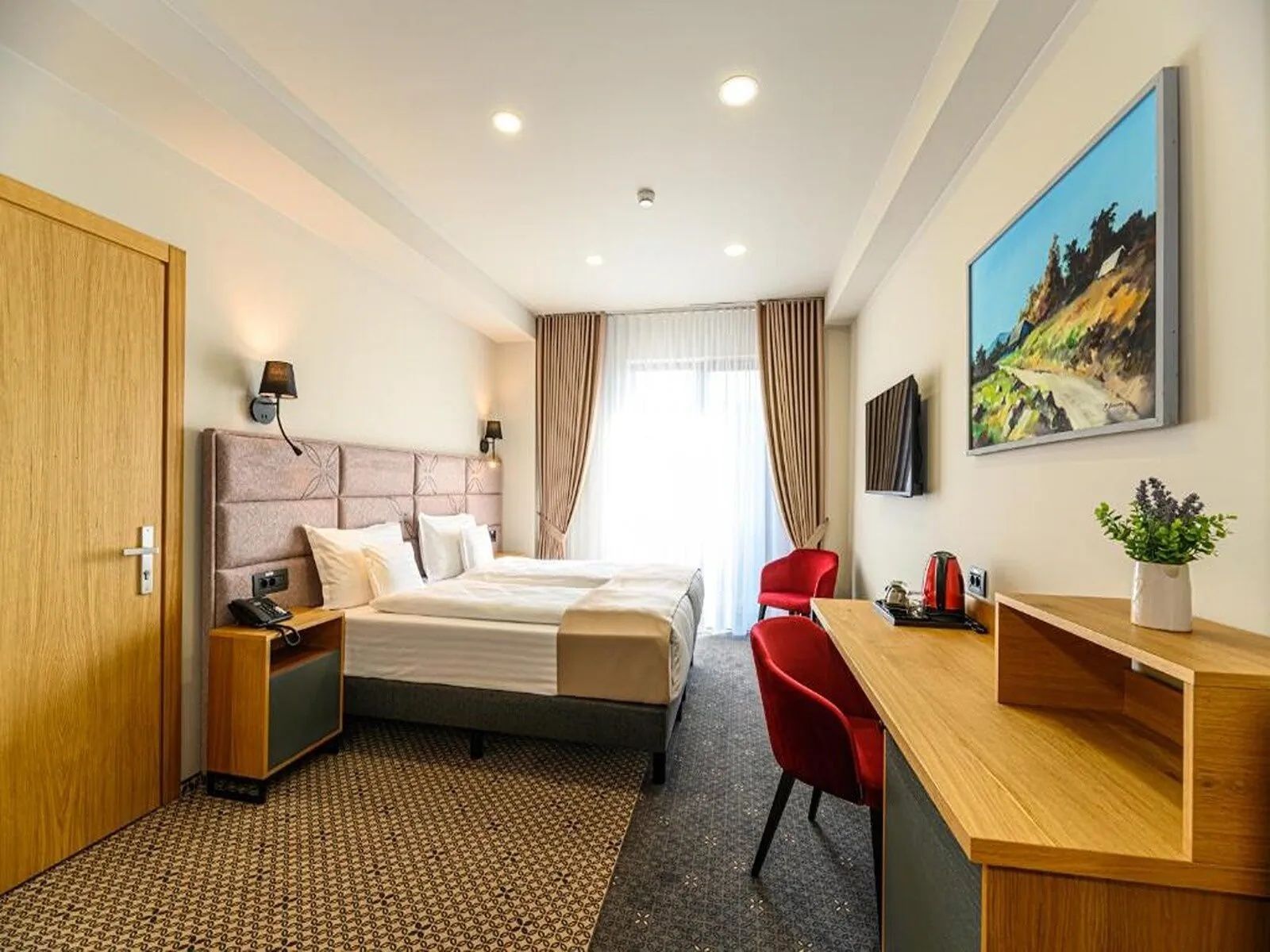
Hotel · 4 stars

Gura Humorului, Suceava County · 0.3 km
Hotel Dukat Gura Humorului
Pe strada Avram Iancu din Gura Humorului se află Hotel Dukat, o unitate de patru stele care îmbracă standardele moderne de ospitalitate într-un cadru primitor, potrivit atât pentru călătoriile de afaceri, cât și pentru vacanțele în familie. Pentru relaxare, aveți la dispoziție sauna și cada cu hidromasaj. Confortul deplasării este asigurat prin Wi-Fi gratuit și parcare privată gratuită, iar în incintă funcționează restaurant, bar și cafenea, unde puteți savura momente de liniște între activitățile zilei. Liftul facilitează accesul pe toate etajele, iar depozitul pentru bagaje răspunde nevoilor dumneavoastră de călătorie. La masă, bucătăria propune preparate pentru diete speciale și un meniu dedicat copiilor, astfel încât fiecare oaspete să găsească opțiuni potrivite. Interiorul camerelor oferă spațiu și confort, într-un ambient plăcut, gata să vă primească oricând pe parcursul zilei. În zonă puteți explora Mănăstirea Voroneț, Mănăstirea Humor, Muzeul Obiceiurilor populare din Bucovina, Salina Cacica și Stațiunea Gura Humorului. Vă așteptăm la Hotel Dukat Gura Humorului.
FROM
420 lei per night

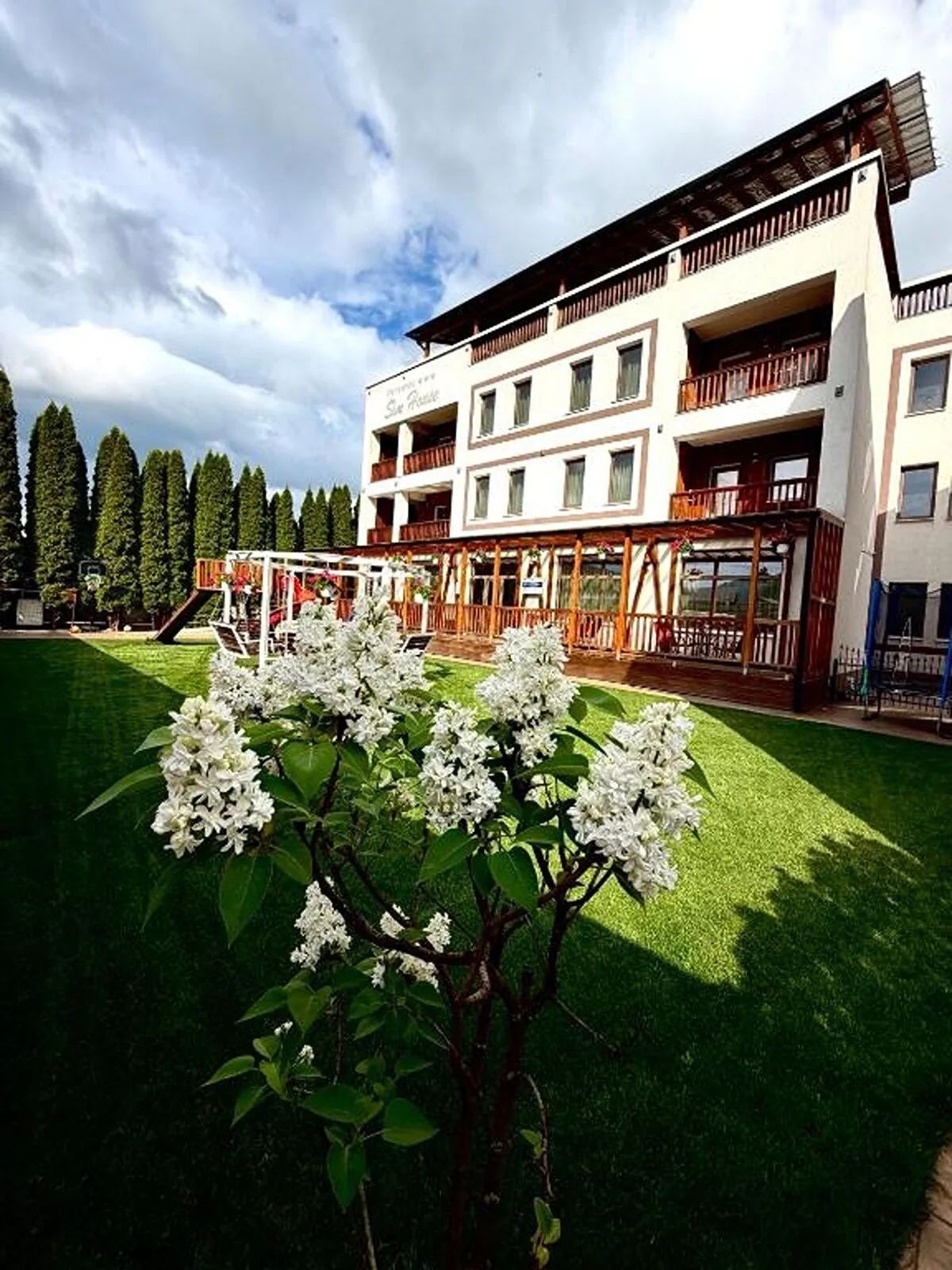
Guesthouse · 3 stars
Gura Humorului, Suceava County · 0.7 km
Pensiunea Sim House Gura Humorului
La Pensiunea Sim House din Gura Humorului, vă așteaptă o vatră de foc în aer liber, un loc perfect pentru seri liniștite sub cerul deschis al Bucovinei. Această unitate de cazare clasată cu trei stele se află în localitatea Gura Humorului, județul Suceava, pe aleea Ana Ipatescu, într-un cadru natural plăcut. Pensiunea pune la dispoziția dumneavoastră 15 camere dotate cu bun gust, o curte mare și o grădină amenajată, un foișor confortabil și un loc de joacă pentru copii în aer liber, alături de un scaun înalt pentru cei mici. Aveți acces la Wi-Fi gratuit în întreaga unitate, aer condiționat în camere, seif și fier de călcat, precum și parcare privată gratuită și acces facilitat pentru persoane cu dizabilități. Pentru momente de relaxare în aer liber, puteți folosi grătarul sau ceaunul din curte. În vecinătate puteți descoperi Mănăstirea Voroneț, Mănăstirea Humor, Muzeul Obiceiurilor populare din Bucovina, Salina Cacica sau puteți explora Stațiunea Gura Humorului și împrejurimile sale. Check-in-ul se realizează de la ora 14:00, iar plata se poate efectua prin card bancar, transfer bancar sau numerar, cu parcare privată gratuită disponibilă direct în incinta pensiunii.
FROM
240 lei per night
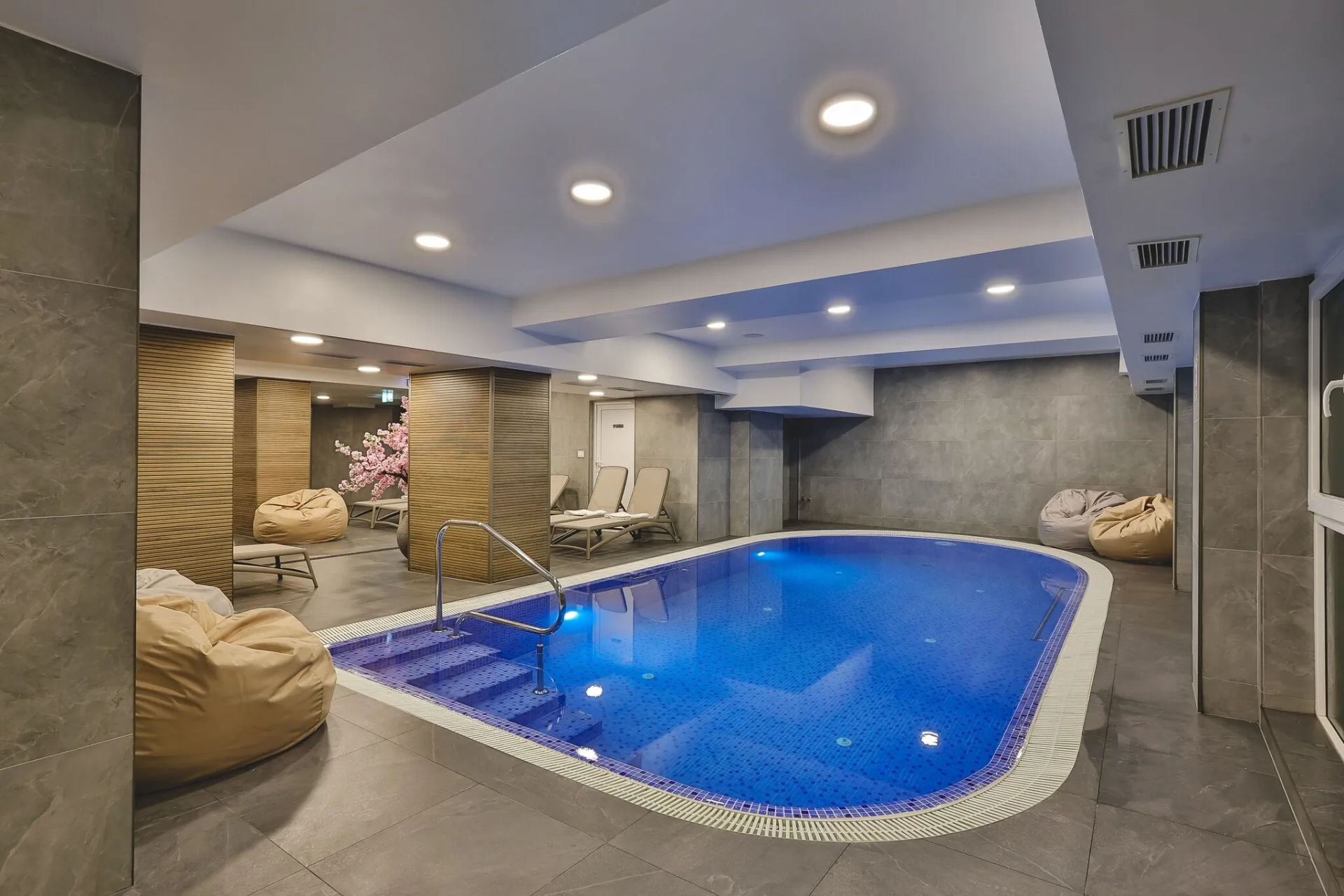
Hotel · 4 stars
Vatra Dornei, Suceava County · 1.1 km
Hotel Dorna Vatra Dornei
Pe drumul Tudor Vladimirescu din Vatra Dornei, stațiunea montană din județul Suceava, se află Hotel Dorna Vatra Dornei, o unitate clasificată cu patru stele care oferă condiții moderne de cazare într-un cadru natural aparte. Oaspeții dumneavoastră beneficiază de Wi-Fi gratuit în întreaga unitate, parcare privată gratuită și acces facilitat prin lift pentru persoanele cu dizabilități. Fiecare cameră dispune de seif, iar la recepție găsiți depozit pentru bagaje. În interior găsiți sală de fitness, saună și cameră de joacă pentru copii, iar restaurantul din incintă servește atât meniuri pentru diete speciale, cât și preparate dedicate celor mici. Serviciile includ room service, fier de călcat în cameră, scaun înalt pentru copii și pătuț pentru bebeluș, astfel încât fiecare membru al familiei se simte confortabil. Din această locație puteți porni spre Stațiunea Vatra Dornei, Pârtiile din Vatra Dornei, Munții Suhard, Rezervația naturală 12 Apostoli și Parcul Național Călimani, descoperind peisaje spectaculoase și aer curat de munte în fiecare anotimp. Vă așteptăm la Hotel Dorna Vatra Dornei.
FROM
420 lei per night
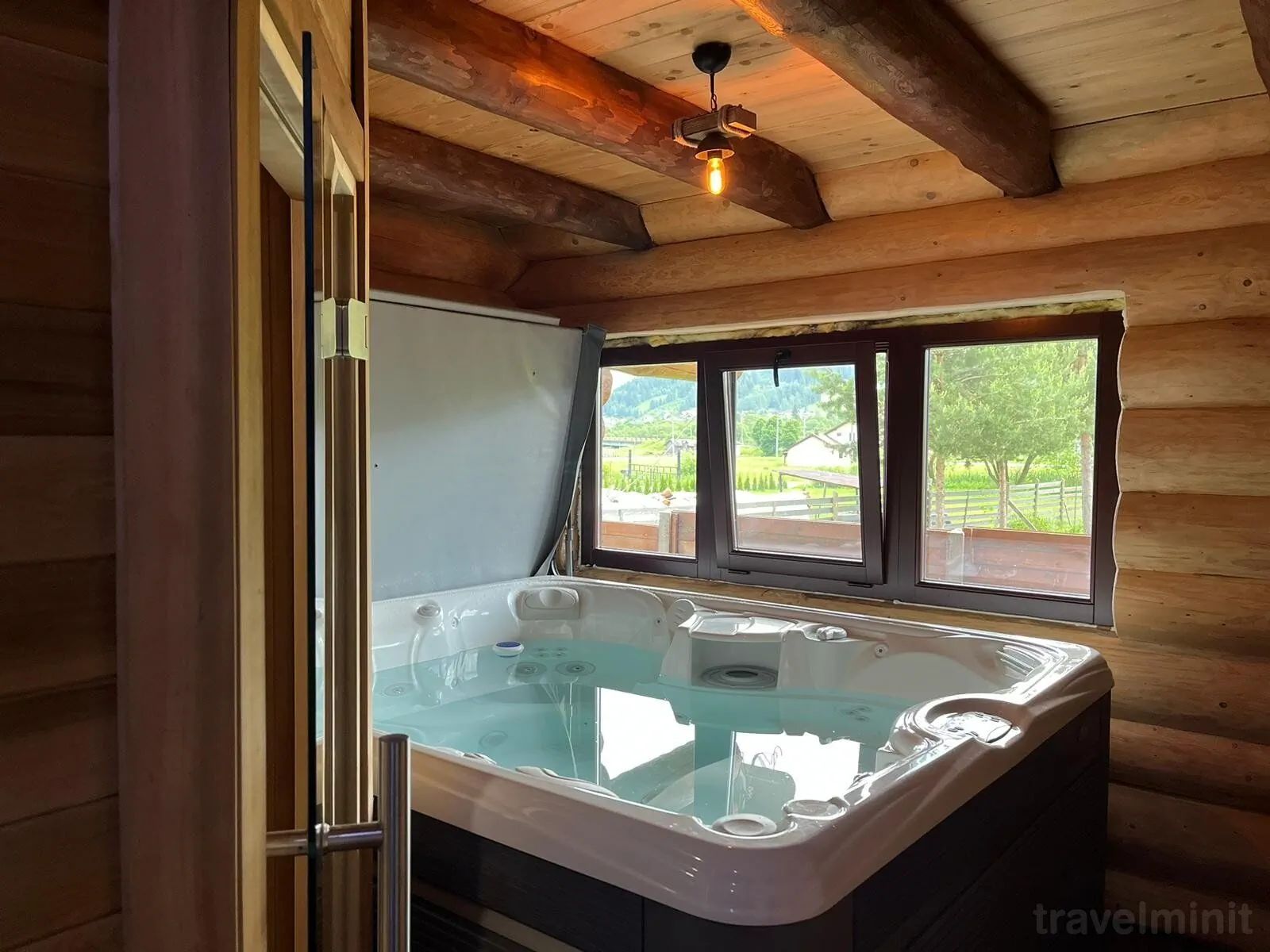
Cabin · 3 stars
Vatra Dornei, Suceava County · 1.5 km
Cabana Casa de Munte Vatra Dornei
Cabana Casa de Munte Vatra Dornei este o cabană clasică de trei stele situată în localitatea Vatra Dornei din județul Suceava. În curtea mare și grădina amenajată vă puteți bucura de aer liber, iar foișorul, grătarul și ceaunul sunt perfecte pentru mese în aer liber. Pentru relaxare, aveți la dispoziție saună și cadă cu hidromasaj, iar pentru distracție, masă de biliard, tenis de masă și un teren amenajat pentru sport sau fotbal. Copiii se pot juca în locul de joacă de la exterior, iar părinții au la dispoziție scaun înalt pentru copii și pătuț pentru bebeluș. Unitatea oferă Wi-Fi gratuit și parcare privată gratuită. Bucătăria este complet echipată, iar în living puteți sta împreună la televizor sau să vă relaxați. În apropiere puteți vizita Stațiunea Vatra Dornei, Pârtiile din Vatra Dornei, Munții Suhard, Rezervația naturală 12 Apostoli și Parcul Național Călimani. Este potrivită pentru familii cu copii, grupuri de prieteni și iubitori de drumeții montane care doresc să exploreze zona.
FROM
270 lei per night
Hotel · 3 stars
Câmpulung Moldovenesc, Suceava County · 1.9 km
Buchenland Hotel Câmpulung Moldovenesc
Buchenland Hotel este un hotel de 3 stele situat în centrul municipiului Câmpulung Moldovenesc, județul Suceava. Găzduit într-o clădire monument istoric construită în 1896 și recent renovată, hotelul pune la dispoziție două camere duble, o suită standard și o suită deluxe, cu un total de 16 locuri de cazare confortabile. Toate camerele și suitele sunt supraetajate, cu înălțime de 5 metri, geamuri înalte și suprafețe cuprinse între 27 și 45 de metri pătrați, amenajate la standarde înalte. Fiecare spațiu beneficiază de aer condiționat, Wi-Fi gratuit, seif și fier de călcat. De asemenea, aveți la dispoziție acces non-stop pe bază de cod și cartelă, chicinetă, saună și jacuzzi care se rezervă și se achită separat la locație, precum și un spațiu exterior destinat fumătorilor. Micul dejun se servește în cameră sau la restaurantul partener din apropiere. În zonă puteți vizita Mănăstirea Moldovița, Mănăstirea Voroneț, Muzeul de Artă Lemnului din Câmpulung Moldovenesc, Mănăstirea Humor și Mănăstirea Sucevița. Vă așteptăm să vă bucurați de un sejur plăcut, iar de aici puteți porni să descoperiți Mănăstirea Sucevița.
FROM
290 lei per night
Guesthouse · 3 stars
Gura Humorului, Suceava County · 2.3 km
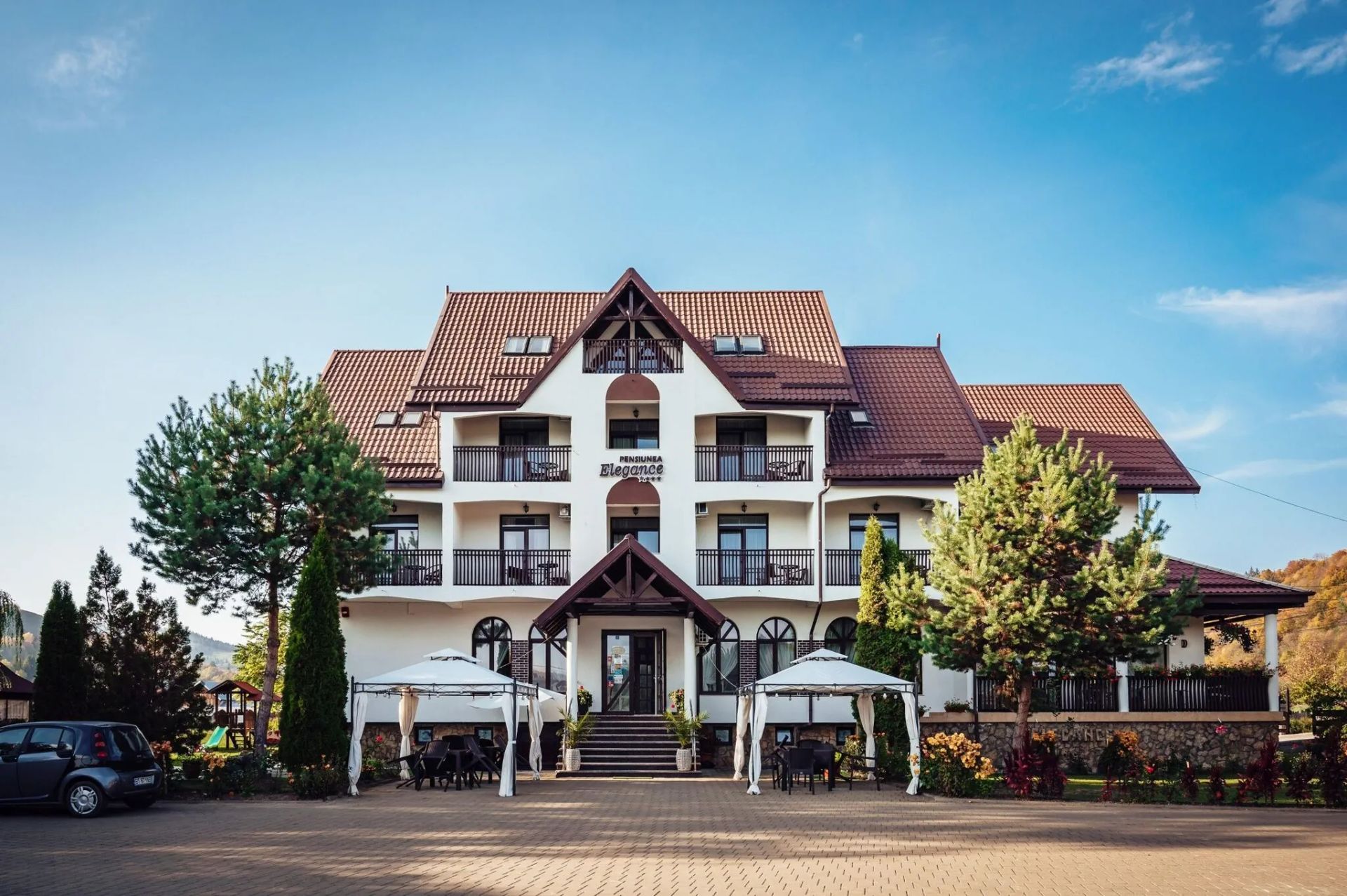
Pensiunea Elegance Gura Humorului
O zi petrecută aici începe cu micul dejun servit în restaurantul din incintă și se încheie în jurul vetrei de foc în aer liber sau într-un ciubăr din lemn tradițional, la Pensiunea Elegance din Gura Humorului. Beneficiați de Wi-Fi gratuit, parcare privată gratuită și parcare pentru biciclete, într-o curte mare cu grădină amenajată și foișor. Pentru relaxare aveți la dispoziție saună, iar pentru cei mici există loc de joacă la exterior, cameră de joacă la interior, scaun înalt și pătuț pentru bebeluși. Oferim room service, meniu pentru copii și preparate pentru diete speciale. Puteți organiza mese în aer liber la grătar, barbeque sau ceaun, iar pentru momente de destindere aveți masă de biliard, fier de călcat, seif și depozit pentru bagaje, într-un spațiu primitor care îmbină tradiția cu confortul modern. În vecinătate puteți vizita Mănăstirea Voroneț, Mănăstirea Humor, Stațiunea Gura Humorului, Muzeul Obiceiurilor populare din Bucovina și Salina Cacica. Pensiunea se adresează familiilor cu copii, grupurilor de prieteni și călătorilor care doresc să descopere Bucovina într-un cadru confortabil, cu facilități moderne și atmosferă tradițională, departe de aglomerația urbană.
FROM
240 lei per night
BEFORE YOU HIT THE ROAD
Weather conditions in Suceava
Local forecast for Moldovița Forest Railway, Suceava, Suceava

Real-time updated weather data
Much more to explore in this area
Nearby tourist attractions


Suceava, Suceava County
Biserica Nașterea Maicii Domnului din Poiana-Dolhasca
Heritage site in Suceava County, Romania
12.0 km

16.0 km

20.0 km
24.0 km
28.0 km
32.0 km
36.0 km
40.0 km

Dolhești, Suceava County
Biserica Cuvioasa Parascheva din Dolheștii Mari
Heritage site in Suceava County, Romania
44.0 km

48.0 km

Suceava, Suceava County
Biserica Sfântul Gheorghe din Costâna
Heritage site in Suceava County, Romania
52.0 km
56.0 km
Cultural life and traditions
Events in the Moldovița Forest Railway area
Medieval festivals, traditional fairs, concerts and local activities recommended in Bukovina.

History and Voivodeship Heritage

Suceava, County of Suceava
The Medieval Festival of Neamț Fortress
Re-enactments of Ștefan’s battles, archery demonstrations with traditional bows, displays of courtly guards, and performances of old court music.
WHEN
July 3-5, 2026


Prehistoric Crafts and Art
Suceava, County of Suceava
The National Pottery Fair “Cucuteni 5000”
The most skilled ceramic artists recreate the spectacular motifs of Europe’s oldest civilisation.
WHEN
June 26-28, 2026

Gastronomy and Wines
Suceava, County of Suceava
The Traditional Festival of Moldovan Wine
A fair featuring wine tastings from the vineyards of Cotnari, Bucium and Panciu, “poale-n brau” pies, and roasted meats cooked on a spit.
WHEN
October 2-4, 2026
On foot, exploration gains depth
Discover the surroundings and local geography
Explore the trails, terrain, and natural landmarks around Moldovița Forest Railway.

Guides and practical tips
Useful travel articles
Travel guides, practical recommendations and tourist itineraries for Bukovina.

Tourist guide
Top 5 Atracții Turistice și Trasee Montane în Zona Moieciu - Bran
Descoperă cele mai spectaculoase peisaje carstice, chei adânci și cetăți medievale din imediata apropiere a stațiunii Moieciu.

Tourist guide
Ghid de Drumeție: Traseul Moieciu de Sus spre Platoul Bucegi
Un itinerariu montan de o frumusețe rară ce urcă din Valea Băngăleasa spre Poiana Guțanu și crestele maiestuoase ale Bucegilor.

Tourist guide
Castelul Bran: Istorie, Legende și Secrete Medievale
Află adevărata poveste a fortăreței medievale din Pasul Bran, reședința de suflet a Reginei Maria a României.
THE JOURNEY STARTS WITH AN IDEA
The next story is on the way.
From the first stop to the last stay, make room for a new Romania.
