


PLACE OF WORSHIP · TRANSYLVANIA
Biertan Fortified Church

Sibiu, Sibiu County
Add location to your trip planner.

Practical access information

VISITING HOURS
Mon: 12:00–17:00 · Tue–Sun: 09:00–17:00 (summer until 20:00)

TICKET PRICE
Adults: 45 RON · Students: 11 RON · Seniors: 23 RON · Guided tour included

RECOMMENDED VISIT DURATION
2–3.5 hours
Visitor information and guide
 Navigate with Google Maps

ABOUT BIERTAN FORTIFIED CHURCH
Captivating Introduction and Universal Value
In the heart of Transylvania, perched on a hill dominating the Târnava Mare valley, Biertan Fortified Church rises as a citadel of the Christian spirit, a silent witness to a millennial history where the borders of Western and Eastern Europe met, merged, and confronted one another in equal measure. Built between 1492 and 1516, this construction represents not only the apogee of late Gothic sacred architecture in the Carpathian region, but also the last hall church (Hallenkirche) erected in all of Transylvania, a unicum that blends spirituality with the vital necessity of defense in a turbulent era. In 1993, the United Nations Educational, Scientific and Cultural Organization included this ensemble in the UNESCO World Heritage, recognizing it as the most valuable of the seven Saxon fortified churches inscribed on the prestigious list, a place where European memory takes the form of stone, wood, and wrought iron.
The universal value of this monument transcends national borders, offering the modern visitor a journey through the great currents of European civilization: from the Germanic colonization of Eastern Europe in the 12th-13th centuries, to the Protestant Reformation that shook the continent in the 16th century, from the late Gothic art that flourished in the Rhine basin to the cultural diplomacy of the 1900 Paris Universal Exposition. Biertan is, in essence, a synthesis of Europe: here the Saxon tradition of craftsmanship and Lutheran faith meets Renaissance Italian influences, medieval fortifications meet the technical innovations of the modern era, while the Orthodox spirituality of the neighborhood and the rigors of Nordic Protestantism create a fascinating dialogue between seemingly separate worlds.
Historical Roots and Major European Connections
The history of Biertan begins with the great migration of Germanic peoples toward Eastern Europe, a phenomenon that shaped the cultural map of the continent between the 12th and 13th centuries. Like the Saxon colonists in other regions of Central Europe – such as those in Polish Silesia or Habsburg Bohemia – the Germanic community of Biertan (in German, Birthälm) was summoned by the kings of Hungary, particularly by the Árpád dynasty and later by the House of Anjou, to populate and defend the eastern borders of the Hungarian kingdom against Cuman invasions and, later, Ottoman ones. This colonization, part of the broader process of Germanic Ostsiedlung, brought to the Carpathians a developed urban and agricultural civilization, with traditions of stone construction and rigorous communal organization, similar to that of the Hanseatic cities or the free imperial cities of the Holy Roman Empire.
The construction of the current church, between 1492 and 1516, fits within the context of the last wave of late Gothic architecture in Central Europe, parallel to the great Gothic construction sites in the Low Countries, northern Germany, or Poland. The late Gothic style, with its tall arches and hall structure that allows generous illumination of the sacred space, reflects the ambition of the Saxon community to assert its cultural identity in a region where Byzantine and Ottoman influences were penetrating ever more insistently. At the same time, the Renaissance elements that appear in certain parts of the construction – such as the classicizing decorations or certain details of the sacred furnishings – betray contact with Italian humanist currents that, through Venice and the Hungarian courts of Matthias Corvinus, had penetrated to the heart of Transylvania.
The decisive moment in the spiritual history of Biertan was the adherence to the Protestant Reformation, in the first half of the 16th century, a phenomenon that transformed this church from a Roman Catholic place of worship into a center of Evangelical Lutheran faith. This transformation places Biertan in the great network of the European Reformation, alongside Wittenberg, Geneva, Zürich, or Edinburgh, cities where Martin Luther, John Calvin, or Huldrych Zwingli were spreading their revolutionary ideas. For nearly three hundred years, Biertan was the seat of the Evangelical Lutheran Bishopric of the Transylvanian Saxons, an administrative and spiritual center that coordinated the religious life of an entire region, from Sibiu to Brașov, thus connecting the small Saxon community to the great theological and political debates of Protestant Europe.
The Habsburg period, beginning at the end of the 17th century, when Transylvania came under the crown of the House of Habsburg, brought new dimensions to the history of the monument. Like other fortified churches in the region – such as those in Viscri, Saschiz, or Criș – Biertan had to adapt to the realities of a multinational empire that was confronting Ottoman expansion. Its system of three concentric enclosures of walls, with defensive towers and massive gates, reflects the military strategy of the Habsburg Military Frontier (Militärgrenze), similar to that in Croatia or the Banat, where local communities had to defend themselves against Ottoman attacks. Thus, Biertan becomes a symbol of Christian resistance in the face of Ottoman expansion, just as the fortresses of northern Italy or the Iberian Peninsula had resisted during the Reconquista period.
Architectural Masterpiece and Artistic Heritage
The architecture of Biertan Fortified Church represents a remarkable synthesis between the late Gothic tradition of Central Europe and the local Transylvanian specific, being the last representative of the hall church type in this part of the continent. Unlike the basilical churches with a dominant central nave, specific to French or English Gothic, the hall church presents side aisles of the same height as the central nave, creating a unified and impressive space, which reflects both the influence of North German architecture (such as the Hallenkirchen of Lübeck or other Hanseatic cities) and the adaptation to the needs of a rural community that had to shelter its entire population in case of danger. The three enclosures of walls surrounding the church form a unique defensive system in Europe, each ring being provided with towers and fortified gates, transforming the entire ensemble into a true fortress of faith.
The interior of the church houses artistic treasures of exception that illustrate the dialogue between European art and local sensibility. The main altar, built in late Gothic style and carved in lime wood, dates from the period of the church's construction and houses an impressive altarpiece formed of 24 painted icons, representing scenes from the life of Jesus Christ and from that of the Virgin Mary. The paintings, executed in tempera on wood technique, present Flemish and Swabian influences, reminiscent of the workshops of Nuremberg or Cologne, but also of the Transylvanian school of painting that developed its own style in the 15th-16th centuries. The pulpit, carved from a single block of stone, represents another masterpiece of sacred art, being decorated with paintings depicting biblical characters and vegetal motifs inspired by Italian Renaissance art, demonstrating how Venetian and Florentine influences had penetrated to the workshops of the masters in Transylvania.
But the centerpiece of the artistic heritage of Biertan is the sacristy door, made in the year 1515, a work of art of ironwork and locksmithing that impresses through its technical and aesthetic complexity. This massive oak door is provided with 19 ingenious locks, each operating a different mechanism, being conceived both as a security system against thieves of sacred vessels and as a demonstration of the mastery of local craftsmen. In the year 1900, at the Paris Universal Exposition – the same event that celebrated the inauguration of the Eiffel Tower and the apogee of the Belle Époque era – this door was distinguished with a prize, thus recognizing its artistic value on the international stage. The details of wrought iron, the geometric ornaments, and the ingenious closing system bring it close to the Renaissance ironwork tradition of Bavaria or Austria, while its defensive functionality links it to the military tradition of Central Europe.
Legends, Personalities, and Turning Points
The history of Biertan is strewn with legends that have fed the imagination of generations of Saxons and, later, of tourists coming from all over the world. The most famous of these is the legend of the locked bridegroom, which is linked to the famous sacristy door and to a small room located nearby. According to tradition, in the 16th-17th centuries, when suspicions of adultery could destroy a family's reputation, a bridegroom unjustly accused of infidelity was locked in this room, behind the door with its multiple locks, for seven weeks, to prove his innocence through survival and prayer. The legend says that the man came out with a grown beard and eyes shining with faith, being released and the marriage being saved, a symbol of divine justice and the power of prayer in a troubled world.
The personalities that marked the destiny of Biertan include generations of Evangelical Saxon bishops, theologians trained at German universities such as Wittenberg, Leipzig, or Tübingen, who shepherded this community for three centuries. Although the names of many have been lost in the mists of history, their influence is felt in the school organization, in the church library, and in the archives that preserve correspondence with Protestant centers in Europe. A major turning point was represented by the 20th century, when, after the establishment of communism and then after the fall of the regime in 1989, the Saxon community experienced a massive exodus to Germany, Austria, and other Western countries. The fortified church, once full of worshippers on Sunday, became a living museum, a witness to a vanished civilization, but preserved with holiness by the few Saxons remaining and by the Romanian authorities.
The year 1993 marks a new beginning for the monument, when inclusion in the UNESCO World Heritage brought international recognition and funds for restoration. In 2000, on the occasion of the Hanover World Exposition, Biertan was presented as part of the European cultural heritage, alongside other monuments from Romania and neighboring countries, consolidating the image of a Europe united in its cultural diversity.
Practical Visiting Guide and Today's Tourist Experience
The journey to Biertan usually begins from Sibiu, one of the best-preserved medieval cities in Central Europe, or from Sighișoara, the birthplace of Vlad Țepeș and the only inhabited citadel city in Eastern Europe, both UNESCO sites. The winding road that climbs toward the village of Biertan, located in the commune of the same name in Sibiu County, offers spectacular views over the Târnava Mare valley and the hills covered with vineyards and hayfields, a landscape characteristic of the Bârsa region. Once arrived in the village, the visitor is greeted by the imposing silhouette of the fortified church, strategically placed on a promontory that dominates the entire locality, a landscape that recalls the medieval fortresses of Tuscany or the Loire Valley.
The actual visit begins with the ascent of the three wall enclosures, each representing a distinct stage in the history of the fortifications. The first enclosure, the outermost, houses the defensive towers and entrance gates, offering a perspective over the entire complex. The second enclosure surrounds the cemetery and the church garden, while the third, the innermost, protects the church itself and the bell tower. Entry into the church is made through a side door, and the interior reveals the impressive dimensions of the central nave, with light penetrating through the Gothic windows with tracery, creating plays of shadow and light on the five-century-old stones.
Inside, the visitor must take time for the monumental altar, admire each of the 24 painted panels, contemplate the stone pulpit, and approach with reverence the sacristy door, admiring the 19 locks that impressed the jury in Paris in 1900. The bridegroom's room, located next to the sacristy, evokes the atmosphere of mystery and devotion of past centuries. The church tower offers a special panorama over the surroundings, from the red roofs of the Saxon houses to the ridges of the Carpathians on clear days.
The experience of visiting Biertan is not limited only to the interior of the church. The village itself, with its traditional Saxon houses, its massive wooden gates, and its cobbled streets, offers an incursion into an almost vanished Central European rural universe. The local ethnographic museum and traditional craft workshops complete the visit, offering context for understanding the way of life of the community that raised and preserved this monument. It is recommended to visit in the spring or autumn days, when the light of the setting sun gives the limestone of the church warm amber hues, or during organ concerts that sometimes take place inside the church, when the music of Bach or Buxtehude resounds under the Gothic vaults, connecting the present with the great musical traditions of Protestant Europe.
For those who wish to explore further, Biertan is located near other UNESCO sites such as Viscri, with its fortified church and traditional rural landscape, or Mediaș, with its well-preserved historic center. Together, these destinations form a circuit of the Transylvanian Saxon heritage, offering a complete image of a civilization that contributed for eight centuries to the cultural mosaic of Central Europe, leaving behind monuments that speak of resilience, faith, and artistic beauty in a constantly changing world.
Media gallery
Discover Biertan Fortified Church in pictures

2 photos · Architecture, courtyards and captivating details


Image source: Wikimedia Commons · Public domain photos · Free license
STAY A FEW DAYS, DISCOVER THE MAGIC
Stays near Biertan Fortified Church

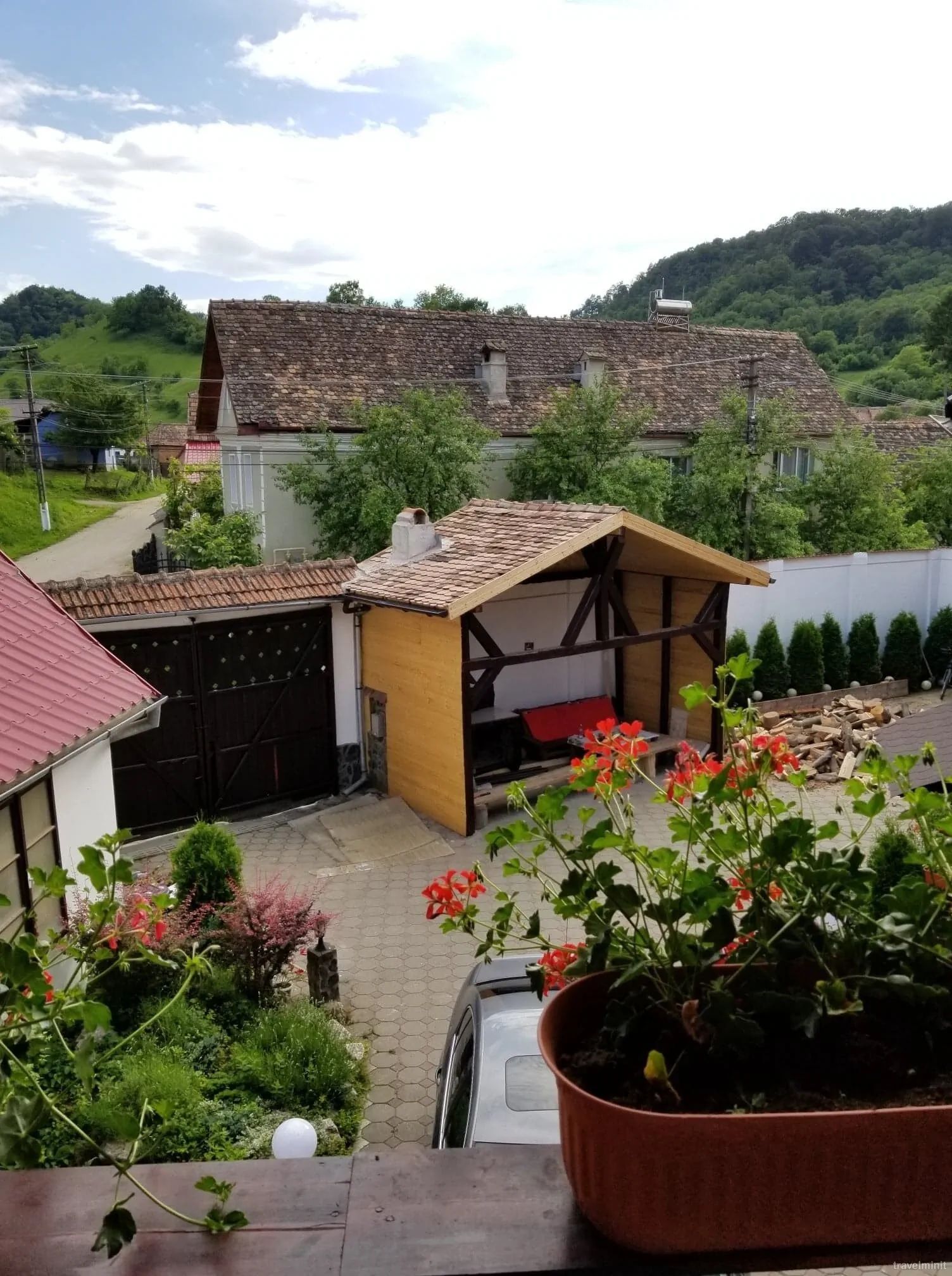
Pensiune · 3 stars

Nemșa, Nemșa County · 8.0 km
Pensiunea Liana Nemșa
Camere, serviciiPensiunea Liana Nemșa Nemșa ofera cazare in 5 camere placut mobilate si confortabile. Este disponibila o parcare gratuita. Acces la internet wireless este disponibil la pensiune. Mai multe informatii despre serviciile unitatii de cazare (inclusiv cele contra cost) si despre dotarea camerelor gasiti in fisa de mai jos. Servicii de masăTarifele afisate nu contin masa. La efectuarea rezervarii aveti posibilitatea de a cere mic dejun contra cost. PlatăPlata se face prin urmatoarele metode: numerar, card bancar, transfer bancar, card de vacanță, avans travelminit, voucher travelminit. Pentru garantarea rezervarii se percepe un avans de 30%. Sosire, programIntrarea se face incepand cu ora 15:00 si iesirea pana la ora 12:00. Limba vorbita la receptie română.
FROM
240 RON / night

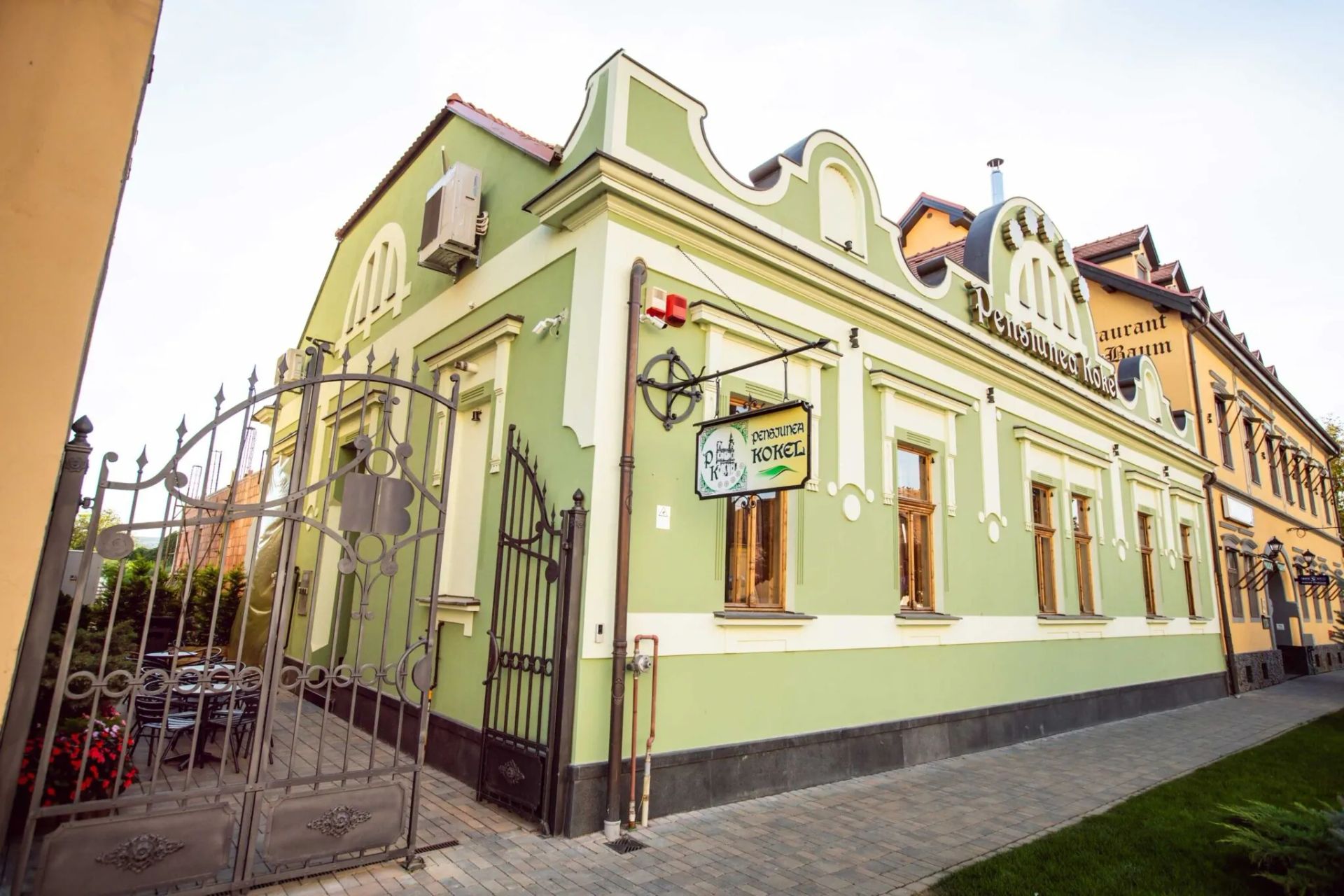
Pensiune · 4 stars
Dumbrăveni, Dumbrăveni County · 10.6 km
Pensiunea Kokel Dumbrăveni
Pension Kokel se găsește în Dumbrăveni, la aproximativ 12 km de Biserica Fortificată din Biertan și la 12 km de Weavers' Bastion, și oferă o grădină și un bar, precum și WiFi gratuit în întreaga proprietate. Această proprietate oferă un club pentru copii, precum și un restaurant, un cazinou și o terasă. Acest hotel pune la dispoziție camere cu aer condiționat, birou, cafetieră, un frigider, un minibar, cutie de valori, televizor cu ecran plat și o baie proprie cu duș. Baia proprie oferă o cadă, articole de toaletă gratuite și un uscător de păr. La Pension Kokel, camerele oferă lenjerie de pat și prosoape. De asemenea, clienții pensiunii au la dispoziție și zona de SPA cu jacuzzi și Sauna. Pension Kokel pune la dispoziție un teren de joacă pentru copii. PLĂȚIILE CU CARDURILE DE VACANȚĂ SUNT ACCEPTATE LA LOCAȚIE. Acest hotel se află la 34 km de Biserica Fortificată din Valea Viilor și la 39 km de Biserica Fortificată din Saschiz. Aeroportul Transilvania Târgu Mureș se află la 45 km.
FROM
310 RON / night
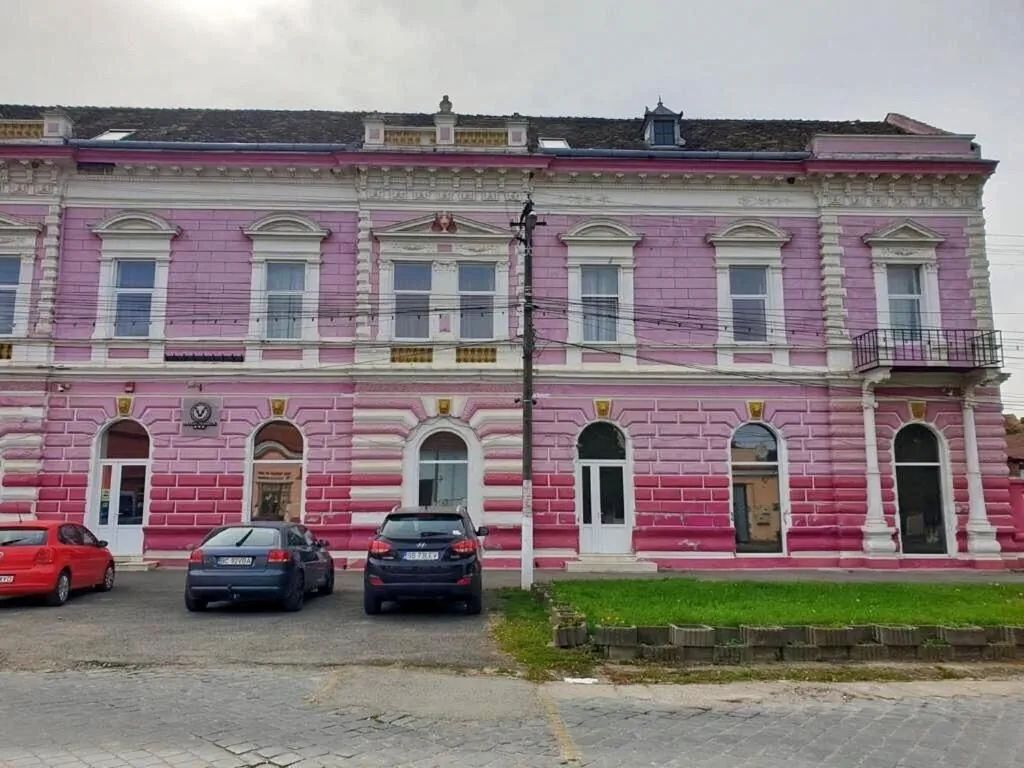
Hotel · 3 stars
Dumbrăveni, Dumbrăveni County · 10.8 km
Hotel Marion Dumbrăveni
Camere, serviciiHotel Marion Dumbrăveni Dumbrăveni va asteapta cu 22 camere amenajate cu bun gust si confortabile. Daca doriti sa obtineti mai multe informatii despre serviciile disponibile (inclusiv cele contra cost) in cadrul unitatii de cazare si despre echiparea camerelor, consultati fisa de mai jos. Servicii de masăPreturile afisate includ mic dejun. PlatăModalitati de plata acceptate: numerar, card bancar, transfer bancar, card de vacanță, avans travelminit, voucher travelminit. Sosire, programPrimirea camerei se face incepand cu ora 14:00 si eliberarea camerei se face pana la ora 10:00. Personalul de la receptie vorbeste limba: engleză, română.
FROM
290 RON / night
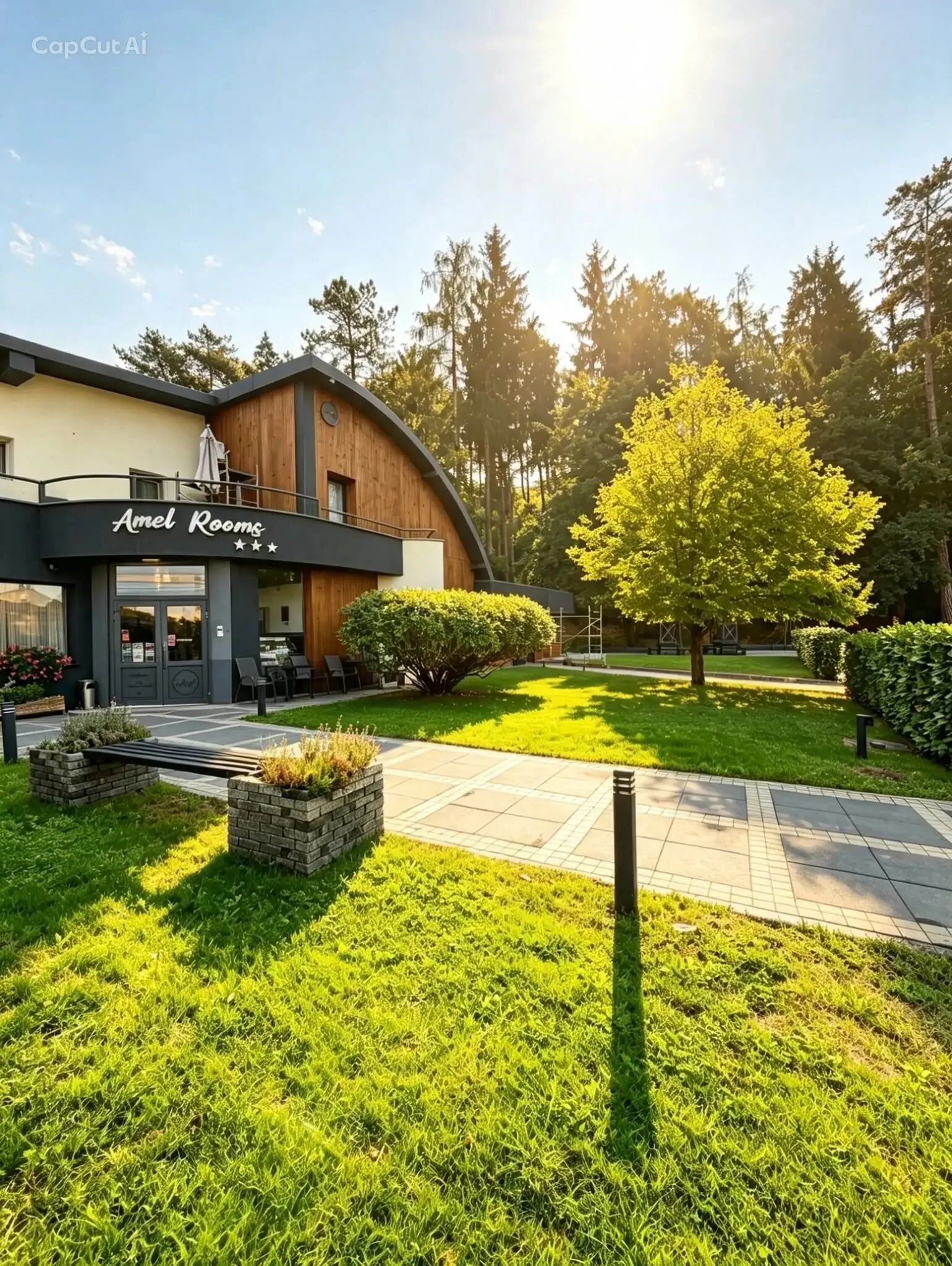
Casă de Vacanță · 3 stars
Mediaș, Mediaș County · 11.3 km
Amel Rooms Mediaș
Camere, serviciiAmel Rooms Mediaș Mediaș ofera cazare in 15 camere frumos amenajate. Se admit animale de companie (contra cost). Oaspetii au la dispozitie parcare gratuita. O parte din camere sunt dotate cu aer conditionat pentru a satisface nevoile si celor mai exigenti clienti. (Pentru mai multe informatii consultati la fiecare tip de camera rubrica "detalii"). Accesul la internetul wireless este disponibil la unitatea de cazare. Mai multe detalii despre facilitatile oferite de Amel Rooms Mediaș (inclusiv cele contra cost), cat si despre dotarile camerelor veti gasi mai jos. Servicii de masăPreturile afisate se refera doar la cazare. La trimiterea rezervarii puteti comanda mic dejun contra cost. PlatăPlata o puteti face cu/prin: numerar, card bancar, transfer bancar, card de vacanță, avans travelminit, voucher travelminit. Rezervarea se considera finalizata numai dupa plata unui avans de 100%. Sosire, programZiua de cazare incepe la ora 14:00. Eliberarea camerei se face la ora 11:00. La receptie se vorbeste limba: engleză, spaniolă, română.
FROM
280 RON / night
Hotel · 3 stars
Dumbrăveni, Dumbrăveni County · 11.3 km
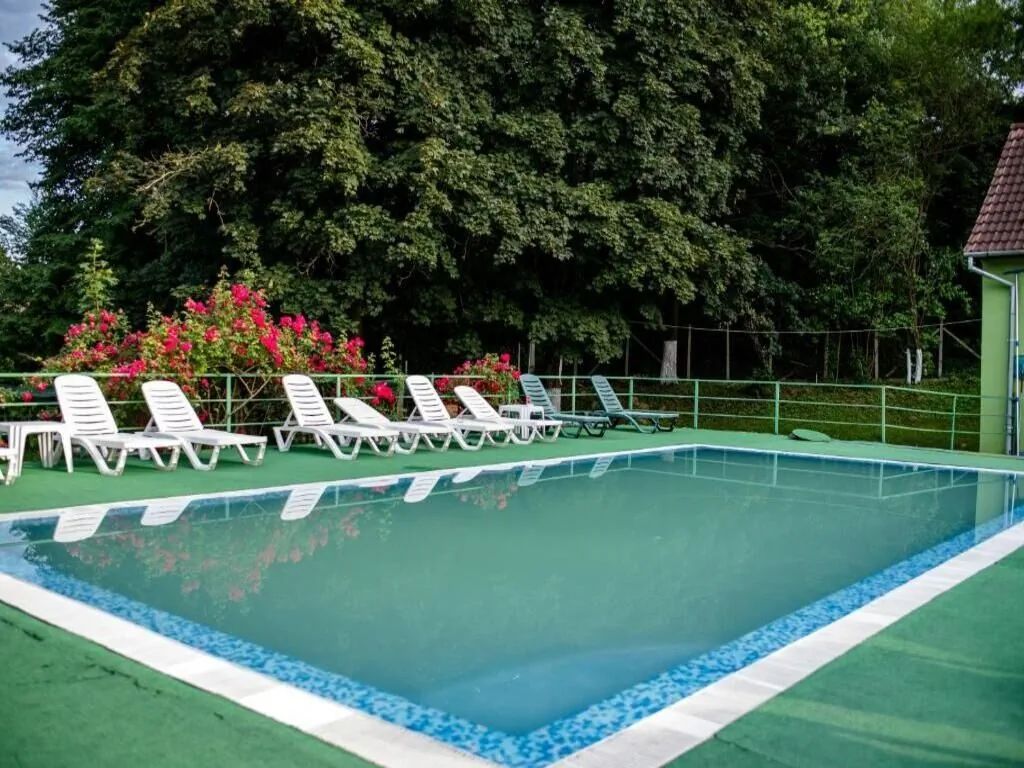
Hotel Marion Poiană Dumbrăveni
Camere, serviciiHotel Marion Poiană Dumbrăveni Dumbrăveni ofera cazare in 21 camere placut mobilate si confortabile. Daca doriti sa obtineti mai multe informatii despre serviciile disponibile (inclusiv cele contra cost) in cadrul unitatii de cazare si despre echiparea camerelor, consultati fisa de mai jos. Servicii de masăPreturile afisate se refera doar la cazare. PlatăPlata rezervarii se poate face cu/prin: transfer bancar, card de vacanță, avans travelminit, voucher travelminit. Sosire, programCamera poate fi ocupata de la ora 14:00 iar predarea ei se face pana la ora 13:00. Limba vorbita la receptie română.
FROM
290 RON / night
Casă de Vacanță · 3 stars
Alma Vii, Alma Vii County · 11.9 km
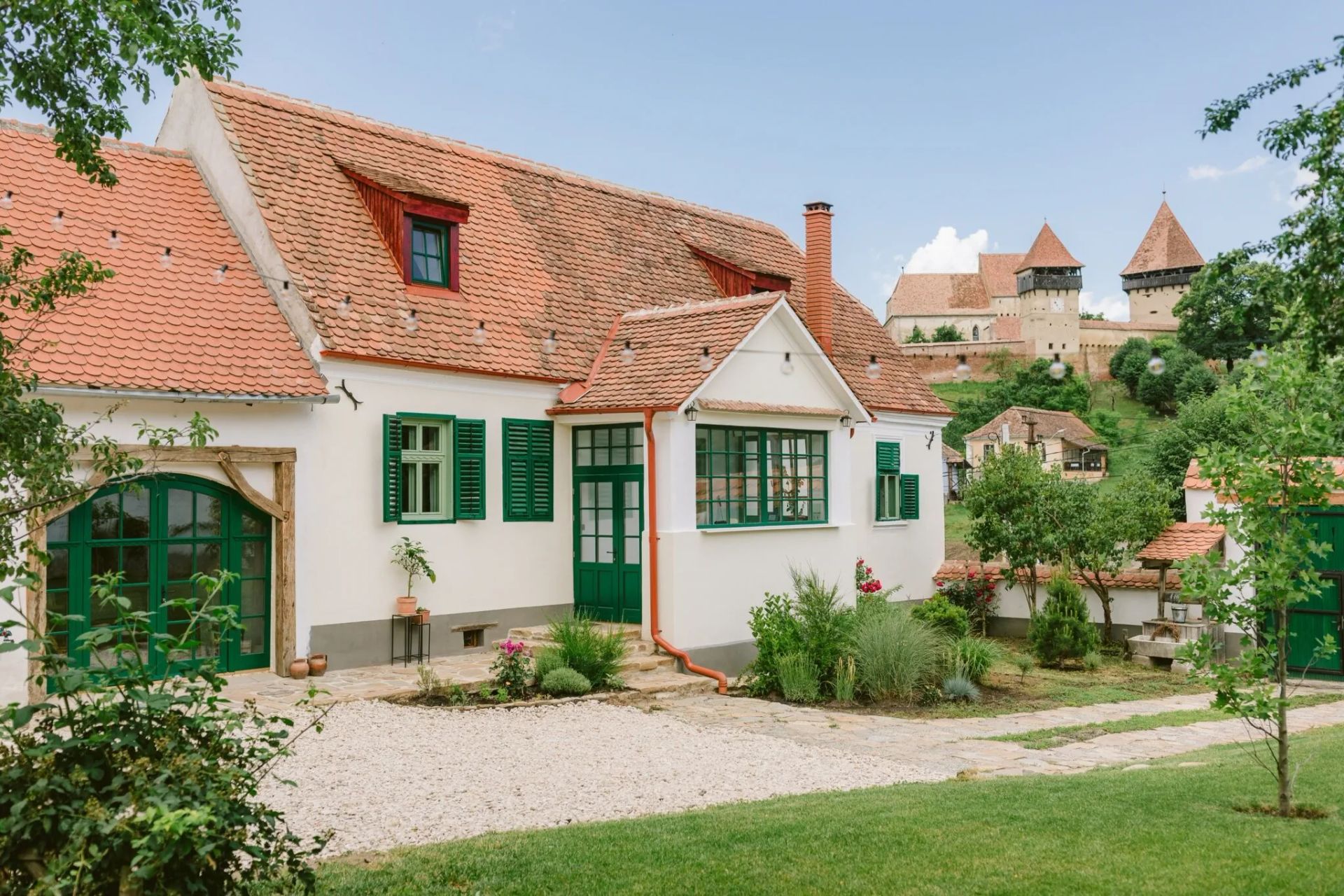
AlmaCalma Guesthouse Alma Vii
AlmaCalma Guesthouse este pentru cei care caută liniștea, natura și un refugiu autentic în inima Transilvaniei. Situată în satul Alma Vii, județul Sibiu, această casă veche săsească, restaurată cu pricepre, strălucește acum de prospețime și oferă o priveliște magnifică spre una dintre cele mai încântătoare biserici fortificate și spre dealurile ce înconjoară satul. CASA Construită în 1850 chiar în inima satului, în fața bisericii fortificate, AlmaCalma păstrează farmecul arhitecturii săsești tradiționale. Recent restaurată cu respect pentru autenticitate, casa a rămas fidelă tehnicilor tradiționale de construcție și materialelor curate, naturale, specifice vremurilor în care a fost ridicată și regiunii. A fost renovată sub supravegherea atentă a unui arhitect pasionat de protejarea caselor vechi și a monumentelor, iar lucrările au fost executate de o echipă excepțională de constructori din Transilvania. Tâmplăria este realizată de un meșteșugar priceput din zonă, iar majoritatea obiectelor din casă sunt românești. Casa are patru camere confortabile, fiecare cu baie proprie, și un spațiu comun dotat cu o chicinetă. În chicinetă nu se poate găti, dar oaspeții au la dispoziție un frigider mic, cuptor cu micorounde, aparat de cafea, fierbător electric, veselă, tacâmuri. GRĂDINA Curtea de peste 5000 mp este un loc ideal pentru relaxare în mijlocul naturii. Poți sta în hamac sau în iarbă printre pomi și flori, poți culege și gusta fructe sau te poți bucura de jocuri de grădină. Vederea către biserica fortificată și spre dealurile înconjurătoare face din AlmaCalma o oază de calm și inspirație. POZIȚIONARE AlmaCalma se află în centrul satului Alma Vii, la 20 de minute de Mediaș, 45 de minute de Sighișoara, 1 oră de Sibiu, 1 oră și jumătate de Târgu Mureș și 2 ore de Cluj-Napoca. Așezată într-un cadru rural deosebit, casa este locul perfect pentru cei care doresc să viziteze cele mai frumoase sate și orașe transilvănene, să facă drumeții pe dealuri și prin păduri, iar noaptea să se bucure de cerul plin de stele. Cei care parcurg Via Transilvanica, Terra Saxonum, ajung ușor la Alma Vii de la Nemșa, doar traversând un deal. OASPEȚI AlmaCalma este recomandată celor care iubesc liniștea, natura, cultura autentică transilvăneană, ritmul molcom și viața simplă de la țară. Este un loc apreciat de artiști și de toți cei care vor să își regăsească inspirația. MASA În Alma Vii există un punct gastronomic local, chiar vizavi, în cetate, cu un farmec deosebit. Rezervările se fac cu o zi înainte. Alternative există atât în sate, cât și în orașele din zonă (Mediaș, Sighișoara, Sibiu). CAMERE 1. Pax / Peace Aceasta era camera cea mai mare, pe care sașii o mențineau mereu frumoasă și aranjată, pregătită să primească oaspeți. Ferestrele ei dau unele spre stradă, cu vedere spre Biserica Fortificată Alma Vii, iar altele spre grădină. Toate ferestrele și obloanele sunt originale, cu o vechime considerabilă, la fel și grinzile solide din stejar, pline de farmec. Această cameră spațioasă și confortabilă are un pat king size, canapea, fotoliu, masă și scaune, un șemineu cu cahle de Mediaș (folosit doar iarna). Pășiți pe covoare vechi tradiționale și pe o dușumea de lemn, fină și curată, pentru a începe să simțiți casa. Descoperiți peste tot senzația plăcută pe care o dau materialele naturale: lemn masiv, tencuieli și vopseluri sănătoase, bumbac, in, lână. Întrerupătoare din porțelan și corpuri de iluminat pictate manual vorbesc despre atenția noastră pentru detalii, dar mai ales despre respectul pentru oaspeți. Răcoarea acestei camere este o încântare în zilele de vară. 2. Nemus / Garden Spațioasă și odihnitoare, aceasta este camera în care sașii dormeau laolată. Este o bucurie îndeosebi pentru cei care iubesc natura, oferind o priveliște minunată asupra grădinii. Patul queen size și biroul unicat sunt făcute cu nelipsitul stejar masiv, rotunjit cu grijă. Ferestrele sunt noi, dar respectă întru totul modelul celor originale. Am păstrat tot ce s-a putut: obloanele vechi, care te îmbie vara, la amiază, să le închizi și să dormi în liniște și răcoare plăcută; o grindă veche, dar încă foarte puternică; un detaliu în perete, specific caselor săsești. Ca toate camerele casei, Nemus te bucură prin simplitate și firesc, prin materiale naturale și eleganță discretă, prin senzația de echilibru în relația cu natura. Mici detalii din porțelan, precum întrerupătoarele și corpurile de iluminat pictate manual, evocă și ele grădina, dealurile și pădurile. Aceasta este camera pentru cei cărora le-a fost dor de verdele curat și de somnul lin. 3. Lumen / Light Lumen sau Camera cu ochi, cum i se mai spune, este o cameră fermecătoare, care pare să privească mirată spre cetate și spre sat. Privind dinăuntru, ochii ei, ferestre ovale cu rame verzi, sunt două tablouri ale unui colț de lume neschimbat de secole. Privind din afară, dau personalitate și o senzație de însuflețire acestei case, care și ea a rezistat cu demnitate secolelor. Este un loc prietenos, elegant, cu pereți înclinați de mansardă, cu un pat queen size și cu un mic birou, ambele din stejar. Dacă vrei să citești sau să te relaxezi, sigur te vor atrage o canapea joasă, pentru privit pe fereastră și pentru citit, și un beanbag foarte confortabil. Este o cameră cu o energie tinerească și cu o atmosferă senină, de care nu te poți sătura. Lumen este locul în care simți că lumina ta interioară sporește. 4. Nidus / Nest Aceasta este camera cea mai mică, care știe să te facă să te simți în largul tău. Dimensiunea, de altfel perfect confortabilă, este doar unul din motivele pentru care o alintăm numind-o Cuib. Este intimă, cu o atmosferă caldă și primitoare, un loc aproape magic în care să te retragi, să te reconectezi cu tine și să te simți protejat. Loc bun pentru creație, reflecție și inspirație, Cuibul este cel în care germinează idei, în care se limpezesc gânduri și sentimente. Are un pat de 140cm, un mic birou de stejar și deasupra lui o fereastră care oferă o vedere încântătoare spre grădină, acoperișuri tradiționale și cer. Ca toate camerele noastre, Cuibul este făcut cu grijă, din materiale naturale și sănătoase, blând și atent cu oaspeții.
FROM
280 RON / night
BEFORE YOU HIT THE ROAD
Weather conditions in Sibiu
Local forecast for Biertan Fortified Church, Sibiu, Sibiu

Real-time updated weather data
Much more to explore in this area
Nearby tourist attractions


Sighișoara, Mureș County
Sighișoara Medieval Citadel
Situata in centrul municipiul Sighisoara; inca din secolul al III-lea i.Hr. a existat pe acest teritoriu o cetate dacica, numita Sandava; romanii au ridicat...
22.9 km

Cârțișoara, Sibiu County
Transfăgărășan Highway and Bâlea Lake
Incepe in comuna Bascov din judetul Arges de langa orasul Pitesti, in directia orasului Curtea de Arges si se termina la intersectia cu drumul DN1 intre Sibiu...
45.5 km

Brasov, Brașov County
Viscri Fortified Church
Situata in localitate Viscri; construita in secolul al XIII-lea; din punct de vedere arhitectural apartine stilului romanic; are un plan de tip sala romanica;...
44.7 km

Sibiu, Sibiu County
Bâlea Lake Resort
Situata in aria comunei Cartisoara din masivul Fagaras; se intinde pana la altitudinea de 2.500 m; include relieful alpin, lacul, flora si fauna din circul...
45.3 km

0.0 km

Brașov, Brașov County
Black Church of Brașov (Evangelical Fortified Church Ensemble)
Heritage site in Braşov County, Romania
34.4 km

Danes, Mureș County
Turnul cu ceas Sighișoara
Situat in partea de est a platoului inferior al Cetatii Sighisoara; construit in preajma secolului al XIV-lea, pentru a proteja poarta principala a orasului si...
22.9 km

Danes, Mureș County
Biserica fortificată Saschiz
Situata in localitatea Saschiz;construita pe locul unde in trecut exista o bazilica romanica;inaltata in anul 1493, in onoarea regelui Stefan I al Ungariei;din...
34.4 km

Sibiu, Sibiu County
Biserica Parohială Evanghelică Sfânta Maria din Sibiu
Situata in Piata Huet, localitatea Sibiu; a fost ridicata in secolul al-XIV-lea, pe locul unde exista o veche biserica inca din secolul al-XII-lea; cladirea...
47.2 km

Sibiu, Sibiu County
Muzeul Brukenthal
Situat in Piata Mare nr.4-5; colectiile baronului von Brukenthal au luat nastere in principal intre anii 1759-1774, perioada pe care acesta a petrecut-o la...
47.3 km

10.8 km

Sibiu, Sibiu County
Biserica Fortificată din Valea Viilor
Situata in localitatea Valea Viilor; a fost construita in secolul al XII-lea, urmand sa fie fortificata in secolul al XV-lea si al XVI-lea; inconjurata de o...
19.5 km
Cultural life and traditions
Events near Biertan Fortified Church
Medieval festivals, traditional fairs, concerts and recommended local activities in Transylvania.

Patrimoniu și Istorie

Sibiu, Jud. Sibiu
Festivalul Cetăților Medievale și Zilele Porților Deschise
Tururi ghidate nocturne, ateliere de meșteșuguri tradiționale și reconstituiri istorice cu cavaleri și domnițe.
WHEN
15 - 17 Mai 2026

Tradiții și Gastronomie
Sibiu, Jud. Sibiu
Târgul Tradițiilor Săsești și Gastronomie Locală
Descoperă producătorii locali, plăcintele săsești coapte pe vatră, siropurile artizanale și dulceața de rubarbă.
WHEN
În fiecare weekend (Mai - Octombrie)

Ecoturism și Natură
Colinele Transilvaniei, Jud. Sibiu
Drumeții Ghidate pe Traseul Colinele Transilvaniei
Excursii pe poteci nemarcate printre fânețe seculare, stejari multiseculari și sate cu biserici fortificate UNESCO.
WHEN
Vineri - Duminică (Sezon 2026)
On foot, exploration gains depth
Discover the surroundings and local geography
Explore trails, terrain and natural landmarks around Biertan Fortified Church.

Guides and practical tips
Useful travel articles
Travel guides, practical tips and itineraries for Transylvania.

Travel guide
Top 5 Atracții Turistice și Trasee Montane în Zona Moieciu - Bran
Descoperă cele mai spectaculoase peisaje carstice, chei adânci și cetăți medievale din imediata apropiere a stațiunii Moieciu.

Travel guide
Ghid de Drumeție: Traseul Moieciu de Sus spre Platoul Bucegi
Un itinerariu montan de o frumusețe rară ce urcă din Valea Băngăleasa spre Poiana Guțanu și crestele maiestuoase ale Bucegilor.

Travel guide
Castelul Bran: Istorie, Legende și Secrete Medievale
Află adevărata poveste a fortăreței medievale din Pasul Bran, reședința de suflet a Reginei Maria a României.
THE JOURNEY STARTS WITH AN IDEA
The next story is on the way.
From the first stop to the last stay, make room for a new Romania.
