


CASTLE · MUNTENIA (WALLACHIA)
Palace of the Parliament

Bucuresti, București County
Add location to your trip planner.

Practical access information

VISITING HOURS
Zilnic: 09:00 - 17:00 (ultimul tur la ora 16:30)

TICKET PRICE
Tur Standard: Adulți 60 RON, Studenți (19-26 ani): 30 RON, Elevi (7-18 ani): 20 RON; Copii sub 7 ani: gratuit

RECOMMENDED VISIT DURATION
1.5 - 2 ore (tur ghidat obligatoriu)


Visitor information and guide
For group bookings or access verification, you can call this number.

PHONE NUMBER
+40 21 316 0300 Navigate with Google Maps

ABOUT PALACE OF THE PARLIAMENT
Captivating Introduction and Universal Value
In the heart of Bucharest, where the old historic center meets the aggressive ambitions of modernity, rises a presence that defies all comparison: the Palace of the Parliament, still known by many under the emotional name of the "People's House." This massive construction, which occupies a central place in the collective memory of Eastern Europe as a symbol of the last decade of communist dictatorship, today represents one of the most controversial and, paradoxically, most visited monuments on the continent. For the European traveler familiar with the Versailles grandeur of France, the parliamentary solidity of Britain, or the verticality of the Vatican, the Palace of the Parliament offers a disturbing experience: a direct encounter with architectural megalomania in its purest form, embodied in a building that exceeds the volume of the Great Pyramid of Khufu by 2% and which was, until recently, the largest civilian administrative building in the world.
What makes this monument truly European is not only its extraordinary size, but the way it incorporates, in condensed form, the entire history of the totalitarian ambitions of the 20th century. From Stalin's Palace of the Soviets – a project never completed that was supposed to surpass the Empire State Building – to Hitler's plan to transform Berlin into a monumental "Germania," from the imperial axes of Mussolini's Rome to Kim Il Sung's Pyongyang, the architecture of absolute power followed the same principles: the domination of urban space through inhuman scale, the use of noble materials to proclaim the eternity of the regime, and the creation of a built environment meant to intimidate and subordinate the individual before the state. The Palace of the Parliament is, in this sense, a three-dimensional historical document, a time capsule that allows the visitor to understand, through direct contact, the psychology of European and global political megalomania.
With a floor area of 330,000 square meters – the equivalent of over 40 football fields – and a volume of 2.55 million cubic meters, the building ranks second in the world in the "Administrative Buildings" category after the Pentagon in Washington, being at the same time the heaviest and most expensive administrative building ever constructed. These figures, however impressive, fail to convey the full sensory experience of physical presence before this construction: the sense of human proportion dissolving before an architecture explicitly designed to diminish and subjugate.
Historical Roots and Major European Connections
The genesis of the Palace of the Parliament must be sought in a series of urban planning ambitions that traverse the entire modern European history. As early as 1935, King Carol II of Romania, under the strong influence of fascist architectural models from Italy and Germany – Mussolini dreamed of a new imperial center in Rome, while Hitler planned the transformation of Berlin into a world capital – conceived a grandiose project for Arsenal Hill in Bucharest. This project, elaborated by the greatest architects of the time, provided for the construction of the Chamber of Deputies in a monumental neoclassical style, in dialogue with the Habsburg architectural tradition that had profoundly influenced Bucharest in the 19th century. However, the king's abdication in 1940 and the outbreak of the Second World War buried these plans, leaving them only on paper until 1977.
The devastating earthquake of March 4, 1977, which shook Bucharest and destroyed thousands of buildings, offered Nicolae Ceaușescu the perfect pretext to resume and radicalize the royal vision. The European context of the 1970s was one of confrontation between Western democracies and communist regimes, and Ceaușescu, seeking to assert his autonomy from Moscow and consolidate his personal power, appealed to an unprecedented model: that of North Korea. His visit in June 1971 to Pyongyang, where he was greeted by Kim Il Sung with grandiose spectacles at Moranbong Stadium attended by 120,000 people, deeply marked him. "Little Pyongyang," as Bucharest was called in his intentions, was to become a replica of the North Korean capital, a city rebuilt according to the principles of socialist realism and the cult of personality.
This Asian inspiration is however inscribed in a broader European tradition of totalitarian architecture. In the Soviet Union, Stalin had launched in the 1930s the Palace of the Soviets project, a construction that was supposed to reach 415 meters in height and house a gigantic statue of Lenin – a project abandoned only because of the Nazi invasion. In Nazi Germany, Albert Speer elaborated the plans for "Germania," the new capital of the Reich, with boulevards 120 meters wide and buildings of pharaonic dimensions. In Italy, Mussolini developed the EUR district in Rome, an ensemble of fascist architecture that combined elements of imperial Rome with monumental modernism. All these projects shared with the Palace of the Parliament the same logic: the use of architecture as an instrument of propaganda and intimidation, the creation of public spaces that would glorify state power to the detriment of the individual, and the use of traditional materials – marble, bronze, crystal – in a manner that would proclaim the eternity of the regime.
In 1978-1979, in the full "Golden Age" – a period that communist propaganda presented as the apogee of socialist development – a national competition was held for the reconstruction of Bucharest. The winner was Anca Petrescu, a young architect of only 28 years, graduate of the "Ion Mincu" Faculty of Architecture in Bucharest and of the German High School "Joseph Haltrich" in Sighișoara, whose European training – influenced by the tradition of the German school of architecture – allowed her to elaborate a project that would combine modernism with Romanian historical elements. Appointed chief architect of the project, Petrescu led a team of over 700 architects and had to face the megalomaniac demands of Ceaușescu, who constantly modified the plans, requesting 1:1000 scale models of the entire city and "beating" the architectural details with a stick.
The official foundation stone laying ceremony took place on June 25, 1984, and the construction lasted seven years, involving 20,000 civilian workers, 5,000 conscript soldiers, and an army of "volunteers," working in three shifts, 24 hours a day. For the realization of this edifice, over 7 square kilometers of the old center of the capital were demolished – approximately one sixth of the city – and over 40,000 people were forcibly relocated. Among the disappeared buildings were the Văcărești Monastery – an important 18th-century monastic complex, comparable in value to the monasteries of Moldova – the Brâncovenesc Hospital, the first medico-legal institute in the world, the National Archives, the Republic Stadium, and numerous churches and boyar houses. This systematic destruction of Bucharest's historical heritage was compared by historians with the "urban cleansing" operations undertaken by Haussmann in Paris in the 19th century, but also with the destruction caused by the bombings of the Second World War, with the essential difference that, this time, the destruction was willed and programmatic.
The project was not limited to the central building, but encompassed the entire civic ensemble: Unirii Boulevard – initially named "Victory of Socialism," a 3.5-kilometer axis inspired by the Champs-Élysées in Paris but on a much larger scale – Constitution Square, Izvor Park, the Marriott Hotel (former Guest House), the Romanian Academy House, and the Ministry of National Defense. All these constructions formed a coherent ensemble meant to transform Bucharest into a "self-sufficient" capital, severed from its historical tradition and anchored in the ideological present of communism.
Architectural Masterpiece and Artistic Heritage
From a stylistic point of view, the Palace of the Parliament represents a unique example of monumental eclecticism, an architectural "collage" that combines elements from European neoclassicism, Transylvanian baroque, the Brâncovenesc style – specific to Romanian architecture of the 17th-18th centuries – and socialist modernism. Anca Petrescu herself compared her project to Buckingham Palace in London and to the French Versailles, while the architects of the time called it "Little Pyongyang." The building extends 270 meters in length and 240 meters in width, reaching 84-86 meters in height above ground and descending 92 meters underground, with 9-12 levels at the surface and 8-9 underground levels, totaling approximately 1,000-5,000 rooms (sources vary), of which 440 offices, over 30 ceremonial halls and salons, four restaurants, three libraries, two underground parking lots, and a concert hall.
The materials used define the pharaonic character of the construction. For its realization, one million cubic meters of marble were used – coming mainly from the quarries of Rușchița (white and pink marble, famous since the Habsburg era for its quality), Moneasa, Căprioara, and Alun – 5,500 tons of cement, 7,000 tons of steel, 700,000 tons of combined steel and bronze, 20,000 tons of sand, 1,000 tons of basalt, 900,000 cubic meters of noble wood essences (oak, beech, cherry, walnut, mahogany), 3,500 tons of crystal, 200,000 cubic meters of glass, 3,500 square meters of leather, and 220,000 square meters of wool carpets. All the carpets were handmade at Cisnădie – the largest carpet factory in Romania at that time – from small pieces later assembled in each hall, and for the huge dimensions of some of them, even the swimming pool in Sibiu was emptied to allow assembly. The chandeliers – between 2,800 and 15,000, depending on the source – were executed by visual artists in Mediaș, being true works of art in crystal that recall the Bohemian and Austrian tradition of luxury glassmaking.
The interior of the Palace is organized around ceremonial halls that evoke, through their names chosen after 1989, crucial moments in Romanian history and personalities of European culture. The Union Hall, the largest room, with an area of over 2,200 square meters and a height that allows a helicopter to land, is dominated by a central three-ton chandelier with 7,000 bulbs, made of Mediaș crystal. The hall's decor, influenced by French architecture and Art Deco style, features columns of white Rușchița marble with Romanian-style fluting and Corinthian capitals, walls with plaster mirrors framed in marble, and a pink brocade carpet woven in Sighișoara. This hall, initially intended for state-level receptions – the "Banquet Hall," as it was called in the communist period – hosted filming for international productions, including scenes from Costa-Gavras's film "Amen."
The Nicolae Bălcescu Hall impresses through its columns with Greek Doric capitals made of bronze, a material associated in the European tradition with eternity and power – from Trajan's Column to Napoleonic monuments – and through the pink Rușchița marble that covers the shafts of the columns. The monumental doors of this hall are made of African mahogany wood, a gift received by Ceaușescu from President Mobutu Sese Seko of Zaire, in a gesture that illustrates the alliances between the dictatorial regimes of the Third World. The chandeliers and wall sconces of this hall were designed by architects and executed by visual artists in Mediaș, continuing the tradition of the Transylvanian school of decorative art.
The Alexandru Ioan Cuza Hall, one of the few completed before 1989, is the tallest room in the palace, with 20 meters in height, and the second largest in area. Its ceiling is covered with gold leaf, and the natural ventilation system – Ceaușescu, fearing poisoning, refused air conditioning – is integrated into its structure. The columns are of white Rușchița marble, and the sculpted monumental doors are framed in marble frames and radiator masks cast in brass, richly ornamented.
Other important halls include the Human Rights Hall – initially intended for the meetings of the Political Executive Committee of the Communist Party – the Nicolae Iorga Hall (with oak paneling), the I.C. Brătianu Hall, the C.A. Rosetti Hall (with a two-ton chandelier, the second largest in the building), and the Nicolae Titulescu Hall (round, 625 square meters). The Hall of Honor stands out through its 34 octagonal columns of white and pink Rușchița marble, 14 tall windows, 67 crystal chandeliers, and silk curtains that weigh 250 kilograms and are hand-washed.
The basement of the Palace of the Parliament represents a world apart, a "fortress in the depths" that mirrors the paranoia and survival ambition of the communist regime. At 92 meters below ground level extend 8-9 underground levels, including an anti-nuclear bunker with 1.5-meter-thick concrete walls, covered with a radiation blast plate, designed to withstand a 9-degree earthquake on the Richter scale and two atomic bombs. A network of approximately 20 kilometers of tunnels – some wide enough to allow the circulation of electric cars – connects the Palace of the Parliament to Cotroceni Palace, the Ministry of National Defense, the former building of the Central Committee of the PCR, and other strategic institutions. There is also talk of a private metro line, intended for Ceaușescu's evacuation to Otopeni Airport in case of emergency, similar to the secret systems existing under the Kremlin or under the Nazi headquarters in Berlin.
Legends, Personalities, and Turning Points
The story of the Palace of the Parliament is inseparable from the figure of Nicolae Ceaușescu, the last communist dictator of Europe, whose megalomania and paranoia gave birth to this monument. Although the project had been initially conceived by Carol II, Ceaușescu transformed it into an expression of the cult of personality, demanding constant modifications and imposing ever larger dimensions. Legend says that, not understanding the architectural plans, the Ceaușescu couple requested 1:1000 scale models of the entire Bucharest, built of polystyrene, over which they walked on an overhead crane to give indications. Another story, partially confirmed by architect Anca Petrescu, speaks of a presidential armchair upholstered with gold and silver threads, intended to dominate the 60 identical oak chairs in the meeting hall, symbol of the supremacy of the leader.
Anca Petrescu (1949-2013), the "mother" of the People's House, remained attached to this creation until her death, publicly defending it against criticism and resuming coordination of the project after 1989, when the building was renamed the Palace of the Parliament. Her training at the German school in Sighișoara and at the "Ion Mincu" faculty in Bucharest gave her a European vision of architecture, which she had to adapt to political pressures. After the Revolution, she continued to work on the completion of the interiors until 2013, when she died in a road accident.
The Revolution of December 1989 found the building almost completed, but with approximately 70% of the space unused and unusable for normal parliamentary functions. After the fall of the communist regime, the building went through a period of uncertainty, being proposed for demolition – an idea supported by some Bucharest intellectuals who saw in it a symbol of oppression – or for transformation into a mall or casino. In 1991, by government decision, it was decided to continue the works and adapt the building to house the Romanian Parliament. Since 1994, the Chamber of Deputies has functioned here, and since 2004 the Romanian Senate has also moved to this headquarters, after the former Central Committee building was restituted. In 1997, the building definitively received the name Palace of the Parliament, and today it also houses the National Museum of Contemporary Art, temporary exhibitions, concerts – in 1995, Yehudi Menuhin conducted the "George Enescu" Philharmonic Orchestra here – and numerous international diplomatic events.
A mysterious figure in the history of the construction is Colonel Nicolae Kovacs, who led the most secret part of the works, being responsible for the tunnel system and bunker. After 1989, he revealed the existence of the 20-kilometer underground network and the anti-nuclear bunker, information that fueled numerous conspiracy theories about the "floating city" under Bucharest – which Anca Petrescu denied, specifying that it was only escape tunnels and standard shelters for such a construction.
International critics had polarized reactions. Catherine Lalumière, Secretary General of the Council of Europe, called the palace "a palace of the megalomaniac, but also a masterpiece of the Romanians," while the British daily The Independent described it as "the third best building in the world – hideous, but at the same time impressive in its way." The architecture website ArchDaily ranked the Palace of the Parliament second in the world in the top of "the most expensive architecture projects ever made," underlining the paradox of a construction that costs billions and still requires enormous annual maintenance, while 70% of the space remains unused.
Practical Visitor Guide and Today's Tourist Experience
Visiting the Palace of the Parliament in 2026 offers an experience that combines fascination with monumental architecture and awareness of recent European history. Access is daily, between 09:00 and 17:00, the last tour starting at 16:30. The visitor entrance is on Izvor Street number 2-4, sector 5, within the "Constantin Brâncuși" Exhibition Hall, on the side facing Izvor Park. It is mandatory to have an original identity document with you – identity card, ID card, or passport – the driving license not being accepted. Security control is similar to that in airports, entry with liquids being prohibited within the palace grounds.
The rates for 2026 are as follows: adults – 60 RON, students aged between 19 and 26 – 30 RON, pupils aged between 7 and 18 – 20 RON, and children under 7 benefit from free entry. Persons with disabilities and their companion, as well as accompanying guides of organized groups, also benefit from free entry. Tickets are purchased only on site, on the day of the visit, from the ticket office in the "Constantin Brâncuși" hall – the Palace of the Parliament does not sell tickets online, and the institution does not assume responsibility for tickets purchased from third parties.
Reservations are mandatory and are made only by phone for groups of 1-9 people, with a minimum of 24 hours before the visit, in the time interval 09:00-16:00, at the numbers +40 733 558 102 or +40 733 558 103. For groups of minimum 10 people, reservations are made exclusively by e-mail at [email protected], with at least 3 days in advance. Attention: for Mondays, reservations are made on Friday. The number of halls available for visiting may vary depending on the day, due to parliamentary or diplomatic events taking place in the building.
The standard tour lasts approximately one hour and is available in several internationally spoken languages. Visitors are led through a route that includes the Union Hall with its impressive three-ton chandelier, the Hall of Honor, the Nicolae Bălcescu Hall with its Greek bronze columns, the Alexandru Ioan Cuza Hall, and other ceremonial halls, offering a perspective on the architectural splendor and the materials used. For professional photography and filming, a special authorization is required, which is obtained by sending a request to [email protected] or fax +40 21 312 09 02, the cost being 5,000 euros per hour.
Access to the Palace can be made by metro – Izvor station, lines M1 and M3, followed by a 10-minute walk through Izvor Park – or by buses 136, 385 (Calea 13 Septembrie station) and 123 (Piața Unirii station). For travelers coming from Henri Coandă Airport, the express line 780 to Gara de Nord, followed by bus 123, offers a convenient route. The palace's panoramic terrace, which offers a spectacular view of Bucharest, is again open to the public after a period of closure.
Visiting the Palace of the Parliament represents more than a simple architectural tour; it is a journey through time through the history of 20th-century Europe, an encounter with the ambitions and excesses of an era that profoundly marked the continent. Before this construction that swallowed the resources of an entire nation and destroyed a centuries-old urban heritage, today's European visitor can reflect on the way architecture serves as an instrument of power, on the resilience of democracy that managed to transform a symbol of oppression into a seat of parliamentarianism, and on the collective memory that must be kept alive so that history does not repeat itself. The Palace of the Parliament thus remains a monument to the contradictions of modern Europe: magnificent and monstrous, historical and contemporary, national and universal, a lesson in architecture and history that every traveler must experience personally.
Media gallery
Discover Palace of the Parliament in pictures

22 photos · Architecture, courtyards and captivating details


Image source: Wikimedia Commons · Public domain photos · Free license
STAY A FEW DAYS, DISCOVER THE MAGIC
Stays near Palace of the Parliament

Casă de Vacanță · 3 stars

București, București County · 0.6 km
Parliament Square București
Hotel Parliament Square is making the check-in formalities using self check-in. Parliament Square is set in the 5th district of Bucharest, 700 metres from Palace of the Parliament and 1.3 km from National Opera. It features free WiFi throughout the property. Servicii de masăTarifele afisate nu contin masa. PlatăModalitati de plata acceptate: transfer bancar, card de vacanță, card bancar, card de vacanță, avans travelminit, voucher travelminit. Pentru finalizarea rezervarii se achita un avans de 100%. Sosire, programZiua de cazare incepe la ora 14:00. Eliberarea camerei se face la ora 12:00. Limbi straine vorbite la receptie: engleză, română.
FROM
280 RON / night

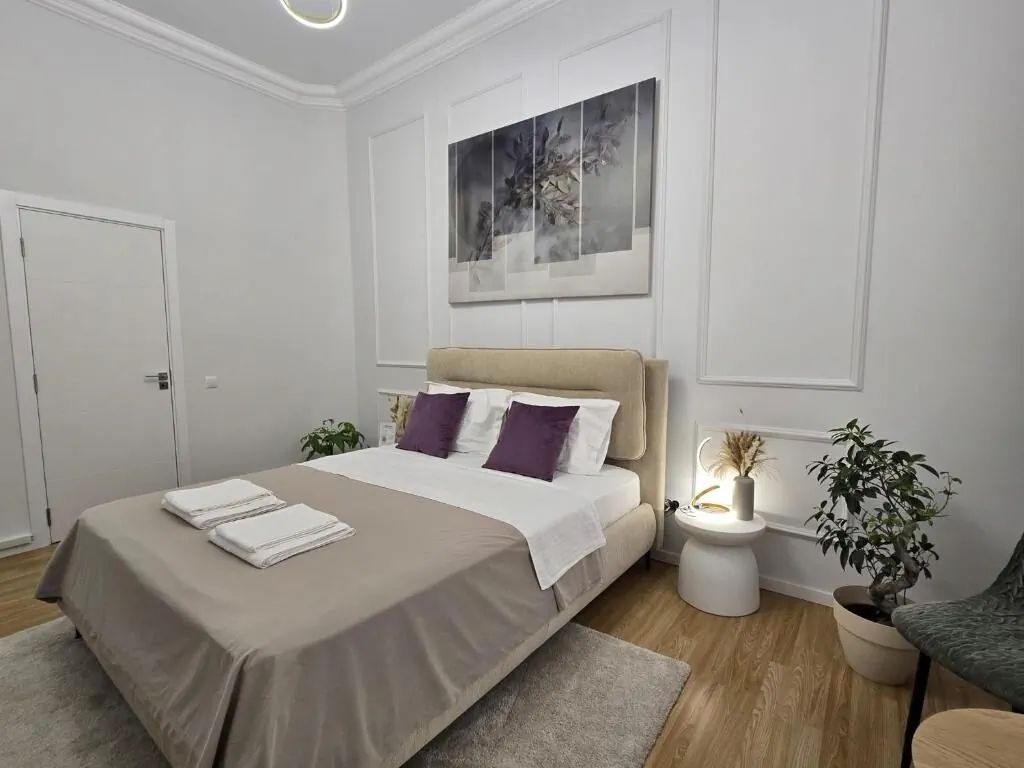
Casă de Vacanță · 3 stars
București, București County · 0.7 km
Luxury House - Private Garden & Parking - Old Town București
O bijuterie rară în centrul orașului!Acest apartament oferă parcare privată în curte, chiar în fața casei, pentru până la trei mașini — un avantaj exclusiv și rar în zona centrală. Bucură-te de confortul și liniștea de a avea propriul loc de parcare sigur, la doar câțiva pași de ușa ta.ZEN Deluxe Bucharest — Spațios, Privat și în cea mai bună locație Apartamente mari și moderne pentru 2–6 persoane Parcarea privată — o raritate în centrul Bucureștiului Bucătării și livinguri complet echipate Curte exterioară privată cu zonă de relaxare Design ultra-curat, elegant, cu lenjerii premium Perfect pentru familii, călătorii de afaceri sau grupuriDacă ești în căutarea unui apartament spațios, sigur și complet privat chiar în centrul Bucureștiului, ZEN Deluxe este alegerea perfectă. Oferim:- Un studio deluxe pentru cupluri- Un apartament cu un dormitor, zonă de living și masă de dining- Un apartament mare cu două dormitoare pentru familii sau grupuri de până la 6 persoane Locație liniștită, la câteva minute de Centrul Vechi, Palatul Parlamentului, Piața Unirii și principalele atracții Clădire complet renovată, cu decor modern și elegant Standard profesional de curățenie și igienă Wi-Fi de mare viteză, TV inteligent, espressor de cafea, bucătărie completă, saltele de lux Confort, intimitate și valoare mult mai bune decât o cameră de hotel. ZEN Deluxe este creat pentru oaspeții care apreciază spațiul, liniștea, confortul și accesul facil la tot ce are de oferit Bucureștiul.
FROM
280 RON / night
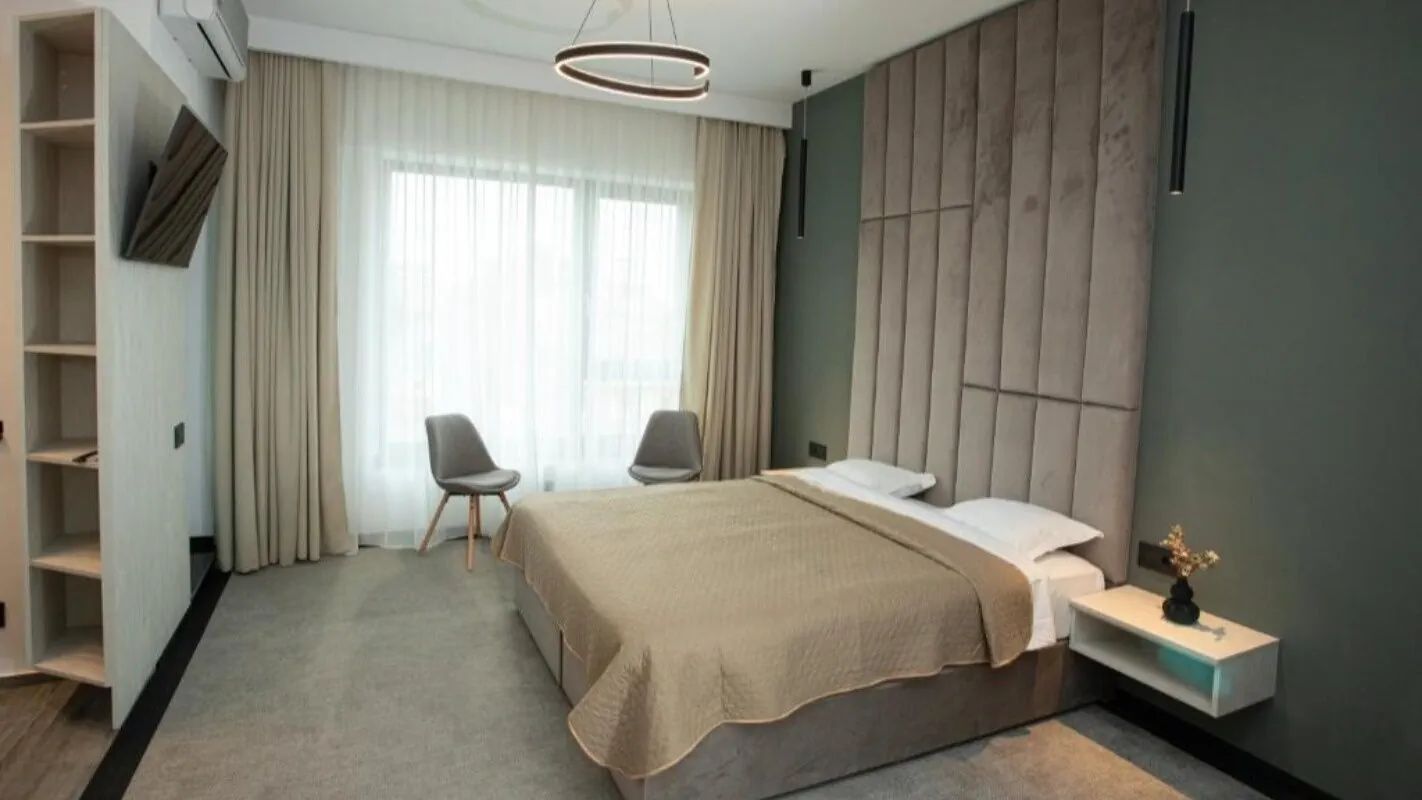
Apartament · 3 stars
București, București County · 0.7 km
Parliament House București
Comfortable Living Space: Parliament House in Bucharest offers a spacious apartment with a balcony, private bathroom, and modern amenities. Guests enjoy free WiFi, air-conditioning, and a fully equipped kitchen. Convenient Facilities: The property provides paid on-site private parking, a work desk, and a dining table. Additional features include bathrobes, a coffee machine, and a TV. Prime Location: Located less than 1 km from the Palace of the Parliament and 1.9 km from Carol Park, Parliament House is an 18-minute walk to the Romanian National Opera. Băneasa Airport is 10 km away.
FROM
230 RON / night
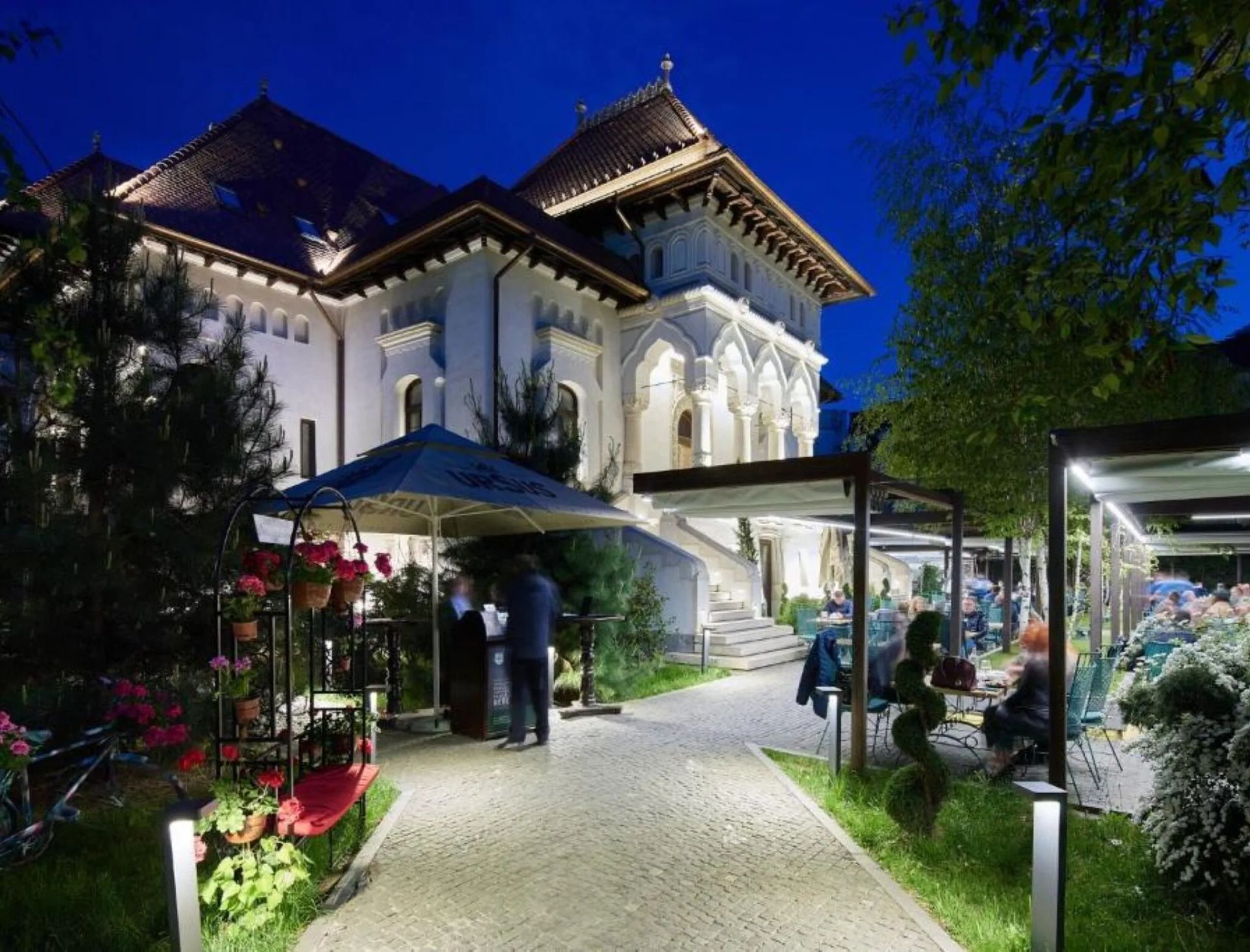
Hotel · 4 stars
București, București County · 0.7 km
Hotel La Boheme Boutique Casa Soare București
Cazare Confortabilă: La Boheme Boutique Casa Soare din București oferă camere de familie cu aer condiționat, băi private și dotări moderne. Fiecare cameră include un birou, minibar și WiFi gratuit. Experiență Culinară: Restaurantul potrivit pentru familii servește preparate din bucătăria locală, internațională, europeană și la grătar. Oaspeții se pot bucura de un mic dejun tip bufet sau à la carte, alături de opțiuni vegetariene. Facilități de Relaxare: Hotelul dispune de o grădină, terasă și zonă de șezut în aer liber. Alte dotări includ un bar, lounge și parcare pentru biciclete. Locație Primordială: Situat în centrul orașului, hotelul se află la o scurtă plimbare de Biserica Stavropoleos și Grădinile Cismigiu. Aeroportul Băneasa este la 9 km distanță. Oaspeții apreciază locația convenabilă și personalul atent.
FROM
420 RON / night
Hotel · 4 stars
București, București County · 0.8 km
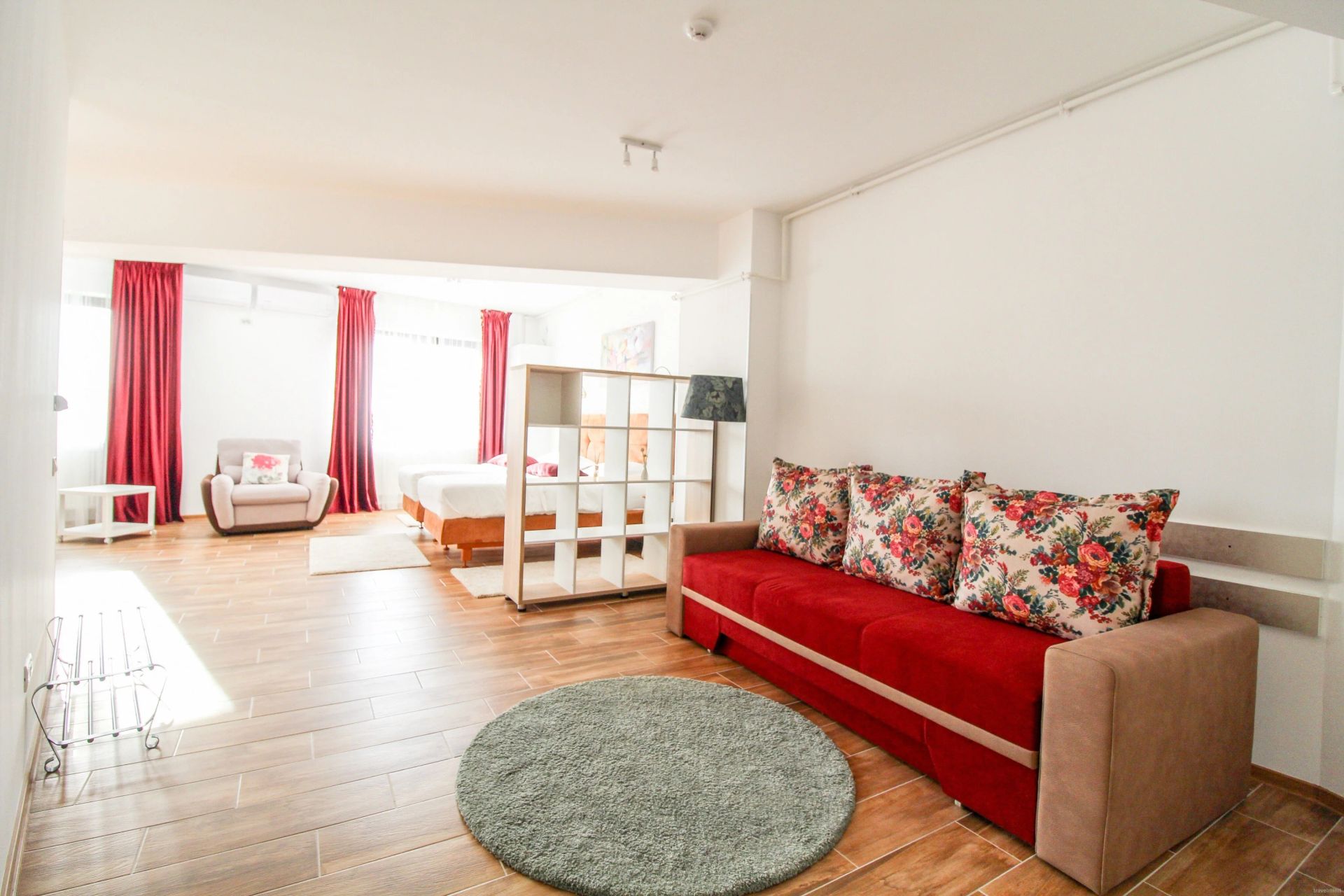
Avenue Parliament București
In vecinatatea Palatului Parlamentului, Centrale ofera poate cele mai mari locuri de cazare din oras. Pozitia exceptional de centrala a dat denumirea locatiei, mai ca ai putea spune ca intreg orasul s-a construit in jurul hotelului. Vederea deosebita catre Fabrica de bere Rahova sau catre Palatul Parlamentului te poarta inapoi in timp in Micul Paris. Hotelul dispune de 21 suite - Junior, Family, Studio si Apartamente, dar si de o sala de conferinte cu o capacitate de 25 de persoane. Camerele au un design modern, facilitatile atat de necesare in zilele noastre si baie proprie. FacilitatiPentru ca tu sa te bucuri de fiecare clipa.Standarde inalte & Eficienta Toate camerele dispun de AC si smart tv, telefon fix, netflix, apa plata din partea casei, cosmetice gratuite, papuci, cada sau cabina de dus si incalzire centrala. Fiecare camera este mobilata cu birou, sifonier, suport bagaj, oglinda, zona de relaxare. Camere doar pentru nefumatori.Hotelul ofera receptie non-stop, serviciu trezire, servicii de spalat si calcat contracost, sala de conferinta si coffee break, presa (ziare, reviste), parcare stradala nesupravegheata si camera de depozitare bagaje. Plata cu cardul este acceptata. Wi-Fi in tot hotelul.
FROM
420 RON / night
Apartament · 3 stars
București, București County · 0.8 km
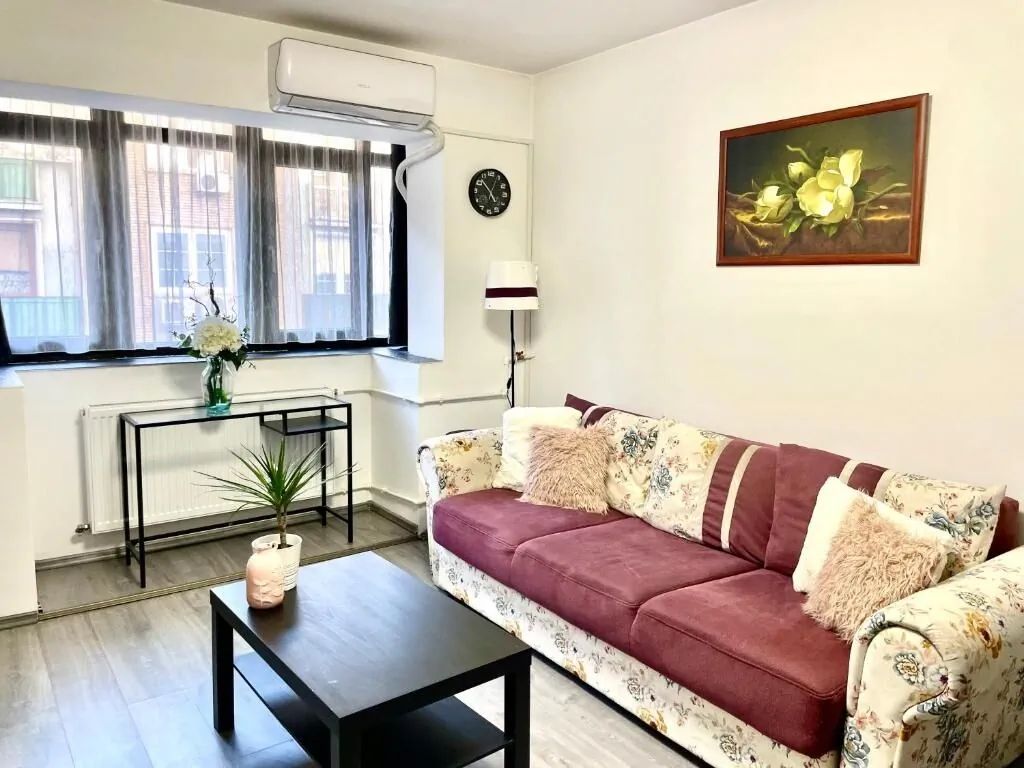
Apartament Tower Old City București
Camere, serviciiApartament Tower Old City București București va pune la dispozitie o camera frumos mobilata si confortabila. Va puteti aduce laptopul deoarece toate camerele dispun de internet. Toate camerele dispun de grup sanitar propriu. Daca doriti sa aflati mai multe detalii despre facilitatile disponibile la Apartament Tower Old City București, respectiv despre amenajarea camerelor, va rugam consultati informatiile de mai jos. LocațiaBiserica Kretzulescu se gaseste la o distanta de 1.2 km , . Servicii de masăPreturile afisate se refera doar la cazare. PlatăPuteti efectua plata cazarii cu/prin: transfer bancar. Rezervarea devine ferma numai dupa efectuarea platii unui avans de 100%. Sosire, programZiua de cazare incepe la ora 15:00. Eliberarea camerei se face la ora 11:00. Personalul de la apartament vorbeste limba: engleză, română.
FROM
230 RON / night
BEFORE YOU HIT THE ROAD
Weather conditions in Bucuresti
Local forecast for Palace of the Parliament, Bucuresti, București

Real-time updated weather data
Much more to explore in this area
Nearby tourist attractions


București, Bucharest
People's Salvation Cathedral (National Cathedral of Romania)
Catedrală ortodoxă din București
0.4 km

Bucuresti, Bucharest
Royal Palace of Bucharest
Situat pe Calea Victoriei nr. 49-53, sector 1, localitatea Bucuresti; construit intre anii 1812-1815 a apartinut marelui logofat Dinicu Golescu, dar a fost...
1.5 km

Bucuresti, Bucharest
Dimitrie Gusti National Village Museum
Situat pe Soseaua Kiseleff nr.28-30, sectorul 1; a fost inaugurat in 1936; expozitia permanenta cuprinde 121 de complexe distincte, totalizand 338 de monumente,...
5.0 km

Bucuresti, Bucharest
Romanian Peasant Museum (Muzeul Național al Țăranului Român)
Situat pe soseaua Kiseleff nr.3, sector 1, localitatea Bucuresti; constructia intregului edificiu a durat 29 de ani, fiind finalizat in 1941; cladirea muzeului...
3.1 km

Bucuresti, Bucharest
Cotroceni Palace
Situat pe bulevardul Geniului nr.2, sector 6, localitatea Bucuresti; in anul 1679, domnitorul Serban Cantacuzino incepe constructia unei manastiri; opera sa a...
2.1 km

Bucuresti, Bucharest
Muzeul Național de Istorie Naturală Grigore Antipa
Situat pe soseaua Kiseleff nr. 1, sector 1, localitatea Bucuresti; fondat in 1834 la initiativa lui Mihalache Ghica; are un bogat patrimoniu format din...
1.3 km

Bucuresti, Bucharest
Palatul Patriarhal
Situat pe aleea Dealul Mitropoliei nr.25, sector 4, localitatea Bucuresti; construit de statul roman, la inceputul secolului al XX-lea, pe locul fostei sali a...
1.0 km

Bucuresti, Bucharest
Muzeul Național de Istorie a României
Situat pe Calea Victoriei nr.12, sector 3, localitatea Bucuresti; adapostit de Palatul Postelor; a fost inaugurat in anul 1970 fiind cel dintai muzeu de...
1.0 km

Bucuresti, Bucharest
Muzeul Național de Artă al României
Situat pe Calea Victoriei nr. 49-53, sector 1; deschis in 1948, in vremea lui Alexandru Ioan Cuza;cladirea era pe atunci locuinta domneasca, in timpul lui...
1.5 km
2.4 km

Bucuresti, Bucharest
Biserica Stavropoleos
Situata pe strada Stavropoleos nr.4, localitatea Bucuresti; poarta hramurile: "Sfintii Arhangheli Mihail si Gavriil", "Sfantul Atanasie cel Mare", "Sfantul...
1.1 km

Bucuresti, Bucharest
Palatul Cantacuzino
Situat pe Calea Victoriei nr.141, sector 1, localitatea Bucuresti; construit intre anii 1898-1900, in stil baroc francez al epocii Ludovic al XVI-lea, pentru...
1.7 km
Cultural life and traditions
Events near Palace of the Parliament
Medieval festivals, traditional fairs, concerts and recommended local activities in Muntenia (Wallachia).

Istorie și Arhitectură Regală

Bucuresti, Jud. București
Zilele Regalității și Patrimoniului Văii Prahovei
Conferințe istorice deschise, tururi tematice de arhitectură regală, proiecții documentare și expoziții foto de epocă.
WHEN
10 - 12 Mai 2026


Gastronomie și Oenologie
Dealu Mare, Jud. București
Festivalul Vinului Prahovean pe Drumul Vinului
Degustări ghidate de Fetească Neagră pe faimosul Drum al Vinului, vizite în crame istorice și întâlniri cu oenologi de top.
WHEN
În fiecare weekend (Septembrie - Octombrie)
Drumeții și Aventură
Masivul Bucegi, Jud. București
Tur Ghidat Montan în Masivul Bucegi
Trasee montane ghidate de salvamontiști către punctele panoramice emblematice și cascade alpine spectaculoase.
WHEN
Zilnic în sezon (Iunie - Octombrie)
On foot, exploration gains depth
Discover the surroundings and local geography
Explore trails, terrain and natural landmarks around Palace of the Parliament.

Guides and practical tips
Useful travel articles
Travel guides, practical tips and itineraries for Muntenia (Wallachia).

Travel guide
Top 5 Atracții Turistice și Trasee Montane în Zona Moieciu - Bran
Descoperă cele mai spectaculoase peisaje carstice, chei adânci și cetăți medievale din imediata apropiere a stațiunii Moieciu.

Travel guide
Ghid de Drumeție: Traseul Moieciu de Sus spre Platoul Bucegi
Un itinerariu montan de o frumusețe rară ce urcă din Valea Băngăleasa spre Poiana Guțanu și crestele maiestuoase ale Bucegilor.

Travel guide
Castelul Bran: Istorie, Legende și Secrete Medievale
Află adevărata poveste a fortăreței medievale din Pasul Bran, reședința de suflet a Reginei Maria a României.
THE JOURNEY STARTS WITH AN IDEA
The next story is on the way.
From the first stop to the last stay, make room for a new Romania.
