

 Tourist attractions
 Muntenia (Wallachia)
 People's Salvation Cathedral (National Cathedral of Romania)
PLACE OF WORSHIP · MUNTENIA (WALLACHIA)
People's Salvation Cathedral (National Cathedral of Romania)

București, București County
Add location to your trip planner.

Practical access information

VISITING HOURS
Mon: 12:00–17:00 · Tue–Sun: 09:00–17:00 (summer until 20:00)

TICKET PRICE
Adults: 45 RON · Students: 11 RON · Seniors: 23 RON · Guided tour included

RECOMMENDED VISIT DURATION
30 - 60 min


Visitor information and guide
 Navigate with Google Maps

ABOUT PEOPLE'S SALVATION CATHEDRAL (NATIONAL CATHEDRAL OF ROMANIA)
Captivating Introduction and Universal Value
On Arsenal Hill, at the intersection of Calea 13 Septembrie and Strada Izvor, in the heart of Bucharest, stands today the most impressive Orthodox cathedral of the contemporary world: the People's Salvation Cathedral, officially also known as the National Cathedral of Romania. Rising to a height of 127 meters to the base of the cross — and 135 meters to its summit — with a length of 126 meters and a volume of over 320,000 cubic meters, the edifice dominates both the urban landscape of the Romanian capital and the global hierarchy of sacred architecture. For the European traveler traversing the continent's great cities in search of testimonies of faith and civilization, the National Cathedral represents an essential landmark: it is the physical expression of a nation that, after more than a century and a half of waiting, fulfilled its dream of having a representative place of worship, at the level of its European ambitions.
This cathedral is not merely an architectural record — it holds the largest church mosaics in the world, the largest officially confirmed Orthodox iconostasis, the largest free-swinging bell in a place of worship, and the tallest Orthodox church building — but also a monument of collective memory. Its double patronal feasts — the Ascension of the Lord, celebrated in Romania as Heroes' Day, and Saint Andrew the Apostle, the spiritual protector of the country — speak of a construction meant to commemorate sacrifice, to express gratitude, and to unite, beneath its vaults, a people dispersed by history among empires. For the foreign visitor, stepping inside this cathedral is equivalent to a journey through time: from the Byzantine heritage of Constantinople, through the Brâncovenesc splendor of Wallachia, to the monumental ambitions of modern and contemporary Western Europe.
Historical Roots and Major European Connections
From Carol I to Ferdinand and the Great Union
The story of the People's Salvation Cathedral begins at the dawn of Romanian modernity, at a moment when Europe was redefining its map and identity. After the War of Independence of 1877-1878 — that Russo-Turkish war in which Romania, alongside Russia, Serbia, Montenegro, and Bulgaria, fought for liberation from the domination of the Ottoman Empire, the same empire that had ruled Constantinople and the Balkans for centuries — the young Kingdom of Romania, proclaimed on March 14, 1881, needed symbols of its sovereignty. King Carol I of Hohenzollern-Sigmaringen, a German prince who had understood the depth of his mission in a Latin country surrounded by empires, intuited that a nation is built not only through institutions and army, but also through monuments capable of speaking about dignity and continuity.
Thus, on May 20, 1882, Carol I submitted to Parliament a bill for the construction of a national cathedral in Bucharest. Law no. 1750, promulgated on June 5, 1884, and published in the Official Gazette, provided for the allocation of an impressive sum for that time: five million gold lei, representing approximately 5% of the state's annual budget, with a completion deadline of five years. This figure acquires European dimensions if we compare it with the investments of the era: the Romanian Athenaeum, inaugurated in 1888, had cost approximately one million gold lei. Among the first intellectuals who supported the idea of a cathedral of the "People's Salvation" as a sign of gratitude to God for liberation from foreign rule were Mihai Eminescu and Ioan Slavici. In 1891, the government led by Lascăr Catargiu, through Minister Florescu, decided to organize an international competition for the building's design — a gesture that placed Romania among the great European nations capable of affirming their identity through monumental architecture.
However, like many ambitious projects of Eastern Europe at the end of the 19th century, the cathedral remained only on paper. The debates regarding the location — Bibescu Square at the foot of Mitropolia Hill, the Unirii Boulevard axis, Carol Park — extended for decades, and the allocated funds were squandered on other investments. Only after the Great Union of 1918, when Greater Romania reunited Transylvania, Bukovina, Bessarabia, and Banat into a single national state, did the idea of a representative cathedral acquire new valences. Metropolitan Miron Cristea — who was to become in 1925 the first Patriarch of the Romanian Orthodox Church, elevated to this dignity through recognition by the Ecumenical Patriarchate of Constantinople, an act inscribed in the history of Orthodox autocephaly alongside those of the Churches of Russia, Serbia, Bulgaria, and Greece — revived the project with vigor. On May 10, 1920, King Ferdinand I issued a royal charter supporting the construction of the cathedral, and on May 11, 1929, in the presence of the members of the Regency, Queen Maria, the government, and the army, Patriarch Miron Cristea consecrated the site at the foot of Mitropolia Hill, in today's Unirii Square, raising a wayside shrine as a symbolic cornerstone.
Among the architects who contributed visions to this unrealized project was also the great Petre Antonescu, academician and leader of the Neo-Romanian movement, who elaborated three successive proposals: in 1909, 1924, and 1942. His projects, preserved in archives, reveal a monumental vision that could have placed Bucharest alongside Vienna, Paris, or Budapest in the gallery of capitals with emblematic cathedrals. However, the coming of the Second World War, the abdication of King Carol II, the royal dictatorship of Ion Antonescu, and then the establishment of the communist regime in 1948, buried this dream for 45 years.
The Century of Silence and Post-Communist Rebirth
The communist period represented for Bucharest and its religious heritage the most traumatic experience in the European history of the 20th century. While in Western Europe Notre-Dame de Paris was being restored or the Sagrada Família in Barcelona was being completed, in the capital of Romania the Nicolae Ceaușescu regime systematically demolished the Uranus neighborhood and the Dealul Spirii area to build the Palace of Parliament — the People's House, the largest administrative building in the world. Among the victims of this "systematization" urban plan were five historic churches, later known as the "crucified churches": Alba Postăvari, Spirea Veche, and Izvorul Tămăduirii were demolished, while the Schitul Maicilor and Mihai Vodă Church were translated — moved on wheels, in a spectacular technical operation, but profoundly painful for collective memory. Spirea Veche Church, on Dealul Spirii, was the place where, in 1848, Bucharest firefighters had gathered to fight fires and, symbolically, to defend the ideals of the Revolution, being considered a monument of civic courage.
After the Revolution of December 1989 — that European turning point that marked the end of the Cold War and the liberation of Eastern Europe from Soviet domination — Patriarch Teoctist revived the national cathedral project, bringing new arguments: honoring the heroes who gave their lives in December 1989 for liberation from dictatorship and atheism, as well as the martyrs from communist prisons. On February 5, 1999, in the presence of President Emil Constantinescu, Prime Minister Radu Vasile, and numerous representatives of public life, Teoctist consecrated the site in Unirii Square and raised a cross as a symbolic cornerstone. Also in that period, Pope John Paul II — who in May 1999 made the first visit of a pope to a majority Orthodox country, in a historic gesture of reconciliation after the Great Schism of 1054 — offered financial aid of 200,000 dollars for the construction of the cathedral, a gesture that linked the Romanian project to European Christian solidarity.
However, the true transformation came with the election in 2007 of Patriarch Daniel — a theologian trained in Bucharest, Geneva, and Strasbourg, with a profoundly European vision of the Church's mission — and with the decision of the state authorities to officially support the project. Through Emergency Ordinance no. 19 of March 17, 2005, the Romanian Government granted the Patriarchate a plot of 11 hectares on Arsenal Hill, considered the highest point of Bucharest, and through Law no. 376 of December 28, 2007, Parliament approved the construction of the "People's Salvation Cathedral" Architectural Ensemble. The location was laden with history: there had been the old Dealul Spirii, witness to the Revolution of 1848, the place where five churches had been "crucified" for the megalomaniacal glory of a dictator. The Patriarchate accepted this place as a "moral reparation" and "a light of Resurrection" for the vanished churches. On November 29, 2007, Patriarch Daniel officiated the laying of the cornerstone and the definitive consecration of the site, and in December 2010 the actual construction began.
In Dialogue with Europe's Great Cathedrals
To fully understand the universal value of the National Cathedral, we must place it in the context of the great European architectural tradition. In the 19th century, Europe experienced a vast Neo-Byzantine revival movement, a movement that sought to revive the glory of Constantinopolitan architecture — that unique synthesis between Roman heritage, Eastern influences, and Orthodox spirituality. This movement, begun in the 1840s in Western Europe and reaching its apogee in the last quarter of the century, gave birth to masterpieces such as the Basilica of Sacré-Cœur in Paris (1875-1914), a votive monument erected after France's defeat in the Franco-Prussian War and the Commune of 1871; Westminster Cathedral in London (1895-1903), the largest Catholic cathedral in Byzantine style in Great Britain, the work of architect John Francis Bentley; the Alexander Nevsky Cathedral in Sofia (1882-1912), erected as a votive offering of gratitude for the liberation of Bulgaria from Ottoman domination, exactly in the same period when Carol I proposed the Romanian cathedral; and the Cathedral of Saint Sava in Belgrade, the largest Orthodox church in the former Yugoslavia, whose Neo-Byzantine style recalls Hagia Sophia.
The People's Salvation Cathedral inscribes itself in this tradition, but surpasses it through ambition and synthesis. While the Cathedral of Christ the Saviour in Moscow — destroyed by Stalin in 1931 and rebuilt between 1994-2000 as a symbol of post-Soviet Russian rebirth — reaches 103 meters, and Saint Isaac's Cathedral in Saint Petersburg 101 meters, the Bucharest edifice surpasses them all, becoming the tallest Orthodox cathedral in the world. The comparison with the Sagrada Família in Barcelona — Antoni Gaudí's masterpiece, still under construction after more than a century — is inevitable: both represent a nation's dream of expressing its identity through a monumental cathedral, transcending the boundaries of the functional to reach the sacred. If the Sagrada Família blends Gothic with Art Nouveau in a unique organic vision, the National Cathedral blends Neo-Byzantine with Neo-Romanian, in a synthesis that speaks of the specificity of a culture at the intersection between East and West.
Not least, the cathedral bears the imprint of European ecumenical dialogue. Pope Francis's visit on May 31, 2019 — the first visit of a pope to Bucharest after the historic one of John Paul II in 1999 — was a moment of Christian reconciliation, in which the sovereign pontiff recited the "Our Father" alongside Patriarch Daniel, beneath the still unfinished vaults of the cathedral. The presence of Ecumenical Patriarch Bartholomew I of Constantinople at the consecration of the altar in 2018 and at the consecration of the mosaic painting in 2025 — his eleventh visit to Romania — underlines the fraternal bonds between the Ecumenical Patriarchate, "first among equals" in the Orthodox world, and the Romanian Patriarchate, the youngest of the great autocephalous patriarchates, elevated to this rank in 1925. Thus, the National Cathedral becomes a meeting point between the Byzantine tradition of Constantinople, the Slavic heritage of Moscow and Kiev, the Balkan specificity of Sofia and Belgrade, and the European aspirations of a Romania that is a member of the European Union.
Architectural Masterpiece and Artistic Heritage
Stylistic Synthesis: Byzantine, Brâncovenesc, and Western
The architecture of the People's Salvation Cathedral is, in the official words of the Patriarchate, "a synthesis between tradition and contemporaneity." Designed by architect Constantin Amâiei and his team from the firm Vanel Exim SRL from Bacău — winner of the design competition in July 2010, alongside the contribution of architect Nicolae Vlădescu — the cathedral harmonizes architectural elements from all the historical provinces of Romania, creating a visual language that speaks of the unity in diversity of a European nation.
The building's plan follows the Byzantine tradition of the Latin cross, with the main arm longer, symbolizing the pilgrimage of the faithful toward the Kingdom of God, represented by the iconostasis. The cathedral's eight turrets illustrate this synthesis: the main turret, the Pantocrator, rises to 120 meters to the base of the cross and is flanked by four smaller turrets representing the four Evangelists — Matthew, Mark, Luke, and John. To the west, the bell-turret is dedicated to the Mother of God, and the two adjacent turrets represent Saints Andrew and Philip the Apostles, those who began the Christianization of the Geto-Daco-Roman Romanian people in the first centuries of the Christian era. The vertical elements — Moldavian ocnițe windows, Brâncovenesc porches with trilobed arches and short, thick Byzantine-type columns, slender Transylvanian towers — intertwine with elements of monumentality taken from Western cathedrals, taking into account the fact that a large part of the Romanian diaspora is today in the West.
The main facade, with its impressive porch supported by Corinthian columns whose capitals present a Neo-Romanian typology with Brâncovenesc acanthus leaves, recalls the portal of Antim Monastery and the Cașin Church in Bucharest, masterpieces of Romanian sacred architecture from the 17th-18th centuries. The acanthus, the spiny leaf, bearer of the symbol of undefiled earth and eternal life, is also found in the scotia at the base of the columns, underlining the durability of the construction from the bottom up. The turret covering is made of gilded copper, a material that, under the sun's light, transforms the cathedral into a hearth of light visible from tens of kilometers, dominating the panorama of Bucharest alongside the Palace of Parliament. The load-bearing structure is one of the most solid in Europe: a four-meter-thick raft foundation, into which 25,000 cubic meters of concrete and 5,000 tons of reinforcement entered, ensures resistance to earthquakes of up to 8-8.5 degrees on the Richter scale, an essential concern in a seismic zone such as Vrancea, which has affected throughout history both Bucharest and the great cities of the Balkans.
Beneath the altar lies a patriarchal necropolis with approximately 27 crypts, inspired by the model of Saint Peter's Basilica in the Vatican, where popes and bishops are buried in the basement of the sacred edifice. In the basement perimeter there are also 42 additional crypts, four anti-nuclear bunkers — a measure imposed by current legislation, but also a memory of the Cold War period — and a museum of Christianity. The extended underground space, symbolically named "Saint Andrew the Apostle's Urban Cave," has a volume of 87,505 cubic meters and can accommodate 6,900 people, being destined for cultural, catechetical, and social activities. The main entrance is through 27 massive bronze doors, each weighing approximately 800 kilograms, on which the twelve apostles are represented, with Saint Andrew in the immediate vicinity of the Mother of God, reflecting his status as protector of Romania and the cathedral's second patronal feast.
The Mosaic — A Cathedral of Light and Stone
The interior of the National Cathedral is a world apart, a universe of light, color, and spirituality that redefines the concept of "church decoration." The mosaic painting covers approximately 25,000 square meters — the largest surface of church mosaic in the world — transforming every wall, every vault, and every apse into an immense three-dimensional icon. This technical choice is not accidental: the mosaic, in the Byzantine tradition, has the potential to withstand the test of time better than any other type of sacred painting, being waterproof, fire-resistant, and capable of preserving the brilliance of colors for centuries, as demonstrated by the mosaics of Ravenna, San Marco in Venice, or Hagia Sophia in Constantinople.
The materials used are among the most prestigious in the world: Murano glass, colored-in-the-mass stone from Carrara and Pietrasanta, all purchased from the Italian firm Orsoni of Venice — the same supplier that restored Saint Mark's Basilica in Venice, the Dome in Florence, the Cathedral of Monreale (Palermo), and contributed to the decoration of the Sagrada Família in Barcelona. Over 350 million tesserae (small pieces) were used, in over 2,500 shades, by a team of approximately 200-220 mosaic specialists, coordinated by church painter Daniel Codrescu. Each square meter contains approximately 10,000-16,000 tesserae, and the creation of a saint's portrait 5.40 meters high can take entire weeks of meticulous work. The 24-karat gold leaf — white, yellow, and copper gold — is melted, cut, and glued onto the glass pieces in Venetian workshops, then transported by special transports to Romania.
The iconographic program, conceived by Daniel Codrescu together with Patriarch Daniel, follows a profound theological logic: it illustrates the historical basis of the Orthodox Church, from the Church of the apostolic era (represented by the twelve apostles) and the Church of the patristic era (represented by the holy fathers from the Greek, Syriac, Latin, and Slavic Churches), to the old and contemporary Romanian Orthodox Church. In addition to the saints of the universal Church, the cathedral's walls depict the great saints of the Romanian nation — from Saint Andrew and Saints Constantine and Helena the Emperors, to Stephen the Great, Daniel the Hesychast, the saints martyred in communist prisons such as Father Stăniloae, Sofian, Cleopa, Partenie Gherasim, and the new Romanian saints canonized in 2024-2025. The main dome houses a monumental representation of Christ Pantocrator (Almighty), with a diameter of 12 meters, the Savior's face measuring 4.5 meters and being created by painter Alina Codrescu with 2.4 tons of mosaic pieces. In the altar apse, above the iconostasis, watches over the Mother of God Platytera, with a height of 16 meters — one of the largest representations of the Mother of God in the Orthodox world.
The Iconostasis, the Bells, and Sacred Symbolism
The iconostasis — the screen that separates the nave from the altar in the Orthodox tradition, symbolizing the boundary between the visible and invisible worlds, between earth and heaven — is the largest in the world: 23.8 meters long, 17.1 meters high, a surface of 406.98 square meters, a record confirmed by the Academy of World Records. Made entirely in mosaic technique, under the direction of Daniel Codrescu, it comprises 45 icons arranged in four registers, from the prophets of the Old Testament to the holy apostles, festal scenes, and the great imperial icons. The part facing the altar, where hierarchs and clergy officiate, is also painted in mosaic, and above it rises the Cross with the supplications — the Mother of God and Saint John the Evangelist — which conclude the composition.
The bell-turret on the western facade houses six bells cast in Innsbruck, Austria, by the renowned Grassmayr foundry — the same firm that made bells for cathedrals throughout Central Europe. The largest of them weighs 25-27 tons, has a diameter of 3.35 meters, and is the largest free-swinging bell in Europe, perhaps even in the world. The six bells, with a total weight of 33 tons, were consecrated on September 3, 2018, and mounted the next day at a height of 60 meters; their sound can be heard within a radius of 15 kilometers. On each bell is the coat of arms of the Romanian Patriarchate, the effigy of Patriarch Daniel, and the patriarchal cross, as well as the inscription "The Blessing of Patriarch Daniel of Romania for the National Cathedral – Centenary 1918-2018." The bronze used contains 78% electrolytic copper and 22% electrolytic tin, and the casting of the first bell, in November 2016, involved three generations of metallurgical engineers.
The interior lighting is provided by monumental solid brass chandeliers, the largest — mounted in the Pantocrator turret — having a diameter of 7 meters. In April 2025 the metal cross of the main turret was mounted: a structure 7 meters high and approximately 7 tons in weight, raised to an altitude of 130 meters with the help of a giant 600-ton crane, in an operation that took a year and a half of planning and which was perceived as "the final of the major works and the fulfillment of a historical promise made to the Romanian people."
Legends, Personalities, and Turning Points
Founders, Patriarchs, and Statesmen
The history of the National Cathedral is inseparable from that of the personalities who made it possible over a century and a half. King Carol I remains the visionary initiator, that German sovereign who understood that an independent Romania deserved a sacred symbol at the height of its European destiny. The 1884 law, with its five million gold lei, testifies to the ambition of a young state that wanted to place itself among the great nations of the continent. After him, King Ferdinand I and Queen Maria — whose "Greater Romania" gave full meaning to the project — supported through the 1920 charter the idea of a cathedral that would spiritually unite the reunited provinces. Patriarch Miron Cristea, the first patriarch of an autocephalous Romanian Orthodox Church elevated to patriarchal rank in 1925, was the spiritual architect of this endeavor in the interwar period, consecrating in 1929 the site in Unirii Square at a ceremony attended by Queen Maria herself.
After 45 years of silence imposed by the communist regime — those years when Western Europe was rebuilding its war-destroyed cathedrals, while in the East of the continent churches were demolished or left to decay — Patriarch Teoctist was the one who rekindled the flame. In 1995 he launched a public appeal for the "salvation of the nation," and on February 5, 1999, he consecrated the site in Unirii Square and raised the stone cross, in a gesture that linked the 1989 Revolution to national aspirations. However, the true providential founder of the cathedral is Patriarch Daniel, elected in 2007 and enthroned on September 30, 2007. A theologian with solid academic training — doctor in theology in Bucharest, with studies in Geneva and Strasbourg — Daniel understood that the Romanian Orthodox Church, the largest autocephalous church in the world by number of faithful after the Russian one, deserved a cathedral to represent its dignity. Under his pastoral leadership, the project came to life: he coordinated the colossal effort of mobilizing resources, negotiated with state authorities, attracted donations from the country and the diaspora, and transformed the construction site into a symbol of national unity. His words spoken at the consecration of the altar (2018) and at the consecration of the painting (2025) underline the missionary dimension of the cathedral: not just a monument, but "a national pedagogy about order, patience, and faith in the future."
Among the turning points is also Pope Francis's visit of May 31, 2019, when the sovereign pontiff recited the "Our Father" in Romanian and Latin beneath the cathedral's vaults, in a gesture of reconciliation between the two great Christian traditions of Europe, after almost a thousand years from the Great Schism of 1054. The presence of Ecumenical Patriarch Bartholomew I — both in 2018 and in 2025 — marks the recognition by the "Mother of Churches" of the dignity of the Romanian Patriarchate and the universal value of this achievement. On October 26, 2025, on the feast of Saint Great Martyr Demetrius, the Fountain of Myrrh, the consecration service of the mosaic painting gathered 10,000 pilgrims inside and over 100,000 outside, alongside 2,500 official guests: President Nicușor Dan with his family, Prime Minister Ilie Bolojan, the presidents of Parliament, former presidents Emil Constantinescu and Traian Băsescu, Custodian of the Crown Princess Margareta and Prince Radu, as well as the President of the Republic of Moldova, Maia Sandu. The event marked the Centenary of the Romanian Patriarchate — 100 years since the elevation of the Romanian Orthodox Church to the rank of Patriarchate in 1925, and 140 years since the recognition of autocephaly in 1885 — thus crowning a national ideal 144 years old, from 1881 to 2025.
The Cathedral and European Memory
The People's Salvation Cathedral is not merely a Romanian religious monument, but a chapter in the great story of Europe. Its location on Arsenal Hill, in the immediate vicinity of the Palace of Parliament — the former People's House, symbol of communist megalomania and of the largest civil building in the world — creates a visual dialogue between two eras: one that destroyed churches to build temples of secularized power, and another that raised a cathedral as a "moral reparation" and "light of Resurrection" for the five "crucified" churches. This juxtaposition transforms the area into a space of European memory, where the visitor can contemplate the consequences of ideological extremisms and, at the same time, the regenerative power of faith and culture.
The connection with Saint Andrew the Apostle — the First-Called, brother of Peter, who, according to Church tradition, would have preached in Scythia, the territory of later Dobruja and Wallachia — places the cathedral in a broader pilgrimage, which links Rome (where Andrew was martyred), Patras in Greece, Kiev, and the Black Sea. This apostolic and ecumenical dimension makes the National Cathedral not merely a place of worship for Romanians, but a meeting point for Christians from all over Europe, Orthodox and Catholic alike, all in search of the same common root. The presence of mosaics depicting saints from all Christian traditions — Greek, Latin, Slavic, Syriac — and of the confessor saints from communist prisons, witnesses of spiritual resistance in the face of 20th-century totalitarianism, confers upon the edifice a universal value, beyond confessional and national boundaries.
Practical Visiting Guide and Today's Tourist Experience
Schedule, Access, and Visiting Rules
Visiting the National Cathedral is, in principle, free and open to all — believers and tourists alike — being one of the most visited religious objectives in Bucharest. The visiting schedule varies according to the time of year and the progress of interior works: during feast periods (Christmas, Easter, the feast of Saint Andrew on November 30, National Day on December 1), the cathedral is open daily, usually between 9:00-17:00 or 8:00-21:00, while in ordinary periods it may be temporarily closed for the continuation of mosaic painting and installation works. The regular liturgical services — Matins, the Divine Liturgy, Vespers — continue to be officiated at the historic Patriarchal Cathedral "Saints Constantine and Helena the Emperors" on Patriarch's Hill (Mitropolia Hill) and at the National Cathedral's Paraklesion, located in the immediate vicinity. It is essential that visitors consult the updated schedule on the official website catedrala-nationala.ro or at the Romanian Patriarchate before visiting, because access may be restricted in certain intervals.
The dress code requires decent attire, covering shoulders and knees, for both men and women; women are encouraged to cover their heads, according to Orthodox church tradition. Silence is required and the atmosphere of recollection must be respected; photography may be permitted in certain areas, but it is advisable to check the specific rules on site and to respect the indications of church staff. Access is on foot, via the monumental stairs of the esplanade, or by elevator for people with disabilities. The basement houses a museum of Christianity, spaces for conferences, and a library, and in the future the opening of exhibition halls and a tourist café is planned.
In the Heart of Bucharest — Urban Context and Routes
The National Cathedral is located at the intersection of Calea 13 Septembrie and Strada Izvor, in Sector 5, just a few steps from the Palace of Parliament and Izvor Park. Access by public transport is facilitated by the Izvor metro station (lines M1 and M3), numerous bus lines (123, 385, 63, 104, 122, 226, 196, 205), and trolleybus lines (63, 69). Starting July 10, 2026, the cathedral was included in the Bucharest City Tour tourist bus route, with a dedicated stop "National Cathedral of Romania," alongside the Palace of Parliament, Unirii Square, Victoriei Square, the Triumphal Arch, and the Village Museum. For those visiting by car, there is an underground parking lot with approximately 400-500 spaces within the ensemble.
The cathedral visiting experience can be complemented with a walk on Mitropolia Hill, ten minutes on foot, where the historic Patriarchal Cathedral "Saints Constantine and Helena the Emperors" (1654-1658), the Patriarchal Palace, and the Brâncoveanu Bell Tower are located — an ensemble that offers a perspective on the spiritual continuity of Bucharest. Also, visiting the Palace of Parliament, a few steps away, allows understanding the historical context of the area and the urban transformations of the communist period. For a complete experience, participation in a Sunday morning service is recommended — when the atmosphere is particularly solemn, and the sun's light penetrates through the stained glass and reflects in the gold of the mosaics — or visiting during the winter feast period, when the cathedral is open daily and hosts religious music concerts and guided tours.
For the European traveler seeking to understand the essence of a nation through its sacred monuments, the People's Salvation Cathedral offers a profound experience: here, beneath the dome of the Pantocrator that dominates the sky of Bucharest, history meets the present, the Byzantine tradition dialogues with modernity, and individual prayer unites with the collective memory of a people who, after centuries of waiting under foreign empires and totalitarian regimes, has finally found its architectural voice at the level of its European aspirations. It is a place where every visitor — regardless of confession, nationality, or age — can feel, for a moment, that they are part of something greater than themselves: of the great story of Christian Europe, in continuous transformation and search for the sacred.
Media gallery
Discover People's Salvation Cathedral (National Cathedral of Romania) in pictures

1 photos · Architecture, courtyards and captivating details

Image source: Wikimedia Commons · Public domain photos · Free license
STAY A FEW DAYS, DISCOVER THE MAGIC
Stays near People's Salvation Cathedral (National Cathedral of Romania)

Casă de Vacanță · 3 stars

București, București County · 0.3 km
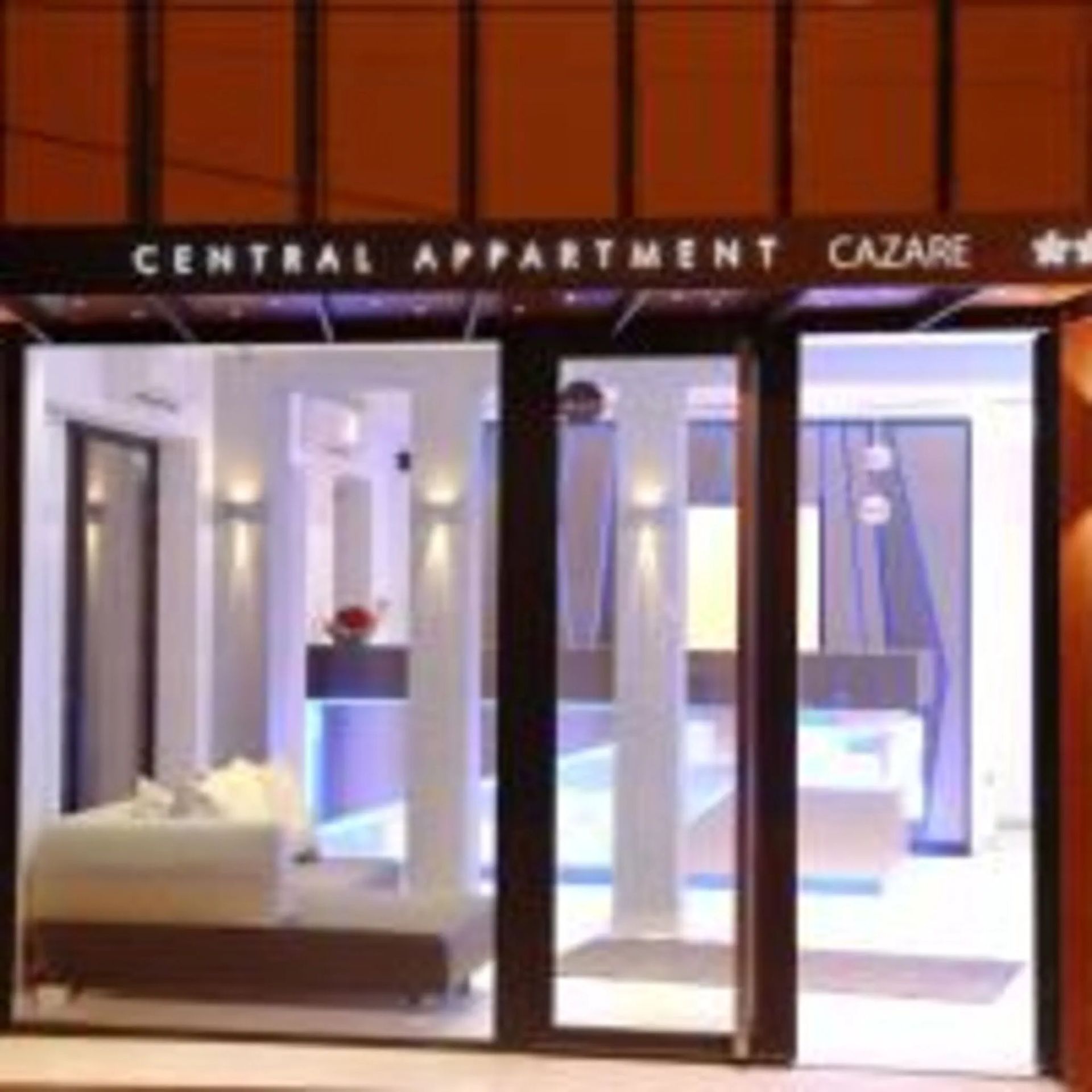
Parliament Square București
Hotel Parliament Square is making the check-in formalities using self check-in. Parliament Square is set in the 5th district of Bucharest, 700 metres from Palace of the Parliament and 1.3 km from National Opera. It features free WiFi throughout the property. Servicii de masăTarifele afisate nu contin masa. PlatăModalitati de plata acceptate: transfer bancar, card de vacanță, card bancar, card de vacanță, avans travelminit, voucher travelminit. Pentru finalizarea rezervarii se achita un avans de 100%. Sosire, programZiua de cazare incepe la ora 14:00. Eliberarea camerei se face la ora 12:00. Limbi straine vorbite la receptie: engleză, română.
FROM
280 RON / night

Apartament · 3 stars
București, București County · 0.4 km
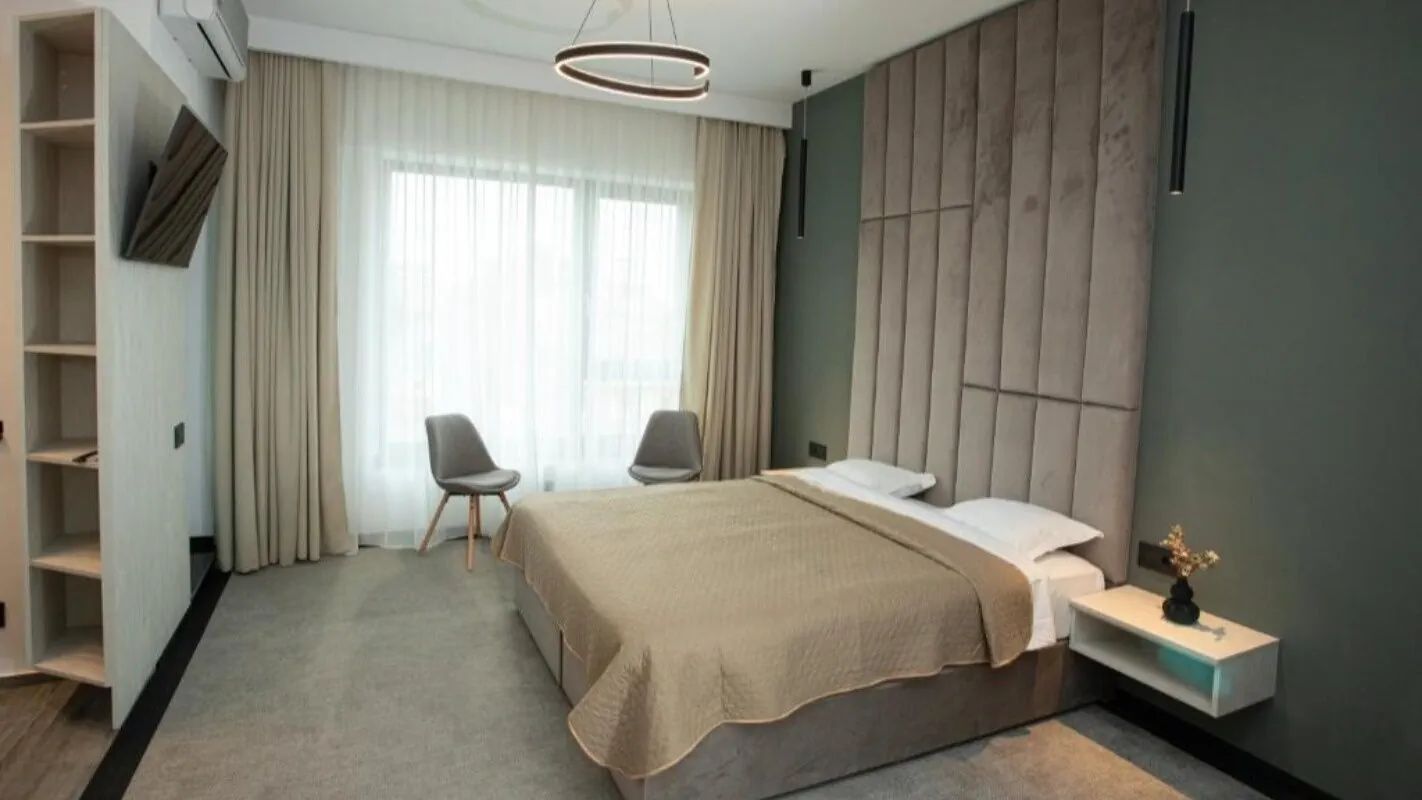
Parliament House București
Comfortable Living Space: Parliament House in Bucharest offers a spacious apartment with a balcony, private bathroom, and modern amenities. Guests enjoy free WiFi, air-conditioning, and a fully equipped kitchen. Convenient Facilities: The property provides paid on-site private parking, a work desk, and a dining table. Additional features include bathrobes, a coffee machine, and a TV. Prime Location: Located less than 1 km from the Palace of the Parliament and 1.9 km from Carol Park, Parliament House is an 18-minute walk to the Romanian National Opera. Băneasa Airport is 10 km away.
FROM
230 RON / night
Hotel · 4 stars
București, București County · 0.6 km
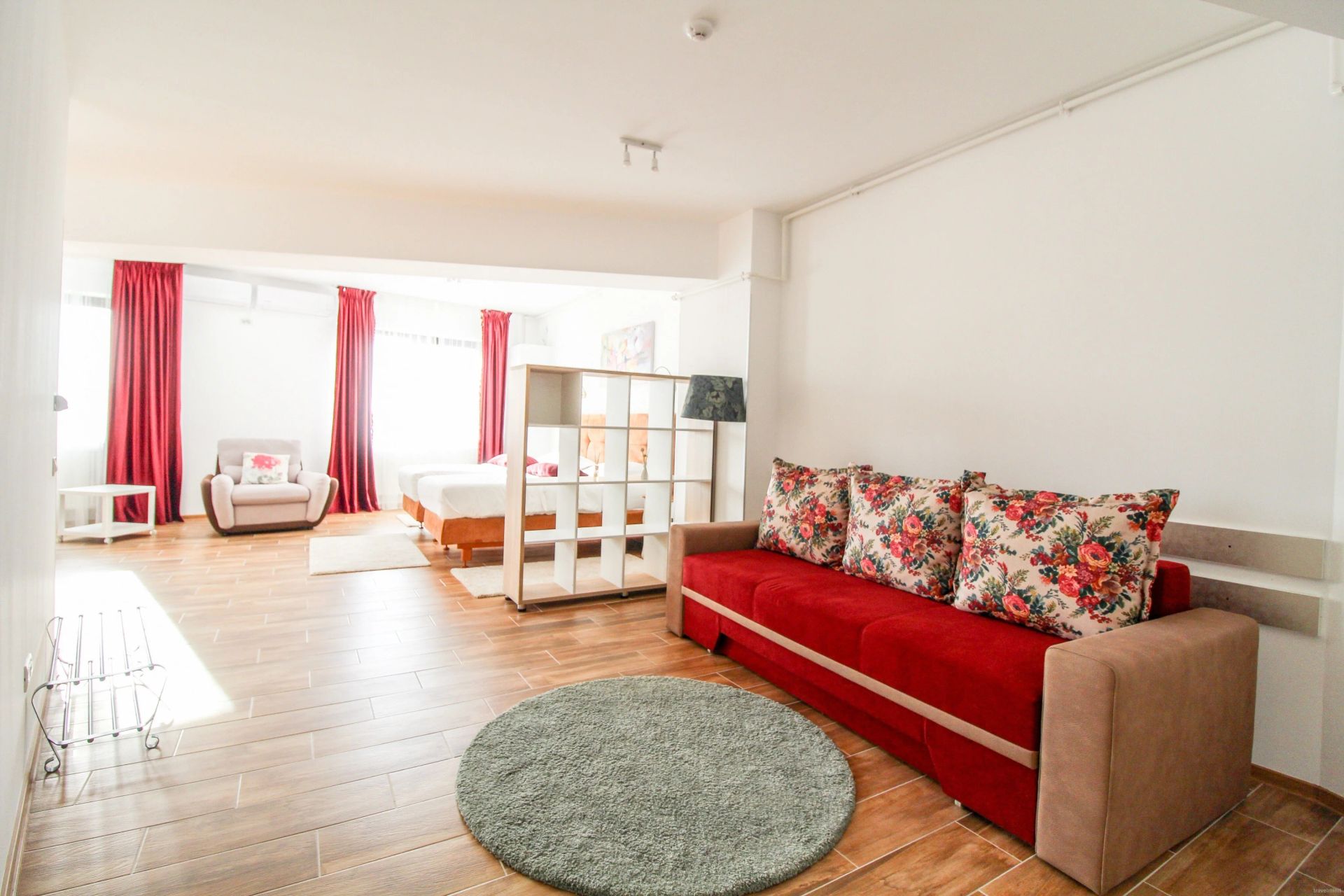
Avenue Parliament București
In vecinatatea Palatului Parlamentului, Centrale ofera poate cele mai mari locuri de cazare din oras. Pozitia exceptional de centrala a dat denumirea locatiei, mai ca ai putea spune ca intreg orasul s-a construit in jurul hotelului. Vederea deosebita catre Fabrica de bere Rahova sau catre Palatul Parlamentului te poarta inapoi in timp in Micul Paris. Hotelul dispune de 21 suite - Junior, Family, Studio si Apartamente, dar si de o sala de conferinte cu o capacitate de 25 de persoane. Camerele au un design modern, facilitatile atat de necesare in zilele noastre si baie proprie. FacilitatiPentru ca tu sa te bucuri de fiecare clipa.Standarde inalte & Eficienta Toate camerele dispun de AC si smart tv, telefon fix, netflix, apa plata din partea casei, cosmetice gratuite, papuci, cada sau cabina de dus si incalzire centrala. Fiecare camera este mobilata cu birou, sifonier, suport bagaj, oglinda, zona de relaxare. Camere doar pentru nefumatori.Hotelul ofera receptie non-stop, serviciu trezire, servicii de spalat si calcat contracost, sala de conferinta si coffee break, presa (ziare, reviste), parcare stradala nesupravegheata si camera de depozitare bagaje. Plata cu cardul este acceptata. Wi-Fi in tot hotelul.
FROM
420 RON / night
Casă de Vacanță · 3 stars
București, București County · 0.9 km
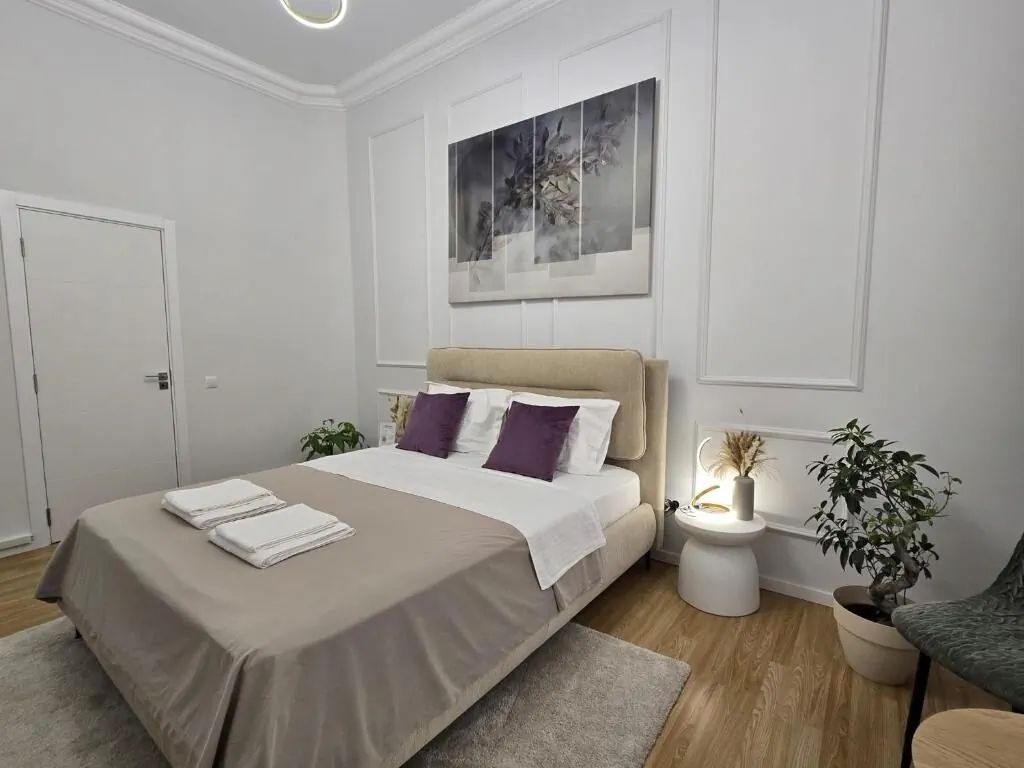
Luxury House - Private Garden & Parking - Old Town București
O bijuterie rară în centrul orașului!Acest apartament oferă parcare privată în curte, chiar în fața casei, pentru până la trei mașini — un avantaj exclusiv și rar în zona centrală. Bucură-te de confortul și liniștea de a avea propriul loc de parcare sigur, la doar câțiva pași de ușa ta.ZEN Deluxe Bucharest — Spațios, Privat și în cea mai bună locație Apartamente mari și moderne pentru 2–6 persoane Parcarea privată — o raritate în centrul Bucureștiului Bucătării și livinguri complet echipate Curte exterioară privată cu zonă de relaxare Design ultra-curat, elegant, cu lenjerii premium Perfect pentru familii, călătorii de afaceri sau grupuriDacă ești în căutarea unui apartament spațios, sigur și complet privat chiar în centrul Bucureștiului, ZEN Deluxe este alegerea perfectă. Oferim:- Un studio deluxe pentru cupluri- Un apartament cu un dormitor, zonă de living și masă de dining- Un apartament mare cu două dormitoare pentru familii sau grupuri de până la 6 persoane Locație liniștită, la câteva minute de Centrul Vechi, Palatul Parlamentului, Piața Unirii și principalele atracții Clădire complet renovată, cu decor modern și elegant Standard profesional de curățenie și igienă Wi-Fi de mare viteză, TV inteligent, espressor de cafea, bucătărie completă, saltele de lux Confort, intimitate și valoare mult mai bune decât o cameră de hotel. ZEN Deluxe este creat pentru oaspeții care apreciază spațiul, liniștea, confortul și accesul facil la tot ce are de oferit Bucureștiul.
FROM
280 RON / night
Apartament · 3 stars
București, București County · 1.0 km
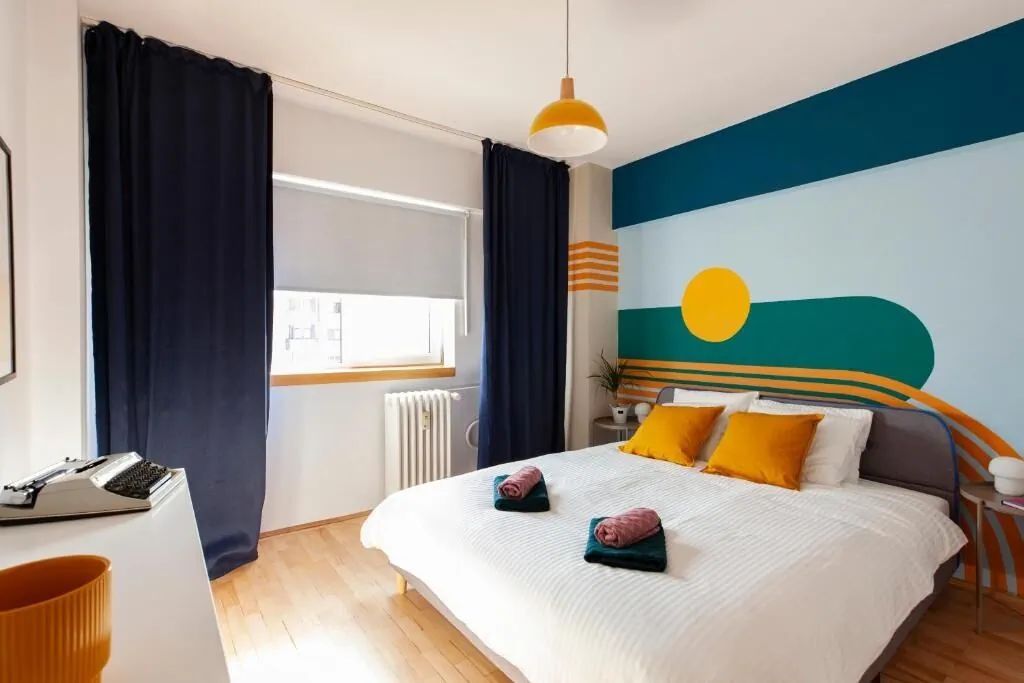
Apartament 13 Septembrie București
Apartamentul 13 Septembrie este recent renovat intr-un stil retro, colorat si luminos, si este amplasat la distanta de mers pe jos de noua cladire de birouri ONE, Spitalul Burghele, Hotelul Marriott si Palatul Parlamentului. Bucataria este complet utilata si este dotata, pe langa vesela si aparatele electrocasnice obisnuite, si cu dozator cu filtru de apa si esspresor de cafea.
FROM
230 RON / night
Apartament · 3 stars
București, București County · 1.0 km
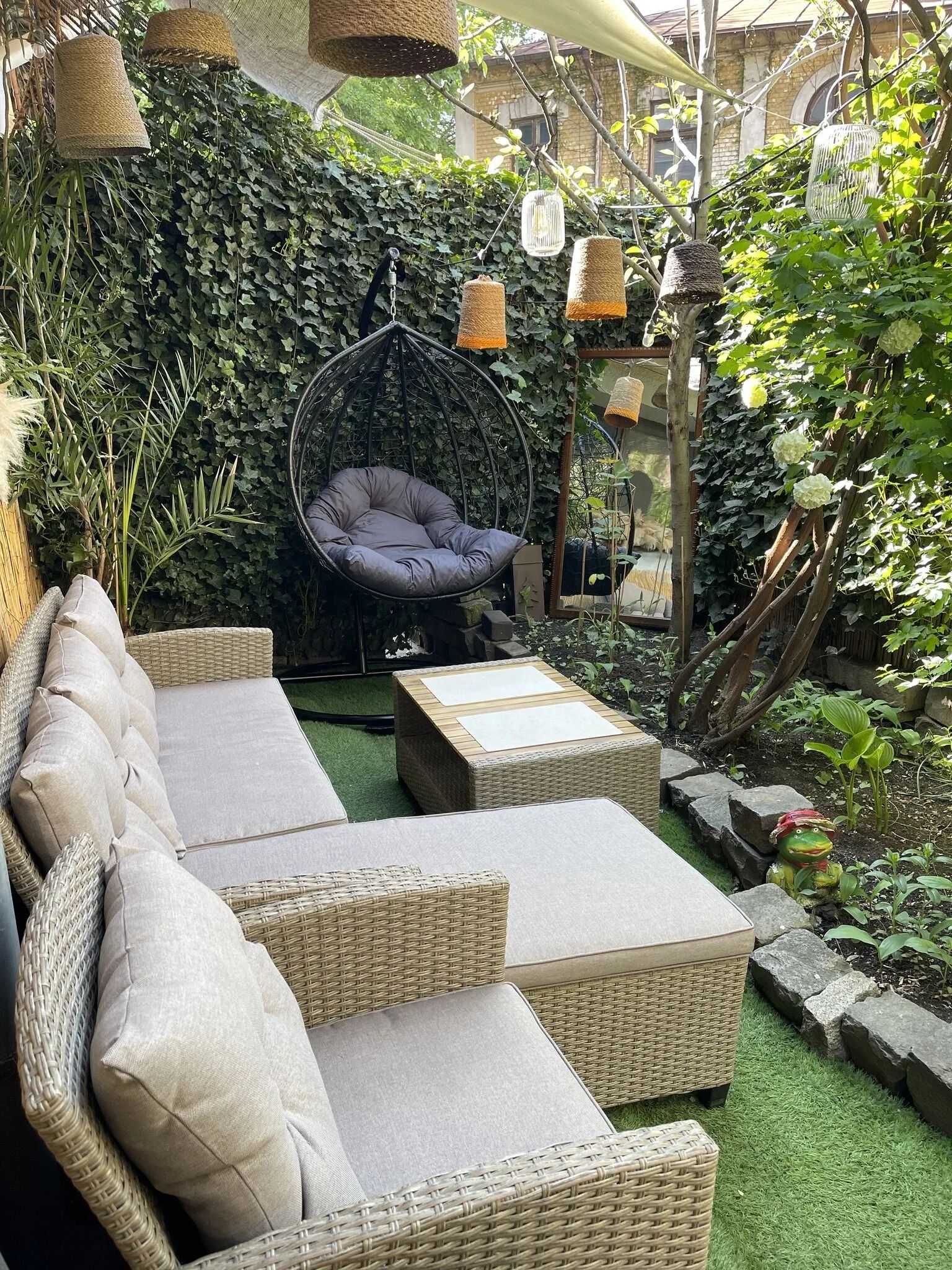
Apartament City Garden București
Situat la 500 de metri de Opera Națională Română, Old City Center Apartment with Shared Yard oferă o cameră de zi cu TV cu ecran plat. Proprietatea are vedere la grădină și se află la 500 m de Grădinile Cișmigiu și la 800 m de Palatul Parlamentului. Deschizându-se pe o terasă, apartamentul cu aer condiționat este format din 1 dormitor. În curte este disponibilă parcare privată gratuită. Muzeul Național de Artă al României este la 1 km de Old City Center Apartment with Shared Yard, iar Piața Revoluției este la 1,1 km de proprietate.Întotdeauna gata să vă faceți șederea cât mai plăcută!Fiind in centrul vechi al orasului Bucuresti, proprietatea se afla intr-un cartier de top.
FROM
230 RON / night
BEFORE YOU HIT THE ROAD
Weather conditions in București
Local forecast for People's Salvation Cathedral (National Cathedral of Romania), București, București

Real-time updated weather data
Much more to explore in this area
Nearby tourist attractions


Bucuresti, Bucharest
Palace of the Parliament
Situat pe strada Izvor nr.3, sector 5, localitatea Bucuresti; in perioada comunista a fost cunoscut sub numele de "Casa Poporului"; considerata una dintre cele...
0.4 km

Bucuresti, Bucharest
Royal Palace of Bucharest
Situat pe Calea Victoriei nr. 49-53, sector 1, localitatea Bucuresti; construit intre anii 1812-1815 a apartinut marelui logofat Dinicu Golescu, dar a fost...
1.8 km

Bucuresti, Bucharest
Dimitrie Gusti National Village Museum
Situat pe Soseaua Kiseleff nr.28-30, sectorul 1; a fost inaugurat in 1936; expozitia permanenta cuprinde 121 de complexe distincte, totalizand 338 de monumente,...
5.1 km

Bucuresti, Bucharest
Romanian Peasant Museum (Muzeul Național al Țăranului Român)
Situat pe soseaua Kiseleff nr.3, sector 1, localitatea Bucuresti; constructia intregului edificiu a durat 29 de ani, fiind finalizat in 1941; cladirea muzeului...
3.3 km

Bucuresti, Bucharest
Cotroceni Palace
Situat pe bulevardul Geniului nr.2, sector 6, localitatea Bucuresti; in anul 1679, domnitorul Serban Cantacuzino incepe constructia unei manastiri; opera sa a...
1.9 km

Bucuresti, Bucharest
Muzeul Național de Istorie Naturală Grigore Antipa
Situat pe soseaua Kiseleff nr. 1, sector 1, localitatea Bucuresti; fondat in 1834 la initiativa lui Mihalache Ghica; are un bogat patrimoniu format din...
1.6 km

Bucuresti, Bucharest
Palatul Patriarhal
Situat pe aleea Dealul Mitropoliei nr.25, sector 4, localitatea Bucuresti; construit de statul roman, la inceputul secolului al XX-lea, pe locul fostei sali a...
1.3 km

Bucuresti, Bucharest
Muzeul Național de Istorie a României
Situat pe Calea Victoriei nr.12, sector 3, localitatea Bucuresti; adapostit de Palatul Postelor; a fost inaugurat in anul 1970 fiind cel dintai muzeu de...
1.3 km

Bucuresti, Bucharest
Muzeul Național de Artă al României
Situat pe Calea Victoriei nr. 49-53, sector 1; deschis in 1948, in vremea lui Alexandru Ioan Cuza;cladirea era pe atunci locuinta domneasca, in timpul lui...
1.8 km

2.6 km

Bucuresti, Bucharest
Biserica Stavropoleos
Situata pe strada Stavropoleos nr.4, localitatea Bucuresti; poarta hramurile: "Sfintii Arhangheli Mihail si Gavriil", "Sfantul Atanasie cel Mare", "Sfantul...
1.5 km

Bucuresti, Bucharest
Palatul Cantacuzino
Situat pe Calea Victoriei nr.141, sector 1, localitatea Bucuresti; construit intre anii 1898-1900, in stil baroc francez al epocii Ludovic al XVI-lea, pentru...
2.0 km
Cultural life and traditions
Events near People's Salvation Cathedral (National Cathedral of Romania)
Medieval festivals, traditional fairs, concerts and recommended local activities in Muntenia (Wallachia).

Istorie și Arhitectură Regală

București, Jud. București
Zilele Regalității și Patrimoniului Văii Prahovei
Conferințe istorice deschise, tururi tematice de arhitectură regală, proiecții documentare și expoziții foto de epocă.
WHEN
10 - 12 Mai 2026


Gastronomie și Oenologie
Dealu Mare, Jud. București
Festivalul Vinului Prahovean pe Drumul Vinului
Degustări ghidate de Fetească Neagră pe faimosul Drum al Vinului, vizite în crame istorice și întâlniri cu oenologi de top.
WHEN
În fiecare weekend (Septembrie - Octombrie)
Drumeții și Aventură
Masivul Bucegi, Jud. București
Tur Ghidat Montan în Masivul Bucegi
Trasee montane ghidate de salvamontiști către punctele panoramice emblematice și cascade alpine spectaculoase.
WHEN
Zilnic în sezon (Iunie - Octombrie)
On foot, exploration gains depth
Discover the surroundings and local geography
Explore trails, terrain and natural landmarks around People's Salvation Cathedral (National Cathedral of Romania).

Guides and practical tips
Useful travel articles
Travel guides, practical tips and itineraries for Muntenia (Wallachia).

Travel guide
Top 5 Atracții Turistice și Trasee Montane în Zona Moieciu - Bran
Descoperă cele mai spectaculoase peisaje carstice, chei adânci și cetăți medievale din imediata apropiere a stațiunii Moieciu.

Travel guide
Ghid de Drumeție: Traseul Moieciu de Sus spre Platoul Bucegi
Un itinerariu montan de o frumusețe rară ce urcă din Valea Băngăleasa spre Poiana Guțanu și crestele maiestuoase ale Bucegilor.

Travel guide
Castelul Bran: Istorie, Legende și Secrete Medievale
Află adevărata poveste a fortăreței medievale din Pasul Bran, reședința de suflet a Reginei Maria a României.
THE JOURNEY STARTS WITH AN IDEA
The next story is on the way.
From the first stop to the last stay, make room for a new Romania.
