


NATURE AND WILDLIFE · OLTENIA (LESSER WALLACHIA)
The Iron Gates Gorges and the Face of Decebalus

Dubova, Mehedinți County
Add location to your trip planner.

Practical access information

VISITING HOURS
Mon: 12:00–17:00 · Tue–Sun: 09:00–17:00 (summer until 20:00)

TICKET PRICE
Adults: 45 RON · Students: 11 RON · Seniors: 23 RON · Guided tour included

RECOMMENDED VISIT DURATION
2–3.5 hours
Visitor information and guide
 Navigate with Google Maps

ABOUT THE IRON GATES GORGES AND THE FACE OF DECEBALUS
Captivating Introduction and Universal Value
Where the blue waters of the Danube, the largest river in Central Europe, carve their path through the Carpathian Mountains and narrow between white-grey limestone slopes, one of the most dramatic spectacles of continental nature unfolds. The Iron Gates Gorges represent a mountain pass carved into stone over millennia, a river canyon that separates Romania from Serbia and that shelters, on its left bank, a monumental presence destined to captivate the gaze of any traveler coming from Europe or from other lands: the Face of Decebalus. This relief sculpture, the largest in Europe carved into a natural rock face, rises to 55 meters in height and 25 meters in width, watching over the waters that witnessed the fall of the last independent kingdom of Dacia.
The universal value of this place resides in the convergence of an exceptional geological landscape and a profound historical layer, which begins with the Daco-Roman civilization, continues with the confrontations between medieval empires, and extends into contemporaneity through the effort to restore to European memory an emblematic figure of resistance. The Iron Gates and the Face of Decebalus are not merely a tourist destination, but a meeting point between geographies, histories, and cultures, situated in the heart of the Iron Gates Natural Park, the largest protected area in Romania, which stretches over approximately 100,000 hectares along the border with Serbia. For the European traveler, this zone represents an incursion into the landscape of the Western Carpathians, a region where Mediterranean influences meet continental ones, creating a unique ecosystem in Europe, while the presence of Decebalus's modern sculpture brings to the forefront the dialogue between the ancient past and the cultural present of a nation that is redefining its identity in the context of the European Union.
Historical Roots and Major European Connections
The history of this region is inseparable from the great currents of European history, being a border territory where Byzantine, Latin, Slavic, and Hungarian influences collided and merged over the centuries. In antiquity, these keys of the Danube were part of the Roman province of Dacia, a territory conquered by Emperor Trajan between 101 and 106 AD, after two bloody wars against King Decebalus. Even though the capital of the Dacian kingdom, Sarmizegetusa Regia, was located in the heart of the Carpathians, the Iron Gates area played a vital strategic role in controlling the river and the trade routes. Only a few kilometers downstream from Dubova rise the ruins of Trajan's Bridge, built by the Syrian architect Apollodorus of Damascus between 103 and 105 AD, a wonder of ancient engineering that for the first time connected the two banks of the Danube with a stone and wood bridge, a symbol of the Roman imperial expansion north of the Danube and of the integration of these territories into the Mediterranean world.
After the Roman withdrawal from Dacia in 271 AD, the area entered the sphere of influence of the Byzantine Empire, which maintained fortifications here and influenced religious and military architecture. In the Middle Ages, the region became a hotspot of confrontations between the Kingdom of Hungary and the Ottoman Empire. The Hungarian kings, especially Ladislaus IV, known as Ladislaus Kan, left behind commemorative inscriptions on the rocks in the area, testimonies to their military presence and their desire to mark the border of Christendom in the face of Ottoman expansion. These inscriptions, made in Church Slavonic, link local history to that of Central and South-Eastern Europe, to the struggles for the defense of Christendom that culminated in famous battles such as that of Nicopolis in 1396.
In the early modern era, the area was part of the military frontier of the Habsburg Monarchy, established to stop the Ottoman advance toward Central Europe. The military map of Emperor Joseph II, made in the 18th century, marks these territories as part of Vienna's defense system, and the roads built by Austrian engineers have remained to this day vital arteries for traffic. After the dismantling of the Austro-Hungarian Empire and the formation of the Kingdom of Yugoslavia, the border between Romania and Serbia crystallized definitively, transforming the Iron Gates into a place of meeting and separation at the same time. The communist period brought a new dimension: the isolation and militarization of the area, but also the development of mass tourism that began to discover the natural beauty of the gorge. Today, in the context of European cooperation and the accession of both countries to the Schengen area (Serbia being a candidate), the Iron Gates represent a symbol of reconciliation and common European heritage, being included in the Iron Gates Natural Park, a transboundary protected area that unites Romania and Serbia in a common effort of nature conservation.
Karst Landscape and Exceptional Natural Heritage
The geology of this region is a masterpiece of nature, sculpted in Jurassic and Cretaceous limestones that have given birth to a spectacular karst relief. The Iron Gates are divided into two main sectors: the Great Iron Gates, which stretch for 3.8 kilometers between the locality of Plavișevița and the Dubova basin, and the Small Iron Gates, with a length of 3.6 kilometers, situated between the Dubova basin and the Ogradena Valley. These gorges are separated by the Danube, forming a landscape of steep cliffs that rise directly from the waters, some reaching impressive heights: Štirbatul Mare on the Serbian bank rises to 768 meters, while on the Romanian bank the Ciucarul Mare massif reaches 318 meters, and Štirbatul Mic 626 meters.
The complex reserve, with an area of 215 hectares, shelters an ecosystem of remarkable biodiversity, influenced by the Mediterranean climate that penetrates up the Danube valley. The vegetation is dominated by species of Mediterranean origin, such as the wild cherry, the Turkish hazel, and the downy oak, which coexist with rare and protected species at European level. Among these are the Iron Gates tulip, also known as the Banat tulip, a species endemic to the Banat and Oltenia regions, the rock iris, the red soapwort, the colilia, and the Iron Gates bellflowers, flowers that bloom in spring and transform the slopes into a colorful carpet. These species are protected by the European Union's Habitats Directive, underlining the importance of conserving this unique habitat in the context of continental biodiversity.
The fauna of the area is equally impressive, including species emblematic for South-Eastern Europe. Hermann's tortoise, a reptile protected at European level, finds here an ideal habitat among the warm and sunny rocks. The horned viper, one of the most venomous snakes in Europe, can be encountered in the rocky areas, alongside the grey lizard. Birds are represented by the white-tailed eagle, a majestic species that nests in the rocky heights and can be observed soaring above the waters of the Danube, and by the crag martin, which builds its nests in the fissures of the limestones. These species are part of the European natural heritage, being protected by international conventions and representing a strong argument for the strict conservation of the area.
The underground hides a world as fascinating as the surface. The eroded limestone relief has given birth to a complex system of caves and sinkholes, among which are the Veterani Cave, the Climente Cave, the Ponicova Cave, the Nameless Cave, and the Bat Cave. These cavities have been inhabited since the middle of the Stone Age, offering shelter to prehistoric human communities, and continued to be used until the 18th century, either as refuges during invasions or as places of shepherding. The Veterani Cave, one of the largest in Romania, with galleries extending over several kilometers, represents an archaeological site of European importance, offering precious information about the way of life of people from the Neolithic to the modern era. These caves are an integral part of the cultural and natural heritage of the area, being included in the European Union's Natura 2000 network.
The Face of Decebalus: Monumental Sculpture and European Memory
At the center of the visual and emotional attention of this landscape stands the Face of Decebalus, also known as the Rock of Decebalus, a relief sculpture made directly in the limestone rock on the left bank of the Danube, near the entrance to the Small Iron Gates. The work was commissioned by the Romanian-Italian businessman and philanthropist Giuseppe Iosif Constantin Drăgan and executed by the Italian sculptor Giuseppe Falcomer between 1994 and 2004, being officially inaugurated in September 2004. With impressive dimensions of 55 meters in height and 25 meters in width, this sculpture represents the portrait of King Decebalus, the last king of free Dacia, who resisted with heroism the expansion of the Roman Empire led by Trajan.
From an artistic point of view, the work fits into a European tradition of monumental rock sculpture, having precedents in ancient rock reliefs, in the Byzantine sculptures of Cappadocia, or in medieval monuments carved into stone, such as those of the Meteora Monastery in Greece. However, the Face of Decebalus distinguishes itself through its colossal dimensions and through the modern approach to historical portraiture, combining traditional sculpting techniques with contemporary methods of realization. The face of the Dacian king, with strong features and a dignified expression, looks toward the east, toward the territories that once belonged to his kingdom, while his gaze seems to watch over the Danube, the river that witnessed the end of Dacian independence.
The symbolism of this work transcends the boundaries of art, reaching profound historical and political dimensions. Made in the period of Romania's transition to democracy and European integration, the sculpture represents a reinterpretation of national identity in an open European context, affirming the cultural continuity of the Romanian people with the Daco-Roman civilization, the foundation of European identity in this part of the continent. Decebalus is presented not only as a military hero, but as a symbol of resistance in the face of empires, of national dignity, and of the profound bond between man and nature. In the European context, this sculpture can be compared with other monuments that celebrate national heroes or crucial historical moments, such as the Arminius (Hermann) Monument in Germany, the Statue of Vercingetorix in France, or the monuments dedicated to the heroes of the World Wars, underlining the role of art in the construction of the collective memory of European nations.
Legends, Personalities, and Turning Points
Numerous legends float over the rocks of the Iron Gates, which have shrouded this mysterious area over the centuries. The most famous is the legend of the death of Decebalus, who, after his defeat at the hands of the Romans and in order not to fall prisoner into the hands of Trajan, would have committed suicide by throwing himself from a cliff into the depths of the Danube, or would have been killed by one of his close associates so as not to be captured. This story, transmitted through oral tradition and taken up by ancient chroniclers such as Dio Cassius, gave birth to the myth of the hero who never dies, but retreats into the depths of the earth or the waters, waiting for the moment of rebirth. The locals tell that on quiet summer nights one can hear the sound of horns in the echo of the rocks, attributed to the spirit of Decebalus who is looking for his lost soldiers.
Another historical personality linked to these places is King Ladislaus IV of Hungary, nicknamed Kan, who in the 14th century left an inscription on one of the rocks on the Serbian bank of the Danube, near the Iron Gates. This inscription, made in the Slavonic language, commemorates the king's passage through the area and marks the border of the territories controlled by the Hungarian crown. The presence of this inscription underlines the strategic importance of the area in the Middle Ages, as a control point for crossing the Danube and for the trade routes that connected Central Europe with the Balkans.
In more recent history, the area witnessed turning points in Romanian and European history. During the First World War and the Second World War, the border between Romania and Yugoslavia was the scene of military operations and population movements. The communist period brought the isolation of the area, transforming it into a military fortress, but also the development of tourist infrastructure, with the construction of the DN57 road that crosses the gorge and offers spectacular views. The revolution of December 1989 opened the way to democracy and European integration, and subsequently, Romania's accession to the European Union in 2007 allowed the development of sustainable tourism and transboundary cooperation with Serbia within the Iron Gates Natural Park.
Contemporary personalities who have marked the evolution of the area include Giuseppe Drăgan, the initiator and financier of the Decebalus sculpture, whose vision was to create a monument that would unite generations and affirm Romanian cultural identity in a European context, and the sculptor Giuseppe Falcomer, whose hand gave form to the monumental vision. Also, biologists, geographers, and local historians have contributed to the documentation and protection of the natural and cultural heritage of the area, transforming the Iron Gates into a living laboratory for the natural sciences and history.
Practical Visiting Guide and the European Traveler's Experience
For the European traveler who wishes to discover the Iron Gates of the Danube and the Face of Decebalus, the experience usually begins in the city of Orșova, located approximately 20 kilometers west of Dubova, or in Drobeta-Turnu Severin, located about 40 kilometers to the east. From Orșova, the national road DN57, a particularly picturesque panoramic highway, climbs along the Danube, offering the first views of the gorge. This route is part of European corridor VII, which connects Central Europe with the Black Sea, and largely follows the route of the ancient Roman road Via Militaris.
The most impressive way to admire the Iron Gates is the Danube cruise, which departs from the port of Orșova or Moldova Nouă and sails upstream, entering the heart of the gorge. From the boat, the traveler can see the entire grandeur of the limestone slopes, the entrances to the caves, and, at a certain moment, the imposing face of Decebalus that stands out against the sky. The cruises usually last between two and four hours, offering the opportunity to photograph the monument from different angles and to listen to the guide telling the history of the places. For those who prefer to explore on foot, there are marked hiking trails that climb the slopes of Ciucarul Mic or Štirbatul Mic, offering viewpoints from where the panorama over the Danube and the Serbian bank is unforgettable.
The Face of Decebalus can also be visited from the land, through a viewpoint arranged on the bank of the Danube, reached by a forest road from the locality of Dubova. From here, the gaze extends over the face sculpted in stone and the river that flows gently toward the Black Sea. Nearby is also the entrance to the Veterani Cave, which can be visited with a specialized guide, offering an incursion into the underground world of the karst and into the millennial history of human habitation in this region.
The optimal season for visiting is the period May-September, when the weather is warm and dry, and the Mediterranean vegetation is in full bloom. In winter, the area can be spectacular with snow on the rocks, but access may be difficult. Accommodation can be found in guesthouses and hotels in Dubova, Orșova, or in the Moldova Nouă area, offering a base for exploring the entire region. Also, the traveler can combine the visit to the Iron Gates with a stop at Trajan's Bridge, at the ruins of the Drobeta fortress in Drobeta-Turnu Severin, or with a walk in the Cheile Nerei-Beușnița National Park, located nearby, thus completing an exceptional cultural and natural experience in the heart of South-Eastern Europe.
In conclusion, the Iron Gates of the Danube and the Face of Decebalus represent a microcosm of European history, where the ancient past meets the present in a natural landscape of overwhelming beauty. For the European traveler, this destination offers not only the opportunity to admire a unique monument, but also to understand the depth of the historical and cultural connections that have shaped our continent, in a natural setting that remains, in essence, unchanged for millennia.
Media gallery
Discover The Iron Gates Gorges and the Face of Decebalus in pictures

9 photos · Architecture, courtyards and captivating details


Image source: Wikimedia Commons · Public domain photos · Free license
STAY A FEW DAYS, DISCOVER THE MAGIC
Stays near The Iron Gates Gorges and the Face of Decebalus

Casă de Vacanță · 2 stars

Dubova, Dubova County · 0.4 km
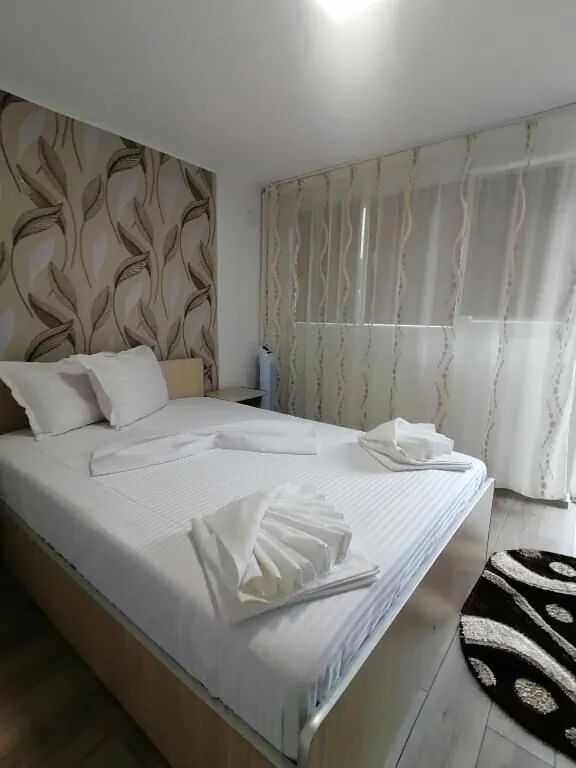
Casa Colette Dubova
Casa este situata in Clisura Dunării la aprox. 1 km de punctul de atractie Ciucaru Mare si 2 km de statuia regelui Decebal. Camerele sunt dotate cu baie proprie, tv, wireless, mini bucatarie, gratar, parcare. Zona este ferita de zgomotul teraselor si al agitatiei, unde confortul si veselia primeaza. Avem la dispoziția dumneavoastră 6 camere cu baie prorie dintre care, 4 camere matrimoniale și 2 camere triple. Un ciubăr cu aeromasaj, masa de ping-pong și câteva biciclete vor face că șederea la noi cât mai plăcută! Taxa de oraș se achită la fața locului.
FROM
280 RON / night

Pensiune · 3 stars
Dubova, Dubova County · 0.5 km
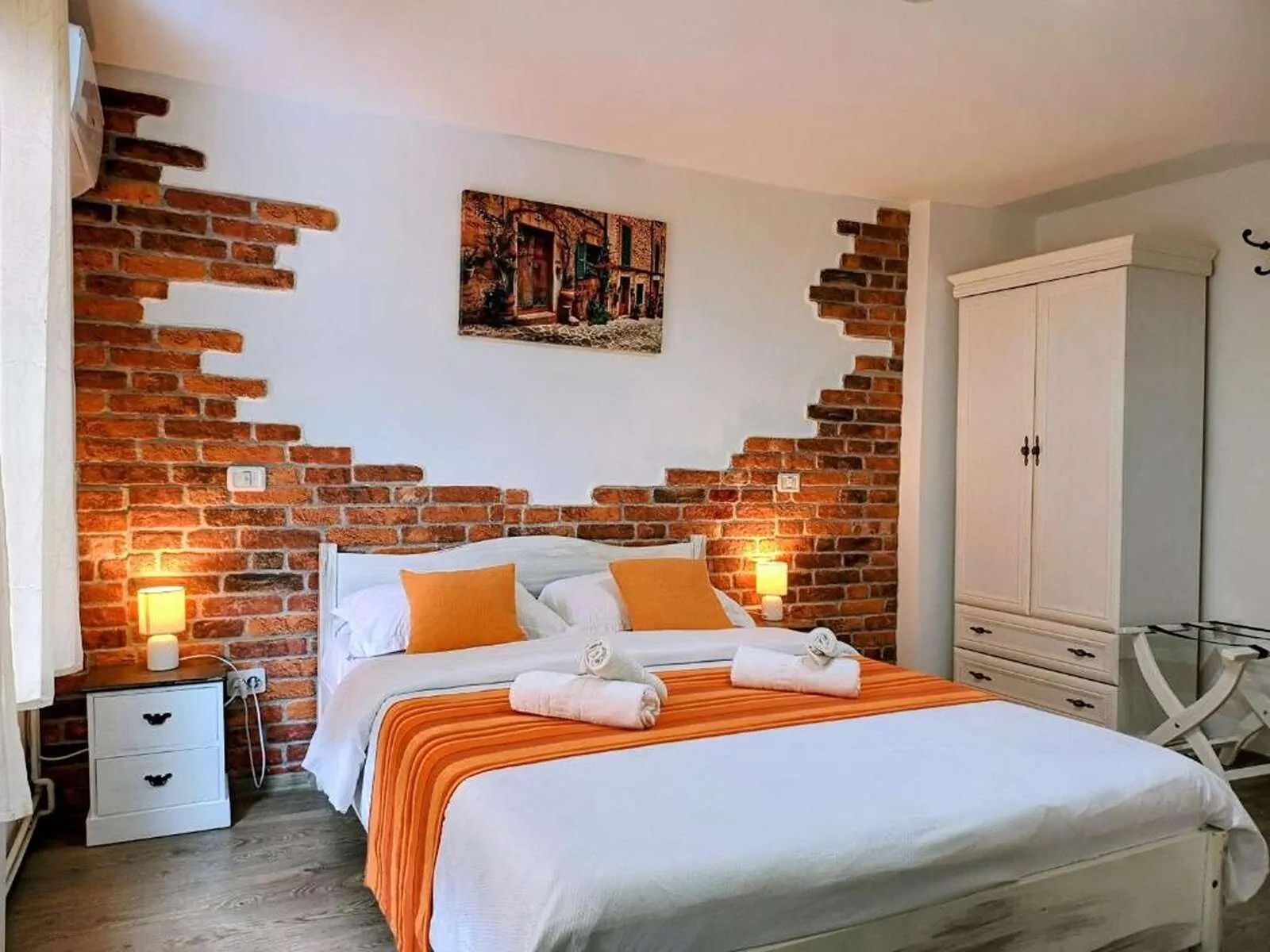
Camere de închiriat LA LOCANDA Dubova
Casa de vacanță La Locanda Dubova se află la 150 de metri de fluviul Dunărea şi are un ponton special amenajat pentru pescuit şi plajă. Proprietatea oferă cazare cu lounge comun, facilități de grătar și terasă. Printre facilitățile oferite de această proprietate se numără recepție cu program nonstop, bucătărie comună, WiFi gratuit și parcare privată gratuită. Unitate are disponibilă în total 8 camere, din care, 7 duble și una triplă. Fiecare cameră de la han include baie privată. Oaspeții de la Casa de vacanță La Locanda Dubova se pot bucura de un mic dejun à la carte. Proprietatea pune la dispoziție un ciubar cu aero masaj.Pentru animalele de companie se percepe un tarif de 30 Roni/pe zitThe vacation house at La Locanda Dubova is located 150 meters from the Danube River and features a specially designed pontoon for fishing and beach. The property offers accommodation with a common lounge, barbecue facilities, and a terrace. Among the amenities provided by this property are a 24/7 reception, a shared kitchen, free WiFi, and free private parking.Each room at the inn includes a private bathroom.Guests at Casa de vacanta La Locanda Dubova can enjoy an à la carte breakfast.The property provides a hot tub with air massage.A fee of 30 Romanian Lei per day is charged for pes.Das Ferienhaus,Locanda Dubova,liegt 150 m von der Donau entfernt, über einen speziell für den Strand konzipierten Ponton.Die Unterkunft bietet Unterkünfte mit einer Gemeinschaft Longe, Grillmöglichkeiten,und einer Terrasse.Zu den Angeboten Einrichtungen gehören eine Rezeption mit non Stop Programm,eine Gemeinschaftsküche, kostenfreie WLAN und kostenfreies Privat Parkplätze.Zimmer verfügt über ein eigenes Bad.Gäste des Ferienhauses in Locunda Dubova, können Sie ein A-la-Carte - Frühstück genießen.Die Unterkunft verfügt über eineLuftmassage Wanne.Für Haustiere wird ein Aufpreis von 30 Ron/ Tag berechnet.La casa de vacaciones en La Locanda Dubova se encuentra a 150 metros del río Danubio y cuenta con un muelle especialmente diseñado para la pesca y acceso a la playa. La propiedad ofrece alojamiento con una sala común, instalaciones para hacer barbacoas y una terraza. Entre las comodidades proporcionadas por esta propiedad se encuentran una recepción abierta las 24 horas, una cocina compartida, WiFi gratuito y aparcamiento privado gratuito.Cada habitación en la posada incluye un baño privado.A La Locanda nyaraló, Dubova város ,Mehedinti megyeben, Romania - a Dunától 150 m-re található, és kifejezetten horgászatra és strandra tervezett pontonnal rendelkezik. Az ingatlan közös társalgóval, grillezési lehetőséggel és terasszal rendelkezik. Az ingatlan 24 órás recepcióval, közös konyhával, ingyenes wifivel és ingyenes parkolási lehetőséggel várja vendégeit.A fogadó minden szobájához saját fürdőszoba tartozik.A La Locanda nyaraló vendégei à la carte reggelit fogyaszthatnak.A szálláshely pezsgőfürdőt kínál aeromasszázssal.Háziállat után 30 lej/nap díjat kell fizetni.Το εξοχικό σπίτι στο La Locanda Dubova βρίσκεται 150 μέτρα από τον ποταμό Δούναβη και διαθέτει ειδική προσωπική προβλήτα για ψάρεμα και πρόσβαση στην παραλία. Το κατάλυμα προσφέρει δωμάτια με κοινόχρηστο καθιστικό, εγκαταστάσεις για μπάρμπεκιου και βεράντα. Ανάμεσα στις παροχές που προσφέρει αυτό το κατάλυμα περιλαμβάνονται υποδοχή 24/7, κοινή κουζίνα, δωρεάν Wi-Fi και δωρεάν ιδιωτικό χώρο στάθμευσης.Κάθε δωμάτιο στον ξενώνα περιλαμβάνει ιδιωτικό μπάνιο.Дачный дом в Ла Локанда Дубова находится в 150 метрах от реки Дунай и оборудован специальным пирсом для рыбалки и доступа к пляжу. На территории предоставляются номера с общей гостиной, местами для барбекю и террасой. Среди предоставляемых удобств — круглосуточная стойка регистрации, общая кухня, бесплатный Wi-Fi и бесплатная частная парковка.Каждый номер в гостинице включает ванную комнату.La casa vacanza presso La Locanda Dubova si trova a 150 metri dal fiume Danubio ed è dotata di un pontile appositamente attrezzato per la pesca e spiaggia. La struttura offre sistemazioni con una sala comune, strutture per barbecue e una terrazza. Tra i servizi offerti da questa struttura ci sono una reception aperta 24/7, una cucina in comune, connessione WiFi gratuita e parcheggio privato gratuito.Ogni camera presso l'osteria include un bagno privato.Gli ospiti presso Casa de vacanta La Locanda Dubova possono gustare una colazione à la carte.La struttura mette a disposizione una vasca idromassaggio.È prevista una tariffa di 30 Lei rumeni al giorno per gli animali domestici.La maison de vacances à La Locanda Dubova est située à 150 mètres du fleuve Danube et dispose d'un ponton spécialement aménagé pour la pêche et l'accès à la plage. La propriété propose des hébergements avec un salon commun, des installations de barbecue et une terrasse. Parmi les commodités offertes par cette propriété, on trouve une réception ouverte 24h/24, une cuisine commune, une connexion Wi-Fi gratuite et un parking privé gratuit.Chaque chambre de l'auberge comprend une salle de bains privative.
FROM
240 RON / night
Casă de Vacanță · 3 stars
Dubova, Dubova County · 0.6 km
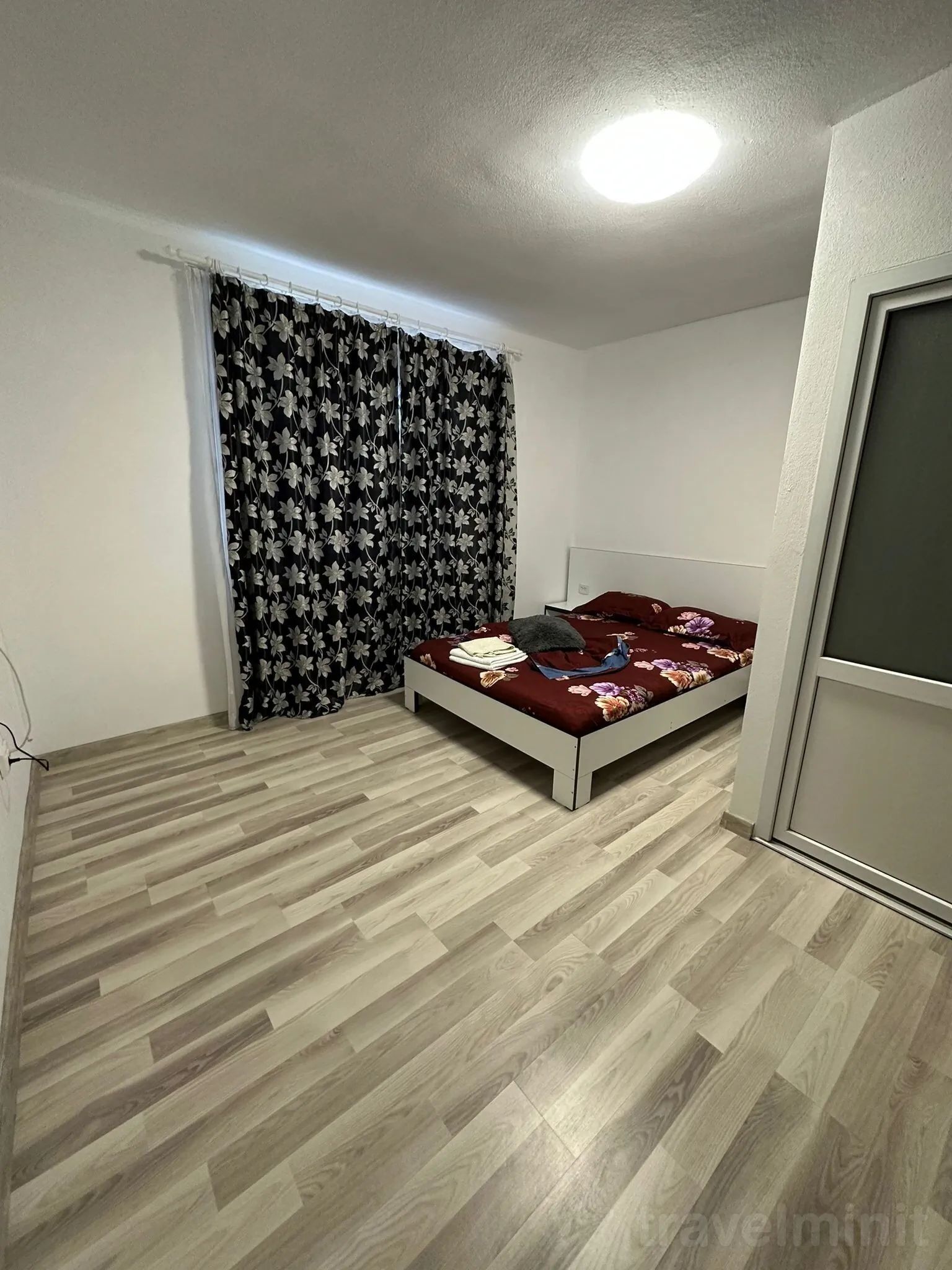
Casa de vacanță Maga Dubova
Camere, serviciiCasa de vacanță Maga Dubova Dubova dispune de o camera confortabila si moderna. Se poate veni cu animale de companie (gratuit). Oaspetii au la dispozitie parcare gratuita. Oaspetii pot beneficia de servicii wellness. Pentru detalii cititi pagina de date. Camerele sunt echipate cu conexiune la internet. O lista detaliata despre facilitatile unitatii de cazare (inclusiv cele contra cost), cat si despre amenajarea camerelor gasiti in fisa de mai jos. LocațiaCasa de vacanță Maga Dubova se afla la 3.7 km distanta fata de Mănăstirea Mraconia. Servicii de masăTarifele afisate se refera numai la cazare. PlatăPlata rezervarii se poate face cu/prin: numerar, card bancar, transfer bancar. Se retine un avans de 50% pentru garantarea rezervarii. Sosire, programPreluarea camerei se face de la ora 14:00 si iesirea pana la ora 12:00. Personal vorbitor de limba română.
FROM
280 RON / night
Vilă · 3 stars
Dubova, Dubova County · 0.6 km
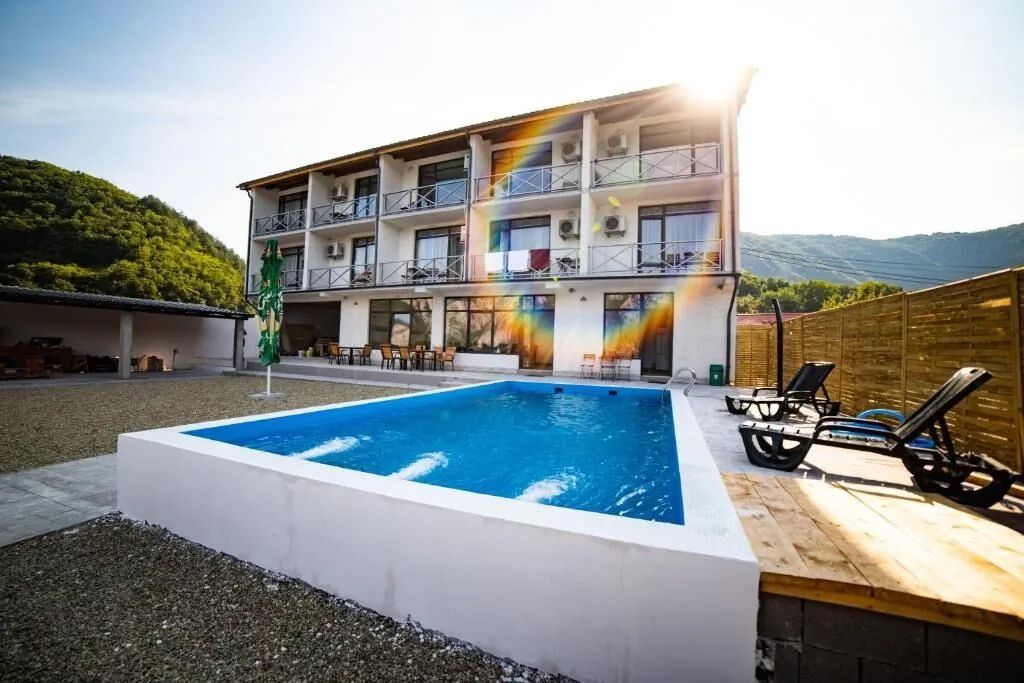
Vila "La Faleza" Dubova
Camere, serviciiVila ,,La Faleza" Dubova ofera cazare in 11 camere placut mobilate si confortabile, cu vedere la Dunare.La parter exista o bucatarie complet utilata,un living in care oaspetii se pot relaxa.De asemenea aveti posibilitatea de a va relaxa in foisor , la gratar sau la o partida de pescuit. Puteti beneficia de parcare gratuita. Pentru detalii consultati pagina de date. La unitate aveti posibilitatea de a accesa internetul wireless. Daca doriti sa obtineti mai multe informatii despre facilitatile oferite la aceasta unitate de cazare (inclusiv cele contra cost) si despre echiparea camerelor, consultati fisa de mai jos. MasăTarifele afisate se refera numai la cazare. PlatăPlata se poate efectua prin urmatoarele modalitati: numerar, card de credit. Sosire, programIntrarea se face incepand cu ora 15:00 si iesirea pana la ora 11:00. Limbi straine vorbite la receptie: engleză, română.
FROM
280 RON / night
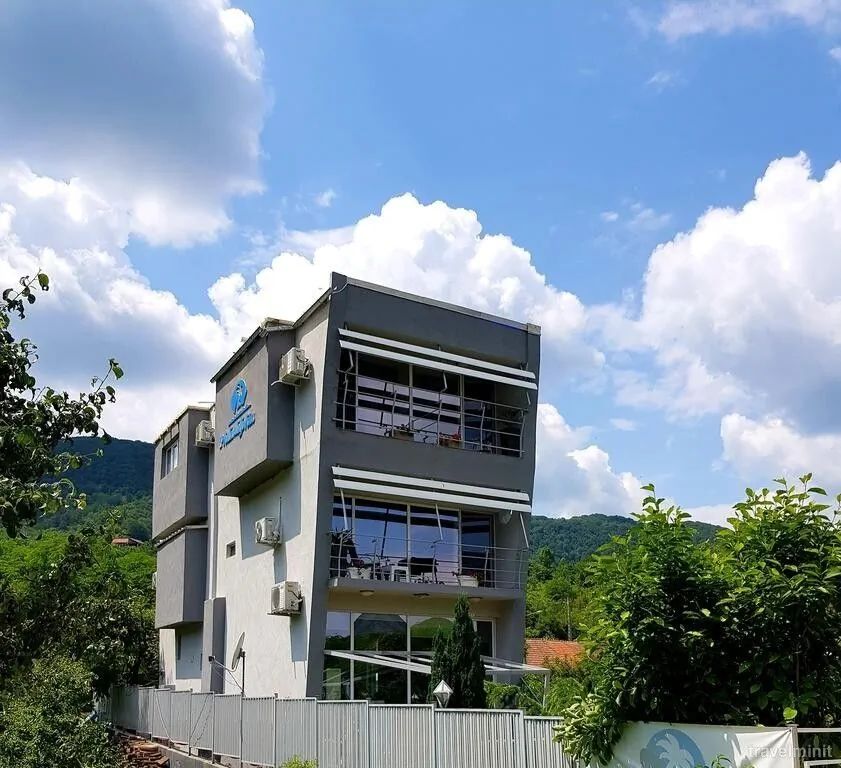
Pensiune · 3 stars
Dubova, Dubova County · 0.6 km
Pensiunea Philadelphia Dubova
Camere, serviciiPensiunea Philadelphia Dubova Dubova ofera cazare in camere frumos amenajate. Exista parcare privata gratuita. Unitatea ofera si cateva camere prevazute cu aer conditionat. (Pentru mai multe informatii consultati la fiecare tip de camera rubrica "detalii"). Acces la internet wireless este disponibil la pensiune. Pentru a obtine mai multe detalii despre facilitatile locatiei (inclusiv cele contra cost) si despre dotarile camerelor, va rugam consultati fisa de mai jos. LocațiaMănăstirea Mraconia se afla la 3.3 km. Servicii de masăPreturile camerelor contin mic dejun. PlatăPlata o puteti efectua cu/prin: numerar, card bancar, transfer bancar. Pentru finalizarea rezervarii se achita un avans de 50%. Sosire, programCamera poate fi ocupata de la ora 14:00 iar predarea ei se face pana la ora 11:00 . Personalul de la receptie este cunoscator a mai multor limbi: engleză, română.
FROM
240 RON / night
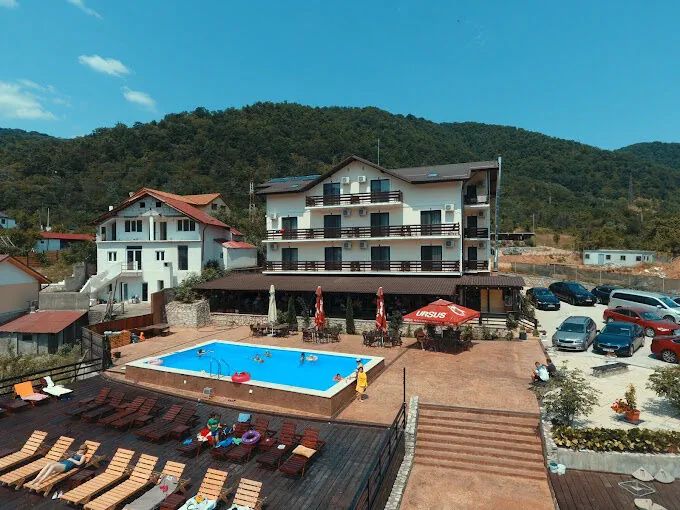
Pensiune · 3 stars
Dubova, Dubova County · 0.9 km
Pensiunea Mirific Dubova
Camere, serviciiPensiunea Mirific Dubova Dubova dispune de 13 camere modern mobilate. Mai multe detalii despre facilitatile oferite de Pensiunea Mirific Dubova (inclusiv cele contra cost), cat si despre dotarile camerelor veti gasi mai jos. Servicii de masăPreturile afisate includ mic dejun. PlatăPlata se face prin urmatoarele metode: transfer bancar, card de vacanță, avans travelminit, voucher travelminit. Pentru garantarea rezervarii se percepe un avans de 100%. Sosire, programZiua de cazare incepe la ora 14:00. Eliberarea camerei se face la ora 11:00. Personalul de la pensiune vorbeste limba română.
FROM
240 RON / night
BEFORE YOU HIT THE ROAD
Weather conditions in Dubova
Local forecast for The Iron Gates Gorges and the Face of Decebalus, Dubova, Mehedinți

Real-time updated weather data
Much more to explore in this area
Nearby tourist attractions


Mehedinti, Mehedinți County
Trajan's Bridge Ruins
Se afla in apropierea orasului Drobeta Turnu Severin, pe Dunarea de jos, la est de Portile de Fier;constructia, capodopera a tehnicii si arhitecturii, a fost...
22.2 km

Caras Severin, Caraș-Severin County
Bigăr Waterfall
Situat pe Valea Minisului, in Muntii Aninei; izvor puternic alimentat de un curs de apa subteran care strabate pestera cu acelasi nume; la aproximativ 200 m...
48.0 km

Caras Severin, Caraș-Severin County
Parcul Natural Porțile de Fier
Este situat in judetele Caras-Severin si Mehedinti, ocupand partial teritorii apartinand judetelor Caras-Severin si Mehedinti in partea sudica a Muntilor...
46.8 km

Caras Severin, Caraș-Severin County
Parcul Național Domogled Valea Cernei
Se intinde pe suprafata a 3 judete - Caras-Severin, Mehedinti si Gorj, peste bazinul raului Cerna, de la obarsie pana la confluenta cu raul Belareca, peste...
46.1 km

Mehedinti, Mehedinți County
Parcul Natural Porțile de Fier
Se afla pe malul stang al Dunarii, intre localitatile Buzias si Gura Vaii, judetul Mehedinti, intinzandu-se si pe teritoriul judetului Caras-Severin;din...
23.6 km

Caras Severin, Caraș-Severin County
Stațiunea Băile Herculane
Situata pe Valea Cernei, la 5 km de principala artera rutiera ce leaga vestul tarii de Bucuresti si calea ferata internationala Bucuresti - Timisoara -...
30.9 km

Caras Severin, Caraș-Severin County
Cheile Nerei
Cheile Nerei sunt situate de-a lungul raului Nera, intre localitatile Sopotul Nou si Sasca Montana;Cheile Nerei sunt cele mai lungi din tara, intinzandu-se pe...
44.0 km

Mehedinti, Mehedinți County
Cetatea Medievală a Severinului
Situata in Parcul Dragalina, Bulevardul Carol I, orasul Drobeta Turnu-Severin;in anul 1233 s-a inceput constructia noii Cetatii a Severinului, peste ruinele...
31.5 km

Caras Severin, Caraș-Severin County
Cheile Rudăriei
Situate in zona muntoasa a judetului Caras Severin, pe raza localitatii Eftimie Murgu (fosta Rudaria);accesul se face de pe drumul E70 Caransebes - Oravita, pe...
28.8 km

Caras Severin, Caraș-Severin County
Rezervația mulinologică Rudăria
Situata pe Valea Rudariei, din satul Eftimie Murgu; cuprinde un numar de 22 de mori cu ciutura, asezate de-a lungul cursului apei, pe o lungime de 3 km, o...
31.1 km
44.1 km
49.0 km
Cultural life and traditions
Events near The Iron Gates Gorges and the Face of Decebalus
Medieval festivals, traditional fairs, concerts and recommended local activities in Oltenia (Lesser Wallachia).

Tradiții și Meșteșuguri

Dubova, Jud. Mehedinți
Zilele Culturii Locale și Turismului Tradițional
Ateliere deschise de olărit, sculptură în lemn și folclor autentic prezentate de meșteri populari locali.
WHEN
15 - 17 Mai 2026


Gastronomie Tradițională
Dubova, Jud. Mehedinți
Târgul Produselor Tradiționale și al Gastronomiei Locale
Produse atestate tradițional, brânzeturi maturate, miere de munte și bunătăți locale pregătite după rețete străvechi.
WHEN
În fiecare final de săptămână

Cultură și Fotografie
Dubova, Jud. Mehedinți
Tur Ghidat Tematic și Fotografic de Patrimoniu
Explorare ghidată dedicată iubitorilor de istorie, natură și fotografie pe cele mai spectaculoase perspective ale zonei.
WHEN
Program zilnic la cerere
On foot, exploration gains depth
Discover the surroundings and local geography
Explore trails, terrain and natural landmarks around The Iron Gates Gorges and the Face of Decebalus.

Guides and practical tips
Useful travel articles
Travel guides, practical tips and itineraries for Oltenia (Lesser Wallachia).

Travel guide
Top 5 Atracții Turistice și Trasee Montane în Zona Moieciu - Bran
Descoperă cele mai spectaculoase peisaje carstice, chei adânci și cetăți medievale din imediata apropiere a stațiunii Moieciu.

Travel guide
Ghid de Drumeție: Traseul Moieciu de Sus spre Platoul Bucegi
Un itinerariu montan de o frumusețe rară ce urcă din Valea Băngăleasa spre Poiana Guțanu și crestele maiestuoase ale Bucegilor.

Travel guide
Castelul Bran: Istorie, Legende și Secrete Medievale
Află adevărata poveste a fortăreței medievale din Pasul Bran, reședința de suflet a Reginei Maria a României.
THE JOURNEY STARTS WITH AN IDEA
The next story is on the way.
From the first stop to the last stay, make room for a new Romania.
