

 Tourist attractions
 Muntenia (Wallachia)
 Romanian Peasant Museum (Muzeul Național al Țăranului Român)
MUSEUM · MUNTENIA (WALLACHIA)
Romanian Peasant Museum (Muzeul Național al Țăranului Român)

Bucuresti, București County
Add location to your trip planner.

Practical access information

VISITING HOURS
Mon: 12:00–17:00 · Tue–Sun: 09:00–17:00 (summer until 20:00)

TICKET PRICE
Adults: 45 RON · Students: 11 RON · Seniors: 23 RON · Guided tour included

RECOMMENDED VISIT DURATION
2–3.5 hours
Visitor information and guide
 Navigate with Google Maps

ABOUT ROMANIAN PEASANT MUSEUM (MUZEUL NAȚIONAL AL ȚĂRANULUI ROMÂN)
A Cathedral of Rural Memory in the Heart of Europe
On Kiseleff Boulevard, a stone's throw from Victory Square, rises one of the most fascinating cultural institutions in Eastern Europe: the National Museum of the Romanian Peasant. The red-brick building, clad in a Neo-Romanian architectural mantle rooted in the Brâncovenesc tradition, today shelters over 90,000 testimonies of a civilization — pottery, folk costumes, textiles, icons, tools, entire wooden churches — which together constitute the richest collection of folk art and traditions in Romania and one of the most valuable in all of Europe. The institution is "new, with an old history," as those who knew its destiny liked to say: re-established on 5 February 1990, just six weeks after the fall of the Ceaușescu regime, it in fact continues a museographic tradition begun in 1906. In 1996, the Romanian Peasant Museum became the first museum in Central and Eastern Europe to be awarded the EMYA prize — European Museum of the Year, the most prestigious distinction in the European museum sector, granted under the auspices of the Council of Europe. For the cultivated European traveler, visiting this museum means more than walking through rooms of exhibits: it means encountering a way of thinking about heritage in which Romanian specificity — the peasant as a universal figure of the human condition — is placed in dialogue with the great story of European culture, from the Brâncovenesc Renaissance to the avant-gardes of the 20th century and today's European museology.
The museum's concept, as envisioned by its founders under the leadership of painter Horia Bernea, deliberately refuses the classical logic of the ethnographic museum of society. Here, "the life of a village in a certain era" is not presented, but rather "traditional man" — the expression given to it by ethnographer Irina Nicolau, Bernea's closest collaborator — as an atemporal spiritual matrix, capable of offering the contemporary world a landmark of authenticity. The philosopher Gabriel Liiceanu observed that the museum proposes "the human-type universality that the peasant represents." This eminently European vision — participating in the same fascination with the "art of peoples" that, beginning in the 19th century, gave birth to the great ethnographic museums of the continent — was rewarded in 1996 by the European jury, which noted the "extraordinarily rare imaginative quality" of the exhibition and the exemplary way in which the collections were protected during the dark years of the communist regime. Today, the museum also houses elements inscribed in the universal intangible heritage: the Horezu pottery craft, present in its collections with vessels of particular refinement, was inscribed by UNESCO on the Representative List of the Intangible Cultural Heritage in December 2012, alongside other Romanian elements such as the doina and the Căluș ritual. The Romanian Peasant Museum is thus a nodal point where Romania's rural memory connects to the great networks of European and world heritage.
Historical Roots: From the Birth of the Modern State to the Great Family of European Ethnographic Museums
The museum's genesis is lost in the Westernizing ambitions of modern Romania, at the confluence of national affirmation and the great cultural models of Europe. It all begins in 1864, when Prince Alexandru Ioan Cuza — the same reformer who, in the full era of the constitution of European nation-states, following the model of the revolutions of 1848 — establishes the National Museum of Antiquities, deliberately placed in the family of the continent's great national museums, from the Louvre to those of Vienna and Berlin. Eleven years later, in 1875, at the proposal of Titu Maiorescu — literary critic formed in the spirit of the German school, leader of the Junimea and one of the artisans of Romania's cultural modernization — a "special section is organized at this museum in which to exhibit textile art works made in the country: clothing, carpets, fabrics, woolens." The exhibits came mainly from the collection of Lieutenant-Colonel Dimitrie Pappasoglu, who as early as 1864 had organized a small museum in the pavilion of his house — one of the first private ethnographic collections in southeastern Europe. These early attempts, still lacking a coherent museographic vision, were to become the foundation on which the later institution would be built.
The founding moment comes in 1906, when, by Royal Decree no. 2,777 of 13 July 1906, King Carol I — belonging to the German Hohenzollern-Sigmaringen dynasty, the first king of unified Romania — establishes the Museum of Ethnography, National Art, Decorative Art and Industrial Art. The idea belongs to the Minister of Education and Cults Mihail Vlădescu, and its realization is owed equally to the reformer Spiru Haret. Alexandru Tzigara-Samurcaș (1872–1952), art historian, ethnographer and museologist, the first Romanian doctor in art history, is appointed director, from 1 October 1906. Tzigara-Samurcaș's formation is profoundly European: after studies at the University of Munich (beginning in 1893), he becomes assistant at the General Directorate of the Royal Museums in Berlin (1896–1897), and in Paris, in the years 1896–1898, he has as professors the reputed art historians André Michel and Müntz — the latter a specialist in the Medici family collections and in European textile art. Returned to the country, he becomes secretary to King Carol I and director of the Carol I University Foundation, militating for decades in a row for "a true national museum," as he rhetorically expressed his question in a famous article: "Are we worthy of a national museum?" In 1910, Tzigara-Samurcaș organizes the Romanian section at the international exhibition of folk art in Berlin — the first international exhibition participation of Romanian folk art — a gesture that places the young Bucharest institution in the network of Europe's ethnographic museums: the Skansen in Stockholm, opened in 1891 by Arthur Hazelius as the continent's first open-air museum, the German folk museums of Berlin and Munich, the future Musée des Arts et Traditions Populaires in Paris (1937, founded by Georges Henri Rivière). The museum of 1906 thus belongs to the first generation of European ethnographic museums, born from the same national romanticism that sought the folk roots of modern identity.
In 1912, construction begins on the new headquarters on Kiseleff Boulevard — "the Museum on the Boulevard," as Bucharesters will affectionately call it — and the construction site, interrupted by wars and financial vicissitudes, will stretch over 29 years, until 1941. During the Second World War, the "palace" was one step away from becoming a barracks for the Soviet army. Then came the long communist turn: in 1948, Tzigara-Samurcaș is removed from the position of director, and the collections are driven out of their headquarters, gathered for a time in the Știrbey Palace on Calea Victoriei — under the name of the Museum of Folk Art of the Socialist Republic of Romania, led by ethnographer Tancred Bănățeanu — only to be then crammed into the storerooms of the Village Museum. From 1953, the building on Kiseleff successively houses the Lenin-Stalin Museum, then the Museum of the Communist Party, becoming an homage paid to the personality cult of Nicolae Ceaușescu; in the 1960s, a central office block with proletkult features is added to it, in total discordance with the original architecture. In 1978, the institution founded in 1906 is practically abolished through merger with the Village Museum.
The rebirth comes with the Revolution of December 1989. On 5 February 1990 — six weeks after the execution of Ceaușescu — the Minister of Culture Andrei Pleșu, at the insistent recommendation of art historian Dan Hăulică, appoints painter Horia Bernea (1938–2000), son of sociologist Ernest Bernea, to the position of director of the museum re-established under the name of the Romanian Peasant Museum. The official inauguration takes place in 1993, on the second day of Easter, with the first exhibition of the permanent display, entitled "The Cross"; in 1994 the icon rooms open, in 1996 the upper floor is inaugurated under the title "Triumph," and in 2008 the "Food" room, completing the museographic vision. But the road to European recognition was strewn with dramatic trials: in June 1990, during the "Mineriad," the museum was devastated by miners brought to the Capital, being confused with the headquarters of the National Peasants' Christian Democratic Party — the historical continuator of Iuliu Maniu's party, banned by the communists. In 1996, twelve years after its establishment and after six years of existence in the new formula, the Romanian Peasant Museum wins the EMYA prize — European Museum of the Year, awarded under the auspices of the Council of Europe in Strasbourg, from 64 participating museums from 21 countries. The distinction, handed to director Horia Bernea by Her Majesty Queen Fabiola of Belgium herself — the trophy being the statuette "The Egg," a creation of British sculptor Henry Moore — was for the first time awarded to a museum from Central and Eastern Europe, marking the symbolic return of Romania to the European cultural family after decades of isolation.
The Architectural Masterpiece: "The Palace of Earthly Art" and the Artistic Heritage
The museum building is itself a declaration of principles. Designed by architect Nicolae Ghica-Budești (1869–1943), a prominent figure of the Romanian school of architecture, it was conceived — according to Tzigara-Samurcaș's museographic vision — as "a palace of earthly art," arranged in the form of a monastic enclosure. The Neo-Romanian style, with strong Brâncovenesc echoes, is expressed through the red-brick masonry, the windows united under arches, the columns, the balustrade, the pierced elements and the central tower with its belvedere reminiscent of the bell towers of old monasteries, all accompanied by a rich decorative repertoire of floral and zoomorphic motifs. The building, declared a historical monument, rises on the site of the former State Mint — where the old museum had operated until 1912 —, on land heavy with history: here once stood the palace of Prince Nicolae Mavrogheni, a Phanariot prince from the era of Ottoman domination over Wallachia. This succession of layers — Ottoman tradition, German royal aspiration, European modernity — makes the building a veritable palimpsest of Romanian history in dialogue with the European.
The museum's Neo-Romanian architecture must be read in the broader European context of the "national styles" of the late 19th and early 20th centuries: the same impulse that led German and Austrian architects toward Jugendstil, the French and Belgians toward Art Nouveau, the British toward Arts and Crafts or the Scandinavians toward national romanticism (Hazelius, founder of the Skansen, was a contemporary of the initiators of this current) determined Ion Mincu — trained at the École nationale supérieure des Beaux-Arts in Paris —, Grigore and Cristofi Cerchez, Petre Antonescu and Ghica-Budești to seek an architectural language "specifically national." The thesis formulated by Alexandru Odobescu as early as 1870 — "to study the remains, however small, of the artistic production of the past and to make them the source of a great art" — lies at the basis of the entire school. And the main source of inspiration, the Brâncovenesc style, is itself a European synthesis: Byzantine, Ottoman and Renaissance, born in Wallachia at the beginning of the 18th century, under the reign of Constantin Brâncoveanu (1688–1714) — a martyred prince, canonized by the Romanian Orthodox Church in 1992, whose era of flowering has remained a landmark of national cultural identity, in permanent dialogue with the Habsburg Baroque of neighboring Transylvania. The museum on Kiseleff is thus not merely a container of heritage, but a total work of art in which architecture, like the collections it shelters, speaks of the resilience of a culture situated at the crossroads between the Ottoman Empire, the Habsburg Monarchy and the ambitions of Western modernity.
The museum's heritage counts over 90,000 pieces — silent witnesses of a rural civilization whose techniques, beliefs and aesthetic forms have traversed centuries. The pottery collection, one of the richest in Europe, comprises approximately 18,000 pieces originating from nearly 200 pottery centers of the country, the oldest dating from 1746. Alongside utilitarian vessels — pots, jugs, saucepans, cake molds — are masterpieces of glazed pottery from Horezu, whose technical traditions were inscribed in 2012 in the UNESCO intangible heritage, vessels with Oriental influences destined for boyar families, creations of the renowned center at Rădăuți associated with the Colibaba family of potters (especially the incomparable Constantin Colibaba) and pieces from the vanished center at Vama Oașului. Some of the first vessels to enter the collection come even from the Jubilee Exhibition of the 40 years of King Carol I's reign, organized in 1906 in Carol Park.
The folk costume collection counts nearly 20,000 pieces of clothing from all Romanian provinces, beginning with the first half of the 19th century — a vestimentary treasure that attracted prestigious donations from personalities such as Queen Marie (born Marie of Edinburgh, granddaughter of Queen Victoria of Great Britain, one of the most charismatic figures of the Romanian dynasty), Princess Sabina Cantacuzino or Elisa Brătianu. The collection was also presented in the "We Wear Culture" exhibition on Google Arts and Culture, alongside 3,000 years of world fashion history. The collection of interior textiles — made from flax, hemp, cotton or silk — and that of wood, furniture and ironwork, with approximately 8,000 objects (of which 130 made in the carpentry technique, spread across all ethnographic zones), complete the image of a material culture of remarkable aesthetic coherence.
A separate category is represented by the religious collection, with nearly 4,000 pieces: icons on glass and on wood, icon templates, woodcuts, priestly vestments, liturgical vessels, wayside crosses and crosses. The icons on glass — painted by peasants for peasants, dating from the end of the 18th century to the second half of the 19th century — come from the renowned Transylvanian centers of Nicula, Alba Iulia's Maieri, Făgăraș, Șcheii Brașovului or Mărginimea Sibiului, territories that for centuries belonged to the Habsburg Monarchy and the Austro-Hungarian Empire. The tradition of the Nicula icon painters is inscribed, moreover, in a broader family of "painting on the back of glass" (Hinterglasmalerei) spread across the Central European space — Bavaria, Austria, Switzerland —, an intercultural dialogue that the museum illustrates abundantly. Among the exhibits with European historical resonance is also a metope from the Tropaeum Traiani, the monument raised by Emperor Trajan in Dobrogea to celebrate the conquest of Dacia — a memory of the Roman layer of the civilization on these lands.
But the piece de résistance of the exhibition — nicknamed "the house within a house" — is the dwelling of peasant Antonie Mogoș from the village of Ceauru, Gorj County, built between 1875 and 1879 and brought to Bucharest as early as 1909 by Tzigara-Samurcaș. Mogoș was a self-taught wood sculptor and church cantor whose popular genius was discovered late; his house, raised and adorned with sculptures made by his own hands in an unprecedented style, was presented from the beginning in a non-naturalistic manner, the objects being exhibited fragmentarily, suggesting the annexes of the household. In 1936, Konrad Hahm, director of the Berlin Museum, made a memorable parallel between the way the house was displayed and the famous Altar of Zeus from Pergamon. After the communist regime moved it outdoors to the Village Museum, Mogoș's house returned to the Romanian Peasant Museum in 2002, resuming the original display.
Another essential dimension of the heritage is the mission of saving wooden churches. Under Horia Bernea's impulse, the museum purchased after 1990 six wooden churches from Arad and Hunedoara counties: two were brought to Bucharest — that from Bejan, a historical monument from the end of the 18th century with the patron saint of Saint Nicholas, transferred to the museum's inner courtyard in 1992 and consecrated in 1993, on the second day of Easter, and that from Mintia, exhibited indoors —, and four are conserved in situ (at Lunca Moților, Groșii Noi, Julița and Troaș). This rescue mission is inscribed in the European tradition of preserving religious heritage in wood — from the stave churches (stavekirker) of Norway, inscribed in UNESCO heritage, to the wooden churches of Maramureș, themselves in world heritage since 1999 —, the Bucharest museum offering a final sanctuary for monuments one step from collapse. In the museum's courtyard, the visitor also encounters wayside crosses dedicated to women — to Saint Theodora, Saint Paraschiva, the Virgin Mary —, as well as a monumental wooden distaff, the "Distaff with Spindle," approximately four meters high, a symbolic object of feminine domestic labor.
Legends, Personalities and Turning Points
The museum's history is populated by personalities whose destinies intertwined with the fate of the institution. Alexandru Tzigara-Samurcaș remains the tutelary figure: an aristocrat of Aromanian origin, member of the Junimea society, friend of Maiorescu, trained in Munich, Berlin and Paris, secretary to King Carol I, he was the effective founder of the museum and remained director until 1948, when the communist regime removed him. His activity as collector, organizer of international exhibitions and theoretician of folk art influenced "all that this museum meant in the history of Romanian culture." After his disappearance, in 1952, the memory of the institution was kept in the shadows, the collections being dispersed, until the rebirth of 1990.
Horia Bernea (1938–2000) is, alongside Tzigara, the second great founder. A painter of international reputation — with exhibitions in Paris, London, Edinburgh, Glasgow, Budapest and The Hague, awarded at the Paris Biennale in 1971 — Bernea was the spiritual architect of the re-established museum, director between 1990 and 2000. He was consulted on the naming of the institution, and the choice of "Romanian Peasant Museum" — a name that puzzled many at first, in an era when the word "peasant" still seemed laden with pejorative connotations — proved brilliant. Bernea created an auteur museography, in which objects are not "exhibited" but "staged," in a visual discourse that combines anthropology with contemporary art; he was the one who discovered, in 1991, the wooden church of Bejan one step from collapse and initiated its salvation. He died in Paris, in December 2000, and his body was brought to the country and buried at the Mavrogheni Church, in the immediate vicinity of the museum, with hierarchs of the Romanian Orthodox Church headed by Patriarch Teoctist participating in the funeral. Today, the museum's cinema bears his name — the Horia Bernea Studio.
Among Bernea's close collaborators is ethnographer Irina Nicolau, whose notes preserved the memory of the museum's "founding," and philosopher Andrei Pleșu, whose founding act of 5 February 1990 made the rebirth possible. Art historian Dan Hăulică was the one who insistently recommended Bernea. After his death, the institution was led, between 2001 and 2005, by historian Dinu C. Giurescu, and in the transition period of the restoration construction site, between 2016 and 2019, by artist Lila Passima; from 2019/2020, the destinies of the museum are entrusted to director Virgil Ștefan Nițulescu, a specialist in intangible heritage, who coordinated the institution's return to life after the decade of construction.
The museum's turning points coincide with those of Romania's own history. The communist period — when the building housed the Lenin-Stalin Museum and then the Museum of the Party, becoming a temple of Ceaușescu's cult — left physically visible traces still today: in the museum's basement there is still a room with an ironic exhibition of artifacts from the former era, a memento of totalitarian absurdity. The Mineriad of June 1990, when the institution was devastated being confused with the headquarters of the National Peasants' Party, remains an unhealed wound of the post-communist transition. And in 1996, in Strasbourg, Queen Fabiola of Belgium handed Horia Bernea the "Egg" trophy by Henry Moore — the first EMYA prize ever awarded to a museum from Eastern Europe, only six years after the existence of the new institution, in a ceremony that symbolized Romania's reintegration into the cultural concert of the continent. In 2006, on the occasion of the centenary, the museum received the Order of "Cultural Merit" in the rank of Grand Officer; in 2007 it acquired the status of a museum of national importance; in 2025 it celebrated 35 years since re-establishment, and in 2026 it marks 120 years since the founding of 1906 and 30 years since the European consecration.
Practical Visitor's Guide and Today's Tourist Experience
The National Museum of the Romanian Peasant is located at Kiseleff Boulevard no. 3, Sector 1, Bucharest, opposite Victory Square — the permanent exhibition —, and for temporary exhibitions, the Peasant's Club, the cinema and the fairs, the secondary address is Monetăriei Street no. 3. The most convenient way of access is the metro, Victory Square station (lines M1 and M2), followed by a walk of a few minutes; buses 205, 381 and 783 stop nearby. The visiting hours are from Wednesday to Sunday, between 10:00 and 18:00, the last entry being allowed at 17:00; the museum is closed on Monday and Tuesday. The entrance fees are modest by European standards: 20 lei for adults, 10 lei for pensioners, and pupils, students, Euro 26 cardholders under 30 years and persons with disabilities benefit from a 75% reduction, paying 5 lei. Personal photographs are allowed, and for professional filming there are additional fees.
After almost a decade of consolidation and restoration works (2016–2025), the museum reopened its gates in stages: in April 2025, the ground floor, with the exhibition "The Christian Law" — a suite of rooms dedicated to peasant religious culture (The Beauty of the Cross, Fasting, Recollection, Relics, Windows, Time, the Cross–Tree of Life, the Power of the Cross, Icons and the School of the Village) —, and in 2026, with the 120th anniversary, the entire upper floor, with the exhibition "The Ordering of Life," which resumes the thread of Horia Bernea's museography through the rooms Triumph, The Garment, Work — Fire, Work — Water and Wind, Together, Minorities (hosting the exhibition "The Hutsuls"), Dwelling, Typologies (with "Aerophone Musical Instruments"), the House within a House and the Food that Binds Us. For a complete visit — ground floor, upper floor, the Mogoș House, the Bejan wooden church and the courtyard with wayside crosses — it is good to reserve between two and three hours. The exhibition spaces at Monetăriei Street host temporary exhibitions, and the museum's cinema — the Horia Bernea Studio and the Cinema Garden, with a capacity of approximately 300 seats — is one of the most appreciated auteur film spaces in the capital, presenting European productions and anthropological documentaries. The Peasant's Club, the café-restaurant in the enclosure, where traditional Romanian cuisine is prepared by the La Mama restaurant team, offers a welcome stop: a coffee or a lunch with soup, sarmale and mămăligă, under the gaze of the arched windows of the palace. Throughout the year, the museum's courtyard becomes a stage for highly successful traditional fairs — the Mărțișor Fair at the end of February, the Icon Fair in September or the Christmas Fair —, occasions when folk craftsmen come to sell their creations, and the atmosphere becomes that of a village in celebration. The museum shop, with the publications of MARTOR Publishing House — the institution's publishing house, which has published since 1996 the anthropology yearbook MARTOR —, offers catalogs, books and craft objects.
For the European traveler, the museum naturally fits into a cultural itinerary of Bucharest alongside the "Dimitrie Gusti" National Village Museum in Herăstrău, the National Museum of Geology on Kiseleff or the Antipa Museum, located opposite. The virtual tour available at 360.muzeultaranuluiroman.ro and the institution's presence on Google Arts and Culture allow the collections to be explored from a distance as well, and events such as Museum Night bring the public into direct contact with the exhibits. The contact telephone number is 021.317.96.61, and the official website, muzeultaranuluiroman.ro, is always up to date.
What remains, at the end of the visit, is the profound impression of an institution that knew how to traverse centuries without losing its soul: a palace of folk art built by a German king on the foundations of an Ottoman mint, conceived by an art historian trained in Munich, Berlin and Paris, revived by a painter with a European vocation six weeks after the fall of a dictator, consecrated by the jury of the Council of Europe as the best museum of the year 1996 and reopened, after a decade of restoration, exactly 120 years after its establishment. The Romanian Peasant Museum demonstrates, in every room, that the Romanian peasant — with his costume, with his pottery inscribed in UNESCO heritage, with his glass icons related to the Central European tradition, with his wooden churches related to the Scandinavian ones — is not a periphery of Europe, but an essential voice of it, kept alive in a monument of architecture that is itself a work of art.
Media gallery
Discover Romanian Peasant Museum (Muzeul Național al Țăranului Român) in pictures

2 photos · Architecture, courtyards and captivating details


Image source: Wikimedia Commons · Public domain photos · Free license
STAY A FEW DAYS, DISCOVER THE MAGIC
Stays near Romanian Peasant Museum (Muzeul Național al Țăranului Român)

Apartament · 3 stars

București, București County · 0.4 km
Center Walking Apartment and Room București
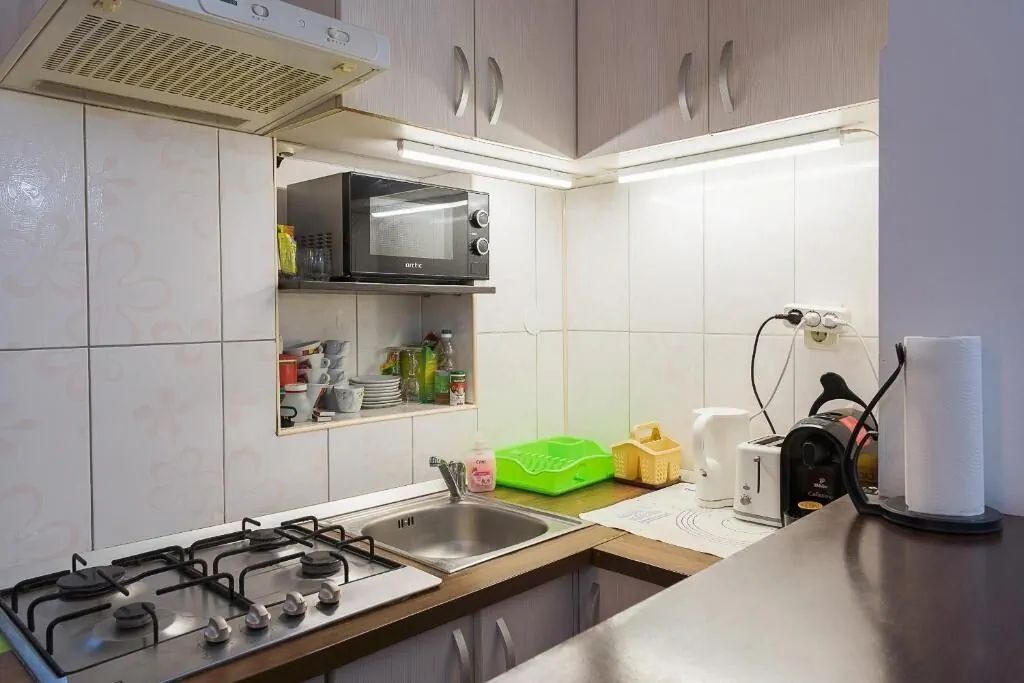
Cu o locație ideală în centrul orașului București, Center Walking Apartment and Room pune la dispoziție WiFi gratuit în întreaga proprietate și o grădină. Proprietatea se află la mică distanță de atracții precum Gara de Nord Bucureşti, Muzeul Colecțiilor de Artă și Arcul de Triumf din București. La această unitate, fiecare cameră are birou, terasă cu o vedere la grădină, baie proprie, televizor cu ecran plat, lenjerie de pat și prosoape.
FROM
230 RON / night

Vilă · 3 stars
București, București County · 0.4 km
Vila Victoria București
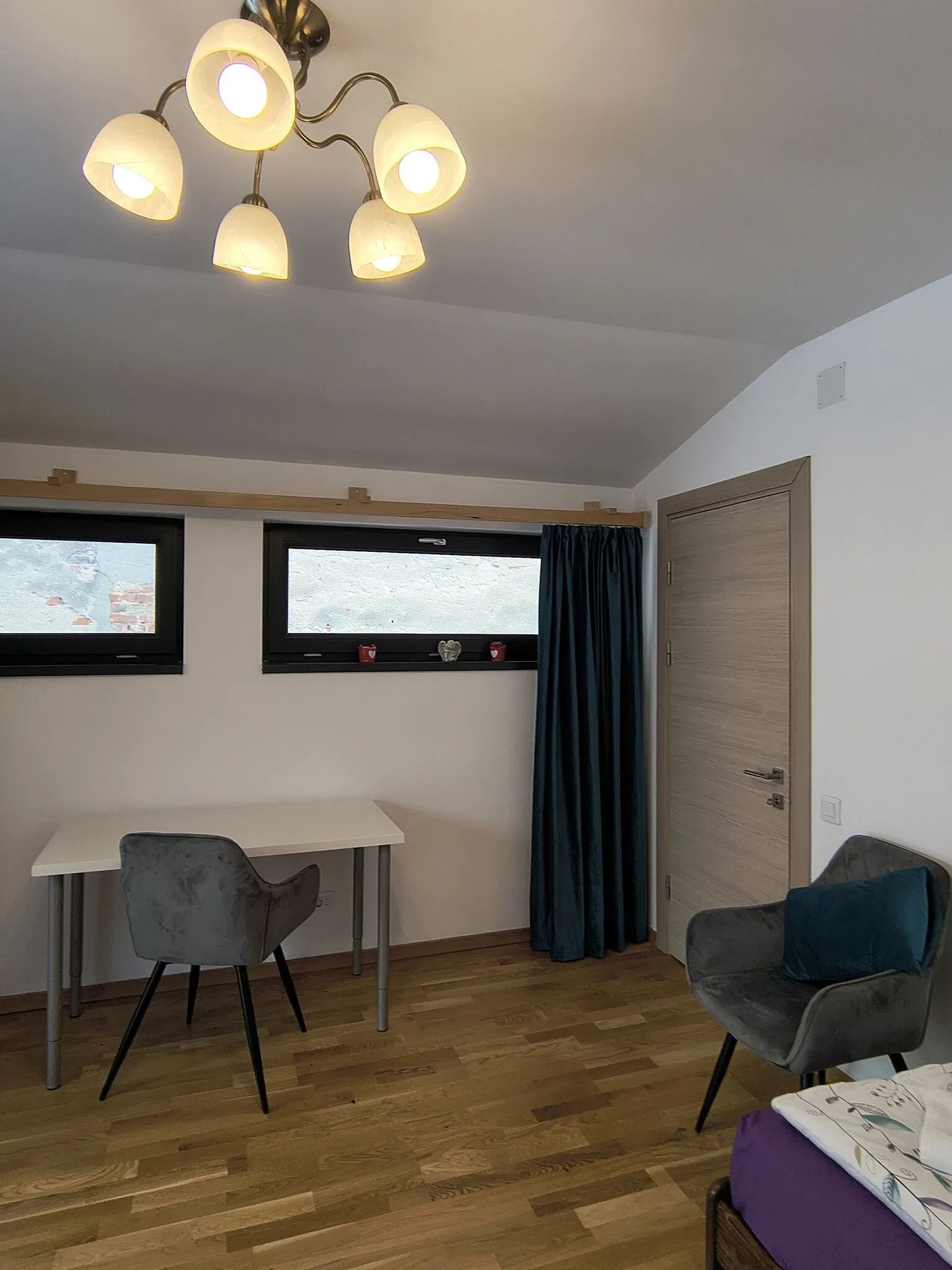
Ceea ce vă va plăcea la această casăAceastă casă confortabilă din centrul Bucureștiului dispune de trei dormitoare luminoase, living, bucătărie, doua bai și o curte mică, oferind un refugiu liniștit în inima orașului. Cu acces facil la atracțiile majore și la transportul public, este perfectă pentru viața urbană, menținând în același timp un sentiment de intimitate. Loc de parcare disponibil pe strada, in fata porții. Ceea ce vă va plăcea la acest cartier Situat într-o zonă centrală, cartierul este unul dintre cele mai căutate din București, cunoscut pentru atmosfera vibrantă și locația centrală. Cu un amestec de clădiri istorice și facilități moderne, oferă acces excelent la repere culturale, restaurante și centre de afaceri, toate la câțiva pași. Informații suplimentare- FĂRĂ PETRECERI ZGOMOTOASE- Casa este situată într-o zonă rezidențială ultracentrală și dorim să asigurăm cel mai mare respect față de vecinii noștri- FUMATUL INTERZIS ÎN INTERIOR- FĂRĂ ANIMALE DE COMPANIE
FROM
280 RON / night
Apartament · 3 stars
București, București County · 0.5 km
Apartament Qult - Huxley București
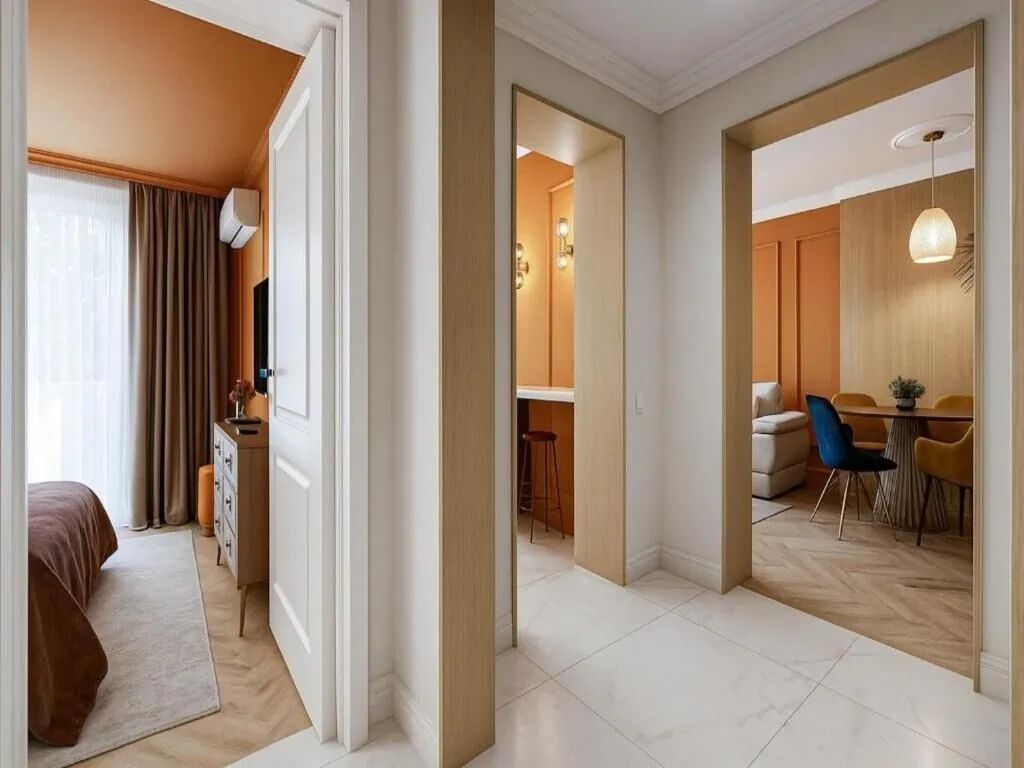
Camere, serviciiApartament Qult - Huxley București București va ofera o camera frumoasa si eleganta. Toate camerele sunt prevazute cu bai. Daca doriti sa obtineti mai multe informatii despre facilitatile oferite la aceasta unitate de cazare (inclusiv cele contra cost) si despre echiparea camerelor, consultati fisa de mai jos. Servicii de masăTarifele afisate se refera numai la cazare. PlatăPlata rezervarii se poate face cu/prin: transfer bancar, card de vacanță, avans travelminit, voucher travelminit. Rezervarea se considera finalizata numai dupa plata unui avans de 100%. Sosire, programPrimirea camerei se face incepand cu ora 16:00 si eliberarea camerei se face pana la ora 11:00. Limba vorbita la receptie română.
FROM
230 RON / night
Apartament · 3 stars
București, București County · 0.5 km
Apartament lângă Piața Victoriei și Gara de Nord București
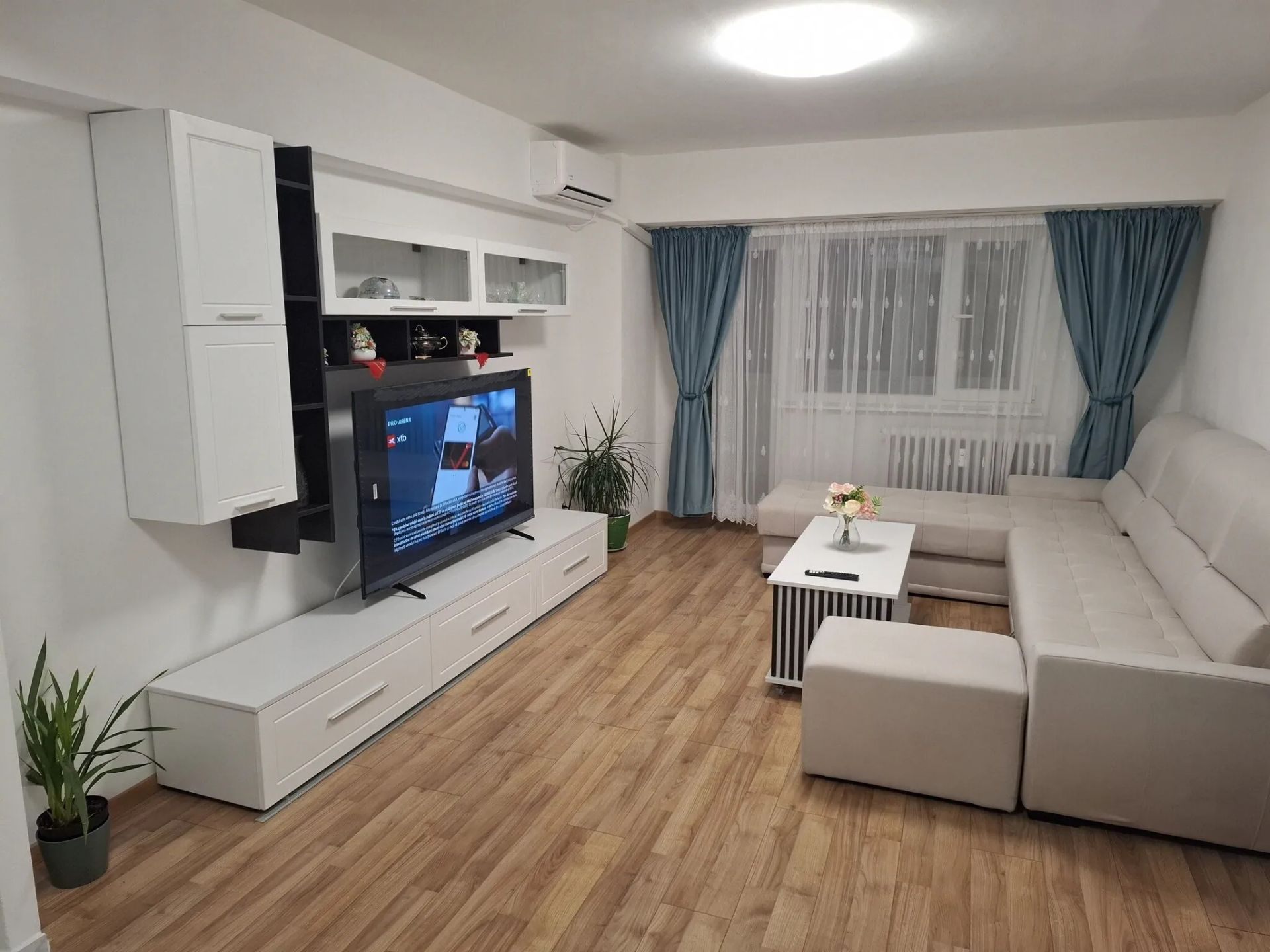
Apartamentul de 3 camere, 2 dormitoare și un living deschis, cu o bucătărie dotata complet și un balcon generos, ultracentral, are vedere spre Bulevardul Titulescu, și se afla la 2 minute de Piata Victoriei și 10 minute de Gara de Nord, de mers pe jos. La parter este un Supermarket Mega Image, câteva restaurante, 2 cantine, câteva unități "take away", baruri, o piața țărănească la 10 minute de mers pe jos, coafor, frizerie, . Acces imediat, lângă imobil, în toate direcțiile, cu metrou, tramvai, autobuz și troleibuz și trenuri Gara de Nord - Aeroportul internațional H. Coandă, tur-retur.
FROM
230 RON / night
Apartament · 3 stars
București, București County · 0.5 km
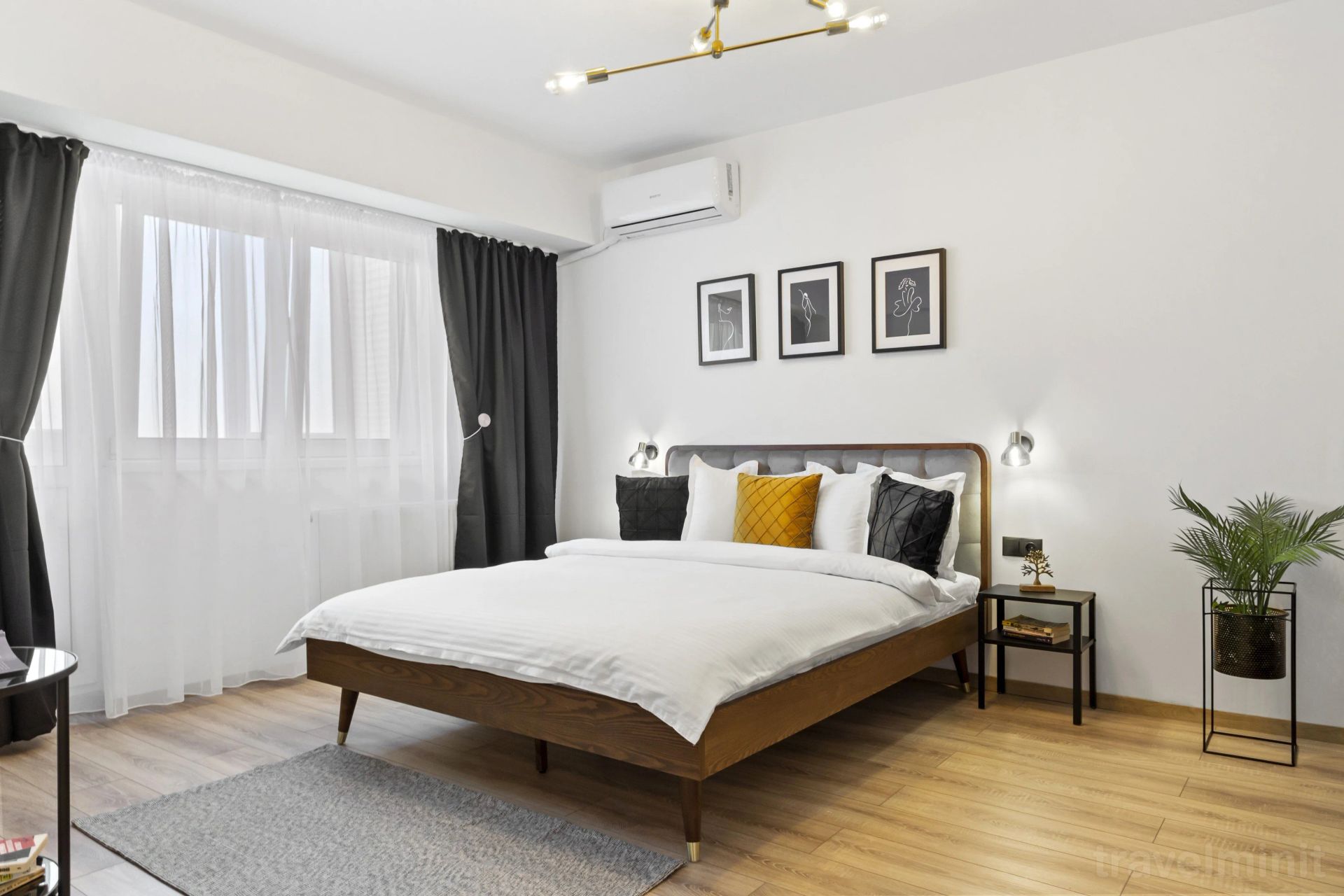
Victoria 31 by MRG Apartments București
Victoriei 31 by MRG Apartments este o garsonieră cu balcon pentru maximum 4 oaspeți, poziționată între Gara de Nord și Piața Victoriei. Amplasarea este convenabilă pentru călătorii care sosesc cu trenul, au nevoie de legătura către Aeroportul Henri Coandă sau folosesc frecvent metroul. Orientarea spre spatele clădirii și balconul mobilat oferă un spațiu mai retras față de bulevard. Camera include un pat queen-size, o canapea extensibilă, aer condiționat, Wi-Fi, Smart TV, draperii blackout și depozitare. Masa poate fi folosită și pentru lucru la laptop. Bucătăria pune la dispoziție frigider, cuptor cu microunde, cafetieră, vase și ustensile, iar baia combină cada cu dușul și include mașină de spălat rufe. Clădirea este prevăzută cu lift, util la sosirea cu bagaje. Gara de Nord asigură conexiuni feroviare naționale și acces către aeroport, iar Piața Victoriei leagă proprietatea de rețeaua de metrou și zona centrală de afaceri. Muzeul Antipa, America House, restaurantele și supermarketurile sunt, de asemenea, în apropiere. Oaspeții folosesc exclusiv garsoniera și balconul și beneficiază de self check-in.
FROM
230 RON / night
Apartament · 3 stars
București, București County · 0.5 km
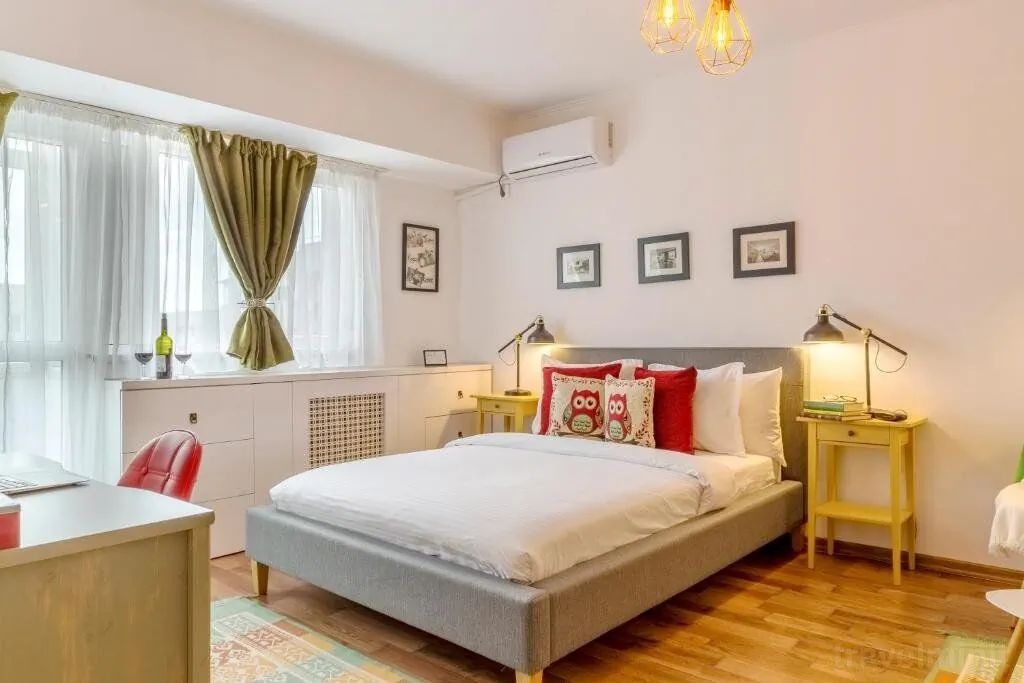
Apartament Victoriei by MRG București
Victoriei by MRG Apartments este o garsonieră cu balcon pentru maximum 4 oaspeți, situată aproape de Piața Victoriei, Spitalul Clinic SANADOR și Gara de Nord. Orientarea spre partea din spate a clădirii limitează expunerea directă la bulevard, iar biroul dedicat transformă proprietatea într-o alegere practică pentru deplasări de afaceri, programări medicale sau șederi de câteva zile în centrul Bucureștiului. Spațiul de dormit include pat dublu și canapea extensibilă, completate de Wi-Fi, aer condiționat, televizor, depozitare și facilități de călcat. Bucătăria este dotată cu aragaz, frigider, cuptor cu microunde, prăjitor de pâine, cafetieră, fierbător, veselă și ustensile. Baia proprie are cadă cu duș, mașină de spălat, prosoape, articole de toaletă și uscător de păr. Metroul Piața Victoriei oferă conexiuni către zonele de birouri, instituții și celelalte cartiere ale orașului. SANADOR, Spitalul Filantropia, America House, Muzeul Antipa și Gara de Nord sunt repere importante din apropiere. Garsoniera și balconul sunt rezervate integral oaspeților, cu acces autonom prin self check-in.
FROM
230 RON / night
BEFORE YOU HIT THE ROAD
Weather conditions in Bucuresti
Local forecast for Romanian Peasant Museum (Muzeul Național al Țăranului Român), Bucuresti, București

Real-time updated weather data
Much more to explore in this area
Nearby tourist attractions


Bucuresti, Bucharest
Palace of the Parliament
Situat pe strada Izvor nr.3, sector 5, localitatea Bucuresti; in perioada comunista a fost cunoscut sub numele de "Casa Poporului"; considerata una dintre cele...
3.1 km

București, Bucharest
People's Salvation Cathedral (National Cathedral of Romania)
Catedrală ortodoxă din București
3.3 km

Bucuresti, Bucharest
Dimitrie Gusti National Village Museum
Situat pe Soseaua Kiseleff nr.28-30, sectorul 1; a fost inaugurat in 1936; expozitia permanenta cuprinde 121 de complexe distincte, totalizand 338 de monumente,...
1.9 km

Bucuresti, Bucharest
Royal Palace of Bucharest
Situat pe Calea Victoriei nr. 49-53, sector 1, localitatea Bucuresti; construit intre anii 1812-1815 a apartinut marelui logofat Dinicu Golescu, dar a fost...
2.0 km

Bucuresti, Bucharest
Cotroceni Palace
Situat pe bulevardul Geniului nr.2, sector 6, localitatea Bucuresti; in anul 1679, domnitorul Serban Cantacuzino incepe constructia unei manastiri; opera sa a...
2.9 km

Bucuresti, Bucharest
Muzeul Național de Istorie Naturală Grigore Antipa
Situat pe soseaua Kiseleff nr. 1, sector 1, localitatea Bucuresti; fondat in 1834 la initiativa lui Mihalache Ghica; are un bogat patrimoniu format din...
2.8 km

Bucuresti, Bucharest
Palatul Patriarhal
Situat pe aleea Dealul Mitropoliei nr.25, sector 4, localitatea Bucuresti; construit de statul roman, la inceputul secolului al XX-lea, pe locul fostei sali a...
3.6 km

Bucuresti, Bucharest
Muzeul Național de Istorie a României
Situat pe Calea Victoriei nr.12, sector 3, localitatea Bucuresti; adapostit de Palatul Postelor; a fost inaugurat in anul 1970 fiind cel dintai muzeu de...
2.9 km

Bucuresti, Bucharest
Muzeul Național de Artă al României
Situat pe Calea Victoriei nr. 49-53, sector 1; deschis in 1948, in vremea lui Alexandru Ioan Cuza;cladirea era pe atunci locuinta domneasca, in timpul lui...
2.0 km
0.7 km

Bucuresti, Bucharest
Palatul Cantacuzino
Situat pe Calea Victoriei nr.141, sector 1, localitatea Bucuresti; construit intre anii 1898-1900, in stil baroc francez al epocii Ludovic al XVI-lea, pentru...
1.7 km

Bucuresti, Bucharest
Biserica Stavropoleos
Situata pe strada Stavropoleos nr.4, localitatea Bucuresti; poarta hramurile: "Sfintii Arhangheli Mihail si Gavriil", "Sfantul Atanasie cel Mare", "Sfantul...
2.9 km
Cultural life and traditions
Events near Romanian Peasant Museum (Muzeul Național al Țăranului Român)
Medieval festivals, traditional fairs, concerts and recommended local activities in Muntenia (Wallachia).

Istorie și Arhitectură Regală

Bucuresti, Jud. București
Zilele Regalității și Patrimoniului Văii Prahovei
Conferințe istorice deschise, tururi tematice de arhitectură regală, proiecții documentare și expoziții foto de epocă.
WHEN
10 - 12 Mai 2026


Gastronomie și Oenologie
Dealu Mare, Jud. București
Festivalul Vinului Prahovean pe Drumul Vinului
Degustări ghidate de Fetească Neagră pe faimosul Drum al Vinului, vizite în crame istorice și întâlniri cu oenologi de top.
WHEN
În fiecare weekend (Septembrie - Octombrie)
Drumeții și Aventură
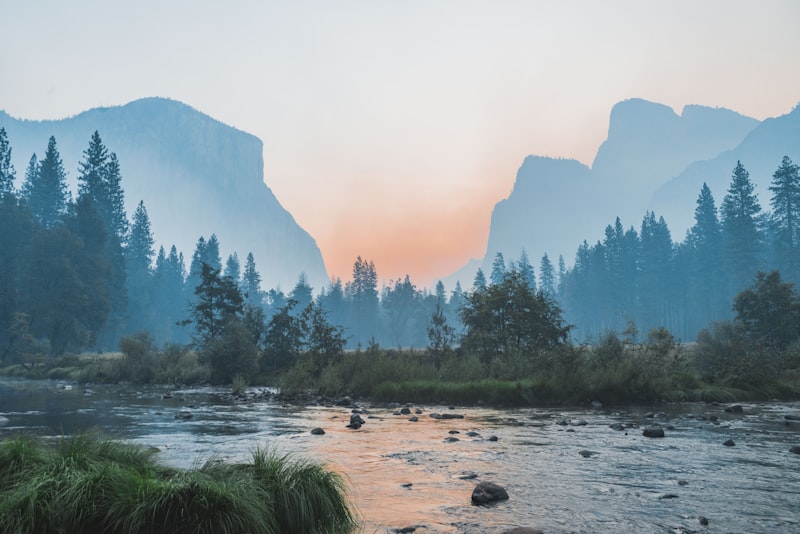
Masivul Bucegi, Jud. București
Tur Ghidat Montan în Masivul Bucegi
Trasee montane ghidate de salvamontiști către punctele panoramice emblematice și cascade alpine spectaculoase.
WHEN
Zilnic în sezon (Iunie - Octombrie)
On foot, exploration gains depth
Discover the surroundings and local geography
Explore trails, terrain and natural landmarks around Romanian Peasant Museum (Muzeul Național al Țăranului Român).

Guides and practical tips
Useful travel articles
Travel guides, practical tips and itineraries for Muntenia (Wallachia).

Travel guide
Top 5 Atracții Turistice și Trasee Montane în Zona Moieciu - Bran
Descoperă cele mai spectaculoase peisaje carstice, chei adânci și cetăți medievale din imediata apropiere a stațiunii Moieciu.

Travel guide
Ghid de Drumeție: Traseul Moieciu de Sus spre Platoul Bucegi
Un itinerariu montan de o frumusețe rară ce urcă din Valea Băngăleasa spre Poiana Guțanu și crestele maiestuoase ale Bucegilor.

Travel guide
Castelul Bran: Istorie, Legende și Secrete Medievale
Află adevărata poveste a fortăreței medievale din Pasul Bran, reședința de suflet a Reginei Maria a României.
THE JOURNEY STARTS WITH AN IDEA
The next story is on the way.
From the first stop to the last stay, make room for a new Romania.
