


MONUMENT · MUNTENIA (WALLACHIA)
Sinaia Resort

Prahova, Prahova County
Add location to your trip planner.

Practical access information

VISITING HOURS
Mon: 12:00–17:00 · Tue–Sun: 09:00–17:00 (summer until 20:00)

TICKET PRICE
Adults: 45 RON · Students: 11 RON · Seniors: 23 RON · Guided tour included

RECOMMENDED VISIT DURATION
2–3.5 hours
Visitor information and guide
 Navigate with Google Maps

ABOUT SINAIA RESORT
An Entrance into the "Pearl of the Carpathians": Why Sinaia is a European Chapter of Royalty and Modernization
Sinaia is not merely a mountain resort with ski slopes and high-altitude air; it is a place where, within a single landscape, the Byzantine memory of a 17th-century foundation, the modernizing ambition of a new European dynasty, and the refinement of a summer capital built almost entirely around one idea converge: that a young kingdom at the "Gates of the East" can and must take its place, with dignity, among the great monarchies of Europe. Situated on the upper Prahova Valley, at the foot of the Bucegi Mountains, with its historic center around the 850-meter elevation and neighborhoods climbing toward Furnica, Sinaia bears the name of a monastery raised "in memory of the great Sinai," and from that monastery was born, in the 19th century, a destination that would become the symbol of Romanian royalty and one of the most visited dynastic residences in Eastern Europe.
The universal value of Sinaia lies not only in the natural beauty of the Bucegi, but in the way a landscape was transformed, with painstaking care and meticulous international coordination, into an instrument of political legitimacy. Here, Carol I of Hohenzollern-Sigmaringen built his summer residence; here, in neighboring houses, lived the heirs to the throne; here, an urban elite was born that copied, on a reduced scale, the models of Paris, Vienna, London, Munich, or Rome; here, the Orient Express and the Arlberg Express stopped; here, decisions of neutrality were made in 1914 and decisive battles were fought in 1916; here, in stone, wood, glass, and gardens, was written the story of a country that wanted to be seen as part of Western Europe. In 2024, the "Royal Residences of Sinaia" ensemble was proposed for the UNESCO Indicative List, with criteria (ii), (iv), and (vi), precisely because it represents a 19th-century European phenomenon: the consolidation of power through dynastic alliances, through historicist architecture, and through the transplantation of Western cultural models into a borderland space, at the contact between the Latin, Slavic, and Ottoman worlds.
Historical Roots: From Pilgrimage to Sinai to the Birth of a Summer Capital
Before kings, Sinaia was a forest. The first inhabitants of the area were the monks of a boyar foundation: the Great Spătar Mihail Cantacuzino, related to the great ruling families of Wallachia and founder of Colțea Hospital in Bucharest, made a pilgrimage to the Holy Land and reached Mount Sinai, at the Monastery of Saint Catherine. Returning home, between 1690 and 1695, on a wooded plateau at the foot of Furnica, he raised a monastery which he named Sinaia, "in memory of the great Sinai," dedicating it to the Dormition of the Mother of God. The old church, with the feast of the Dormition of the Mother of God, preserves a Latin cross plan and a painting by Pârvu Mutu, the Cantacuzino painter, canonized in 2017; the sculpted portal depicts Moses with the tablets of the Law and Aaron with the budding staff, and in the center shines the coat of arms of the founder's family, the double-headed eagle with imperial insignia.
The position of the monastery was by no means accidental. The Prahova Valley was the old commercial road between Bucharest and Brașov, a bridge between Wallachia and Transylvania, located on the border with the Habsburg Empire. Therefore, the monastery also knew the harshness of history: Ottoman and Austrian invasions, looting, reconstructions, transformations. In 1864, the monastery estate was attributed to the Eforia of Civil Hospitals, which opened a hospital and baths here and put the mineral springs of the area to use, paving the way for the balneary vocation of the place. At that time, for almost eleven years, the monastery hosted the royal family while nearby Peleș was being built; in 1895, the former royal residence within the monastery enclosure became a religious museum, the first of its kind in the country, preserving the Bucharest Bible of 1688, icons by Pârvu Mutu, altar crosses, and the first printed music books in the Romanian language.
This succession — monastery, hospital, springs, royal residence, railway station, casino, villas, parks — explains why Sinaia did not grow organically, like a mountain village, but as a city designed from above. In 1874, at the initiative of the sovereign, the commune received the name Sinaia; a year later, the first boyar houses appeared in the center, and in 1876 work began on the Ploiești–Predeal railway, inaugurated in 1879. The railway was the engine of transformation: from a place of pilgrimage and passage, Sinaia became accessible to the Bucharest elite and, then, to European tourists. The German who commanded the future city was not an adventurer, but a Prussian prince, an artillery officer, educated in Münster and Berlin, accustomed to discipline, planning, and the public image of constitutional monarchy.
Prince Carol I and the Great Network of Dynastic Europe
Carol I, born Karl Eitel Friedrich Zephyrinus Ludwig of Hohenzollern-Sigmaringen on April 20, 1839, did not reach the throne of Romania through conquest, but through election. After the removal of Alexandru Ioan Cuza in February 1866, the Romanian elites sought a prince capable of guaranteeing stability, international recognition, and proximity to the great powers. The choice fell on a prince from the Catholic, Swabian branch of the House of Hohenzollern, related to the Prussian royal family and close, through matrimonial alliances, to the Bonaparte world: Carol's maternal grandmother, Stéphanie de Beauharnais, was related to Empress Joséphine and adopted by Napoleon I, which made Emperor Napoleon III favorable to the candidacy. In April 1866, Carol was elected ruler of the United Principalities of Moldavia and Wallachia, and in 1881, after the victory in the Russo-Turkish War and the recognition of independence through the Treaty of Berlin of 1878, he was proclaimed king.
This biography explains why Sinaia is so European. Carol did not come to a country he considered peripheral; he came with the consciousness of a civilizing mission, with a German education, with the military experience of the Austro-Prussian and Danish wars, with admiration for French models of administration and culture, and with the desire to link the new dynasty to the great courts of the continent. The signing of the secret alliance treaty with Germany and Austria-Hungary in 1883 placed Romania in the European alliance system, while the marriage of the heir Ferdinand to Princess Marie of Edinburgh, granddaughter of Queen Victoria and Tsar Alexander II, brought British and Russian blood into the Romanian royal family. Sinaia was the physical place where these alliances came to life: a royal domain built by a German king, decorated by Austrian, British, Italian, and French artists, inhabited by an English queen who became Romanian by vocation, visited by diplomats, musicians, and travelers from all the capitals of Europe.
King Carol I was present at Plevna in 1877, but he was also present at Sinaia every summer, for almost four decades, until his death on September 27/October 10, 1914. Here he received guests, signed acts, celebrated the castle's semicentenary in 1933 under Carol II, and attended, as founder, the transformation of a valley into a city. His legacy is not only architectural; it is also one of governance: he demonstrated that a new state can use art and heritage as a diplomatic language, that a summer residence can be at the same time a museum, an instrument of foreign policy, and an urban engine.
Peleș Castle: Masterpiece of Eclectic Historicism and Technical Innovation
Peleș Castle was conceived by Carol I as a summer residence, but also as a dynastic monument: the "cradle of the dynasty" and symbol of independence after 1878. The land, covering about five square kilometers in the Piatra Arsă area, was purchased from the Eforia of Hospitals in 1871/1872; work was launched in 1872/1873, the foundation stone was laid festively on August 10/22, 1875, and the inauguration took place on October 7, 1883. Construction continued, however, until 1914, so that Peleș is not a castle "finished" in one year, but a royal construction site that grew together with the country and its ambitions.
The first architect, the Austrian Wilhelm von Doderer, professor at the Technische Hochschule in Vienna, presented three projects inspired by French Renaissance castles of the Loire Valley and by Viennese Ringstrasse architecture. Carol rejected them: they were too expensive and not original enough. The winning project belonged to the German Johannes Schultz, who proposed an Alpine residence, with Swiss chalet accents and an exterior decoration in Fachwerk style, that is, with exposed beams and infill panels, in direct dialogue with 16th-century German architecture and Alpine romanticism. After 1890, the Frenchman Émile André Lecomte du Noüy, a disciple of Viollet-le-Duc, added the Moorish Hall, and the Czech architect Karel Liman, active at Sinaia from 1894/1896 until 1924, gave the castle its definitive silhouette: towers, fragmented roofs, verticalized facades, a central tower of 66 meters, and a composition that does not imitate a single European palace, but summons them all.
Inside, Peleș is a true European "museum of styles." The Hall of Honor, built between 1907 and 1911 after the model of the Fredenhagen Hall in the Chamber of Commerce in Lübeck, is dressed in carved wood, with Baroque accents, by the Viennese decorator Bernhard Ludwig; the Florentine Hall, the Hall of Columns, the Moorish Hall, the Imperial Apartment, the apartments of the crown princes, the theater transformed into a cinema in 1906, and the armory rooms compose a route that passes from German and Italian Renaissance to Austrian Baroque, from French Neoclassicism to Art Nouveau and Moorish motifs. The collections were gathered from the great workshops of Europe: furniture from Hamburg, Cologne, Munich, Nuremberg, and Paris; glassware from Viennese workshops; carpets from Smyrna; silver and goldsmith pieces from France and Germany. UNESCO mentions original contributions by Gustav Klimt, panels by Dora Hitz, and works by sculptors Rafaello Romanelli, Martin Stöhr, Oscar Han, and Oscar Späthe, alongside copies after famous masterpieces — the spiral staircase of Bremen City Hall, sculptures from the gardens of Versailles, Neptune from Piazza della Signoria, figures from the Trevi Fountain or from the Vatican — chosen precisely to anchor the new dynasty in the cultural history of Europe.
Beyond decoration, Peleș was also a technical laboratory. The electrical network was installed in 1884, and in 1897 its own hydroelectric power plant was built, which makes Peleș, according to UNESCO sources, the first European royal residence fully electrified through its own installation; in 1888 the hydraulic elevator appeared, in 1883 fire hydrants brought from Germany, and central heating was entrusted to the Polish inventor Franciszek Rychnowski. The castle also had a centralized cleaning system, inspired by the sanitary innovations of the great European cities. These details are not technical anecdotes: they show that the Romanian kingdom, although young, could afford to commission the most modern solutions of the moment and integrate them into an architecture that spoke of history.
Pelișor and Queen Marie: Art Nouveau as a National and European Gesture
If Peleș is the work of Carol I, Pelișor is the work of the heirs and, above all, of a queen. Built between 1899 and 1902/1903, at the order of Carol I, as a gift for the crown princes Ferdinand and Marie, Pelișor — "the little Peleș" — was designed by Karel Liman in a style that combines Art Nouveau/Art 1900, British Arts and Crafts, and Neo-Romanian elements. The exterior preserves Fachwerk elements to integrate into the ensemble, but adds towers covered with colored shingles, similar to the turrets of the churches of Bukovina, and the interior is a personal declaration by Queen Marie: the Golden Room, the chapel, the studies, the salons with Viennese and British furniture, Tiffany and Lalique glassware, panels with Byzantine and Celtic motifs, spatial divisions inspired by Brâncovenesc architecture and by traditional houses of the Prahova Valley.
Queen Marie, born Princess Marie of Edinburgh on October 29, 1875, was a granddaughter of Queen Victoria through her father and of Tsar Alexander II through her mother; she married Ferdinand on January 10, 1893, at Sigmaringen, and came to a country she learned to love more than her own comfort. At Pelișor, she refused the solemn historicism of her uncle and chose a new, personal art, in which "the beautiful" was a creed. She decorated the interiors in stages, between 1902–1903 and 1925–1928, leaving behind the aphorism: "If all beautiful things will remind you of me, I will be fully rewarded for the love I bore you, for to me the beautiful was a creed." She died at Pelișor on July 18, 1938, and her memory remains linked to this place more than to any other palace.
Pelișor is, therefore, the bridge between two Europes: the imperial, dynastic-military Europe of Carol I and the alliance with Germany and Austria-Hungary, and the cosmopolitan, artistic Europe of Queen Marie, raised between Kent, Malta, Coburg, and Saint Petersburg, but definitively attached to Romania. Between 1914 and 1927, when Ferdinand became king, Pelișor was the residence of the second royal couple; during the First World War, Queen Marie was present in hospitals and on the front, and Sinaia remained a symbol of resilience. After 1947, when the communists nationalized the domain, Pelișor was transformed into a house for artists and party members; after 1989, it returned to the public circuit as a museum, preserving intact that atmosphere of "dream house" that Marie had built.
Sinaia Monastery, the Royal Station, and the Court-City
Sinaia is not limited to the two castles. Between the monastery and the royal domain stretches the city itself, with Dimitrie Ghica Park, with the Casino, with the boyar villas, with the early 20th-century hotels, and with the railway station. The Sinaia Casino, built at the initiative of Carol I between 1912 and 1913 according to the plans of architect Petre Antonescu, on the site of the resort's first villa, Vila Ghica, was conceived as a European luxury center: the main shareholder was Baron de Marçay, connected to the Casino of Monte Carlo, and the inauguration was marked by a recital by George Enescu, by the presence of Alexandru Davila and Titu Maiorescu, and by the splendor of the international press. After 1947, gambling ceased, and the building became an international conference center, preserving, however, the silhouette and aura of an era when Sinaia was compared to the great European resorts.
Sinaia Station adds another European dimension. In addition to the public station, the city had a royal station and a ceremonial station, inaugurated in 1939 according to the plans of Duiliu Marcu, in a Neoclassicism with arcades and rustic stone, destined for the royal family and state guests. Over time, the Orient Express and the Arlberg Express stopped at Sinaia; the station platform preserves the memory of dramatic events, such as the assassination of Prime Minister Ion G. Duca in 1933, and in 1975 American President Gerald Ford and Nicolae Ceaușescu met here. The train was not only a means of transport; it was the infrastructure that brought diplomacy, the press, tourists, and ideas to Sinaia.
In the Cumpătu neighborhood, on the right bank of the Prahova, Vila Luminiș, built between 1923 and 1926 by architect Radu Dudescu in Neo-Brâncovenesc style, was the refuge of George Enescu. The connection between the composer and the royal court had begun earlier: Queen Elisabeth, also known by the literary pseudonym Carmen Sylva, offered Enescu a room in Peleș Castle and invited him to play at court, opening the way for him to the great stages of Europe and America. Enescu lived at Luminiș from 1926 to 1946 and donated the villa to the state in 1947, with the thought that it should become a creative house for artists; since 1995 it has functioned as a memorial, preserving his Ibach piano and the bust made by Ion Irimescu. This musical presence completes the portrait of Sinaia: not only royal stone, but also sound, poetry, artistic memory.
Climate, Mineral Waters, and the Mountain: The Balneo-Climatic Resort
Beyond history, Sinaia remains a balneo-climatic resort in the classic European sense. The subalpine climate, with cool summers and moderate winters, is influenced by the Prahova corridor, which attenuates the winds; the lower atmospheric pressure, the clean air, free of dust and allergenic agents, rich in ozone and ultraviolet radiation, the strongly ionized atmosphere, and the springs with sulfurous, bicarbonate, calcic, magnesian, and oligomineral waters have made Sinaia, since the 19th century, a place indicated for neurasthenia, digestive and hepatobiliary ailments, but also for rest. The Eforia of Civil Hospitals was the key to this vocation: the hospital and baths opened around the monastery transformed a place of pilgrimage into a therapeutic center, and King Carol I contributed to the development of the monastery's great church, electrified in 1906, among the first electrically lit churches in the country.
The mountain completes the cure. The Bucegi, with their escarpment of over a thousand meters above Sinaia, offer ski slopes on two major levels, Cota 1400 and Cota 2000, served by cable car, gondola, chairlift, and T-bar, as well as trails toward Furnica, Vârful cu Dor, Piatra Arsă, Babele, the Sphinx, and Omu. The Bucegi Natural Park, with an area of over 32,000 hectares and strictly protected zones, hosts remarkable biodiversity; at the same time, the area preserves natural monuments and botanical reserves, and protection rules prohibit the gathering of protected plants such as rhododendron, edelweiss, or yellow gentian. In winter, the resort becomes a city of snow; in summer, a platform for hiking, cycling, and climbing; in autumn, a setting of tranquility in which the transition from the Belle Époque to modernity is felt almost physically.
1916–1947: Wars, the Heroes' Cross, and the Last Royal Train
Sinaia was also a witness to moments when Europe tore itself apart. In 1914, after the assassination at Sarajevo, the Crown Council of Sinaia decided on neutrality, although Carol I, bound by the secret treaty of 1883 to Germany and Austria-Hungary and related to the German imperial family, would have wanted entry on the side of the Central Powers. Two years later, when Romania entered the war on the side of the Entente, the Prahova Valley became one of the gates of defense of the capital; in October–November 1916, German and Austro-Hungarian forces tried to descend toward Bucharest, meeting Romanian resistance in the Carpathian passes and in the Predeal–Sinaia area. Peleș Castle was used as a military hospital, and Queen Marie, with the energy that characterized her, became directly involved in caring for the wounded.
After the war, the mountains received a monument that speaks of sacrifice more powerfully than any speech: the Heroes' Cross on Caraiman, raised between 1926 and 1928 at the initiative of Queen Marie and King Ferdinand, at the altitude of 2,291 meters, in memory of the railway heroes fallen in the First World War. With a height of 39.3 meters, designed by architects Georges Cristinel and Constantin Procopiu and built from riveted metal rails, the cross was inaugurated on September 14, 1928, and can be seen from tens of kilometers, from the Prahova Valley, as a vertical presence over the entire story of Sinaia. In 1947, after the forced abdication of King Michael, the last royal train left Sinaia; the domain was nationalized in 1948, Peleș became a museum in 1953, and Pelișor was used by the communist regime as a house for artists and dignitaries. The public reopening after 1989 and the restitution to the Royal House, with administration by the Romanian state through the Peleș National Museum, closed a circle: a place confiscated by history returned to the public circuit, without having lost its soul.
Universal Value and Heritage Status
The proposal of "Royal Residences of Sinaia" for the UNESCO Indicative List on April 15, 2024, is not a simple administrative file. It recognizes that the ensemble in Prahova is a rare example of "eclectic historicism" and innovative engineering, born from the political will of Carol I and from the solid artistic education of a dynasty that wanted to legitimize itself in its adoptive country and to raise Romania's prestige on the international stage. UNESCO explicitly compares Sinaia with the residences of Ludwig II of Bavaria — Neuschwanstein, Linderhof, Herrenchiemsee — with the cultural landscape of Sintra, with Miramare, or with the ensemble of Schwerin: all are expressions of the same European phenomenon, through which monarchs and aristocrats used castles and gardens to consolidate power through family alliances and to demonstrate belonging to a common civilization. The specific difference of Sinaia is precisely the hybridization: a German king, a British queen, Austrian, Czech, French, and British architects, Viennese decorators, Italian and German sculptors, gardeners of the former Emperor Maximilian of Mexico, Italian, German, Hungarian, Turkish, Polish, Czech, English, and French workers — all worked at the foot of the Bucegi to make a valley a royal "home."
From a heritage perspective, the ensemble is a historic monument of national and international interest; the monastery has the code PH-II-a-A-16691, and Vila Luminiș is inscribed on the list of historic monuments. The Bucegi are a natural park and a Natura 2000 site, and their protection intertwines with the conservation of the royal domain: the same landscape that attracted Carol I in 1866 is today protected against chaotic development. This simultaneity — culture, nature, technique, diplomacy — is the essence of Sinaia's universal value: not an isolated castle, but a territory where Europe met the Carpathians.
Practical Guide 2026: Schedule, Tickets, Itineraries, and the Visitor Experience
For today's European visitor, Sinaia is one of the most accessible major destinations in Romania: it is located on the Bucharest–Brașov railway mainline, about 120–135 km from Bucharest, 45–50 km south of Brașov, and 60–65 km northwest of Ploiești, on DN1/E60, and Henri Coandă International Airport is approximately 106 km away. Direct trains from Bucharest take about an hour and a half, and from Brașov under an hour; from the station, the castle can be reached either on foot or by taxi/local transport, and the road to Peleș passes through the royal park, with a final stretch of about 800 meters on a sloping alley, which is why comfortable footwear is essential.
At the time of writing, in October 2026, the Peleș National Museum announces the following rules for the two castles. Peleș is open Wednesday between 10:00 and 17:00 and Thursday–Sunday between 09:15 and 17:00, being closed Monday and Tuesday; Pelișor has the same schedule, with last entry at 16:15. Access is on the basis of tickets with time slots, in a system designed for the protection of the monuments: maximum 2,000 visitors per day at Peleș and 1,500 at Pelișor. The official rates are, for Peleș (ground floor and first floor), 100 lei for adults, 50 for pensioners, 25 for pupils and students, and 25 for holders of the European Youth Card; for Pelișor (full tour), 30 lei adults, 15 pensioners, 7.5 lei pupils/students and holders of the European Youth Card. Tickets are purchased online at bilete.peles.ro or at the vending machines near the monuments, cannot be rescheduled or refunded, and guided tours in English are included, without additional charge, at fixed times displayed by the museum. There are closure periods for conservation: Pelișor is closed between September 28 and November 3, 2026, and Peleș between November 2 and December 1, 2026; therefore, any itinerary must be checked before departure. Inside, amateur photography without flash is permitted for personal use, publication being prohibited without the museum's consent; pets are not admitted, and backpacks and coats can be left at the cloakroom.
The ideal journey begins early in the morning, at the castle's opening, when the light falls differently on the wooden and stone facades of Peleș. After the interior visit — approximately two hours for a complete route, more if Pelișor is added — it is worth walking the alley between the two castles, with the Foișor nearby and with the perspective toward the Bucegi. The descent toward the monastery brings a necessary contrast: from the court's splendor to the cell's tranquility, from gold and crystal to stone and fresco, from European diplomacy to Orthodox prayer. Then, Dimitrie Ghica Park and the Casino offer the image of the resort city, and Vila Luminiș, beyond the railway, completes the portrait with Enescu's memory. In winter, the same city becomes a ski slope: the cable car and gondola rise toward Cota 1400 and Cota 2000, and from there the trails lead toward Furnica, Vârful cu Dor, Babele, and the Sphinx. In summer, the same cable installations open the way to the plateau, toward the Caraiman Cross and toward the Bucegi ridge.
The experience of Sinaia is, in essence, one of mutual recognition. The European visitor recognizes in Peleș the echo of the Rhine and the Loire, of Vienna and London, of Versailles and Lübeck; at the same time, they discover the Romanian specific: the Brâncovenesc of the monastery and of Luminiș, Bukovina in the turrets of Pelișor, the mountain dust of the Bucegi, the tranquility of a resort that knew how to remain elegant without becoming a dead museum. For this, Sinaia deserves more than a one-day stop: it deserves a stay in which the castle, the mountain, the monastery, and the station are read together, as pages of the same story — the story of a place where Europe settled at the foot of the Carpathians and decided to remain.
Media gallery
Discover Sinaia Resort in pictures

2 photos · Architecture, courtyards and captivating details


Image source: Wikimedia Commons · Public domain photos · Free license
STAY A FEW DAYS, DISCOVER THE MAGIC
Stays near Sinaia Resort

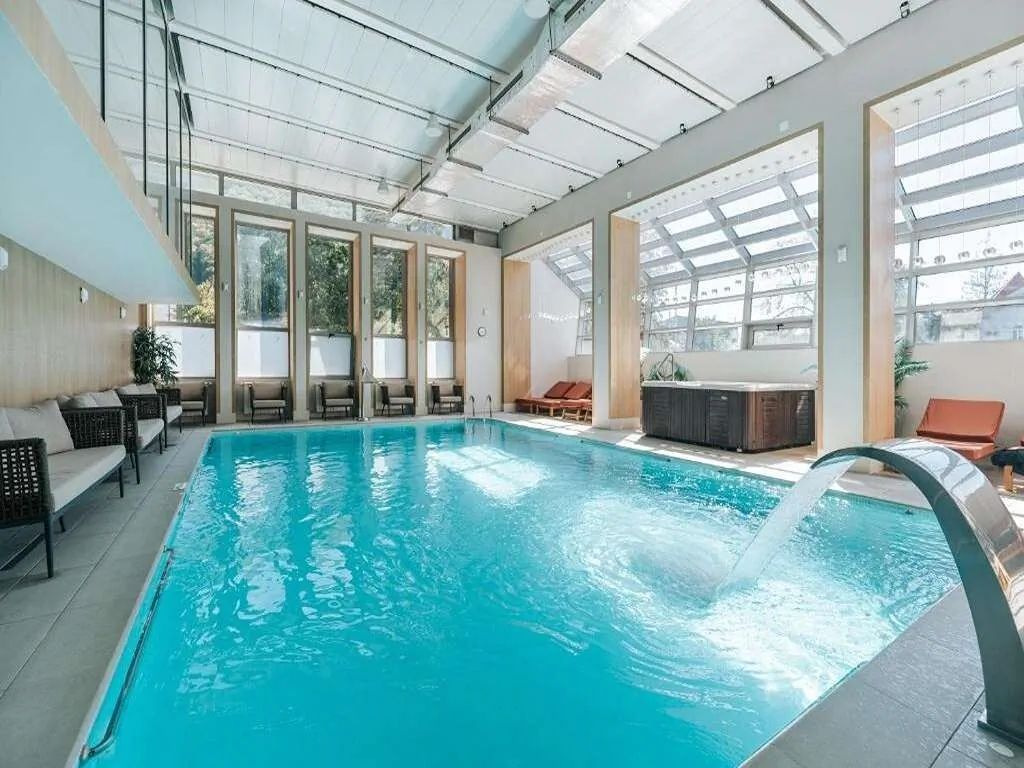
Hotel · 4 stars

Sinaia, Sinaia County · 0.0 km
Hotel Sinaia Sinaia
Hotel Sinaia se află în inima uneia dintre cele mai iubite stațiuni montane din România,oferind o bază primitoare și confortabilă, indiferent dacă ești aici pentru un weekend sau ovacanță mai lungă.Camerele sunt amenajate cu atenție, cu finisaje moderne și menținute la un standardexcepțional de curățenie, tocmai acel tip de detaliu care îi face pe oaspeți să revină an dupăan. Când vine vorba de masă, restaurantul hotelului este disponibil la orice oră a zilei, astfelîncât să nu fie nevoie să cauți altceva.După o zi petrecută explorând munții, spa-ul și piscina interioară sunt acolo pentru a-ți oferiliniștea meritată.*Informații importante:- Accesul la facilități este gratuit între orele 9:00 și 18:00, cu rezervare prealabilă.- Accesul de seară, între 18:00 și 20:00, este disponibil la tariful de 20 RON/adult și 10RON/copil.- Pentru cei care doresc o atmosferă mai liniștită, sesiunile Adults Only au loc între20:00–21:00 în zilele de săptămână și 20:00–22:00 în weekend, la tariful de 20 RON/adult. Serviciile de cosmetică și masaj sunt contra-cost. Rezervarea prealabilă este obligatorie.- Copiii cu vârsta peste 7 ani necesită un pat suplimentar, cu cost adițional, în funcție dedisponibilitate.
FROM
420 RON / night

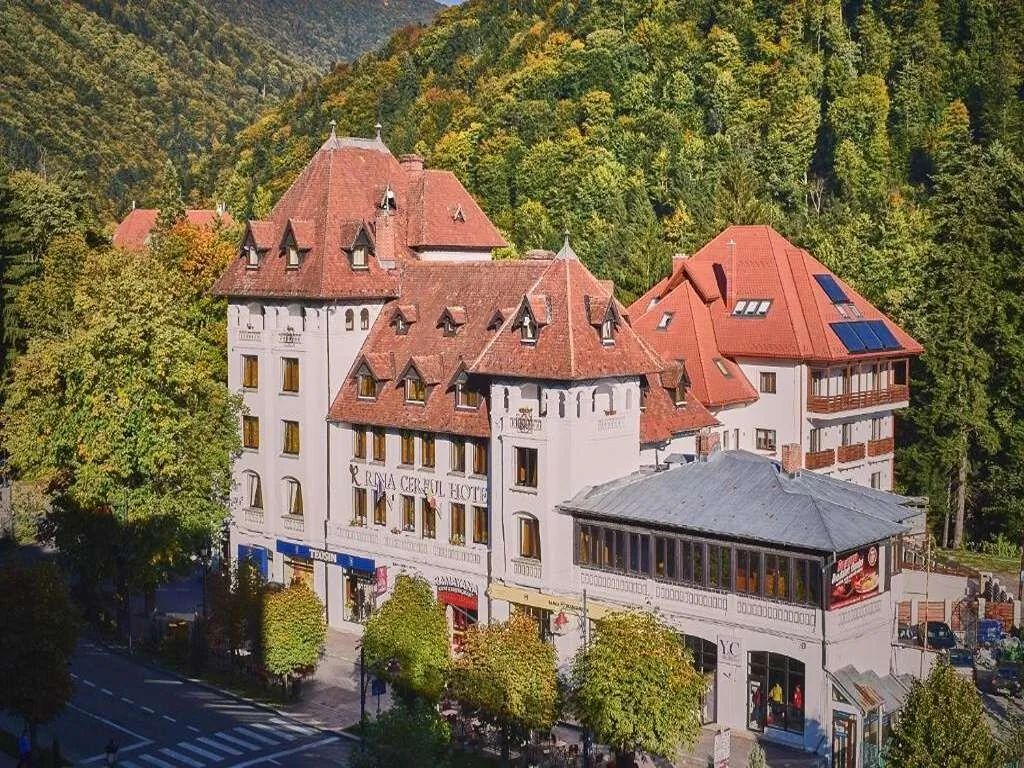
Hotel · 2 stars
Sinaia, Sinaia County · 0.1 km
Hotel Rina Cerbul Sinaia
Camere, serviciiHotel Rina Cerbul Sinaia Sinaia va intampina cu 37 camere confortabile si placut amenajate. Daca doriti sa aflati mai multe detalii despre facilitatile disponibile la Hotel Rina Cerbul Sinaia, respectiv despre amenajarea camerelor, va rugam consultati informatiile de mai jos. Servicii de masăTarifele contin numai cazare. PlatăPlata rezervarii se poate face cu/prin: transfer bancar, card de vacanță, avans travelminit, voucher travelminit. Pentru asigurarea rezervarii este necesar sa achitati un avans de 100%. Sosire, programPreluarea camerei se face de la ora 15:00 si iesirea pana la ora 12:00. Personalul de la receptie vorbeste limba română.
FROM
210 RON / night
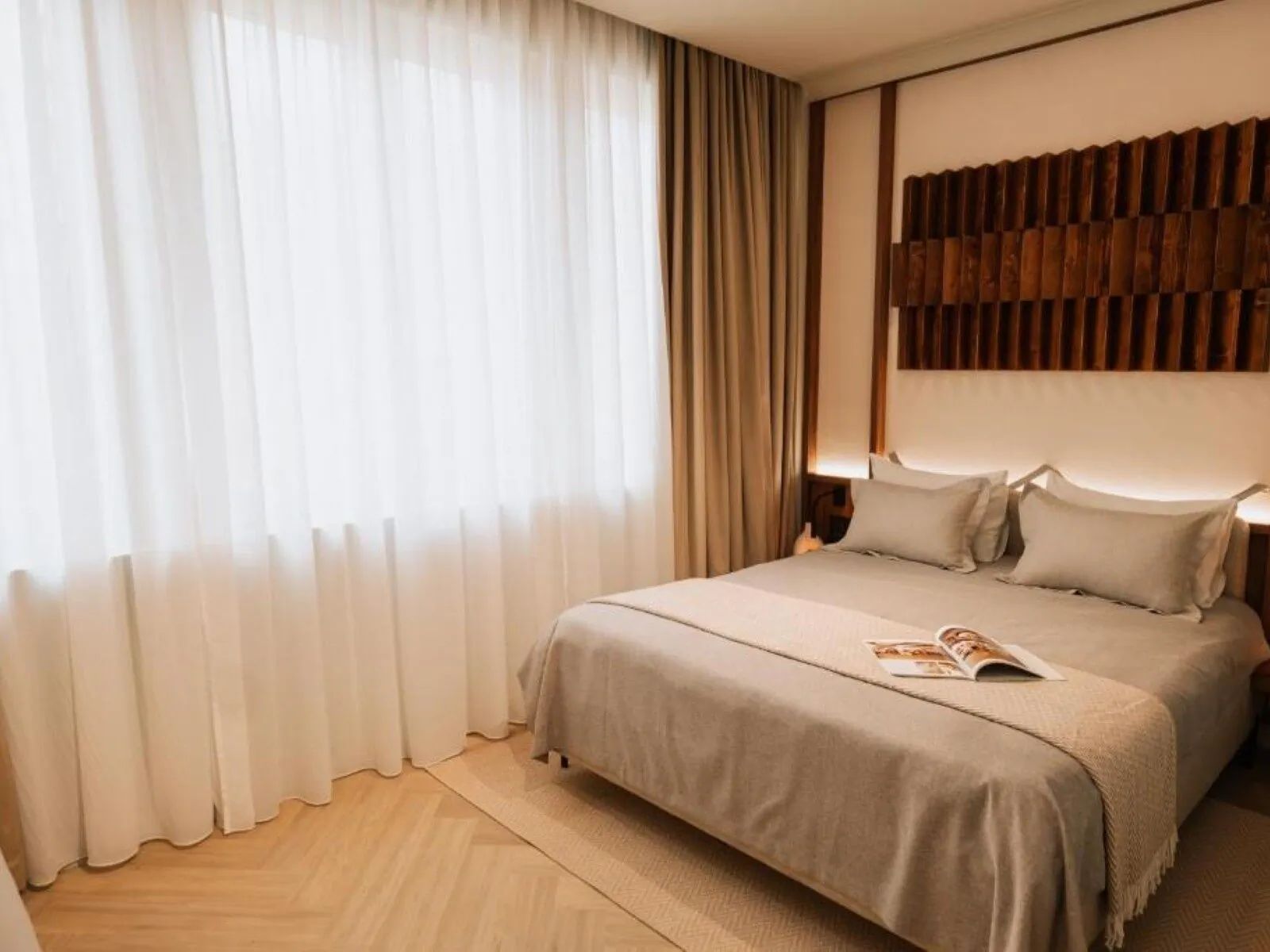
Hotel · 2 stars
Sinaia, Sinaia County · 0.1 km
Parc Suites by Hotel Cerbul Sinaia
La acest hotel, camerele sunt echipate cu birou. Camerele de la Parc Suites by Hotel Cerbul au o baie proprie cu duș și articole de toaletă gratuite. Unele camere includ și o vedere la oraș. Camerele de la Parc Suites by Hotel Cerbul sunt dotate cu televizor cu ecran plat și un uscător de păr. La acest hotel este disponibil un mic dejun tip bufet.
FROM
210 RON / night
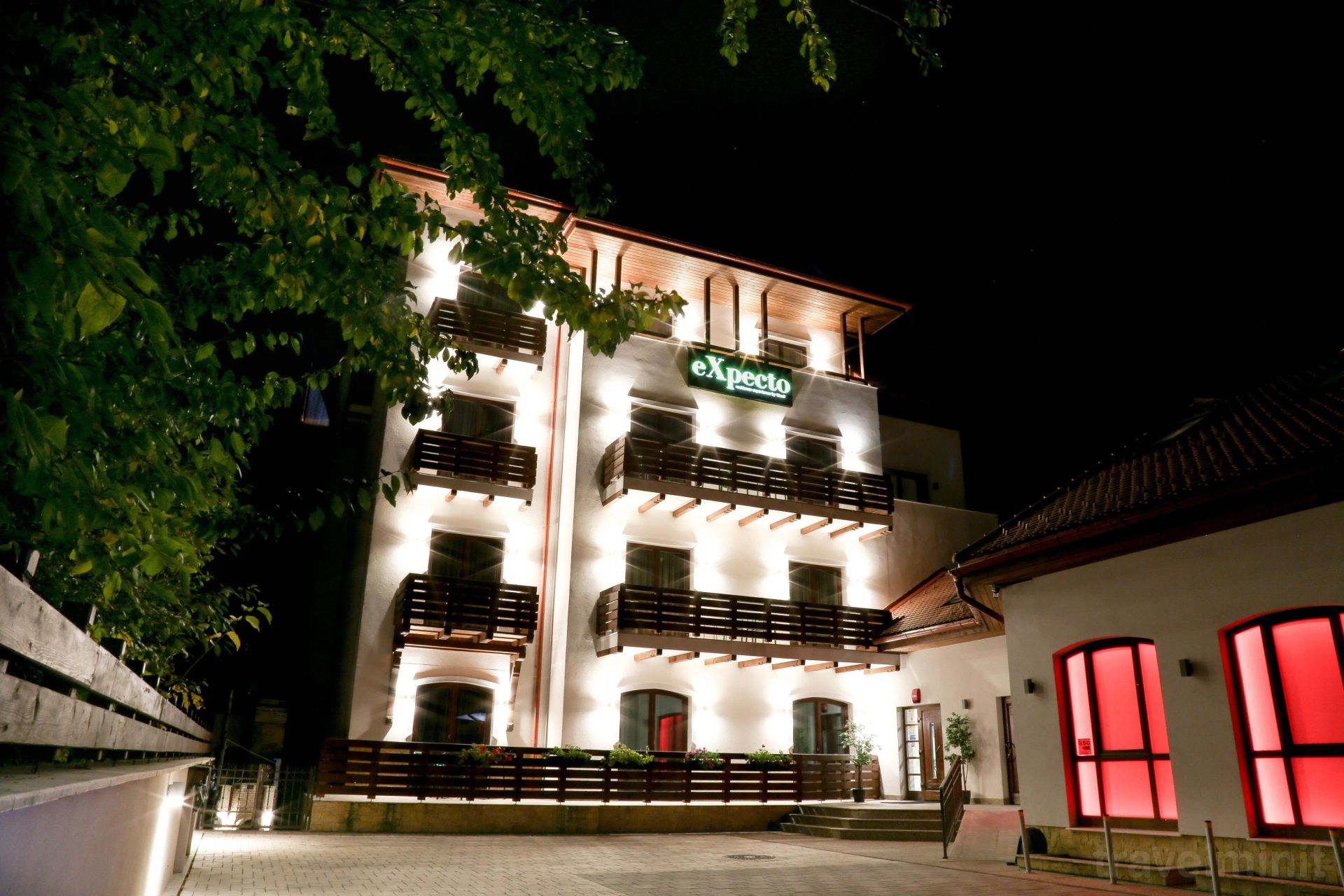
Apartament · 3 stars
Sinaia, Sinaia County · 0.1 km
Expecto Apartments Sinaia
Camere, serviciiExpecto Apartments Sinaia Sinaia va intampina cu camere confortabile si placut amenajate. Proprietatea ofera parcare gratuita. Unitatea va pune la dispozitie internet wireless. Mai multe detalii despre facilitatile oferite de Expecto Apartments Sinaia (inclusiv cele contra cost), cat si despre dotarile camerelor veti gasi mai jos. LocațiaUnitatea de cazare este amplasata la 200 m distanta fata de Ștrand Sinaia. Servicii de masăTarifele contin numai cazare. PlatăPlata o puteti face cu/prin: card bancar, transfer bancar, card de vacanță, avans travelminit, voucher travelminit. Pentru asigurarea rezervarii este necesar sa achitati un avans de 100%. Sosire, programPrimirea camerei se face incepand cu ora 15:00 si eliberarea camerei se face pana la ora 12:30. Personalul de la receptie vorbeste limba: engleză, română.
FROM
230 RON / night
Apartament · 3 stars
Sinaia, Sinaia County · 0.1 km
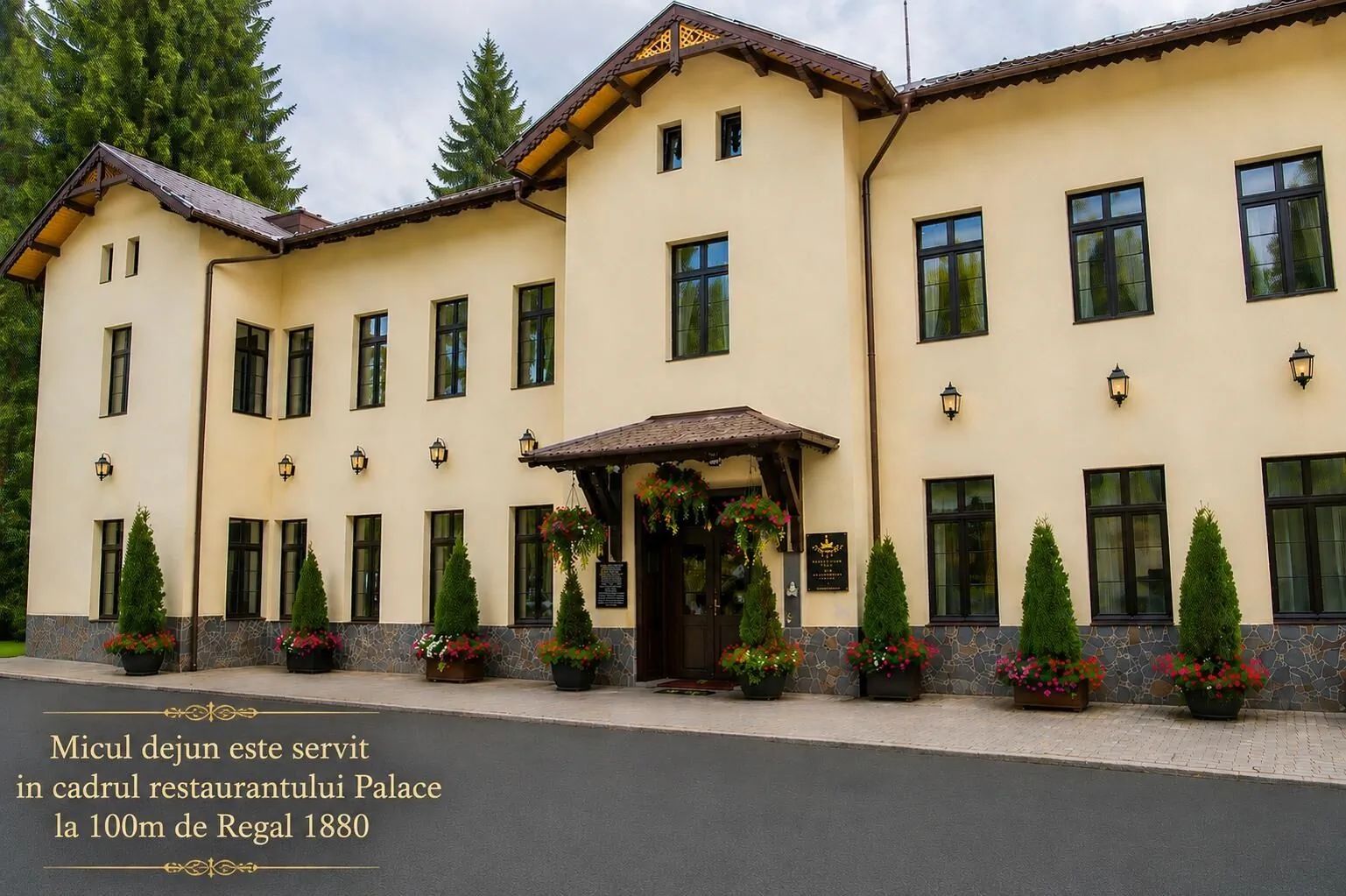
Regal 1880 Sinaia
Micul dejun este servit în cadrul restaurantului Palace, la 100 metri de Regal 1880.
FROM
230 RON / night
Vilă · 3 stars
Sinaia, Sinaia County · 0.2 km
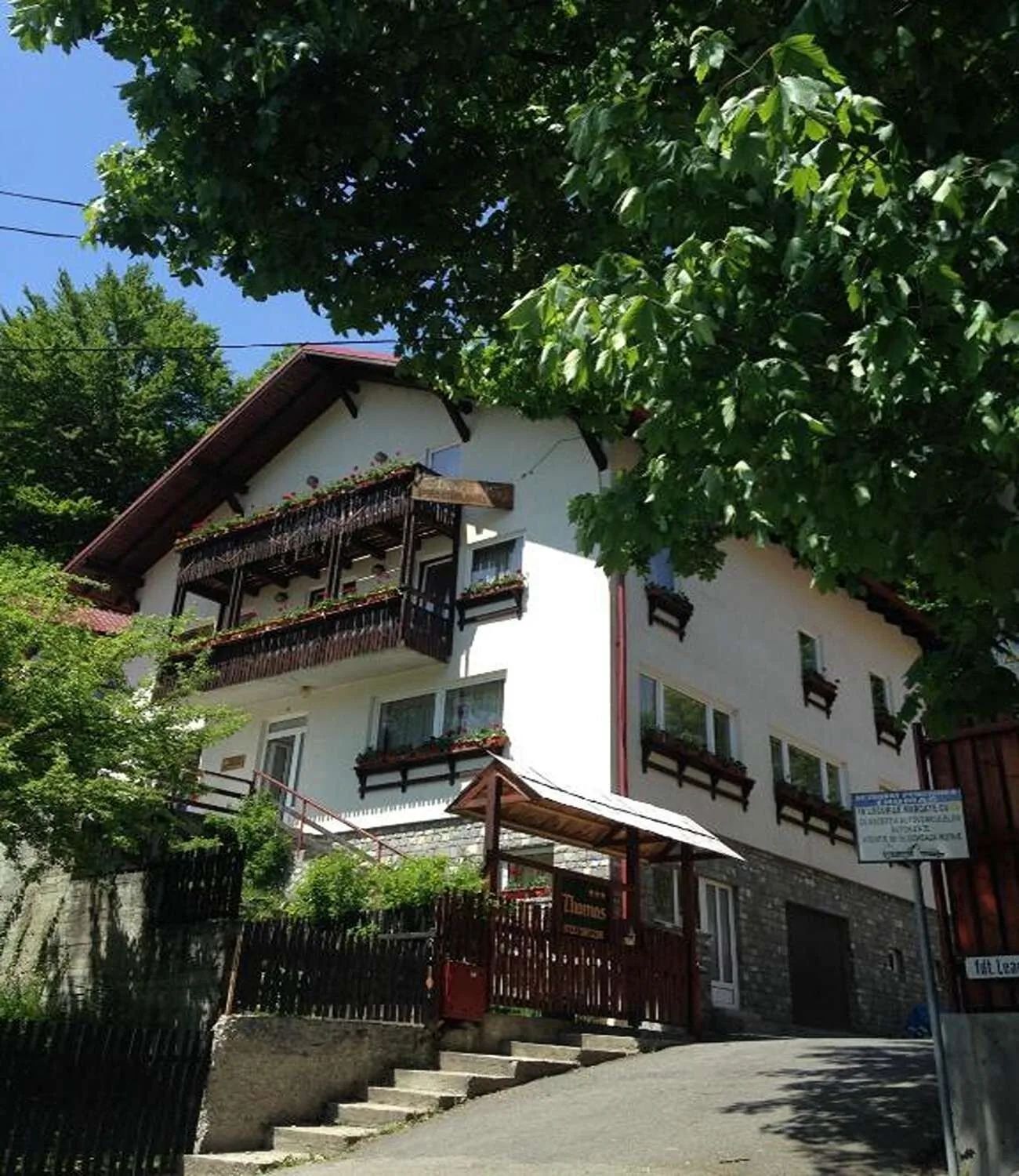
Vila Thomas Sinaia
Camere, serviciiVila Thomas Sinaia Sinaia ofera 7 camere dotate cu bun gust. Anumite camere sunt echipate cu aer conditionat, pentru a va asigura tot confortul cuvenit pe perioada sejurului. (Pentru mai multe informatii consultati la fiecare tip de camera rubrica "detalii"). Toate camerele sunt prevazute cu bai. Mai multe informatii despre serviciile unitatii de cazare (inclusiv cele contra cost) si despre dotarea camerelor gasiti in fisa de mai jos. Servicii de masăPreturile afisate nu includ masa. PlatăPuteti face plata cazarii cu/prin: numerar, card de vacanță, transfer bancar, card de vacanță, avans travelminit, voucher travelminit. Sosire, programPrimirea camerei se face incepand cu ora 14:00 si eliberarea camerei se face pana la ora 11:00. La receptie se vorbeste limba: engleză, română.
FROM
280 RON / night
BEFORE YOU HIT THE ROAD
Weather conditions in Prahova
Local forecast for Sinaia Resort, Prahova, Prahova

Real-time updated weather data
Much more to explore in this area
Nearby tourist attractions


Bran, Brașov County
Bran Castle
Situat pe strada General Traian Mosoiu nr. 28 din localitatea Bran, la 30 km de municipiul Brasov; construit in anul 1377 in scop militar; in anul 1395, este...
23.0 km

Sinaia, Prahova County
Peleș Castle
Situat pe strada Pelesului din Sinaia; piatra de temelie a castelului se pune in 1873, aici fiind ingropate si cateva zeci de monede de 20 de lei, din aur -...
1.0 km

Brasov, Brașov County
Black Church
Situata in curtea Honterus nr. 2 din municipiul Brasov; construita intre secolele XIV - XV; o inscriptie din interior il atesta ca prim ctitor pe Thomas; din...
32.9 km

Brasov, Brașov County
Prejmer Fortified Church
Situata in localitatea Prejmer, la 15 km de municipiul Brasov; cea mai mare biserica fortificata din sud-estul Europei; construita in secolul al XIII-lea; are...
44.7 km

Prahova, Prahova County
Castelul Pelișor
Situat in parcul Castelului Peles, pe Valea Prahovei; ridicat intre anii 1899 si 1902; in 1903 a devenit resedinta de vara a principilor mostenitori;...
1.2 km

Brasov, Brașov County
Parcul natural Munții Bucegi
Situat in Muntii Bucegi, se intinde pe raza comunelor Rasnov, Bran, Moeciu; zona Muntilor Bucegi a fost propusa pentru protejare in anul 1936, dar initiativa s-...
18.0 km

Râșnov, Brașov County
Cetatea Râșnov
Situata in orasul Rasnov, la 15 km de municipiul Brasov; construita in secolele XIII - XIV de catre locuitorii zonei, in scopul apararii impotriva atacurilor...
27.2 km

Prahova, Prahova County
Salina Slănic Prahova
Situata in localitatea Slanic Prahova; lucrarile miniere de deschidere a minei "Unirea" au inceput in anul 1938, iar exploatarea sarii din aceasta mina s-a...
33.3 km

Brasov, Brașov County
Stațiunea Poiana Brașov
Situata la poalele muntelui Postavaru, la 12 km de municipiul Brasov; amplasata la altitudinea de 1.030 m, statiunea turistica Poiana Brasov a fost infiintata...
27.0 km

Brasov, Brașov County
Parcul Național Piatra Craiului
Situat in Carpatii Meridionali;include Creasta Pietrei Craiului in totalitate si spatiile din culoarele intramontane limitrofe, Rucar - Bran si Rucar -...
32.8 km

Brasov, Brașov County
Stațiunea Predeal
Situata pe Valea Prahovei, intre raurile Prahova si Timis, la 25 km de municipiul Brasov; amplasata la 1.100 m, este cea mai inalta asezare urbana din Romania;...
17.2 km

Prahova, Prahova County
Cazinoul din Sinaia
Situat in parcul "Dimitrie Ghica" din localitatea Sinaia; reprezinta si astazi unul dintre edificiile - simbol ale statiunii; construit in timp record, intre...
0.4 km
Cultural life and traditions
Events near Sinaia Resort
Medieval festivals, traditional fairs, concerts and recommended local activities in Muntenia (Wallachia).

Istorie și Arhitectură Regală

Prahova, Jud. Prahova
Zilele Regalității și Patrimoniului Văii Prahovei
Conferințe istorice deschise, tururi tematice de arhitectură regală, proiecții documentare și expoziții foto de epocă.
WHEN
10 - 12 Mai 2026


Gastronomie și Oenologie
Dealu Mare, Jud. Prahova
Festivalul Vinului Prahovean pe Drumul Vinului
Degustări ghidate de Fetească Neagră pe faimosul Drum al Vinului, vizite în crame istorice și întâlniri cu oenologi de top.
WHEN
În fiecare weekend (Septembrie - Octombrie)
Drumeții și Aventură
Masivul Bucegi, Jud. Prahova
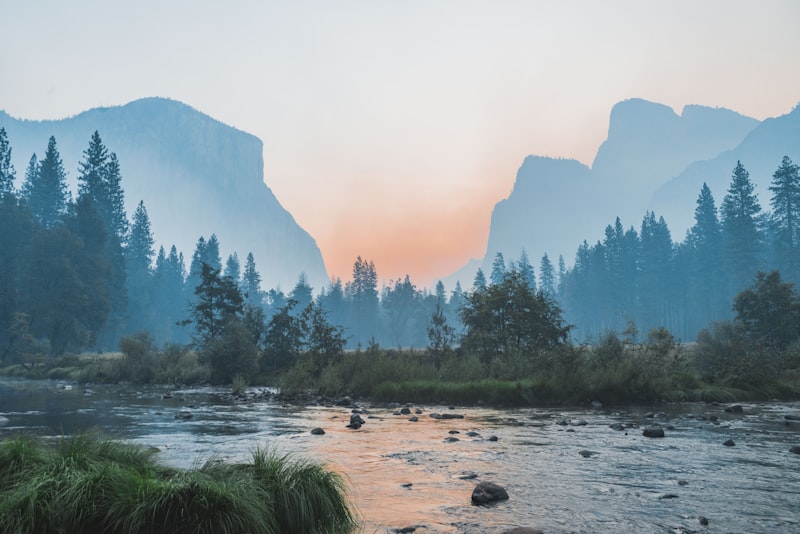
Tur Ghidat Montan în Masivul Bucegi
Trasee montane ghidate de salvamontiști către punctele panoramice emblematice și cascade alpine spectaculoase.
WHEN
Zilnic în sezon (Iunie - Octombrie)
On foot, exploration gains depth
Discover the surroundings and local geography
Explore trails, terrain and natural landmarks around Sinaia Resort.

Guides and practical tips
Useful travel articles
Travel guides, practical tips and itineraries for Muntenia (Wallachia).

Travel guide
Top 5 Atracții Turistice și Trasee Montane în Zona Moieciu - Bran
Descoperă cele mai spectaculoase peisaje carstice, chei adânci și cetăți medievale din imediata apropiere a stațiunii Moieciu.

Travel guide
Ghid de Drumeție: Traseul Moieciu de Sus spre Platoul Bucegi
Un itinerariu montan de o frumusețe rară ce urcă din Valea Băngăleasa spre Poiana Guțanu și crestele maiestuoase ale Bucegilor.

Travel guide
Castelul Bran: Istorie, Legende și Secrete Medievale
Află adevărata poveste a fortăreței medievale din Pasul Bran, reședința de suflet a Reginei Maria a României.
THE JOURNEY STARTS WITH AN IDEA
The next story is on the way.
From the first stop to the last stay, make room for a new Romania.
