


CASTLE · TRANSYLVANIA
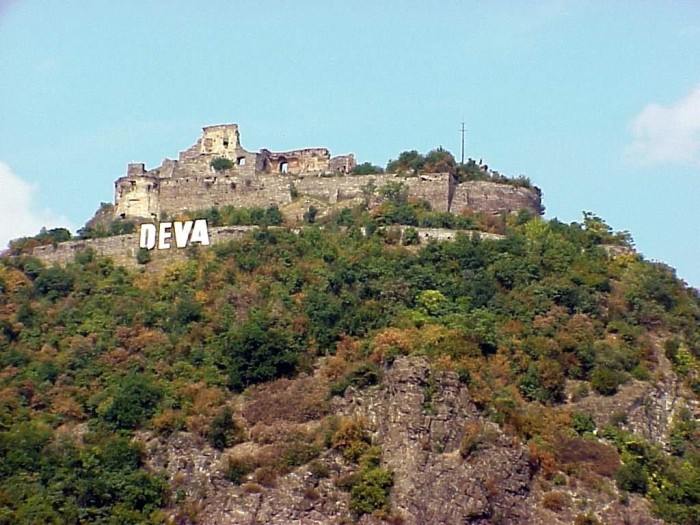
Deva Fortress

Hunedoara, Hunedoara County
Add location to your trip planner.
Practical access information

VISITING HOURS
Check the local visiting schedule

TICKET PRICE
Information available at the cashier's desk

RECOMMENDED VISIT DURATION
1-2 hours
Sources and external references
Wikipedia Encyclopedia (EN)
Visitor information and guide
 Navigate with Google Maps

ABOUT DEVA FORTRESS
Captivating Introduction and Heritage Significance
Rising majestically above the confluence of the Mureș River and the Cerna Stream, Deva Fortress stands on Fortress Hill as a silent witness to the passage of centuries—a stone silhouette steeped in history that dominates the Transylvanian landscape from miles away. Built upon a volcanic cone of andesitic tuff, this fortification is not merely an exceptional military monument but also a symbol of civilizational continuity in the heart of Central Europe, marking the spectacular transition from the ancient Daco-Roman world to the European Middle Ages. For the cultured traveler traversing the roads of the old continent, Deva Fortress offers a profound experience, where the archaeological layers of a Dacian oppidum overlap with the foundations of a medieval stronghold designed to defend Christendom’s borders against Ottoman expansion. Strategically positioned at the intersection of the Apuseni Mountains and the Tisza Plain, this fortress served for seven centuries as a crucial node in the defensive network of the Kingdom of Hungary and later the Habsburg Monarchy, bearing witness to decisive moments that shaped the destiny of Southeastern Europe. Unlike the great fortresses of Western Europe, such as those along the Loire Valley or in the Rhineland, Deva Fortress retains a distinct aura, imbued with the spirit of a frontier zone where Byzantine, Hungarian, Ottoman, and Habsburg influences converged, leaving visible imprints in its stone and creating a unique architectural palimpsest in Europe’s heritage landscape.
Historical Roots and Major European Connections
The origins of Deva Fortress fade into the mists of time, rooted in the site of a fortified Dacian settlement of the oppidum type, an integral part of the defensive system of pre-Roman Dacia and possibly connected to the royal residence at Sarmizegetusa Regia, whose archaeological remains attest to the presence of an advanced civilization over two millennia ago. However, its true history begins in the 13th century, when, following the devastating Mongol invasion of 1241–1242 that ravaged Hungary and Central Europe, King Béla IV of Hungary initiated an extensive program of reconstruction and fortification along the kingdom’s borders. This effort mirrored similar endeavors by monarchs in Poland and Kievan Rus’ to rebuild their states after the Mongol catastrophe. In this tumultuous European context, the first documented mention of castrum Deva appears in 1269—a royal fortress designed to control the strategic Mureș Valley and secure the vital link between Transylvania and the central territories of the Hungarian crown. This period coincided with the rise of the Angevin dynasty and the consolidation of the Hungarian feudal state, akin to the processes of monarchical centralization in Capetian France or the Holy Roman Empire. The fortress quickly became an essential bastion in the anti-Ottoman defensive system, forming part of the line of fortifications that separated Christian territories from the expansion of the Ottoman Empire, much like the fortresses of Banat, Croatia, or Serbia, constituting a crucial segment of the Habsburg Military Frontier. It also served as a refuge and power base for the Hunyadi family, one of medieval Europe’s most illustrious dynasties, with roots in Transylvanian Romanian nobility and influence across the continent. John Hunyadi, Governor of Hungary and hero of the Battle of Belgrade against the Ottomans, was the lord of this fortress, while his son, Matthias Corvinus, future King of Hungary and Croatia, was imprisoned here by his uncle, Ladislaus V. This illustrious era illustrates the close ties between Deva Fortress and Europe’s royal courts, from Buda to Vienna and Florence, transforming the fortification into a center of political importance. Later, in the 16th and 17th centuries, Transylvanian princes such as Sigismund Báthory, allied with Protestant European powers, and Gabriel Bethlen, who elevated Transylvania to the status of a regional power, reinforced and expanded the fortifications, adapting them to the new military art of bastions influenced by Italian and French engineers, similar to developments in the Netherlands or northern Italy. During the Habsburg era, under Maria Theresa and Joseph II, the fortress was part of the defensive system against the Ottomans until the definitive conquest of Transylvania by Vienna, integrating local history into the broader politics of the Austro-Hungarian Empire.
Architectural Masterpiece, Style, and Constructive Details
The architecture of Deva Fortress presents a fascinating overlay of eras and styles, reflecting the evolution of European military techniques over five centuries, from the late Middle Ages to the early modern period. The medieval core, built in the 13th century, included a massive central keep and enclosures with impressively thick stone walls, characteristic of royal Hungarian fortifications from the Árpád period, similar to those at Visegrád or northern Hungary. In subsequent centuries, with the advent of large-caliber artillery and firearm cannons, the fortress was transformed according to the principles of trace italienne, featuring pentagonal and triangular angular bastions, gun terraces, and sloped glacis—a innovation introduced by Italian military engineers and spread throughout Central Europe, from Vienna to Kraków. Within the enclosure stands the Church of Saint Nicholas, initially a Roman Catholic chapel in the Gothic style, later modified during the Baroque period under Prince Gabriel Bethlen, with decorative elements specific to 17th-century Central European art, when Italian and German craftsmen introduced stucco, sculpted altars, and mural paintings inspired by the art of the Counter-Reformation. The clock tower, added during the Habsburg period, dominates the ensemble, offering not only military and civil functionality but also an impressive verticality reminiscent of the civic towers in Hanseatic cities or Italian towns like San Gimignano. The construction utilized local andesitic tuff stone, fired brick, and wood, techniques similar to those employed in the fortresses of Silesia, Moravia, or Slovenia, with sophisticated drainage systems and water cisterns designed to withstand prolonged sieges. Over time, the fortress housed Renaissance-style residential buildings, featuring open loggias, sculpted window frames, and festive halls, transforming from a mere military fortification into an impressive noble residence, comparable to the palace-fortresses of Tyrol, Salzburg, or Slovenia. Its current state of romantic ruin, the result of the catastrophic explosion on August 3, 1849, when Austrian troops under General Haynau blew up the powder magazine, lends the site a melancholic atmosphere characteristic of European Romanticism, akin to the ruins of Heidelberg, the Rhine Valley, or Scotland, attracting artists, poets, and Romantic travelers from across Europe in the 19th century.
Stories, Legends, Personalities, and Turning Points
The stones of Deva Fortress preserve the memory of personalities who shaped European history, while its walls have witnessed dynastic intrigues, heroic sieges, and dramatic moments worthy of the medieval courts of Paris, Vienna, or Prague. The most captivating episode remains the captivity of the young Matthias Corvinus, future King of Hungary, imprisoned in the fortress tower in 1448 by his uncle, Ladislaus V, King of Poland and Hungary, amid the fierce power struggles in Central Europe following the death of King Vladislav. This imprisonment later became a symbol of resistance and destiny, as the young prince escaped spectacularly and ascended the throne in 1458, becoming one of the wisest and most cultured monarchs of the European Renaissance, with a Renaissance court in Buda rivaling those of the Medici in Florence or Louis XI in France. Local legends, passed down through generations, speak of treasures hidden in the fortress’s underground chambers, attributed to the Hunyadi dynasty and still sought by adventurers and amateur archaeologists, while popular tradition keeps alive the memory of mysterious ghosts, including that of Matthias Corvinus, said to watch over the site, and the tragic tale of the Maiden of the Fortress, a young woman imprisoned in the tower out of jealousy. Another turning point was the Ottoman siege of the 16th century, when the fortress’s defenders, led by Hungarian and Székely captains, heroically resisted the Ottoman armies led by sultans, keeping alive the flame of Christian resistance in the region, much like the legendary defenders of Vienna in 1529 or the fortress of Eger in 1552. The most tragic episode, however, remains the year 1849, during the Hungarian Revolution and the war of independence against the Habsburgs, when, after the fortress fell into the hands of imperial Austrian troops commanded by Field Marshal Haynau, a devastating explosion destroyed much of the interior structures, including the munitions magazine and residential buildings, transforming the fortification into an impressive ruin. This event marked the end of the fortress’s active military role and the beginning of a new era—one of heritage conservation and cultural tourism, similar to the evolution of other European monuments like the fortresses of the Rhine Valley or those in Portugal, which transitioned from military function to the status of historic landmarks.
Practical Visitor’s Guide and Today’s Tourist Experience
For the contemporary traveler eager to discover this jewel of European heritage, a visit to Deva Fortress offers a complete experience, blending the adventure of archaeological exploration with the spectacular panorama of the Țara Hațegului region, the Apuseni Mountains, and the Pannonian Plain. Access can be gained either via the modern cable car that ascends directly to the fortress plateau from the center of Deva, offering a few-minute aerial journey with stunning views of the city, or through a picturesque pedestrian trail through oak and beech forests, taking approximately 30–40 minutes and providing unique perspectives of the outer walls and steep slopes. Once atop the 1.5-hectare plateau, visitors are greeted by the imposing ruins of the central defense tower, the remnants of the Church of Saint Nicholas with its Baroque architecture, and the Renaissance bastions, which offer unforgettable views of the Mureș Valley, the city of Deva with its Secessionist and Neoclassical buildings, and the distant mountains. Inside the enclosure, the Deva Fortress Museum, housed in the former command building, features archaeological collections from systematic excavations on Fortress Hill, including Dacian iron and ceramic artifacts, medieval Hungarian and Ottoman coins, and sculpted architectural elements, providing essential historical context for the visit. A sunset visit is highly recommended, when the warm, golden light illuminates the volcanic stones, offering exceptional photographic opportunities to capture the fortress’s silhouette against the flaming sky, comparable to those at other World Heritage sites like the fortresses of Tuscany, Portugal, or Scotland. Nearby, just 20 kilometers away, lies the city of Hunedoara with its impressive Corvin Castle, Romania’s largest Gothic castle, while in Deva itself, the Museum of Dacian and Roman Civilization in Micia completes an exceptional cultural itinerary in the heart of Transylvania. During the summer, the fortress hosts medieval festivals, classical music concerts, and historical reenactments, recreating the atmosphere of the Renaissance era, while local restaurants offer culinary specialties specific to the Transylvanian region. Deva Fortress thus remains not only a historic monument of national and European importance but also a living place, charged with emotion, where Europe’s glorious past comes alive before the eyes of the modern traveler, inviting reflection on the shared destiny of the continent’s peoples and an understanding of the profound ties that have united—and continue to unite—the nations of Europe.
Media gallery
Discover Deva Fortress in pictures

20 photos · Architecture, courtyards and captivating details


Image source: Wikimedia Commons · Public domain photos · Free license
STAY A FEW DAYS, DISCOVER THE MAGIC
Accommodation in the Deva Fortress area

Holiday villa · 3 stars

Deva, Hunedoara County · 0.4 km
Vila Mihu Cetate Deva
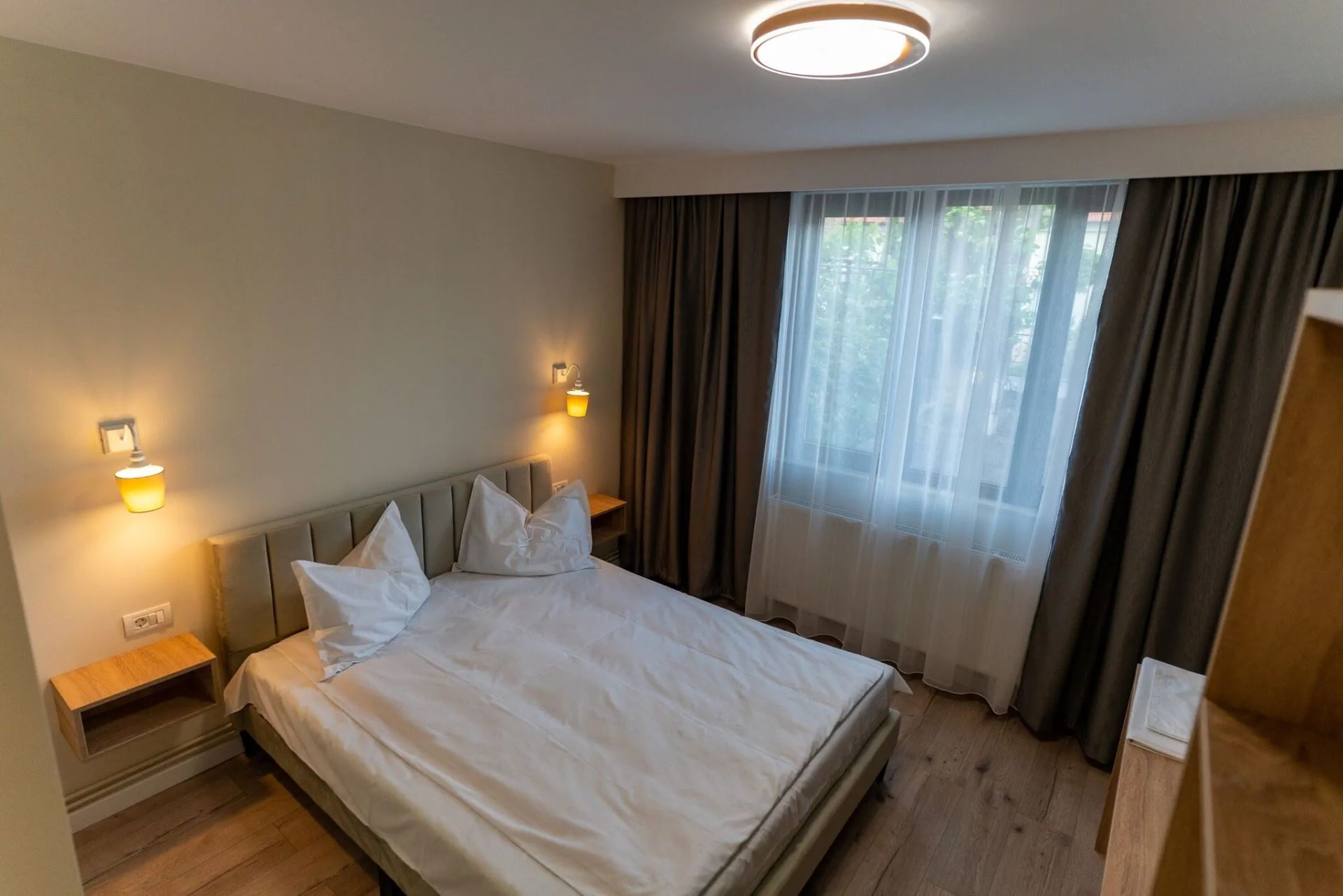
Priveliștea spre Cetatea Deva se desfășoară din curtea largă și grădina îngrijită a unei vile cu istorie aparte. Vila Mihu Cetate Deva se află pe strada Axente Sever 13A, în Deva, județul Hunedoara, într-un cadru liniștit. Vă punem la dispoziție Wi-Fi gratuit în întreaga incintă, o cafenea în care puteți servi băuturi într-un cadru plăcut și parcare special amenajată pentru biciclete. Curtea mare și grădina îngrijită oferă dumneavoastră un spațiu generos pentru relaxare în aer liber, departe de aglomerație. În vecinătate puteți vizita Cetatea Devei, Castelul Corvinilor, Palatul Magna Curia, Muzeul Civilizației Dacice și Romane Deva și Castrul roman Micia. Aceste obiective vă permit să descoperiți straturile de istorie care au definit această regiune de-a lungul secolelor. Vila păstrează vie amintirea unei perioade marcate de excelență sportivă, fiind asociată cu povestea antrenorului Béla Károlyi. Atmosfera intimă a locului îmbină confortul unei reședințe private cu proximitatea unor monumente care au marcat istoria națională. Este potrivită pentru călătorii care doresc să combine odihna într-un mediu verde cu vizitarea unor obiective culturale și istorice de excepție.
FROM
280 lei per night

Holiday villa · 3 stars
Deva, Hunedoara County · 0.4 km
Vila Marina&Eddy Deva
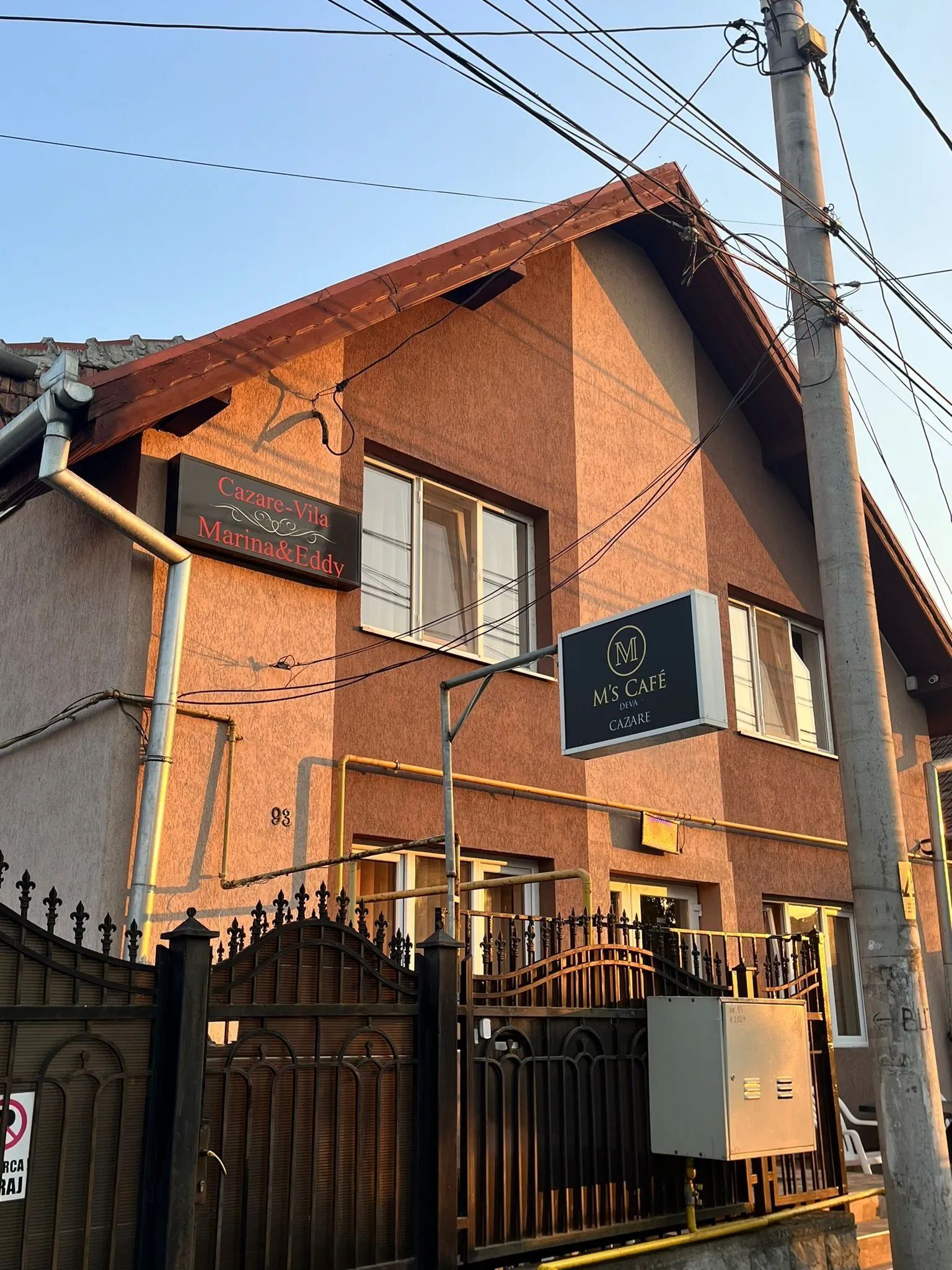
Vilă turistică de 3 stele în Deva, județul Hunedoara, Vila Marina și Eddy Deva pune la dispoziția dumneavoastră patru camere amenajate cu grijă, fiecare dotată cu baie proprie. Unitatea beneficiază de internet wireless gratuit și parcare privată gratuită, iar primirea camerei se efectuează începând cu ora 18:00. În incintă găsiți un bar și o curte mare cu grădină amenajată, un spațiu generos dedicat relaxării în aer liber. Pentru prepararea mesei în aer liber, aveți la dispoziție grătar, barbeque și ceaun. De asemenea, sunt disponibile pătuț pentru bebeluș și depozit pentru bagaje, facilități utile pentru familii. În vecinătate se află Cetatea Devei, Castelul Corvinilor, Palatul Magna Curia, Muzeul Civilizației Dacice și Romane Deva și Castrul roman Micia. Aceste obiective istorice și culturale pot fi explorate cu ușurință, oferind o perspectivă valoroasă asupra trecutului regiunii. Personalul comunică în limba română, germană și franceză, iar eliberarea camerei se face până la ora 12:00. Vă așteptăm la Vila Marina și Eddy Deva.
FROM
280 lei per night
Apartment · 3 stars
Deva, Hunedoara County · 0.5 km
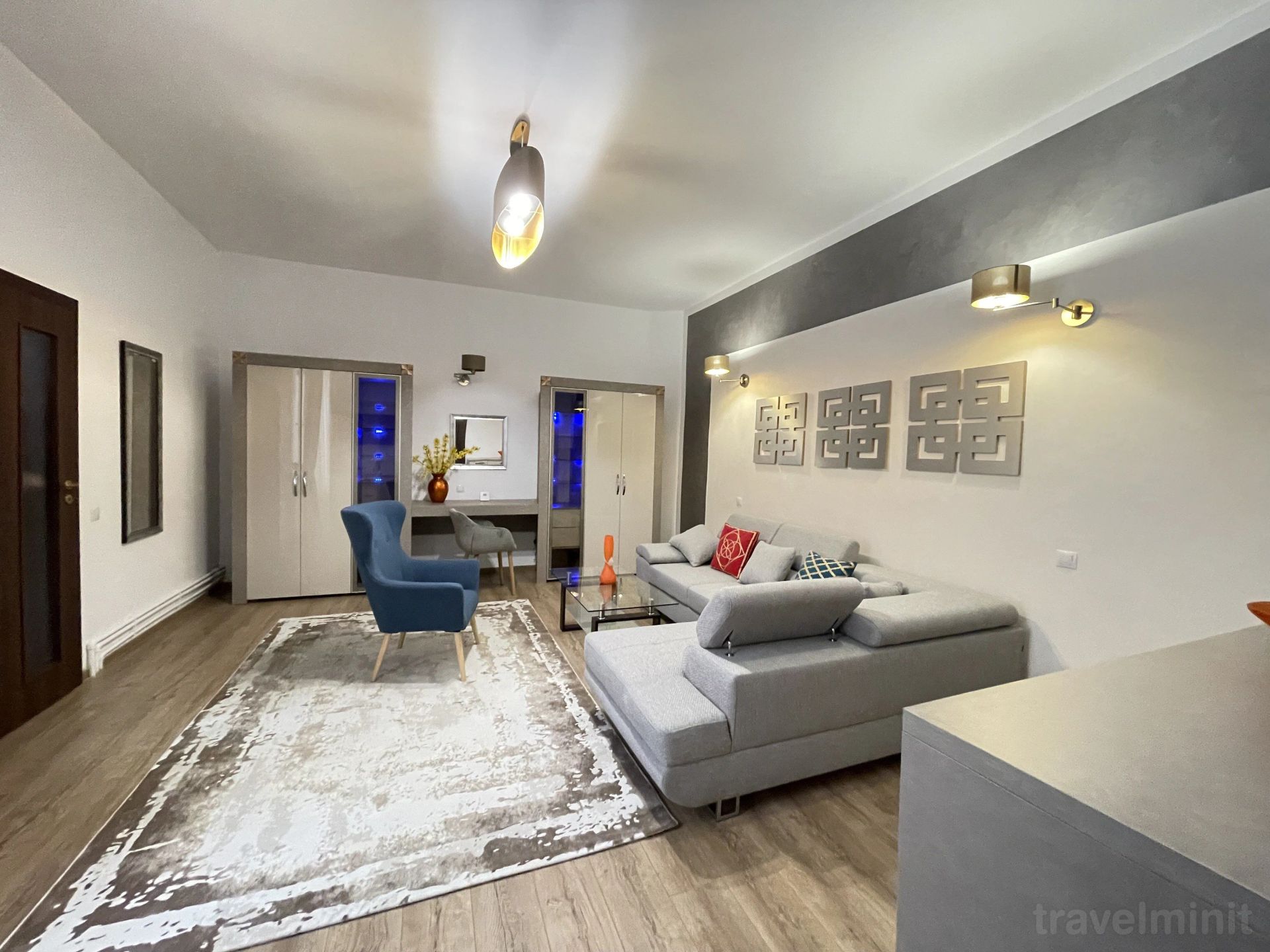
Apartament Chill House Deva
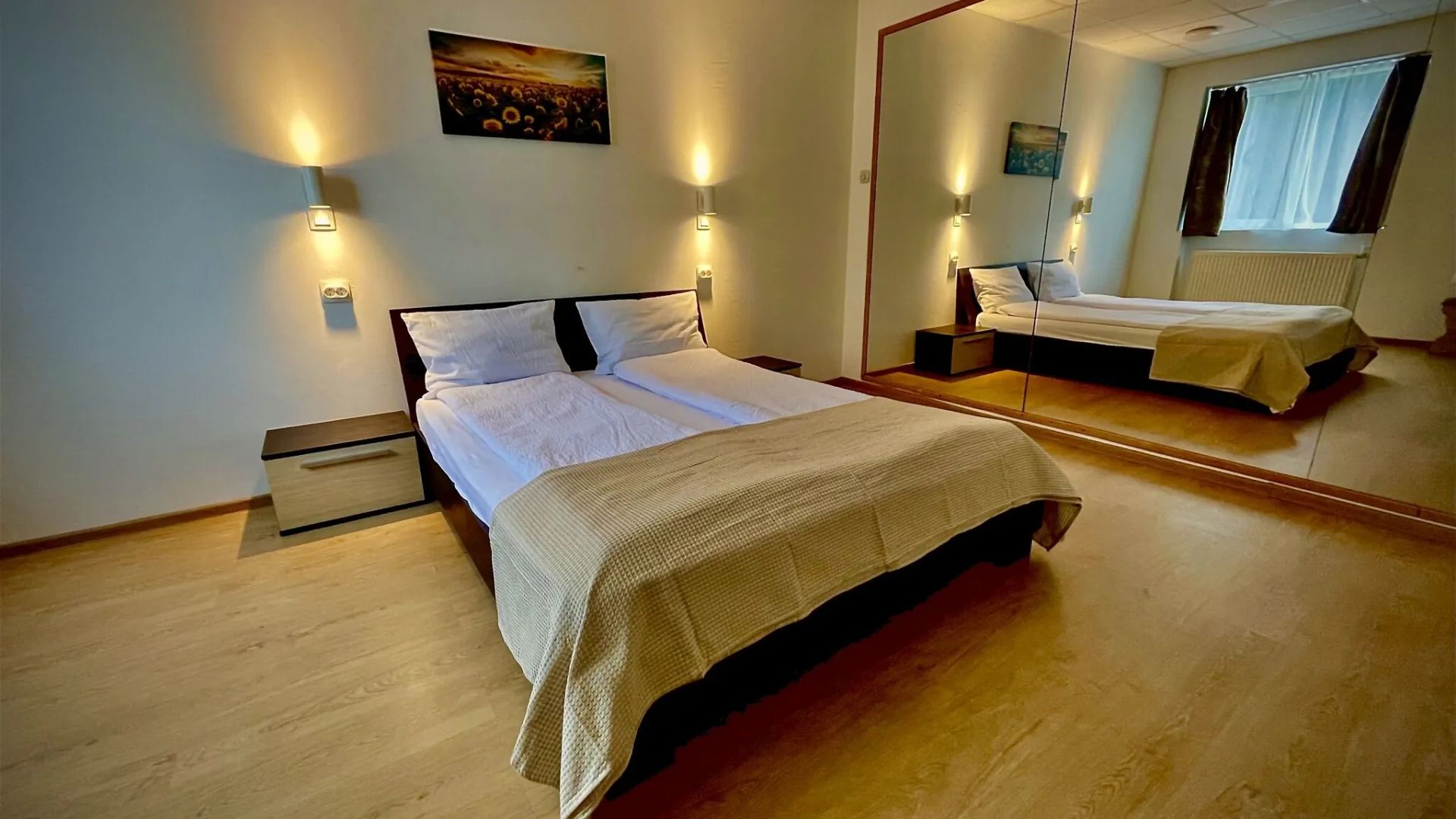
La doar câțiva pași de Cetatea Devei, puteți porni într-o călătorie în timp prin istoria fascinantă a acestui loc emblematic din județul Hunedoara. Apartamentul Chill House din Deva reprezintă un punct de plecare excelent pentru a descoperi orașul, monumentele sale impresionante și atmosfera specifică zonei înconjurătoare. Această unitate de cazare clasificată cu trei stele vă oferă un spațiu bine amenajat și confortabil pentru întreaga perioadă a șederii dumneavoastră. Beneficiați de Wi-Fi gratuit pentru a rămâne conectat în permanență, de fier de călcat pentru îngrijirea garderobei dumneavoastră și de parcare pentru biciclete, astfel încât să vă puteți deplasa ușor și rapid prin întregul oraș. În apropiere puteți vizita Castelul Corvinilor, Palatul Magna Curia, Muzeul Civilizației Dacice și Romane Deva sau Castrul roman Micia. Fiecare dintre aceste obiective oferă o perspectivă unică asupra trecutului istoric al regiunii și poate fi explorat cu ușurință pornind direct de la adresa unității de cazare. Vă așteptăm să descoperiți Deva și să vă bucurați de un sejur plăcut și relaxant în Apartamentul Chill House.
FROM
230 lei per night
Apartment · 3 stars
Deva, Hunedoara County · 0.6 km
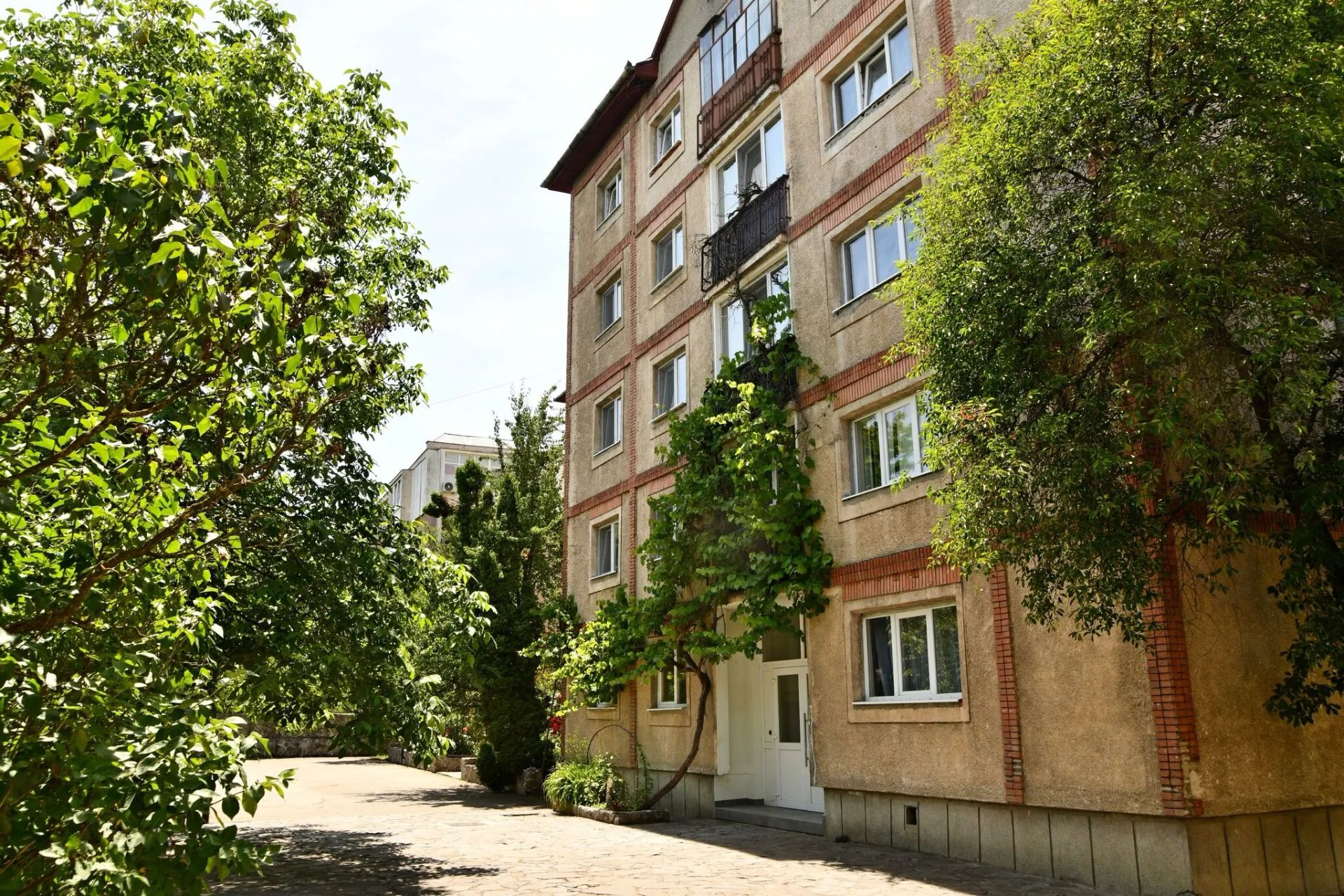
Burebista Residence Deva
Pe strada 1 Decembrie 1918 din Deva, județul Hunedoara, vă așteaptă Burebista Residence Deva, un apartament de închiriat clasificat cu trei stele. Proprietatea oferă trei camere amenajate cu atenție, fiecare dotată cu baie proprie, într-un ambient confortabil și bine întreținut, potrivit atât pentru familii, cât și pentru grupuri de prieteni care doresc să se simtă bineveniți. Pentru șederea dumneavoastră, unitatea asigură Wi-Fi gratuit și aer condiționat în toate camerele. Beneficiați de parcare privată gratuită, o curte generoasă cu grădină amenajată și un spațiu de grătar pentru seri relaxante în aer liber. De asemenea, accesul este facilitat pentru persoanele cu dizabilități, iar fiecare cameră dispune de baie proprie pentru intimitatea dumneavoastră. În vecinătate se află mai multe obiective de neratat: Cetatea Devei, Castelul Corvinilor, Palatul Magna Curia, Muzeul Civilizației Dacice și Romane Deva și Castrul roman Micia. Aceste puncte de interes istoric și cultural vă invită să descoperiți povestea bogată a orașului Deva și a împrejurimilor sale, de la vechi fortificații la vestigii antice care spun despre trecutul glorios al zonei. Când plecați să explorați împrejurimile, porniți către Castelul Corvinilor pentru a vă bucura de una dintre cele mai impresionante fortificații medievale din regiune.
FROM
230 lei per night
Apartment · 3 stars
Deva, Hunedoara County · 0.6 km
Apartament Szent Ferenc Deva
Comfort, relaxation and stunning views, all just steps away from the main attractions.
FROM
230 lei per night
Apartment · 3 stars
Deva, Hunedoara County · 0.7 km
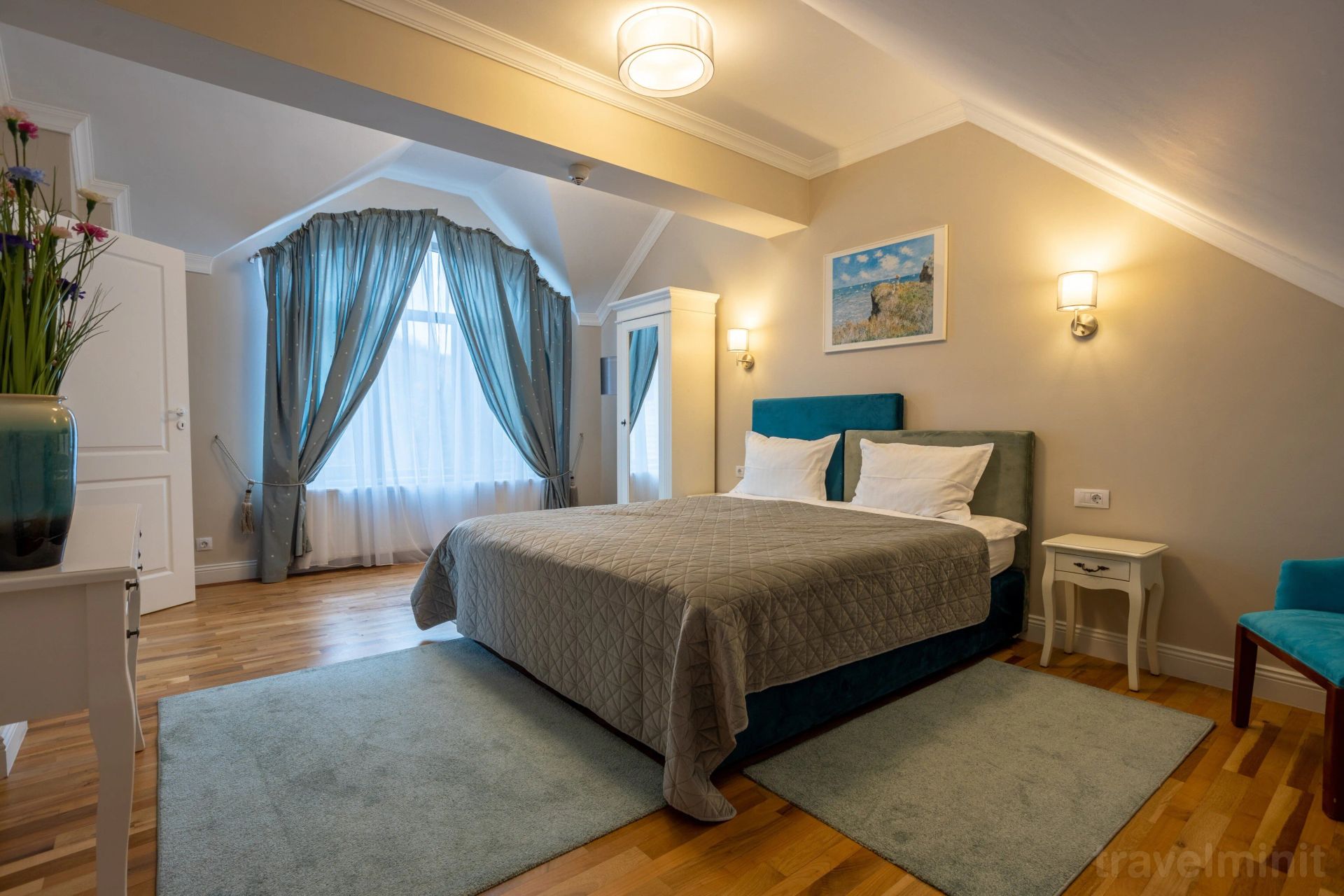
Apartament View Deva
Într-o curte mare și într-o grădină amenajată care înconjoară proprietatea, Apartament View Deva din Deva, clasificat cu trei stele, vă oferă un cadru plăcut pentru șederea dumneavoastră în județul Hunedoara, pe strada Aurel Vlaicu. Pentru confortul dumneavoastră, unitatea pune la dispoziție parcare privată gratuită și conexiune Wi-Fi gratuită în întreg apartamentul. Familiile cu copii mici vor aprecia locul de joacă amenajat la exterior și pătuțul pentru bebeluș pus la dispoziție. Camera este dotată cu aer condiționat și baie proprie, iar animalele de companie sunt acceptate contra cost. În proximitate puteți vizita Cetatea Devei, Castelul Corvinilor, Palatul Magna Curia, Muzeul Civilizației Dacice și Romane Deva și Castrul roman Micia. Vă așteptăm să descoperiți aceste obiective istorice în timpul șederii dumneavoastră în oraș. La recepție personalul vorbește limbile română, engleză și italiană, astfel încât să vă simțiți binevenit. Primirea camerei se face începând cu ora 14:00, iar eliberarea până la ora 11:00. Această unitate reprezintă o alegere potrivită pentru familiile cu copii sau pentru călătorii care doresc să exploreze patrimoniul istoric al orașului Deva.
FROM
230 lei per night
BEFORE YOU HIT THE ROAD
Weather conditions in Hunedoara
Local forecast for Deva Fortress, Hunedoara, Hunedoara

Real-time updated weather data
Much more to explore in this area
Nearby tourist attractions


Hunedoara, Hunedoara County
Corvin Castle
Situat pe strada Castelului nr. 1 - 3 din municipiul Hunedoara; ridicat in secolul al XV-lea, de Ioan de Hunedoara, pe locul unei vechi intarituri; din punct...
15.5 km
Hunedoara, Hunedoara County
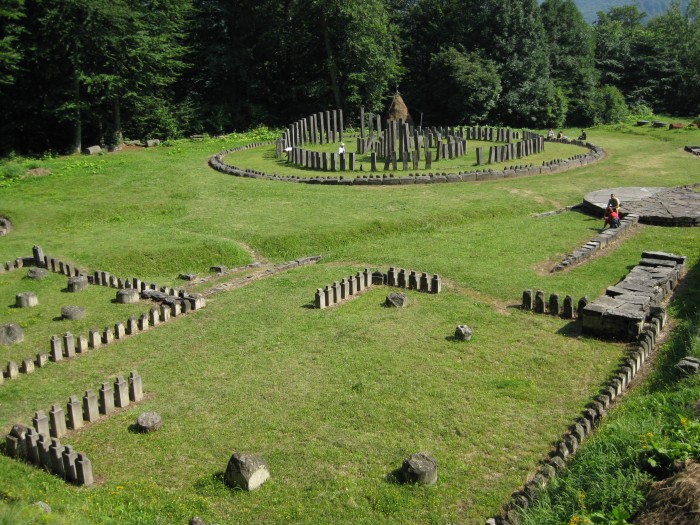
Sarmizegetusa Regia Fortress
Situata pe raza localitatii Gradistea Muncelului; amplasata la altitudinea de 1.200 m; inclusa pe lista patrimoniului cultural mondial UNESCO; a fost capitala...
43.5 km
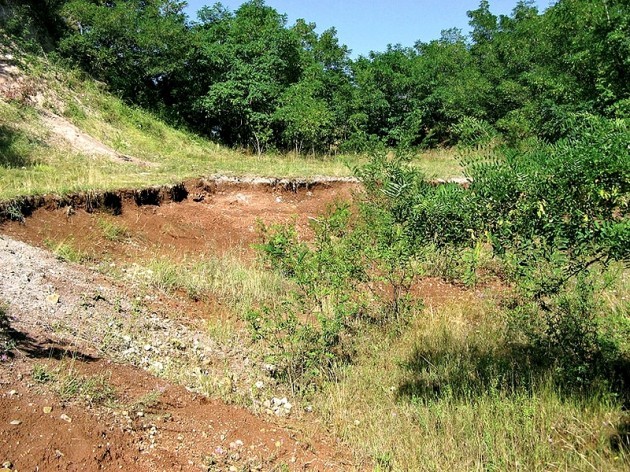
Hunedoara, Hunedoara County
Hațeg Country Dinosaur Geopark
Situat in Tara Hategului, din depresiunea Hategului, invecinandu-se cu Parcul National Retezat la sud si cu Parcul natural Cioclovina Gradistea Muncelului la...
45.4 km

42.2 km

Hunedoara, Hunedoara County
Sarmizegetusa Regia Fortress
Situat pe teritoriul administrativ al satului Gradistea de Munte, comuna Orastioara de Sus; punctul sitului se numeste "Dealul Gradistii"; se intinde pe o...
43.6 km

43.8 km
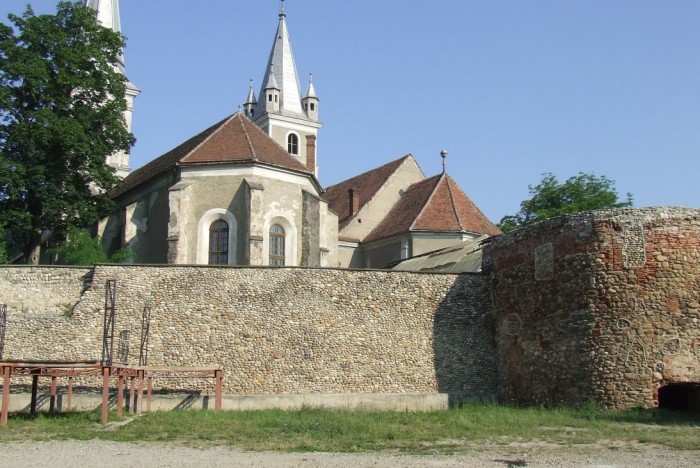
Hunedoara, Hunedoara County
Orăștie Citadel
Situata pe strada N. Balcescu, municipiul Orastie, judetul Hunedoara; construita in preajma anului 1300; atestata documentar in 1544 de catre Sebastian Munster,...
23.8 km
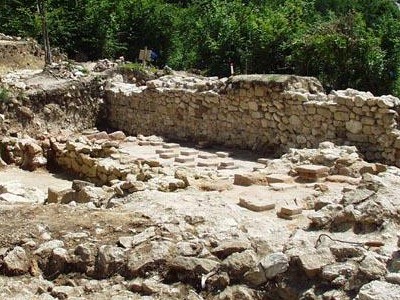
Alba, Alba County
Alburnus Maior Fortress
Situata in localitatea Rosia Montana, pe Dealul Cetatii, in apropierea fostelor exploatari romane;a reprezentat punctul de aparare al localitatii si al...
48.8 km
46.3 km
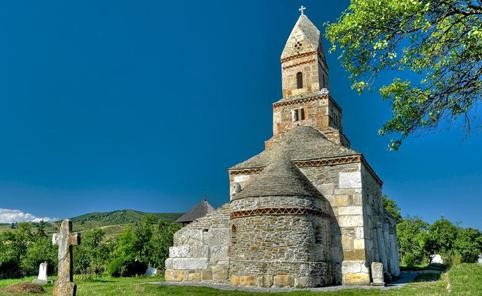
Hunedoara, Hunedoara County
Densuș Church
Situata in localitatea Densus, la mica distanta de Ulpia Traiana Sarmisegetusa, in Tara Hategului; nu se stie cu exactitate data la care a fost construita;...
35.3 km
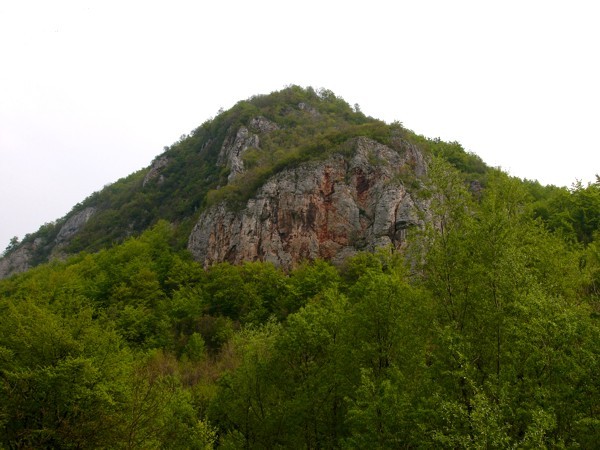
Hunedoara, Hunedoara County
Piatra Roșie Dacian Fortress
Situata pe platoul Piatra Rosie, teritoriul satului Luncani - Alun, comuna Bosorod; inclusa pe lista patrimoniului cultural mondial UNESCO; amplasata la...
37.3 km
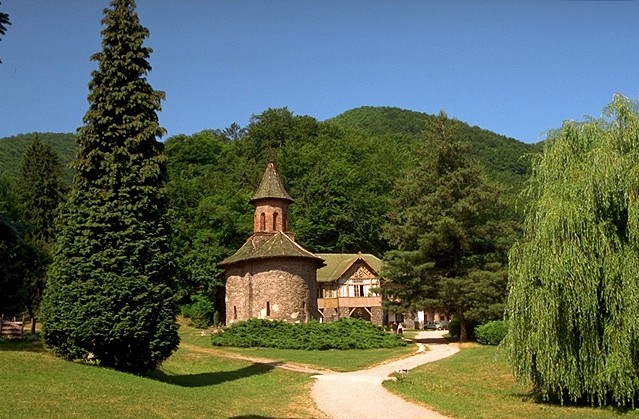
Hunedoara, Hunedoara County
Prislop Monastery
Situata in apropiera satului Silvasu de Sus; reprezinta unul din cele mai importante asezaminte religioase ortodoxe din Transilvania; mentionata pentru prima...
28.7 km
Cultural life and traditions
Events in the Deva Fortress area
Medieval festivals, traditional fairs, concerts and local activities recommended in Transylvania.

Heritage and History

Hunedoara, County of Hunedoara
The Festival of Medieval Fortresses and the Open Doors Days
Guided night tours, traditional crafts workshops and historical re-enactments featuring knights and ladies.
WHEN
May 15-17, 2026


Traditions and Cuisine
Hunedoara, County of Hunedoara
The Fair of Saxon Traditions and Local Cuisine
Discover local producers, traditional Saxon pastries baked in a wood-fired oven, artisanal syrups, and rhubarb jam.
WHEN
Every weekend (May - October)

Ecotourism and Nature
The hills of Transylvania, County of Hunedoara
Guided Hikes on the Transylvanian Hills Trail
Take excursions along unmarked trails through ancient meadows, centuries-old oak trees, and villages with fortified churches that are UNESCO World Heritage sites.
WHEN
Friday – Sunday (Season 2026)
On foot, exploration gains depth
Discover the surroundings and local geography
Explore the trails, terrain, and natural landmarks around Deva Fortress.

Guides and practical tips
Useful travel articles
Travel guides, practical recommendations and tourist itineraries for Transylvania.

Tourist guide
Castelul Bran: Istorie, Legende și Secrete Medievale
Află adevărata poveste a fortăreței medievale din Pasul Bran, reședința de suflet a Reginei Maria a României.

Tourist guide
Top 5 Atracții Turistice și Trasee Montane în Zona Moieciu - Bran
Descoperă cele mai spectaculoase peisaje carstice, chei adânci și cetăți medievale din imediata apropiere a stațiunii Moieciu.

Tourist guide
Ghid de Drumeție: Traseul Moieciu de Sus spre Platoul Bucegi
Un itinerariu montan de o frumusețe rară ce urcă din Valea Băngăleasa spre Poiana Guțanu și crestele maiestuoase ale Bucegilor.
THE JOURNEY STARTS WITH AN IDEA
The next story is on the way.
From the first stop to the last stay, make room for a new Romania.
