


NATURE AND WILDLIFE · TRANSYLVANIA
Bâlea Lake

Sibiu, Sibiu County
Add location to your trip planner.

Practical access information

VISITING HOURS
Consultă programul local de vizitare

TICKET PRICE
Informații disponibile la casierie

RECOMMENDED VISIT DURATION
1 - 2 ore
Sources and external references
Wikipedia Encyclopedia (EN)
Visitor information and guide
 Navigate with Google Maps

ABOUT BÂLEA LAKE
Bâlea Lake — The Crystal Mirror of the Carpathians, at the Frontier Between Myth and Europe
Suspended at 2,034 meters altitude, in the heart of a glacial cirque carved by millennia of ice in the Făgăraș Mountains, Bâlea Lake is not merely a lake. It is a meeting point of the continent with itself: here, Europe's Quaternary geology encounters the Alpine tradition of old Austria-Hungary, Cold War strategic ambition transforms into the world's most famous mountain road, and the lake's ice becomes, each winter, the raw material of Europe's southernmost ice hotel. With a surface area of 46,508 square meters, a length of 360 meters and a maximum depth of 11.35 meters, Bâlea is the largest glacial lake of the Făgăraș — a massif that geographers have rightly called the "Transylvanian Alps" and the "Roof of Romania," for between its ridges rise Moldoveanu (2,544 m) and Negoiu (2,535 m), the country's two highest peaks, flanked by six other summits exceeding 2,500 meters. Seen from above, the lake mirrors the sky like a precious stone set in an amphitheater of rock, and around it unfolds one of the most spectacular concentrations of glacial lakes in South-Eastern Europe — Capra, Podragu, Podrăgel, Urlea, Avrig — remnants of a glacial epoch that shaped the Southern Carpathians with the same force that sculpted the Alps, the Tatras or the Pyrenees.
Historical Roots and Major European Connections
Bâlea's European story begins long before the first hut or the first road. The oldest written account of these lands dates from around 1700 and belongs to Dr. G. Lindner, a nature-loving Sibiu native, who first recorded the existence of the Bâlea cirque and its lake. But the true "European discovery" of the area takes place around 1750, when Captain Jacob Zultner — an officer in the army of the Habsburg Monarchy — is sent into the Făgăraș Mountains with the mission of precisely tracing the border of the Austro-Hungarian Empire. His cartographic work, carried out in the full era of Maria Theresa's reforms and Austrian Enlightenment, laid the foundations of scientific knowledge of this frontier territory between Transylvania and Wallachia.
The turning point, however, comes in the autumn of 1880. On November 28, in Sibiu — Hermannstadt, the Saxon city in full development under the aegis of the Austro-Hungarian Empire — the Transylvanian Carpathian Society is born, under the German name Siebenbürgischer Karpatenverein, abbreviated SKV. Initiated by personalities such as the economist and journalist Dr. Carl Wolff, the association inscribes itself directly in the great tradition of European Alpine clubs: it follows the model of the British Alpine Club (founded in 1857), the Club Alpino Italiano (1863) and, above all, the powerful Deutscher und Österreichischer Alpenverein, established in 1869–1873 in the German-speaking countries and Austria. SKV thus becomes one of the oldest mountain associations in the world still active, maintaining systematic exchanges of publications and experience with over one hundred similar associations across Europe — from the Swiss Alpine Club and the London Alpine Club, to the Towarzystwo Tatrzańskie in Poland and the Magyar Turista Egyesület in Hungary. In 2010, SKV becomes the first Romanian association member of the European Ramblers Association (ERA), and today it maintains active partnerships with the Deutscher Alpenverein and with mountain associations throughout the Carpathian chain — Serbia, Poland, Slovakia, Czechia, Austria — in a network that illustrates how mountains have always been common European territory.
SKV's role in Bâlea's destiny was decisive. The association built the first marked trails, edited maps and tourist guides (the first guide to Sibiu and its surroundings appearing as early as 1884), organized first ascents, in summer and winter, and erected, in 1904, the first hut at Bâlea Lake — a simple stone construction, with a single room, solemnly inaugurated on August 29, 1905 on the peninsula that advances into the waters. When the Great War broke out in 1914, of the five huts existing in the Făgăraș Mountains only two — that of Bâlea and that of Negoiu — survived, silent testimony to the resilience of this place. In 1932, Bâlea Lake and an area of about 4.7 hectares around it were declared a scientific nature reserve, a status that the area today extends within the vast Natura 2000 site "Făgăraș Mountains" (ROSCI0122), part of European natural heritage.
The second great historical chapter, that of extravagant engineering, belongs to the communist period and the Cold War. Following the Soviet invasion of Czechoslovakia in August 1968, Nicolae Ceaușescu — leader of the Socialist Republic of Romania — decided to build a strategic military road that would cross the Făgăraș ridge and ensure the rapid movement of troops in case of a USSR invasion. Thus the Transfăgărășan (DN7C) is born, built between 1970 and 1974, mainly by military engineering units, at a huge human and financial cost: approximately six million kilograms of dynamite, over 830 culverts, 27 viaducts and five tunnels, among which the Capra–Bâlea Tunnel — with its 884 meters, the longest road tunnel in Romania for five decades, dug in 1972 by blasting through over 41,000 cubic meters of rock with 20 tons of dynamite. The road, officially inaugurated on September 20, 1974 (asphalting continuing until 1980), climbs to 2,042 meters, passes through the Bâlea cirque and descends, on the southern slope, towards Wallachia, connecting two historical provinces — Transylvania and Muntenia — separated for centuries by the mountain ridge. Although historians have called the project "Ceaușescu's Folly," the whole world was to prove him right in another sense: in 2009, the British team Top Gear filmed on the Transfăgărășan, and Jeremy Clarkson declared this road "the best road in the world," dethroning the famous Stelvio Pass in Italy. Today, the route hosts the annual Sibiu Cycling Tour, and the 22-kilometer stage to Bâlea is considered by cyclists equivalent to the "hors catégorie" climbs of the Tour de France.
Natural Masterpiece and the Living Heritage of Ice
Bâlea Lake is, first and foremost, a masterpiece of nature — a cirque glacial lake, formed in the Quaternary by the tongue of a glacier that disappeared thousands of years ago, in a cirque surrounded by sharp ridges and narrow couloirs such as the Fereastra Zmeilor (Window of the Dragons). Together with the other lakes of the massif — Capra, Podragu, Podrăgel, Avrig, Urlea, Buda, Iezer — it forms a glacial system of rare density, comparable to that of the Alps or the Tatras, and the ancient beech forests of the Făgăraș were included in 2017 in the prestigious UNESCO World Heritage list, in the series "Primeval and Ancient Beech Forests of the Carpathians and Other Regions of Europe." The flora and fauna of the area — the chamois, the brown bear, the marmot, the golden eagle, the edelweiss and the carpets of mountain peonies — make Bâlea a sanctuary of biodiversity recognized at European level, where the meteorological station and the Salvamont post have watched over the safety of hikers for decades.
But Bâlea is also a place where man learned to speak the language of ice. Beginning with the winter of 2005–2006, on the shore of the lake an ice hotel is born, each year — the first in Romania and in all of South-Eastern Europe, officially inaugurated on February 1, 2006. Built in the shape of an igloo from approximately 2,000 blocks of ice cut directly from Bâlea Lake (each block over 40 centimeters thick and 50–60 kilograms), the hotel offers 16 places in themed rooms, each dedicated to a zodiac sign sculpted in ice. The interior temperature remains constant between −2 and +2 degrees Celsius, and the ice beds are covered with reindeer furs and warm sleeping bags. The American publication Fodor's Travel included the hotel in the top ten most beautiful ice hotels in Europe, in third place, after Kakslauttanen in Finland and Iglu-Dorf Gstaad in Switzerland — a recognition that places Bâlea on the world map of winter tourism, alongside the Icehotel in Jukkasjärvi (Sweden), the Hôtel de Glace in Québec (Canada) or the ice hotels of Japan.
Alongside the hotel, beginning with the winter of 2006–2007, the anonymous ice craftsmen also raise the Ice Church — the first church of its kind in all of South-Eastern Europe. Built after the model and architecture of the old fortified church of Mălâncrav (Sibiu County, UNESCO monument), it has a height of approximately 4–6 meters, a length of 14 meters and a width of 7 meters; the altar is decorated with ice relief sculptures, and the furniture, crosses and icons are all worked from ice and snow. The Church was consecrated by an ecumenical council of 12 priests — Orthodox, Evangelical, Greek-Catholic and Roman Catholic — in a gesture of Christian unity rarely encountered, and each year weddings and baptisms are officiated here, regardless of religion. The complex is completed with an Ice Bar (from 2009), where drinks are served in ice glasses, and an Ice Restaurant, all these ephemeral constructions being raised each winter, between the months of January and March, and then melting back into the waters of the lake from which they were taken.
In summer, when the ice retreats, the lake becomes a canoeing ground, and in winter, when it freezes completely, its surface transforms into a natural skating rink, a field for hockey and curling. And throughout all this time, the Bâlea Lac Hut — descendant of the first SKV hut of 1904 — remains on its peninsula, silent witness to over a century of mountain history, offering shelter to hikers who set out towards the Făgăraș ridge. Not far away, about 13 kilometers to the north, the Bâlea Waterfall — "The Roar of Bâlea" — throws the waters of the Bâlea River from 60–68 meters height, the largest stepped waterfall in the country, in a setting of rock and foam that completes the grandeur of the landscape.
Legends, Personalities and Turning Points
In the collective memory of the place lives the legend of the shepherd Balea, the youngest of the five sons of a poor widow from the foothills of the Făgăraș. Although his mother urged him to make a living, Balea repeated that fate would send him a bride. One day, while grazing his sheep, a bear came in his way which, courageously, he drove away — and the news of his bravery reached the court of an emperor, who called him into his service and, in time, made him captain over his armies. But his heart remained at home, among sheep and mountains. When the emperor, together with his five daughters, tried to keep him, the first to try to conquer him was the eldest daughter: disguised as an ugly old woman searching for medicinal herbs, she was hosted overnight by Balea, and in the morning revealed herself in all her beauty. Filled with love, Balea accepted her as wife, and the wedding preparations began. But in a late spring a terrible blizzard broke out, and Balea, fearing to lose his bride, sheltered with her in the mountains. The blizzard, however, took them both and threw them into the lake at the foot of the mountain, finding their end there. Moved by their tragic fate, the people gave the lake the name of the shepherd: Bâlea.
Beyond legend, Bâlea also bears the memory of real personalities who marked its destiny. Dr. G. Lindner, the first documented "explorer" of the area around 1700, and Captain Jacob Zultner, the cartographer of the Habsburg border around 1750, opened the way; the founders of SKV, such as Dr. Carl Wolff, transformed it into territory of organized European tourism; and the engineers and sappers of the years 1970–1974 forced the mountain to yield to asphalt. A special moment is represented by the presence of the Ceaușescu family: next to the lake the Paltinu Hut was built, a villa reserved for the dictator and his family, today a three-star hotel — a symbol of the contrast between the austerity of the communist regime and the private luxury of the leadership.
But Bâlea's history also has a dark face, which must not be forgotten. On Sunday, April 17, 1977, a dry snow avalanche crashed down upon the lake, claiming 23 lives — 16–20 students and teachers from German School No. 1 in Sibiu (today the "Samuel von Brukenthal" National College), on a ski camp under the coordination of teachers Richard Schuller, Sigrid Avram and Anneliese Frisch. It was the most serious mountain tragedy in Romanian history: the shock wave of the avalanche passed over the lake and shattered the windows of the Paltinu Hut, located half a kilometer away, and the press of the time remained silent, under the pressure of the Party. The rescue operations, coordinated by Liviu Miu, deputy head of Salvamont Sibiu, lasted nine hours, and the bodies of the 23 victims were brought down by cable car to Bâlea Waterfall. A commemorative plaque from the Brukenthal College preserves the living memory of that April, reminding that the mountain, however beautiful, demands respect and knowledge.
Practical Visitor Guide and the Tourist Experience of Today
Reaching Bâlea is itself a European experience. The lake is located about 77 kilometers from Sibiu — former European Capital of Culture in 2007 —, 68 kilometers from Făgăraș and 85 kilometers from Curtea de Argeș, the former princely court of Wallachia. In the warm season — in 2026, the alpine section of the Transfăgărășan reopened on June 12, with daily hours between 07:00 and 21:00, and may close again starting October 20, depending on weather conditions — one can reach the lake directly by car, traveling one of the most spectacular road routes on the continent, with hairpin bends that seem to lose themselves in the clouds ("the road in the clouds"), with five tunnels and with the dizzying perspective of the glacial cirque. The recommended average speed is about 40 km/h, and each hairpin bend offers a panorama that has conquered television teams from all over the world.
For the rest of the year — from autumn to early summer — the road is closed to road traffic in the high area, and access to Bâlea is made exclusively by the Bâlea Waterfall – Bâlea Lake cable car. The installation, put into operation in 1975, climbs 3,700 meters of cable, from the altitude of 1,234 meters (the station at Bâlea Waterfall) up to 2,034 meters, in a journey of approximately 15 minutes above the coniferous forests and frozen waterfalls. The rates for the 2026 season are approximately 80 lei for adults and 40 lei for children (round trip), and the schedule varies according to season, being strongly influenced by weather conditions — strong wind can temporarily suspend operation. It is recommended to arrive at the departure station before 09:00 on weekends, to avoid crowds, and to check the weather forecast, because at over 2,000 meters conditions can change within minutes. There are no ATMs at Bâlea Lake or at Bâlea Waterfall, and parking at the base of the cable car is paid.
Once up there, the visitor discovers a landscape that changes radically with the season. In summer, the lake reveals waters of a deep blue, in which the Făgăraș ridge is mirrored, and the shores bloom with mountain peonies and edelweiss; boats can be rented for canoeing, and the trails marked by SKV — some of them traced as far back as the 19th century — set out towards Negoiu, Moldoveanu or towards the neighboring lakes. In autumn, the beech forests burn in copper colors, and the early snow clothes the ridges in a silver shroud. In winter, the lake freezes completely, and on its surface are arranged tracks for skating, hockey and curling; the natural ski slopes, with a descent of approximately 10 kilometers down to Bâlea Waterfall, attract mountaineers and off-piste skiers from all over Europe. Temperatures can drop to −25 or −30 degrees Celsius, and the snow layer often persists until June, offering remarkable spring skiing conditions.
For accommodation, Bâlea offers a range that reflects the history of the place: the Bâlea Lac Hut, with roots in 1904, hosts tourists in rooms with a direct view of the lake; the Paltinu Hut — the former villa of Ceaușescu — operates as a three-star hotel; and in the full cold season, between the months of January and March, the Ice Hotel appears and disappears, as if by magic — with rooms at 440 lei/night for a double room and 660 lei for a more spacious igloo, prices that include the unique experience of sleeping on a crystal bed, at −2 degrees, under the blue vault of an igloo built from the very water of the lake. Next to the hotel, the Ice Church opens its ice doors to believers of all denominations, and the Ice Bar serves cocktails in glasses sculpted from the same ephemeral material. Meals can be taken at the restaurants of the huts, where Transylvanian cuisine — influenced by the traditions of the Saxons, Romanians and Hungarians of the area — offers savory dishes, from tripe soup and stew, to game dishes and mountain trout.
For the cultivated European traveler, a visit to Bâlea means more than a holiday photograph. It means traveling, literally, a road that was the strategic dream of the Cold War and the titanic effort of a nation; it means walking in the footsteps of the first Central European mountaineers, members of an association founded in 1880 in Sibiu, in the heart of the Austro-Hungarian Empire; it means contemplating a glacial landscape shaped by the same geological eras that created the Alps and discovering that the surrounding beech forests are part of UNESCO World Heritage; it means sleeping, at least one night, in an ice palace that places Romania in the elite of European winter tourism, alongside Finland, Switzerland and Sweden; and it means, perhaps above all, feeling the silence of the mountain at 2,034 meters, where the sky seems so close that you can touch it with your hand. Bâlea Lake is, in the end, a place where all of Europe — with its history of empires and borders, with its Alpine and scientific tradition, with its dreams of conquering the heights and with its need for stillness — meets itself, in a mirror of water and ice at the foot of the "Roof of Romania."
Media gallery
Discover Bâlea Lake in pictures

22 photos · Architecture, courtyards and captivating details


Image source: Wikimedia Commons · Public domain photos · Free license
STAY A FEW DAYS, DISCOVER THE MAGIC
Stays near Bâlea Lake

Hotel · 3 stars

Cârţişoara, Cârţişoara County · 0.3 km
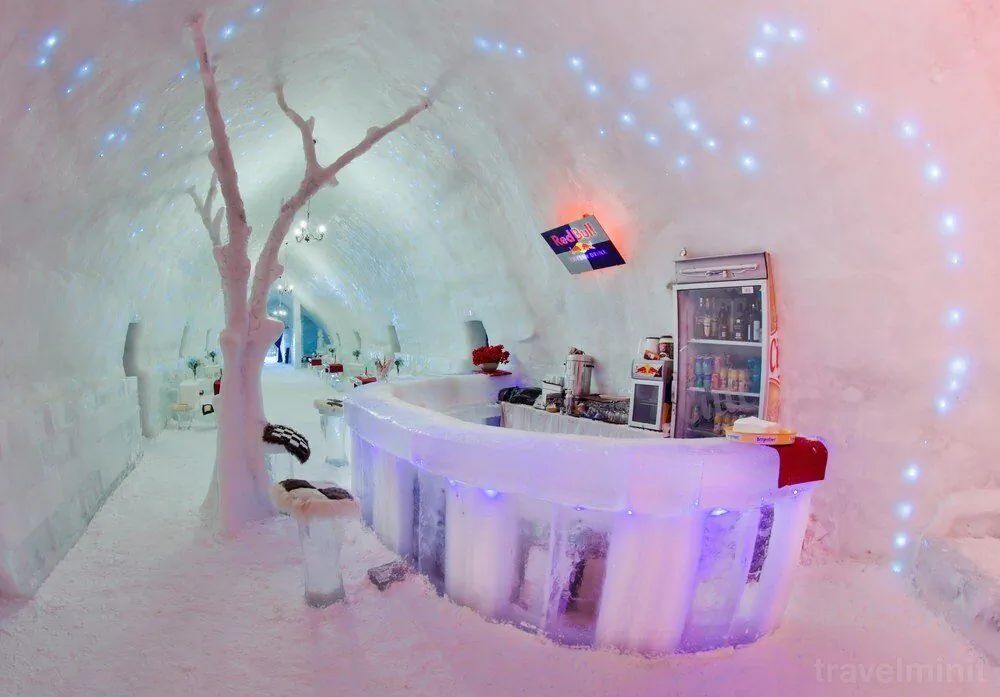
Hotel of Ice Cârțișoara
The Hotel of Ice in the Romanian Carpathians – a challenge, a thought born from the desire to bring something new to Romanian tourism, something that combines adventure and fun with the latest concepts of tourism promotion. At first glance an unbelievable idea. To many people it seemed to be a crazy idea that was encountered with a lot of skepticism and mistrust. They would not have believed that there is someone ambitious enough to use the nature for its own advantage, to transform it without destroying it – what eventually led to the Hotel of Ice, the unique winter attraction in Eastern Europe. Built from ice from a glacial lake. Since 2005 every winter the Hotel of Ice in the Fagaras Mountains is rebuilt, namely from the materials offered by nature: huge blocks of ice, cut and removed directly from the glacial Lake Balea are used to raise the walls, the snow gathered across the mountain slopes, is used for fixing the ice bricks and for finishing the walls. Every year brings a new story from the Hotel of Ice. Each season another new structure is added and tells a new story. The story is transposed in the architecture and design of the rooms, the Ice Bar and the Ice Restaurant but also in the special events organized for our guests. Places of silence. Beside of sleeping in the hotel we offer more private places in a complex of igloos built near the hotel. The beautiful Ice Church is opened from the middle of January for those who desire a moment of silence or for those who want to celebrate an unconventional wedding. And there is plenty of fun. This winter season, our Winter Park will offer a series of activities such as skiing and snowboarding, snowmobiling, sleighing and ice skating. There are a lot of organized fun games with prizes, like snowballs fights, the biggest snow man, ice bowling.
FROM
290 RON / night

Hotel · 3 stars
Arefu, Arefu County · 2.5 km
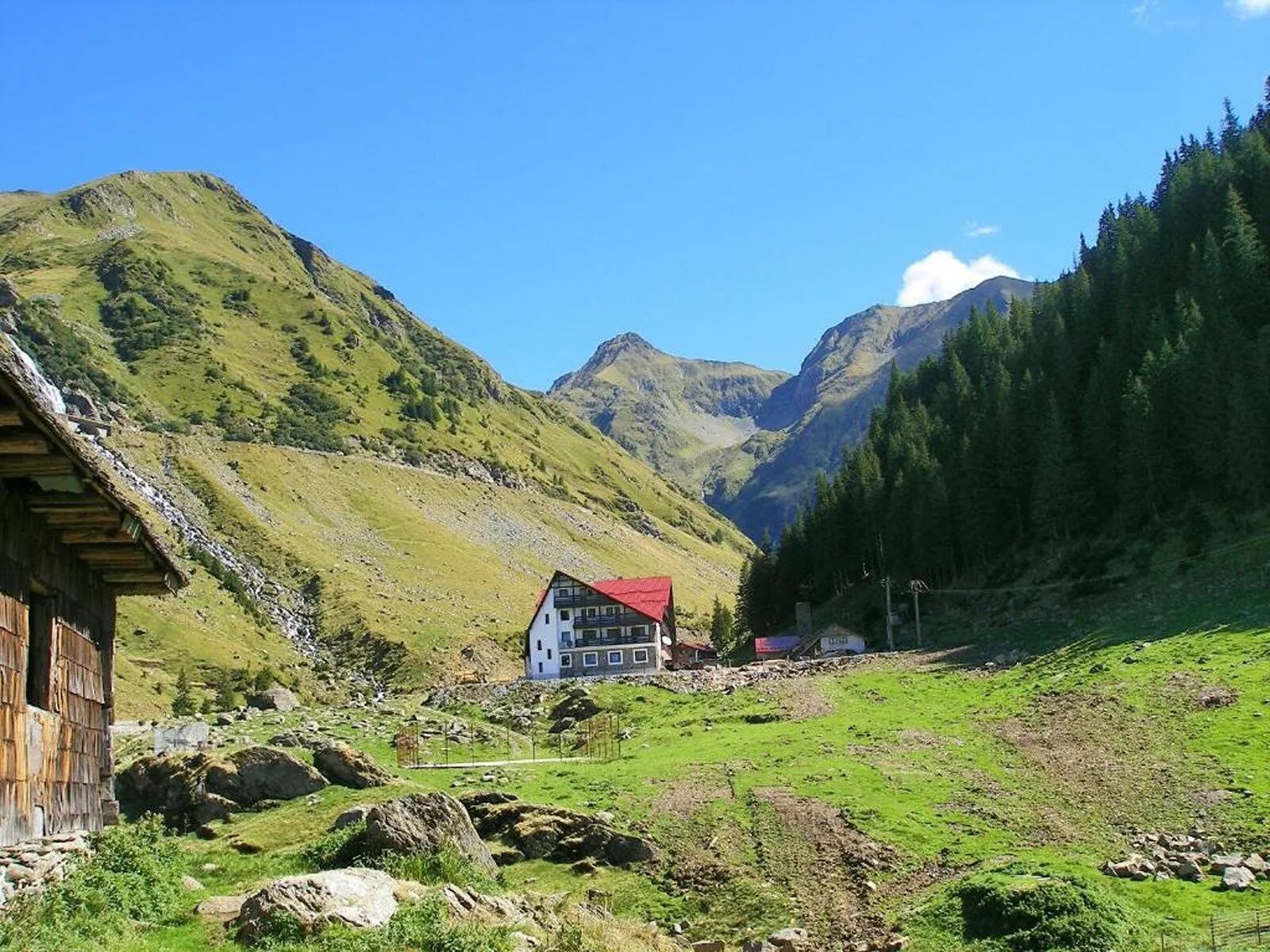
Hotel Pârâul Capra Arefu
Situat la altitudinea de 1585 m în golul alpin, la numai 9 km de lacul glaciar Bâlea, Complexul Turistic Capra 3* este uşor de localizat datorită arhitecturii aparte şi a amplasamentului excelent, la numai 50 m de DN 7C – Transfăgărăşan km 108, cea mai înalta şosea din România.Hotelul Pârâul Capra 3* a fost total reconstruit pe locaţia vechii cabane. Arhitectura corespunde noilor cerinte în turism montan, dar, în acelaşi timp, se integrează perfect în frumuseţea şi autenticitatea împrejurimilor Transfăgărăşanului.Complexul dispune de 56 locuri de cazare dotate cu: grup sanitar propriu, cabină de duş, televiziune prin cablu, centrală termică automată proprie.Complexul Turistic Capra 3* oferă următoarele facilităţi: parcare exterioară, seif la Receptie, internet wireless în lobby şi restaurant, loc de joacă pentru copii- exterior, gratar exterior, foc de tabără.Restaurantul Complexului Turistic Capra 3*, cu o capacitate de 80 persoane, şi terasa restaurantului, ce pune la dispoziţie un numar de 90 locuri, vă aşteaptă cu o bucătărie tradiţionala, bazată pe preparate gustoase cu specific romanesc, care poate satisface, la cerere, cele mai diverse şi pretenţioase gusturi. Restaurantul permite organizarea unor momente festive - aniversări, dineuri sau evenimente private.Ca suport pentru aceste evenimente, Complexul vă pune la dispoziţie şi o sală de conferinţe cu capacitate de 30 de locuri, ce poate fi locul ideal pentru reuniuni de companie, seminarii, conferinţe. În sala de conferinţe vă sunt puse la dispozitie gratuit un videoproiector si un flipchart.Complexul Turistic Capra oferă multiple posibilităţi pentru petrecerea timpului liber şi pentru activităţile de team-building. Principala atracţie o reprezintă modernul “Adventure Park Capra” de tipul “rope – course”, ce oferă 16 ateliere de pod suspendat, pod nepalez, puntea piraţilor, tiroliene, leagăne suspendate, tracking, tir cu arcul.Hotelul vă invită, de asemenea, să vă petreceti timpul într-un ambient placut şi prietenos, la un joc de biliard sau tenis de masă.După o zi în care v-aţi bucurat de sporturile de iarna în mijlocul munţilor (snow park-ul pentru snowboard şi ski se situeaza la doar cativa pasi de Complex), vă puteţi relaxa pe Terasa noastră rustică, savurând o cana cu vin fiert sau un ceai fierbinte.Vă aşteptăm să ne vizitaţi pentru a vă convinge de varietatea ofertei noastre şi de serviciile complete pe care le promovăm.
FROM
290 RON / night
Cabană · 3 stars
Arefu, Arefu County · 3.8 km
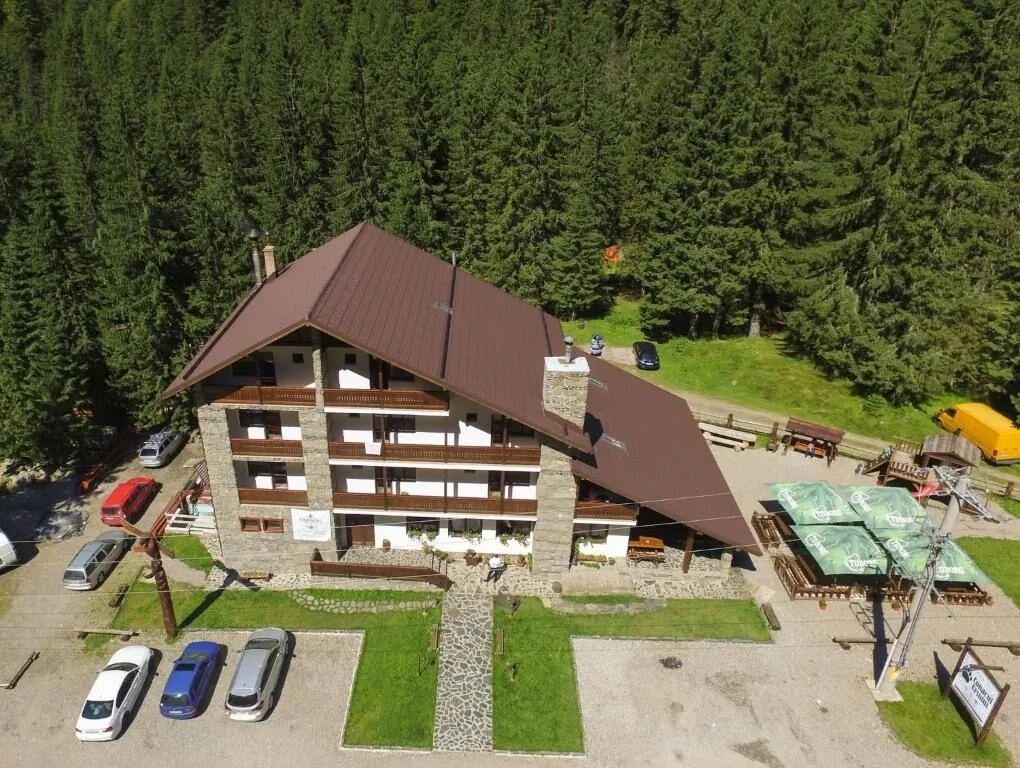
Cabana Conacul Ursului Arefu
Camere, serviciiCabana Conacul Ursului se află pe drumul DN7C (Transfăgărășan) la km 104, la o distanta de 68 km de Curtea de Argeș, la 91 km de Sibiu, la 104 km de Pitești și la 214 km de București. Cabana Conacul Ursului se află la altitudinea de 1285m într-o zonă spectaculoasă și salbatică la limita pădurii de conifere cu golul alpin pe malul râului Capra.Cabana Conacul Ursului Arefu dispune de 18 camere cu baie proprie, apa caldă și caldură permanentă, TV LED, cablu TV, balcon, Wi-Fi. Restaurant cu bucătărie tradițională - 60 de locuri, terasă 36 de locuri, WIFI gratuit în restaurantDaca doriti sa obtineti mai multe informatii despre serviciile disponibile (inclusiv cele contra cost) in cadrul unitatii de cazare si despre echiparea camerelor, consultati fisa de mai jos. Servicii de masăTarifele afisate se refera la cazare cu mic dejun. PlatăPlata se face prin urmatoarele metode: numerar, card bancar, card de vacanta, transfer bancar. Sosire, programZiua hoteliera incepe de la ora 15:00 si se termina la ora 11:00. Limbi straine vorbite la receptie: engleză, română. Acces autoSe face tot timpul anului dinspre judetul Argeș - Curtea de Arges.În perioada 1 iulie - 1 noiembrie accesul se face și dinspre judetul Sibiu (via Carțișoara - Lacul Bâlea)
FROM
270 RON / night
Hotel · 3 stars
Arefu, Arefu County · 5.3 km
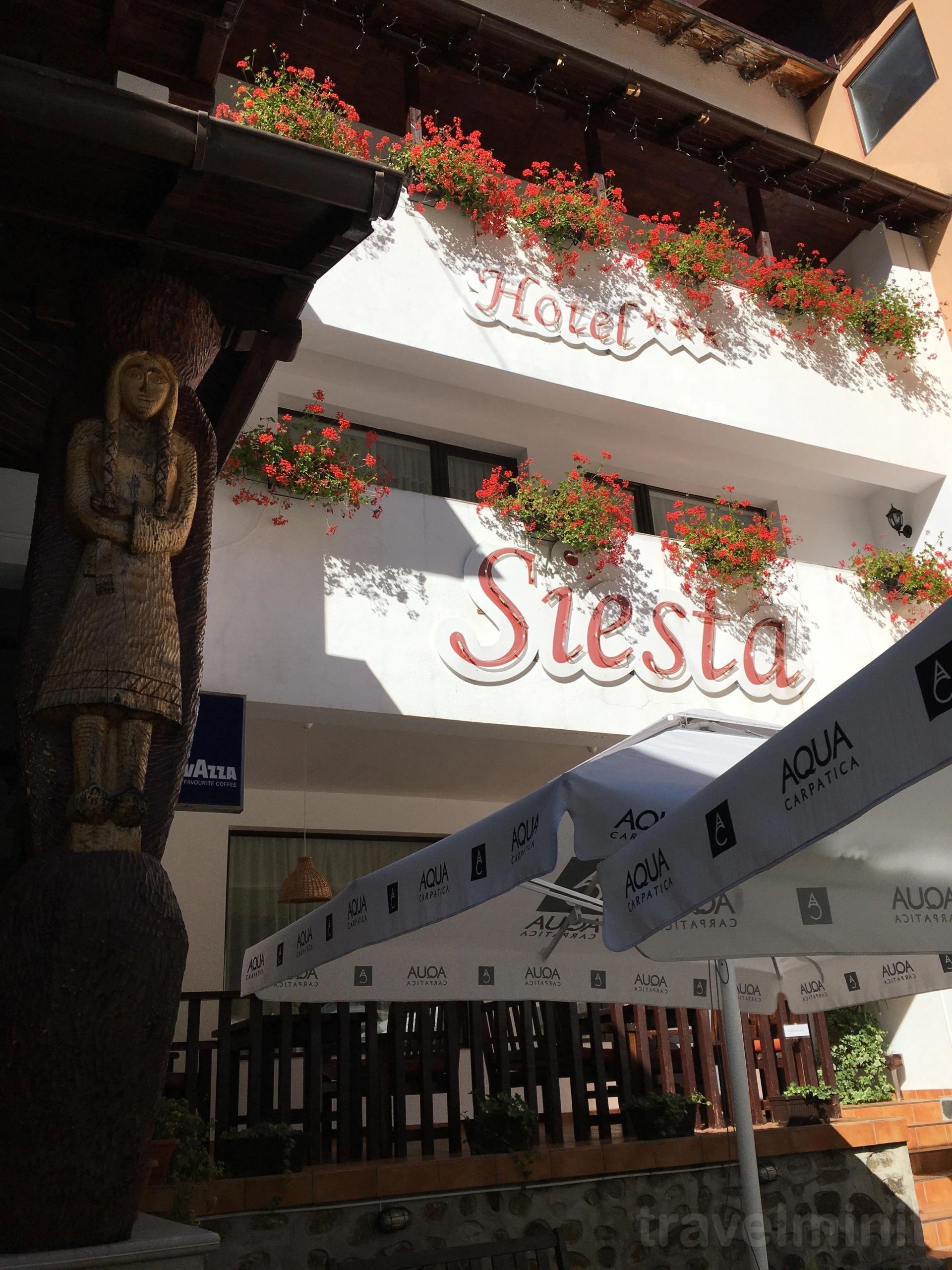
Hotel Siesta Arefu
Situat la altitudine de 1200m,hotelul se afla pe Transfagarasan la 12km de Lacul Balea,in punctul de plecare spre cele mai spectaculoase trasee montane din Fagaras:vf.Negoiu,vf.Lespezi,vf.Moldoveanu,lacul Capra,Balea etc.Dispune de 21 camere are parcare proprie si este gratuita.
FROM
290 RON / night
Hotel · 3 stars
Arefu, Arefu County · 5.6 km
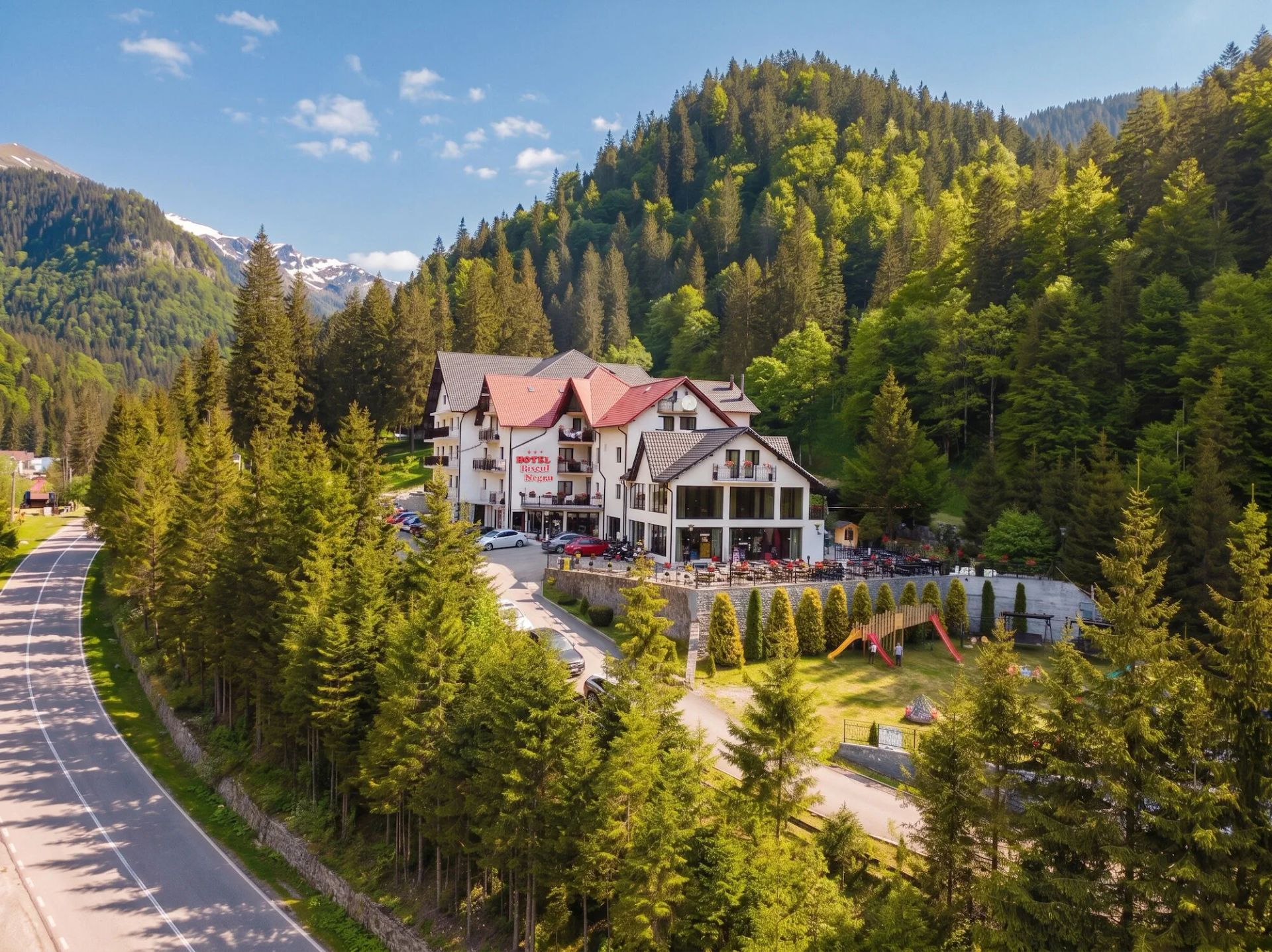
Hotel Piscul Negru Arefu
Hotel Piscul Negru Situat în lanţul montan Făgăraş din Carpaţi, Hotelul Piscul Negru este amplasat pe celebrul drum Transfăgărăşan. Dotate cu mobilier modern şi podele din lemn, camerele şi suitele oferă acces gratuit la Wi-Fi, canale TV internaţionale şi zone de relaxare. Elegantul restaurant al hotelului serveşte preparate din bucătăria tradiţională românească şi o selecţie rafinată de vinuri. La aproximativ 70 km de Curtea de Argeş, Piscul Negru este un bun punct de plecare pentru a merge la schi pe pârtia privată a hotelului, în drumeţii pe traseele montane sau pentru a merge la vânătoare în pădurile carpatine. Hotelul Piscul Negru se află la 50 de minute de mers cu maşina de Cetatea Poienari sau de barajul Vidraru. Oaspeţii pot explora, de asemenea, lacul glaciar Bâlea, care este situat la 2034 de metri deasupra nivelului mării şi se află la 25 de minute cu maşina distanţă. Camerele Hotelului: 25
FROM
290 RON / night
Pensiune · 3 stars
Cârţişoara, Cârţişoara County · 10.2 km
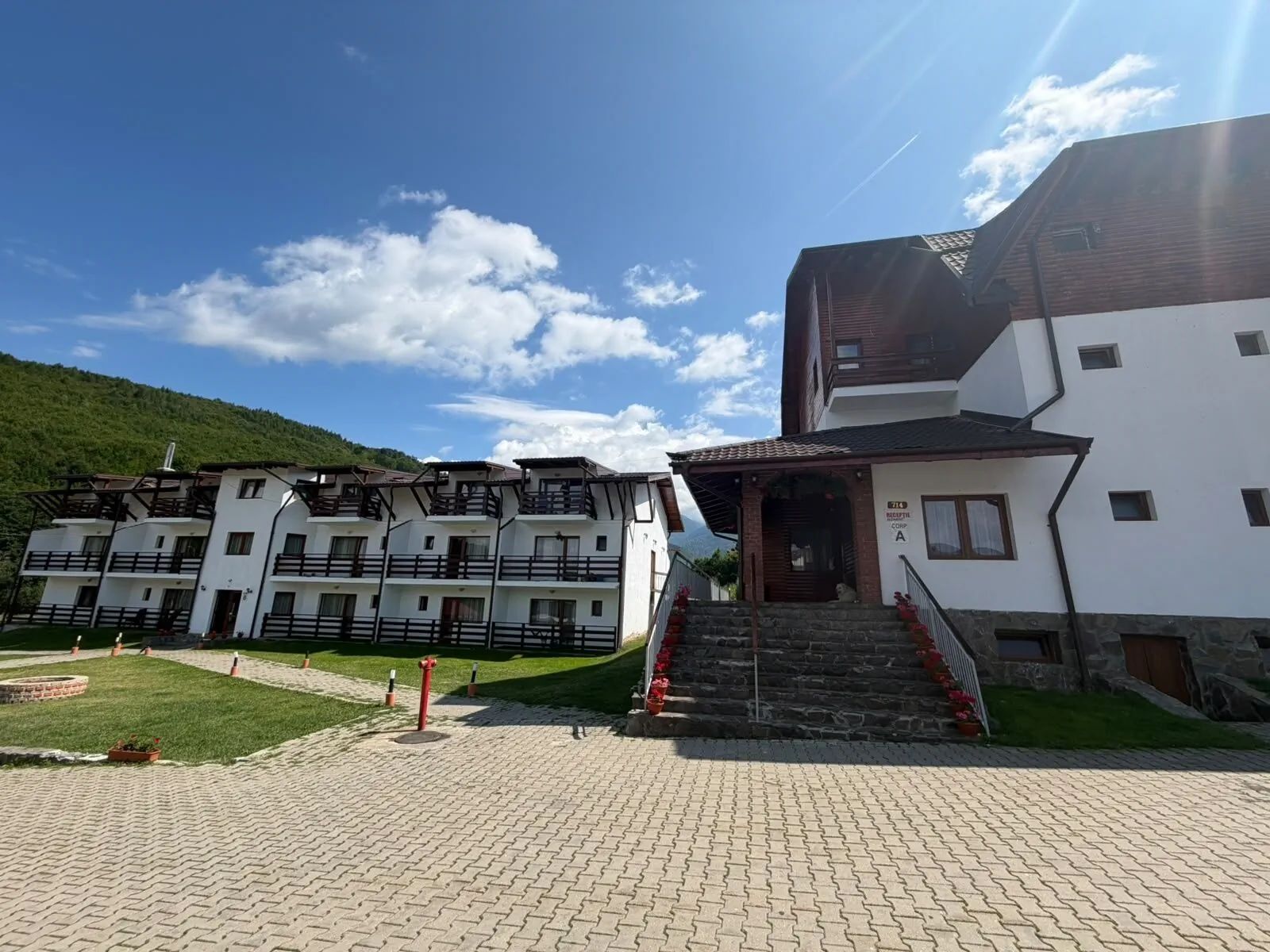
Hanul Patrisiei Cârțișoara
Hanul Patrisiei se află în Cîrţişoara, la un capătul din judetul Sibiu al drumului montan Transfăgărăşan. La proprietate există parcare privată si piscina acoperita cu apa incalzita, ambele fiind gratuite pentru turistii nostri. Toate camerele au balcon si sunt dotate cu TV cu ecran plat şi baie privată cu articole de toaletă gratuite. Accesul este gratuit la piscina acoperita si internet WiFi. Cascada Bâlea este la 18 km de Hanul Patrisiei, iar lacul Bâlea se află la 25 km de proprietate. Cel mai apropiat aeroport este Aeroportul Internaţional Sibiu, la 69 km de proprietate.
FROM
240 RON / night
BEFORE YOU HIT THE ROAD
Weather conditions in Sibiu
Local forecast for Bâlea Lake, Sibiu, Sibiu

Real-time updated weather data
Much more to explore in this area
Nearby tourist attractions


Cârțișoara, Sibiu County
Transfăgărășan Highway and Bâlea Lake
Incepe in comuna Bascov din judetul Arges de langa orasul Pitesti, in directia orasului Curtea de Arges si se termina la intersectia cu drumul DN1 intre Sibiu...
14.2 km
2.4 km

Sibiu, Sibiu County
ASTRA Museum of Traditional Folk Civilization
Situat pe Calea Rasinari din localitatea Sibiu; este un muzeu in aer liber; a fost organizat cu incepere din anul 1963, sub denumirea de Muzeul Tehnicii...
42.4 km

Sibiu, Sibiu County
Bâlea Lake Resort
Situata in aria comunei Cartisoara din masivul Fagaras; se intinde pana la altitudinea de 2.500 m; include relieful alpin, lacul, flora si fauna din circul...
14.4 km

Brașov, Brașov County
Black Church of Brașov (Evangelical Fortified Church Ensemble)
Heritage site in Braşov County, Romania
49.6 km

Sibiu, Sibiu County
Biserica Parohială Evanghelică Sfânta Maria din Sibiu
Situata in Piata Huet, localitatea Sibiu; a fost ridicata in secolul al-XIV-lea, pe locul unde exista o veche biserica inca din secolul al-XII-lea; cladirea...
42.2 km

Sibiu, Sibiu County
Muzeul Brukenthal
Situat in Piata Mare nr.4-5; colectiile baronului von Brukenthal au luat nastere in principal intre anii 1759-1774, perioada pe care acesta a petrecut-o la...
42.1 km

Sibiu, Sibiu County
Biserica Evanghelică Fortificată din Cisnădie
Situata pe strada Cetatii nr.1-3, localitatea Cisnadie; construita in secolul al XIII-lea; fortificata dupa atacul turcesc din 1493: turnul central a fost...
38.2 km

Sibiu, Sibiu County
Turnul Sfatului
Situat in Piata Mica nr.1, localitatea Sibiu; construit deodata cu cea de-a doua incinta fortificata, intre anii 1224 si 1241; este considerat simbol al...
42.1 km

Brasov, Brașov County
Parcul Național Piatra Craiului
Situat in Carpatii Meridionali;include Creasta Pietrei Craiului in totalitate si spatiile din culoarele intramontane limitrofe, Rucar - Bran si Rucar -...
48.4 km

Albestii, Argeș County
Mănăstirea Curtea de Argeș
Situata pe strada Basarabilor nr. 1, in apropierea centrului orasului Curtea de Arges; construita intre 1515-1517, de catre Neagoe Basarab, pe locul vechii...
49.9 km

Curtea de Argeș, Argeș County
Catedrala Regală din Curtea de Argeș
Catedrala din Curtea de Argeș, România
50.0 km
Cultural life and traditions
Events near Bâlea Lake
Medieval festivals, traditional fairs, concerts and recommended local activities in Transylvania.

Patrimoniu și Istorie

Sibiu, Jud. Sibiu
Festivalul Cetăților Medievale și Zilele Porților Deschise
Tururi ghidate nocturne, ateliere de meșteșuguri tradiționale și reconstituiri istorice cu cavaleri și domnițe.
WHEN
15 - 17 Mai 2026

Tradiții și Gastronomie
Sibiu, Jud. Sibiu
Târgul Tradițiilor Săsești și Gastronomie Locală
Descoperă producătorii locali, plăcintele săsești coapte pe vatră, siropurile artizanale și dulceața de rubarbă.
WHEN
În fiecare weekend (Mai - Octombrie)

Ecoturism și Natură
Colinele Transilvaniei, Jud. Sibiu
Drumeții Ghidate pe Traseul Colinele Transilvaniei
Excursii pe poteci nemarcate printre fânețe seculare, stejari multiseculari și sate cu biserici fortificate UNESCO.
WHEN
Vineri - Duminică (Sezon 2026)
On foot, exploration gains depth
Discover the surroundings and local geography
Explore trails, terrain and natural landmarks around Bâlea Lake.

Guides and practical tips
Useful travel articles
Travel guides, practical tips and itineraries for Transylvania.

Travel guide
Top 5 Atracții Turistice și Trasee Montane în Zona Moieciu - Bran
Descoperă cele mai spectaculoase peisaje carstice, chei adânci și cetăți medievale din imediata apropiere a stațiunii Moieciu.

Travel guide
Ghid de Drumeție: Traseul Moieciu de Sus spre Platoul Bucegi
Un itinerariu montan de o frumusețe rară ce urcă din Valea Băngăleasa spre Poiana Guțanu și crestele maiestuoase ale Bucegilor.

Travel guide
Castelul Bran: Istorie, Legende și Secrete Medievale
Află adevărata poveste a fortăreței medievale din Pasul Bran, reședința de suflet a Reginei Maria a României.
THE JOURNEY STARTS WITH AN IDEA
The next story is on the way.
From the first stop to the last stay, make room for a new Romania.
