


PLACE OF WORSHIP · TRANSYLVANIA
Viscri Fortified Church

Brasov, Brașov County
Add location to your trip planner.

Practical access information

VISITING HOURS
Luni - Duminică: 10:00 - 18:00 (în sezon)

TICKET PRICE
Bilet intrare: 15 RON adulți, 7 RON elevi/studenți

RECOMMENDED VISIT DURATION
1.5 - 2 ore


Visitor information and guide
 Navigate with Google Maps

ABOUT VISCRI FORTIFIED CHURCH
Captivating Introduction and Universal Value
In the heart of Transylvania's gentle hills, where the road winds through apple orchards and hay meadows turned golden by autumn, rises, like a white fortress watching over time, the Viscri Fortified Church. This monument is not merely a place of worship, but a living testimony to over eight centuries of European history, a meeting point of the continent's great civilizations — from the German colonists brought by the kings of Hungary, to the defenders of Christianity against Ottoman expansion, to the British monarch who chose to bind his name to the destiny of this village. In 1999, together with six other Transylvanian villages, Viscri was inscribed on the UNESCO World Heritage List under the name "Villages with Fortified Churches in Transylvania," a recognition that places this site among the most authentic and best-preserved rural cultural landscapes in all of Europe.
The universal value of the Viscri church resides in the fact that it condenses, within a relatively confined space, the entire story of medieval and modern Europe: the German colonization of Central and Eastern Europe (Ostsiedlung), the confrontation between Christianity and Islam on the continent's eastern frontier, the Protestant Reformation and the birth of a distinct confessional identity, but also the contemporary renaissance of a common European heritage through the joint efforts of UNESCO, international foundations, and the British Royal House. For today's European traveler, Viscri represents an open window onto a forgotten chapter of history — that of the "church-fortresses" (Kirchenburgen in German, Wehrkirchen for the properly fortified churches), an architectural phenomenon that, although present also in Franconia, Bavaria, Austria, or even in England on the border with Scotland, reaches in Transylvania its most impressive concentration and diversity, with over 150 examples preserved out of the approximately 300 built between the 13th and 16th centuries.
Historical Roots and Major European Connections
The story of the Viscri church begins long before the arrival of the Saxons, at a moment when Europe was redefining its borders in the wake of the great migrations. Around the year 1100, on the promontory in the northeast of the future locality, the Székely community — that Hungarian border people tasked with defending the eastern frontier of the Kingdom of Hungary — raised a small rectangular chapel with a semicircular apse, built of greenish-white limestone. This chapel, known in documents as Alba Ecclesia ("the White Church"), would also give the German name of the village: Weißkirch or Deutsch-Weisskirch. Archaeological dating, based on coins and temple earrings discovered in the graves inside and outside the chapel, places the construction between 1100 and 1120, during the reign of King Géza II of Hungary (1141–1162).
The turning point in the history of Central and Southeastern Europe occurs in the second half of the 12th century, when the kings of Hungary, aware of the vulnerability of the eastern frontiers against the invasions of the Cumans, Pechenegs, and later Mongols and Tatars, decide to colonize Transylvania with German populations. These colonists — coming from the Rhine valley, the Moselle region, Luxembourg, and even Flanders ("alii Flandrenses") — are brought not only as farmers, but as a veritable "border guard" of European Christianity. Their arrival in Viscri takes place around the year 1185, when the Saxons take over the Székely chapel, which they integrate into a larger Romanesque hall church, adding a wooden gallery at the western end and preserving fragments of the old building in the structure of the new construction.
The European context of these events is essential for a deep understanding of the monument. The year 1224 marks a fundamental moment: King Andrew II of Hungary issues the Diploma Andreanum (also known as the "Golden Bull of the Transylvanian Saxons" — Der Goldener Freibrief der Siebenbürger Sachsen), a document considered the first legal framework of regional autonomy in European history. Through this act, the Saxons received the right to choose their own judges, priests, and leaders, forming a distinct "nation" (Universitas Saxonum) alongside the Hungarian nobles and the Székelys. This privileged status, obtained also in the context of the rivalry between King Andrew II and the Teutonic Knights (who had been granted the Burzenland in 1211, but who were trying to form an independent state), explains why Viscri — a free village, not affiliated with any noble estate — was able to develop such an impressive church-fortress, financed by the entire village community.
The 15th and 16th centuries bring with them the threatening shadow of the Ottoman Empire, in rapid expansion after the fall of Constantinople (1453) and the victory at Mohács (1526). In this tense European geopolitical context, when the Ottomans reach the gates of Vienna (1529, 1683), the Transylvanian Saxons transform their churches into true fortifications. At Viscri, around the year 1500 — a period that coincides with the peak of the Ottoman threat and with the peasant uprisings of 1437–1438 — the church is fortified: the hall is extended and connected to the residential tower (the former keep of a count, built in the second half of the 13th century), and the oval enclosure from the 13th century is reinforced with two towers and two bastions. This architectural evolution mirrors the European phenomenon of the Wehrkirchen from Franconia and Bavaria (Germany), of the fortified churches in Austria and Switzerland, but also of the "fortified pilgrims" in northern England, on the border with Scotland — all similar responses to the political and military instability of the Late Middle Ages.
Another crucial European moment unfolds in the 16th century: the Protestant Reformation. Like the majority of Transylvanian Saxons, the Viscri community passes from Roman Catholicism to Lutheranism, adhering to the Evangelical Church of the Augsburg Confession. This confessional change, influenced by Martin Luther's ideas diffused in the German space, definitively marks the religious identity of the monument, which remains to this day a place of worship of the Evangelical Church C.A. in Romania. In the same century, Transylvania becomes an autonomous principality under Ottoman suzerainty (after 1542), and the Saxons, alongside the Romanians, participate in the alliance with the Habsburgs during the 1848 revolution — an episode that shows the depth of the connections between this rural community and the great political currents of Europe.
Architectural Masterpiece and Artistic Heritage
The ensemble of the Viscri fortified church represents one of the most complete and best-preserved expressions of Saxon architecture in Transylvania, being classified as a historical monument of category A (code LMI BV-II-a-A-11843). Although its dimensions are not impressive — it is, in fact, one of the smallest of the Saxon fortified churches — the complexity and historical stratification of the construction transform it into a veritable open-air manual of European medieval and Renaissance architecture.
The original nucleus of the monument is the Romanesque hall church from the 13th century, one of the few preserved in the Rupea area (alongside that of Homorod). The "hall" plan (Hallenkirche), popular in 12th-century Germany but which soon disappears after reaching Austria, integrates the old Székely chapel. In the church choir are preserved four Romanesque capitals from the first half of the 13th century, of which the largest (48×48 cm) — decorated with central and lateral shields in relief — was reused as a baptismal font, proof of the continuity of worship and of respect for the original material. A unique element in Transylvania is the scalloped capital of the apse, possibly of Romanesque origin. The western gallery, supported by four semicircular arches on three cylindrical columns, recalls those in the basilicas of the Sebeș area and, at Gârbova and Miercurea Sibiului, served a family of Saxon counts.
In the 14th century, with the church passing into the ownership of the village community (after the extinction of the count's family), the eastern part is modified: the semicircular apse is demolished and replaced with a trapezoidal choir, closed in the east with a semicircular apse supported by seven buttresses. On the northern side, before the modification of the choir, the sacristy is built, used partially also as an ossuary.
The period of fortification — the first half of the 16th century — brings the most spectacular modifications. The side walls of the hall are extended to connect the church to the residential tower, which becomes a defensive tower. On the ground floor of the tower an entrance with a broken arch is created, whose profile — semicylindrical fillet between two cavettos — is almost identical to that of the entrance in the hall church of Homorod, suggesting the circulation of craftsmen and architectural models in the Saxon space. The choir and hall receive barrel vaults with penetrations and terracotta ribs, a system common in Saxon churches around the year 1500. To strengthen the eastern part, the choir is raised polygonal and surrounded by a second row of buttresses, joined at the top by semicircular arches that support a defensive parapet with machicolations.
In the 17th century, on the steep slope to the west, an additional rectangular wall is raised, with two projecting towers: the northern one, with three levels, built in 1630 by the architect Johann Hartman, and the western one, with four levels, raised in 1648–1649. These towers, with defensive corridors on consoles, embrasures, and firing platforms, mirrored the military technique of the era, influenced by the experience of the religious wars and the evolution of artillery. The upper level of the western tower, with small windows and an opening for the evacuation of smoke from the hearth, served as the priest's residence in case of siege — proof of the residential character that these fortifications acquired.
In the 18th century, with the disappearance of the immediate Ottoman threat, a radical transformation takes place: in 1743, the dangerous vaults are replaced with a coffered ceiling in the hall and a stuccoed one in the choir, and the defensive gallery above the choir is demolished. This intervention, marked by an inscription on the triumphal arch, reflects the transition from the military function to the communal and domestic one. In the 18th century a second ring of wall is also built around the fortress, and in the enclosure, the defensive corridor is replaced with a shed for storing grain, with 19 large rectangular entrances. The eastern bastion, also known as the "Bacon Tower," preserves in the upper floor the wide embrasures with oak frames and turning logs, witnesses of its function as a food store.
The interior of the church preserves rustic painted furniture of great ethnographic value: pews with Gothic and Renaissance phytomorphic paintings (1694) along the western wall, wooden galleries with painted balustrades (1717), and pews on the southern side (1783). The coffered ceiling harmoniously matches these elements. The mural painting, partially destroyed when the choir was raised, left traces on the northern wall of the hall, and fragments of frescoes were discovered during research. The classicist altar from the 19th century has as its centerpiece "The Blessing of the Children," a work by the painter J. Paukratz from Rupea. The baptismal font, made from a capital of the 13th-century church, is unique in Transylvania.
The entire ensemble — church, fortified enclosure with defensive walkway, two towers, two bastions, and the gate tower — is surrounded by a cemetery with funerary stones dating from the Bijelo Brdo culture period, adding a profound memorial dimension to the site.
Legends, Personalities, and Turning Points
The history of the Viscri church is marked by numerous episodes that illustrate the resilience of a community situated at the intersection of great empires. One of the most fascinating moments is that of the archaeological research of 1970–1971, conducted by archaeologist Mariana Dumitrache, whose results were published in the journal Forschungen zur Volks- und Landeskunde (vol. 21, no. 2, 1978). These excavations unraveled the mysteries of the construction, demonstrating that the residential tower was raised after the place no longer served as a cemetery (the tower's foundation cuts through a grave), and allowed the reconstruction of the monument's stages of evolution. Also in this period, the fortress underwent extensive restoration, reconstructing the defensive corridor of the eastern bastion.
A separate chapter in the recent history of the monument is represented by the massive emigration of the Saxons. If in January 1990 there were still 300 people living in Viscri, by December of the same year only 68 remained. The almost total departure of the German population to Germany (especially Bavaria) after the 1989 Revolution left the church and village in a state of extreme vulnerability. Here intervenes a personality who would definitively change the destiny of the place: Prince Charles of Wales (today King Charles III of the United Kingdom). The first visit took place in 1998, and in 2006 the prince purchased and restored a traditional 19th-century Saxon house in the village (Viscri no. 163, known as the "Blue House"), which he transformed into a center for promoting sustainable tourism. Through the Mihai Eminescu Trust Foundation (MET), patronized by the prince and later by the king, hundreds of restoration projects were financed in the village, including around the fortified church. Today, Viscri again counts approximately 420 inhabitants, of whom only about 20 are Saxons, the rest being Romanians and Roma, and the village has been reborn as an internationally prestigious tourist destination.
In 2024 and 2025, King Charles cancelled his traditional visits to Romania due to health problems, but his connection with Viscri remains alive, and the Foundation continues to be active. This British royal involvement represents a unique case in Europe: a Western monarch who saves, through private resources and charitable foundations, the heritage of a rural community in Eastern Europe, demonstrating that the European values of heritage conservation transcend national borders.
Practical Visitor Guide and Today's Tourist Experience
Visiting the Viscri Fortified Church is an experience that rewards the patience and curiosity of the European traveler. Located approximately 80 km northwest of Brașov, the village of Viscri can be reached either from the direction of Brașov (via Bunești, ~7 km county road), or from the direction of Sighișoara (via Dacia, ~9 km). The nearest railway station is Rupea, from where one can continue by car or taxi. The village is crossed by the Via Transilvanica trail, offering hiking opportunities.
The visiting schedule in season (April–October) is daily between 10:00–13:00 and 14:00–18:00, with the possibility of extension until 18:30 in the peak months (June–September). Outside the season (October 16 – March 31), the schedule is very limited and advance telephone contact is recommended. The standard entrance fee is 15 RON for adults and 7 RON for pupils and students. The ticket includes access to the church, tower, museum, and exhibitions.
Essential information for visitors in autumn 2026 and spring 2027: from September 14, 2026, the interior of the church and the main tower are closed to the public for extensive restoration works (roof, frescoes, flooring, galleries, and pews), with reopening estimated in 2027. During this period, the enclosure walls, the ethnographic museum, the Bacon Tower (eastern bastion), and the upper floor of the Southern Bastion remain open, and the fee is reduced to 10 RON. This situation nevertheless offers a unique opportunity: the visitor can explore the exterior fortifications, the museum, and can climb the accessible towers, benefiting from a perspective on the ongoing conservation process.
Inside the defensive walls operates an ethnographic museum that presents the daily life of the Transylvanian Saxons: traditional costumes (Trachten), painted furniture pieces, agricultural tools, pottery and textile articles, but also historical photographs of the community. The main tower of the church — once accessible — offers an unforgettable panorama of the village's red roofs of traditional ceramic tile, the surrounding hills, and, on clear days, as far as Sighișoara. The Bacon Tower, with its original oak embrasures, evokes the function of the bastion as a food store.
The experience of visiting Viscri is not limited to the church. The village itself is an open-air museum: the Saxon houses with blue gates (King Charles's "Blue House," open to visitors from April to October, with museum, café, and souvenir shop), the barns with shingle roofs, the stone fountains, and the unpaved roads (paved with beaten earth) create the atmosphere of a place "left behind fifty years," as local guides describe it. Overnight accommodation is recommended — there are numerous guesthouses restored in traditional style (Viscri 9, Viscri 32, Viscri 44, Viscri 125, Casa Harald) — to catch the evening silence, when the horses and carts return from the pasture and the church bells resound over the hills.
Local gastronomy completes the experience: traditional bread baked in a clay oven, homemade jams (of plums, quinces, blueberries), smoked sausages and pork dishes, along with the village's bee products, offer an incursion into Saxon cuisine, inherited from the Central European tradition. Nearby one can visit Rupea Fortress (only 15 minutes' walk or a few minutes by car), the Fortified Church of Criț, with its famous cemetery cross, and the medieval town of Sighișoara, located at ~34 km.
For the European traveler seeking authenticity, for the historian following the invisible threads that connect Transylvania to the great empires of the continent, for the architect fascinated by the Kirchenburgen phenomenon, or for the simple seeker of peace and beauty, the Viscri Fortified Church remains an essential landmark. It is a place where the history of Europe — from the Carolingians and Teutonic knights, to the Protestant Reformation, from the Ottoman wars to the contemporary British monarchy — meets and is reflected in the white stone of a church that knew how to resist, transform, and be reborn, preserving its soul in a village that, in turn, learned to find its future in its European past.
Media gallery
Discover Viscri Fortified Church in pictures

25 photos · Architecture, courtyards and captivating details


Image source: Wikimedia Commons · Public domain photos · Free license
STAY A FEW DAYS, DISCOVER THE MAGIC
Stays near Viscri Fortified Church

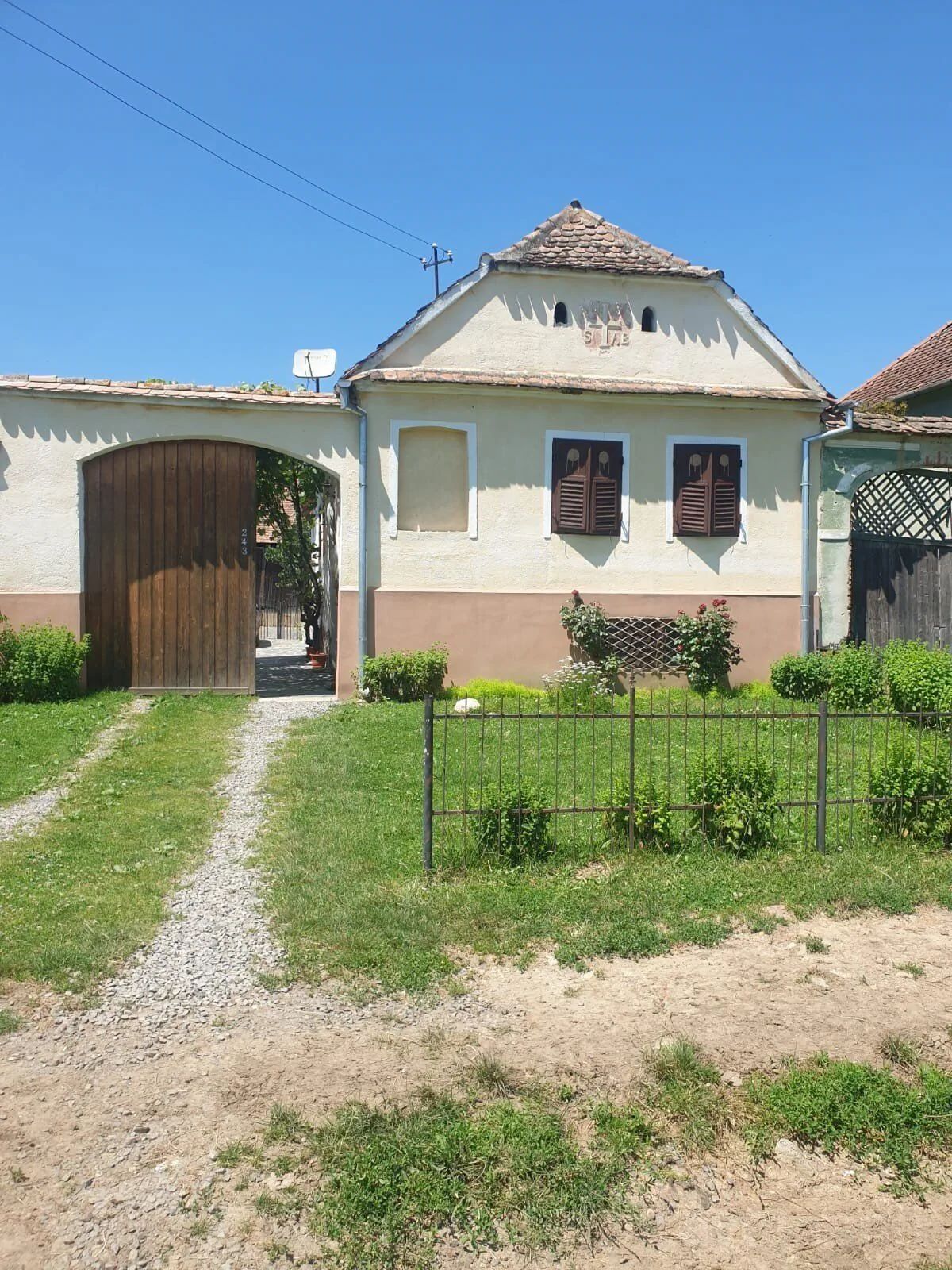
Casă de Vacanță · 3 stars

Viscri, Viscri County · 0.7 km
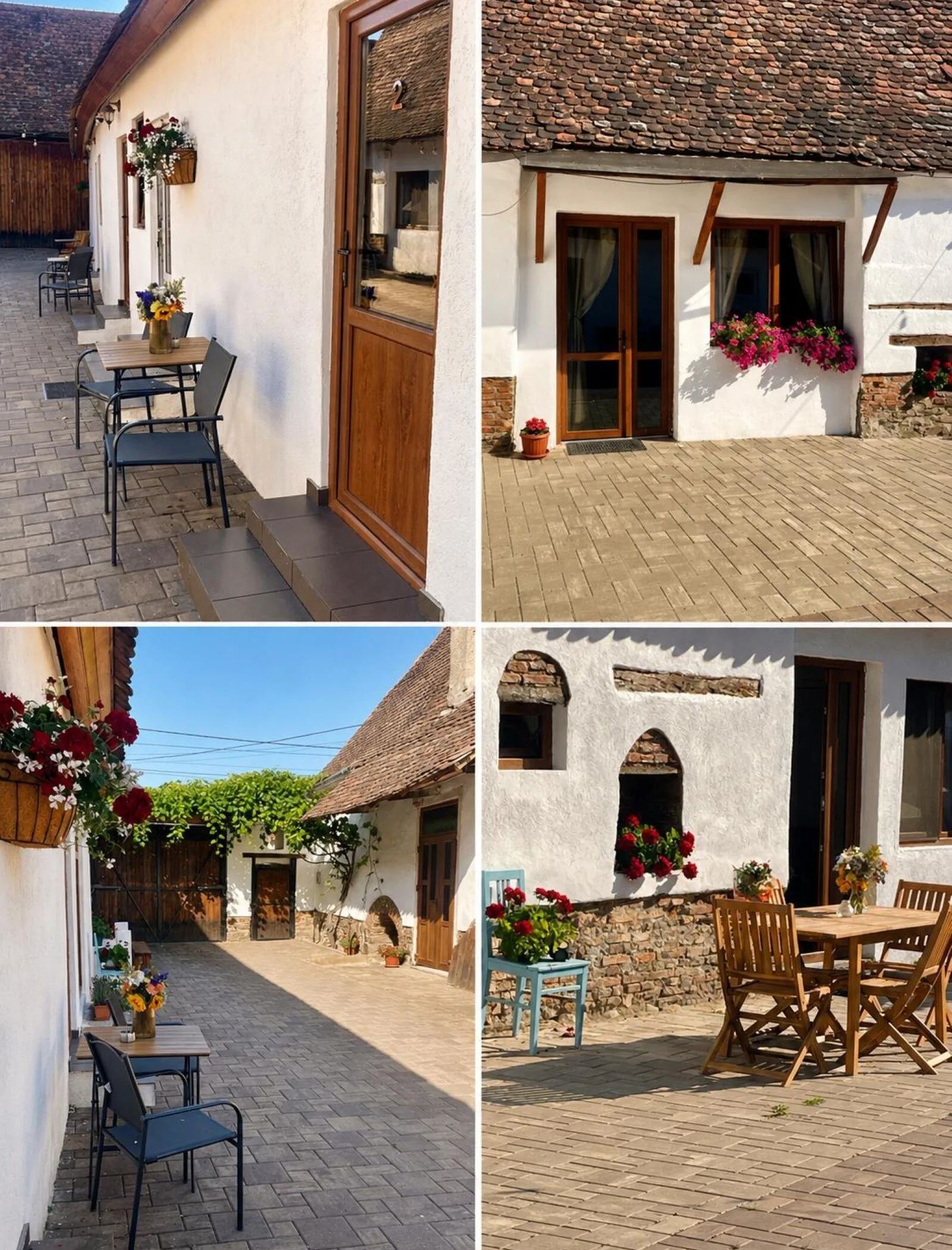
Casa Viscri
Camere, serviciiCasa Viscri Viscri ofera doua camere confortabile si placut amenajate. Puteti beneficia de parcare gratuita. Unitatea este prevazuta cu internet wireless. O lista detaliata despre facilitatile unitatii de cazare (inclusiv cele contra cost), cat si despre amenajarea camerelor gasiti in fisa de mai jos. LocațiaBiserica fortificată de la Viscri se afla la 700 m. Servicii de masăPreturile camerelor contin mic dejun. La trimiterea rezervarii se poate solicita urmatoarele mese: mic dejun, demipensiune, cină, fără servicii de masă, pensiune completă, prânz. PlatăPlata se face prin urmatoarele metode: numerar, transfer bancar. Rezervarea se considera finalizata numai dupa plata unui avans de 100%. Sosire, programZiua de cazare incepe la ora 14:00. Eliberarea camerei se face la ora 12:00. Limba vorbita la receptie română.
FROM
280 RON / night

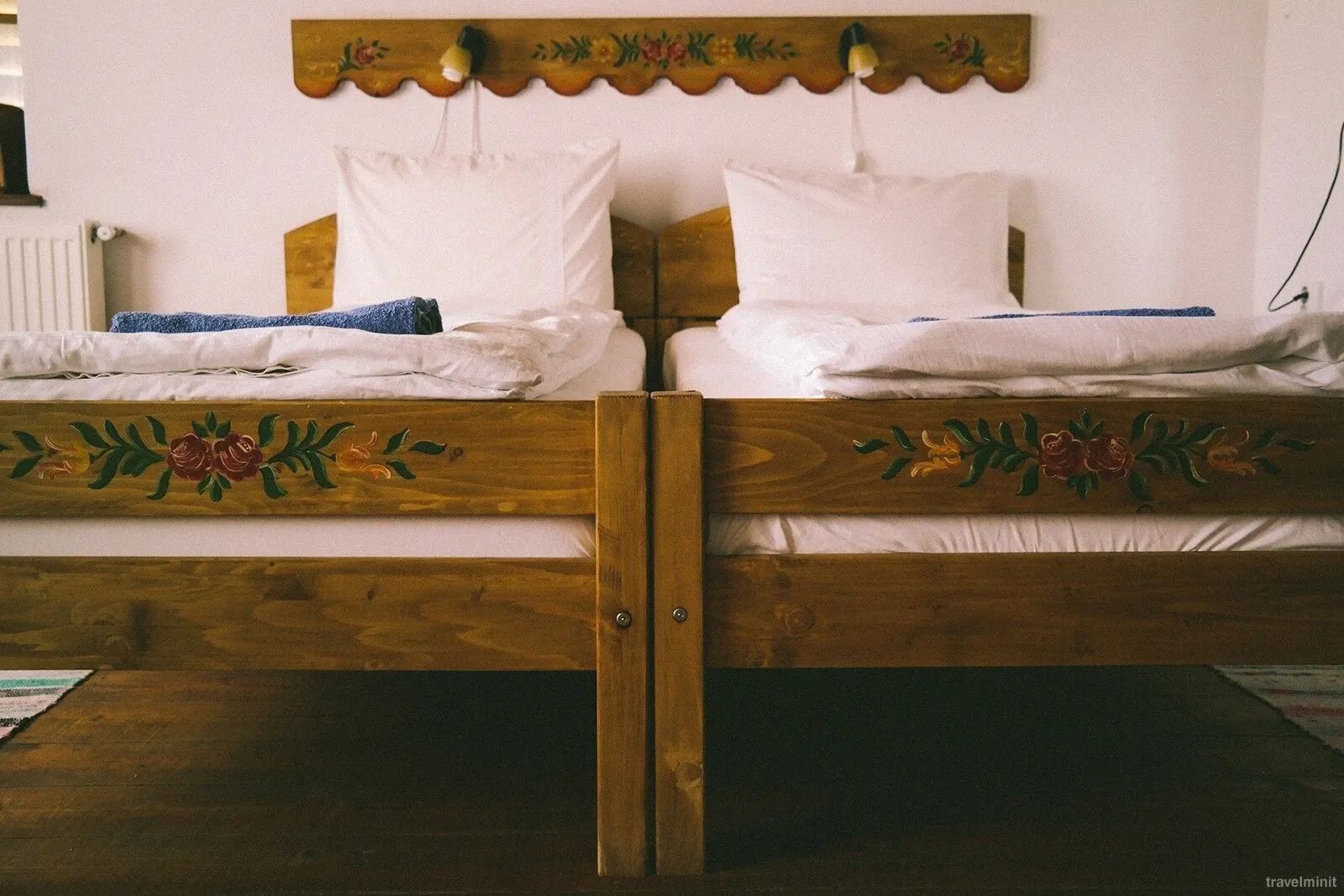
Pensiune · 3 stars
Viscri, Viscri County · 0.8 km
Pensiunea Viscri 195 - Adults Only +14
Camere, serviciiPensiunea Viscri 195 - Adults Only +14 Viscri va asteapta cu 4 camere amenajate cu bun gust si confortabile. Este disponibila o parcare gratuita. Unitatea este prevazuta cu internet wireless. Daca doriti sa obtineti mai multe informatii despre facilitatile oferite la aceasta unitate de cazare (inclusiv cele contra cost) si despre echiparea camerelor, consultati fisa de mai jos. LocațiaUnitatea de cazare este amplasata la 800 m distanta fata de Biserica fortificată de la Viscri. Servicii de masăPreturile afisate includ mic dejun. La efectuarea rezervarii se poate solicita demipensiune contra cost. PlatăPuteti face plata cazarii cu/prin: numerar, card bancar, transfer bancar, card de vacanță, avans travelminit, voucher travelminit. Pentru garantarea rezervarii se percepe un avans de 50%. Sosire, programCheck-in se face incepand cu ora 14:00 si check-out pana la ora 12:00. Personalul de la pensiune vorbeste limba: engleză, română.
FROM
240 RON / night
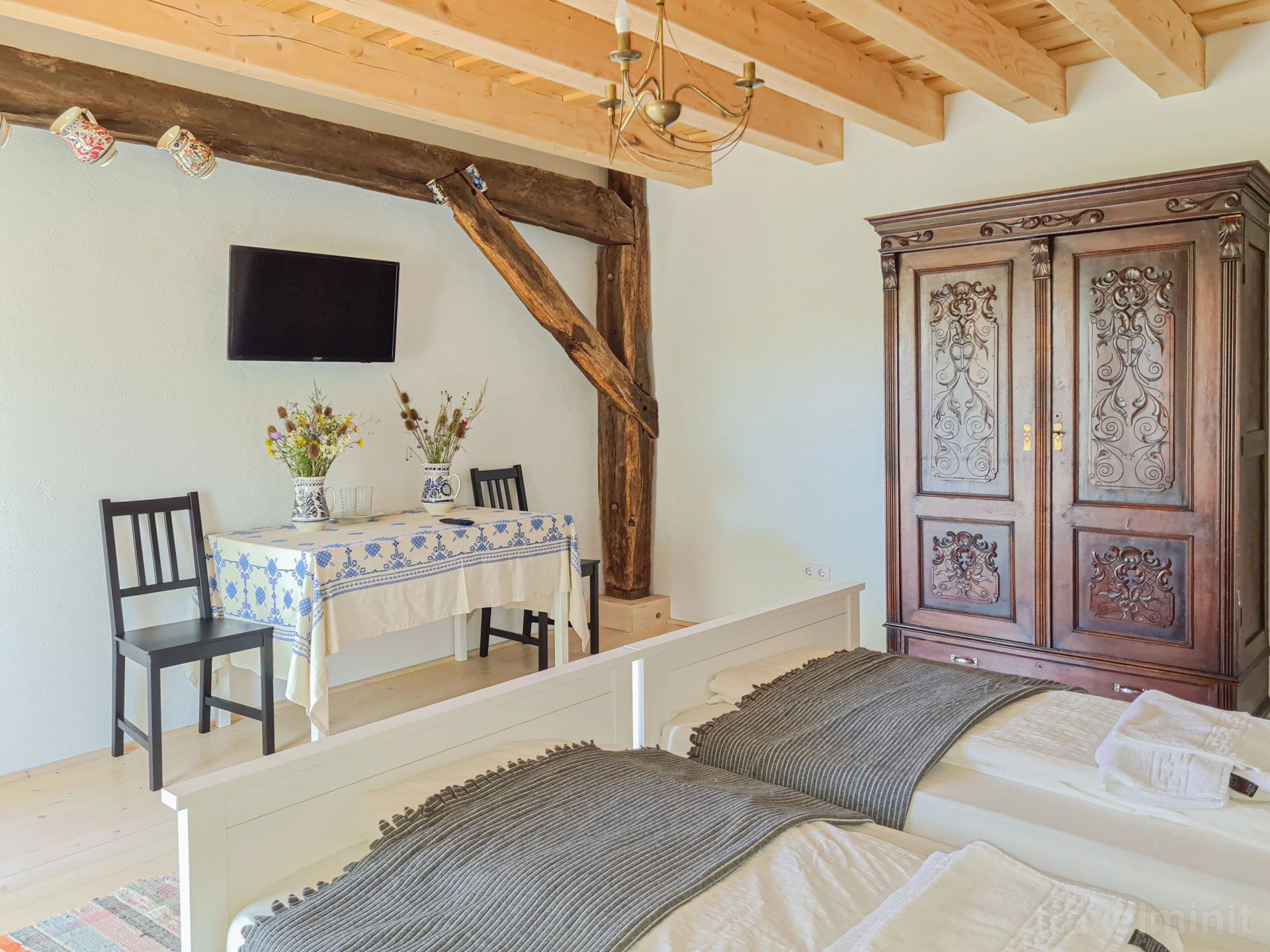
Pensiune · 3 stars
Buneşti, Buneşti County · 6.0 km
Pensiune Haus Rether Bunești
Camere, serviciiPensiune Haus Rether Bunești Buneşti ofera 4 camere confortabile si placut amenajate. Proprietatea ofera parcare gratuita. Fiecare camera ofera baie proprie. Daca doriti sa obtineti mai multe informatii despre serviciile disponibile (inclusiv cele contra cost) in cadrul unitatii de cazare si despre echiparea camerelor, consultati fisa de mai jos. Servicii de masăPreturile camerelor nu contin masa. La efectuarea rezervarii puteti solicita mic dejun contra cost. PlatăPlata serviciilor se poate efectua prin urmatoarele modalitati: numerar, transfer bancar, card de vacanță, avans travelminit, voucher travelminit. Rezervarea devine ferma numai dupa efectuarea platii unui avans de 30%. Sosire, programZiua de cazare incepe la ora 13:00. Eliberarea camerei se face la ora 11:00. Personalul de la pensiune vorbeste limba: engleză, germană, română.
FROM
240 RON / night
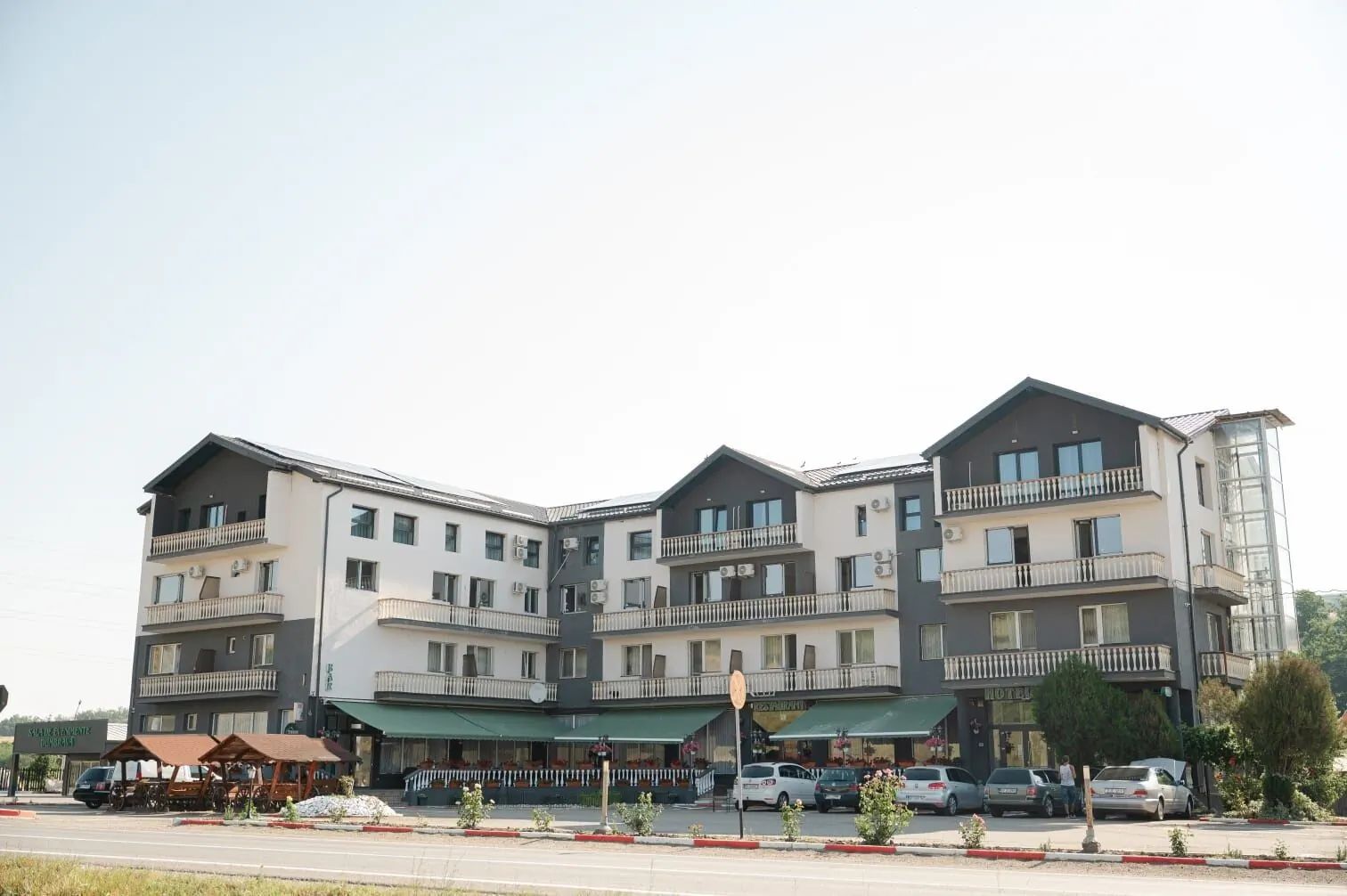
Hotel · 3 stars
Рупя, Рупя County · 7.0 km
Hotel Dumbrava Rupea
Complexul turistic Dumbrava este situat in inima Transilvaniei intr-un decor pitoresc de vai si dealuri, de-a lungul drumului European Brasov-Sighisoara, la 3 km de orasul Rupea. Din hotelul nostru aveti parte de o priveliste cu adevarat pitoreasca, pictata cu romantism. Hotelul pe o parte va ofera o priveliste despre dealuri si vai strabatute dese ori de turme de oi si de vaci. Pe celalta parte va este oferit o priveliste cu lacul hotelului unde puteti sa va petreceti timpul relaxand cu pescuit si daca doriti puteti vizita cetatea Rupea, o cetate rara cu o locatie si forma specifica, la care lucrarile de renovare sau terminat in anul 2013 si este demna de vizitat. Complexul este situat langa drumul European (E60), intre Sighisoara si Brasov, doua orase care se pot vizita de la hotelul nostru, fiind la o distanta de aproximativ o ora la Sighisoara, si o ora si jumatate de la Brasov, parcurs cu masina. Hotelul se afla la o distanta de 3 kilometrii, de orasul Rupea, unde putesi vizita cetatea, Muzeul Etnografic ''Gheorghe Cernea'', biserica fortificata din Rupea etc. Va invitam sa va petreceti timpul liber la noi si sa va bucurati de facilitatile oferite de hotel si de locurile apropiate. Hotelul dispune de 100 de spatii de cazare, 43 de camere: camere matrimoniale, duble-twin, camere triple si doua apartamente. Hotelul a fost modernizat si dotat cu mobilier de lemn masiv in camere, televizoare LCD, frigider. Hotelul este dotat cu lift. in hotel este wireles gratuit pentru clienti. Va asteptam si la restaurantul a la carte al hotelului, clasificat la categoria I, unde puteti sa gustati atat preparate internationale, cat si produse traditionale romanesti din ferma proprie Dispunem si de o sala de conferinte pentru 60 de persoane, pavilon de evenimente cu o capacitate de primire pana la 700 de persoane. Va sta la dispozitie si lacul de pescuit al hotelului unde clientii cazati la noi beneficiaza de o reducere de 50%. Oferim servicii de masă în regim a la carte.
FROM
290 RON / night
Pensiune · 3 stars
Criț, Criț County · 8.8 km
Pensiunea Family & Friends Criț
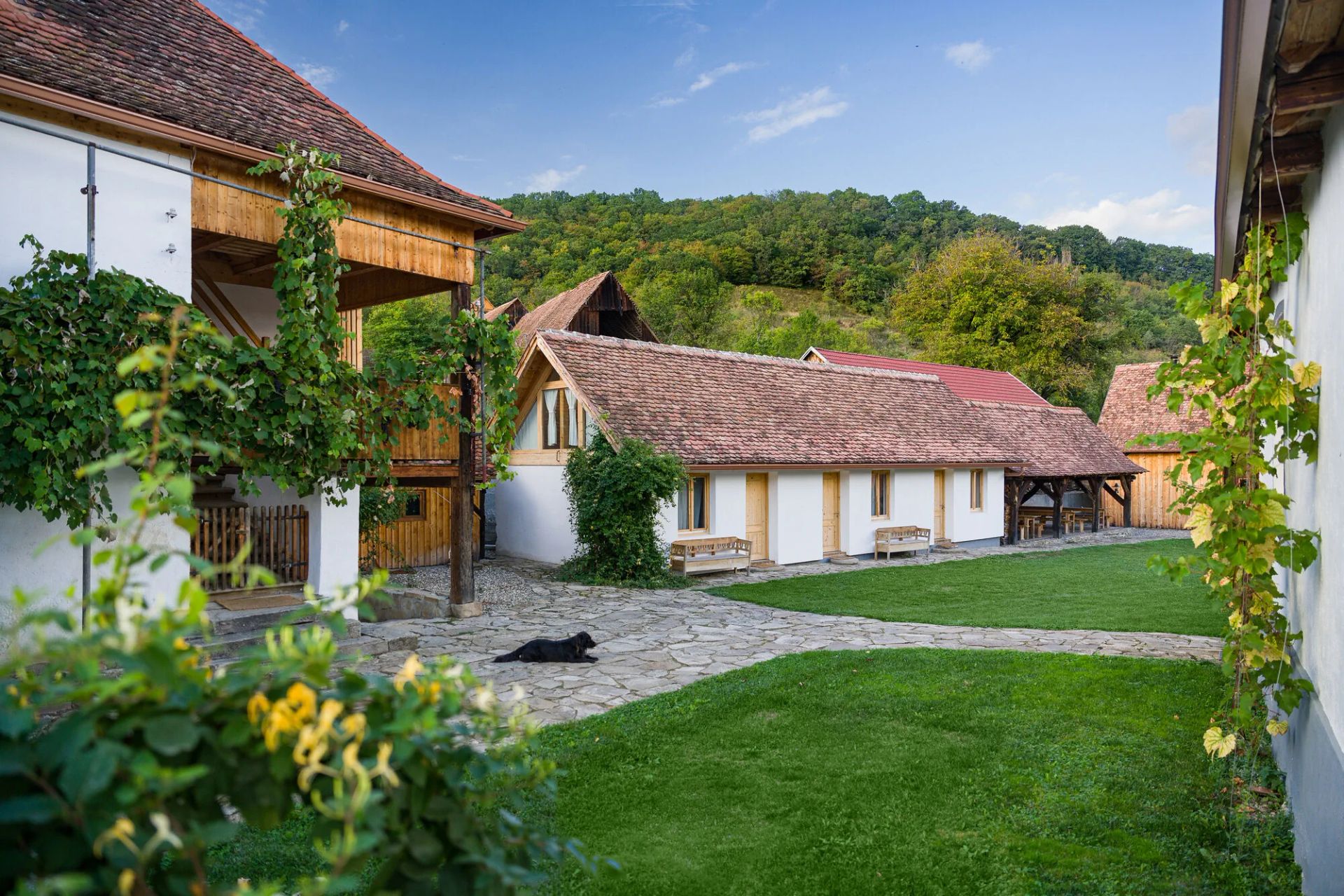
Pensiune Family & Friends Crit 168 se află în Criţ, la aproximativ 12 km de Biserica Fortificată din Viscri și la 12 km de Biserica Fortificată din Saschiz, și pune la dispoziție o grădină și un lounge comun, precum și WiFi gratuit în întreaga proprietate. Această proprietate include o bucătărie comună, precum și o terasă pentru plajă. Personalul proprietății poate organiza servicii de transport de la/la aeroport. Toate unitățile de la această pensiune sunt echipate cu zonă de relaxare, televizor cu ecran plat cu canale prin satelit și baie proprie cu un uscător de păr și duș. La Pensiune Family & Friends Crit 168, fiecare cameră oferă lenjerie de pat și prosoape. În Criţ și în împrejurimi, oaspeții cazați la Pensiune Family & Friends Crit 168 pot desfășura diverse activități, printre care ciclism.
FROM
240 RON / night
Casă de Vacanță · 4 stars
Meșendorf, Meșendorf County · 9.1 km
Mesendorf Gasthaus Meșendorf
Camere, serviciiMesendorf Gasthaus Meșendorf Meșendorf ofera cazare in camere placut mobilate si confortabile. Proprietatea pune la dispozitia oaspetilor parcare gratuita. Accesul la internetul wireless este disponibil la unitatea de cazare. Daca doriti sa obtineti mai multe informatii despre serviciile disponibile (inclusiv cele contra cost) in cadrul unitatii de cazare si despre echiparea camerelor, consultati fisa de mai jos. Servicii de masăPreturile afisate includ mic dejun. PlatăModalitati de plata acceptate: transfer bancar, card de vacanță, avans travelminit, voucher travelminit. Sosire, programPreluarea camerei se face de la ora 16:00 si iesirea pana la ora 11:00. Limbi straine vorbite la receptie: engleză, română.
FROM
390 RON / night
BEFORE YOU HIT THE ROAD
Weather conditions in Brasov
Local forecast for Viscri Fortified Church, Brasov, Brașov

Real-time updated weather data
Much more to explore in this area
Nearby tourist attractions


Sighișoara, Mureș County
Sighișoara Medieval Citadel
Situata in centrul municipiul Sighisoara; inca din secolul al III-lea i.Hr. a existat pe acest teritoriu o cetate dacica, numita Sandava; romanii au ridicat...
29.3 km

Harghita, Harghita County
Dârjiu Fortified Church
Situata in localitatea Darjiu; construita intre secolele XIV - XV; initial, a fost ridicata in stil romanic, iar apoi a fost transformata in stil gotic; a...
18.5 km

Brașov, Brașov County
Black Church of Brașov (Evangelical Fortified Church Ensemble)
Heritage site in Braşov County, Romania
14.6 km

44.6 km

Sibiu, Sibiu County
Biertan Fortified Church
Situata in localitatea Biertan; construita pe locul unei alte biserici, intre 1492-1516, in stil gotic tarziu, cu elemente de arhitectura renascentista in...
44.7 km

Danes, Mureș County
Turnul cu ceas Sighișoara
Situat in partea de est a platoului inferior al Cetatii Sighisoara; construit in preajma secolului al XIV-lea, pentru a proteja poarta principala a orasului si...
29.3 km

Danes, Mureș County
Biserica fortificată Saschiz
Situata in localitatea Saschiz;construita pe locul unde in trecut exista o bazilica romanica;inaltata in anul 1493, in onoarea regelui Stefan I al Ungariei;din...
18.6 km

Brasov, Brașov County
Cetatea Rupea
Situata in vestul orasului Rupea, in zona rezervatiei geologice Dealul Cohalm, la 50 km de municipiul Brasov; prima atestare documentara dateaza din anul 1324 -...
9.8 km

18.4 km

Danes, Mureș County
Cetatea Țărănească Saschiz
Situata pe aria localitatii Saschiz, la 2 km de vatra satului; lucrarile au inceput in 1347, fiind construita de comunitatea germana din zona; fortificatia a...
18.9 km

Brasov, Brașov County
Biserica fortificată din Homorod
Situata in localitatea Homorod, judetul Brasov; ridicata in secolul al XIII - lea; este printre rarele biserici ce au planul in forma de sala romanica; sala...
14.9 km

18.5 km
Cultural life and traditions
Events near Viscri Fortified Church
Medieval festivals, traditional fairs, concerts and recommended local activities in Transylvania.

Patrimoniu și Istorie

Brasov, Jud. Brașov
Festivalul Cetăților Medievale și Zilele Porților Deschise
Tururi ghidate nocturne, ateliere de meșteșuguri tradiționale și reconstituiri istorice cu cavaleri și domnițe.
WHEN
15 - 17 Mai 2026

Tradiții și Gastronomie
Brasov, Jud. Brașov
Târgul Tradițiilor Săsești și Gastronomie Locală
Descoperă producătorii locali, plăcintele săsești coapte pe vatră, siropurile artizanale și dulceața de rubarbă.
WHEN
În fiecare weekend (Mai - Octombrie)

Ecoturism și Natură
Colinele Transilvaniei, Jud. Brașov
Drumeții Ghidate pe Traseul Colinele Transilvaniei
Excursii pe poteci nemarcate printre fânețe seculare, stejari multiseculari și sate cu biserici fortificate UNESCO.
WHEN
Vineri - Duminică (Sezon 2026)
On foot, exploration gains depth
Discover the surroundings and local geography
Explore trails, terrain and natural landmarks around Viscri Fortified Church.

Guides and practical tips
Useful travel articles
Travel guides, practical tips and itineraries for Transylvania.

Travel guide
Top 5 Atracții Turistice și Trasee Montane în Zona Moieciu - Bran
Descoperă cele mai spectaculoase peisaje carstice, chei adânci și cetăți medievale din imediata apropiere a stațiunii Moieciu.

Travel guide
Ghid de Drumeție: Traseul Moieciu de Sus spre Platoul Bucegi
Un itinerariu montan de o frumusețe rară ce urcă din Valea Băngăleasa spre Poiana Guțanu și crestele maiestuoase ale Bucegilor.

Travel guide
Castelul Bran: Istorie, Legende și Secrete Medievale
Află adevărata poveste a fortăreței medievale din Pasul Bran, reședința de suflet a Reginei Maria a României.
THE JOURNEY STARTS WITH AN IDEA
The next story is on the way.
From the first stop to the last stay, make room for a new Romania.
