


MUSEUM · MUNTENIA (WALLACHIA)
George Enescu National Museum

Bucuresti, Bucharest
Add location to your trip planner.
Practical access information

VISITING HOURS
Monday: 12:00 PM – 5:00 PM · Tuesday–Sunday: 9:00 AM – 5:00 PM (in summer until 8:00 PM)

TICKET PRICE
Adults: 45 RON · Students: 11 RON · Seniors: 23 RON · Guided tour included

RECOMMENDED VISIT DURATION
2-3.5 hours
Visitor information and guide
 Navigate with Google Maps

ABOUT GEORGE ENESCU NATIONAL MUSEUM
A sanctuary of universal music in the heart of Bucharest
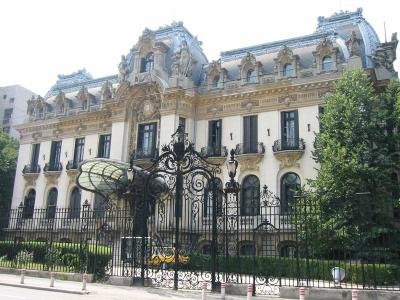
At 141 Calea Victoriei, within one of the most elegant palaces in the Romanian capital, the George Enescu National Museum opens its doors to the universe of the greatest musician Romania has ever contributed to the world’s cultural heritage. The institution is housed in the Cantacuzino Palace, an aristocratic residence that blends the French Beaux-Arts grace with the cosmopolitan spirit of early 20th-century Bucharest. Visitors are offered not only a deep dive into Enescu’s artistic biography but also an exceptional architectural experience that places Romania on the grand map of European civilization. This site is far more than a simple memorial museum; it is a true temple of classical music, a meeting point between Romanian musical tradition and the great currents of universal creation, between East and West, between the 19th and 21st centuries.
Historical roots and major European connections
The history of this palace and the institution it hosts is deeply rooted in the broader European context of the 19th and 20th centuries. The Cantacuzino family, one of the oldest and most prestigious boyar dynasties in the Romanian Principalities, traces its origins to the Byzantine Empire, being related to the Paleologus emperors and the great aristocratic families of the Balkans. During the Ottoman domination, Romanian boyars were integrated into the administrative system of the Sublime Porte, but with the 19th century and the modernization aspirations of the Romanian Principalities, the Bucharest elite increasingly turned toward Western models, particularly France and the Austro-Hungarian Empire. Gheorghe Grigore Cantacuzino, nicknamed "The Nabob" due to his immense wealth, represented the pinnacle of this aristocratic class, which asserted its belonging to European civilization through culture, education, and luxury.
The palace, built between 1901 and 1903, exemplifies this Western orientation. Architect Ion D. Berindey, trained in the tradition of the École des Beaux-Arts in Paris, created a residence that could rival the palaces on Vienna’s Ringstrasse, Paris’s Champs-Élysées, or Budapest’s Andrássy út. The Beaux-Arts style, developed in France under the Second Empire and spread throughout Europe, combined classical Greek and Roman elements with modern technical innovations, creating opulent spaces designed to impress and affirm the social status of its owner. The imposing façade, adorned with Corinthian columns, tall windows, and refined sculptural decorations by Italian and French masters, evokes the splendor of an era when Bucharest aspired to become the "Little Paris" of the Balkans—a cultural center competing with the great capitals of Western Europe.
The transformation of the palace into a museum in 1956 marked a crucial moment in Romania’s cultural history. During the communist period, when culture was used as a tool for diplomacy and national affirmation on the international stage, the Romanian state decided to dedicate this historic monument to the memory of George Enescu, Romania’s greatest cultural ambassador. Thus, the Cantacuzino Palace entered the circuit of major European museums dedicated to composers, alongside the memorial houses of Mozart in Salzburg, Beethoven in Bonn, and Chopin in Warsaw, consolidating Romania’s position in the European cultural landscape.
George Enescu: A European of universal music
Born in 1881 in Liveni-Vârnav, a village in Moldavia, George Enescu was a phenomenon of musical precocity comparable to Wolfgang Amadeus Mozart or Felix Mendelssohn. However, his artistic trajectory is emblematic of the destiny of Eastern European intellectuals in the 19th and early 20th centuries, who had to navigate between local traditions and the great cultural centers of Europe. At the age of seven, Enescu left for Vienna, the capital of the Austro-Hungarian Empire and one of the world’s most important musical centers, where he studied at the Conservatory under masters such as Joseph Hellmesberger and Robert Fuchs. There, he was influenced by the legacy of Beethoven and Brahms, by the tradition of the Viennese school of music, absorbing the principles of German classicism and romanticism.
Later, in Paris, the capital of the French Third Republic, Enescu continued his studies at the Conservatoire de Musique, with teachers like Jules Massenet and Gabriel Fauré, central figures of French music. This dual training—Viennese and Parisian—placed him at the heart of two of Europe’s most influential musical traditions, giving him a cosmopolitan vision that would define his entire oeuvre. His international career took him to the most prestigious stages in Europe and America, from London’s Royal Albert Hall to New York’s Carnegie Hall, passing through concert halls in Berlin, Vienna, Prague, and Budapest. He collaborated with personalities such as Johannes Brahms, Richard Strauss, Pablo Casals, Fritz Kreisler, and the younger Yehudi Menuhin, becoming a meeting point between different generations and musical schools.
As a violinist, composer, conductor, and pedagogue, Enescu represented the essential bridge between Romanian musical tradition—rooted in folk and Byzantine music—and the great currents of European classical music. His compositions, such as the Romanian Rhapsodies, Symphony No. 3, Symphony No. 5, and Oedip, were praised by masters like Richard Strauss and entered the repertoire of the world’s great orchestras. In the European context of his time, Enescu stands alongside other great Eastern European composers who transcended national borders, such as Béla Bartók from Hungary, Karol Szymanowski from Poland, and Antonín Dvořák from the Czech Republic, enriching the universal musical heritage with the specific accents of Romanian culture.
The Cantacuzino Palace: An architectural masterpiece and constructive details
The building that houses the museum is a remarkable example of Beaux-Arts architecture, a style that dominated European architecture from the late 19th to the early 20th century. Designed by Ion D. Berindey, one of the most important Romanian architects of the period, the palace reflects the Western architectural influences that transformed Bucharest into a modern urban center, similar to the transformations in Paris under Haussmann, Vienna under Franz Joseph I, or Budapest during the Austro-Hungarian dualism. The main façade, facing Calea Victoriei, impresses with its classical symmetry, the use of monumental Corinthian columns, and the richness of the sculptural decoration, created by French and Italian artists specially brought in for this project.
The interior of the palace preserves the opulent atmosphere of an aristocratic residence from the early 20th century. The grand staircase, with its wrought-iron and marble balustrade, the halls decorated with Rococo stucco, the salons with oak parquet and Louis XVI-style decorations—all these elements evoke the luxury and refinement of an elite that modeled its existence after the standards of Europe’s great courts. When the palace was transformed into a museum dedicated to George Enescu in 1956, the interior spaces were adapted to house museum collections while preserving as much of the original atmosphere as possible, creating a fascinating dialogue between the secular architecture of a noble residence and the universal artistic heritage it shelters.
The legacy of the Cantacuzino dynasty, which gave the country many great boyars, ministers, and even a prime minister, is reflected in every corner of the building. After the Nabob’s death in 1913, the palace served various purposes, including as a royal family residence and the headquarters of cultural institutions, before finally becoming the temple of Romanian classical music. This historical continuity makes a visit to the museum not just an exploration of a musician’s life but also a journey through the history of a family that shaped Romania’s political and cultural destiny for centuries.
The permanent exhibition: Three halls, a life of genius
Visitors are welcomed by a permanent exhibition spread across three generous halls of the palace, organized chronologically to offer an intimate and moving journey through the musician’s life. The first rooms display period photographs, personal documents, correspondence, and original manuscripts, including musical sketches that reveal the composer’s creative process—the way musical ideas took shape on paper before being transcribed into definitive scores. These carefully preserved documents, displayed in archives and special showcases, provide a unique perspective on the working methods of a genius, allowing visitors to enter the intimacy of his creative workshop.
Special attention is given to the musical instruments, particularly the 1737 Guarneri del Gesù violin and the piano Enescu played throughout his career. These instruments, true works of art and silent witnesses to historic musical moments, are displayed in a specially arranged salon, creating an atmosphere of almost sacred contemplation. The museum also preserves an impressive collection of the musician’s personal belongings: his glasses, walking stick, scarf, family photographs, and books from his personal library. These seemingly small details help paint the portrait of a modest man, entirely dedicated to his art, devoid of the arrogance of genius but full of human warmth and spiritual generosity.
Each hall reconstructs the atmosphere of a distinct phase in his life: his childhood in Moldavia, his formative years in Vienna and Paris, his artistic maturity marked by international tours, and his Bucharest period, when Enescu became the director of the George Enescu Philharmonic and a professor at the Conservatory. This organization allows visitors to understand the evolution of a genius who knew how to blend deep Romanian roots with the cosmopolitan vision of the 20th century, creating a body of work that belongs equally to Romania and to all of Europe.
Stories, personalities, and turning points
The history of the museum and the palace is filled with anecdotes and turning points that illustrate the tumultuous destiny of art in the 20th century. One of the most moving episodes is tied to Enescu’s final days. He died in Paris in 1955 but was brought back to his homeland to be buried in Bellu Cemetery in Bucharest, alongside other great artists of the nation. His musical and personal legacy was carefully gathered by friends and admirers, forming the core of the museum’s collections.
In 1956, when the museum was inaugurated in the Cantacuzino Palace, Romania was under communist rule, and culture was intensively used as a tool for propaganda and cultural diplomacy. Despite this, Enescu, though appreciated by the new regime for his contribution to the national heritage, remained a symbol of authentic artistic excellence, untouched by ideological compromises. This duality—between political pressure and the recognition of pure artistic value—marked the museum’s early years, which had to navigate the ideological demands of the era while fulfilling its authentic mission of preserving the memory of a great musician.
Among the personalities who have crossed the threshold of this palace are Queen Marie of Romania, a great lover of music who supported Enescu in his career, as well as numerous foreign musicians who came to admire the collection or perform in the palace’s halls. Enescu’s relationship with Yehudi Menuhin, whom he discovered and promoted when Menuhin was just a child, represents one of the most beautiful stories of friendship and artistic collaboration in the history of 20th-century music—a bond that transcended borders and united two great musical traditions, American and European.
Practical visitor’s guide and the modern tourist experience
The George Enescu National Museum is an essential reference point for understanding Romania’s musical heritage and its contribution to European culture. Classified as a Class A historic monument, it is located on Calea Victoriei, one of Bucharest’s oldest and most prestigious boulevards, in an area with a remarkable concentration of historic landmarks. The institution offers not only an exceptional collection but also an architectural setting that evokes the elegance of a bygone era, comparable to a visit to the Chopin Museum in Warsaw or the Beethoven House in Bonn.
The museum is open from Tuesday to Sunday, between 10:00 AM and 6:00 PM, with the last entry allowed half an hour before closing. Access is via 141 Calea Victoriei, Sector 1, in an area excellently connected by public transport, just a few minutes’ walk from the Piața Unirii and Piața Romană metro stations. For music lovers, art historians, and travelers curious about European spirituality, the museum is a must-visit destination that uniquely combines national heritage with the universal dimension of artistic creation.
In addition to the permanent exhibition, the museum frequently organizes chamber concerts in the palace’s halls, offering visitors the opportunity to listen to classical music in an authentic historic setting, similar to the experiences offered by palace-museums in Vienna or Prague. Nearby, other major tourist attractions include the Romanian Athenaeum, with its impressive neoclassical architecture, the CEC Palace, the former headquarters of the National Bank, the National Museum of History, and the Stavropoleos Church, allowing for a complete cultural itinerary through the historic center of the capital. For foreign tourists, a visit to the Enescu Museum provides a profound perspective on how Romania has contributed to Europe’s great culture, demonstrating that artistic genius knows no borders and that Enescu’s music remains an eternal ambassador of Romanian spirituality in the world.
Media gallery
Discover George Enescu National Museum in pictures

5 photos · Architecture, courtyards and captivating details
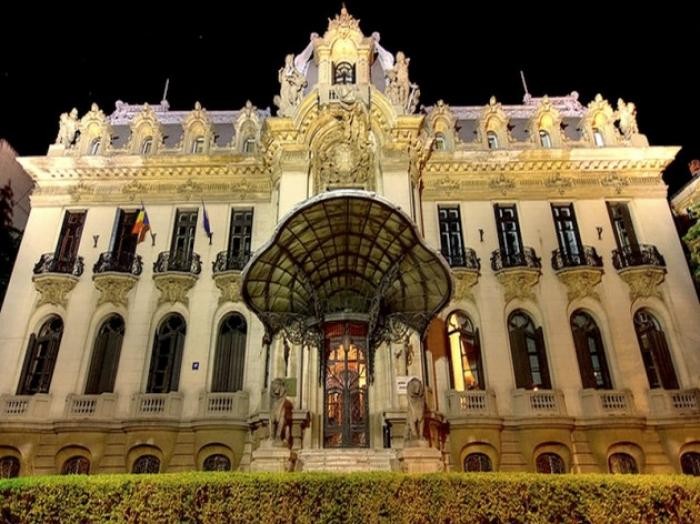
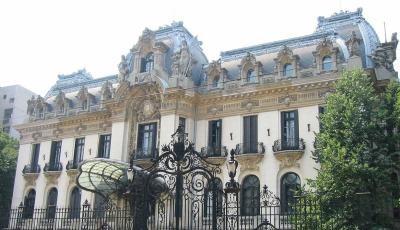


Image source: Wikimedia Commons · Public domain photos · Free license
STAY A FEW DAYS, DISCOVER THE MAGIC
Accommodation in the George Enescu National Museum area

Hotel · 4 stars

București, Bucharest · 0.2 km
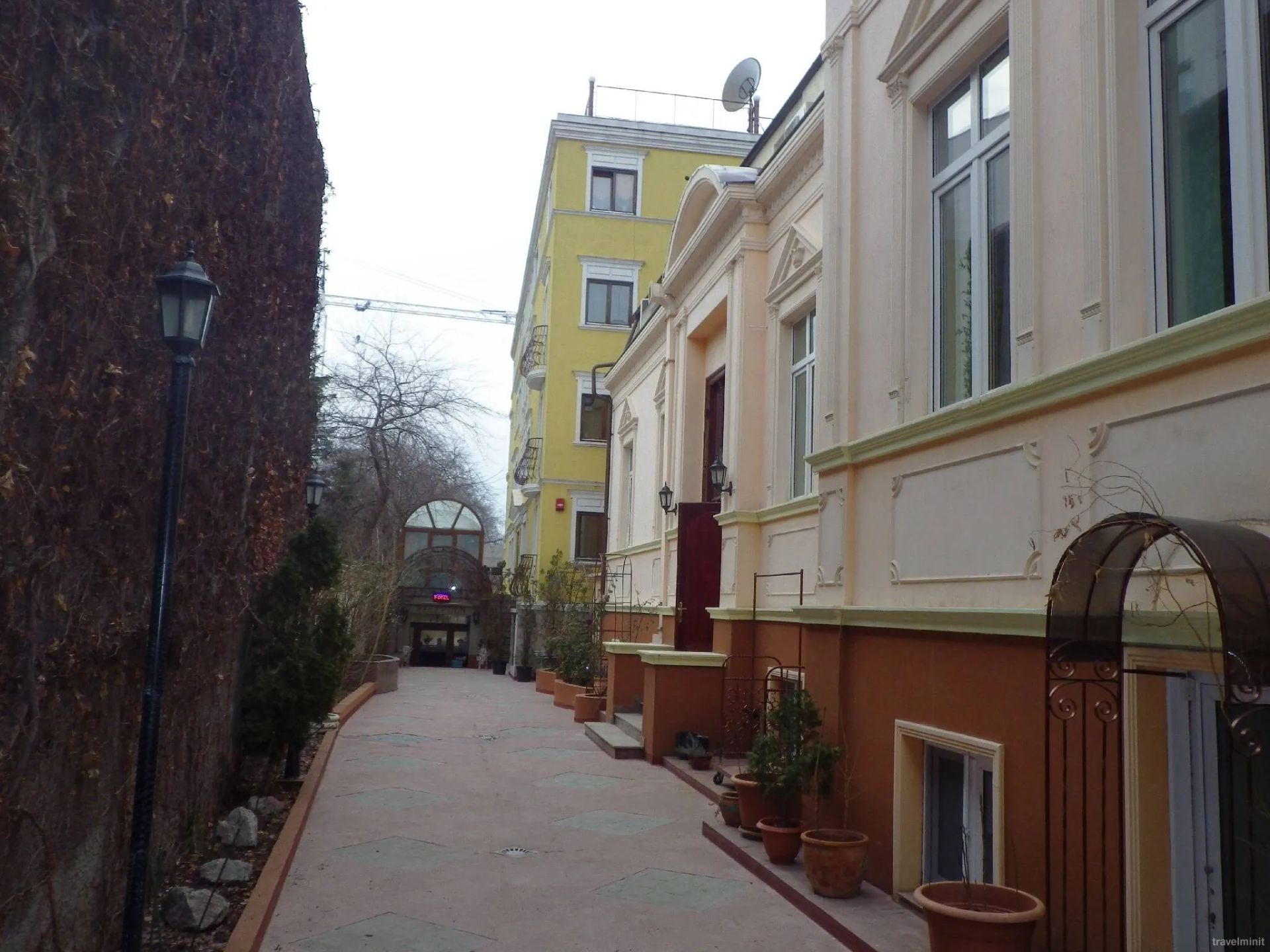
Hotel Minerva București
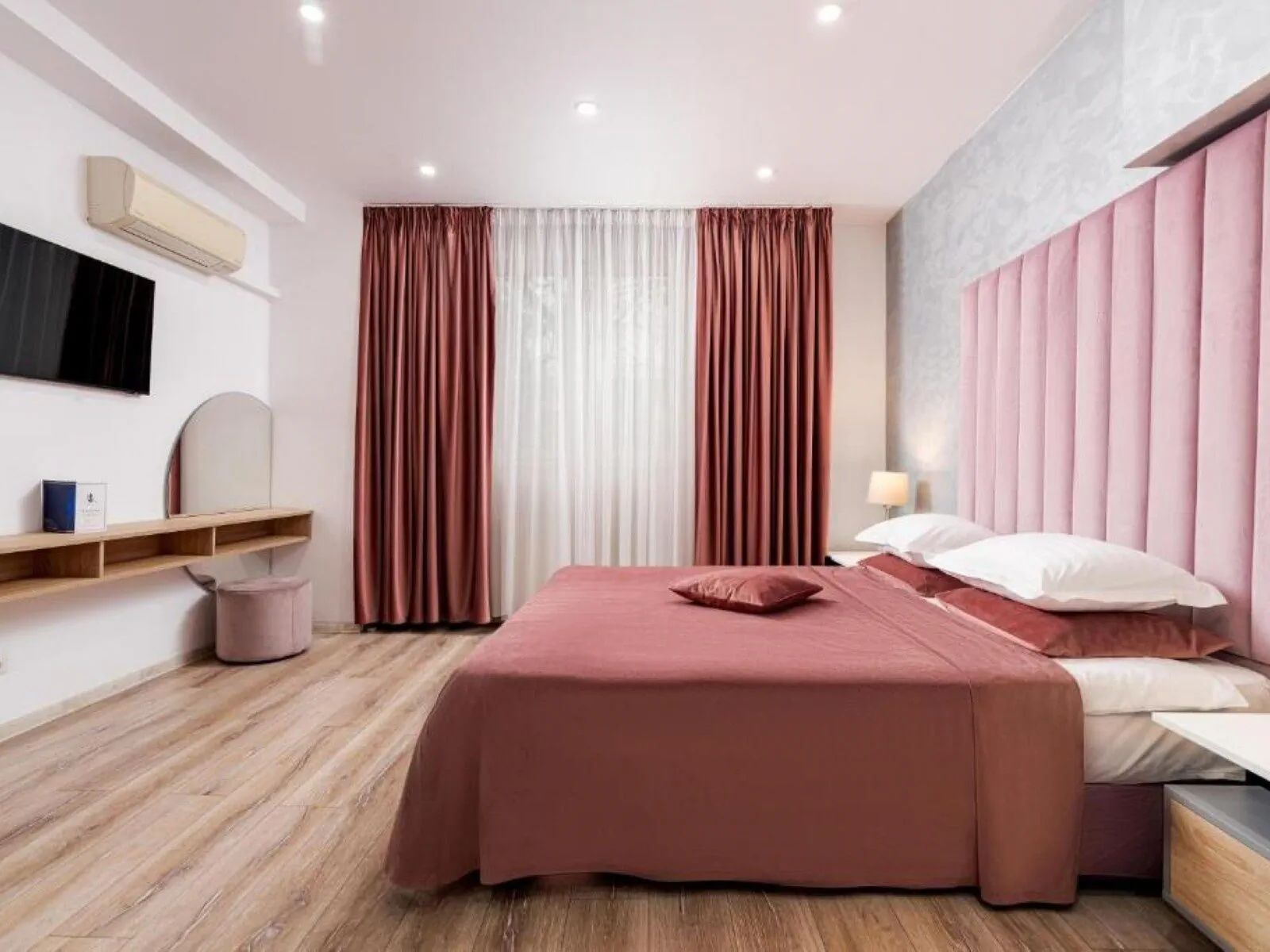
Familiile cu copii și călătorii în interes de afaceri se vor simți bineveniți la Hotel Minerva București, un hotel de patru stele situat în Sectorul 1 al capitalei, pe strada Gheorghe Manu 2-4. Amplasat într-o zonă centrală și ușor accesibilă a orașului București, hotelul vă pune la dispoziție facilități moderne pentru un sejur confortabil și productiv. Beneficiați de Wi-Fi gratuit în întreaga proprietate, de restaurant și bar în incintă, de room service și de depozit pentru bagaje. Pentru siguranța și confortul dumneavoastră, camerele dispun de seif, iar accesul este facilitat de lift și de facilități pentru persoane cu dizabilități. Pentru familiile cu bebeluși sunt disponibile la cerere pătuț pentru copil și scaun înalt, în timp ce parcarea privată gratuită reprezintă un avantaj semnificativ pentru cei care călătoresc cu autoturismul. În apropiere se află principalele obiective turistice ale capitalei: Palatul Parlamentului, Palatul Regal, Catedrala Mântuirii Neamului, Muzeul Țăranului Român și Muzeul Național al Satului Dimitrie Gusti, oferindu-vă ocazia de a explora cu ușurință cele mai reprezentative puncte de interes ale orașului. Vă așteptăm la Hotel Minerva București.
FROM
420 lei per night

Hotel · 3 stars
București, Bucharest · 0.3 km
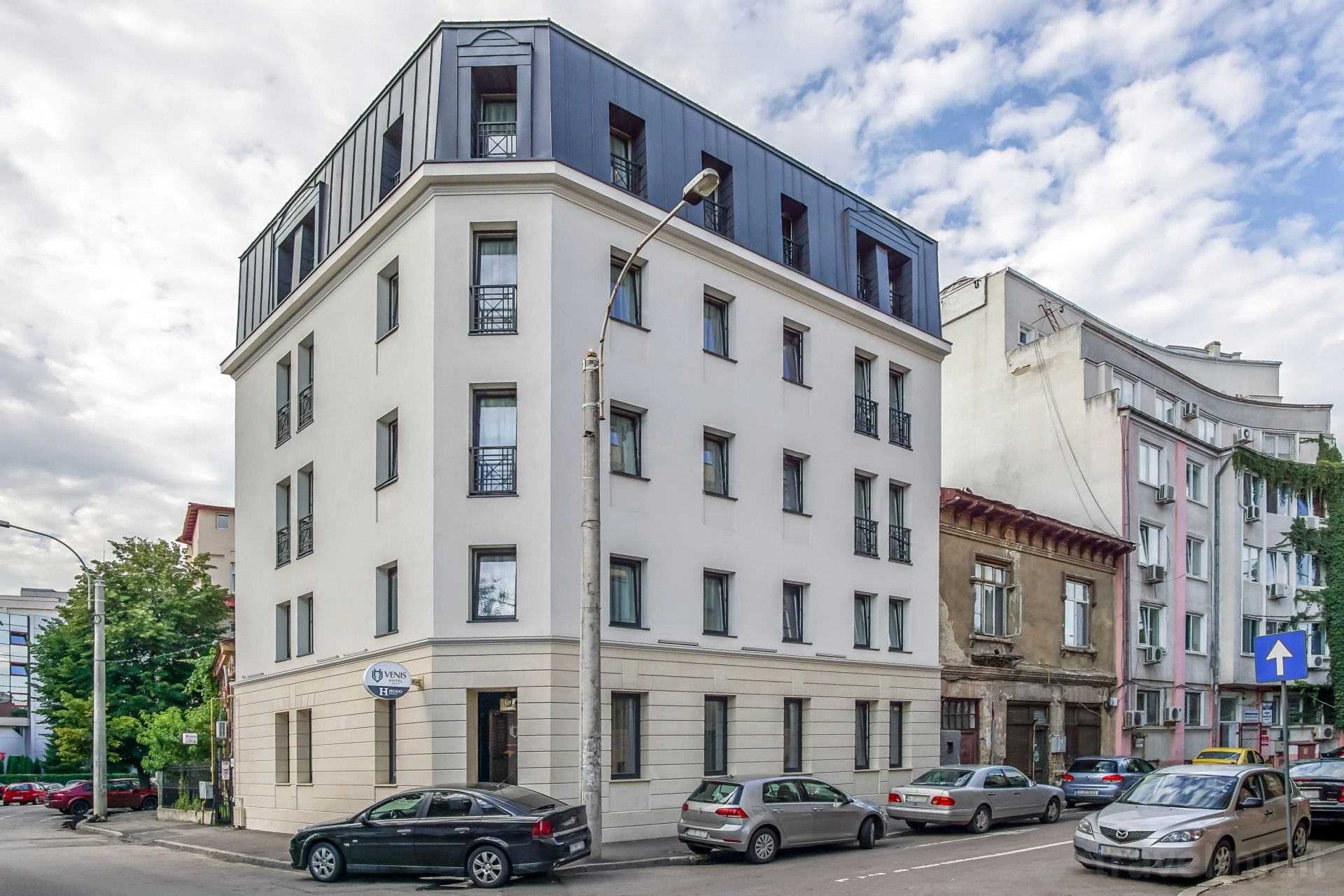
Hotel Michelangelo București
Cu o curte mare și o grădină amenajată, Hotelul Michelangelo din București vă pune la dispoziție un spațiu verde generos în centrul orașului, un adevărat refugiu pentru relaxare după o zi plină de vizite. Această facilitate reprezintă un atu aparte pentru o unitate de cazare situată într-o zonă urbană, oferind un contrast plăcut cu aglomerația străzilor din jur. Camerele sunt dotate cu aer condiționat, seif, fier de călcat și conexiune Wi-Fi gratuită. În incintă găsiți cafenea și bar, parcare pentru biciclete, precum și depozit pentru bagaje. Liftul facilitează deplasarea între etaje, iar serviciul de room service asigură confortul necesar pe toată durata șederii dumneavoastră, indiferent de oră. Poziția centrală vă permite să vizitați cu ușurință Palatul Parlamentului, Palatul Regal, Catedrala Mântuirii Neamului, Muzeul Țăranului Român și Muzeul Național al Satului Dimitrie Gusti, toate aflate în apropiere și accesibile rapid pe jos. Unitatea este potrivită pentru călătorii care doresc să exploreze principalele obiective turistice ale Bucureștiului într-un cadru plăcut, beneficiind de o grădină frumoasă, de facilități moderne și de servicii complete.
FROM
290 lei per night
Boutique hotel · 4 stars
București, Bucharest · 0.3 km
Venis Boutique Hotel București
Călătorii care vizitează Bucureștiul se vor simți bineveniți la Venis Boutique Hotel, un hotel de patru stele situat pe strada Clopotarii Vechi numărul 10. Această unitate de tip boutique oferă un cadru elegant și confortabil pentru șederi în capitala României. Camerele sunt modern mobilate și dotate cu aer condiționat, fiecare cameră având grup sanitar propriu. Oaspeții beneficiază de conexiune Wi-Fi gratuită în întreaga unitate și de parcare privată gratuită, facilități esențiale care asigură un sejur relaxant și lipsit de griji. În apropierea hotelului se află numeroase obiective culturale și istorice de neratat. Puteți vizita Palatul Parlamentului, Muzeul Țăranului Român, Palatul Regal, Catedrala Mântuirii Neamului sau Muzeul Național al Satului Dimitrie Gusti, toate situate la îndemână. Check-in-ul se poate efectua de la ora 04:00, iar predarea camerei se face până la ora 12:00. Personalul unității vorbește limba română și limba engleză. Plata rezervării se poate realiza prin numerar, card bancar, transfer bancar, card de vacanță sau voucher. Vă așteptăm să vă bucurați de sejur și să porniți în explorarea orașului către Palatul Parlamentului, un monument impresionant aflat în imediata vecinătate.
FROM
420 lei per night
Holiday home · 2 stars
București, Bucharest · 0.5 km
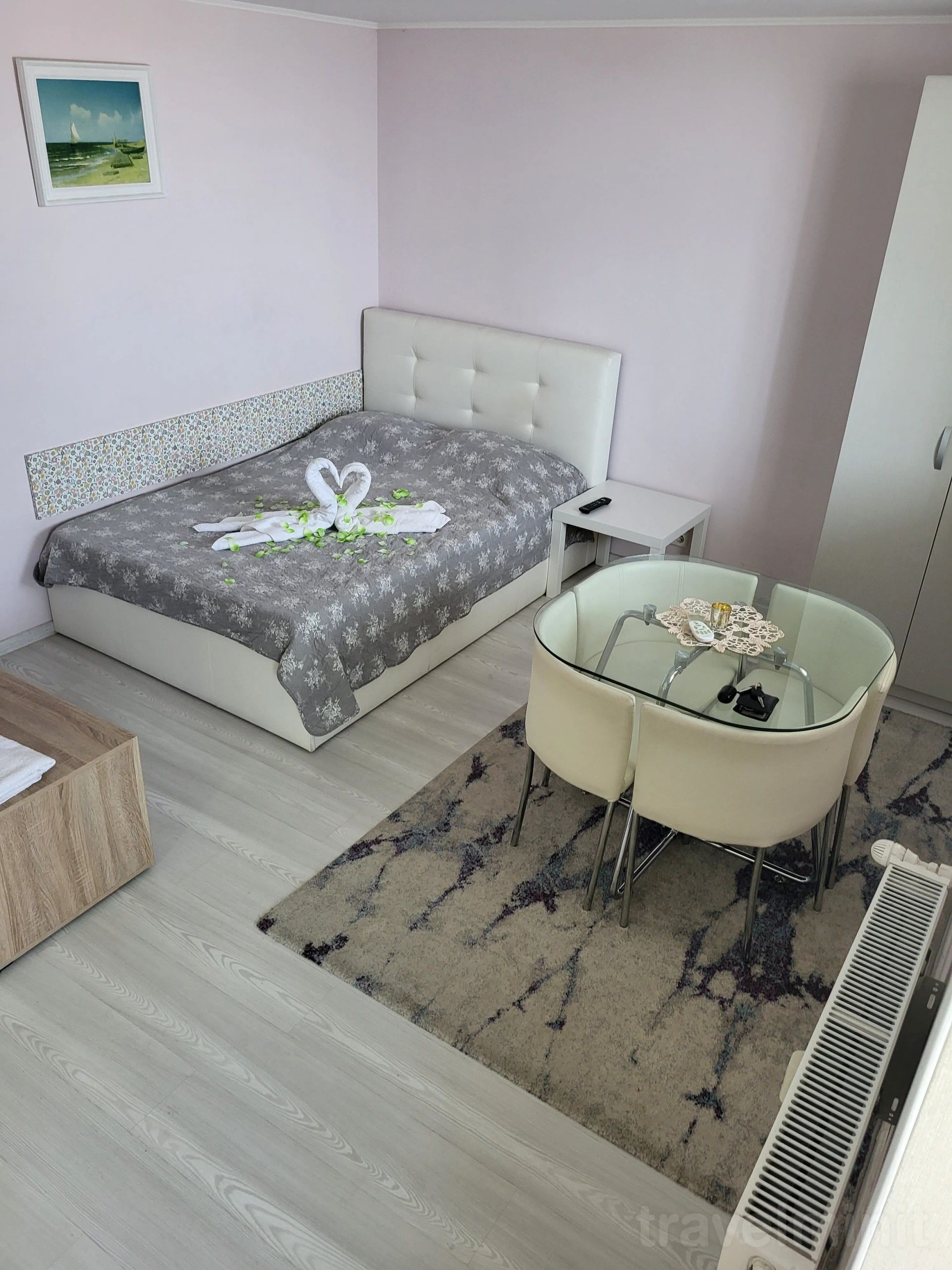
Stone Gate Apartment #1 București
Stone Gate Apartment #1 București este o vilă integrală pusă la dispoziție în București, oferind un apartament modern și plăcut amenajat într-un spațiu primitor și bine întreținut. Această unitate de cazare reprezintă o alegere potrivită pentru cei care doresc să exploreze capitala României într-un cadru confortabil, liniștit și intim. Camera este dotată cu aer condiționat, grup sanitar propriu și conexiune Wi-Fi gratuită, astfel încât dumneavoastră să vă simțiți bineveniți și să aveți parte de un sejur relaxant. Programul de primire începe la ora 15:00, iar eliberarea camerei se poate face până la ora 11:00, oferindu-vă flexibilitate în organizarea timpului. În apropiere se află numeroase puncte de interes cultural și istoric de neratat: Palatul Parlamentului, Muzeul Țăranului Român, Palatul Regal, Catedrala Mântuirii Neamului și Muzeul Național al Satului Dimitrie Gusti. Aceste obiective turistice pot fi vizitate cu ușurință pornind de la această locație, oferindu-vă ocazia de a descoperi cele mai importante atracții ale orașului. Dimineața, înainte de a porni spre noi explorări prin capitală, puteți verifica știrile locale sau planifica itinerariul zilei folosind conexiunea Wi-Fi gratuită disponibilă în confortul apartamentului dumneavoastră.
FROM
280 lei per night
Hotel · 3 stars
București, Bucharest · 0.6 km
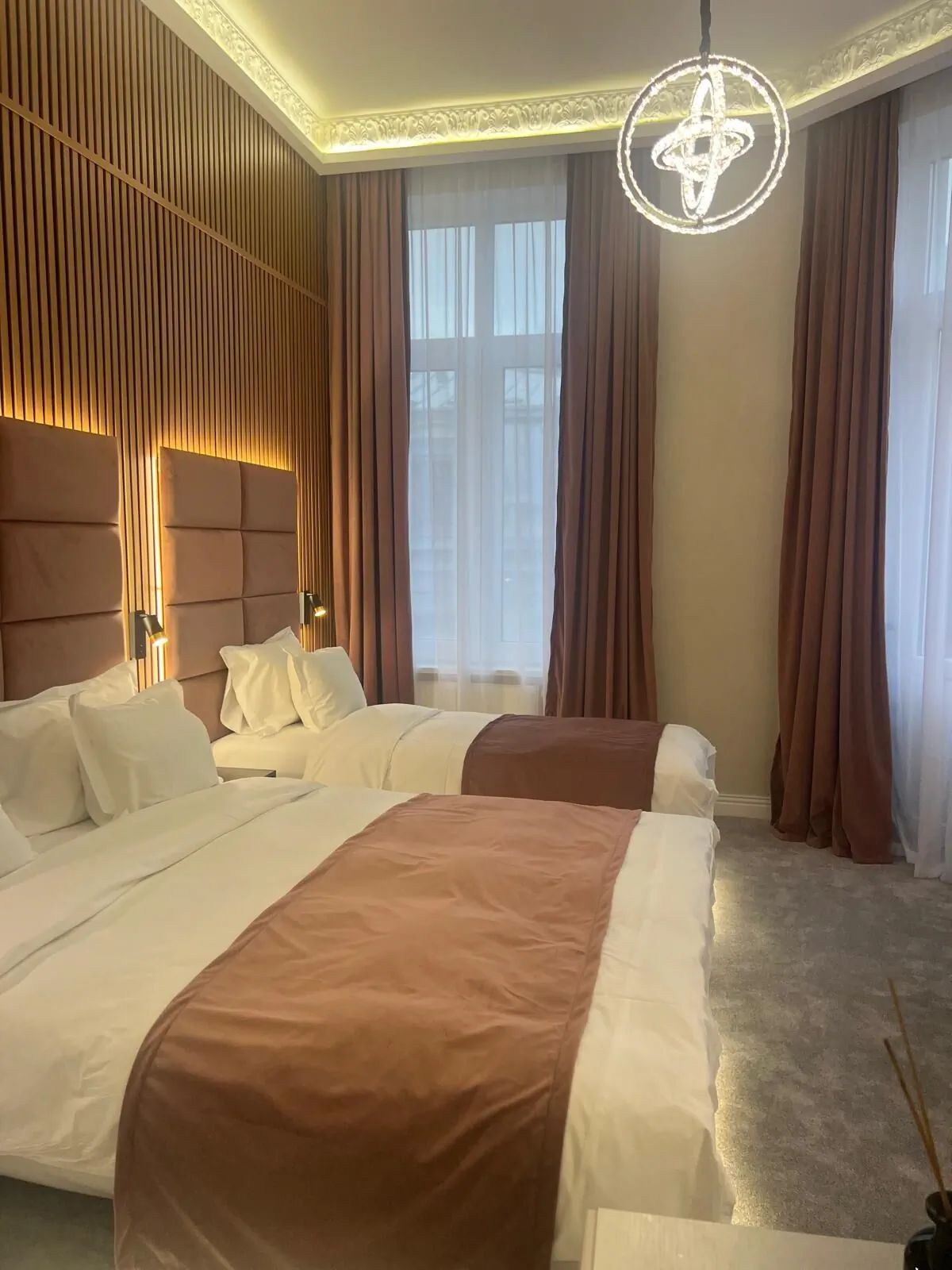
Hotel Bucharest Downtown Inn București
În apropiere puteți vizita Palatul Parlamentului, unul dintre cele mai mari edificii administrative din lume, care impresionează prin sălile sale monumentale și expozițiile permanente. Hotelul Bucharest Downtown Inn din București reprezintă un punct de plecare potrivit pentru explorarea capitalei și pentru descoperirea celor mai importante obiective culturale din zonă. Camerele oferă Wi-Fi gratuit pentru a vă menține conectat pe toată durata sejurului, iar fiecare cameră este dotată cu seif și fier de călcat pentru un plus de confort și siguranță. Pentru familiile care călătoresc cu copii mici sunt disponibile pătuț pentru bebeluș și scaun înalt. De asemenea, aveți la dispoziție parcare pentru biciclete și un spațiu de depozitare pentru bagaje, astfel încât să vă bucurați de o ședere liniștită. În vecinătate se află și Catedrala Mântuirii Neamului, Palatul Regal, Muzeul Țăranului Român și Muzeul Național al Satului Dimitrie Gusti. Aceste obiective completează oferta turistică a zonei și pot fi vizitate cu ușurință pornind de la hotel. Vă așteptăm la Hotel Bucharest Downtown Inn București.
FROM
290 lei per night
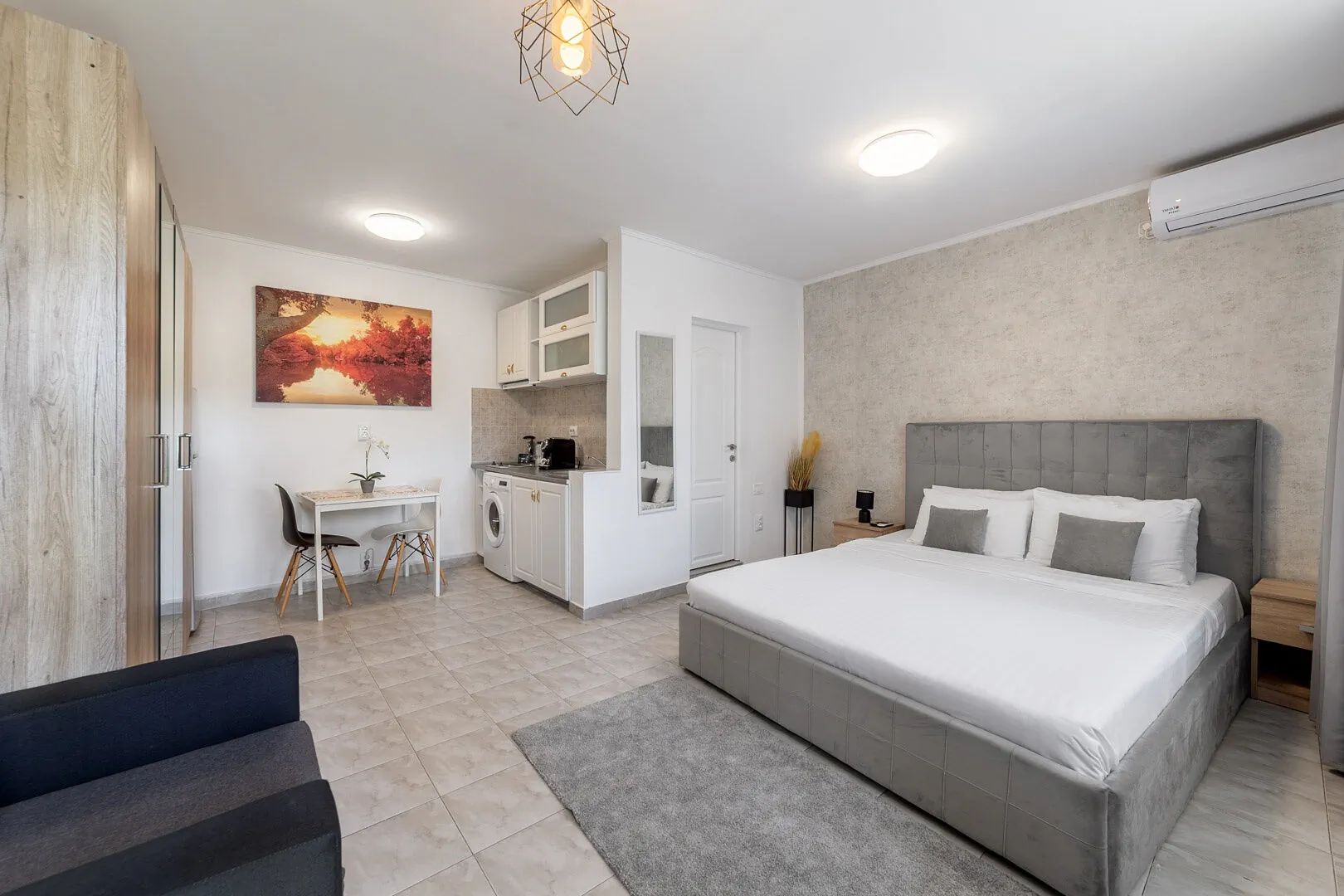
Apartment · 3 stars
București, Bucharest · 0.6 km
Downtown Victoria Studios București
Pe aleea Strada Buzesti din București se află Downtown Victoria Studios București, un apartament de închiriat clasificat cu trei stele. Unitatea oferă cazare într-un cadru urban accesibil, situat într-o zonă centrală a capitalei, potrivit atât pentru călătorii de afaceri, cât și pentru turiști. Camerele sunt dotate cu bun gust, iar o parte dintre acestea dispun de aer condiționat pentru confortul dumneavoastră pe timpul verii. Beneficiați de Wi-Fi gratuit în întreaga unitate și de acces la o curte mare cu grădină amenajată, un spațiu plăcut pentru momente de relaxare în aer liber. În apropiere se pot vizita Palatul Parlamentului, Catedrala Mântuirii Neamului, Palatul Regal, Muzeul Țăranului Român și Muzeul Național al Satului Dimitrie Gusti. Aceste obiective culturale și istorice importante completează experiența șederii dumneavoastră în această zonă a orașului. Preluarea camerei se efectuează începând cu ora 15:00, iar eliberarea se face până la ora 11:00. Personalul de la recepție comunică fluent în limba română și în limba engleză, fiind pregătit să vă ajute cu informațiile necesare. Plata se poate realiza prin transfer bancar, cu card de vacanță sau prin voucher. Vă așteptăm la Downtown Victoria Studios București pentru un sejur plăcut în București.
FROM
230 lei per night
BEFORE YOU HIT THE ROAD
Weather conditions in Bucuresti
Local forecast for George Enescu National Museum, Bucuresti, București

Real-time updated weather data
Much more to explore in this area
Nearby tourist attractions


Bucuresti, Bucharest
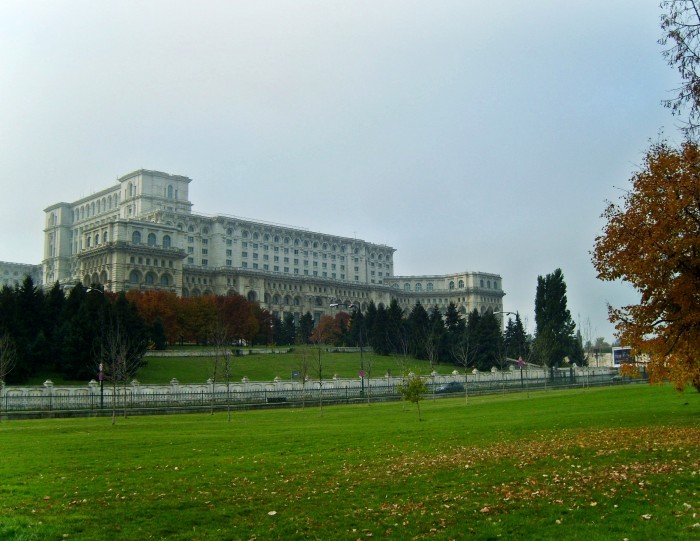
Palace of the Parliament
Situat pe strada Izvor nr.3, sector 5, localitatea Bucuresti; in perioada comunista a fost cunoscut sub numele de "Casa Poporului"; considerata una dintre cele...
2.4 km

București, Bucharest
People's Salvation Cathedral (National Cathedral of Romania)
Catedrală ortodoxă din București
2.6 km
Bucuresti, Bucharest
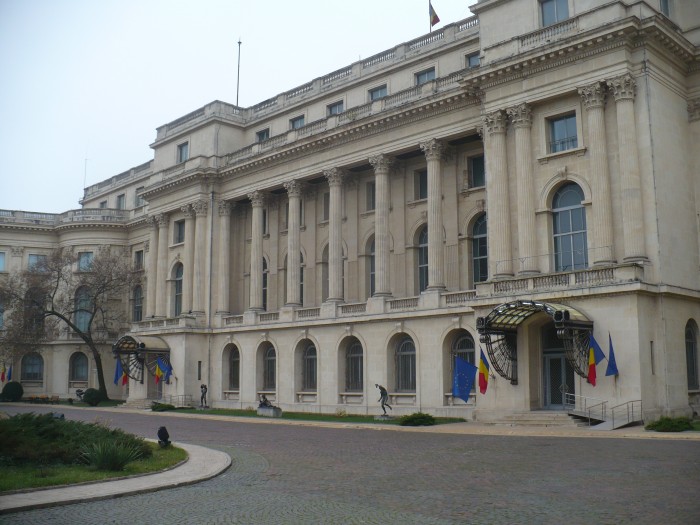
Royal Palace of Bucharest
Situat pe Calea Victoriei nr. 49-53, sector 1, localitatea Bucuresti; construit intre anii 1812-1815 a apartinut marelui logofat Dinicu Golescu, dar a fost...
1.2 km
Bucuresti, Bucharest
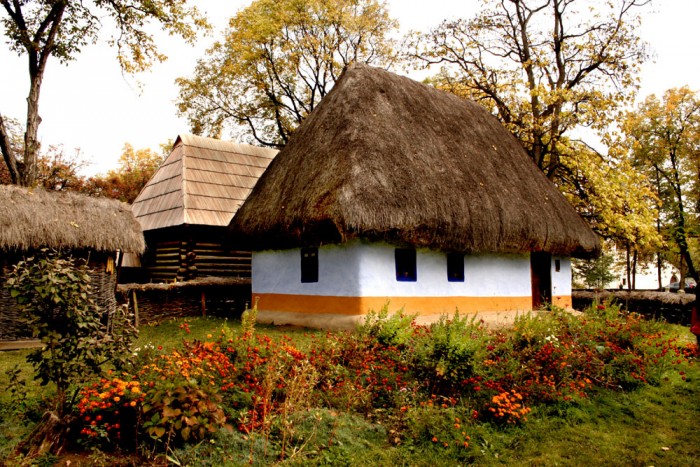
Dimitrie Gusti National Village Museum
Situat pe Soseaua Kiseleff nr.28-30, sectorul 1; a fost inaugurat in 1936; expozitia permanenta cuprinde 121 de complexe distincte, totalizand 338 de monumente,...
2.7 km

Bucuresti, Bucharest
Romanian Peasant Museum (Muzeul Național al Țăranului Român)
Situat pe soseaua Kiseleff nr.3, sector 1, localitatea Bucuresti; constructia intregului edificiu a durat 29 de ani, fiind finalizat in 1941; cladirea muzeului...
0.8 km

Bucuresti, Bucharest
Cotroceni Palace
Situat pe bulevardul Geniului nr.2, sector 6, localitatea Bucuresti; in anul 1679, domnitorul Serban Cantacuzino incepe constructia unei manastiri; opera sa a...
2.7 km

Bucuresti, Bucharest
Grigore Antipa National Museum of Natural History
Situat pe soseaua Kiseleff nr. 1, sector 1, localitatea Bucuresti; fondat in 1834 la initiativa lui Mihalache Ghica; are un bogat patrimoniu format din...
1.9 km
Bucuresti, Bucharest
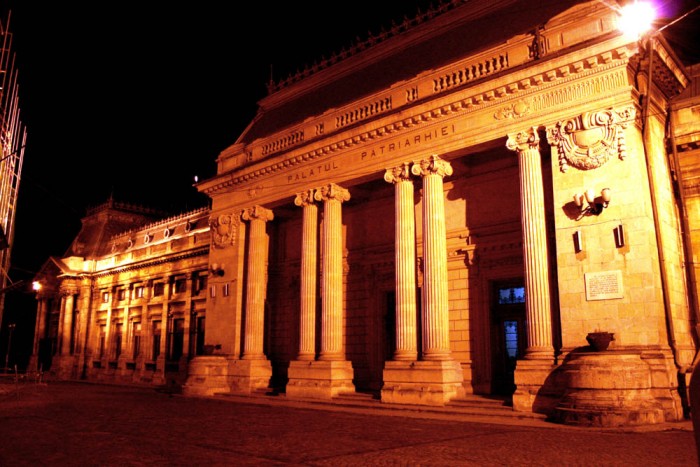
Patriarchal Palace
Situat pe aleea Dealul Mitropoliei nr.25, sector 4, localitatea Bucuresti; construit de statul roman, la inceputul secolului al XX-lea, pe locul fostei sali a...
2.7 km

Bucuresti, Bucharest
National Museum of Romanian History
Situat pe Calea Victoriei nr.12, sector 3, localitatea Bucuresti; adapostit de Palatul Postelor; a fost inaugurat in anul 1970 fiind cel dintai muzeu de...
2.0 km
Bucuresti, Bucharest
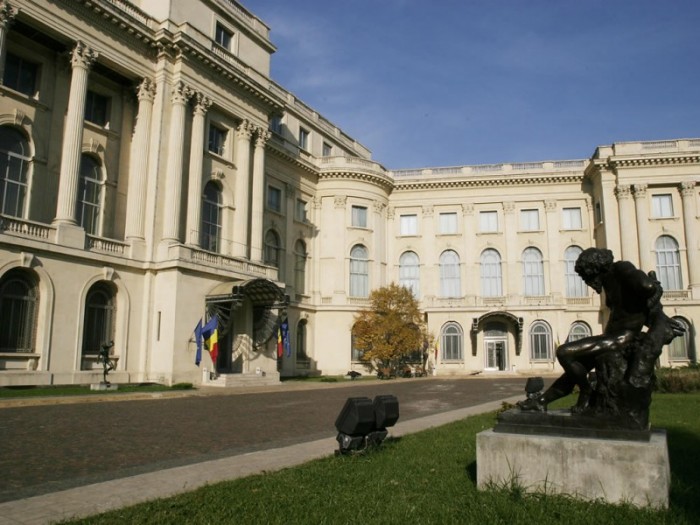
National Museum of Art of Romania
Situat pe Calea Victoriei nr. 49-53, sector 1; deschis in 1948, in vremea lui Alexandru Ioan Cuza;cladirea era pe atunci locuinta domneasca, in timpul lui...
1.2 km

0.5 km
Bucuresti, Bucharest
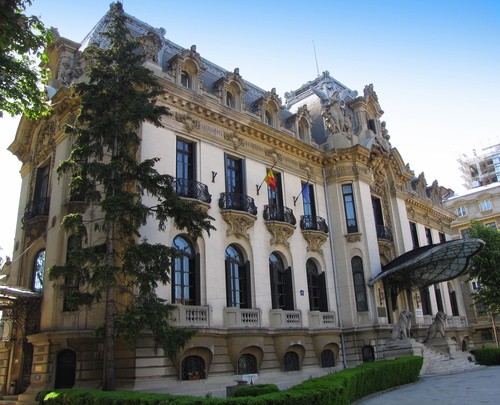
Cantacuzino Palace
Situat pe Calea Victoriei nr.141, sector 1, localitatea Bucuresti; construit intre anii 1898-1900, in stil baroc francez al epocii Ludovic al XVI-lea, pentru...
0.9 km
Cultural life and traditions
Events in the George Enescu National Museum area
Medieval festivals, traditional fairs, concerts and local activities recommended in Muntenia (Wallachia).

History and Royal Architecture

Bucuresti, County of București
Days of Royalty and Heritage in the Prahova Valley
Historical conferences open to the public, themed tours of royal architecture, documentary screenings and exhibitions of vintage photographs.
WHEN
May 10-12, 2026


Gastronomy and Oenology
Dealu Mare, County of București
The Prahova Wine Festival on the Wine Route
Guided tastings of Fetească Neagră along the famous Wine Route, visits to historic wineries, and meetings with leading winemakers.
WHEN
Every weekend (September - October)
Hiking and Adventure
Bucegi Mountains, București County
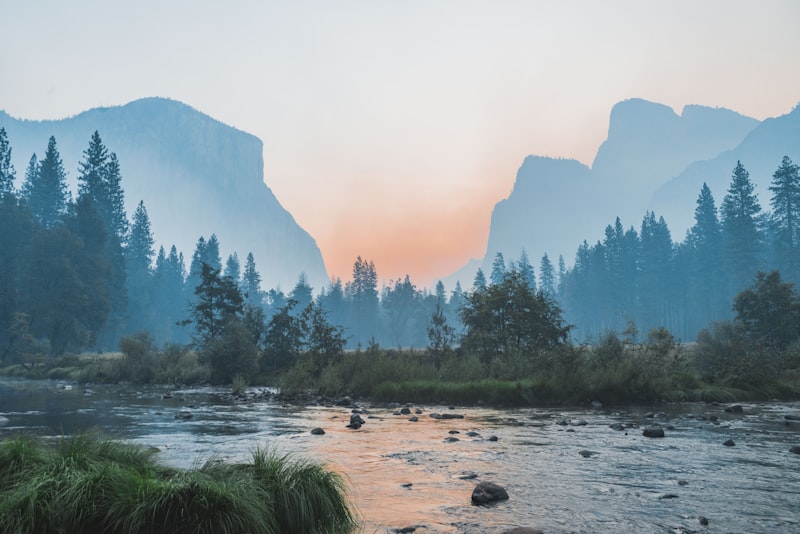
Guided Mountain Tour in the Bucegi Mountains
Guided mountain tours led by mountain rescue personnel to iconic panoramic viewpoints and spectacular alpine waterfalls.
WHEN
Daily during the season (June - October)
On foot, exploration gains depth
Discover the surroundings and local geography
Explore the trails, terrain, and natural landmarks around George Enescu National Museum.

Guides and practical tips
Useful travel articles
Travel guides, practical recommendations and tourist itineraries for Muntenia (Wallachia).

Tourist guide
Top 5 Atracții Turistice și Trasee Montane în Zona Moieciu - Bran
Descoperă cele mai spectaculoase peisaje carstice, chei adânci și cetăți medievale din imediata apropiere a stațiunii Moieciu.

Tourist guide
Ghid de Drumeție: Traseul Moieciu de Sus spre Platoul Bucegi
Un itinerariu montan de o frumusețe rară ce urcă din Valea Băngăleasa spre Poiana Guțanu și crestele maiestuoase ale Bucegilor.

Tourist guide
Castelul Bran: Istorie, Legende și Secrete Medievale
Află adevărata poveste a fortăreței medievale din Pasul Bran, reședința de suflet a Reginei Maria a României.
THE JOURNEY STARTS WITH AN IDEA
The next story is on the way.
From the first stop to the last stay, make room for a new Romania.
