


MUSEUM · MUNTENIA (WALLACHIA)
Ceaușescu Mansion

București, Bucharest
Add location to your trip planner.

Practical access information

VISITING HOURS
Monday: 12:00 PM – 5:00 PM · Tuesday–Sunday: 9:00 AM – 5:00 PM (in summer until 8:00 PM)

TICKET PRICE
Adults: 45 RON · Students: 11 RON · Seniors: 23 RON · Guided tour included

RECOMMENDED VISIT DURATION
30-60 minutes


Visitor information and guide
 Navigate with Google Maps

ABOUT CEAUȘESCU MANSION
A Seat of Power in the Heart of Bucharest
In a district where Bucharest’s history intertwines with the elegance of interwar aristocratic villas and the endless greenery of its parks, along the prestigious Kiseleff Boulevard, stands a building whose existence seems to defy time and collective memory. Ceaușescu Mansion, officially known today as the Ceaușescu House, is not merely a structure but a monument to the contradictions of the modern era—a temple of absolute power constructed in just a few months between 1964 and 1965, shortly after Nicolae Ceaușescu, then only 47 years old, took the reins of the Communist Party in March 1965. The poetic name of the place, "Primăverii" (Spring), evoking rebirth and hope, starkly contrasts with the historical reality it harbors: a claustrophobic world of megalomaniacal luxury, isolated from the poverty imposed on an entire nation. This was a space where decisions shaping the fate of millions were made, and where the final days of a totalitarian regime unfolded.
This private residence, exclusively for the presidential family of Nicolae and Elena Ceaușescu, functioned for nearly a quarter of a century as the physical nucleus of a political dynasty, transforming into a symbol of the absolute divide between the ruling elite and the people. While Romanians stood in endless queues for bread and basic foodstuffs, while electricity was rationed to just a few hours a day, and intellectuals were persecuted, behind the massive gates of Kiseleff Boulevard, a life of regal splendor unfolded—a caricatured replica of Western courts, built with the resources of an entire country. Today, after its opening as a museum in 2016, the mansion stands as a silent witness to the final decades of the Cold War in Eastern Europe, offering visitors a unique, almost voyeuristic perspective into the intimacy of a dictatorship.
Historical Roots and Major European Connections
Ceaușescu Mansion is part of a broader phenomenon specific to Eastern Europe during the Cold War: the construction of lavish private residences for communist leaders, a tradition rooted in the Soviet Kremlin model but with distinct national variations. However, unlike the bureaucratic sobriety of Soviet offices or the relative modesty of other Eastern European leaders such as Hungary’s János Kádár or Poland’s Wojciech Jaruzelski, the Bucharest residence of Ceaușescu stands out for its unprecedented megalomania within the socialist bloc, deeply influenced by the personality cults practiced in Asia. After his historic official visits in 1971 to the People’s Republic of China and the Democratic People’s Republic of Korea, Nicolae Ceaușescu returned fascinated by the opulence of Mao Zedong’s and Kim Il Sung’s palaces. Determined to transform his own residence into a monument of absolute power, isolated from everyday reality, he drew inspiration from the residential complexes of the Kim dynasty in Pyongyang or the imperial palaces of China.
Architecturally and ideologically, the building reflects Romania’s "independent path" within the communist bloc, an increasingly pronounced break from Moscow after 1964, when the country began developing a "national communism" with autarkic and dynastic traits. While in Yugoslavia, Josip Broz Tito divided his time between modest residences on the Brioni Islands and in Zagreb, and in Albania, Enver Hoxha built a system of massive underground bunkers, Romania in the 1960s and 1970s developed a personality cult that blended Stalinist elements with Asian influences, creating a unique hybrid in the European political landscape. The mansion on Kiseleff Boulevard can be seen as a precursor to the Palace of the Parliament, built later, but it retains a human, almost domestic dimension that makes it even more disturbing: this was not just the seat of power but the home of a family, a space where extreme private luxury coexisted with public terror.
In the broader European context, this residence illustrates the paradox of the Cold War: on one hand, the Iron Curtain divided the continent into two opposing worlds, while on the other, the communist elites of the East aspired to replicate, in a distorted form, the splendor of Western courts. The neoclassical façade of the mansion, with its imposing columns and classical pediment, evokes 19th-century French architecture, reminiscent of the Petit Trianon at Versailles or Italian Renaissance palaces. Meanwhile, the interior absorbs influences from Art Nouveau and the modernism of the 1960s, creating an eclectic kitsch specific to totalitarian regimes attempting to assimilate all styles to demonstrate their universality. Thus, Ceaușescu Mansion becomes a mirror of a divided Europe, a place where the history of great empires—from the Roman to the Habsburg and Soviet—meets the megalomaniacal ambition of a leader who dreamed of being the "beloved leader" of a people he had isolated from the world.
An Architectural Masterpiece: Style and Constructive Details
The construction of Ceaușescu Mansion, completed in a record time of just a few months between 1964 and 1965, represents a remarkable engineering feat but also an act of economic brutality, given that the resources of an impoverished country were concentrated on a single project for one family. The exterior architecture features a monumental neoclassical façade, dominated by a portico with Corinthian columns and a triangular pediment in the academic style, elements reminiscent of the Beaux-Arts style popular in 19th-century Europe and royal palaces such as Schönbrunn in Vienna or Fontainebleau in France. This classical gravitas, designed to impress foreign guests and project an image of eternal stability, conceals an interior world of unprecedented luxury for the period—a violent contrast between the austere republican appearance and absolute private opulence.
The mansion’s approximately eighty rooms house finishes of unparalleled opulence in Romania’s recent history: Carrara marble imported from Italy, Bohemian crystal from Czechoslovakia—an ironic twist given the tense relations with the USSR and its allies—rare African woods such as mahogany and ebony, and gold leaf applied to furniture and decorations. The official dining hall, intended for diplomatic receptions, is dominated by massive chandeliers and an imposing table, while the indoor swimming pool, tiled with turquoise waters and mosaics, represents a nearly regal luxury, unusual for a presidential residence in a socialist country. The private cinema, equipped with state-of-the-art technology of the era, the vast library with thousands of volumes—including Western literature banned to the general public—and the indoor garden with an artesian fountain complete the portrait of a dreamlike life, completely isolated from the reality of the streets.
A particularly significant architectural element, specific to the Cold War period, is the anti-atomic bunker—a reinforced concrete underground shelter capable of withstanding a nuclear attack, where the Ceaușescu family could take refuge in the event of a global conflict. This detail underscores the paranoia and isolation of the communist elite, prepared for apocalypse while building luxury monuments above ground. The exterior garden, meticulously landscaped, connects organically with Herăstrău Park, offering continuity between private and public space, though the high fences and security systems were meant to sever any connection with the outside world. All these elements—from the neoclassical columns to the nuclear bunker, from the Italian marble to the indoor pool—transform the mansion into a temple of megalomania, a structure that aspires, in a caricatured manner, to equal the splendor of the courts of Versailles or St. Petersburg, while the country lived under austerity, food queues, and darkness imposed by electricity rationing.
Stories, Personalities, and Turning Points
Behind the massive oak doors and bulletproof windows of Ceaușescu Mansion, moments unfolded that marked the history of Eastern Europe. Nicolae Ceaușescu, the son of a poor railway worker from Scornicești, had risen to the pinnacle of power by 1965, and this residence became the stage on which he constructed his personality cult. Alongside him, Elena Ceaușescu, a former chemistry researcher—though her doctoral thesis was later proven to be plagiarized—exerted a decisive influence on the interior décor, bringing to the mansion a kitsch sensibility for gold, crystal, and sumptuous textiles, transforming the house into an expression of feminine vanity exacerbated by power. Together, they created a miniature dynasty, with their children Valentin and Zoia growing up in this protected universe, isolated from Romanian reality, surrounded by servants, guards, and protocol officers.
The mansion witnessed lavish diplomatic receptions, hosting guests such as Richard Nixon in 1969—the first visit of an American president to Romania—leaders of liberation movements from the Third World, and members of European royal families, to whom impressive diplomatic gifts were offered: Chinese porcelain services from Jingdezhen, authentic Persian carpets, Swiss luxury watches, and works of art. Yet behind these moments of splendor, the mansion also concealed the shadow of terror: decisions regarding police repression, the closing of borders, the forced demographic policy that led to thousands of children abandoned in orphanages, and organized famine as state policy were made in the leather-upholstered offices of this residence.
The turning point came in December 1989. On December 21, as crowds gathered in University Square and Palace Square, the Ceaușescu family was still safe within the mansion on Kiseleff Boulevard. On December 22, as the regime collapsed, Nicolae and Elena Ceaușescu fled Bucharest by helicopter from the roof of the Central Committee building, leaving the mansion empty and exposed to the fury of the crowd. In the hours and days that followed, the residence was partially looted by curious onlookers and rebels, with luxury items destroyed or stolen in a symbolic act of revenge against the symbol of oppression. After the Revolution, the mansion became state property, used for protocol and official meetings, until, after years of neglect and deterioration, it was restored and opened to the public in 2016 as a museum. Today, visitors walk through the same rooms where decisions that changed destinies were made, discovering personal items left behind—from Elena’s clothing to her shoe collection, from the personal library to the kitchen where meals were prepared for guests while the country starved.
Practical Visitor’s Guide and the Tourist Experience Today
Located at 38-40 Kiseleff Boulevard in Sector 1 of the capital, Ceaușescu Mansion is situated in an area rich in cultural attractions, just a few minutes’ walk from the National Village Museum "Dimitrie Gusti," Herăstrău Park, and the Arch of Triumph, offering an excellent opportunity to combine the visit with a stroll through Bucharest’s urban history. Access to the interior of the Ceaușescu House is exclusively through a guided tour, with mandatory prior reservation via the official website casaceausescu.ro, as the number of visitors is strictly limited to preserve the intimate atmosphere and protect the heritage. The tour lasts approximately 60-90 minutes, during which small groups are led through a well-defined route: from the official reception halls on the ground floor to the private apartments upstairs, including the bedrooms, bathrooms tiled with golden mosaics, the library, and, depending on availability, the underground anti-atomic bunker.
The visitor experience is deeply emotional and educational, offering a unique perspective on how the communist elite lived in Eastern Europe. Walk through the halls lined with red velvet, admire the indoor pool with turquoise waters, stand in front of the private cinema, and look through the bulletproof windows that isolated the presidential family from the real world. The tour guide provides essential historical context, explaining the significance of each object—from the direct-line telephones to the "comrade" leader, to the diplomatic gifts received from around the world—and recounting the final days of the regime. The visit can be complemented with a walk in Herăstrău Park, a trip to the Village Museum to contrast traditional Romanian life with the artificial luxury of the communist elite, or a stop at the Arch of Triumph, a monument marking the entrance to the city’s historic area.
For those interested in 20th-century European history, the architecture of the communist period, or understanding the mechanisms of totalitarian power, Ceaușescu Mansion is an essential destination—a monument to memory that reminds us of the fragility of democracy and the price of freedom. It is a place that provokes reflection on how power corrupts and isolates, while offering a living history lesson in an architectural setting that, though built of marble and gold, remains shrouded in the dark shadow of a bygone era. Reservations are made online, and the visit, though it may seem like an act of tourism, is essentially a journey into the intimacy of a history that profoundly marked the collective memory of Europe.
Media gallery
Discover Ceaușescu Mansion in pictures

1 photos · Architecture, courtyards and captivating details

Image source: Wikimedia Commons · Public domain photos · Free license
STAY A FEW DAYS, DISCOVER THE MAGIC
Accommodation in the Ceaușescu Mansion area

Hotel · 4 stars

București, Bucharest · 0.6 km
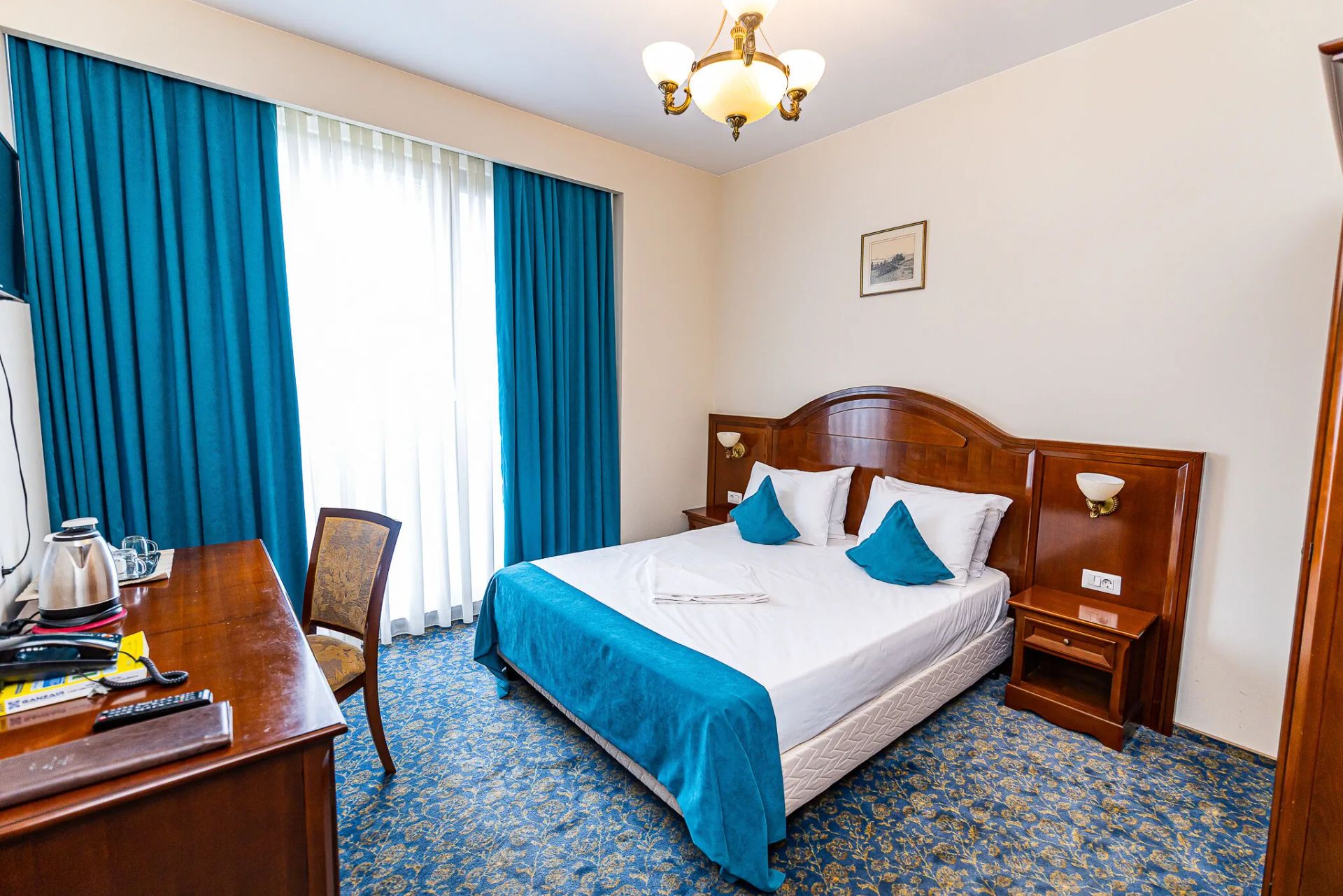
Hotel Diesel București
Hotel de 4 stele situat în București, pe bulevardul Mircea Eliade 113A, într-un cartier liniștit din nordul capitalei, cu priveliște spre lacul Floreasca și un cadru natural plăcut, departe de aglomerația urbană. Unitatea oferă condiții excelente și confort maxim pentru un sejur relaxant atât pentru turiști, cât și pentru călătorii de afaceri. Beneficiați de Wi-Fi gratuit în întreaga incintă, parcare privată gratuită și facilități complete pentru persoane cu dizabilități, inclusiv lift. Pentru familiile cu copii sunt disponibile pătuț pentru bebeluș, scaun înalt, meniu pentru copii, meniu pentru diete speciale și un loc de joacă amenajat în aer liber. În incintă veți găsi restaurant, bar și cafenea, alături de o curte mare cu grădină îngrijită și foișor. Serviciile includ room service, fier de călcat, seif în cameră și depozit pentru bagaje. În apropiere se află numeroase obiective culturale și istorice importante: Palatul Parlamentului, Muzeul Național al Satului Dimitrie Gusti, Muzeul Țăranului Român, Palatul Regal și Catedrala Mântuirii Neamului. Vă așteptăm să vă bucurați de șederea dumneavoastră și să porniți apoi cu plăcere spre explorarea Palatului Parlamentului.
FROM
420 lei per night

Apartment · 3 stars
București, Bucharest · 0.6 km
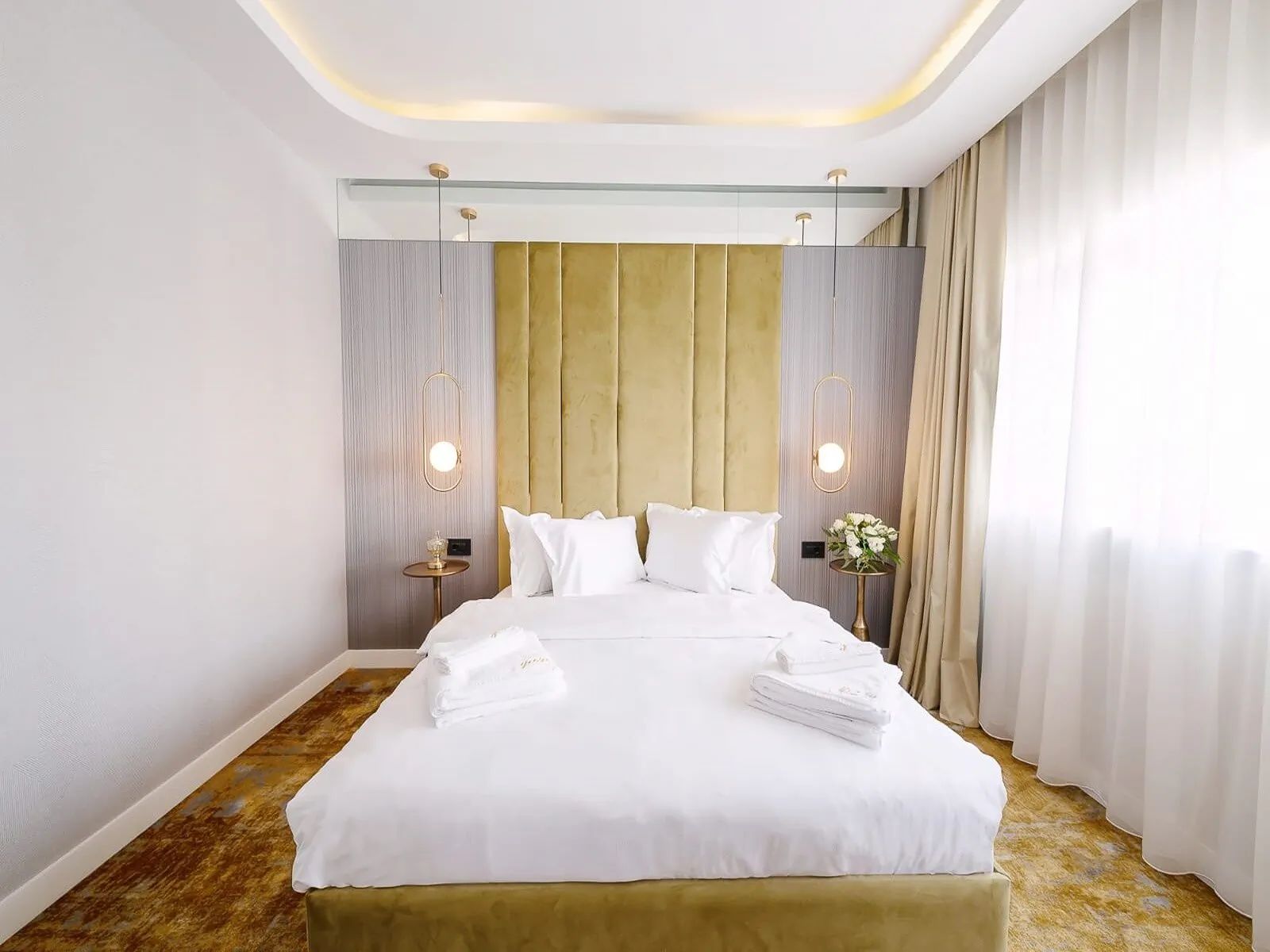
Yasu Luxury Rooms București
Yasu Luxury Rooms București este un apartament de închiriat clasificat cu trei stele, situat în București, pe Piața Charles de Gaulle. Proprietatea oferă Wi-Fi gratuit în toate încăperile și parcare privată gratuită pentru dumneavoastră. Veți beneficia de lift pentru acces comod între etaje, seif pentru păstrarea în siguranță a obiectelor de valoare, fier de călcat și un spațiu dedicat pentru depozitarea bagajelor. Fiecare unitate de cazare include baie proprie cu cadă, sistem de climatizare, televizor cu ecran plat și minibar. De asemenea, un lounge comun este pus la dispoziție pentru momente de relaxare, oferindu-vă un ambient plăcut după o zi de explorare a orașului. În imediata apropiere puteți descoperi Palatul Parlamentului, Muzeul Național al Satului Dimitrie Gusti, Muzeul Țăranului Român, Palatul Regal și Catedrala Mântuirii Neamului, oferindu-vă acces facil la cele mai importante puncte de interes cultural și istoric ale capitalei. Vă așteptăm la Yasu Luxury Rooms București, la adresa Piața Charles de Gaulle 4-6, Scara 1, unde parcare privată gratuită vă stă la dispoziție pe întreaga perioadă a șederii dumneavoastră.
FROM
230 lei per night
Guesthouse · 3 stars
București, Bucharest · 0.7 km
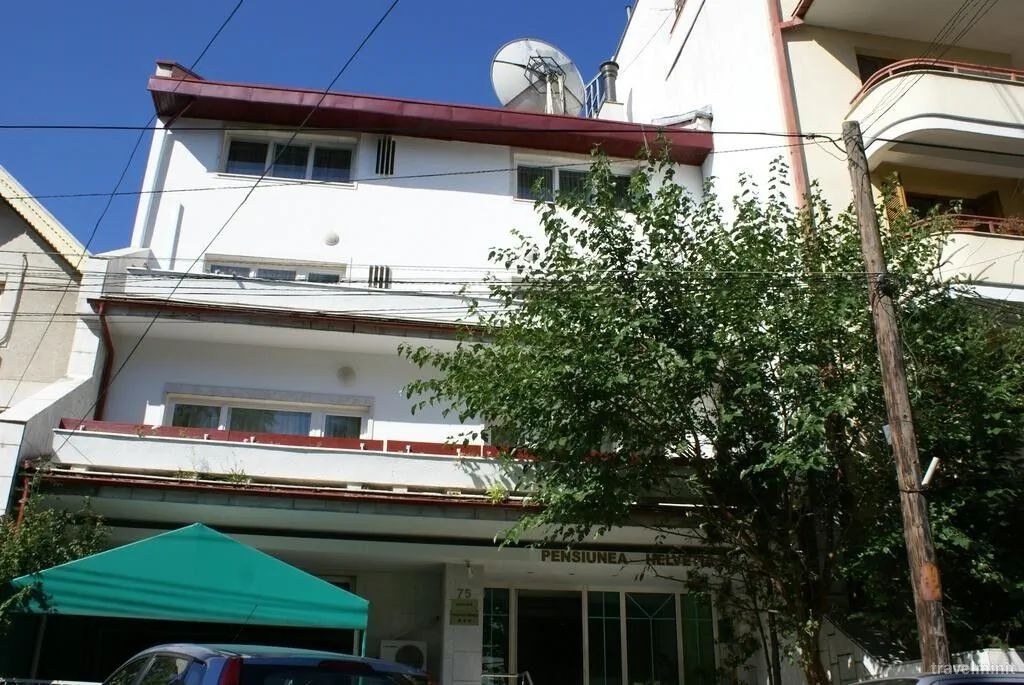
Pensiunea Helvetia București
Călătorii care caută un loc confortabil și bine poziționat în București se vor simți bine la Pensiunea Helvetia, situată pe strada Popa Savu. Unititatea pune la dispoziție camere mobilate cu grijă, fiecare dotată cu grup sanitar propriu, aer condiționat și acces gratuit la internet Wi-Fi. De asemenea, aveți la dispoziție un spațiu special pentru depozitarea bagajelor, foarte util mai ales în ziua sosirii sau a plecării. În imediata apropiere se află numeroase obiective culturale și istorice pe care le puteți explora cu ușurință: Palatul Parlamentului, Muzeul Național al Satului Dimitrie Gusti, Muzeul Țăranului Român, Catedrala Mântuirii Neamului și Palatul Regal. Aceste puncte de interes vă oferă ocazia de a descoperi bogatul patrimoniu al capitalei chiar în timpul șederii dumneavoastră. Recepția vă așteaptă începând cu ora 14:00 pentru procedura de check-in, iar check-out se efectuează până la ora 12:00. Personalul comunică fluent în limba română și în engleză, fiind pregătit să răspundă nevoilor dumneavoastră pe toată durata sejurului. Vă așteptăm cu drag la Pensiunea Helvetia și vă încurajăm să porniți apoi în explorarea orașului, începând cu o vizită la Palatul Parlamentului.
FROM
240 lei per night
Hotel · 3 stars
București, Bucharest · 0.9 km
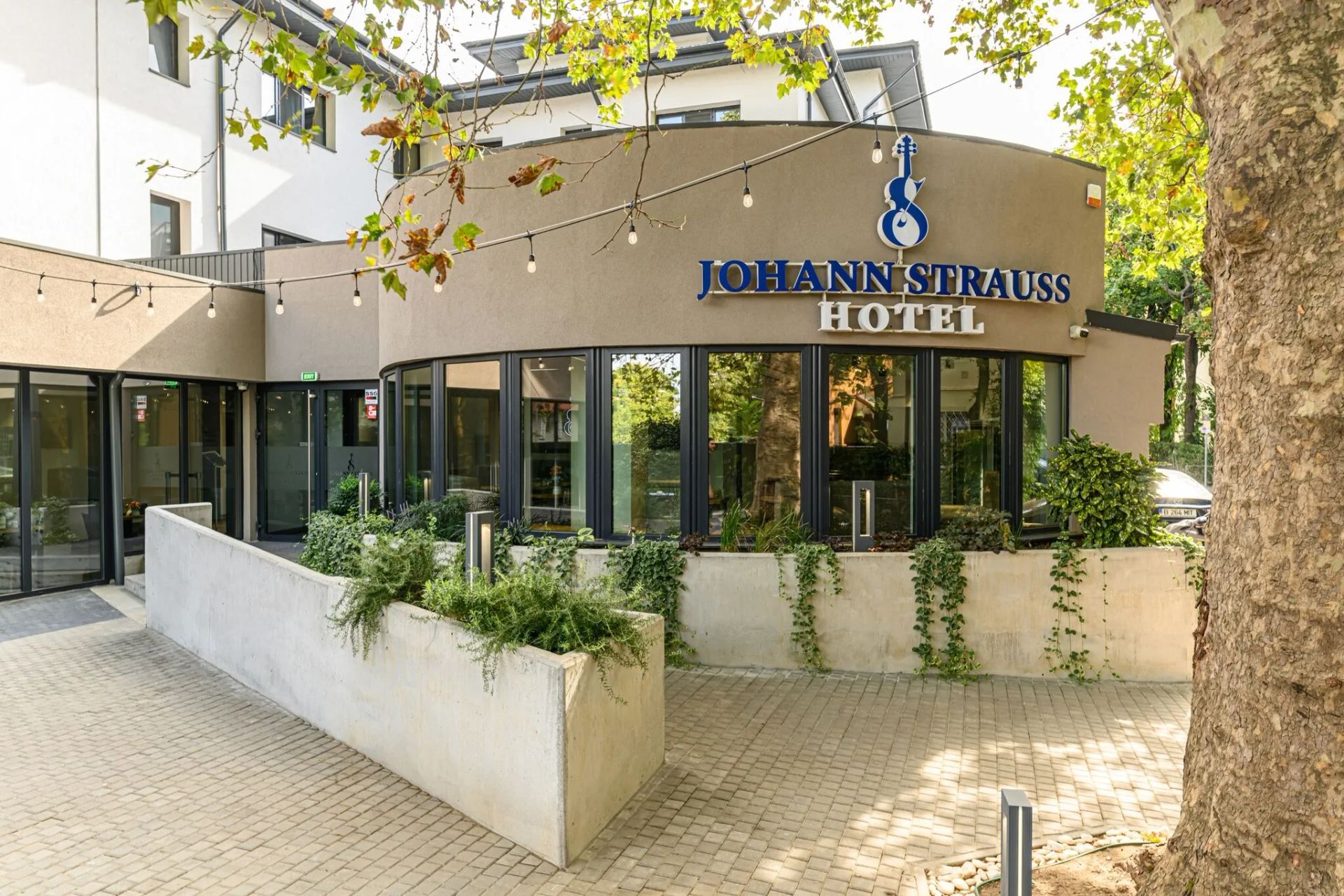
Johann Straus Hotel București
Johann Straus Hotel București este un hotel de trei stele situat în capitala României, pe strada Johann Strauss numărul 1, într-o zonă accesibilă a orașului. Camerele dumneavoastră beneficiază de Wi-Fi gratuit și seif pentru păstrarea în siguranță a obiectelor de valoare. Pentru familiile cu copii mici punem la dispoziție pătuț pentru bebeluș și scaun înalt la masă. Aveți la dispoziție și fier de călcat, iar accesul persoanelor cu dizabilități este facilitat prin lift. În incintă vă așteaptă o curte mare și o grădină amenajată, un bar și o cafenea pentru momentele de relaxare. Pentru activități sportive aveți la dispoziție un teren de tenis și o sală de fitness. Parcarea privată este gratuită, iar pentru biciclete există spațiu special de parcare. La recepție puteți lăsa bagajele în siguranță. În apropiere se află Palatul Parlamentului, Muzeul Național al Satului Dimitrie Gusti, Muzeul Țăranului Român, Palatul Regal și Catedrala Mântuirii Neamului, astfel încât puteți descoperi cu ușurință cele mai reprezentative obiective turistice ale capitalei. Seara, după o zi plină de vizite în oraș, vă puteți bucura de liniște în grădina amenajată.
FROM
290 lei per night
Apartment · 3 stars
București, Bucharest · 1.0 km
Herastrau Apartments Self Check-In București
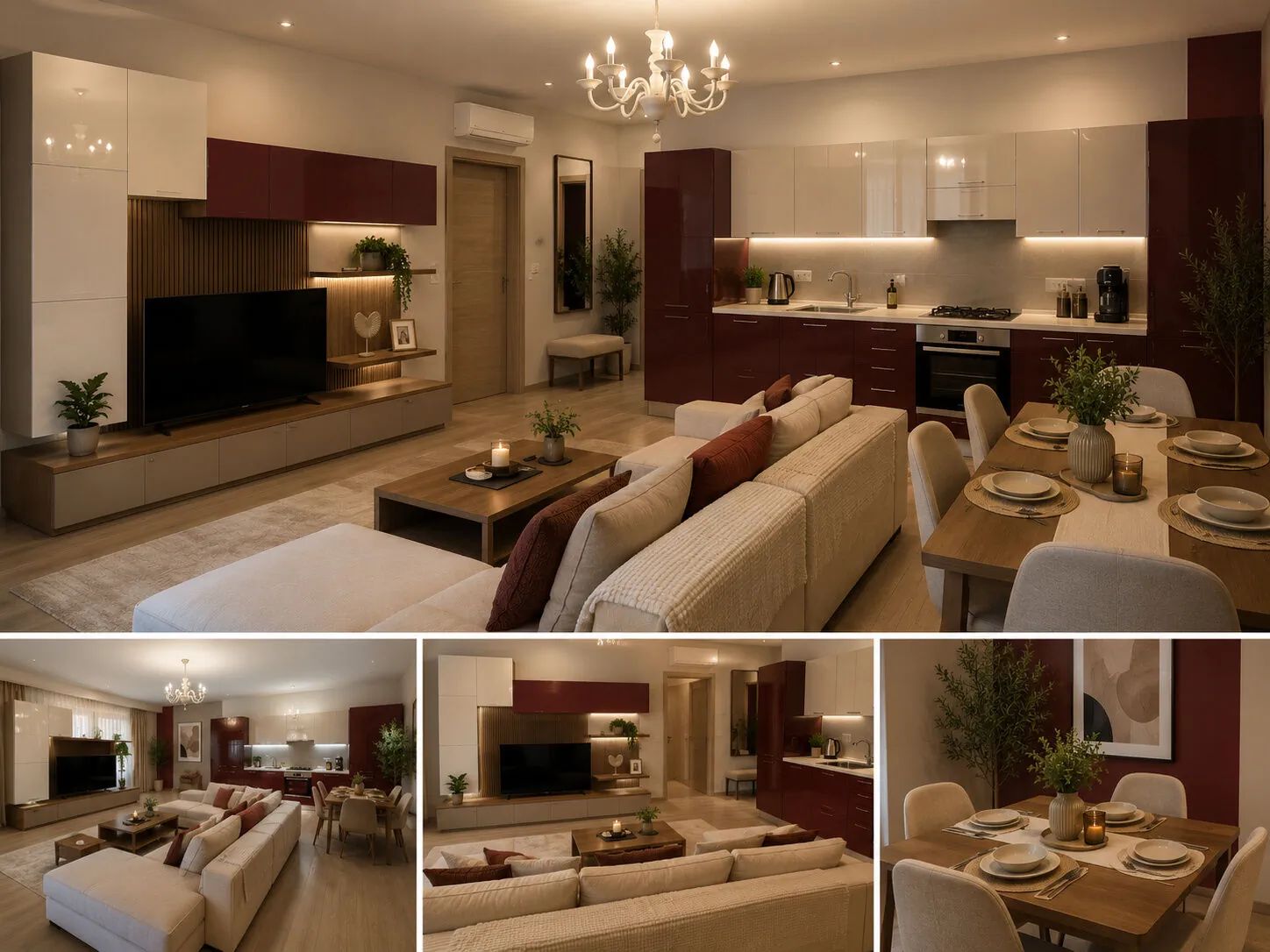
De pe balconul apartamentului se deschide o priveliște largă spre oraș, iar accesul se face prin self check-in. Herastrau Apartments Self Check-In București vă așteaptă în capitala României, într-o zonă rezidențială liniștită de pe Intrarea Unditei, într-un apartament clasificat cu trei stele. Apartamentul cu trei camere oferă aer condiționat și două dormitoare, un living și o bucătărie complet utilată cu frigider și cafetieră. Baia este dotată cu cadă cu hidromasaj, uscător de păr și articole de toaletă gratuite, iar în cameră găsiți prosoape, lenjerie de pat, papuci, cafea și ceai, pentru un sejur confortabil. Printre facilități se numără Wi-Fi gratuit, ascensor, pătuț pentru bebeluș, fier de călcat și un restaurant în incintă. În zona înconjurătoare găsiți restaurante, terase și locuri de joacă pentru copii, într-un cadru plăcut pentru relaxare în aer liber. În apropiere puteți descoperi Palatul Parlamentului, Muzeul Național al Satului Dimitrie Gusti, Muzeul Țăranului Român, Palatul Regal și Catedrala Mântuirii Neamului. Check-in-ul se realizează în mod independent, oferindu-vă flexibilitate și autonomie pe toată durata șederii dumneavoastră.
FROM
230 lei per night
Apartment · 3 stars
București, Bucharest · 1.4 km
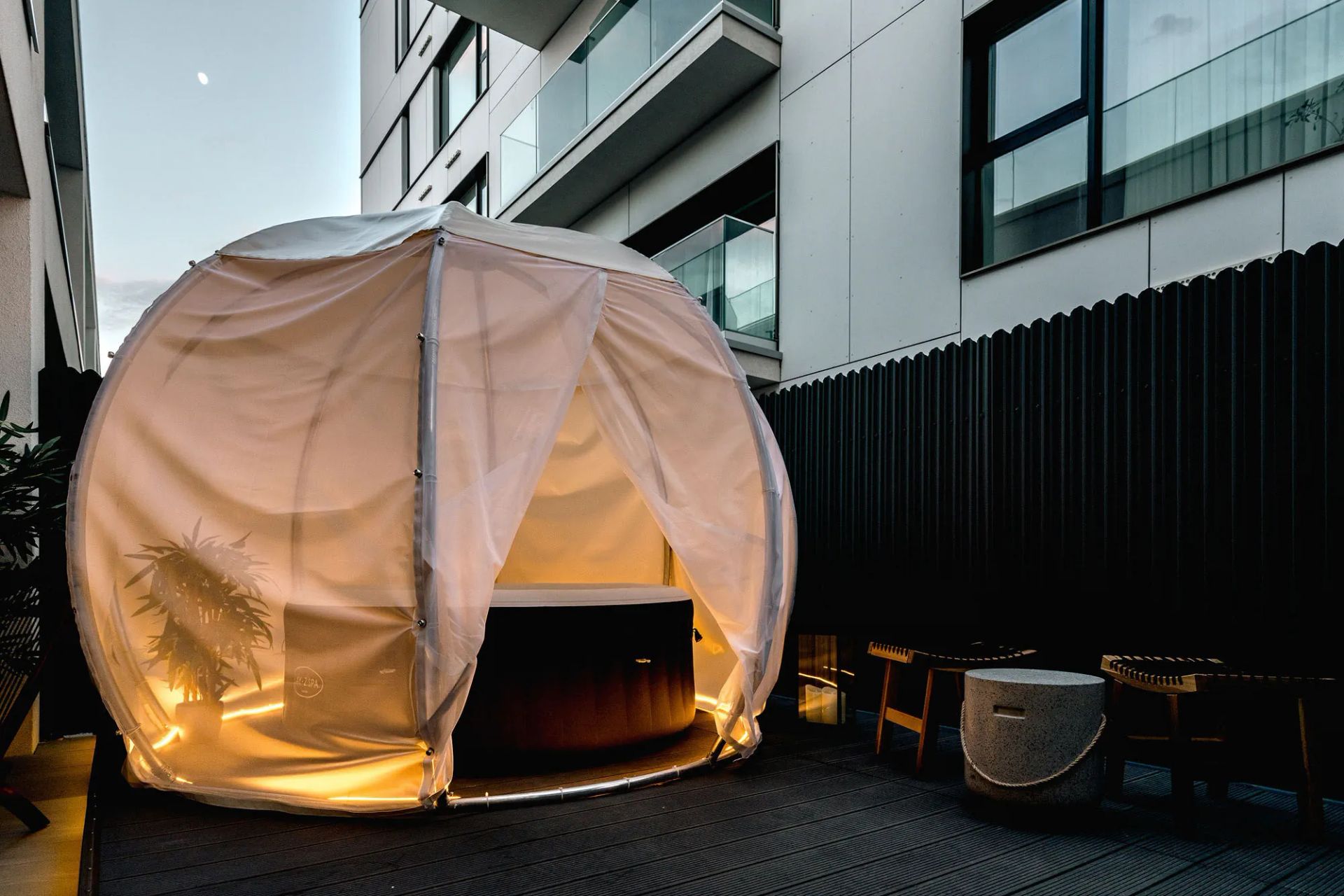
Urban Deluxe | Igloo Jacuzzi Terrace & Sauna București
Comfort, relaxation and stunning views, all just steps away from the main attractions.
FROM
230 lei per night
BEFORE YOU HIT THE ROAD
Weather conditions in București
Local forecast for Ceaușescu Mansion, București, București

Real-time updated weather data
Much more to explore in this area
Nearby tourist attractions


Bucuresti, Bucharest
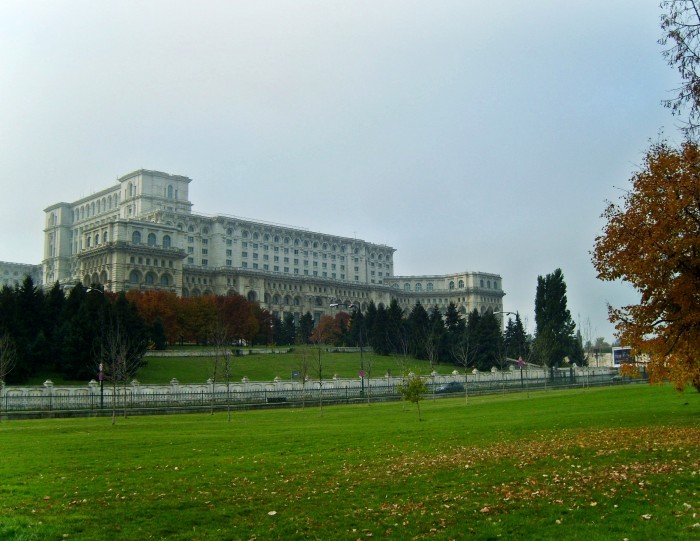
Palace of the Parliament
Situat pe strada Izvor nr.3, sector 5, localitatea Bucuresti; in perioada comunista a fost cunoscut sub numele de "Casa Poporului"; considerata una dintre cele...
4.7 km

București, Bucharest
People's Salvation Cathedral (National Cathedral of Romania)
Catedrală ortodoxă din București
4.9 km
Bucuresti, Bucharest
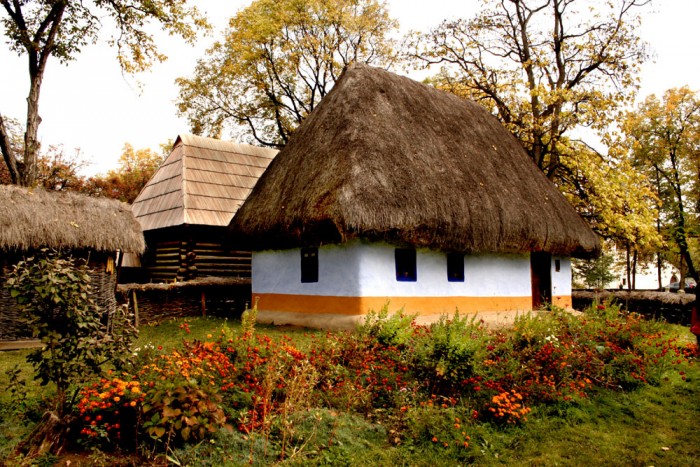
Dimitrie Gusti National Village Museum
Situat pe Soseaua Kiseleff nr.28-30, sectorul 1; a fost inaugurat in 1936; expozitia permanenta cuprinde 121 de complexe distincte, totalizand 338 de monumente,...
1.2 km
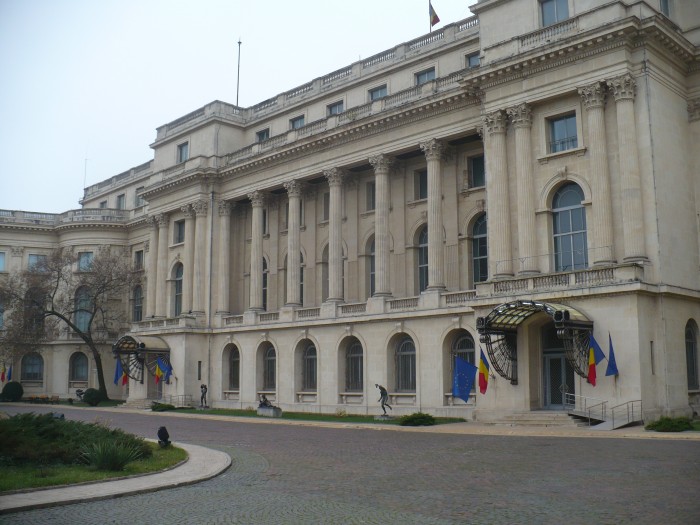
Bucuresti, Bucharest
Royal Palace of Bucharest
Situat pe Calea Victoriei nr. 49-53, sector 1, localitatea Bucuresti; construit intre anii 1812-1815 a apartinut marelui logofat Dinicu Golescu, dar a fost...
3.3 km

Bucuresti, Bucharest
Romanian Peasant Museum (Muzeul Național al Țăranului Român)
Situat pe soseaua Kiseleff nr.3, sector 1, localitatea Bucuresti; constructia intregului edificiu a durat 29 de ani, fiind finalizat in 1941; cladirea muzeului...
1.7 km

Bucuresti, Bucharest
Cotroceni Palace
Situat pe bulevardul Geniului nr.2, sector 6, localitatea Bucuresti; in anul 1679, domnitorul Serban Cantacuzino incepe constructia unei manastiri; opera sa a...
4.6 km

Bucuresti, Bucharest
Grigore Antipa National Museum of Natural History
Situat pe soseaua Kiseleff nr. 1, sector 1, localitatea Bucuresti; fondat in 1834 la initiativa lui Mihalache Ghica; are un bogat patrimoniu format din...
4.0 km
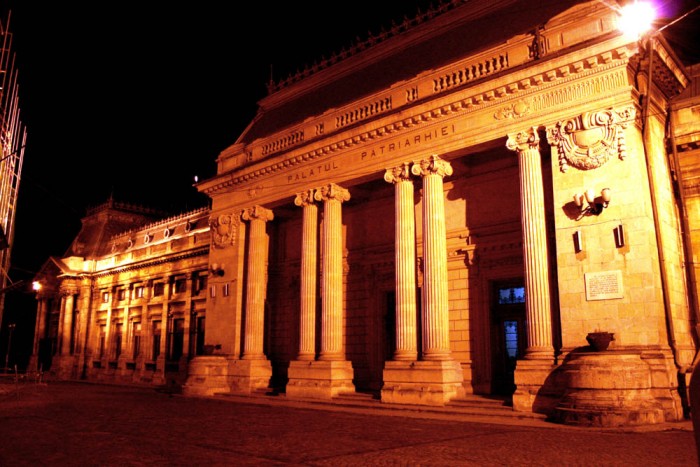
Bucuresti, Bucharest
Patriarchal Palace
Situat pe aleea Dealul Mitropoliei nr.25, sector 4, localitatea Bucuresti; construit de statul roman, la inceputul secolului al XX-lea, pe locul fostei sali a...
4.9 km

Bucuresti, Bucharest
National Museum of Romanian History
Situat pe Calea Victoriei nr.12, sector 3, localitatea Bucuresti; adapostit de Palatul Postelor; a fost inaugurat in anul 1970 fiind cel dintai muzeu de...
4.2 km
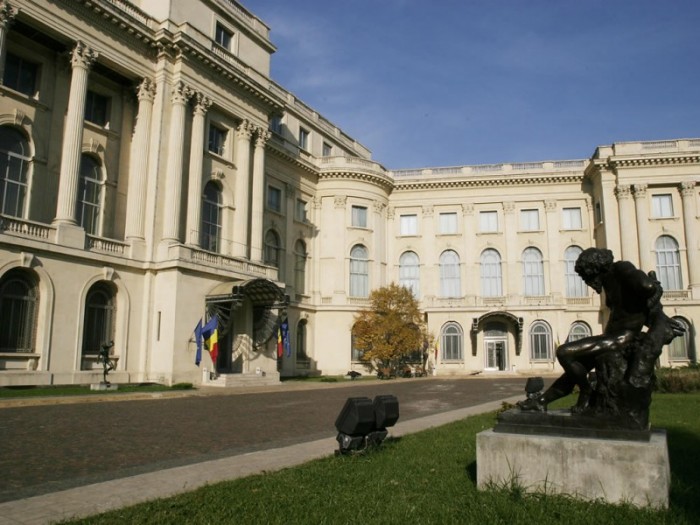
Bucuresti, Bucharest
National Museum of Art of Romania
Situat pe Calea Victoriei nr. 49-53, sector 1; deschis in 1948, in vremea lui Alexandru Ioan Cuza;cladirea era pe atunci locuinta domneasca, in timpul lui...
3.3 km

2.3 km
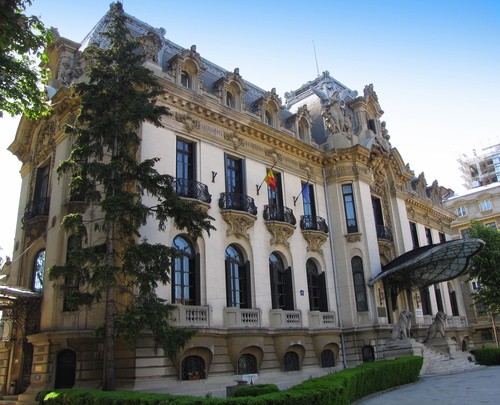
Bucuresti, Bucharest
Cantacuzino Palace
Situat pe Calea Victoriei nr.141, sector 1, localitatea Bucuresti; construit intre anii 1898-1900, in stil baroc francez al epocii Ludovic al XVI-lea, pentru...
3.0 km
Cultural life and traditions
Events in the Ceaușescu Mansion area
Medieval festivals, traditional fairs, concerts and local activities recommended in Muntenia (Wallachia).

History and Royal Architecture

București, County of București
Days of Royalty and Heritage in the Prahova Valley
Historical conferences open to the public, themed tours of royal architecture, documentary screenings and exhibitions of vintage photographs.
WHEN
May 10-12, 2026


Gastronomy and Oenology
Dealu Mare, County of București
The Prahova Wine Festival on the Wine Route
Guided tastings of Fetească Neagră along the famous Wine Route, visits to historic wineries, and meetings with leading winemakers.
WHEN
Every weekend (September - October)
Hiking and Adventure
Bucegi Mountains, București County
Guided Mountain Tour in the Bucegi Mountains
Guided mountain tours led by mountain rescue personnel to iconic panoramic viewpoints and spectacular alpine waterfalls.
WHEN
Daily during the season (June - October)
On foot, exploration gains depth
Discover the surroundings and local geography
Explore the trails, terrain, and natural landmarks around Ceaușescu Mansion.

Guides and practical tips
Useful travel articles
Travel guides, practical recommendations and tourist itineraries for Muntenia (Wallachia).

Tourist guide
Top 5 Atracții Turistice și Trasee Montane în Zona Moieciu - Bran
Descoperă cele mai spectaculoase peisaje carstice, chei adânci și cetăți medievale din imediata apropiere a stațiunii Moieciu.

Tourist guide
Ghid de Drumeție: Traseul Moieciu de Sus spre Platoul Bucegi
Un itinerariu montan de o frumusețe rară ce urcă din Valea Băngăleasa spre Poiana Guțanu și crestele maiestuoase ale Bucegilor.

Tourist guide
Castelul Bran: Istorie, Legende și Secrete Medievale
Află adevărata poveste a fortăreței medievale din Pasul Bran, reședința de suflet a Reginei Maria a României.
THE JOURNEY STARTS WITH AN IDEA
The next story is on the way.
From the first stop to the last stay, make room for a new Romania.
