


NATURE AND WILDLIFE · OLTENIA (LESSER WALLACHIA)
Iron Gates Natural Park

Mehedinti, Mehedinți County
Add location to your trip planner.

Practical access information

VISITING HOURS
Monday: 12:00 PM – 5:00 PM · Tuesday–Sunday: 9:00 AM – 5:00 PM (in summer until 8:00 PM)

TICKET PRICE
Adults: 45 RON · Students: 11 RON · Seniors: 23 RON · Guided tour included

RECOMMENDED VISIT DURATION
2-3.5 hours
Visitor information and guide
 Navigate with Google Maps

ABOUT IRON GATES NATURAL PARK
A Wilderness Oasis at Europe’s Millennial Frontier
On the left bank of the Danube, where the river forges its path with geological force through the arches of the Carpathians toward the Black Sea, lies Iron Gates Natural Park—a protected area of exceptional significance that blends the grandeur of a European-defining gorge with the richness of a unique biological sanctuary. Stretching between the towns of Buziaș and Gura Văii across the counties of Mehedinți and Caraș-Severin, this 115,655.80-hectare reserve represents one of the continent’s most awe-inspiring landscapes. Here, the Danube forms one of Europe’s most spectacular and largest gorges, its limestone cliffs rising abruptly from the water in a play of light and shadow reminiscent of the romantic engravings of the 19th century. In this place, nature and history have collaborated to create a cultural landscape where every rock, every bend in the river, and every isolated village tells stories of shifting imperial borders, ancient trade routes, and the resilience of ecosystems in a constantly evolving world. The park is not merely a destination for hikers but a true open-air museum of Europe’s natural heritage—a place where the border between Romania and Serbia becomes a thin line on the map of a shared ecosystem, and the Danube, the river that once connected Vienna to the Black Sea and inspired Strauss’s waltzes, reveals its true wild and untamed nature.
Historical Roots and the Confluence of Empires
The name evokes the natural gates that guarded the entrance to the Carpathian pass, a strategic location since antiquity when Roman legions controlled the northern frontier of the Empire along this sector of the Danube limes, near the fortress of Drobeta and Trajan’s Bridge, the architectural masterpiece designed by Apollodorus of Damascus that first united the river’s banks in the early 2nd century. Here, on these steep shores, Europe’s military history unfolded: the IV Flavia Felix Legion was garrisoned in Drobeta, while the Roman frontier roads, engineered with precision, followed the contours of the gorge, marking the boundary between Roman civilization and the barbarian world of the free Dacians and, later, migrating peoples. After the fall of Rome, these lands became the stage for less-documented but equally dramatic conflicts between Byzantines, Bulgarians, and Slavic tribes vying to control the Danube’s fords—a vital artery linking Constantinople to the heart of Central Europe.
In the Middle Ages, the Iron Gates represented a fluid border between Wallachia and the Kingdom of Hungary, a disputed buffer zone between voivodes and kings, where medieval fortifications like the one at Golubac on the Serbian bank oversaw the passage of trade convoys. The Ottoman period brought new tensions, as the area became part of the Timișoara Eyalet and later the vassal Principality of Transylvania—a military frontier where the Habsburg Austrians organized the Banat Military Frontier in the 18th century, meticulously mapping these rugged gorges to fortify their defenses against Ottoman expansion. Austrian military maps from the 18th and 19th centuries depict the Iron Gates as an impenetrable natural bastion, a place where nature itself guarded the borders of empires.
The 19th century transformed these lands into a fascination for European Romantic travelers, who, seeking the sublime landscapes described by Caspar David Friedrich or engraved by Turner, discovered in the Danube Gorge a wilder and less-explored alternative to the Rhine or the Norwegian fjords. Poets and painters lingered here, captivated by the contrast between the swirling waters and the limestone cliffs, helping crystallize the Iron Gates’ image in Europe as a symbol of passage to the mysterious Orient. In the 20th century, the area’s history took a radical turn with the decision of the communist regimes of Romania and Yugoslavia to collaborate on the construction of the Iron Gates I Hydroelectric Plant, an ambitious project completed in 1972 under the auspices of Nicolae Ceaușescu and Josip Broz Tito. This endeavor permanently transformed the landscape, creating a vast reservoir and giving rise to a magnificent lakeside scenery where towering rock formations are mirrored in deep waters—a human-altered landscape reminiscent of the great hydroelectric works in the Alps or the dams of the Rhine.
An Architectural Masterpiece: Style and Constructive Details
Geology and Morphology of the Gorge
The park encompasses the slopes of the Mehedinți Mountains, part of the Mehedinți Plateau, and the national strip of the reservoir, offering a remarkable geological cross-section through Mesozoic limestone formations sculpted by fluvial erosion over millions of years. The gorge features cliffs rising abruptly from the water to impressive heights, forming the Great and Small Kazan Gorges, where the rocks narrow so closely to the river’s course that they create a grand canyon effect, unique in Southeastern Europe. Karst phenomena are ubiquitous, from caves with spectacular concretions to sinkholes and lapies, while the Veterani Cave nearby houses the oldest evidence of human presence in Romania, dating back over 40,000 years—a testament that this natural corridor has always been a path of migration and cultural exchange.
Hydrotechnical Architecture and the Transformed Landscape
The Iron Gates I Dam represents a masterpiece of 20th-century hydrotechnical engineering, a monument of Brutalist industrial architecture that dramatically integrates into the natural landscape. Standing over 60 meters tall and nearly 1,300 meters long, its construction required diverting the entire flow of the Danube through underground galleries and created a reservoir covering over 100 square kilometers—the largest artificial lake in Romania. The lock system, one of the most advanced of its time, allows river navigation to overcome the dam’s height difference, continuing the Danube’s millennia-old tradition of transport. This structure, a symbol of technical cooperation between two states with similar ideologies but distinct national interests, permanently altered the area’s morphology, flooding the old town of Orșova and entire villages, whose churches and houses were relocated or rebuilt on nearby hills. The result is a lakeside landscape of floating islands and deep bays reminiscent of Swiss or Bavarian scenery, yet with a distinctly Balkan atmosphere.
The Biological Sanctuary and the Architecture of Ecosystems
Beyond its geological and anthropogenic structures, the park harbors exceptional biodiversity, reflecting its unique position at the intersection of Mediterranean, continental, and Carpathian climates. Here, nature has preserved remarkable biological treasures: 171 habitats, 26 of which are unique in the country, host over 1,668 plant species, many rare, endemic, or relics of milder climatic epochs from the Tertiary and Quaternary periods. The flora is particularly rich, featuring species such as wild lilac, rock iris, and various wild orchids, while beech and sessile oak forests—some of them virgin—offer a lush vegetal landscape contrasting with the arid cliffs. The fauna is equally impressive, with over 5,200 species, including reptiles protected at the European level, such as Hermann’s tortoise, the horned viper, the Aesculapian snake, and the slow worm, alongside invertebrates like scorpions, all adapted to the gorge’s specific microclimates. The park’s wetlands and steep cliffs provide refuge for numerous internationally protected bird species, including majestic raptors like the golden eagle and peregrine falcon, making the area a paradise for ornithologists and nature lovers. The 18 nature reserves within the park protect remarkable ecosystems, from karst caves to virgin forests, forming—together with Serbia’s Đerdap National Park—a transboundary ecological corridor within the Danube Green Belt, essential for species migration across the continent and the conservation of European biodiversity in an era of accelerated climate change.
Stories, Legends, Personalities, and Turning Points
The name Iron Gates itself carries echoes of ancient legends, suggesting not only the impenetrable nature of the cliffs but also the idea of a passage, an obligatory gateway between two worlds. Local folklore speaks of hidden Dacian treasures, of King Decebal seeking refuge in these caves before the Roman conquest, and of the iron that gave the area its name—whether from the dark color of the rocks or the unyielding force of the swirling waters. Another tale tells of a local hero, Trifon, whose rock, Stânca lui Trifon, now dominates the gorge, offering a dramatic viewpoint over the Kazan Gorges.
The most significant turning point in recent history remains the inauguration of the hydroelectric plant in 1972, an event that brought together communist leaders Nicolae Ceaușescu and Josip Broz Tito in a display of socialist fraternity. Yet it also marked the permanent disappearance of historic villages like Old Orșova, whose Orthodox churches and traditional houses were moved stone by stone to nearby hills. The engineers and workers who participated in the construction—many brought from across Romania and Yugoslavia—left behind not just concrete and steel but stories of the human sacrifice required to tame such a powerful river. Today, figures like the monk at Mraconia Monastery, built on a cliff that seems to float above the Danube between Dubova and Svinița, continue the area’s spiritual tradition, offering a place of contemplation reminiscent of Greece’s Meteora monasteries, though on a more intimate and wild scale.
Practical Visitor’s Guide and the Modern Traveler’s Experience
To discover this natural treasure of national and European importance, visitors can follow the European route E70 between Drobeta-Turnu Severin and Orșova, then continue on national road DN57 toward Baziaș—a route offering spectacular views of the gorge and access to numerous viewpoints. Along these roads, marked hiking trails allow exploration of the nature reserves, providing unforgettable experiences through beech and sessile oak forests to peaks like Trescovăț or Craca, where the panorama over the Kazan Gorges and the reservoir takes one’s breath away, evoking Alpine or Pyrenean landscapes.
A journey by water is undoubtedly the most impressive way to experience the grandeur of the Iron Gates. From the ports of Moldova Nouă or Dubova, cruise ships and smaller boats offer day or two-day trips through the gorge, allowing visitors to admire the towering cliffs directly from the water, much like cruises on the Rhine or the Upper Danube in Austria and Germany. During these cruises, tourists can see the entrance to Veterani Cave, admire the cliffside Mraconia Monastery, and—with luck—spot eagles and other raptors soaring above the narrow valleys. For speleology enthusiasts, caves in the Topolnița or Ponicova areas offer the chance to explore karst galleries with stalactite and stalagmite formations, some of which are equipped for guided visits.
Beyond its extraordinary natural value, the park preserves an authentic ethno-folkloric heritage. Traditional villages like Eșelnița, Dubova, or Svinița retain the specific architecture of the Mountain Oltenia and Banat regions, with old wooden houses—some with shingle roofs—and wooden churches built in the 18th and 19th centuries, true gems of rural religious heritage. These villages, scattered along the side valleys descending to the Danube, offer the chance to savor traditional Oltenian cuisine, from cabbage rolls to cheese and onion pies, in an authentic setting far from urban crowds. The optimal time to visit is late spring, when wild orchids and lilacs bloom, or autumn, when the beech forests turn shades of copper and gold, providing ideal conditions for photography and hiking. Whether you choose to climb the ridges, cruise the shimmering waters, or watch the sunset from a guesthouse terrace in Dubova, the Iron Gates remain a destination where Europe’s wild nature and millennial history converge in an unforgettable spectacle.
Media gallery
Discover Iron Gates Natural Park in pictures

9 photos · Architecture, courtyards and captivating details


Image source: Wikimedia Commons · Public domain photos · Free license
STAY A FEW DAYS, DISCOVER THE MAGIC
Accommodation in the Iron Gates Natural Park area

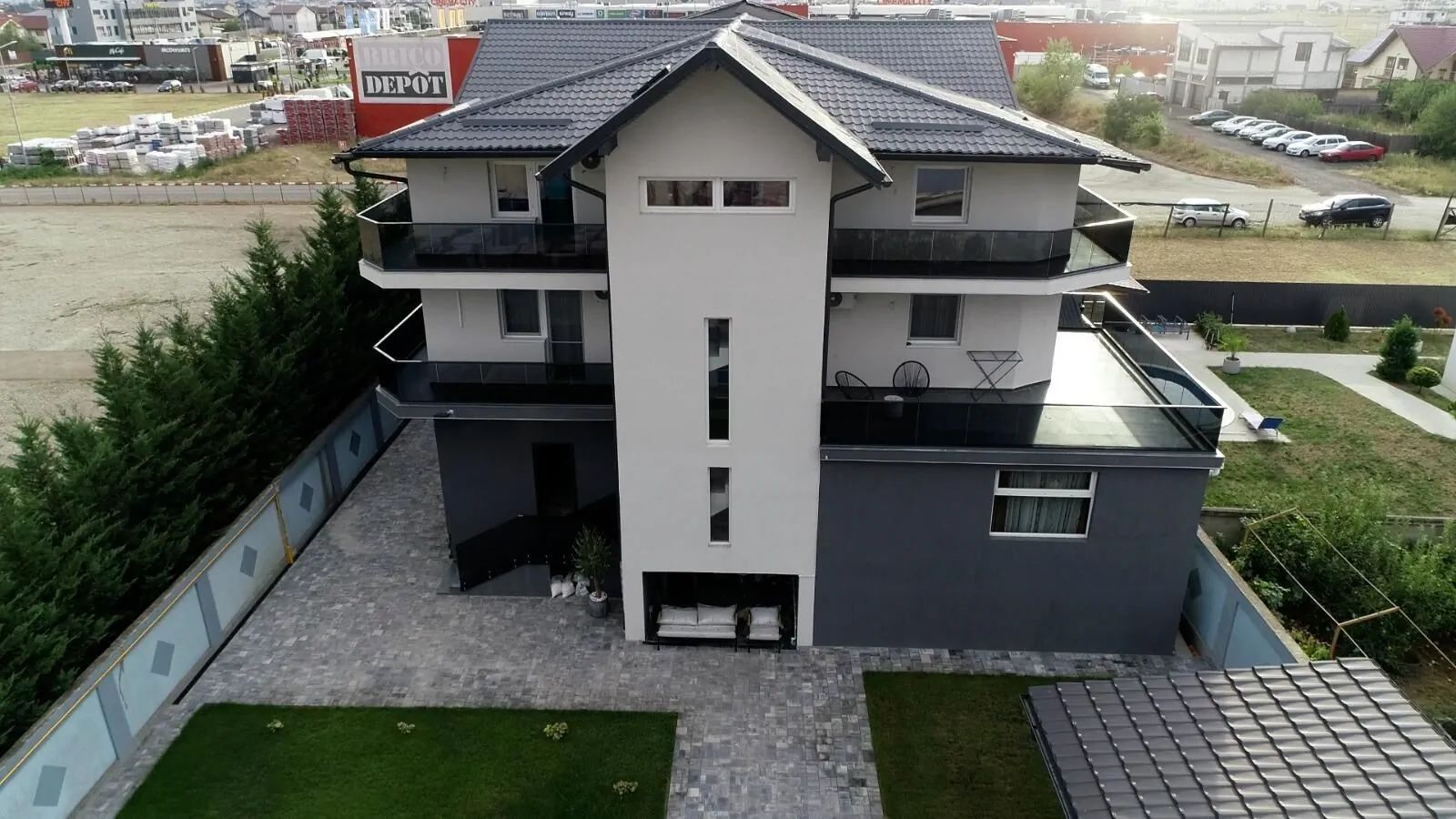
Guesthouse · 3 stars

Drobeta-Turnu Severin, Mehedinți County · 8.1 km
Pensiunea Grey Residence Drobeta-Turnu Severin
Familiile și grupurile de prieteni care caută un sejur confortabil în Drobeta-Turnu Severin vor găsi la Pensiunea Grey Residence un spațiu modern și primitor. Interiorul cu linii simple și materiale de calitate oferă un ambient intim, iar apartamentele spațioase și bine iluminate sunt dotate cu bucătărie complet echipată, potrivite pentru șederi prelungite sau pentru cei care preferă să își pregătească propriile mese. Pentru confortul dumneavoastră, fiecare cameră permite reglarea temperaturii individual și are televizor LED cu canale prin cablu. Veți avea acces la Wi-Fi gratuit în întreaga proprietate și la parcare privată gratuită, astfel încât șederea să fie lipsită de griji. Baia proprie este amenajată modern și include articole de toaletă gratuite și uscător de păr, iar mobilierul confortabil și lenjeriile moi contribuie la relaxare. În apropiere puteți descoperi cele mai importante obiective turistice ale zonei: Ruinele Podului lui Traian, Cetatea Medievală a Severinului, Parcul Natural Porțile de Fier, Castrul Roman Drobeta și Catedrala Episcopală din Drobeta-Turnu Severin. Toate aceste locuri vă așteaptă să le explorați în timpul șederii dumneavoastră, oferindu-vă ocazia de a descoperi istoria și natura zonei. Vă așteptăm la Pensiunea Grey Residence Drobeta-Turnu Severin.
FROM
240 lei per night

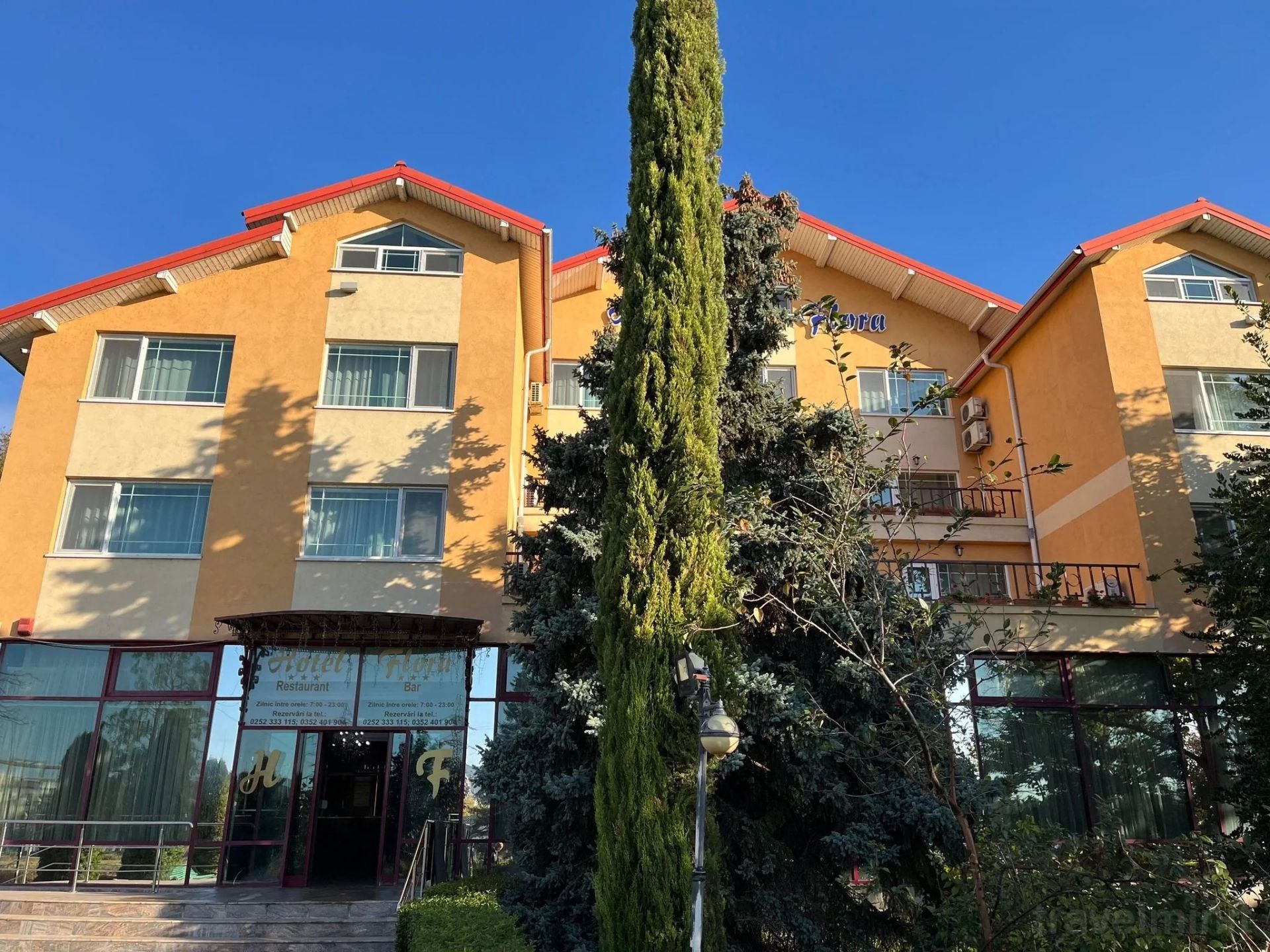
Hotel · 3 stars
Drobeta-Turnu Severin, Mehedinți County · 8.4 km
Hotel Flora Drobeta-Turnu Severin
Familiile cu copii, grupurile de prieteni și iubitorii de natură se vor simți bine la Hotel Flora din Drobeta-Turnu Severin. Unitatea oferă 16 camere confortabile și plăcut amenajate, iar unele dintre acestea sunt dotate cu aer condiționat pentru un plus de confort. Internetul wireless este disponibil gratuit în toate spațiile, iar parcarea privată gratuită vă permite să lăsați mașina în siguranță. La recepție se vorbesc limba română și limba engleză, iar serviciul de depozit pentru bagaje face călătoria mai ușoară. Curtea mare și grădina amenajată oferă un cadru plăcut pentru relaxare după o zi plină, în timp ce terenul de sport, terenul de tenis și locul de joacă pentru copii la exterior asigură oportunități de mișcare și distracție pentru toate vârstele. Pentru momente de socializare în aer liber, grătarul sau barbeque-ul sunt puse la dispoziția dumneavoastră. În apropiere se află Ruinele Podului lui Traian, Cetatea Medievală a Severinului, Parcul Natural Porțile de Fier, Castrul Roman Drobeta și Catedrala Episcopală din Drobeta-Turnu Severin, obiective pe care le puteți explora cu ușurință. Vă așteptăm cu drag la Hotel Flora, iar când decideți să plecați în explorare, puteți porni direct spre Ruinele Podului lui Traian pentru a descoperi mărturiile istorice ale zonei.
FROM
290 lei per night
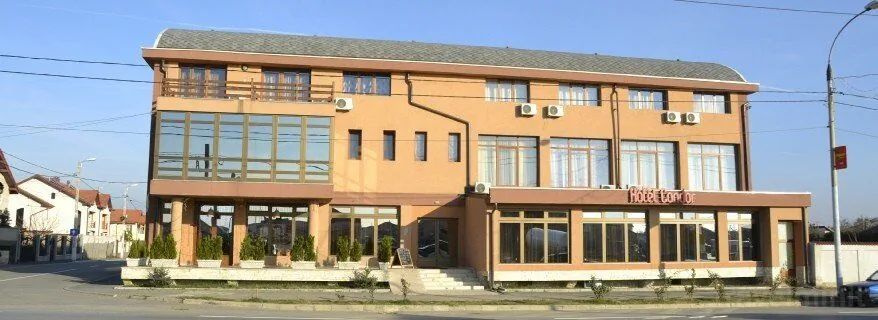
Hotel · 3 stars
Drobeta-Turnu Severin, Mehedinți County · 8.4 km
Hotel Condor Drobeta-Turnu Severin
Hotel cu trei stele situat în Drobeta-Turnu Severin, pe bulevardul Aluniș. Unității îi stau la dispoziție dumneavoastră 22 de locuri de cazare, în camere single, duble sau apartamente, dotate cu aer condiționat, televiziune prin cablu, televizor cu plasmă, minibar, uscător de păr, halate și Wi-Fi gratuit. La parter se află un restaurant cu 110 de locuri și un bar unde puteți lua micul dejun. În subsol este amenajat un centru SPA cu saună, cadă de hidromasaj, zonă de odihnă și cabinet de masaj. Parcare privată gratuită este disponibilă pentru dumneavoastră. În apropiere puteți vizita Ruinele Podului lui Traian, Cetatea Medievală a Severinului, Parcul Natural Porțile de Fier, Castrul Roman Drobeta și Catedrala Episcopală din Drobeta-Turnu Severin. Aceste obiective vă oferă ocazia să descoperiți istoria antică și medievală a zonei, alături de peisaje naturale. Vă așteptăm să vă bucurați de ședere și să porniți în explorarea zonei, începând cu Ruinele Podului lui Traian.
FROM
290 lei per night
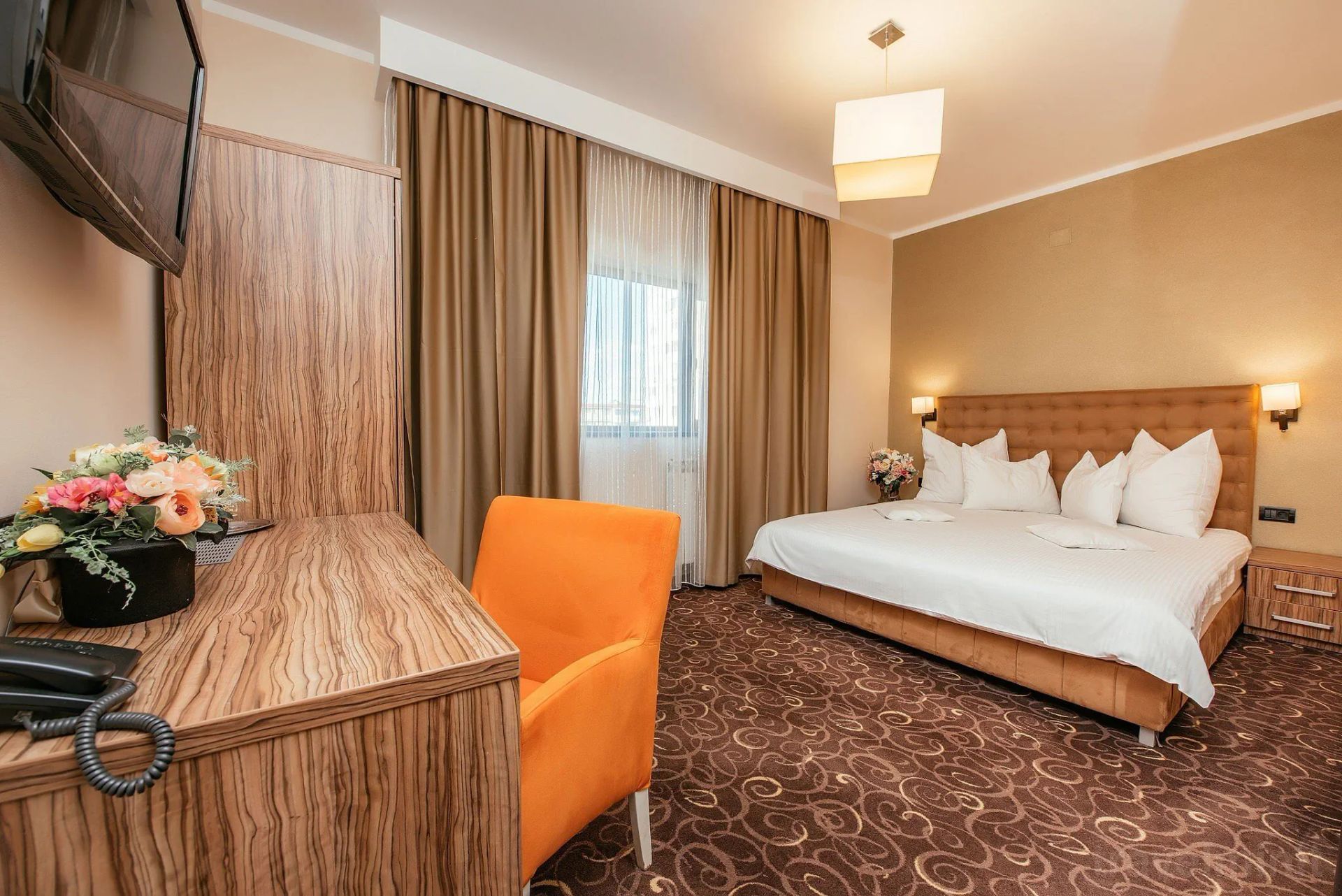
Holiday home · 3 stars
Drobeta-Turnu Severin, Mehedinți County · 9.0 km
C Guest House Drobeta-Turnu Severin
Familiile și grupurile de prieteni se vor simți bine la C Guest House Drobeta-Turnu Severin, o casă de închiriat integrală situată pe bulevardul Revoluției 16-22 Decembrie 1989 din Drobeta-Turnu Severin, județul Mehedinți. Unitatea beneficiază de o clasificare de trei stele și oferă un spațiu primitor pentru toți cei care doresc să exploreze această regiune istorică. Pentru confortul dumneavoastră, punem la dispoziție Wi-Fi gratuit, saună, închiriere de biciclete, parcare privată gratuită și room service. Fie că doriți să vă relaxați în saună după o zi plină sau să serviți masa direct în cameră, aceste facilități sunt gata să vă întâmpine. De asemenea, aveți posibilitatea de a închiria biciclete pentru a vă deplasa prin oraș în voie. În apropiere puteți vizita Cetatea Medievală a Severinului, Ruinele Podului lui Traian, Parcul Natural Porțile de Fier, Castrul Roman Drobeta și Catedrala Episcopală din Drobeta-Turnu Severin. Aceste obiective turistice vă oferă ocazia de a descoperi istoria antică a zonei, monumente impresionante și peisaje naturale deosebite. Vă așteptăm să vă bucurați de șederea dumneavoastră și apoi să porniți să explorați Cetatea Medievală a Severinului.
FROM
280 lei per night
Apartment · 3 stars
Drobeta-Turnu Severin, Mehedinți County · 9.7 km
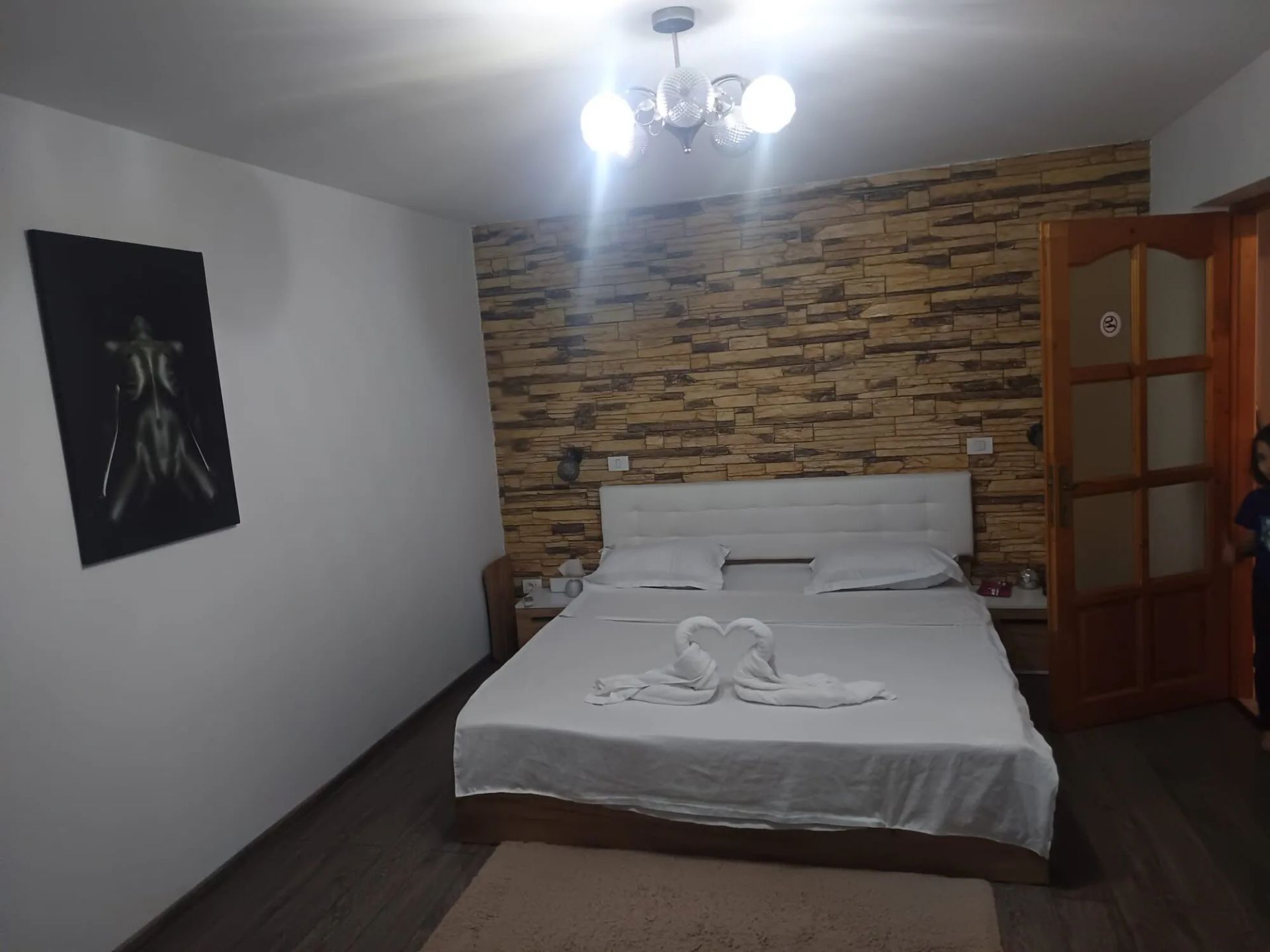
Insomnia Studio Drobeta-Turnu Severin
O zi petrecută la Insomnia Studio Drobeta-Turnu Severin începe cu navigarea pe internet prin Wi-Fi gratuit și se încheie liniștit, cu bagajele pregătite și hainele proaspăt călcate cu fierul de călcat pus la dispoziție. Unitatea vă așteaptă în Drobeta-Turnu Severin, județul Mehedinți, într-un apartament de închiriat clasificat cu 3 stele, situat pe bulevardul Ion C. Brătianu 22, bloc 3, scara 3. Spațiul este organizat în două camere bine amenajate, fiecare dotată cu grup sanitar propriu, oferind intimitate și confort pentru dumneavoastră și însoțitorii dumneavoastră. Fiecare cameră beneficiază de condiții adecvate pentru un sejur relaxant în oraș. În apropiere puteți vizita Cetatea Medievală a Severinului, Ruinele Podului lui Traian, Parcul Natural Porțile de Fier, Castrul Roman Drobeta și Catedrala Episcopală din Drobeta-Turnu Severin. Aceste obiective turistice îmbogățesc experiența vizitatorilor care aleg să se cazeze aici. Programul de primire începe la ora 12:00, iar predarea apartamentului se face până la ora 10:00, la recepție putând comunica în română, engleză, germană sau franceză, iar plata se poate realiza prin transfer bancar, card de vacanță sau voucher travelminit.
FROM
230 lei per night
Hotel · 4 stars
Drobeta-Turnu Severin, Mehedinți County · 9.9 km
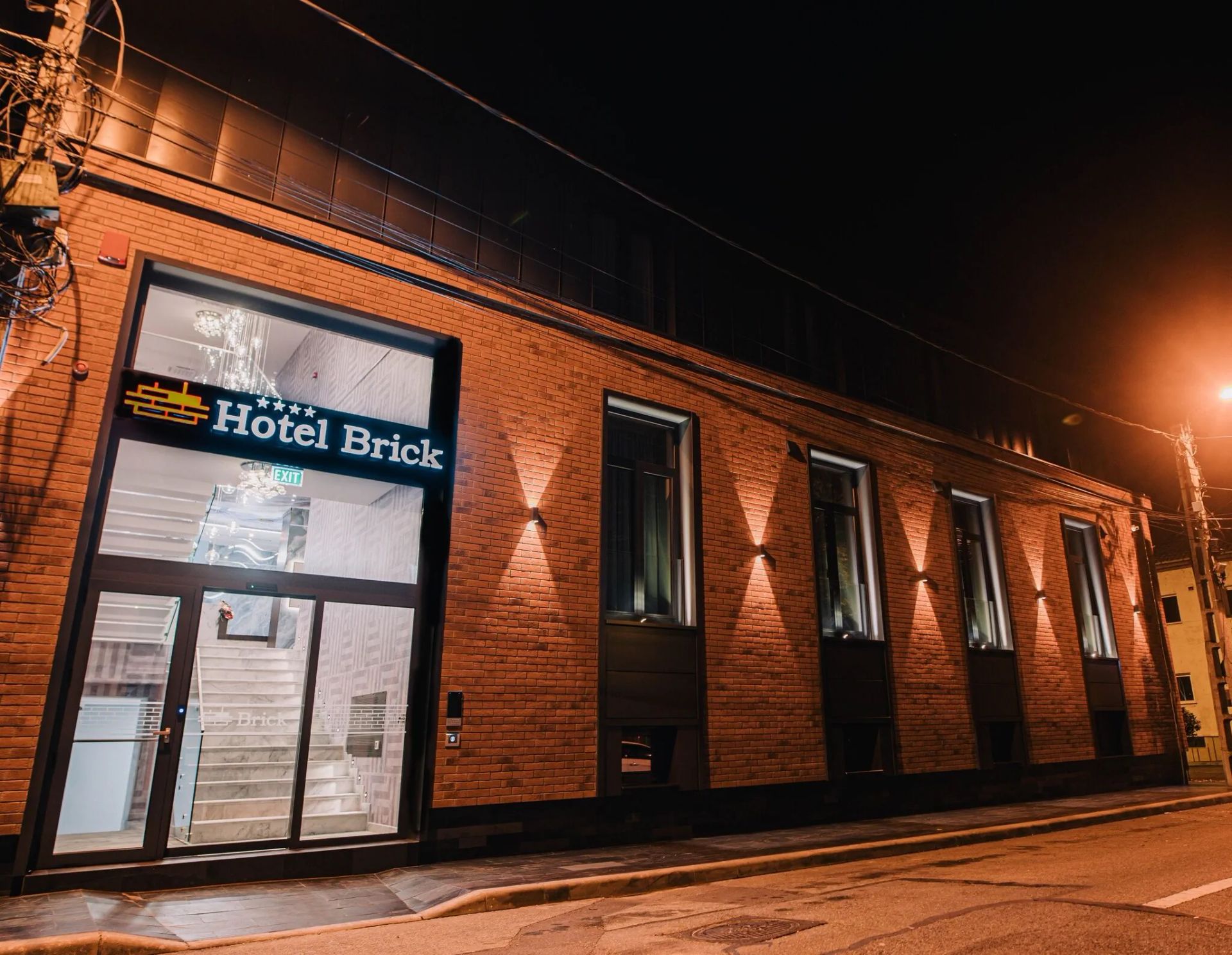
Hotel Brick Drobeta-Turnu Severin
Călătorii care doresc să combine explorarea urbană cu descoperirea naturii se vor simți bine la Hotel Brick din Drobeta-Turnu Severin. Hotelul de patru stele se află în localitatea Drobeta-Turnu Severin din județul Mehedinți. Camerele sunt dotate cu Wi-Fi gratuit, seif și fier de călcat, iar serviciile de room service și depozitul pentru bagaje vă asigură tot confortul necesar pe toată durata șederii. Fiecare detaliu este gândit pentru ca dumneavoastră să vă simțiți bine, să aveți liniște și să vă bucurați de odihnă după activitățile zilei. Pentru momentele de relaxare, unitatea pune la dispoziție un restaurant, un bar și o cafenea în incintă. Aceste spații sunt ideale pentru a savura o masă gustoasă sau o cafea într-un ambient plăcut după o zi petrecută în explorarea orașului și a monumentelor sale. În apropiere puteți vizita Cetatea Medievală a Severinului, Ruinele Podului lui Traian, Castrul Roman Drobeta, Catedrala Episcopală din Drobeta-Turnu Severin și Parcul Natural Porțile de Fier. Aceste obiective oferă oportunități variate de a descoperi istoria și natura zonei. Vă așteptăm la Hotel Brick Drobeta-Turnu Severin.
FROM
420 lei per night
BEFORE YOU HIT THE ROAD
Weather conditions in Mehedinti
Local forecast for Iron Gates Natural Park, Mehedinti, Mehedinți

Real-time updated weather data
Much more to explore in this area
Nearby tourist attractions


Mehedinti, Mehedinți County
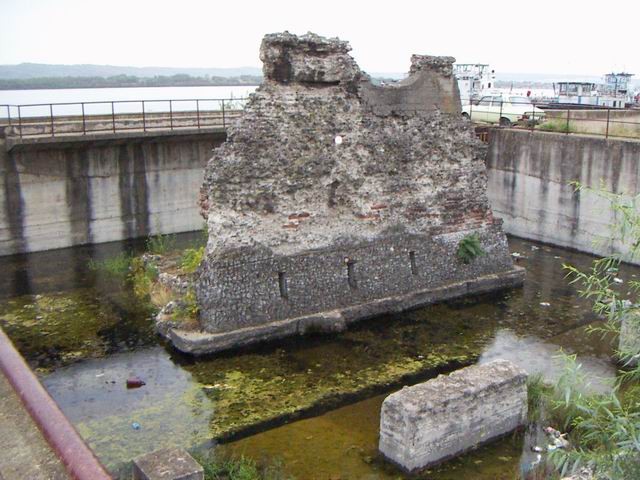
Trajan's Bridge Ruins
Se afla in apropierea orasului Drobeta Turnu Severin, pe Dunarea de jos, la est de Portile de Fier;constructia, capodopera a tehnicii si arhitecturii, a fost...
1.5 km
Dubova, Mehedinți County
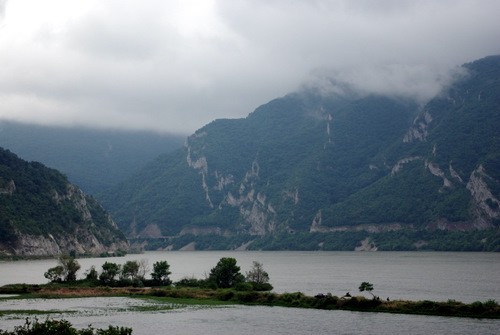
The Iron Gates Gorges and the Face of Decebalus
Se afla intre Valea Ogradena si Paraul Ogasul Turcului, in perimetrul localitatii Dubova, intre versantii abrupti pe care ii desparte Dunarea, formand niste...
23.6 km
Caras Severin, Caraș-Severin County
Domogled-Valea Cernei National Park
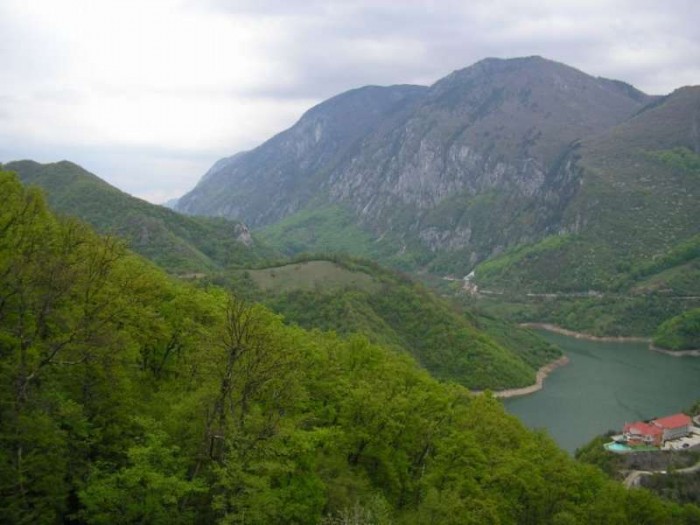
Se intinde pe suprafata a 3 judete - Caras-Severin, Mehedinti si Gorj, peste bazinul raului Cerna, de la obarsie pana la confluenta cu raul Belareca, peste...
36.5 km
Caras Severin, Caraș-Severin County
Herculane Baths
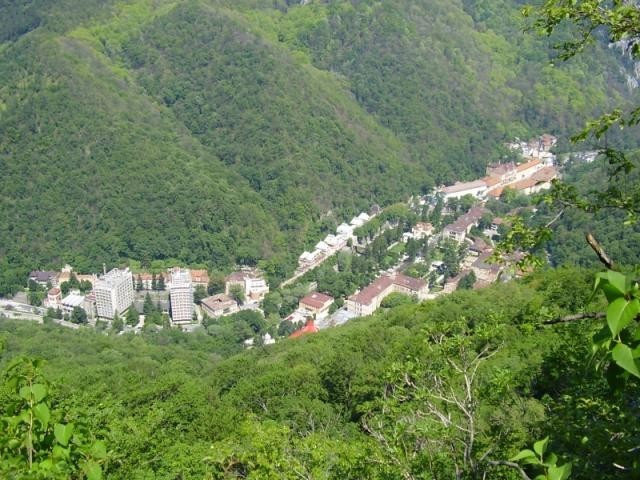
Situata pe Valea Cernei, la 5 km de principala artera rutiera ce leaga vestul tarii de Bucuresti si calea ferata internationala Bucuresti - Timisoara -...
25.1 km
Mehedinti, Mehedinți County
Severin Medieval Fortress
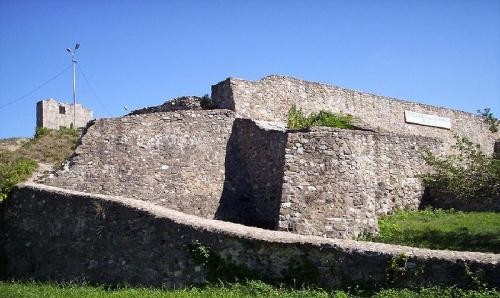
Situata in Parcul Dragalina, Bulevardul Carol I, orasul Drobeta Turnu-Severin;in anul 1233 s-a inceput constructia noii Cetatii a Severinului, peste ruinele...
10.3 km
Caras Severin, Caraș-Severin County
Rudăria Gorge and Water Mills
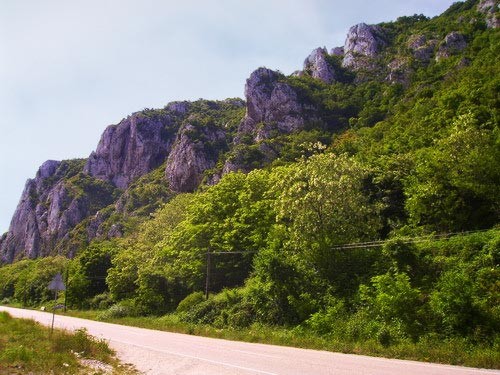
Situate in zona muntoasa a judetului Caras Severin, pe raza localitatii Eftimie Murgu (fosta Rudaria);accesul se face de pe drumul E70 Caransebes - Oravita, pe...
39.9 km

36.3 km
Caras Severin, Caraș-Severin County
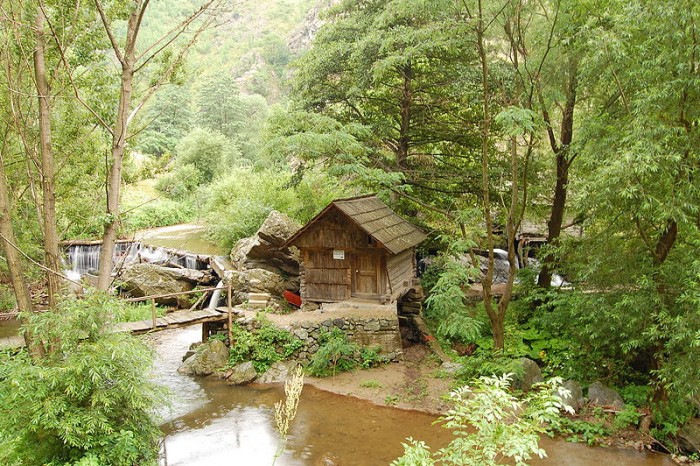
Rudăria Water Mill Reserve
Situata pe Valea Rudariei, din satul Eftimie Murgu; cuprinde un numar de 22 de mori cu ciutura, asezate de-a lungul cursului apei, pe o lungime de 3 km, o...
42.5 km

Mehedinti, Mehedinți County
God's Bridge Natural Landmark
Se afla la 5 km de localitatea Baia de Arama, in perimetrul comunei Ponoare;face parte din Rezervatia geomorfologica Complexul carstic Ponoare, ce se intinde...
37.6 km
Mehedinti, Mehedinți County
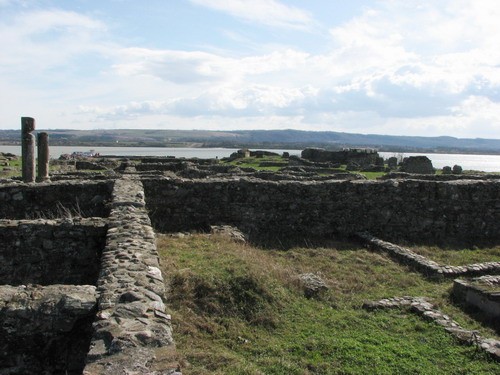
Drobeta Roman Fortress
Situat pe strada Independentei nr.2 din Drobeta Turnu Severin;este prima cetate de piatra ridicata in Dacia de imparatul Traian, intre anii 103 si 105;...
10.4 km
Mehedinti, Mehedinți County
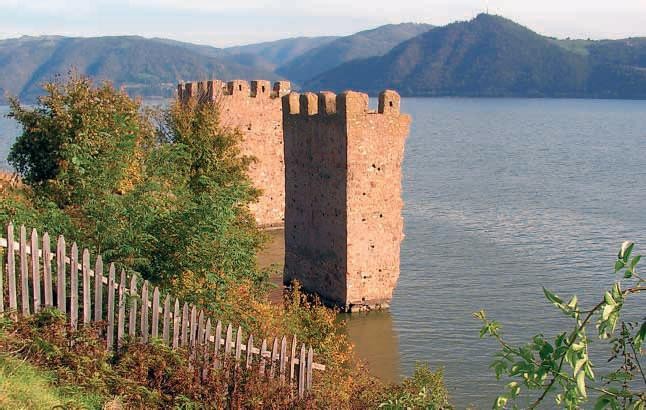
Tricule Fortress
Se afla pe malul stang al Dunarii, la 4 km in aval de localitatea Svinita;dateaza din secolul al XV-lea;a fost ridicata in scop de aparare contra Imperiului...
37.2 km

Drobeta-Turnu Severin, Mehedinți County
Catedrala Episcopală din Drobeta-Turnu Severin
Orthodox cathedral in Drobeta-Turnu Severin
9.9 km
Cultural life and traditions
Events in the Iron Gates Natural Park area
Medieval festivals, traditional fairs, concerts and local activities recommended in Oltenia (Lesser Wallachia).

Traditions and Crafts

Mehedinti, County of Mehedinți
Days of Local Culture and Traditional Tourism
Open workshops featuring pottery, wood carving, and authentic folklore demonstrations by local artisans.
WHEN
May 15-17, 2026


Traditional Cuisine
Mehedinti, County of Mehedinți
The Fair of Traditional Products and Local Cuisine
Traditional products, aged cheeses, mountain honey and local delicacies prepared according to ancient recipes.
WHEN
Every weekend

Culture and Photography
Mehedinti, County of Mehedinți
Themed and Photographic Guided Tour of Cultural Heritage
A guided tour designed for history buffs, nature lovers, and photography enthusiasts, showcasing the most spectacular views in the area.
WHEN
Daily schedule available upon request
On foot, exploration gains depth
Discover the surroundings and local geography
Explore the trails, terrain, and natural landmarks around Iron Gates Natural Park.

Guides and practical tips
Useful travel articles
Travel guides, practical recommendations and tourist itineraries for Oltenia (Lesser Wallachia).

Tourist guide
Top 5 Atracții Turistice și Trasee Montane în Zona Moieciu - Bran
Descoperă cele mai spectaculoase peisaje carstice, chei adânci și cetăți medievale din imediata apropiere a stațiunii Moieciu.

Tourist guide
Ghid de Drumeție: Traseul Moieciu de Sus spre Platoul Bucegi
Un itinerariu montan de o frumusețe rară ce urcă din Valea Băngăleasa spre Poiana Guțanu și crestele maiestuoase ale Bucegilor.

Tourist guide
Castelul Bran: Istorie, Legende și Secrete Medievale
Află adevărata poveste a fortăreței medievale din Pasul Bran, reședința de suflet a Reginei Maria a României.
THE JOURNEY STARTS WITH AN IDEA
The next story is on the way.
From the first stop to the last stay, make room for a new Romania.
