


MUSEUM · MUNTENIA (WALLACHIA)
Romanian Athenaeum

Bucuresti, Bucharest
Add location to your trip planner.

Practical access information

VISITING HOURS
Tuesday – Sunday: 10:00 AM – 6:00 PM (subject to the schedule of rehearsals for the George Enescu Philharmonic)

TICKET PRICE
Tourist visit: 15 RON; Concert tickets range from 50 to 150 RON

RECOMMENDED VISIT DURATION
45-60 minutes


Visitor information and guide
For group bookings or access verification, you can call this number.

PHONE NUMBER
+40 21 315 2567 Navigate with Google Maps

ABOUT ROMANIAN ATHENAEUM
A Temple of Music and Civilization in the Heart of Eastern Europe
As you stroll along Calea Victoriei, the historic axis that cuts through the heart of Bucharest from north to south, your gaze is inevitably drawn to the imposing silhouette of a circular building crowned by a majestic dome—an edifice that seems to have been transplanted directly from the agoras of ancient Athens or the grand concert halls of imperial Vienna. The Romanian Athenaeum, inaugurated on February 14, 1888, is far more than a mere concert hall; it is a monument to the cultural aspirations of a young nation in the midst of European emancipation and a symbol of the dialogue between local tradition and the continent’s great artistic currents. Built during a period when the Romanian Principalities had only recently consolidated their full independence and proudly assumed the status of a kingdom in 1881, this temple of music embodies the intellectual elite’s desire to anchor Romania within the universal values of Europe’s great capitals, such as Paris, Vienna, or London. The circular structure, with its dominant dome and classical peristyle, is not just a performance space but a true civic sanctuary—a place where art, history, and national identity converge in an exceptional architectural harmony, offering visitors an experience that transcends mere musical enjoyment and becomes a journey through time.
Historical Roots and Dialogue with Europe’s Great Currents
The construction of the Athenaeum unfolded during a pivotal historical moment for Romania, the years following the War of Independence (1877–1878), when the country was consolidating its status as a sovereign state on the European map and seeking Western cultural models to affirm its modernity. The project was conceived by the French architect Albert Galleron, a disciple of Charles Garnier—famed for the Paris Opera—a connection that placed the Athenaeum directly within the tradition of French neoclassical and eclectic architecture, dominant in the second half of the 19th century. The chosen style reflected the European fashion of the era, when neoclassicism, inspired by Greco-Roman antiquity, reigned in the continent’s great capitals, from Berlin to St. Petersburg, passing through Habsburg Vienna and Prague. The peristyle with its six Ionic columns at the front, meticulously proportioned after those of the Erechtheion on the Athenian Acropolis, is not merely an homage to ancient democracy and Hellenic civilization but also a declaration of intent: Romania aspired to become a cultural center worthy of Europe’s great metropolises, an "Athenaeum" in the original sense of the word—a temple of wisdom and music. The initiative for its construction came from the Romanian Athenaeum Society, founded in 1865, a civic organization that brought together intellectuals, musicians, and businessmen, much like the philharmonic societies of Vienna, London, or Prague, modeled after the prestigious Vienna Philharmonic Society established in 1842. The fundraising campaign under the slogan "Give a leu for the Athenaeum" mobilized Romanian society from peasants to great boyars in an act of cultural solidarity comparable to the efforts behind the construction of London’s Royal Albert Hall or Vienna’s Musikverein. This public subscription, launched in 1886, demonstrated the deep attachment of the Romanian people to culture at a time when access to high art was often reserved for aristocratic elites in Europe, setting a precedent for supporting cultural institutions through civic contribution.
An Architectural Masterpiece and Interior Artistic Heritage
The architecture of the Athenaeum represents a remarkable synthesis of neoclassical elegance and eclectic elements, dominated by the 41-meter-high central dome crowning the circular structure and the imposing peristyle that lends it the gravitas of an ancient temple. The façade, 48 meters wide, features a pediment whose Ionic columns evoke the classical proportions of Greek temples, while the five mosaic medallions on the front depict great rulers of Wallachia: Neagoe Basarab, Alexandru cel Bun, Carol I, Vasile Lupu, and Matei Basarab, thus connecting the cultural present with the nation’s historical roots in a manner akin to the iconographic programs of Haussmann’s Paris or Habsburg Vienna. Around the base of the dome, the names of illustrious scholars such as Miron Costin, Dimitrie Cantemir, and Ion Heliade Rădulescu are carved into the stone, underscoring the indissoluble link between erudition and music, between the learned past and the artistic present. Construction and finishing works continued until 1897 under the direction of architect Leonida Negrescu, solidifying the building’s status as a landmark of Romanian architecture. The interior of the concert hall, with a diameter of 28.5 meters and a height of 16 meters, accommodates 794 seats and houses a unique pictorial masterpiece in Europe: the circular fresco painted by Costin Petrescu between 1933 and 1939. Stretching 70 meters in length and 3 meters in width above the 52 boxes, this visual epic comprises 25 scenes from Romanian history, from Daco-Roman antiquity and Trajan’s Column to the modern era and the allegory of the reunification of historical provinces, evoking techniques and themes found in the great historical painting cycles of European palaces, such as those in Versailles or Vienna’s Hofburg. The hall also houses an exceptional concert organ, built by the German firm E.F. Walcker between 1935 and 1939 at the initiative of George Enescu and inaugurated in April 1939. This organ, representing the German Romantic tradition of organ building, stands alongside legendary instruments in Cologne Cathedral or St. Peter’s Basilica in Rome, offering internationally renowned acoustics based on the hall’s circular shape, which ensures perfect sound diffusion. This places the Athenaeum among Europe’s finest concert halls, alongside Vienna’s Musikverein or Amsterdam’s Concertgebouw.
Stories, Personalities, and Turning Points in History
The history of the Athenaeum is dotted with emotional moments and notable personalities that have bestowed upon it the aura of a living temple and witness to history. The "Give a leu" campaign of 1886 remains etched in the collective memory as an unprecedented moment of national unity, when every Romanian, regardless of social status, contributed to the construction of this sanctuary of the spirit—from peasants donating their last leu to great industrialists and boyars offering substantial sums. The inauguration on February 14, 1888, was a European-scale event, with the first concert performed by the Bucharest Philharmonic Society orchestra under the baton of maestros who laid the foundations of a solid musical tradition, while the audience, dressed in the era’s most elegant attire, filled the hall to capacity. A central figure in the Athenaeum’s destiny was George Enescu, Romania’s musical genius, who conducted here countless times, inaugurated the organ in 1939 with a memorable concert, and transformed this hall into one of the world’s most cherished venues for chamber and symphonic music, alongside the concert halls of Paris or Vienna. During the communist era, the historical fresco was hidden behind red velvet to obscure the role of the monarchy and the intellectual elites deemed "bourgeois," a tragic episode in recent history that deprived entire generations of the complete artistic vision until Petrescu’s work was rediscovered and restored in 1966, revealing once again its glory and the allegorical representations of the historical provinces. The extensive restoration carried out between 1994 and 2004 by architects Ana Braniște, Raluca Nicoară, and Gabriela Mindu restored the monument’s splendor after decades of neglect, reopening it to the public in 2005 in a form that preserved its acoustic and aesthetic magic. In the garden in front of the building, the bronze statue of Mihai Eminescu, created in 1963 by sculptor Gheorghe D. Anghel, watches over the entrance, evoking the profound connection between national poetry and classical music. Over the decades, the Athenaeum’s stage has hosted world-renowned artists, from Yehudi Menuhin and David Oistrakh to Sviatoslav Richter and Martha Argerich, transforming Bucharest into an essential node of the European musical circuit. The George Enescu International Festival, established in 1958 and held biennially under the auspices of this temple, is one of Eastern Europe’s most prestigious events, connecting Romanian tradition with the highest standards of continental interpretative art, alongside festivals such as those in Salzburg or Edinburgh.
Practical Visitor’s Guide and Contemporary Experience
For the European or international traveler seeking to discover the cultural essence of Bucharest, a visit to the Romanian Athenaeum is an essential experience—a pilgrimage to one of Europe’s most authentic monuments of musical heritage. The building is located on Calea Victoriei, in George Enescu Square, an area that concentrates the capital’s most important cultural institutions, easily accessible from the historic center and in close proximity to the CEC Palace, the National Museum of Art, and the Old Town. Visitors can explore the exterior area and the garden where Eminescu’s statue stands free of charge, admiring the architectural details of the façade, the mosaic medallions, and the harmonious proportions of the dome reflected in Bucharest’s sky. Access to the concert hall for tourist visits costs 15 lei, a symbolic price for entry to an art sanctuary with the status of a Group A historical monument. The visiting schedule is from Tuesday to Sunday, between 10:00 AM and 6:00 PM, with the caveat that access may be restricted during rehearsals of the "George Enescu" Philharmonic or on concert days. For a complete experience, attending a Philharmonic concert represents the highlight of the visit; tickets range between 50 and 150 lei, depending on the program and seating, and advance booking is essential, especially for the Enescu Festival editions or special symphonic concerts. The atmosphere of the hall, with its perfect acoustics recognized by specialists as among the best in the world, the historical frescoes watching over the audience, and the aura of cultural sacredness, offers a profound sensory experience comparable to that of Europe’s great concert halls, requiring elegant evening attire similar to that expected at concerts in Vienna or Paris. In 2007, the Athenaeum was included on the European Heritage List on the occasion of the 50th anniversary of the Treaty of Rome, and in 2023, it received the European Heritage Label, recognitions that underscore its role as a bridge between the cultures of Eastern and Western Europe, between the Byzantine-Orthodox tradition and the Western one. For foreign visitors, the Athenaeum represents an open window into the cultural soul of Romania, a place where history, art, and music intertwine in an unforgettable symphony within an architectural setting that rivals the continent’s most illustrious monuments, offering not just a concert but a lesson in European civilization.
Media gallery
Discover Romanian Athenaeum in pictures

26 photos · Architecture, courtyards and captivating details


Image source: Wikimedia Commons · Public domain photos · Free license
STAY A FEW DAYS, DISCOVER THE MAGIC
Accommodation in the Romanian Athenaeum area

Apartment · 3 stars

București, Bucharest · 0.1 km
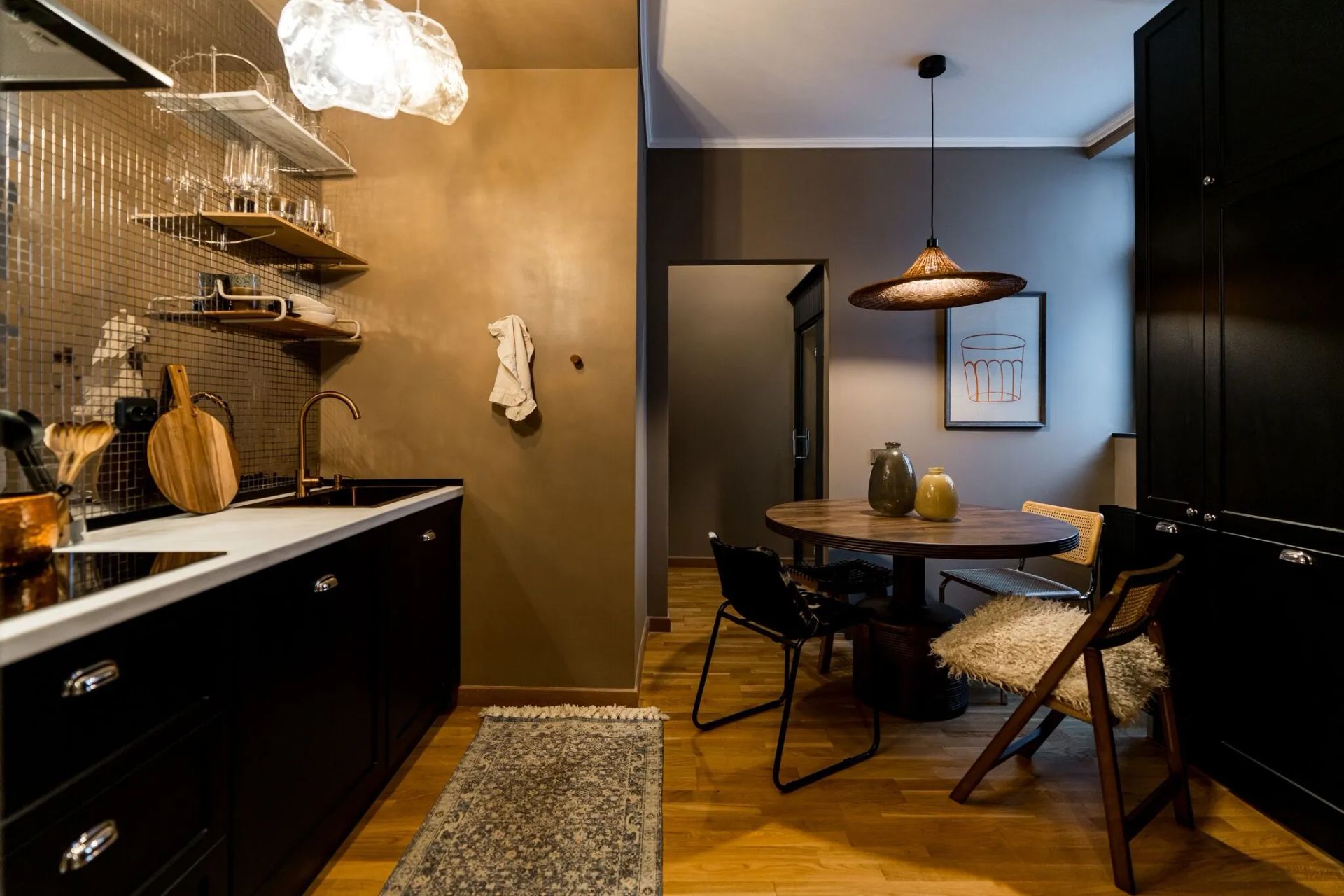
Urban Deluxe Apartments București
Cuplurile și călătorii în interes de serviciu se vor simți bine la Urban Deluxe Apartments București, situat pe strada Calea Victoriei din capitală. Acest apartament de trei stele oferă saună și cadă cu hidromasaj pentru momente de relaxare profundă, alături de Wi-Fi gratuit, lift și fier de călcat. Spațiul este dotat cu pat matrimonial, lenjerie fină, bucătărie dotată complet și zonă dedicată pentru lucru, iar accesul se face autonom pentru confortul dumneavoastră. Curtea mare și grădina amenajată aduc un plus de liniște în mijlocul aglomerației urbane, oferind un spațiu generos pentru odihnă în aer liber. Televizorul smart cu servicii de streaming este disponibil pentru serile relaxante, iar asistența rapidă din partea gazdei asigură o experiență fără griji pe toată durata șederii. În vecinătate puteți vizita Palatul Parlamentului, Palatul Regal, Catedrala Mântuirii Neamului, Muzeul Țăranului Român și Muzeul Național de Istorie Naturală Grigore Antipa. Locația de pe Calea Victoriei vă permite să ajungeți ușor la aceste obiective turistice și să explorați centrul orașului. Vă așteptăm la Urban Deluxe Apartments București.
FROM
230 lei per night

Apartment · 3 stars
București, Bucharest · 0.1 km
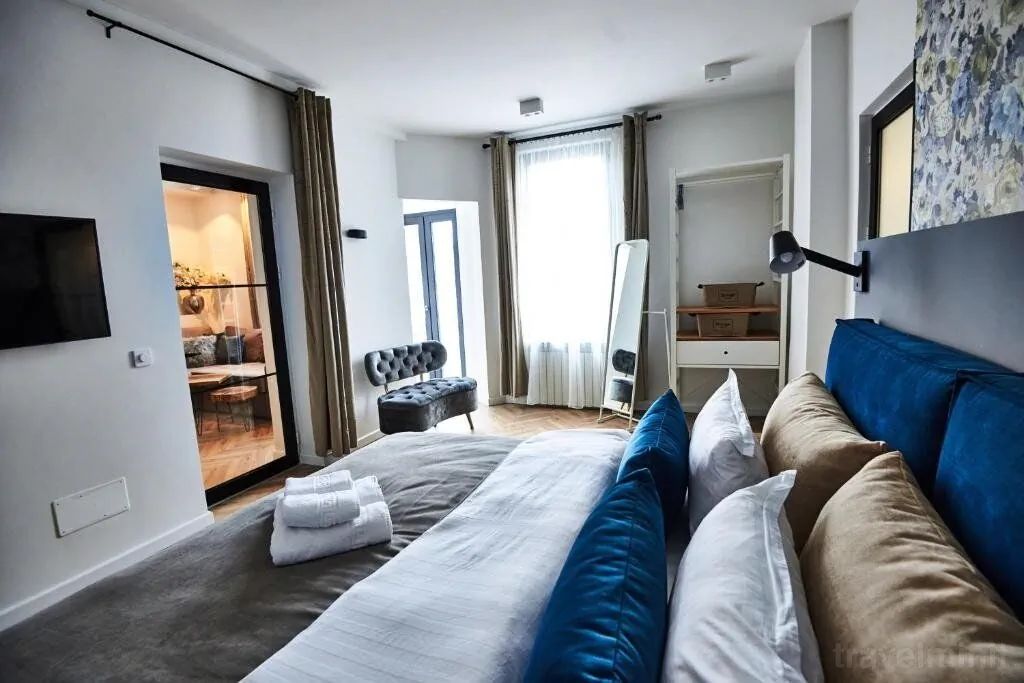
Metropole Apartments Royal Residence București
Familiile și grupurile de prieteni se vor simți bine în Metropole Apartments Royal Residence București, un apartament clasificat cu trei stele situat în centrul capitalei. Cele două camere confortabile și bine amenajate oferă un spațiu potrivit pentru un sejur relaxant împreună, într-un mediu primitor și funcțional. Unitatea pune la dispoziție aer condiționat și Wi-Fi gratuit, facilități esențiale pentru confortul dumneavoastră zilnic. De asemenea, aveți la dispoziție fier de călcat, ascensor și seif pentru păstrarea în siguranță a obiectelor de valoare. Fiecare cameră include grup sanitar propriu, iar plata se poate realiza prin numerar, card bancar, transfer bancar sau voucher de vacanță. În vecinătate puteți descoperi atracții deosebite precum Palatul Parlamentului, Palatul Regal, Catedrala Mântuirii Neamului, Muzeul Țăranului Român și Muzeul Național de Istorie Naturală Grigore Antipa. Aceste obiective culturale și istorice importante completează perfect șederea dumneavoastră în București și vă invită la plimbări pline de descoperiri prin oraș. Vă așteptăm să vă cazați aici și să porniți apoi spre explorarea Palatului Parlamentului.
FROM
230 lei per night
Apartment · 3 stars
București, Bucharest · 0.2 km
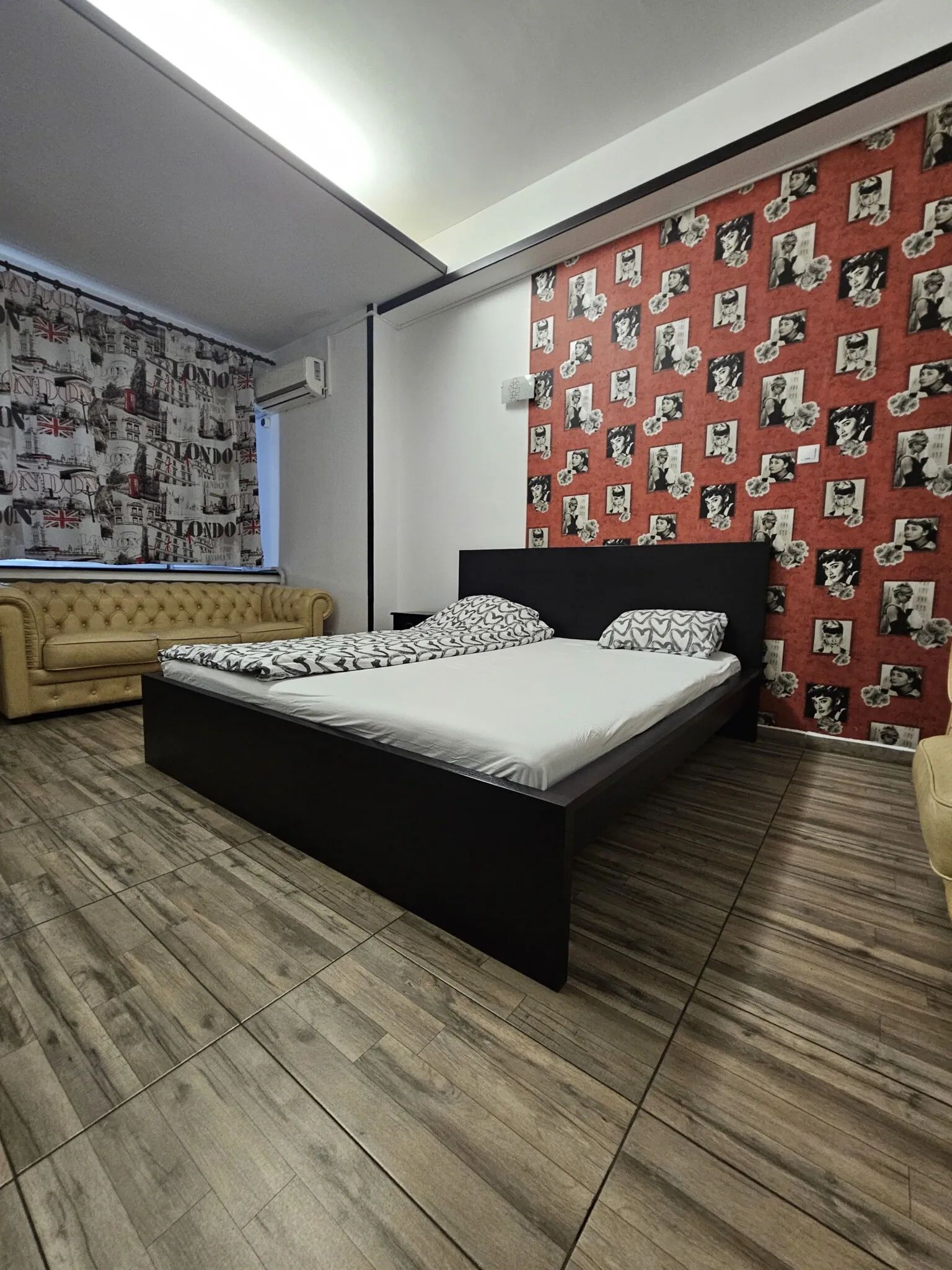
Apartament Central Class București
Pe bulevardul Nicolae Bălcescu din București se află Apartament Central Class București, o unitate de cazare clasificată cu trei stele, situată la etajul patru al unui imobil. Spațiul oferă condiții potrivite atât pentru călătoriile de afaceri, cât și pentru explorarea capitalei, fiind amplasat într-o zonă centrală care facilitează deplasările în oraș și accesul rapid la principalele puncte de interes. Apartamentul beneficiază de Wi-Fi gratuit, lift, fier de călcat și un depozit pentru bagaje. În incintă funcționează o cafenea, iar accesul se realizează prin self-checking, ceea ce oferă flexibilitate la sosire și plecare, fără restricții de program, astfel încât dumneavoastră vă puteți organiza șederea după propriul program. În apropiere se pot vizita Palatul Parlamentului, Palatul Regal, Catedrala Mântuirii Neamului, Muzeul Țăranului Român și Muzeul Național de Istorie Naturală Grigore Antipa. Aceste obiective culturale și istorice importante din capitală sunt ușor accesibile, astfel încât dumneavoastră aveți la dispoziție numeroase opțiuni pentru timpul liber. Vă așteptăm să vă bucurați de șederea dumneavoastră în București.
FROM
230 lei per night
Apartment · 3 stars
București, Bucharest · 0.2 km
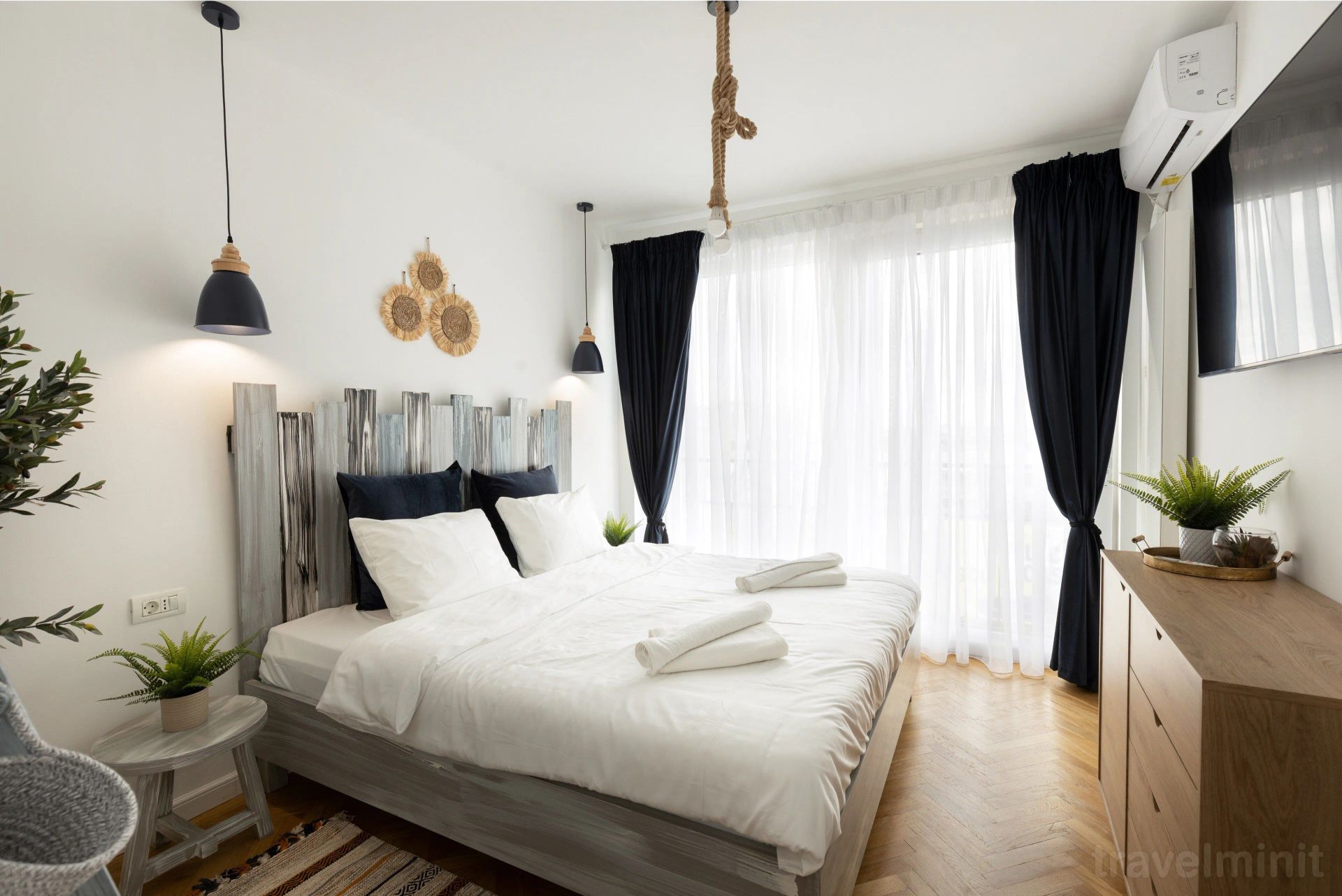
Metropole Apartments Panoramic Ateneum București
Comfort, relaxation and stunning views, all just steps away from the main attractions.
FROM
230 lei per night
Hotel · 4 stars
București, Bucharest · 0.2 km
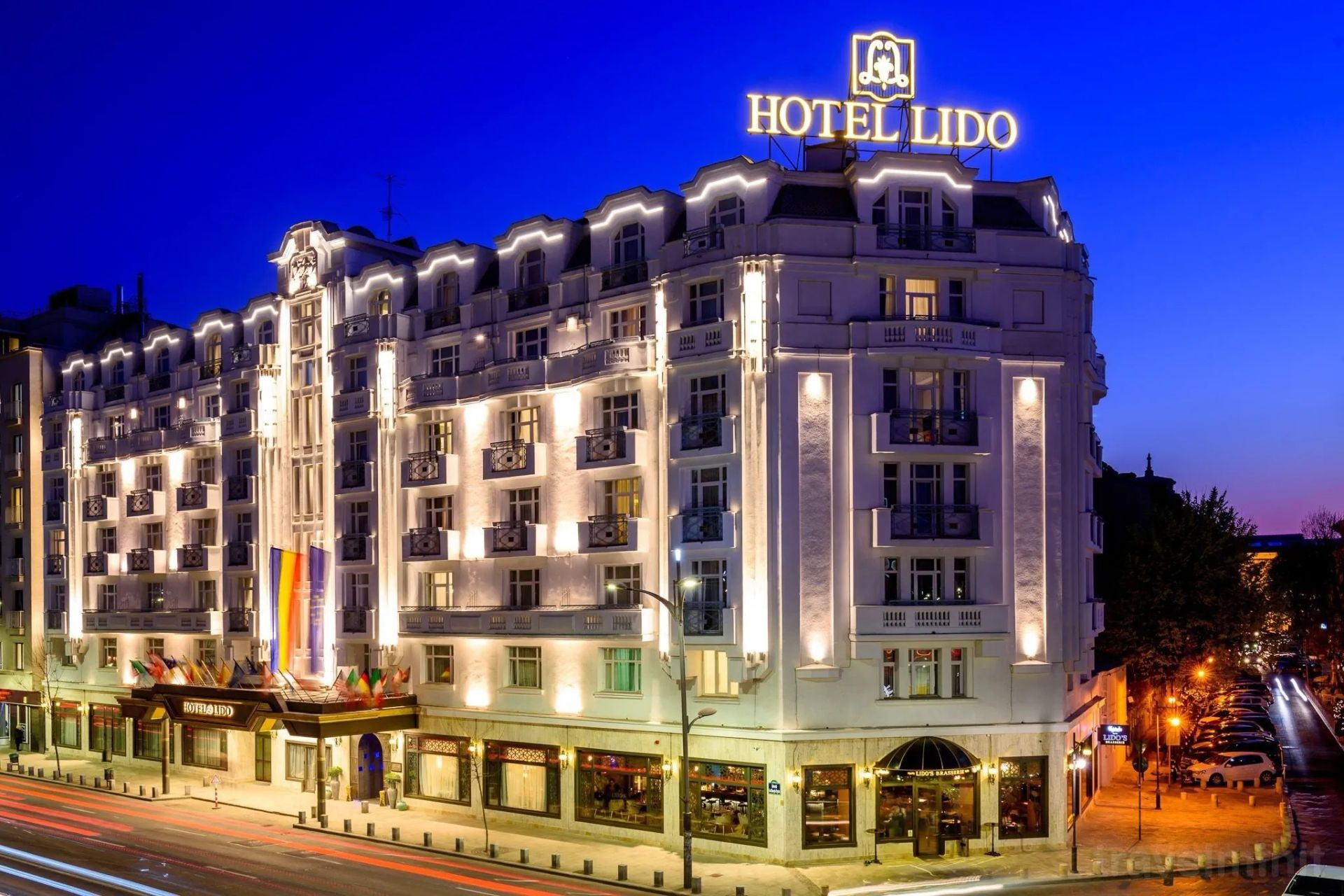
Hotel Lido by Phoenicia București
O zi petrecută aici începe cu aer proaspăt din grădina amenajată și un mic dejun servit prin room service, la Hotel Lido by Phoenicia București. Vă așteaptă un spațiu unde confortul modern se îmbină cu eleganța istorică a capitalei. Camerele beneficiază de aer condiționat, Wi-Fi gratuit și seif pentru obiectele personale. Pentru familiile cu copii mici, sunt disponibile pătuțuri pentru bebeluși și scaune înalte, iar liftul facilitează deplasarea cu bagajele. Aveți la dispoziție și fier de călcat pentru a vă pregăti impecabil pentru ieșiri. După o zi plină, vă puteți menține în formă în sala de fitness sau vă puteți relaxa cu servicii de masaj. Cafeneaua din incintă oferă un loc plăcut pentru o cafea, iar curtea mare reprezintă un refugiu liniștit în mijlocul orașului. Depozitul pentru bagaje vă permite să lăsați valizele în siguranță pe toată durata șederii. În apropiere puteți descoperi Palatul Parlamentului, Palatul Regal, Catedrala Mântuirii Neamului, Muzeul Țăranului Român și Muzeul Național de Istorie Naturală Grigore Antipa. Aceste obiective culturale și istorice importante completează perfect programul dumneavoastră de vizitare a orașului. Hotelul se află pe bulevardul General Gheorghe Magheru 5-7, oferind acces direct și facil către centrul Bucureștiului și principalele zone de interes.
FROM
420 lei per night
Apartment · 3 stars
București, Bucharest · 0.2 km
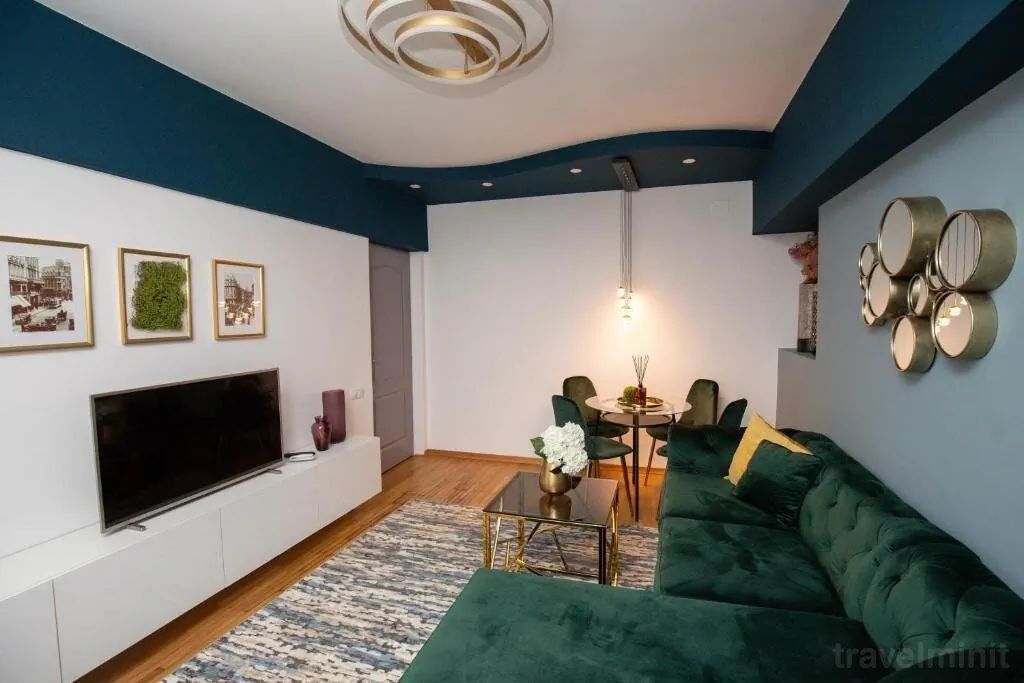
Metropole Apartments Centrum București
Apartament de închiriat cu 3 stele în București, situat pe bulevardul General Gheorghe Magheru, la etajul 9. Spațiul oferă condiții moderne pentru un sejur confortabil în capitală, într-o zonă centrală bine conectată cu rețeaua de transport public și principalele puncte de interes ale orașului. Unitatea pune la dispoziția dumneavoastră Wi-Fi gratuit, aer condiționat, fier de călcat, lift și seif. Aceste facilități asigură atât siguranța bunurilor dumneavoastră personale, cât și confortul necesar pe toată durata șederii, indiferent de anotimp sau de scopul vizitei dumneavoastră. În imediata apropiere se află Palatul Parlamentului, Palatul Regal, Catedrala Mântuirii Neamului, Muzeul Țăranului Român și Muzeul Național de Istorie Naturală Grigore Antipa. Astfel, aveți ocazia să vizitați cele mai reprezentative monumente istorice și instituții culturale ale Bucureștiului, fără să parcurgeți distanțe mari de la locul de cazare. Locația centrală vă permite să explorați cu ușurință centrul vechi al orașului, zonele comerciale și restaurantele din zonă, având la îndemână toate serviciile și atracțiile necesare unui sejur plăcut și reușit în capitala României. Vă așteptăm la Metropole Apartments Centrum București.
FROM
230 lei per night
BEFORE YOU HIT THE ROAD
Weather conditions in Bucuresti
Local forecast for Romanian Athenaeum, Bucuresti, București

Real-time updated weather data
Much more to explore in this area
Nearby tourist attractions


Bucuresti, Bucharest
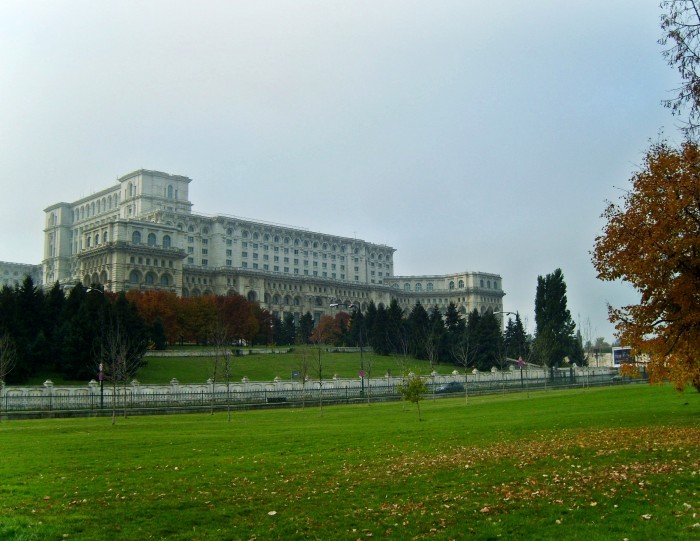
Palace of the Parliament
Situat pe strada Izvor nr.3, sector 5, localitatea Bucuresti; in perioada comunista a fost cunoscut sub numele de "Casa Poporului"; considerata una dintre cele...
1.7 km

București, Bucharest
People's Salvation Cathedral (National Cathedral of Romania)
Catedrală ortodoxă din București
2.0 km
Bucuresti, Bucharest
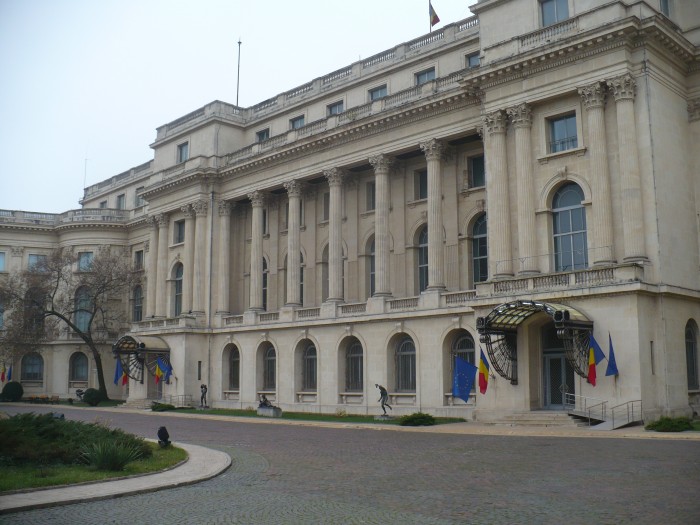
Royal Palace of Bucharest
Situat pe Calea Victoriei nr. 49-53, sector 1, localitatea Bucuresti; construit intre anii 1812-1815 a apartinut marelui logofat Dinicu Golescu, dar a fost...
0.2 km
Bucuresti, Bucharest
Dimitrie Gusti National Village Museum
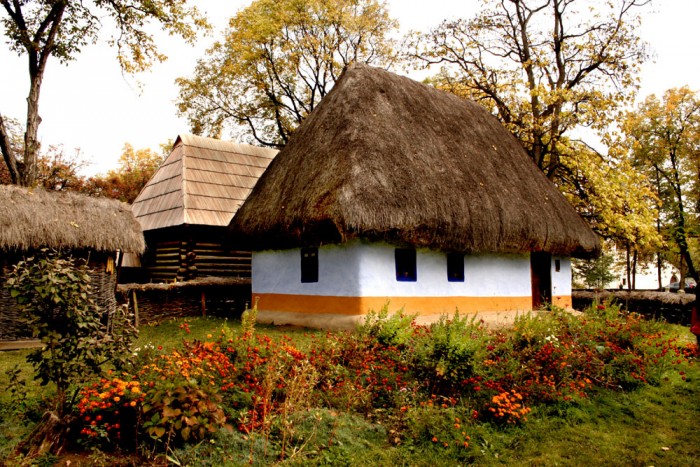
Situat pe Soseaua Kiseleff nr.28-30, sectorul 1; a fost inaugurat in 1936; expozitia permanenta cuprinde 121 de complexe distincte, totalizand 338 de monumente,...
3.7 km

Bucuresti, Bucharest
Romanian Peasant Museum (Muzeul Național al Țăranului Român)
Situat pe soseaua Kiseleff nr.3, sector 1, localitatea Bucuresti; constructia intregului edificiu a durat 29 de ani, fiind finalizat in 1941; cladirea muzeului...
1.9 km

Bucuresti, Bucharest
Cotroceni Palace
Situat pe bulevardul Geniului nr.2, sector 6, localitatea Bucuresti; in anul 1679, domnitorul Serban Cantacuzino incepe constructia unei manastiri; opera sa a...
2.9 km

Bucuresti, Bucharest
Grigore Antipa National Museum of Natural History
Situat pe soseaua Kiseleff nr. 1, sector 1, localitatea Bucuresti; fondat in 1834 la initiativa lui Mihalache Ghica; are un bogat patrimoniu format din...
0.9 km
Bucuresti, Bucharest
Patriarchal Palace
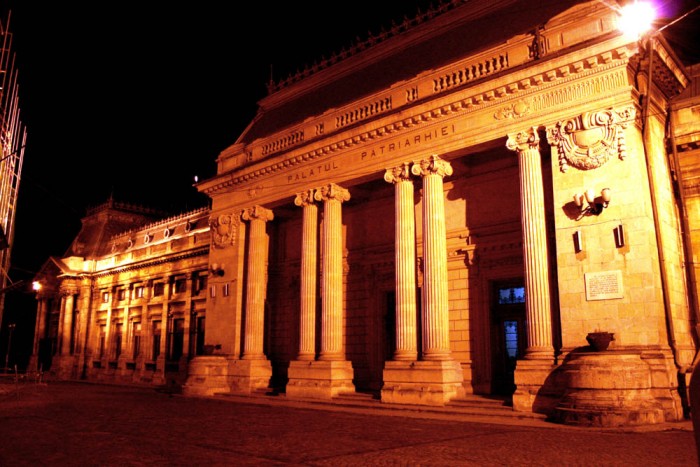
Situat pe aleea Dealul Mitropoliei nr.25, sector 4, localitatea Bucuresti; construit de statul roman, la inceputul secolului al XX-lea, pe locul fostei sali a...
1.8 km

Bucuresti, Bucharest
National Museum of Romanian History
Situat pe Calea Victoriei nr.12, sector 3, localitatea Bucuresti; adapostit de Palatul Postelor; a fost inaugurat in anul 1970 fiind cel dintai muzeu de...
1.1 km
Bucuresti, Bucharest
National Museum of Art of Romania
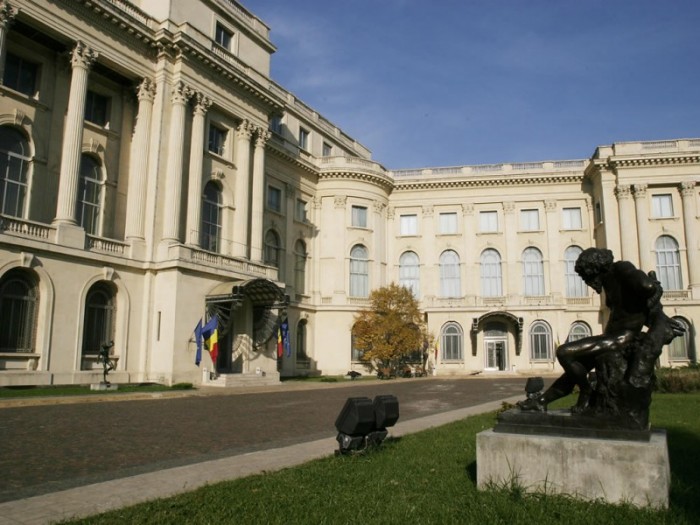
Situat pe Calea Victoriei nr. 49-53, sector 1; deschis in 1948, in vremea lui Alexandru Ioan Cuza;cladirea era pe atunci locuinta domneasca, in timpul lui...
0.2 km

1.4 km
Bucuresti, Bucharest
Cantacuzino Palace
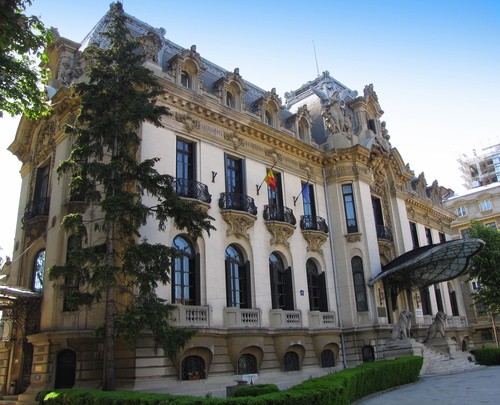
Situat pe Calea Victoriei nr.141, sector 1, localitatea Bucuresti; construit intre anii 1898-1900, in stil baroc francez al epocii Ludovic al XVI-lea, pentru...
0.2 km
Cultural life and traditions
Events in the Romanian Athenaeum area
Medieval festivals, traditional fairs, concerts and local activities recommended in Muntenia (Wallachia).

History and Royal Architecture

Bucuresti, County of București
Days of Royalty and Heritage in the Prahova Valley
Historical conferences open to the public, themed tours of royal architecture, documentary screenings and exhibitions of vintage photographs.
WHEN
May 10-12, 2026


Gastronomy and Oenology
Dealu Mare, County of București
The Prahova Wine Festival on the Wine Route
Guided tastings of Fetească Neagră along the famous Wine Route, visits to historic wineries, and meetings with leading winemakers.
WHEN
Every weekend (September - October)
Hiking and Adventure
Bucegi Mountains, București County
Guided Mountain Tour in the Bucegi Mountains
Guided mountain tours led by mountain rescue personnel to iconic panoramic viewpoints and spectacular alpine waterfalls.
WHEN
Daily during the season (June - October)
On foot, exploration gains depth
Discover the surroundings and local geography
Explore the trails, terrain, and natural landmarks around Romanian Athenaeum.

Guides and practical tips
Useful travel articles
Travel guides, practical recommendations and tourist itineraries for Muntenia (Wallachia).

Tourist guide
Top 5 Atracții Turistice și Trasee Montane în Zona Moieciu - Bran
Descoperă cele mai spectaculoase peisaje carstice, chei adânci și cetăți medievale din imediata apropiere a stațiunii Moieciu.

Tourist guide
Ghid de Drumeție: Traseul Moieciu de Sus spre Platoul Bucegi
Un itinerariu montan de o frumusețe rară ce urcă din Valea Băngăleasa spre Poiana Guțanu și crestele maiestuoase ale Bucegilor.

Tourist guide
Castelul Bran: Istorie, Legende și Secrete Medievale
Află adevărata poveste a fortăreței medievale din Pasul Bran, reședința de suflet a Reginei Maria a României.
THE JOURNEY STARTS WITH AN IDEA
The next story is on the way.
From the first stop to the last stay, make room for a new Romania.
