


CASTLE · TRANSYLVANIA
Sarmizegetusa Regia Fortress

Hunedoara, Hunedoara County
Add location to your trip planner.

Practical access information

VISITING HOURS
Consultă programul local de vizitare

TICKET PRICE
Informații disponibile la casierie

RECOMMENDED VISIT DURATION
1 - 2 ore
Sources and external references
Wikipedia Encyclopedia (EN)
Visitor information and guide
 Navigate with Google Maps

ABOUT SARMIZEGETUSA REGIA FORTRESS
Captivating Introduction and Universal Value
In the heart of the Orăștie Mountains, hidden among ancient beech forests at an altitude of 1,200 meters, stands a silent fortress that witnessed the birth and fall of one of the most fascinating civilizations of ancient Europe: Sarmizegetusa Regia, the royal capital of the Dacians. This archaeological site, inscribed since 1999 on UNESCO's prestigious World Heritage List as part of the "Dacian Fortresses of the Orăștie Mountains" ensemble, represents not only an exceptional monument of pre-Roman military and religious architecture, but also a meeting point of the great cultural currents that have crossed the European continent over the millennia.
For the cultivated European traveler, Sarmizegetusa Regia offers a unique experience: it is the place where the Thracian tradition met the Hellenistic influences coming from the Greek world, where the military technique of the Celtic world from Western Europe merged with the Eastern spirituality of the Scythians from the North Pontic steppes, and where, ultimately, the destiny of a vigorous civilization was played out in the face of the greatest military power of antiquity – Trajan's Roman Empire. The ruins that stretch today on the slopes of Grădiștea Hill in the village of Grădiștea de Munte, Hunedoara County, are not just old stones from two millennia ago, but silent testimonies of a world that fundamentally contributed to the formation of the cultural identity of South-Eastern Europe and, by extension, of the entire continent.
The universal value of this site is recognized by UNESCO through criteria (ii), (iii), and (iv), highlighting the unique fusion of military techniques from the classical world with those of late Iron Age Europe, the exceptional level of socio-economic development achieved by the Geto-Dacian kingdoms in the last millennium BC, and the fact that the Dacian fortresses represent remarkable examples of the fortified settlement type – "hill-fort" and "oppidum" – characteristic of Europe in the Iron Age. In this sense, Sarmizegetusa Regia can be seen as a true "Stonehenge of the Carpathians", a sacred and military complex that rivals in complexity and mystery the great megalithic monuments of Western Europe, such as those on the British Salisbury Plain or on the island of Malta.
Historical Roots and Major European Connections
The Thracian World and the Balkan Context
To fully understand the significance of Sarmizegetusa Regia, we must go back in time by more than two millennia, into the world of the Thracians – a vast Indo-European people that populated the Balkans and the areas adjacent to the Carpathians. The Dacians, the northern inhabitants of this great Thracian nation, were linguistically and culturally related to the Thracians south of the Danube, to the Getae of the Romanian Plain, and to the Thracian tribes of the Balkan Peninsula. Ancient authors – Herodotus, Strabo, Dio Cassius, or Trogus Pompeius – considered the Dacians and Getae to be "the same people", speaking the same language and sharing the same religious and military traditions.
This belonging to the great Thracian family places Sarmizegetusa Regia in a vast European context, stretching from the Balkan Peninsula to the Carpathian Mountains. The circular and rectangular temples of Sarmizegetusa find their parallels in the Thracian sanctuaries discovered in present-day Bulgaria – at Perperikon, Tatul, or Sveshtari – highlighting a common sacred architectural tradition that crossed the entire Thracian space. At the same time, the Dacians were influenced by neighboring civilizations: from the Scythians of the North Pontic steppes they adopted elements of "animal style" art and advanced metallurgical techniques, while commercial contacts with the Greek world from the colonies on the Black Sea coast (Histria, Tomis, Callatis) brought them knowledge of astronomy, geometry, and monumental architecture.
Dialogue with the Celtic World and Comparisons with European Oppida
A fascinating aspect of Dacian civilization, revealed by modern archaeological research, is the cultural dialogue with the Celtic world of Central and Western Europe. In the 2nd–1st centuries BC, Celtic tribes – particularly the Boii of Bohemia and the Scordisci of the Danube area – penetrated into Transylvania, leaving behind significant influences on art, metallurgy, and, not least, on fortification techniques. This interaction explains the surprising parallels between the Dacian walls – built in the unique "murus dacicus" technique – and the "murus gallicus" of the Celtic fortresses (oppida) of Gaul, Germany, or Britain.
Both the Dacians and the Celts developed in the Late Iron Age a type of fortified settlement on heights – "hill-fort" in the Celtic world, "hilltop fortress" in the Dacian world – that combined military function with religious and economic ones. UNESCO explicitly recognizes this European affiliation, emphasizing that the Dacian fortresses of the Orăștie Mountains are "remarkable examples of this type of defended site, characteristic of Europe in the Late Iron Age". Thus, Sarmizegetusa Regia can be placed in parallel with the famous Celtic oppida of Bibracte (France), Manching (Germany), or Danebury (Great Britain), all representing centers of military, economic, and spiritual power of the barbarian world on the threshold of the Roman era.
Confrontation with the Roman Empire: Decebalus and Trajan
The climactic moment in the history of Sarmizegetusa Regia – and, in a certain sense, of the entire history of the Dacians – was the military confrontation with the Roman Empire, the greatest power of the ancient world. In the 1st century AD, under the reign of King Decebalus (87–106 AD), the Dacian kingdom reached its territorial and military apogee, becoming a serious threat to the Roman province of Moesia south of the Danube. The Daco-Roman Wars (101–102 and 105–106 AD), waged under Emperor Trajan, represented one of the most dramatic episodes of Roman imperial expansion, involving no fewer than 13 legions and culminating in the conquest of the Dacian capital and the suicide of Decebalus.
This confrontation was not just a military episode, but a moment of encounter between two worlds: the organized, technological, and bureaucratic world of Rome – heir to Etruscan, Greek, and Oriental traditions – and the "barbarian" but sophisticated world of the Dacians, with millennial military and religious traditions. Trajan's Column in Rome, a monument unique in the world for its dimensions and narrative detail, immortalizes this epochal struggle, depicting the siege of the Dacian fortresses, the construction of bridges over the Danube by the architect Apollodorus of Damascus, and, finally, the fall of Sarmizegetusa and the death of Decebalus. Today, the relief of this column – located in Trajan's Forum in Rome – offers the European visitor a direct bridge between the Dacian capital in the mountains and the heart of the Roman Empire, highlighting that Sarmizegetusa Regia was, indeed, a crucial point in the history of ancient Europe.
After the conquest, the Romans founded about 40 kilometers away a new capital, Colonia Ulpia Traiana Augusta Dacica Sarmizegetusa (today the village of Sarmizegetusa in Hunedoara County). Emperor Hadrian wanted this new capital to be perceived as a legitimate successor to the Dacian one, adding the name "Sarmizegetusa" to it. Thus, the memory of the Dacian capital survived in Roman toponymy, and the ruins of Ulpia Traiana can be visited today, only an hour's drive from Sarmizegetusa Regia, offering a complete picture of the transition from the Dacian to the Roman world.
Transylvania in European History: From the Habsburgs to Austria-Hungary
The geographical context of Sarmizegetusa Regia – Transylvania, in Hunedoara County – places this site in a region that, over the centuries, has been a true "European mosaic". After the fall of Dacia in 106 AD and the Roman withdrawal in 271 AD under Aurelian, the territory passed through periods of Gothic, Hunnic, Gepid, Avar, and Slavic domination, until in the 10th century it came under the rule of the Hungarian tribes. The Kingdom of Hungary, founded by Stephen I in the year 1000, included Transylvania in its feudal structure, and in the 12th–13th centuries, Saxon (German) colonists were brought to the region by the kings of Hungary to develop mining and agriculture, leaving behind fortified cities such as Sibiu, Brașov, Sighișoara, or Bistrița – monuments of Central European Gothic and Renaissance architecture.
In the 16th–17th centuries, Transylvania became a semi-independent principality, a vassal of the Ottoman Empire, but with dynastic and diplomatic ties to the Habsburg Monarchy. After the defeat of the Turks at Vienna in 1683 and the Treaty of Karlowitz (1699), the region came under direct Habsburg rule, becoming part of the Austrian Empire and then of Austria-Hungary (1867–1918). This long period of Habsburg domination left deep traces in the architecture, administration, and culture of the region, Transylvania becoming one of the most diverse and fascinating territories of Central Europe.
Thus, the visitor who arrives today at Sarmizegetusa Regia finds themselves in a place where successive layers of European history meet: from the temples of the Dacians, they pass through the Roman ruins of Ulpia Traiana, admire the fortified churches and Saxon fortresses of the Middle Ages and the Renaissance, to finally reach the industrial and urban complexes of the 20th century. This historical continuity makes the Hunedoara region a true "open-air museum" of Europe.
Architectural Masterpiece and Artistic Heritage
The "Murus Dacicus" Technique – Innovation in European Military Architecture
The heart of Sarmizegetusa Regia fortress is its imposing fortification, built in the unique technique known as "murus dacicus" – the Dacian Wall. This construction method, developed by Dacian builders before the Roman conquest, represents a remarkable synthesis between indigenous tradition and technical influences from the Greek and Roman world, being considered by UNESCO as "a unique fusion of military architecture techniques and concepts from inside and outside the classical world".
The Dacian wall consists of two parallel outer faces, made of massive stone blocks (limestone or andesite) shaped as parallelepipeds, laid without mortar – a "dry masonry" technique similar to the Cyclopean one of Mycenae or Tiryns, but with its own particularities. The space between the two faces – with a thickness of approximately 3 meters – is filled with gravel and crushed stone cemented with clay, compacted using the "rammed earth" technique. The genius element of this construction consists of the horizontal wooden beams, treated by burning (carbonization) for resistance, which cross the structure at each level and are fixed in the stone blocks through dovetail joints. This wooden reinforcement gives the wall exceptional flexibility, allowing it to absorb and dissipate the kinetic energy of projectiles launched by siege engines – a decisive advantage over rigid, monolithic walls, such as the Mycenaean or Roman ones.
The height of the fortress walls reached 4–5 meters at the time of completion of construction, and on certain sections, in the reconstruction period between the two wars with Trajan, they reached even 10 meters. The configuration of the fortress – a hexagon with unequal sides, perfectly adapted to the rocky terrain – covers an area of approximately 30,000 square meters (3 hectares) and is organized on five successive terraces, each with specific functions: from the upper terrace, intended for the nobility's residences and the king's seat, to the lower terraces, reserved for crafts and storage.
The Sacred Complex: Temples, Astronomy, and the "Romanian Stonehenge"
To the east of the main gate of the fortress, at a distance of about 100 meters, stretches the sacred zone – an impressive ensemble of sanctuaries that represents one of the most important achievements of pre-Roman religious architecture in Europe. These temples, connected to the fortress by a "Via Sacra" paved with andesite, a processional road covered with shingles and bordered by white limestone curbs, demonstrate a sophisticated understanding of geometry, astronomy, and religious ritual.
The most spectacular constructions are the two circular sanctuaries, of which the Great Circular Sanctuary – with a diameter of almost 30 meters – has fascinated entire generations of researchers and visitors. This monument, completely discovered in the 1950s by archaeologist Constantin Daicoviciu, consists of a circle of andesite pillars (volcanic stone brought from tens of kilometers away) and an outer ring of slabs, surrounding in the center 68 thicker pillars. Initially, Daicoviciu interpreted this monument as a "stone calendar" with 360 days, based on the number of peripheral pillars divided into 60 groups of 6. Although this theory was later contested by more recent research, it contributed enormously to the popularization of the site and reflects, in a way, the correct intuition that the sanctuary had an astronomical and calendrical function.
Modern research has shown that the circular sanctuary was astronomically aligned, with the pillars arranged so as to mark the solstices and equinoxes, being used for measuring time and for religious ceremonies related to the solar cycle. This astronomical function places Sarmizegetusa Regia in a vast European tradition of "stone circles" and "woodhenges" – from Stonehenge in England, to Newgrange in Ireland, to the megalithic temples of Malta or the alignments of Carnac in Brittany. The "Andesite Sun" – a stone disc carved in the shape of a sun with rays – discovered in the sacred zone, confirms the central role of the solar cult in Dacian religion.
Alongside the circular sanctuaries, the sacred zone also includes seven or eight rectangular sanctuaries (quadrangular temples), with visible column bases in regular arrangements, reminiscent of Greek temple architecture, but with their own particularities. These temples, partially destroyed by the Romans during the wars, were probably dedicated to the supreme god Zalmoxis – a mysterious figure, considered by some a religious reformer similar to Pythagoras, by others a chthonic god of death and immortality. Legend says that Zalmoxis withdrew into a cave for three years, after which he reappeared "resurrected", bringing his people teachings about immortality – a tradition that brings him close to the Eleusinian mysteries of Greece or the Orphic cults.
The Civil Settlement and Archaeological Discoveries
Around the fortress, to the west, stretched a vast civil settlement, covering an area of approximately 3 square kilometers. This "fortress-city" included residential quarters, craft workshops, warehouses, granaries, and water reservoirs, demonstrating a high level of urban and economic organization. The water supply system was particularly advanced for the era: the ceramic pipe brought water to the nobility's residences, proof of a high standard of living and remarkable engineering knowledge.
The archaeological discoveries at Sarmizegetusa Regia have brought to light an extraordinary inventory that attests to the wealth and sophistication of Dacian civilization. Among the most spectacular pieces is the ceramic vessel with the inscription "DECEBALVS PER SCORILO" – discovered in 1954 by archaeologist Ion Horațiu Crișan – a cult vessel one meter high, with a similar diameter, on which the Latin words "Decebalus, son of Scorilo" appear stamped. This inscription, whether in Latin or a transcription in the Dacian language of a proper name, demonstrates that the Dacian elites knew and used writing, at least among themselves. The vessel is today at the National Museum of Romanian History in Bucharest.
Another impressive category of discoveries is represented by the gold and silver hoards: the famous spiral Dacian gold bracelets (13 pieces, weighing almost 13 kilograms in total), discovered in the 1990s–2000s, and the gold coins with the inscription "KOSON" – the name of a Dacian king from the 1st century BC. These hoard pieces, exhibited in the museums of Bucharest, Cluj-Napoca, or in international collections (such as the Museum in Manching, Germany), are masterpieces of Dacian metallurgical art, influenced by Scythian style and Hellenistic art, representing a unique fusion between Thracian tradition and the luxury of the Mediterranean world.
Also, numerous limestone blocks with inscriptions in the Greek language, iron tools (sickles, scythes, mattocks, hoes), glass and painted ceramic vessels demonstrate the diversity and refinement of Dacian material production. The ironworking workshops discovered at the site had produced hundreds of metal artifacts – from agricultural tools to weapons such as daggers, spearheads, and curved swords (falx) – proving a well-developed military industry, capable of arming Decebalus's army in the confrontation with the Roman legions.
Legends, Personalities, and Turning Points
Burebista – The Unifier and Founder
The history of Sarmizegetusa Regia as a center of power truly begins during the reign of Burebista (circa 82/70 – 44 BC), the king who succeeded in uniting the Dacian and Getic tribes into a vast centralized kingdom. Before Burebista, the capital was at Argedava (probably in the area of the Costești-Cetățuie fortress), but the great king moved the center of gravity of the state to Sarmizegetusa, on the "holy mountain", choosing this place for its strategic position, for the natural resources nearby (gold, silver, iron, salt) and, not least, for its sacredness – tradition says that here was "Cogaionon", the sacred mountain where the great priest Deceneus had his residence.
Under Burebista, the Dacian kingdom extended from Moravia (present-day Czech Republic) to the mouths of the Bug (Ukraine), and from the Northern Carpathians to southern Dobrogea, becoming the greatest "barbarian" power on the eastern frontier of the Roman Republic. The Greek historian Strabo wrote that Burebista was "the greatest of all Thracians", and the Romans feared him, knowing that his army could mobilize hundreds of thousands of warriors. The death of Burebista in 44 BC (in the same period as the assassination of Caesar in Rome) led to the disintegration of his empire into five rival kingdoms, triggering a century of civil wars that considerably weakened Dacian power.
Deceneus – The Great Priest and Religious Reformer
The figure of Deceneus (or Deceneus), the great priest and counselor of Burebista, is shrouded in mystery and legend. According to ancient sources, he was considered the "prophet" and "interpreter of dreams", having a spiritual authority that rivaled that of the king. After the death of Burebista, Deceneus continued to conduct the religious affairs of the state, and tradition attributes to him major reforms in the organization of the cult of Zalmoxis and in the hierarchical structure of the Dacian priesthood. It is said that he introduced the solar calendar and organized the sanctuaries of Sarmizegetusa, transforming the capital into a first-rank spiritual center of the Thracian world.
Decebalus – The Last King and Heroic Resistance
The most impressive personality associated with Sarmizegetusa Regia remains, however, Decebalus (87–106 AD), the last king of the independent Dacians. After succeeding in reuniting the Dacian kingdom after the period of fragmentation, Decebalus confronted the expansionist ambition of Rome. In the first war (101–102 AD), although defeated at the Battle of Tapae, Decebalus succeeded in obtaining a relatively honorable peace treaty, receiving in exchange annual subsidies from Rome and Roman military engineers – whom, however, he used to strengthen his own fortifications.
In 105 AD, Decebalus broke the treaty, attacking the Roman province of Moesia, which prompted Trajan to declare the second war (105–106 AD). This time, the emperor organized a massive invasion, crossing the Danube on a huge bridge built by Apollodorus of Damascus at Drobeta (Turnu Severin). The Roman legions advanced systematically, conquering and destroying the Dacian fortresses in their path. The final siege of Sarmizegetusa Regia, described in detail on Trajan's Column, was a dramatic moment: the Romans succeeded in cutting the water pipes that supplied the fortress, and the defenders, exhausted by thirst and hunger, were forced to surrender in the summer of 106.
Decebalus himself fled into the mountains, but being pursued by the Roman cavalry led by Tiberius Claudius Maximus, he committed suicide by cutting his throat, refusing the humiliation of being presented in triumph in Rome. His head was brought to Rome and displayed in the Roman Forum, and his body was thrown into the Tiber, according to tradition. Thus ended the existence of the independent Dacian kingdom, and Sarmizegetusa Regia – once a proud royal capital – was systematically destroyed by the Romans, who installed a military garrison there and began to demolish the walls and temples.
Trajan's Column – The Imperial Memory of a Fall
In Rome, in Trajan's Forum, stands today Trajan's Column – a 30-meter-high monument, made of 20 drums of Carrara marble, with a 190-meter spiral relief depicting 155 scenes from the two Daco-Roman wars. This column, dedicated in 113 AD, is unique in the world for its detail and narrative precision, offering a "comic strip" in stone of the entire military campaign. Among the scenes depicted are the construction of the bridge over the Danube, the battles of Tapae and Adamclisi, the siege of the Dacian fortresses, the burning of villages, and, finally, the suicide of Decebalus and the capture of his treasure.
For today's European visitor, Trajan's Column in Rome and the ruins of Sarmizegetusa Regia form a complete historical diptych: in Rome one sees the imperial victory and political propaganda, and in the mountains of Romania one sees the ruins of a fallen but dignified civilization. This duality – between the glory of Rome and the resistance of the Dacians – is essential for understanding the complexity of European history and the way in which empires and "barbarian" civilizations interacted at the frontiers of the classical world.
Practical Visitor Guide and Today's Tourist Experience
How to Get There and When to Visit
Sarmizegetusa Regia is located in the commune of Orăștioara de Sus, the village of Grădiștea de Munte, Hunedoara County, approximately 40 kilometers southwest of the city of Deva and about 70 kilometers from the city of Sibiu. Access is via the county road DJ107A, paved to the parking lot at the foot of the mountain, from where a pedestrian trail of approximately 20 minutes through the forest leads to the entrance to the site.
The visiting schedule for 2026 varies by season: in the summer period (starting in May), the site is open daily between 9:00 AM and 8:00 PM, while in the autumn period (from September 25), the schedule is reduced, and Monday is the closing day. In the winter period (December–February), access may be restricted due to weather conditions, visiting being possible only for organized groups and with prior approval. It is important to check the updated schedule on the website of the Museum of Dacian and Roman Civilization Deva (mcdr.ro) or the Hunedoara County Council before visiting, as there may be temporary closure periods for restoration works – in 2026 interventions are planned in the area of the 10th Terrace and the fortified enclosure, with restrictions in the period May 4 – June 30 (access only on weekends) and August 4–31 (access only on weekends).
Fees and Facilities
According to Decision no. 310/2025 of the Hunedoara County Council, the entrance fees for the fiscal year 2026 are: 15 lei for adults and 5 lei for pupils, students, and pensioners (with ID). The audio guide, available at the entrance, costs an additional 20 lei and is highly recommended for an in-depth understanding of the site. Parking is free. Free entry is granted on certain special days, such as World Heritage Day (November 15), when guided tours are also organized.
The duration of a complete visit varies between 1.5 and 2 hours, during which the two main trails can be covered: one through the fortified enclosure (the fortress itself, with the murus dacicus walls and the residential terraces) and another through the sacred zone (the circular and rectangular sanctuaries, Via Sacra, the "Andesite Sun"). Appropriate mountain footwear is recommended – hiking boots or sneakers with non-slip soles – because the trails pass over paved stones and forest paths, and in the autumn and spring periods the paths can be slippery.
What You Will See and Feel
The experience of visiting Sarmizegetusa Regia is profoundly emotional and intellectual in equal measure. From the entrance to the fortress, the first contact with the massive walls built in the murus dacicus technique – blocks of limestone or andesite stone, well-shaped, that have resisted for two millennia – offers a feeling of awe at the technical skill of "barbarian" builders whom the Romans considered inferior. Climbing the five terraces, the visitor treads in the footsteps of the Dacian nobility, passes through the areas where the royal residences were located, with their advanced water supply system through ceramic pipes, and gazes at the spectacular panorama of the Orăștie Mountains, the same view that the fortress defenders once had while awaiting Trajan's legions.
The paved road – Via Sacra – leads to the sacred zone, and here the emotion reaches its peak. The Great Circular Sanctuary, with its ring of andesite pillars and the "Andesite Sun" at its center, is a monument that rivals the British Stonehenge in its mystery and spirituality. Standing in the middle of this circular sanctuary, with one's gaze directed toward the sky, the visitor can feel the connection between the ancient world and the present, can understand why this place was considered sacred for centuries and why the Dacians chose it as the capital of their kingdom. The rectangular temples, with their column bases still visible in regular arrangements, evoke the image of a civilization that aspired to greatness, to knowledge, and to communion with the divine.
The Whole Story: The Circuit of the Six Dacian Fortresses
Sarmizegetusa Regia cannot be visited in isolation, but is part of a larger ensemble – the six Dacian fortresses of the Orăștie Mountains, inscribed together in the UNESCO heritage: Sarmizegetusa Regia (the capital), Costești-Cetățuie (the oldest royal residence), Costești-Blidaru (the best-preserved military fortification, with two concentric enclosures and six towers), Luncani-Piatra Roșie, Bănița, and Căpâlna. These fortresses formed the defensive system conceived by Decebalus to protect the capital against the Roman invasion, each having its strategic role in the mountain defense network.
For the European traveler eager to fully understand the significance of Sarmizegetusa Regia, a one-to-two-day circuit is recommended that includes at least the capital and one or two of the satellite fortresses, such as Blidaru (only 8 km away) or Costești-Cetățuie (6 km away). Also, only 40 kilometers to the northeast are the ruins of Ulpia Traiana Sarmizegetusa – the capital of the Roman province of Dacia – where one can see the ruins of the amphitheater, forum, baths, and Roman temples, offering a complete picture of the transition from the Dacian to the Roman world.
Regional Context: Deva, Hunedoara, and Sibiu
Visiting Sarmizegetusa Regia can be complemented by exploring an exceptional cultural triangle of Transylvania. Only 20 kilometers away is Deva, a city with a rich history, where Deva Fortress rises – a medieval fortress with panoramic views – and the Museum of Dacian and Roman Civilization, which houses numerous artifacts discovered in the region, including pieces from the Dacian hoards. 40 kilometers to the southeast is Hunedoara, famous for Hunedoara Castle (Corvin Castle), the largest civil Gothic construction in Romania, associated with the family of John Hunyadi, the great voivode and governor of Hungary, father of King Matthias Corvinus.
Approximately 70 kilometers to the east lies the city of Sibiu, the former European Capital of Culture (2007), with its magnificently preserved medieval historic center, with its three squares – the Large Square, the Small Square, and the Huet Square – and with the "Bridge of Lies", the first cast-iron bridge in South-Eastern Europe. Sibiu, with its Saxon (German), Hungarian, and Romanian influences, represents the multicultural essence of Transylvania, being a living example of the way in which different European cultures coexisted and enriched each other over the centuries.
Recommendations for a Complete Experience
To make the most of visiting Sarmizegetusa Regia, it is recommended to arrive early in the morning, when the sun's light rises over the mountain ridges and when the site is less crowded. A visit in May or September–October offers the best conditions – the vegetation is lush, the temperatures are pleasant, and the colors of the surrounding beech forest are spectacular. The audio guide, available at the entrance, offers detailed information about each monument and helps to understand the complex historical context.
Also, one can consider participating in special events organized in the area, such as the DacFest Festival at Costești (usually held in early autumn), with parades of ancient military costumes, gladiator fights, and Dacian craft workshops, or visiting on the night of Sânziene (June 23–24), when, according to popular tradition, the sacred zone acquires "special powers" and the energy of the place is considered particularly strong.
In conclusion, Sarmizegetusa Regia is not just an archaeological site, but a sacred place of European memory, where the threads of an entire continent's history meet. From the solar temples of the Dacians, to the Roman ruins of Ulpia Traiana, from the medieval walls of the Saxon fortresses, to the Baroque and Neoclassical influences of Habsburg Transylvania, this corner of the world offers the European traveler a journey through time of more than two millennia, an experience that enriches our common understanding of the past and reminds us that Europe is, in essence, a mosaic of civilizations that met, confronted, and enriched each other throughout history.
Media gallery
Discover Sarmizegetusa Regia Fortress in pictures

23 photos · Architecture, courtyards and captivating details


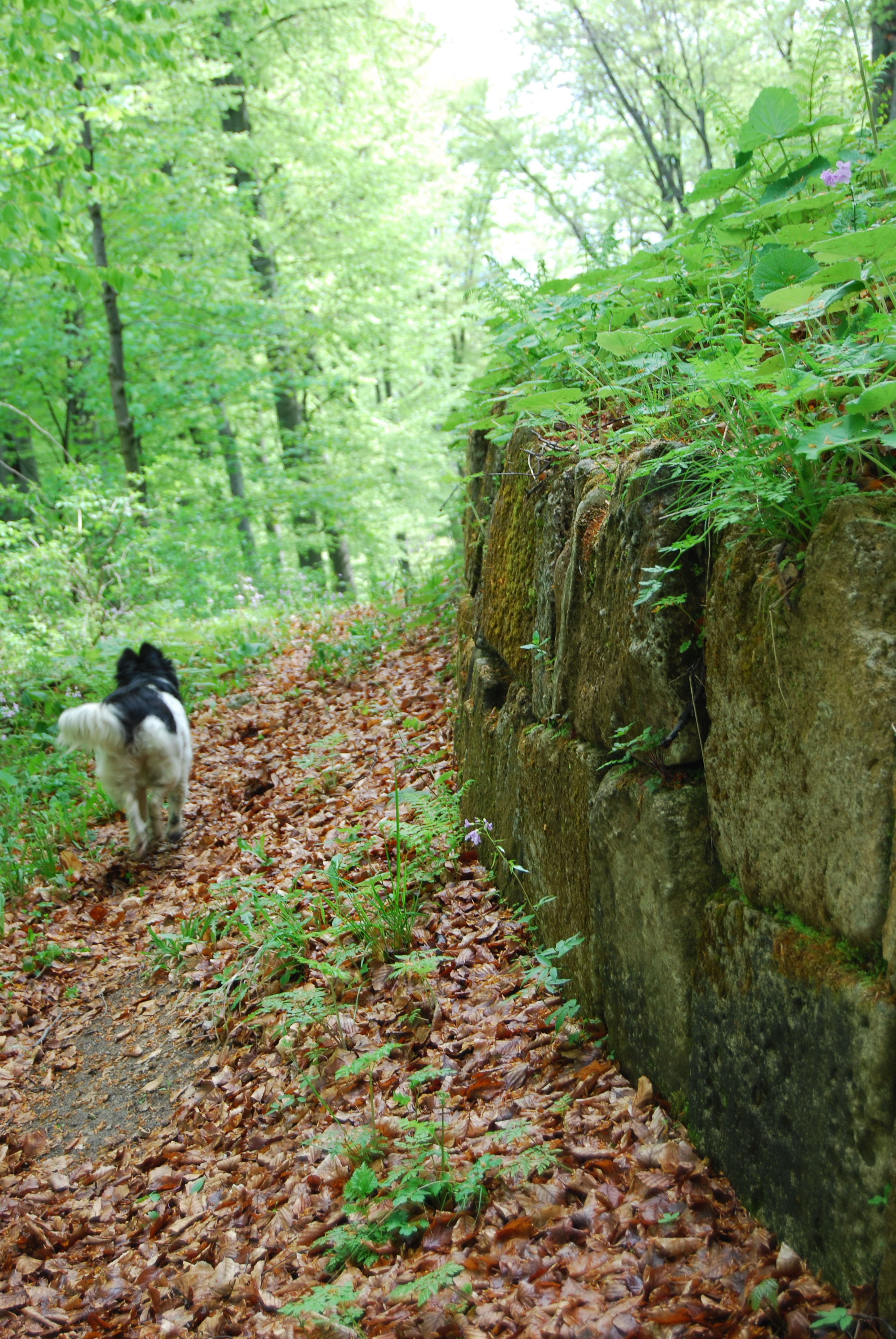


Image source: Wikimedia Commons · Public domain photos · Free license
STAY A FEW DAYS, DISCOVER THE MAGIC
Stays near Sarmizegetusa Regia Fortress

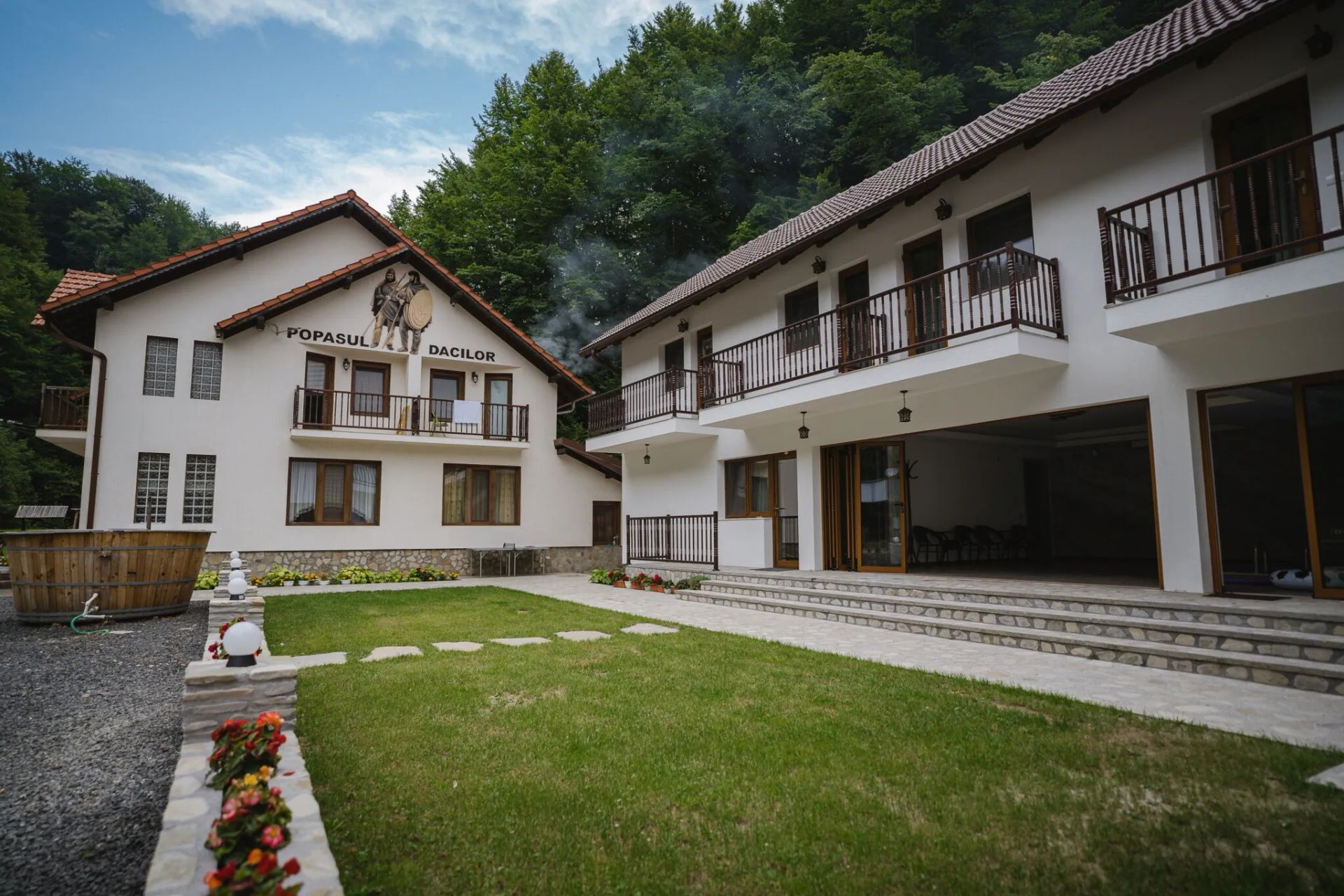
Pensiune · 3 stars

Grădiștea de Munte, Grădiștea de Munte County · 7.4 km
Vila Popasul Dacilor Grădiștea de Munte
A doua noastră pensiune este Popasul Dacilor – Grădiștea, are tot 3 margarete dar am construit-o în mijlocul naturii, la Grădiștea de Munte, în 2013. Pensiunea noastră este mai apropiată de Cetatea Sarmizegetusa Regia – la 5km (iar de Cetatea Fetele Albe la 3km) și mai îndepărtată de cetățile dacice Costești-Cetățuie și Costești-Blidaru. Această pensiune nu este la stradă, ci într-un spațiu verde amplu și mult mai liniștit, la baza dealurilor și a pădurii. Râul Sargetia trece pe lângă marginea curții și puteți asculta mai aproape apă liniștitoare și relaxantă. Zona nu este mult circulată și copiii se pot juca nestingheriți în aerul de munte. Facilitățile Interioroare– Piscină interioară cu apă încălzită și sărata – Camere cu Wifi si TV – Salon modern cu mese mari la parter, încăpător pentru 40 persoane (excelent pentru petreceri private, nunți etc) – Zonă cu canapea în salon / living, cu Wifi și TV – Bucătărie nouă cu facilități moderne unde vă puteți pregăti ce doriți de mâncare – Încălzire pe întreg anul – Puteți comanda masă caldă când doriți Facilitățile Exteriorare– 5 mese mari în curte – Foișoare – Grătar – Curte largă cu verdeață și aer de munte – Parcare în curte – 3 Balansoare mari de lemn – Toată zona verde la dispoziția dumneavostră pentru relaxare – Spațiu de joacă pentru copii – Wifi (vodafone) – Râu chiar lângă curte, cu apă mică și relaxantă (copiii sunt în siguranță).
FROM
240 RON / night

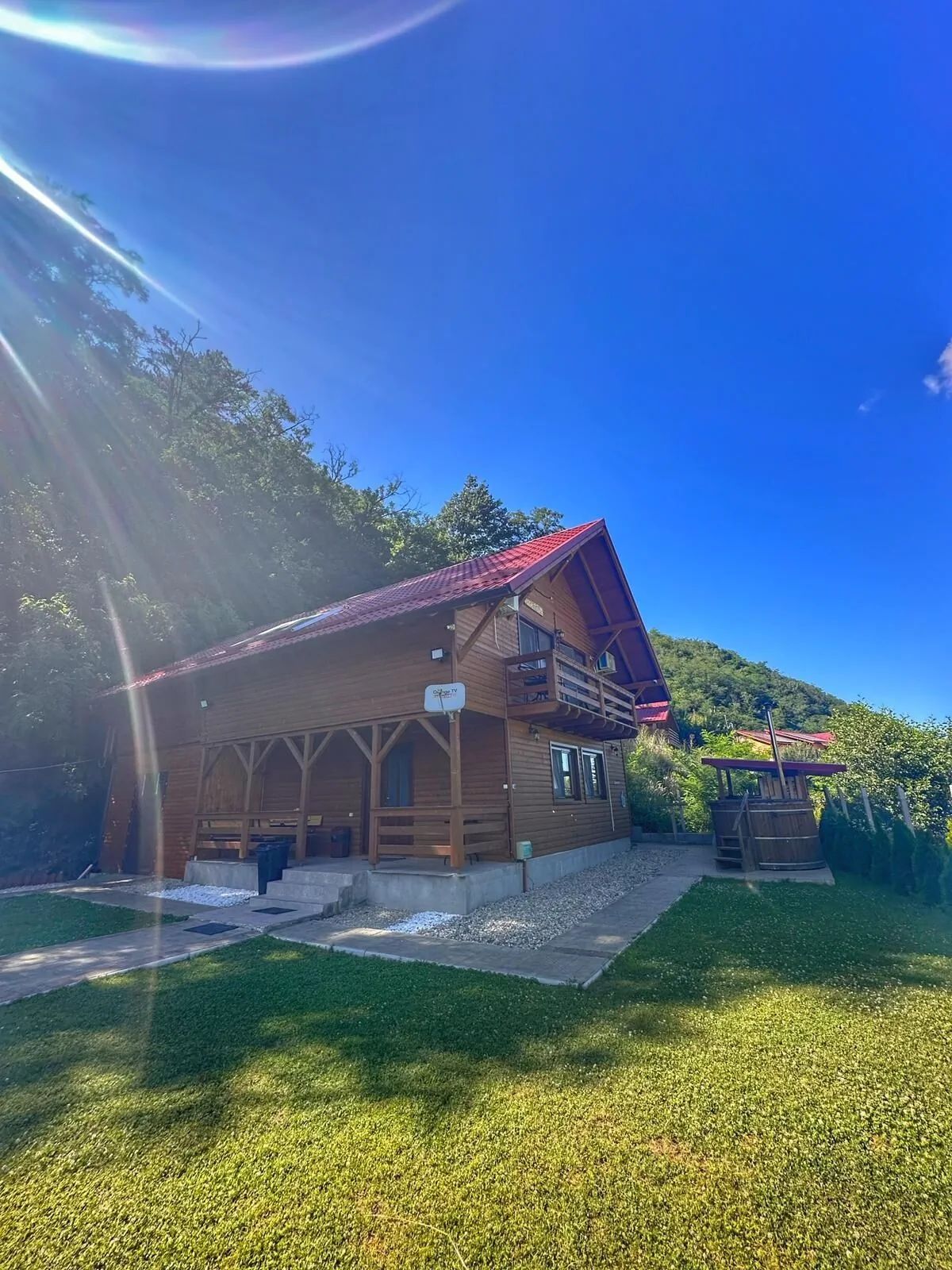
Cabană · 3 stars
Orăştioara de Sus, Orăştioara de Sus County · 13.9 km
Casa Favorit Orăştioara de Sus
Camere, serviciiCasa Favorit Orăştioara de Sus Orăştioara de Sus va ofera o camere frumoasa si eleganta. Unitatea va ofera parcare gratuita. Este o unitate perfecta pentru relaxare deoarece se ofera servicii suplimentare (ciubărul Dacic). Pentru informatii consultati pagina de date. Vi se pune la dispozitie camere dotate cu aer conditionat. Unitatea va pune la dispozitie internet wireless. Daca doriti sa aflati mai multe detalii despre facilitatile disponibile la Casa Favorit Orăştioara de Sus, respectiv despre amenajarea camerelor, va rugam consultati informatiile de mai jos. Servicii de masăTarifele contin numai cazare. PlatăPlata se poate efectua prin urmatoarele modalitati: numerar, card bancar, transfer bancar, card de vacanță, avans travelminit, voucher travelminit. Pentru garantarea ferma a rezervarii se solicita un avans de 30%. Sosire, programZiua de cazare incepe la ora 16:00. Eliberarea camerei se face la ora 12:00. La receptie se vorbeste limba: engleză, română.
FROM
270 RON / night
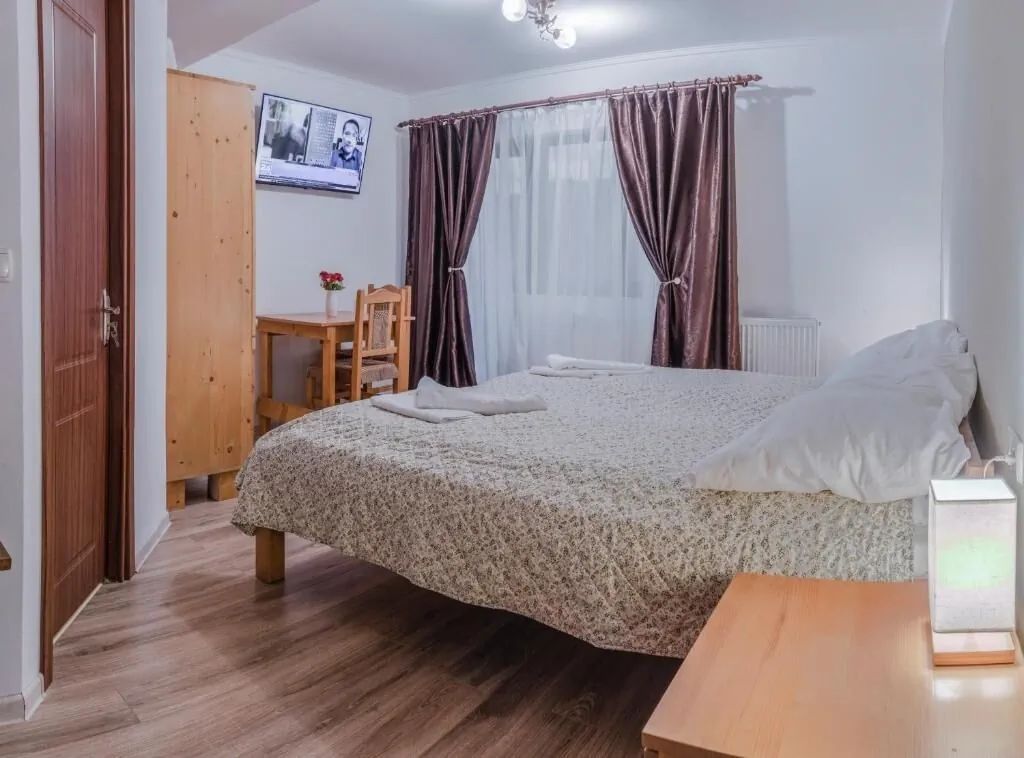
Pensiune · 3 stars
Costeşti, Costeşti County · 13.9 km
Agropensiunea Zamolxis Costeşti
AGROPENSIUNEA ZAMOLXIS se află în Costeşti și pune la dispoziție cazare cu WiFi gratuit și vedere la munte, precum și biciclete gratuite, o grădină și un lounge comun. Această pensiune agroturistică oferă parcare privată gratuită și o bucătărie comună. Această pensiune agroturistică include 6 dormitoare, un living și 6 băi cu un uscător de păr și duș. Această pensiune agroturistică pune la dispoziția oaspeților prosoape și lenjerie de pat.
FROM
240 RON / night
Resort · 4 stars
Costești, Costești County · 14.0 km
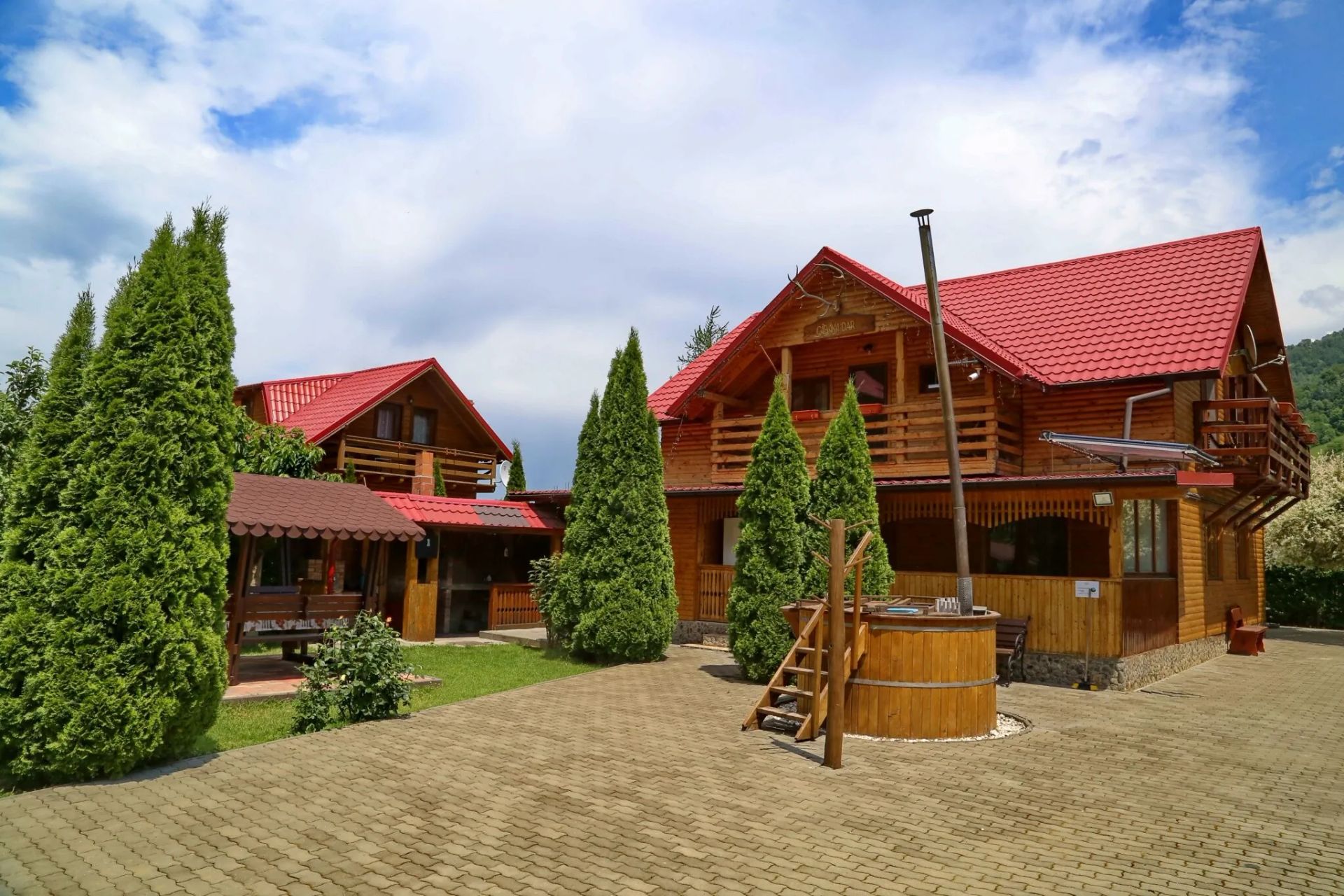
Complex DAR Costești
Complexul Turistic DAR se află în localitatea Costești, Sat De Vacanță, la poalele cetăților dacice Blidaru, Costești, Piatra Roșie, iar în apropiere se află măreața cetate Sarmisegetusa Regia ( capitala Daciei ).Sarmizegetusa Regia a fost capitala și cel mai important centru militar, religios și politic al statului dac înainte de războaiele cu Imperiul Roman.A fost nucleul unui sistem defensiv strategic format din șase fortărețe dacice din Munții Orăștiei, folosit de Decebal pentru apărare contra cuceririi romane.Situl arheologic Sarmizegetusa este situat în satul Grădiștea Muncelului din județul Hunedoara. Complex DAR Costești ofera cazare in 4 cabane placut mobilate si confortabile. Fiecare cabană dispune de bucătărie utilată, living, terasă, spațiu amenajat pentru grătar, ceaun. Pentru grătar este necesar să aduceți dumnevoastră cărbune.Este disponibila o parcare gratuita. Oaspetii pot beneficia de accesul gratuit la internet wireless. La restaurant puteti servi diverse preparate culinare. În sezonul rece, cabanele sunt încălzite.Nu se acceptă animale de companie în unitățile de cazare! Servicii de masă - Avem posibilitatea de a vă pune la dispoziție și servicii de masă, la solicitare, atunci când restaurantul este deschis (Weekend).Preturile camerelor nu contin masa și acces la ciubărul dacic cu apă caldă! Servicii Extra (Contra-cost): Unitatea noastră de cazare pune la dispoziția oaspeților jacuzzi dacic cu apă caldă și piscină exterioară încălzită (piscina este deschisă doar pe timpul verii), pentru momente de relaxare și răsfăț.Pentru a vă asigura disponibilitatea acestora, vă rugăm să anunțați unitatea înainte de sosirea la locație.*Ciubărul Dacic cu apă caldă - 600 lei/sejurPentru rezervarea ciubărului cu apă caldă, vă rugăm sa ne contactați telefonic. Plată:Plata o puteti face cu/prin: numerar, la sosirea în locație. Sosire, program:Camera poate fi ocupata de la ora 15:00 iar predarea acestora se face pana la ora 11:00 . Puteți vizita numeroase obiective turistice în zonă: Castelul Corvinilor HUNEDOARA Cetatea Albă Iulia Carolina Sarmizegetusa Regia Cetatea Blidarul Peștera Bolii Mănăstirea Prislop Mănăstirea Cucuis Lacul Cinciș Schitul Sfinților Romani Platoul Luncanilor Costesti Cetatea Devei Cascada Clocota Geoagiu-Bai Arsenal Park Orăștie Aventura Park Arsenal Park Aqua Park Arsenal Parc Băile Termale Daco - Romane Geoagiu Băi Muzeul Trenulețelor Valentin Banciu HUNEDOARA Giardini di Zoe Rezervația de Zimbrii Hateg Dacic Horses Sarmisegetusa Ulpia Traiana
FROM
490 RON / night
Casă de Vacanță · 2 stars
Costeşti, Costeşti County · 14.0 km
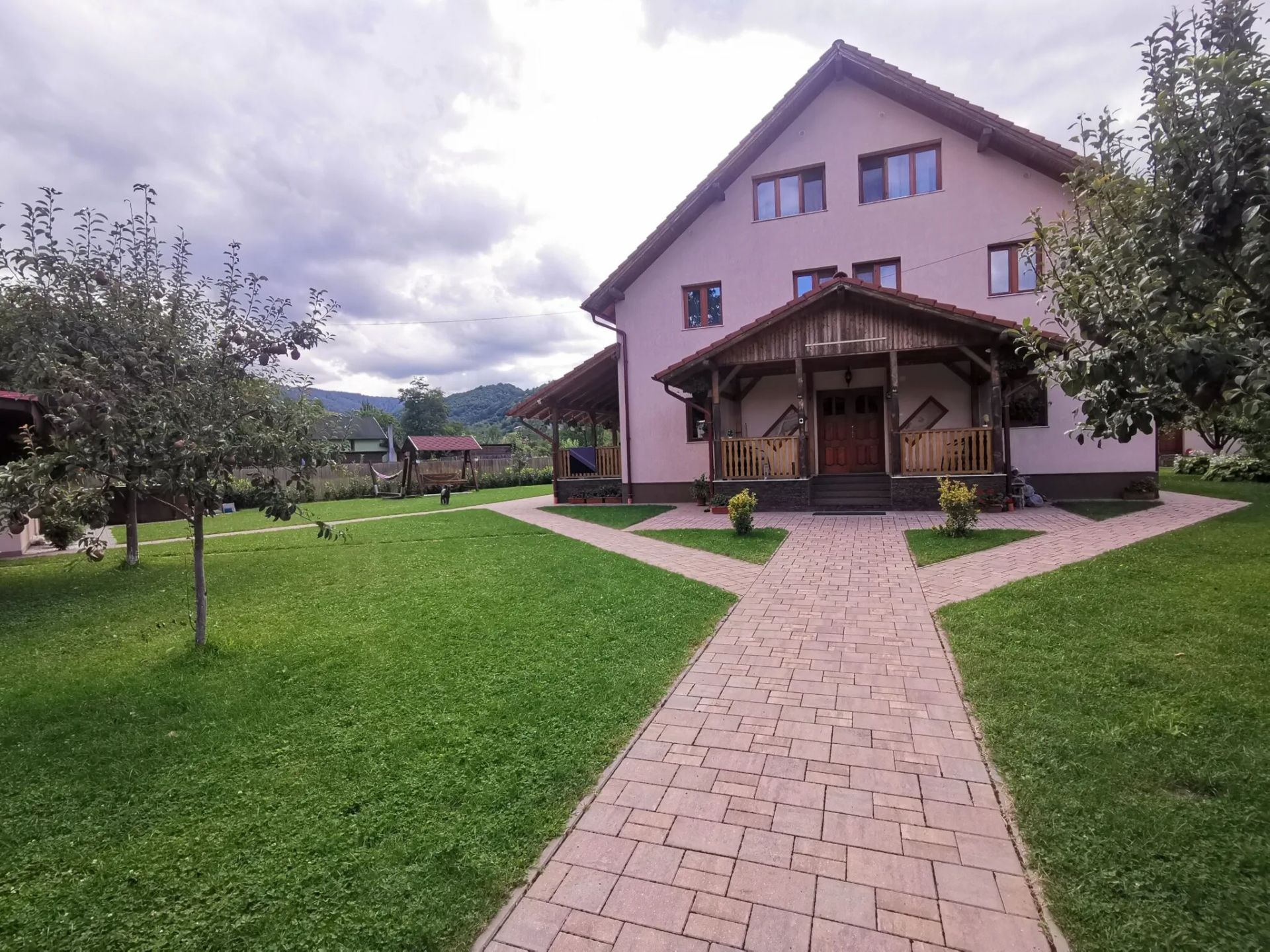
Casa Cecilia Costeşti
Casa Cecilia îţi oferă o şedere plăcută, într-o zonă naturală superbă în Munţii Orăştiei, aproape de cetăţile dacice Costeşti-Cetăţuie, Costeşti-Blidaru si Sarmizegetusa Regia.
FROM
280 RON / night
Cabană · 3 stars
Cioclovina, Cioclovina County · 14.2 km
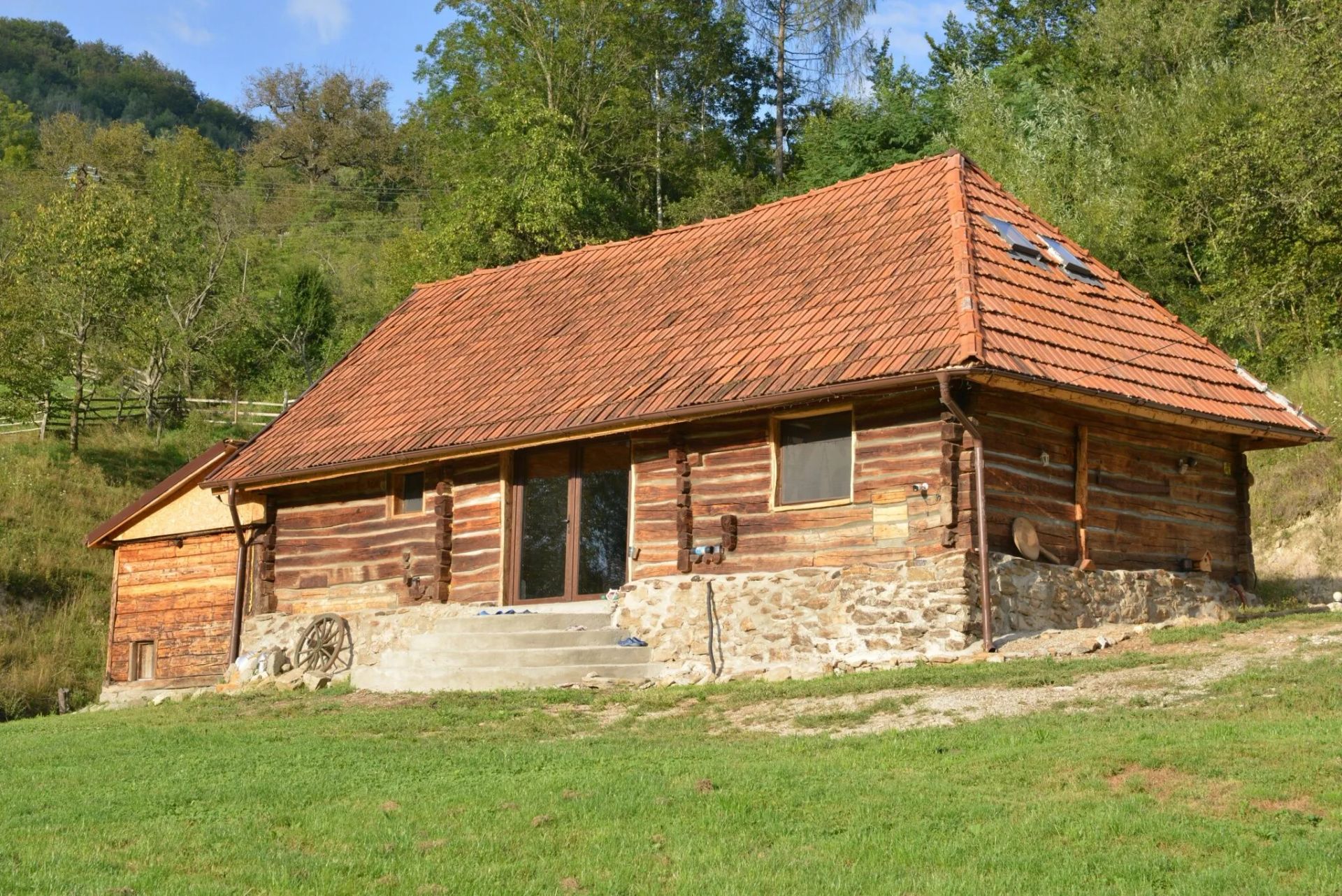
Cabana Great Village Cioclovina
Situată într-un cadru natural minunat, in inima Daciei, Great Village Cioclovina este locul ideal și unic în care poți să te relaxezi și să te distrezi!!! GVC iti pune la dispozitie: Cabana + 6000mp teren:Ciubăr încălzire pe lemne.Jacuzzi încălzit 40 grade, prosoape, sezlonguri. Foișor, grătar, disc, ceaun.Leagăne, hamace, tobogane, trambulină, tiroliana, badminton, tenis de masă, darts. Plimbări prin natură.Spațiu verde generos.Liniște și relaxare, Peștera Cioclovina, Cetățile Dacice, Poiana Omului, Fundătura Ponorului.Plimbări ATV, biciclete.Foc de tabara.Pet friendly. Te invităm la relaxare si aer curat, alături de familie, prieteni, colegi sau alaturi de cine vrei tu!!! 850 lei pe noapte - închiriere integrală - capacitate 10-12 persoane.Dacă sunteți mai mulți, se poate campa și cu cortul 30 lei pe noapte. #natura#pace#relaxare#distractie#agrement #drumetii#cetăți dacice #peșteră #obiectiveturistice
FROM
270 RON / night
BEFORE YOU HIT THE ROAD
Weather conditions in Hunedoara
Local forecast for Sarmizegetusa Regia Fortress, Hunedoara, Hunedoara

Real-time updated weather data
Much more to explore in this area
Nearby tourist attractions


Alba, Alba County
Transalpina (Transalpina Highway / King's Road)
Este o sosea (DN 67C) din Muntii Parang, in Carpatii Meridionali, ce face legatura intre Oltenia si Transilvania (orasele Novaci din judetul Gorj si Sebes din...
47.0 km

Hunedoara, Hunedoara County
Corvin Castle
Situat pe strada Castelului nr. 1 - 3 din municipiul Hunedoara; ridicat in secolul al XV-lea, de Ioan de Hunedoara, pe locul unei vechi intarituri; din punct...
35.6 km

Hunedoara, Hunedoara County
Hațeg Country Dinosaur Geopark
Situat in Tara Hategului, din depresiunea Hategului, invecinandu-se cu Parcul National Retezat la sud si cu Parcul natural Cioclovina Gradistea Muncelului la...
34.1 km

Hunedoara, Hunedoara County
Retezat National Park
Situat in masivul Retezat - Godeanu, in partea de vest a Carpatilor Meridionali; ocupa o suprafata totala de 38.138 ha; altitudinea e cuprinsa intre 800 si 2.50...
49.9 km

Hunedoara, Hunedoara County
Sarmizegetusa Regia Fortress
Situat pe teritoriul administrativ al satului Gradistea de Munte, comuna Orastioara de Sus; punctul sitului se numeste "Dealul Gradistii"; se intinde pe o...
0.1 km

42.3 km

Hunedoara, Hunedoara County
Lacul Bucura
Situat in caldarea Bucura, sub Varful Peleaga si Saua Bucurei; orientat pe directia nord - sud; face parte din Parcul National Retezat si este situat la o...
44.9 km

Hunedoara, Hunedoara County
Cetatea Orăștiei
Situata pe strada N. Balcescu, municipiul Orastie, judetul Hunedoara; construita in preajma anului 1300; atestata documentar in 1544 de catre Sebastian Munster,...
25.4 km

Alba, Alba County
Cetatea Călnic
Se gaseste in satul cu acelasi nume, pe drumul dintre Sibiu si Sebes;este unul dintre monumentele de arhitectura cele mai interesante din Romania, ocupand un...
40.0 km

Hunedoara, Hunedoara County
Cetatea Devei
Situata pe Dealul Cetatii, municipiul Deva; construita in secolul al XIII-lea, pe locul unei locuinte dacice de tip oppidium; a fost mentionata documentar sub...
43.5 km

Gorj, Gorj County
Pârtiile din Rânca
Situate in zona Muntilor Parang, in statiunea Ranca; in fiecare an, aceasta statiune este din ce in ce mai cautata, oferind partii excelente pentru iubitorii...
47.8 km
19.5 km
Cultural life and traditions
Events near Sarmizegetusa Regia Fortress
Medieval festivals, traditional fairs, concerts and recommended local activities in Transylvania.

Patrimoniu și Istorie

Hunedoara, Jud. Hunedoara
Festivalul Cetăților Medievale și Zilele Porților Deschise
Tururi ghidate nocturne, ateliere de meșteșuguri tradiționale și reconstituiri istorice cu cavaleri și domnițe.
WHEN
15 - 17 Mai 2026

Tradiții și Gastronomie
Hunedoara, Jud. Hunedoara
Târgul Tradițiilor Săsești și Gastronomie Locală
Descoperă producătorii locali, plăcintele săsești coapte pe vatră, siropurile artizanale și dulceața de rubarbă.
WHEN
În fiecare weekend (Mai - Octombrie)

Ecoturism și Natură
Colinele Transilvaniei, Jud. Hunedoara
Drumeții Ghidate pe Traseul Colinele Transilvaniei
Excursii pe poteci nemarcate printre fânețe seculare, stejari multiseculari și sate cu biserici fortificate UNESCO.
WHEN
Vineri - Duminică (Sezon 2026)
On foot, exploration gains depth
Discover the surroundings and local geography
Explore trails, terrain and natural landmarks around Sarmizegetusa Regia Fortress.

Guides and practical tips
Useful travel articles
Travel guides, practical tips and itineraries for Transylvania.

Travel guide
Castelul Bran: Istorie, Legende și Secrete Medievale
Află adevărata poveste a fortăreței medievale din Pasul Bran, reședința de suflet a Reginei Maria a României.

Travel guide
Top 5 Atracții Turistice și Trasee Montane în Zona Moieciu - Bran
Descoperă cele mai spectaculoase peisaje carstice, chei adânci și cetăți medievale din imediata apropiere a stațiunii Moieciu.

Travel guide
Ghid de Drumeție: Traseul Moieciu de Sus spre Platoul Bucegi
Un itinerariu montan de o frumusețe rară ce urcă din Valea Băngăleasa spre Poiana Guțanu și crestele maiestuoase ale Bucegilor.
THE JOURNEY STARTS WITH AN IDEA
The next story is on the way.
From the first stop to the last stay, make room for a new Romania.
