


MONUMENT · TRANSYLVANIA
Sarmizegetusa Regia Fortress

Hunedoara, Hunedoara County
Add location to your trip planner.

Practical access information

VISITING HOURS
Mon: 12:00–17:00 · Tue–Sun: 09:00–17:00 (summer until 20:00)

TICKET PRICE
Adults: 45 RON · Students: 11 RON · Seniors: 23 RON · Guided tour included

RECOMMENDED VISIT DURATION
2–3.5 hours
Visitor information and guide
 Navigate with Google Maps

ABOUT SARMIZEGETUSA REGIA FORTRESS
A Fortress Above Europe: Introduction and Universal Value
At over 1,200 meters above sea level, in the heart of the Orăștie Mountains in southwestern Transylvania, on Grădiștea Hill — a peak that dominates the valley of the river bearing the same name — lie the ruins of the most imposing capital of a civilization that European history long called, with an unjust word, "barbarian." Here stood Sarmizegetusa Regia, the capital of the Dacian Kingdom, the most important military, religious, and political center of the Dacian world for nearly a century and a half, between the mid-1st century BC and the summer of 106 AD, when Trajan's legions conquered it and nearly erased it from the face of the earth. Today, the archaeological site at Grădiștea de Munte, located on the territory of the village of the same name in the commune of Orăștioara de Sus, Hunedoara County, is part of the ensemble "Dacian Fortresses of the Orăștie Mountains," inscribed on the UNESCO World Heritage List in 1999 — a recognition of the fact that these fortifications represent, in the words of UNESCO experts, "the image of a vigorous and innovative ancient civilization," capable of developing original military architecture, proto-urban planning, and a religious system unique in Europe beyond the Rhine.
For the cultivated European traveler, Sarmizegetusa Regia is more than a simple archaeological site. It is the place where one of the most dramatic confrontations between the Roman Empire and the "barbarian" world of Europe came to an end — Trajan's Daco-Roman Wars —, it is the starting point of the Roman province of Dacia, which was to shape the destiny of an entire region for 165 years, and it is, at the same time, one of the few places in Europe where the sacred architecture of a pre-Roman civilization that reached a level of urban development rivaling the great centers of the Hellenistic world can be contemplated on a monumental scale. Here, at 1,200 meters above sea level, the Dacians built a city on over 250 man-made terraces, dug kilometers of channels for the capture and distribution of drinking water, minted coins imitating Roman denarii, raised eight temples — two circular and six quadrangular, according to the most recent discoveries — and gathered a treasure whose gold was to finance, in Rome, the Forum and Trajan's Column. The visitor who steps today on the ruins of the fortress steps, in essence, on one of the cornerstones of European history: the border between two worlds, the Roman and the Dacian, whose violent encounter — but also creative fusion — gave birth, among other things, to the Romanian people and its Latin heritage.
Historical Roots and Major European Connections
The story of Sarmizegetusa begins in the full 1st century BC, at a moment when Europe was the theater of large-scale political transformations. In the middle of that century, King Burebista — a name that still resonates in European historiography as the first unifier of the Getae-Dacian tribes — succeeded, with the help of the great priest Deceneu, in creating a centralized state that stretched from the Euxine Pontus to the Pannonian Plain and from the Haemus Mountains to the marshes of the Pripet. This kingdom, comparable in ambition and organization to the surrounding Hellenistic states or to Caesar's Roman expansion in Gaul, initially had its capital at Argedava, identified by historians with the fortress at Costești-Cetățuie, nearby, after which, toward the end of Burebista's reign, the center of power moved to Sarmizegetusa Regia. The European context of this rise is essential: Burebista became directly involved in the politics of Republican Rome, choosing to support Pompey in the civil war against Caesar in 48 BC — proof that the Dacian kingdom was already a recognized actor on the diplomatic stage of the Mediterranean. Assassinated in 44 BC, shortly after Caesar's death, Burebista left behind a powerful state, whose fortresses — Costești-Cetățuie, Costești-Blidaru, Piatra Roșie, Bănița, Căpâlna, and Sarmizegetusa itself — were to form, a century later, the defensive system conceived by the last Dacian king.
This last king, Decebal (or Diurpaneus, "the strongest of the Dacians," as the sources gloss), ruled between 87 and 106 AD and succeeded in reuniting the Dacian state after a period of fragmentation, motivated precisely by the growing danger represented by the expansion of the Roman Empire toward the Danube. Relations with Rome were marked by conflict and diplomacy: during Domitian's reign, General Cornelius Fuscus was defeated by the Dacians in 87 AD, and the peace of 89 AD transformed Dacia into a client kingdom — Rome undertook to pay subsidies, send craftsmen, engineers, and architects, and deliver weapons, in exchange for the Dacians' commitment to defend the imperial frontier. This "early Romanization" of the Dacian fortifications, attested archaeologically, shows how interconnected the Dacian world was with the Roman one even before the final wars. When Trajan ascended the throne in 98 AD, Dacia represented the main threat to the Danubian provinces — Moesia — and the decision to conquer was taken quickly. Two bloody wars followed: 101–102 and 105–106 AD, whose episodes are immortalized on the famous Trajan's Column in Rome, erected in 113 AD in Trajan's Forum, the work of the architect Apollodorus of Damascus. The spiral frieze, nearly 200 meters long and populated with over 2,500 figures, depicts scenes from the siege of Sarmizegetusa: the Dacian defenders sharing their last drops of water after Trajan cut off the conduits, the fortress burning, the capture of the royal treasure. The Roman historian Cassius Dio records that, after the fall of the capital, a close associate of Decebal, Bicilis, revealed to the Romans the location of the treasure hidden under the bed of the Sargetia river — identified with today's Strei — where the king had diverted the course of the water with the help of prisoners to bury gold and silver. The figures transmitted by Cassius Dio and by Joannes Lydus, based on Criton's Getica — 165,000 kg of gold and 331,000 kg of silver — are, of course, exaggerated, but the wealth of the plunder was real and impressive: the Dacians' gold financed imperial constructions in Rome and fueled the myth of the "Eldorado" north of the Danube. Decebal himself, pursued by Roman cavalry, committed suicide by cutting his throat, refusing to fall alive into Roman hands. After 106 AD, a garrison formed from detachments of the Legio IV Flavia Felix was stationed in the fortress for approximately eleven years, and Dacia became a Roman province. Trajan founded about 40 kilometers to the southwest a new capital, Colonia Ulpia Traiana Augusta Dacica Sarmizegetusa — today the site at Sarmizegetusa-Hațeg, with its museum and Roman amphitheater — and Emperor Hadrian was to add the name Sarmizegetusa precisely so that the new capital would be perceived as a symbolic continuation of the Dacian one. In 271 AD, Aurelian was to withdraw the Roman administration south of the Danube, but the cultural heritage remained: the spoken Latin language here was to become, in the following centuries, the foundation of the Romanian language.
Interesting for the European reader is also the way Sarmizegetusa was perceived by the ancient world after the conquest. Claudius Ptolemy, in his Geographia (circa 150 AD), mentions "Zarmizeghéthousa Basileion" — "the royal fortress" — among the settlements of Dacia, preserving the geographical coordinates of the former capital even after its destruction. The name survived in sources under multiple forms — Zarmigethusa, Zermizegethusa (Cassius Dio), Sarmazege (the anonymous Geographer of Ravenna, 7th century), Sarmategte (Tabula Peutingeriana) — proof of a persistent geographical memory. Moreover, until the beginning of the 20th century, historians confused the Roman capital Ulpia Traiana with the Dacian capital; only in 1880 did the historian Grigore Tocilescu propose the identification of the ruins at Grădiștea Muncelului with the true Sarmizegetusa, based on the Greek signs scratched on the Dacian masonry.
The scientific rediscovery of the site paradoxically belongs to another imperial era: that of the Habsburgs. At the beginning of the 19th century, news of the discovery of gold treasures by locals attracted the attention of the Austrian administration in Transylvania. In 1803–1804, the procurator of the fiscal domain of Hunedoara, Paul Török, representative of the Austrian Treasury, organized the first official excavations — nearly ten months of research that brought to light a pentagonal tower, temple ruins, a Roman bath, and ceramic fragments with inscriptions, including the famous "PER Sco Rilo." Throughout the 19th century, research at the site was taken over by a pleiad of scholars of the Austro-Hungarian Empire — Austrians, Hungarians, and Saxons: Michael Ackner, Johann Neigebaur, the brothers Friedrich and Heinrich Müller, Gabor Finály, Gábor and István Téglás, Anton Bögözi, Mihály Péchy, Franz von Pribila — while Romanian scholars were primarily concerned with the question of Latinity. This "imperial" phase of research left behind plans, reports, and discoveries partially forgotten, rediscovered only today by contemporary archaeologists. The 20th century brought systematization: Vasile Pârvan, D.M. Teodorescu, Constantin Daicoviciu — who led, starting in 1949, the most extensive research project —, Hadrian Daicoviciu, Ion Horațiu Crișan, and Ioan Glodariu laid the foundations of modern understanding of the site. From 1995, a close cooperation between the Institute of Ancient History of the University of Cologne and the National Museum of Transylvanian History in Cluj, together with Babeș-Bolyai University, brought German methods of survey and geophysical archaeology to the Orăștie Mountains. And from 2020, the European project "The Capital of Dacia – Living Museum of European Cultural Heritage," financed through the RO-CULTURE Programme from EEA Grants (Norwegian funds) worth approximately 2.7–3 million euros, in partnership with the Mihai Eminescu Trust Foundation and the Møre og Romsdal region of Norway, launched the most extensive restoration in the monument's recent history: over 700 meters of enclosure wall rebuilt, digitization of the site, a lapidarium, and a visitor shelter. In 1999, the six fortifications — Sarmizegetusa Regia, Costești-Cetățuie, Costești-Blidaru, Luncani-Piatra Roșie, Bănița, and Căpâlna — were inscribed together on the UNESCO World Heritage List, as a unique defensive system in Europe.
Architectural Masterpiece and Artistic Heritage
Systematic archaeological excavations have revealed an ensemble of astonishing complexity, organized into three functionally distinct zones: the fortress — the residence of the king, the high priest, and the supreme judge —, the sacred zone, with the monumental sanctuaries, and the civil settlement, the largest known habitat in the Dacian world to date. The entire complex unfolds along an axis of nearly six kilometers, on the slopes of Grădiștea Hill, and encompasses over 250 man-made terraces — some recent topographical sources estimate nearly 400 hectares of land leveled in Antiquity — of which only a small part has been researched to date.
The fortress proper rises on the summit, at 1,200 meters, and is surrounded by an enclosure wall built entirely in the murus dacicus technique — an original architectural system, without counterpart in the ancient world, which combines massive stone blocks with a filling and a timber frame, conferring remarkable resistance and flexibility on the construction. The walls, 3.30 meters thick and 4–5 meters high, form an irregular polygon — almost a hexagon with unequal sides — with a maximum width of 152 meters, perfectly adapted to the shape of the rock. Inside the enclosure, with an area of over one hectare (within a larger complex, the acropolis reaching about 3 hectares), were the king's residence and the administrative buildings. The Dacians' technical innovation does not stop here: an ingenious system of capture, filtration, and distribution of drinking water — ceramic pipes, cisterns, channels — served both the fortress and the civil quarters on the terraces, and the Dacian elites enjoyed running water in their homes, a luxury almost inconceivable for Europe of those times. Historian Hadrian Daicoviciu emphasized that these installations attest to remarkable "concerns for public hygiene," and in one of the researched dwellings a veritable ancient medical kit was discovered: bronze tweezers, an iron scalpel, five clay jars for storing medicinal substances, and a plate of pressed volcanic ash, used as an absorbent and healing agent. The Dacian physician-priests knew 42 medicinal plants with curative properties — their list, with Dacian names, was transmitted by the Greek physician Dioscorides —, practiced balneary treatments, and were capable of performing surgical operations.
The sacred zone, located about 100 meters east of the fortress gate and connected to it by a via sacra — a paved road with limestone, sandstone, and andesite slabs, whose segments were uncovered in recent campaigns —, unfolds on two large terraces (the Xth and XIth) and, according to the 2017–2021 discoveries, also on the IXth terrace. Here are concentrated eight temples — two circular and six quadrangular — which makes Sarmizegetusa one of the densest complexes of sacred architecture in ancient Europe. The Great Round Temple — the "calendar-sanctuary," as it was nicknamed — dominates the ensemble: a building with a diameter of nearly 30 meters, built from three concentric circles — 104 andesite blocks on the outside, 180 andesite pillars in the middle, and, inside, 84 wooden pillars about 3 meters high, clad in terracotta plates, plus a horseshoe-shaped apse of 34 wooden pillars delimiting the hearth of the sacred fire. Four symmetrical entrances and a conical roof completed the construction, and the apse was oriented toward the winter solstice sunrise. The mathematical disposition of the elements — 180 pillars grouped into 30 columns of 6, 52 plinths in four rows of 13 — fueled the fascinating hypothesis of a Dacian calendar: a year of 360 days divided into 12 months of 30 days, each month into 5 periods of 6 days, or, in the variant of the great limestone temple, a year of 364 days represented by 4 seasons of 13 weeks each. Beside it stands the famous "Andesite Sun" — a circular altar discovered in 1958 and fully uncovered in 1959, sculpted with ten solar rays, symbol of the urano-solar character of the Dacian religion. The great limestone temple, the oldest, dates from Burebista's era and housed 60 wooden columns on massive limestone plinths, while the quadrangular andesite temples, with plinths two meters in diameter, were, according to archaeologists' interpretations, spaces for military initiation rites — "the temple of man and the lair of wolves," as historian Dinu Antonescu wrote. A striking characteristic, which still amazes today: the great Dacian sanctuaries had no other roof than the sky — open, hypaethral spaces, where columns of stone and wood framed the sky itself as a living temple.
The most spectacular discovery of recent years — officially announced in 2021 by archaeologist Răzvan Mateescu, from the National Museum of Transylvanian History and Babeș-Bolyai University, coordinator of the excavation — is the eighth temple, identified on the IXth terrace, after five excavation campaigns begun in 2017. Its plan includes 60 limestone bases arranged in five rows of twelve rows, on an estimated area of 350 square meters, and the fragments of painted plaster found in the burnt layer that destroyed the previous building represent an exceptional rarity in Dacian architecture: "Plaster, especially painted plaster, is not often encountered — not everyone could afford such a thing," Mateescu emphasized, suggesting that the previous phase was also an imposing building, destroyed by fire and rebuilt from the foundations.
The civil settlement, spread over dozens of artificial terraces on the western and eastern slopes of the hill, reveals an industrial and commercial city of European proportions. Here were found groups of dwellings, craft workshops, warehouses, granaries, and water capture and distribution installations. Most of the workshops discovered are ironworking — in a single terrace about 1,000 kilograms of iron blooms were found, raw material for tools and weapons —, but ceramic and glass workshops have also been researched. In 1988, in the eastern part of the site, on the IVth terrace, a mint workshop was discovered where the Dacians imitated Roman denarii — proof of the integration of the Dacian economy into the Mediterranean commercial system —, with bronze dies set in iron sleeves. The inventory of the ironworking workshops is impressive: about 400 metal artifacts — sickles, scythes, hoes, rakes, knives, plow hoes, carpentry axes, but also weapons: curved daggers (sicae), swords, spearheads, shields. The pottery from Sarmizegetusa impresses with the elegance of the tableware, with visible Mediterranean influences, and on numerous fragments appear graphic signs — Greek and Latin letters scratched after firing — which suggest an unexpected level of literacy. On the territory of the site, numerous pieces of jewelry, gold coins of the Koson type with Greek inscriptions, gold and silver objects that are part of the famous Dacian Treasure, preserved today mostly at the National Museum of Romanian History in Bucharest, have been found over time.
The architecture and art of Sarmizegetusa are inscribed in a broad European context: the Dacians belong to the northern branch of the Thracians, and their material civilization — from the ceremonial helmets of Ciumești or the Iron Gates to silver fibulae and fine pottery — bears the imprint of interactions with the Celtic world (La Tène culture), with the Greek colonies on the Euxine Pontus coast (Histria, Tomis, Callatis), and with the Scythian empire. The circular sanctuaries, with precise astronomical orientations toward the solstices, have attracted comparisons with Stonehenge — a megalithic monument also inscribed on the UNESCO heritage list —, although, unlike the latter, the Dacian temples were "living" constructions, of stone and wood, meant for ritual, not merely celestial observation. The murus dacicus technique, although presenting certain affinities with Hellenistic fortification methods (visible especially at Costești-Blidaru) and with Celtic ones, remains an original innovation, recognized as such by the UNESCO forum.
Legends, Personalities, and Turning Points
The figure that dominates the history and memory of Sarmizegetusa is, without doubt, King Decebal. Ruling between 87 and 106 AD, he succeeded in reuniting the fragmented Dacian kingdom and resisting two Roman military campaigns before the final fall. On a large clay vessel — about 60 centimeters high and over a meter in diameter — found at the site, appears an inscription in the Latin alphabet: "DECEBALVS PER SCORILO," interpreted by scholars as "Decebalus, son of Scorilo." Scorilo (or Scorylo) was a Dacian king mentioned by the Roman historian Frontinus and by the Goth Jordanes (under the name Coryllus, between Comosicus and Diurpaneus), who would have ruled for four decades in a period of relative peace, until around 70 AD. Jordanes, in his Getica, wrote that the Getae "were always superior to almost all barbarians and almost equal to the Greeks" — a value judgment that places the Dacian kingdom on the cultural map of ancient Europe. Decebal's death, in the summer of 106 AD, after being pursued by Roman cavalry through the mountains, marks a turning point: refusing captivity, the king cut his throat, and with him the existence of the independent Dacian Kingdom came to an end.
Another legendary personality is Zalmoxis (or Zalmoxian), the supreme god of the Dacians, about whom Herodotus — the father of European historiography — related that he would have been a Get born in the lands of Dacia, a slave of Pythagoras on the island of Samos, freed and enriched with wisdom from the great Greek philosopher and from the Egyptians, whom he would have visited in his travels. Returned among his own, Zalmoxis would have brought the belief in the immortality of the soul and the mysteries of a monotheistic religion, with a single, almighty god, master over heaven and earth. This "Pythagorean teaching" of Zalmoxis, filtered through the prism of the solar urano-solar religion of the sanctuaries at Sarmizegetusa, illustrates how profoundly connected the Dacian world was to the great spiritual currents of the Mediterranean — from Pharaonic Egypt to Classical Greece — and explains the prestige of the Dacian priesthood, capable of uniting, alongside the king, the entire state.
The legends of the place do not stop at historical figures. The story of Decebal's treasure — the hoard hidden under the bed of the Sargetia river (today's Strei), revealed by the traitor Bicilis — fueled centuries of searches. At the end of the 18th century, news that villagers find gold coins among the ruins sparked a "gold fever" in Habsburg Transylvania and led to the first official excavations. Two centuries later, after 1990, the discovery of treasures by archaeological poachers — the Treasure of Fagii lui Bodea (1996, about 3,000–4,000 gold staters, 25–34 kg), the treasure of 3,600 Lysimachus coins from Șesu Căprăreței (1998, 30.6 kg), that of Dealu Muncelului (2007, 10.2 kg) — triggered a true modern "El Dorado" in the Șureanu Mountains, totaling about 87–97 kilograms of gold partially recovered by the authorities. The most spectacular episode remains that of the Dacian gold bracelets: 24 spiral gold bracelets of 24-carat gold, some weighing over a kilogram, with wolf-head terminals — the symbol of the Dacian nobility and, probably, the restricted prerogative of the royal family as priests. Thirteen of them (plus a fourteenth, of 1.2 kg) were recovered by the Romanian state between 2007 and 2011, after having been illegally removed from the country and trafficked on the black market of antiquities — a story that continues to disturb the mountain's tranquility and that, unfortunately, also shows the fragility of heritage in the face of archaeological poaching.
Not even the name of the fortress escapes mystery. Sarmizegetusa — in Greek Zarmizegethoúsa — has reached us through numerous variants (Zarmigethusa in Ptolemy, Zermizegethusa in Cassius Dio, Sarmazege in the Geographer of Ravenna), and its etymology remains debated. The most cited hypothesis, formulated by linguist Ioan I. Russu, sees in the name the composition of zermi ("rock, height") and zeget ("palisade, fortress," from Indo-European gegh-, "branch, pillar"), resulting in the meaning of "Fortress on the Rock" or "High Fortress." Other hypotheses propose "the city of the warm river" (from zarmi, "warm," and the name of the Sargetia river), "the center where mounted archers meet," or "the palace that illuminates the world of life" — the latter bringing zaryma ("palace," cf. Sanskrit harmya) closer to zegeth ("the world of life"). An older theory, "the capital of the Sarmatians and the Getae" (sarmis et getusa), was rejected by Vasile Pârvan, who showed that the Sarmatians penetrated Getic territory only after Trajan, and the name of the capital was much older. The fact that the toponym Grădiștea — an old Romanian word for "fortress" — was preserved by the local peasants for two millennia is, in itself, a miracle of popular memory: the shepherds from the village at the foot of the mountain preserved, from mouth to mouth, the name of the vanished capital.
Among the turning points of European history that this place hosts are also the war with Domitian (87–89 AD), when Dacia became a client kingdom of Rome, and the Aurelian withdrawal of 271 AD, which moved the empire's border to the Danube, but left behind a Romanized Dacia, the cultural matrix of future Romania. Between these milestones, Sarmizegetusa witnessed the birth of the province of Dacia and of a cultural-religious synthesis that was to survive the empire itself.
Practical Visitor Guide and Today's Tourist Experience
How to get there. The Sarmizegetusa Regia archaeological site (LMI code HD-I-s-A-03190) is located approximately 15–20 kilometers from the city of Orăștie and about 40 kilometers from Deva, the county seat of Hunedoara County. The most frequented road route starts from Orăștie and follows the paved road Orăștie – Beriu – Orăștioara de Sus – Costești – Grădiștea de Munte, over a total distance of about 35–40 kilometers, of which the last kilometers along the narrow Grădiștea valley. A public parking lot is located a few hundred meters from the entrance to the fortress, and from there the visiting trails — two thematic circuits — can be covered in approximately 1.5–2 hours. For hiking enthusiasts, there is also a mountain trail marked with a red cross, starting from the village of Costești, which climbs through beech forest to the Grădiștea summit to the ruins and continues toward the Godeanu peak (1,656 m). Distances to other urban centers: Sibiu about 80 km, Cluj-Napoca about 150 km, Bucharest about 350 km.
Schedule and 2026 fees. The site is administered by the Museum of Dacian and Roman Civilization (MCDR) in Deva, through the Service for the Administration of the Dacian Fortresses of the Orăștie Mountains, within the Hunedoara County Council. The standard visiting schedule is as follows: in the period May 1 – September 30, daily between 09:00 and 20:00; in the periods March 1 – April 30 and October 1 – November 30, daily between 09:00 and 18:00; in the period December 1 – end of February, between 10:00 and 15:00, only if weather conditions permit. Special attention for autumn 2026: starting September 25 and throughout October 2026, the site is open only on Saturdays and Sundays (09:00–20:00 in September, 09:00–18:00 in October), being closed from Monday to Friday due to restoration and conservation works on the Xth Terrace, within the project "The Capital of Dacia – Living Museum of European Cultural Heritage." The official fees for the 2026 fiscal year (according to Hunedoara County Council Decision no. 310/2025) are: 30 lei for adults, 10 lei for pupils, students, and pensioners, free for persons with severe disabilities together with their companion; the audio guide is available in Romanian, English, French, German, and Hungarian at 30 lei per device (90 minutes); specialized guiding for groups of maximum 30 people costs 100 lei in Romanian and 150 lei in English; annual passes are 200 lei (adults), 300 lei (family), and 100 lei (pupils/students/pensioners), and a single ticket of 150 lei (adults) allows access for 7 days to all MCDR objectives. There is also a photography fee (15 lei for individuals) and a commercial filming fee (300 lei/hour). Updated information can be obtained by phone at 0254 216 750 or +40 722 360 626 (Service for the Administration of the Dacian Fortresses), on the website mcdr.ro, and on the official Facebook page "Sarmizegetusa Regia."
What you will see. The trail through the fortress reveals, first of all, the massive enclosure wall in the murus dacicus technique — the impressive traces of the fortification that surrounds the plateau — and the ruins of the constructions inside it. The paved road of the "via sacra" then leads to the sacred zone, where rise, on the Xth and XIth terraces, the foundations and plinths of the temples: the Great Round Temple with its stone "calendar," the "Andesite Sun" with its ten rays, Burebista's great limestone temple, and the quadrangular andesite temples, with their regular rows of column bases. Nearby, on the trail between the west gate and the south gate, is the area of the former mint workshop discovered in 1988. Beyond the visitable enclosure, to the west, stretches — still largely unresearched and covered by vegetation — the extensive civil settlement, with the traces of terraces, roads, and water installations, an entire city asleep under the forest. Over 67,000 tourists visit the fortress annually, and the ongoing restoration project promises, in the coming years, a "living museum" with digital reconstructions, exhibitions, and modern infrastructure, while preserving the wild and contemplative character of the place.
In the surroundings. The visit to Sarmizegetusa Regia is naturally complemented by the other five Dacian fortresses of the UNESCO heritage — Costești-Cetățuie and Costești-Blidaru, only a few kilometers away, considered among the most impressive fortifications of the defensive system (Blidaru being the most articulated, with visible Hellenistic elements), Luncani-Piatra Roșie, spectacularly situated on an almost inaccessible rock, Bănița and Căpâlna —, with Ulpia Traiana Sarmizegetusa at Hațeg (the Roman capital of Dacia, with the archaeology museum and the restored Roman amphitheater, located about 40 kilometers away), with the city of Deva and its medieval fortress, with the UNESCO International Geopark Țara Hațegului — Romania's only dinosaur geopark — and with Retezat National Park, at the foot of which unfolds part of the natural and human history of this region. For the European traveler, the area thus offers a complete circuit: from the sacred and military capital of the Dacians, to the Roman capital of the province, from stone temples to the amphitheater of Ulpia Traiana, from Decebal's gold to the Latin heritage of Transylvania.
Practical tips. The altitude of 1,200 meters brings harsh winters and cool summers: even in August, the temperature on the summit can be 10–15 degrees lower than in the plain, and fog can envelop the ruins without warning. Mountain footwear is mandatory, and an extra layer of clothing is welcome. Respect the site: do not climb on the walls, do not take stones or fragments "as souvenirs" — every stone is an archaeological document —, and drone photography requires special authorization. The best light for photographs is early morning or toward sunset, when the andesite sun literally shines, and at the solstices, when the shadows of the pillars align with the sacred markings, the place acquires an almost magical charge — the same one that, two millennia ago, the Dacian priests felt in the lost capital of Eastern Europe.
Media gallery
Discover Sarmizegetusa Regia Fortress in pictures

5 photos · Architecture, courtyards and captivating details


Image source: Wikimedia Commons · Public domain photos · Free license
STAY A FEW DAYS, DISCOVER THE MAGIC
Stays near Sarmizegetusa Regia Fortress

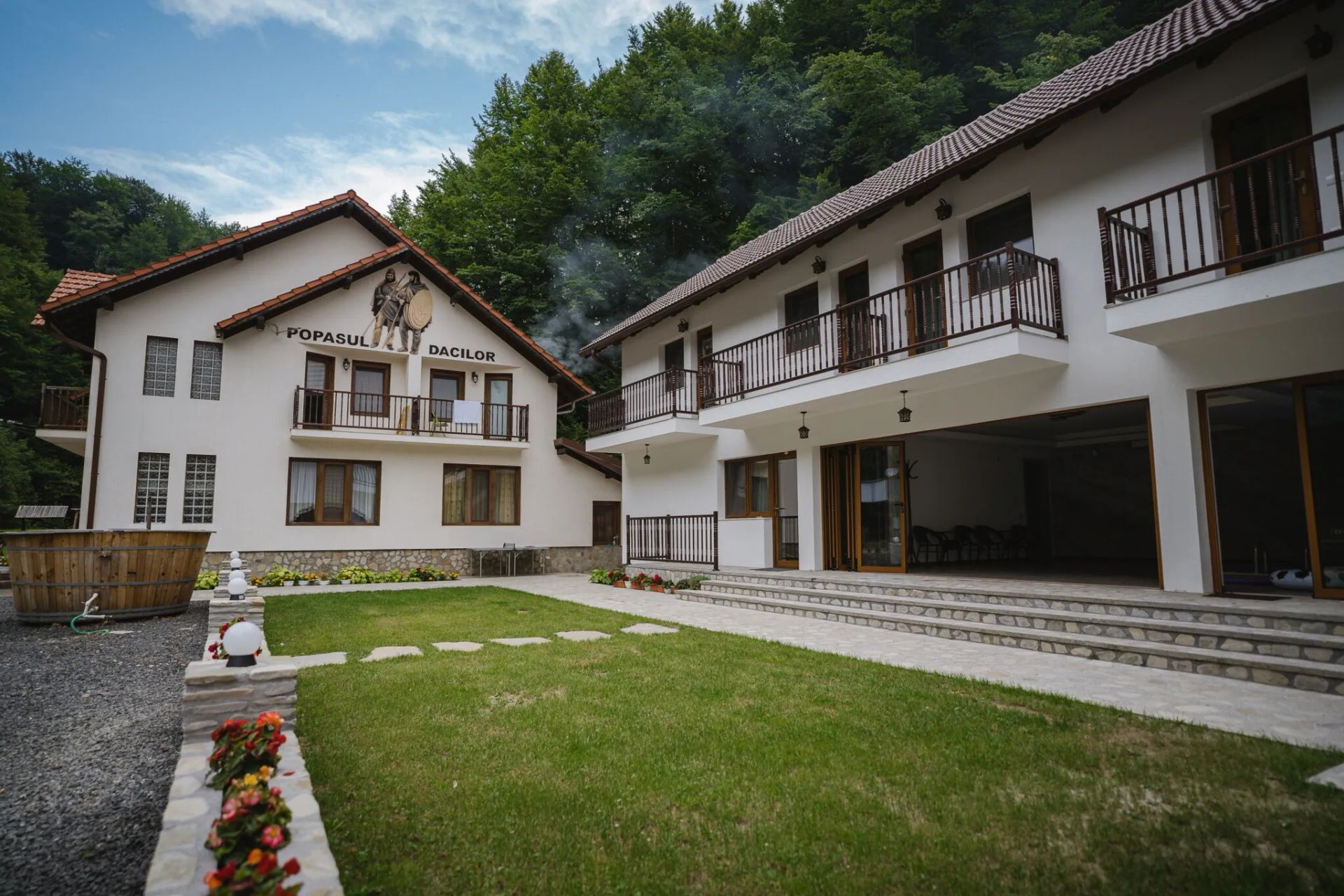
Pensiune · 3 stars

Grădiștea de Munte, Grădiștea de Munte County · 7.4 km
Vila Popasul Dacilor Grădiștea de Munte
A doua noastră pensiune este Popasul Dacilor – Grădiștea, are tot 3 margarete dar am construit-o în mijlocul naturii, la Grădiștea de Munte, în 2013. Pensiunea noastră este mai apropiată de Cetatea Sarmizegetusa Regia – la 5km (iar de Cetatea Fetele Albe la 3km) și mai îndepărtată de cetățile dacice Costești-Cetățuie și Costești-Blidaru. Această pensiune nu este la stradă, ci într-un spațiu verde amplu și mult mai liniștit, la baza dealurilor și a pădurii. Râul Sargetia trece pe lângă marginea curții și puteți asculta mai aproape apă liniștitoare și relaxantă. Zona nu este mult circulată și copiii se pot juca nestingheriți în aerul de munte. Facilitățile Interioroare– Piscină interioară cu apă încălzită și sărata – Camere cu Wifi si TV – Salon modern cu mese mari la parter, încăpător pentru 40 persoane (excelent pentru petreceri private, nunți etc) – Zonă cu canapea în salon / living, cu Wifi și TV – Bucătărie nouă cu facilități moderne unde vă puteți pregăti ce doriți de mâncare – Încălzire pe întreg anul – Puteți comanda masă caldă când doriți Facilitățile Exteriorare– 5 mese mari în curte – Foișoare – Grătar – Curte largă cu verdeață și aer de munte – Parcare în curte – 3 Balansoare mari de lemn – Toată zona verde la dispoziția dumneavostră pentru relaxare – Spațiu de joacă pentru copii – Wifi (vodafone) – Râu chiar lângă curte, cu apă mică și relaxantă (copiii sunt în siguranță).
FROM
240 RON / night

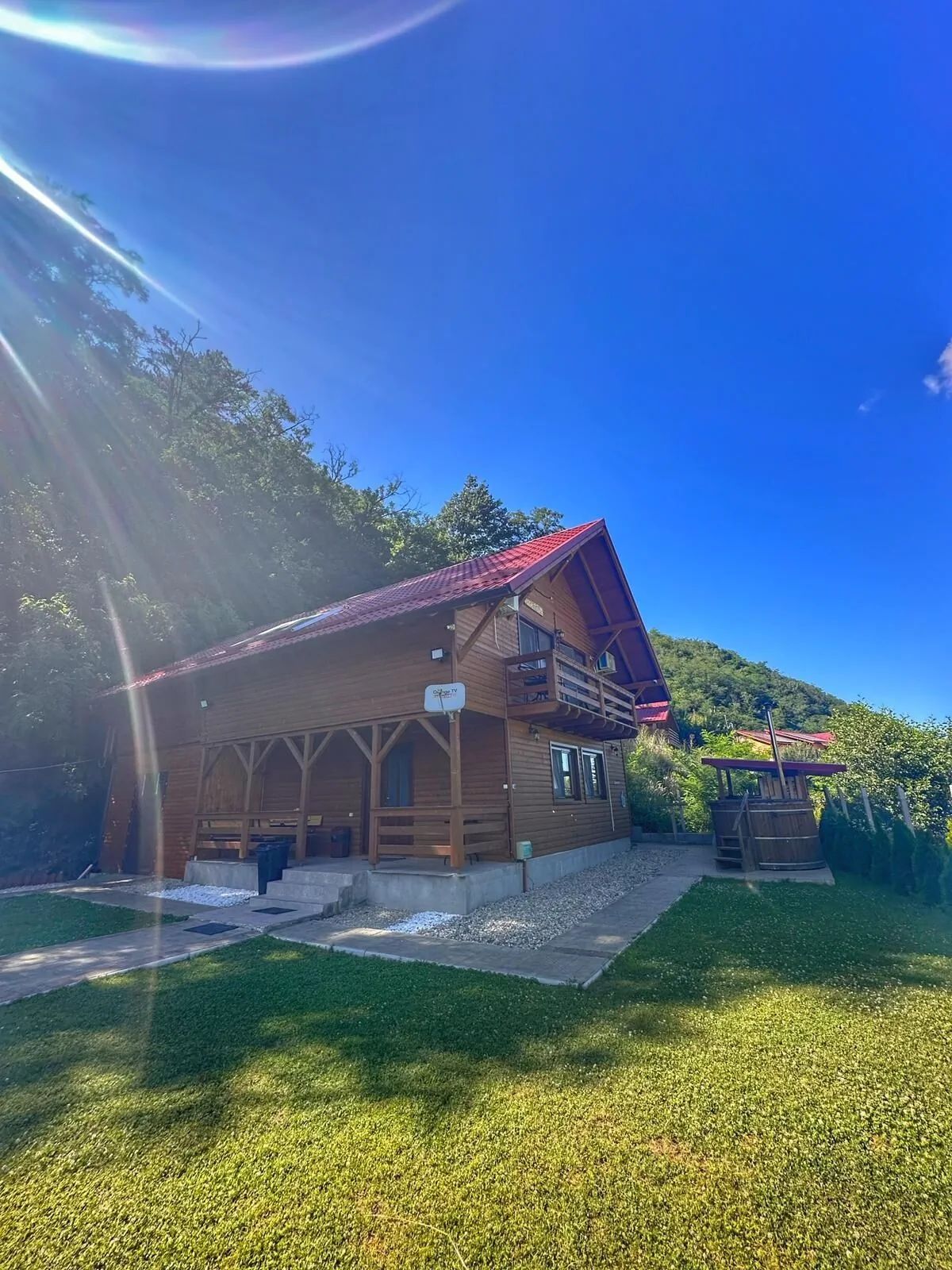
Cabană · 3 stars
Orăştioara de Sus, Orăştioara de Sus County · 14.0 km
Casa Favorit Orăştioara de Sus
Camere, serviciiCasa Favorit Orăştioara de Sus Orăştioara de Sus va ofera o camere frumoasa si eleganta. Unitatea va ofera parcare gratuita. Este o unitate perfecta pentru relaxare deoarece se ofera servicii suplimentare (ciubărul Dacic). Pentru informatii consultati pagina de date. Vi se pune la dispozitie camere dotate cu aer conditionat. Unitatea va pune la dispozitie internet wireless. Daca doriti sa aflati mai multe detalii despre facilitatile disponibile la Casa Favorit Orăştioara de Sus, respectiv despre amenajarea camerelor, va rugam consultati informatiile de mai jos. Servicii de masăTarifele contin numai cazare. PlatăPlata se poate efectua prin urmatoarele modalitati: numerar, card bancar, transfer bancar, card de vacanță, avans travelminit, voucher travelminit. Pentru garantarea ferma a rezervarii se solicita un avans de 30%. Sosire, programZiua de cazare incepe la ora 16:00. Eliberarea camerei se face la ora 12:00. La receptie se vorbeste limba: engleză, română.
FROM
270 RON / night
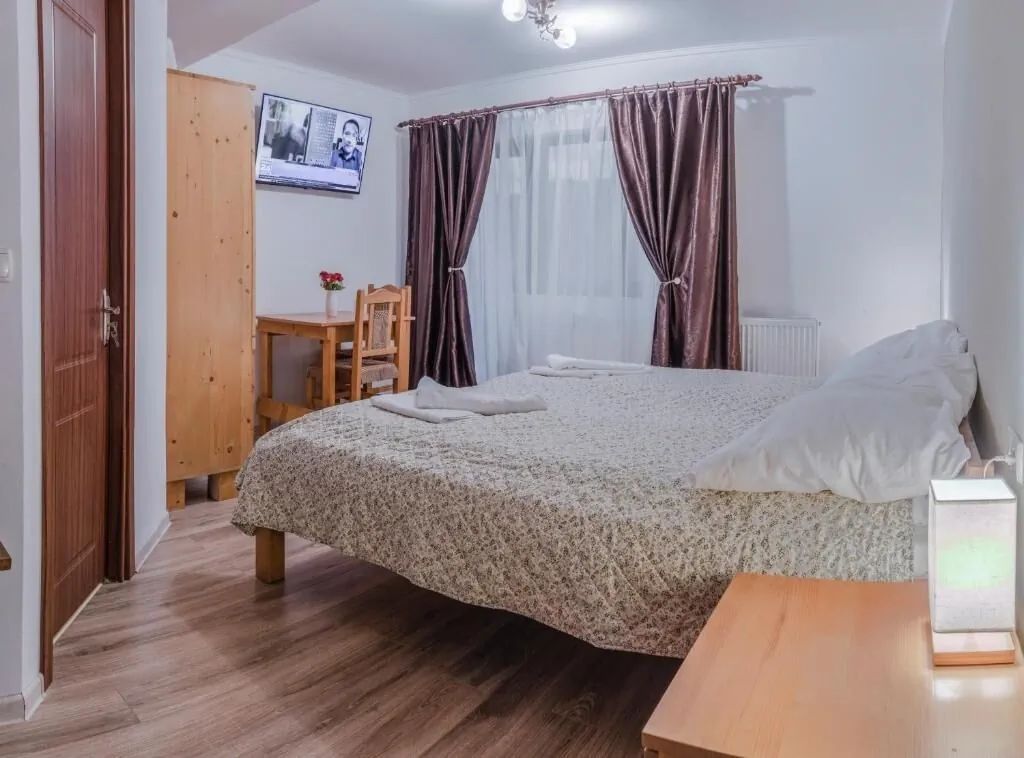
Pensiune · 3 stars
Costeşti, Costeşti County · 14.0 km
Agropensiunea Zamolxis Costeşti
AGROPENSIUNEA ZAMOLXIS se află în Costeşti și pune la dispoziție cazare cu WiFi gratuit și vedere la munte, precum și biciclete gratuite, o grădină și un lounge comun. Această pensiune agroturistică oferă parcare privată gratuită și o bucătărie comună. Această pensiune agroturistică include 6 dormitoare, un living și 6 băi cu un uscător de păr și duș. Această pensiune agroturistică pune la dispoziția oaspeților prosoape și lenjerie de pat.
FROM
240 RON / night
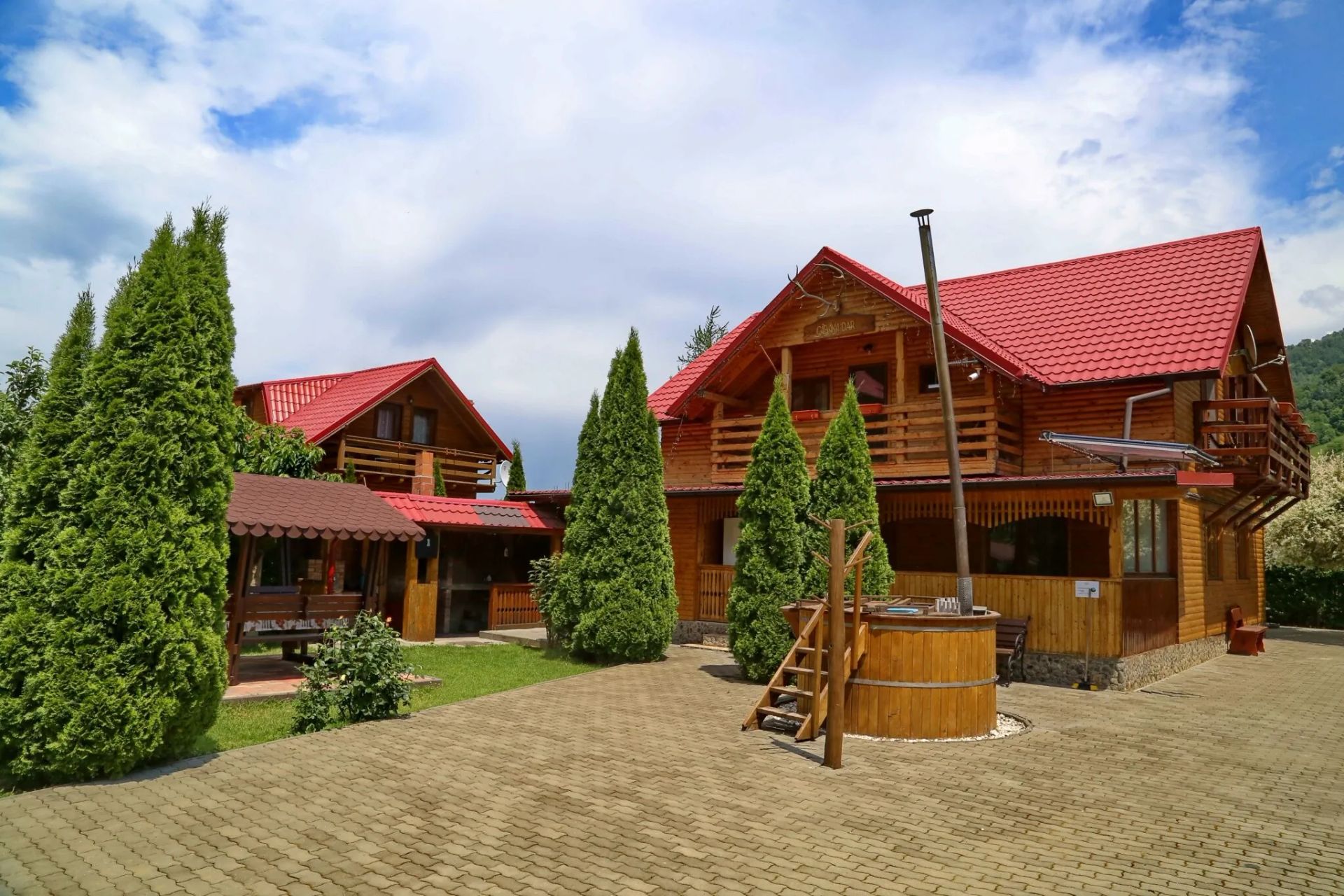
Resort · 4 stars
Costești, Costești County · 14.0 km
Complex DAR Costești
Complexul Turistic DAR se află în localitatea Costești, Sat De Vacanță, la poalele cetăților dacice Blidaru, Costești, Piatra Roșie, iar în apropiere se află măreața cetate Sarmisegetusa Regia ( capitala Daciei ).Sarmizegetusa Regia a fost capitala și cel mai important centru militar, religios și politic al statului dac înainte de războaiele cu Imperiul Roman.A fost nucleul unui sistem defensiv strategic format din șase fortărețe dacice din Munții Orăștiei, folosit de Decebal pentru apărare contra cuceririi romane.Situl arheologic Sarmizegetusa este situat în satul Grădiștea Muncelului din județul Hunedoara. Complex DAR Costești ofera cazare in 4 cabane placut mobilate si confortabile. Fiecare cabană dispune de bucătărie utilată, living, terasă, spațiu amenajat pentru grătar, ceaun. Pentru grătar este necesar să aduceți dumnevoastră cărbune.Este disponibila o parcare gratuita. Oaspetii pot beneficia de accesul gratuit la internet wireless. La restaurant puteti servi diverse preparate culinare. În sezonul rece, cabanele sunt încălzite.Nu se acceptă animale de companie în unitățile de cazare! Servicii de masă - Avem posibilitatea de a vă pune la dispoziție și servicii de masă, la solicitare, atunci când restaurantul este deschis (Weekend).Preturile camerelor nu contin masa și acces la ciubărul dacic cu apă caldă! Servicii Extra (Contra-cost): Unitatea noastră de cazare pune la dispoziția oaspeților jacuzzi dacic cu apă caldă și piscină exterioară încălzită (piscina este deschisă doar pe timpul verii), pentru momente de relaxare și răsfăț.Pentru a vă asigura disponibilitatea acestora, vă rugăm să anunțați unitatea înainte de sosirea la locație.*Ciubărul Dacic cu apă caldă - 600 lei/sejurPentru rezervarea ciubărului cu apă caldă, vă rugăm sa ne contactați telefonic. Plată:Plata o puteti face cu/prin: numerar, la sosirea în locație. Sosire, program:Camera poate fi ocupata de la ora 15:00 iar predarea acestora se face pana la ora 11:00 . Puteți vizita numeroase obiective turistice în zonă: Castelul Corvinilor HUNEDOARA Cetatea Albă Iulia Carolina Sarmizegetusa Regia Cetatea Blidarul Peștera Bolii Mănăstirea Prislop Mănăstirea Cucuis Lacul Cinciș Schitul Sfinților Romani Platoul Luncanilor Costesti Cetatea Devei Cascada Clocota Geoagiu-Bai Arsenal Park Orăștie Aventura Park Arsenal Park Aqua Park Arsenal Parc Băile Termale Daco - Romane Geoagiu Băi Muzeul Trenulețelor Valentin Banciu HUNEDOARA Giardini di Zoe Rezervația de Zimbrii Hateg Dacic Horses Sarmisegetusa Ulpia Traiana
FROM
490 RON / night
Casă de Vacanță · 2 stars
Costeşti, Costeşti County · 14.1 km
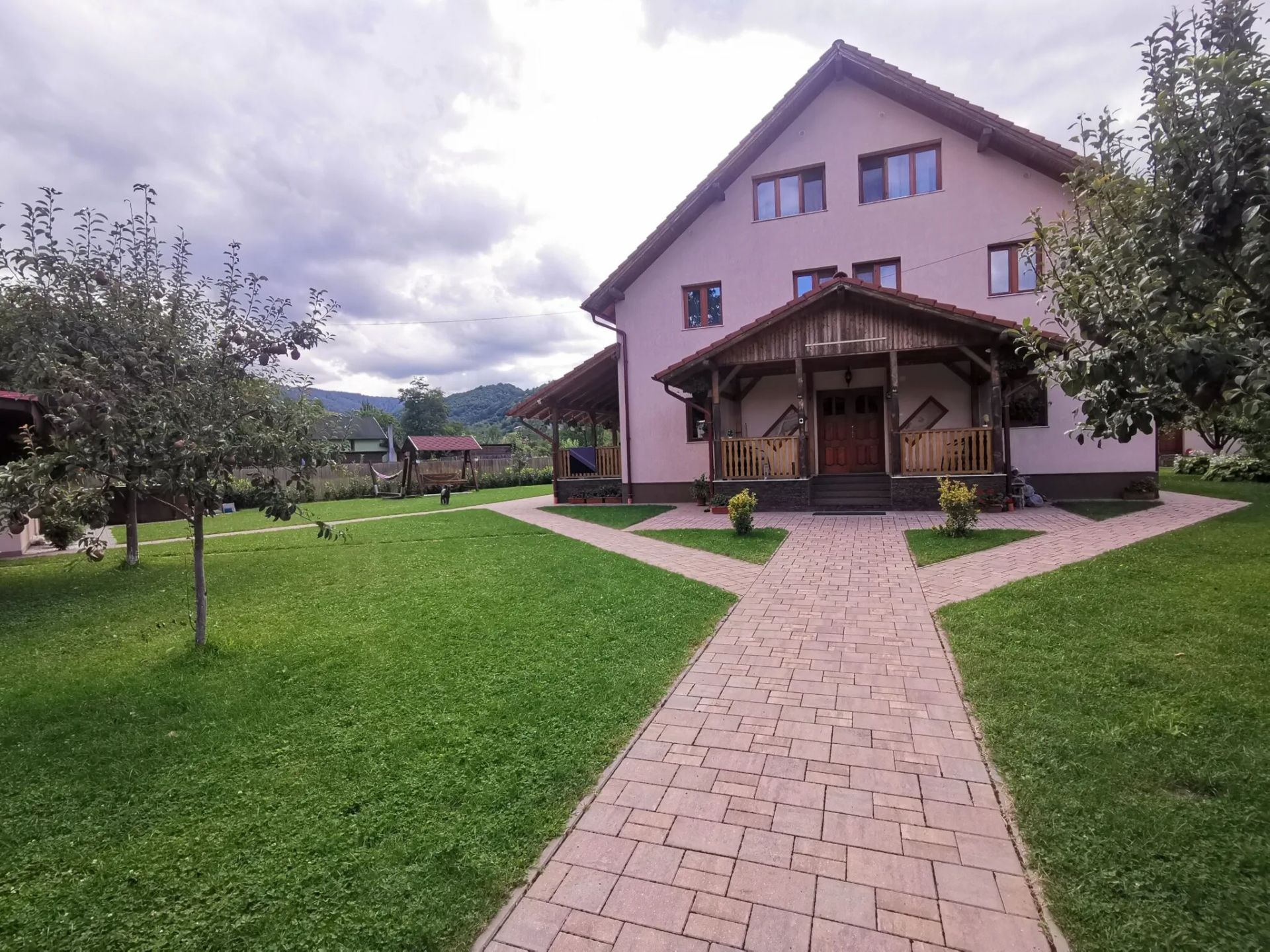
Casa Cecilia Costeşti
Casa Cecilia îţi oferă o şedere plăcută, într-o zonă naturală superbă în Munţii Orăştiei, aproape de cetăţile dacice Costeşti-Cetăţuie, Costeşti-Blidaru si Sarmizegetusa Regia.
FROM
280 RON / night
Cabană · 3 stars
Cioclovina, Cioclovina County · 14.2 km
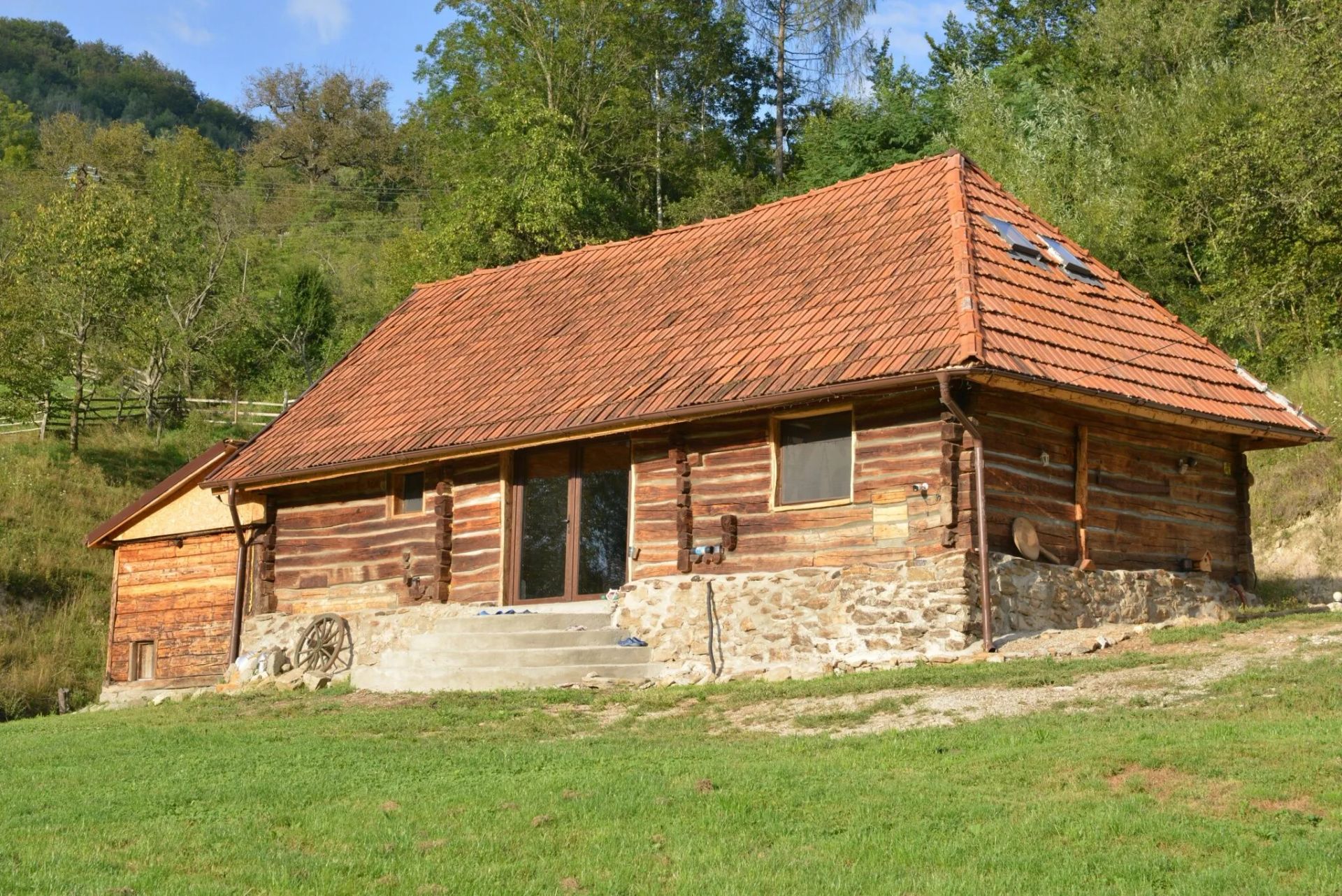
Cabana Great Village Cioclovina
Situată într-un cadru natural minunat, in inima Daciei, Great Village Cioclovina este locul ideal și unic în care poți să te relaxezi și să te distrezi!!! GVC iti pune la dispozitie: Cabana + 6000mp teren:Ciubăr încălzire pe lemne.Jacuzzi încălzit 40 grade, prosoape, sezlonguri. Foișor, grătar, disc, ceaun.Leagăne, hamace, tobogane, trambulină, tiroliana, badminton, tenis de masă, darts. Plimbări prin natură.Spațiu verde generos.Liniște și relaxare, Peștera Cioclovina, Cetățile Dacice, Poiana Omului, Fundătura Ponorului.Plimbări ATV, biciclete.Foc de tabara.Pet friendly. Te invităm la relaxare si aer curat, alături de familie, prieteni, colegi sau alaturi de cine vrei tu!!! 850 lei pe noapte - închiriere integrală - capacitate 10-12 persoane.Dacă sunteți mai mulți, se poate campa și cu cortul 30 lei pe noapte. #natura#pace#relaxare#distractie#agrement #drumetii#cetăți dacice #peșteră #obiectiveturistice
FROM
270 RON / night
BEFORE YOU HIT THE ROAD
Weather conditions in Hunedoara
Local forecast for Sarmizegetusa Regia Fortress, Hunedoara, Hunedoara

Real-time updated weather data
Much more to explore in this area
Nearby tourist attractions


Alba, Alba County
Transalpina (Transalpina Highway / King's Road)
Este o sosea (DN 67C) din Muntii Parang, in Carpatii Meridionali, ce face legatura intre Oltenia si Transilvania (orasele Novaci din judetul Gorj si Sebes din...
46.9 km

Hunedoara, Hunedoara County
Corvin Castle
Situat pe strada Castelului nr. 1 - 3 din municipiul Hunedoara; ridicat in secolul al XV-lea, de Ioan de Hunedoara, pe locul unei vechi intarituri; din punct...
35.7 km

Hunedoara, Hunedoara County
Sarmizegetusa Regia Fortress
Situata pe raza localitatii Gradistea Muncelului; amplasata la altitudinea de 1.200 m; inclusa pe lista patrimoniului cultural mondial UNESCO; a fost capitala...
0.1 km

Hunedoara, Hunedoara County
Hațeg Country Dinosaur Geopark
Situat in Tara Hategului, din depresiunea Hategului, invecinandu-se cu Parcul National Retezat la sud si cu Parcul natural Cioclovina Gradistea Muncelului la...
34.1 km

Hunedoara, Hunedoara County
Retezat National Park
Situat in masivul Retezat - Godeanu, in partea de vest a Carpatilor Meridionali; ocupa o suprafata totala de 38.138 ha; altitudinea e cuprinsa intre 800 si 2.50...
49.9 km

42.3 km

Hunedoara, Hunedoara County
Lacul Bucura
Situat in caldarea Bucura, sub Varful Peleaga si Saua Bucurei; orientat pe directia nord - sud; face parte din Parcul National Retezat si este situat la o...
44.9 km

Hunedoara, Hunedoara County
Cetatea Orăștiei
Situata pe strada N. Balcescu, municipiul Orastie, judetul Hunedoara; construita in preajma anului 1300; atestata documentar in 1544 de catre Sebastian Munster,...
25.5 km

Alba, Alba County
Cetatea Călnic
Se gaseste in satul cu acelasi nume, pe drumul dintre Sibiu si Sebes;este unul dintre monumentele de arhitectura cele mai interesante din Romania, ocupand un...
40.1 km

Hunedoara, Hunedoara County
Cetatea Devei
Situata pe Dealul Cetatii, municipiul Deva; construita in secolul al XIII-lea, pe locul unei locuinte dacice de tip oppidium; a fost mentionata documentar sub...
43.6 km

Gorj, Gorj County
Pârtiile din Rânca
Situate in zona Muntilor Parang, in statiunea Ranca; in fiecare an, aceasta statiune este din ce in ce mai cautata, oferind partii excelente pentru iubitorii...
47.7 km
19.4 km
Cultural life and traditions
Events near Sarmizegetusa Regia Fortress
Medieval festivals, traditional fairs, concerts and recommended local activities in Transylvania.

Patrimoniu și Istorie

Hunedoara, Jud. Hunedoara
Festivalul Cetăților Medievale și Zilele Porților Deschise
Tururi ghidate nocturne, ateliere de meșteșuguri tradiționale și reconstituiri istorice cu cavaleri și domnițe.
WHEN
15 - 17 Mai 2026

Tradiții și Gastronomie
Hunedoara, Jud. Hunedoara
Târgul Tradițiilor Săsești și Gastronomie Locală
Descoperă producătorii locali, plăcintele săsești coapte pe vatră, siropurile artizanale și dulceața de rubarbă.
WHEN
În fiecare weekend (Mai - Octombrie)

Ecoturism și Natură
Colinele Transilvaniei, Jud. Hunedoara
Drumeții Ghidate pe Traseul Colinele Transilvaniei
Excursii pe poteci nemarcate printre fânețe seculare, stejari multiseculari și sate cu biserici fortificate UNESCO.
WHEN
Vineri - Duminică (Sezon 2026)
On foot, exploration gains depth
Discover the surroundings and local geography
Explore trails, terrain and natural landmarks around Sarmizegetusa Regia Fortress.

Guides and practical tips
Useful travel articles
Travel guides, practical tips and itineraries for Transylvania.

Travel guide
Castelul Bran: Istorie, Legende și Secrete Medievale
Află adevărata poveste a fortăreței medievale din Pasul Bran, reședința de suflet a Reginei Maria a României.

Travel guide
Top 5 Atracții Turistice și Trasee Montane în Zona Moieciu - Bran
Descoperă cele mai spectaculoase peisaje carstice, chei adânci și cetăți medievale din imediata apropiere a stațiunii Moieciu.

Travel guide
Ghid de Drumeție: Traseul Moieciu de Sus spre Platoul Bucegi
Un itinerariu montan de o frumusețe rară ce urcă din Valea Băngăleasa spre Poiana Guțanu și crestele maiestuoase ale Bucegilor.
THE JOURNEY STARTS WITH AN IDEA
The next story is on the way.
From the first stop to the last stay, make room for a new Romania.
