


PLACE OF WORSHIP · TRANSYLVANIA
Moșna Fortified Church

Moșna, Transylvania
Add location to your trip planner.

Practical access information

VISITING HOURS
Monday: 12:00 PM – 5:00 PM · Tuesday–Sunday: 9:00 AM – 5:00 PM (in summer until 8:00 PM)

TICKET PRICE
Adults: 45 RON · Students: 11 RON · Seniors: 23 RON · Guided tour included

RECOMMENDED VISIT DURATION
30-60 minutes
Sources and external references
Wikipedia Encyclopedia (EN)
Visitor information and guide
 Navigate with Google Maps

ABOUT MOȘNA FORTIFIED CHURCH
A Fortress of Faith in the Heart of Transylvania
In the rolling landscape of the Târnava Plateau, where hills stretch like petrified waves beneath the vast sky of Transylvania, stands proudly the Moșna Fortified Evangelical Church, a monument that breathes history in every stone and tells its story with the gentle voice of the centuries. Located in the heart of the Saxon village of the same name, just a few kilometers from the medieval town of Mediaș and in the vicinity of Sibiu International Airport, this construction represents not only a place of worship, but a true bastion of European resilience, a silent witness to a civilization that knew how to transform the necessity of survival into an unparalleled architectural masterpiece. Inscribed in the UNESCO World Heritage List in 1993, as part of the site "Villages with Fortified Churches in Transylvania," and extended in 1999, the church of Moșna perfectly illustrates the synthesis between deep spirituality and defensive pragmatism, being one of the best-preserved examples of fortified sacred architecture in all of Central and Eastern Europe. For the European traveler seeking authenticity and cultural emotion, this place offers a journey through time, to a world where faith intertwined with stone and where every tower and every wall had the mission to protect not only bodies, but also the souls of a community determined to preserve its identity in a turbulent border region.
Historical Roots and Connections with the Great European Empires
The roots of this impressive construction go back to the mists of the 12th and 13th centuries, when the kings of Hungary, especially Géza II, Béla III and Andrew II, brought German colonists from the regions of the Rhine, Franconia and Saxony to defend the eastern border of the Kingdom of Hungary against Tatar and Cuman invasions. These colonists, known as Transylvanian Saxons, brought with them not only agricultural and craft traditions, but also a European architectural vision, inspired by the Romanesque and Gothic models from their homeland, reflecting the evolution of sacred architecture in the Holy Roman Empire. Thus, the first church of Moșna, a modest Romanesque construction, was erected as early as the 13th century, reflecting the Benedictine and Cistercian influences that dominated sacred architecture in Central Europe during that period. However, the fate of this first church was brutally cut short in 1480, when a devastating fire consumed the place of worship, leaving behind only ruins and the memory of a community in full economic and spiritual development, supported by the privileges granted by the Hungarian monarchs. The reconstruction, begun immediately after this disaster and completed between 1480 and 1486, gave birth to the current church in late Gothic style, a period when Eastern Europe was experiencing major turmoil: the fall of Constantinople in 1453 under Ottoman rule, the expansion of the Ottoman Empire led by Mehmed II and later by Suleiman the Magnificent, as well as internal conflicts in the Kingdom of Hungary, culminating in the disastrous Battle of Mohács in 1526. In this tense historical context, the church of Moșna was not only a place of prayer, but a symbol of the resistance of a community that had to face external threats. In the 16th century, with the Protestant Reformation that swept across all of Europe, the Saxon community of Moșna embraced the Lutheran confession, under the influence of reformers such as Martin Luther and the initiatives of Johannes Honterus of Brașov, transforming the church into a center of the new faith. Later, the fortification of the tower and the construction of the outer enclosure in this century reflected the need to adapt sacred architecture to the realities of frequent Ottoman wars, directly dialoguing with the tradition of fortress-churches from Franconia, Bavaria, Silesia and Moravia, regions that knew the same threats from the Ottoman Empire. The Habsburg period, beginning in the 17th century, brought relative stability, allowing the community to consolidate and beautify the place of worship, while Transylvania became an autonomous principality under Ottoman suzerainty, and later part of the Habsburg Monarchy and the Austro-Hungarian Empire. The 18th and 19th centuries marked the period of cultural flourishing of the Saxons, when the church received baroque furnishings, an impressive organ and decorative elements that enrich even today the artistic heritage of the monument, reflecting the artistic currents of Central European Baroque.
Architectural Masterpiece and Defensive System
The architecture of the Moșna church represents a remarkable synthesis between European late Gothic and the specific defensive needs of South-Eastern Europe. The late Gothic style, also known as Spätgotik in the German-speaking world, is manifested through tall windows with ogival arches, ribbed cross vaults resting on elegant columns, and a solemn interior space, flooded with natural light filtered through historical stained glass, creating an atmosphere of spiritual transcendence comparable to the cathedrals of Strasbourg or Nuremberg. However, the element that definitively distinguishes this monument from other European Gothic churches is the complex defensive system that surrounds it. The fortress-tower, approximately thirty meters high and provided with five distinct levels, dominates the rural landscape like a medieval watchtower, offering an impressive panoramic view over the Târnava Plateau and the surrounding villages. This tower, fortified in the 16th century, features an enclosed defense gallery, loopholes for archers and a clock mechanism that recalls the clock towers of the imperial cities of the Holy Roman Empire. The fortified enclosure surrounding the church is built of massive stone walls approximately two meters thick, provided with strategically placed defense towers at regular intervals, a system that reflects the principles of military architecture from the period of the Crusades and Ottoman wars, being similar to the fortifications in the castles of the Middle Rhine or the Salzburg region. Inside, the central nave opens toward a high choir, while the 18th-century baroque furnishings – the carved wooden altar, the stalls and the side galleries – add an additional artistic dimension, reflecting the influences of Central European art from the Counter-Reformation period. The historical organ, a musical instrument of special heritage value, completes the image of a sacred space where religious music, inspired by the traditions of Bach and the German school, has resounded over the centuries. The wall frescoes, partially preserved, and the sculptural details of the Gothic portal offer precious clues about artistic techniques and local crafts, while the system of wooden walkways and interior stairs leading to the upper levels of the tower allows visitors to physically explore the defensive mechanisms, feeling on their own skin the emotion of those who, centuries ago, watched from here against imminent dangers.
Stories, Personalities and Turning Points
Over the more than five centuries of its existence, the fortified church of Moșna has witnessed numerous historical turning points and hosted stories full of drama and hope. One of the most moving accounts concerns the period immediately following the fire of 1480, when the entire Saxon community, united in faith and in the desire for survival, mobilized to raise the new church from its foundations. The local craftsmen, brought from neighboring villages and even from Saxon towns such as Sibiu or Mediaș, worked with dedication for six years, transforming the pain of loss into a work of art that would withstand time and weather. In the 16th century, when the Ottomans penetrated ever more frequently into Transylvania, the church tower was raised and fortified, a moment when the locals sheltered inside the walls not only their families, but also provisions and animals, transforming the church into a true fortress of faith. Local legends tell of the church bells, cast in workshops in Sibiu or even brought from Nuremberg, which sounded the alarm in case of danger, calling the warriors from neighboring villages to come to the rescue. During the wars between the Habsburgs and the Ottomans, in the 17th century, the church served as a refuge for the civilian population, and its thick walls withstood sieges and looting. The 18th century brought a period of artistic flourishing, when the community, prosperous thanks to the grain and wine trade, commissioned baroque furnishings and installed the organ, creating a cultural center that attracted musicians and scholars from the entire region. However, recent history was marked by dramas: after World War II and the establishment of the communist regime, the Saxon community began to emigrate en masse to Germany, leaving behind a deserted and dilapidated church. Only after the 1989 Revolution and the return of religious freedom, restoration efforts, supported by international organizations and the Evangelical Church of the Augsburg Confession in Romania, brought back the splendor of this unique monument. Today, the church is cared for by a few parishioners remaining in the village, but also by dedicated volunteers and historians, who keep alive the memory of a community that contributed essentially to the formation of the cultural identity of Transylvania.
Practical Guide and Today's Visitor Experience
For the contemporary traveler who wishes to discover this treasure of European heritage, visiting the fortified church of Moșna represents a profound and accessible cultural experience. The monument is located in the center of Moșna village, Sibiu County, approximately ten kilometers from the town of Mediaș and about fifty kilometers from the municipality of Sibiu, being easily accessible on well-maintained paved roads, either starting from Sibiu International Airport, or from the direction of Sighișoara or the town of Agnita. Once arrived in the village, visitors are greeted by the fortified ensemble that rises imposingly in the middle of a well-kept garden, surrounded by traditional Saxon houses with carved gates and high roofs. The exploration begins with the exterior, where one can admire the massive stone walls, the defense towers and the Gothic architecture of the windows, after which one enters the interior of the church to contemplate the carved baroque wooden altar, the historical organ and the wall frescoes, in an atmosphere of deep tranquility. Climbing the fortress-tower, through a system of narrow interior stairs and wooden walkways, offers an unprecedented perspective on the defensive mechanisms and the clock mechanism, as well as an unforgettable panoramic view over the Târnava Plateau, with the surrounding villages and hills covered with vineyards and hayfields. The church museum, arranged within the fortified enclosure, houses an impressive collection of artifacts of the Saxon community: liturgical textiles embroidered with gold thread, historical documents and manuscripts, traditional ceramics and photographs illustrating the daily life of the Saxons over the centuries. Local guides, speakers of Romanian, German and English, offer thematic tours that reveal the secrets and legends of the monument. The optimal period for visiting is summer, when the surrounding gardens bloom and the sunset light transforms the limestone into a warm, reddish color spectacle, offering the opportunity to capture memorable images. It is also recommended to combine the visit with the exploration of other fortified churches from the UNESCO heritage in the area – Biertan, Viscri, Câlnic, Valea Viilor, Saschiz and Dârjiu – as well as with a walk through the medieval town of Sighișoara, the citadel of Sibiu or the town of Mediaș, to fully understand the cultural and historical context of this unique region of Europe. In Moșna village and its surroundings one can find traditional guesthouses that offer accommodation and meals prepared according to authentic Saxon recipes, allowing guests to live for a few days in the peaceful atmosphere of a Transylvanian village that preserves the traditions of a millennial European civilization.
Media gallery
Discover Moșna Fortified Church in pictures

1 photos · Architecture, courtyards and captivating details

Image source: Wikimedia Commons · Public domain photos · Free license
STAY A FEW DAYS, DISCOVER THE MAGIC
Accommodation in the Moșna Fortified Church area

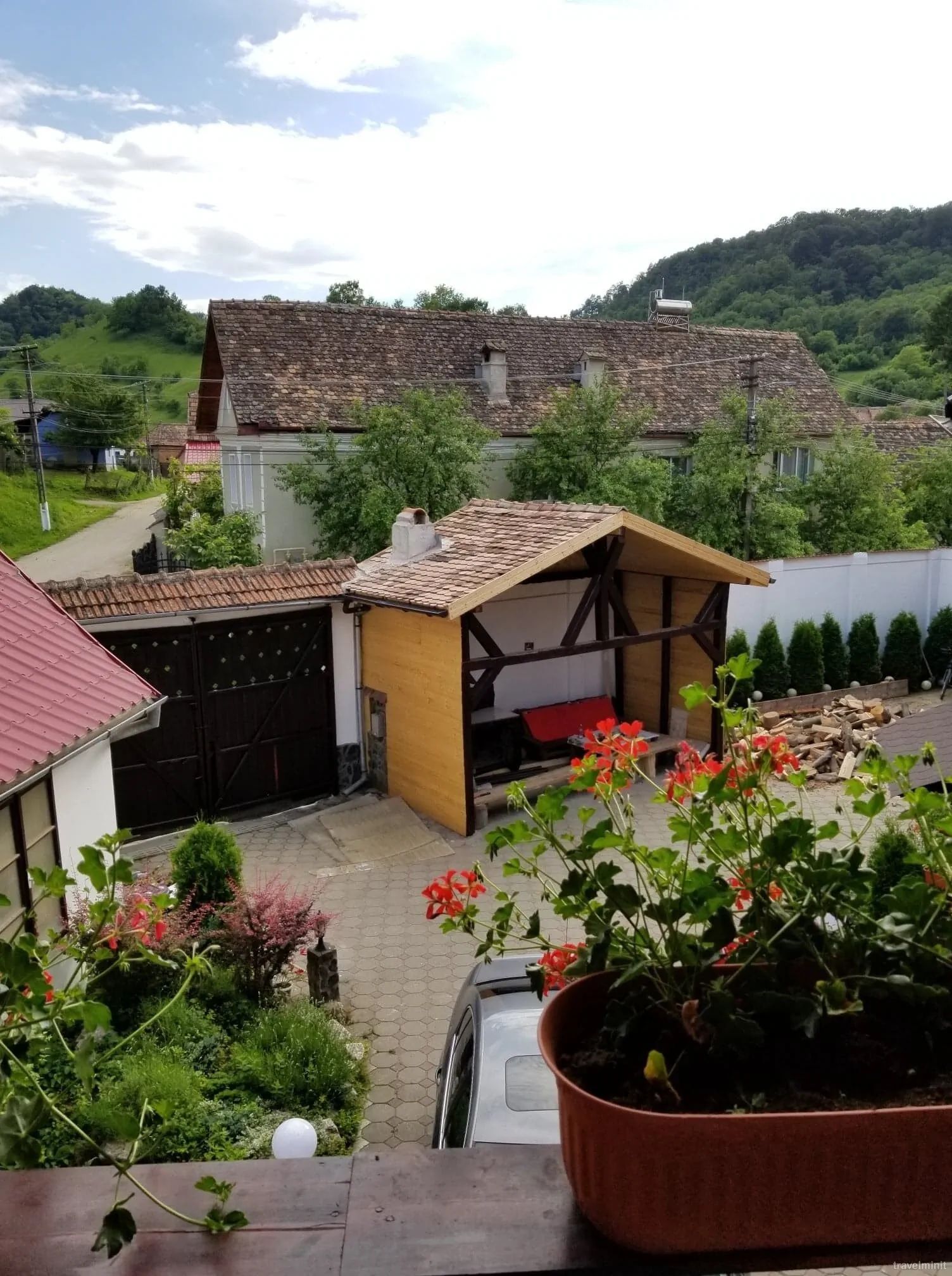
Guesthouse · 3 stars

Nemșa, Sibiu County · 3.8 km
Pensiunea Liana Nemșa
Pensiune turistică de trei stele situată în localitatea Nemșa, județul Sibiu, vă oferă cinci camere mobilate confortabil, pregătite pentru un sejur plăcut în mijlocul naturii. Curtea mare și grădina amenajată reprezintă un spațiu generos pentru relaxare, unde puteți folosi grătarul sau barbeque-ul ori ceaunul pentru a găti în aer liber. Un foișor vă oferă umbră, iar copiii se pot juca în siguranță la locul de joacă amenajat în exterior. Pentru deplasările cu mașina beneficiați de parcare privată gratuită, iar conexiunea Wi-Fi gratuit asigură acces la internet în întreaga unitate. La cerere, puteți solicita și serviciul de mic dejun. În apropiere se află cinci biserici fortificate impresionante: Biserica fortificată de la Biertan, Biserica evanghelică fortificată din Moșna, Biserica evanghelică fortificată din Alma Vii, Biserica Fortificată din Valea Viilor și Biserica fortificată din Richiș. Vă așteptăm să vă bucurați de liniștea acestui loc și să porniți într-o excursie spre Biserica fortificată din Richiș.
FROM
240 lei per night

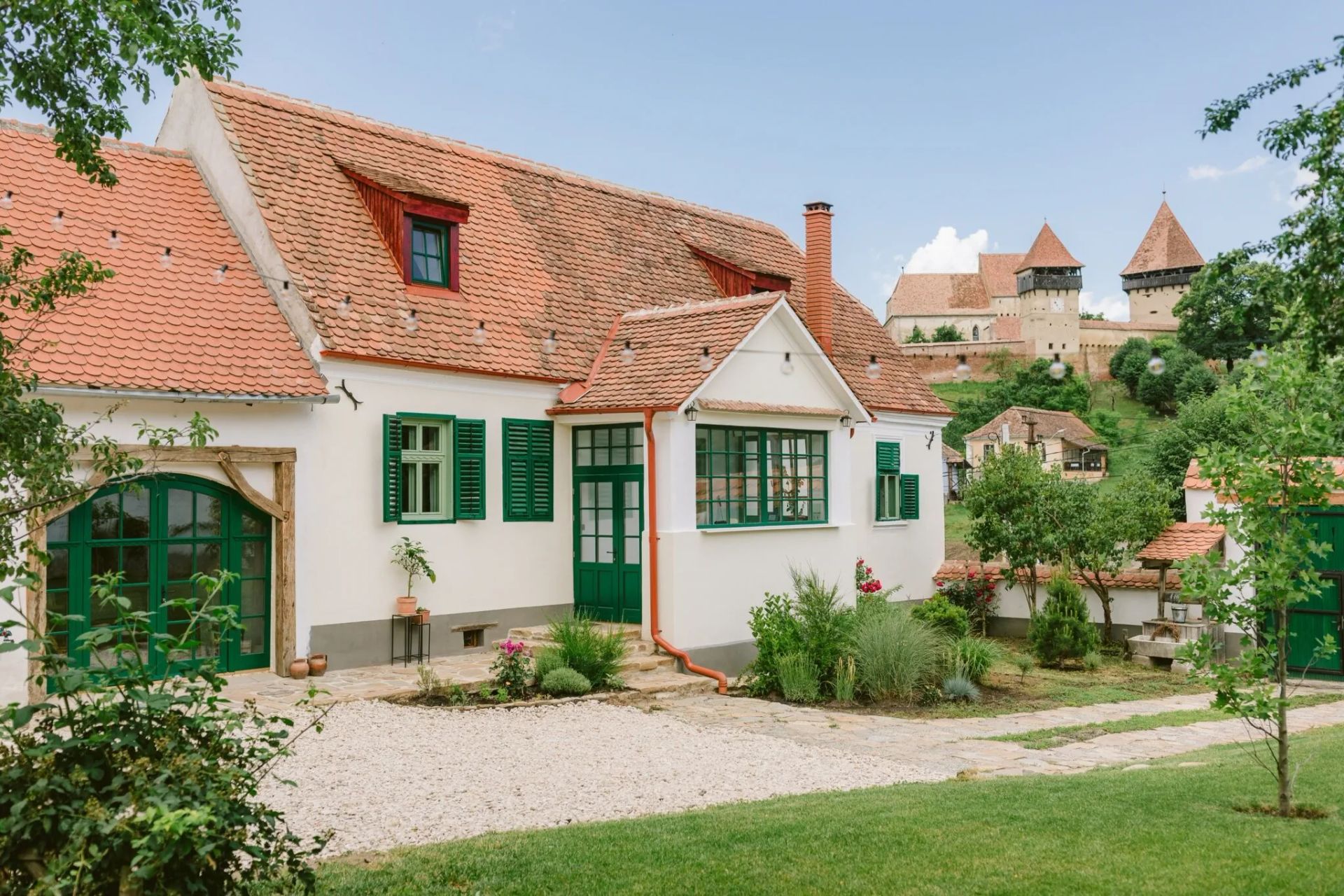
Holiday home · 3 stars
Alma Vii, Sibiu County · 5.8 km
AlmaCalma Guesthouse Alma Vii
În apropiere puteți vizita Biserica fortificată din Richiș. AlmaCalma Guesthouse Alma Vii, o casă de închiriat integrală situată în localitatea Alma Vii din județul Sibiu, reprezintă punctul dumneavoastră de plecare pentru a explora această regiune cu tradiție săsească și peisaje pitorești de dealuri. Unitatea vă pune la dispoziție facilități practice pentru un sejur confortabil: Wi-Fi gratuit, fier de călcat și parcare pentru biciclete. De asemenea, aveți acces la drumeții montane pe trasee în natură care pornesc chiar din zonă, ideale pentru iubitorii de mișcare în aer liber și pentru cei care doresc să descopere priveliști autentice. Curtea mare și grădina amenajată oferă un spațiu generos pentru relaxare, într-un cadru natural care invită la liniște, odihnă și contemplare departe de aglomerația urbană. Din Alma Vii puteți ajunge ușor la alte obiective importante din zonă: Biserica fortificată de la Biertan, Biserica evanghelică fortificată din Moșna, Biserica evanghelică fortificată din Alma Vii și Biserica Fortificată din Valea Viilor, fiecare cu istoria sa aparte. Vă așteptăm la AlmaCalma Guesthouse Alma Vii.
FROM
280 lei per night
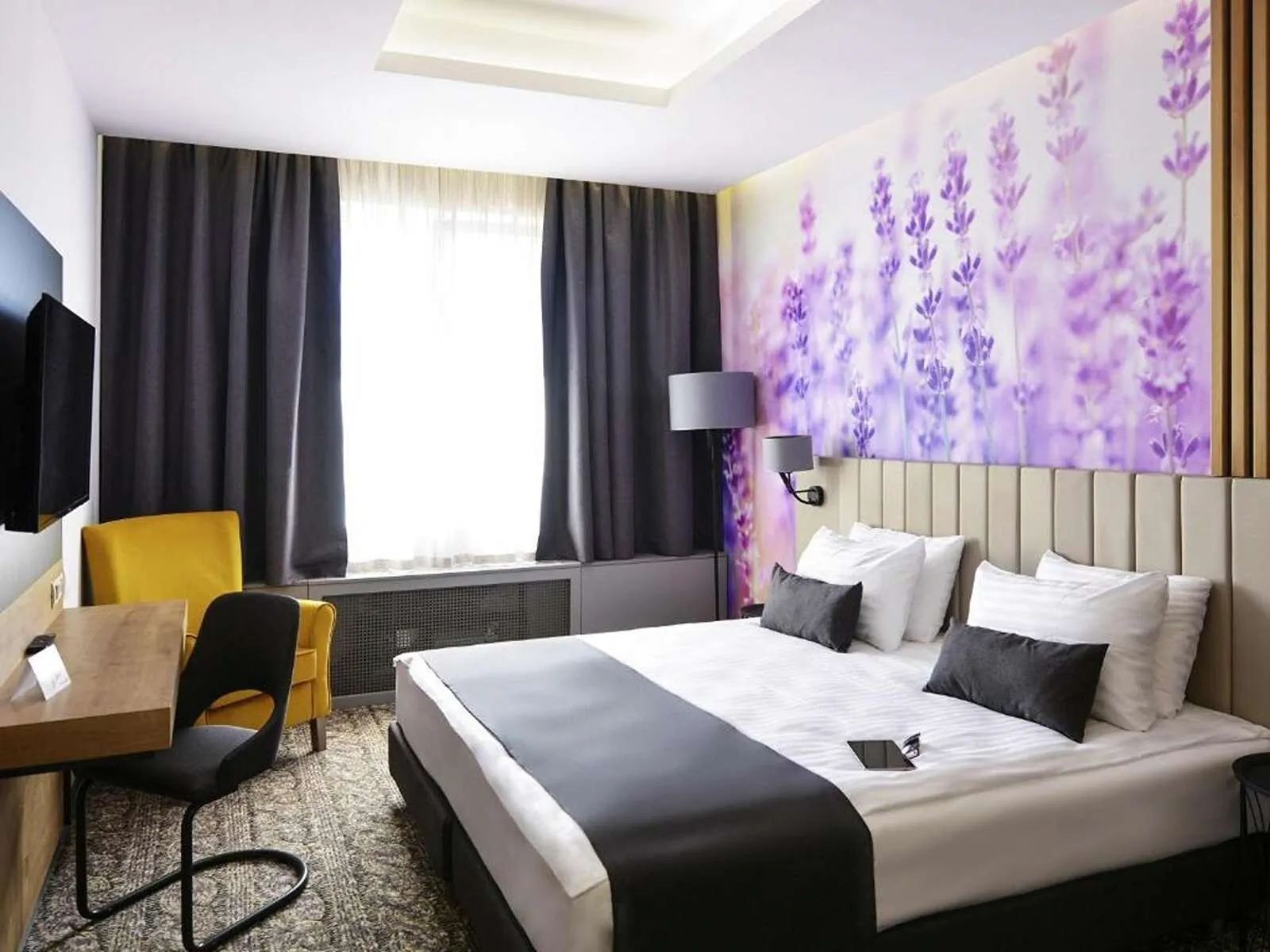
Hotel · 4 stars
Mediaș, Sibiu County · 8.0 km
Mercure Binderbubi Hotel&Spa Mediaș
Hotelul de patru stele Mercure Binderbubi Hotel Spa Mediaș se află în Mediaș, județul Sibiu, pe strada Plopului. Unitatea pune la dispoziția dumneavoastră 46 de camere amenajate cu grijă, dotate cu fier de călcat și seif pentru siguranța bunurilor dumneavoastră. Beneficiați de Wi-Fi gratuit în întreaga proprietate, acces facilitat pentru persoane cu dizabilități și ascensor. Restaurantul și barul din incintă servesc preparate pentru diete speciale și oferă un meniu dedicat copiilor, iar serviciile de masaj contribuie la starea dumneavoastră de bine după o zi plină de explorări. Curtea mare și grădina amenajată includ un foișor unde puteți petrece momente liniștite în aer liber, departe de aglomerație. Parcare privată gratuită și parcare pentru biciclete sunt disponibile, împreună cu o stație de încărcare pentru vehicule electrice. Cafeneaua din incintă este locul potrivit pentru o cafea de dimineață, iar pătuțul pentru bebeluș asigură confortul celor mai mici oaspeți. În zona învecinată puteți descoperi Biserica fortificată de la Biertan, Biserica evanghelică fortificată din Moșna, Biserica Evanghelică Sfânta Margareta din Mediaș, Biserica Fortificată din Valea Viilor și Complexul franciscan Mediaș, obiective care completează perfect sejurul dumneavoastră. Vă așteptăm la Mercure Binderbubi Hotel Spa Mediaș.
FROM
420 lei per night
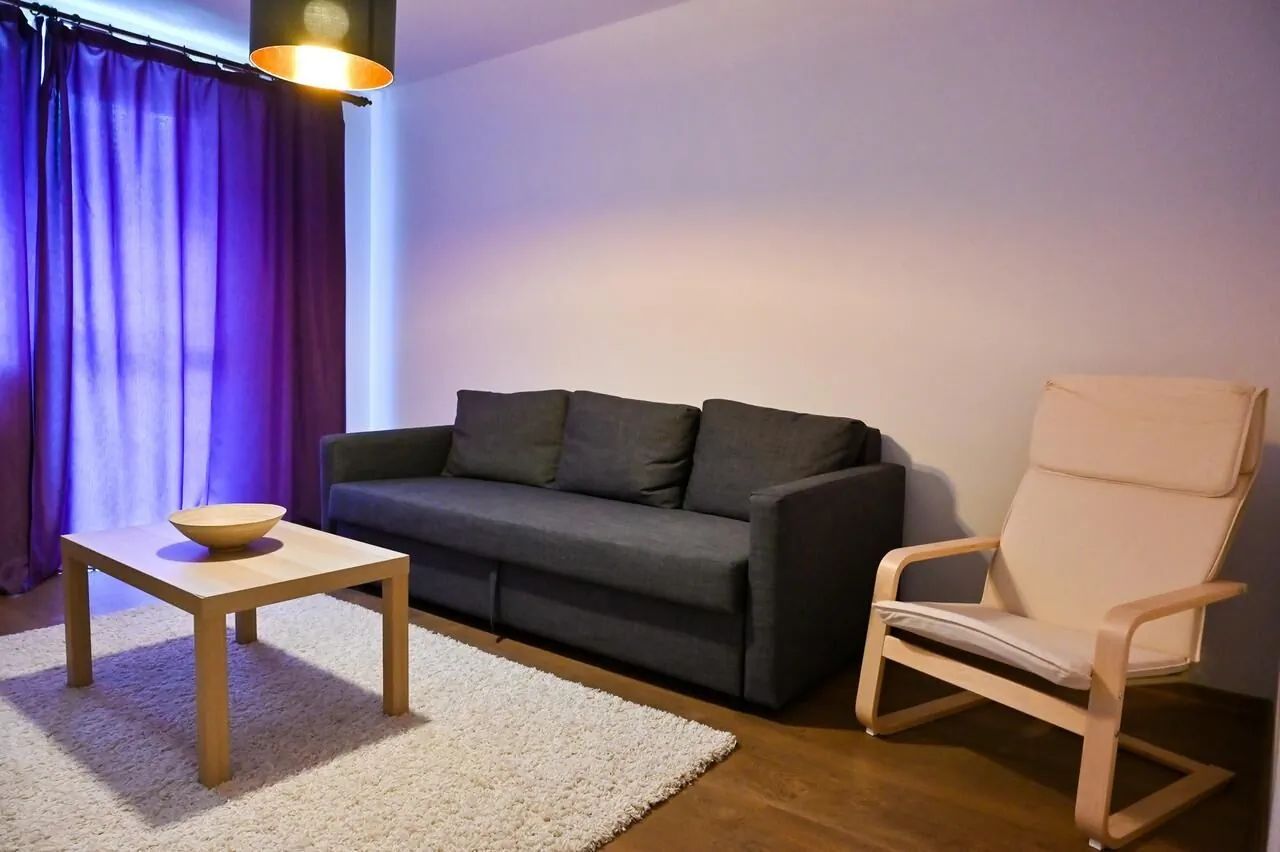
Apartment · 1 star
Mediaș, Sibiu County · 8.5 km
Sophia's Cozy Apartment
Comfort, relaxation and stunning views, all just steps away from the main attractions.
FROM
230 lei per night
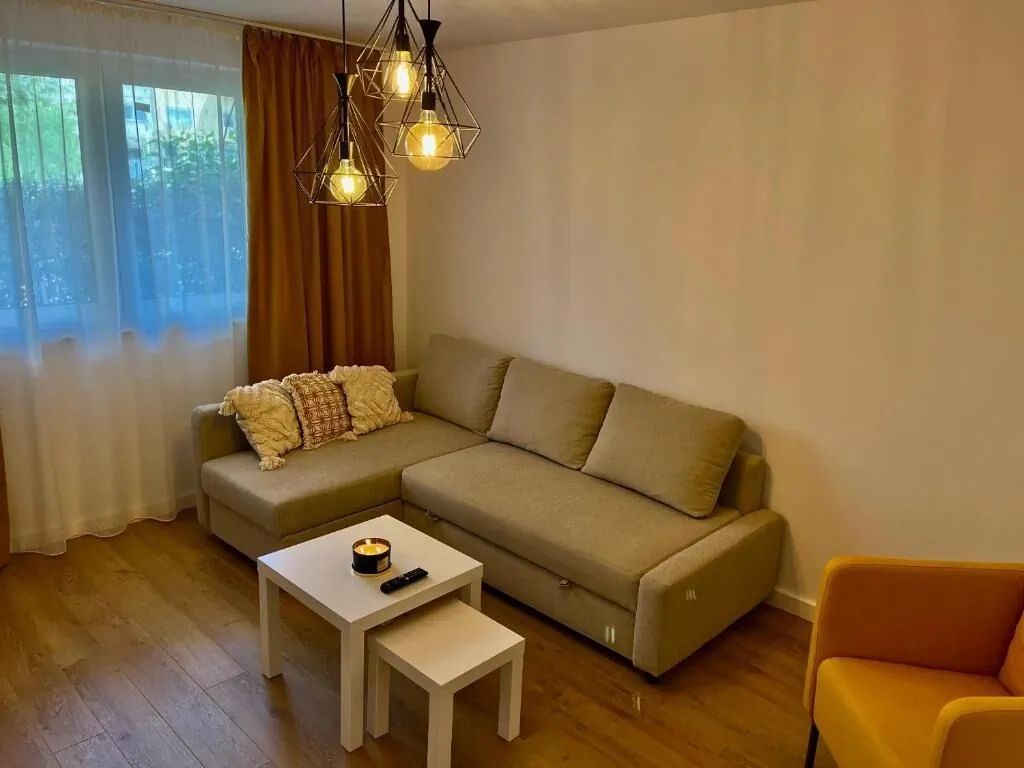
Apartment · 3 stars
Mediaș, Sibiu County · 8.6 km
Alexander Cozy Apartment Mediaș
Comfort, relaxation and stunning views, all just steps away from the main attractions.
FROM
230 lei per night
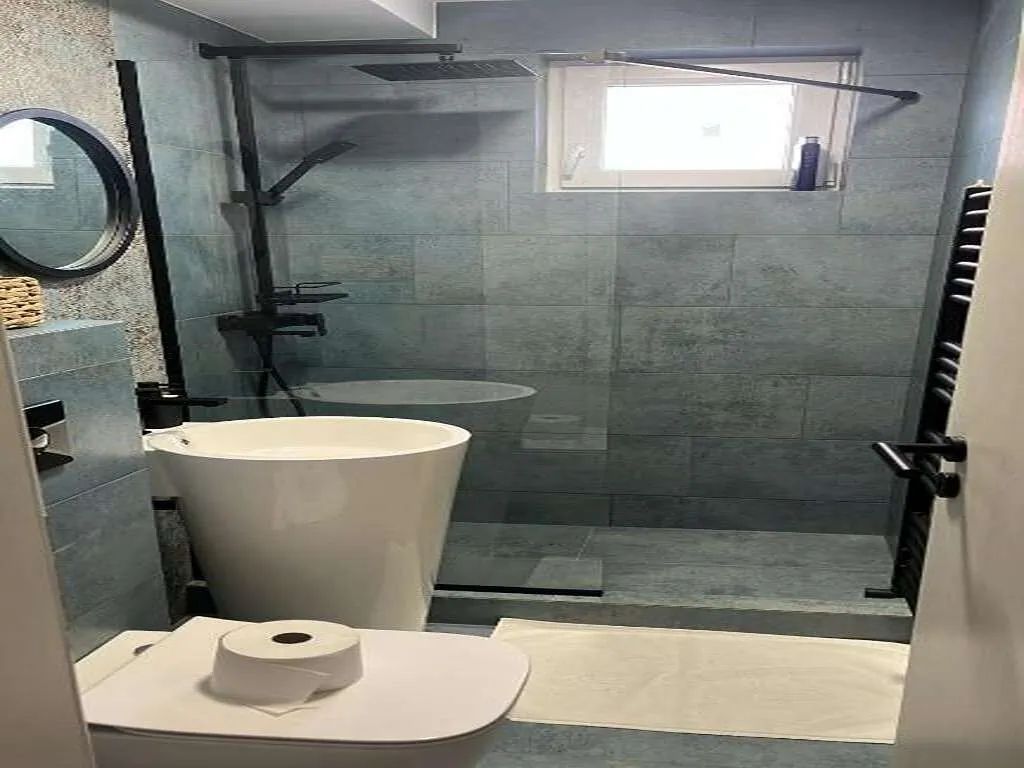
Apartment · 3 stars
Mediaș, Sibiu County · 8.6 km
Central Studio Mediaș
Comfort, relaxation and stunning views, all just steps away from the main attractions.
FROM
230 lei per night
BEFORE YOU HIT THE ROAD
Weather conditions in Moșna
Local forecast for Moșna Fortified Church, Moșna, Moșna

Real-time updated weather data
Much more to explore in this area
Nearby tourist attractions

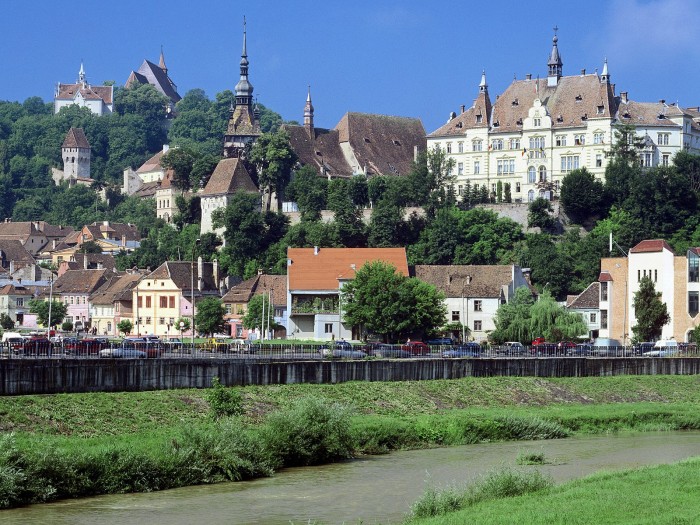

Sighișoara, Mureș County
Sighișoara Medieval Citadel
Situata in centrul municipiul Sighisoara; inca din secolul al III-lea i.Hr. a existat pe acest teritoriu o cetate dacica, numita Sandava; romanii au ridicat...
33.7 km
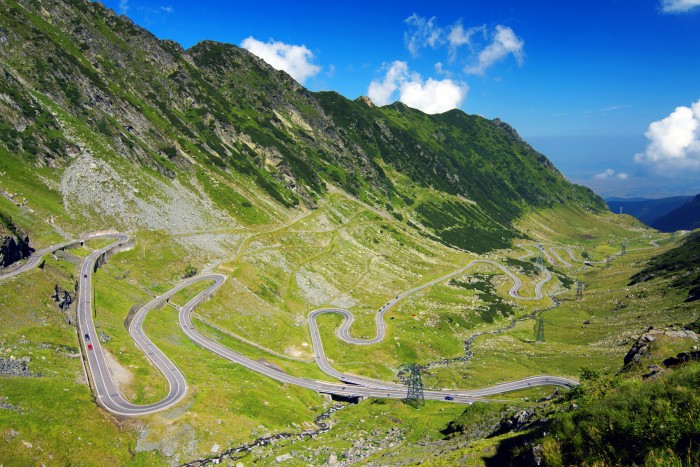
Cârțișoara, Sibiu County
Transfăgărășan Highway and Bâlea Lake
Incepe in comuna Bascov din judetul Arges de langa orasul Pitesti, in directia orasului Curtea de Arges si se termina la intersectia cu drumul DN1 intre Sibiu...
42.8 km
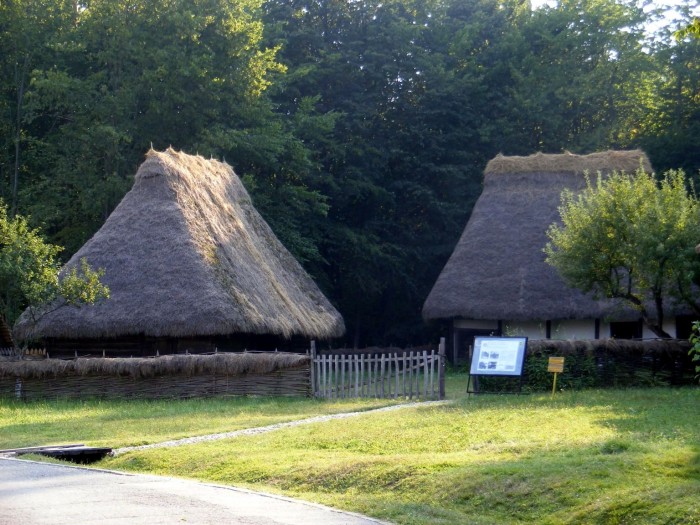
Sibiu, Sibiu County
ASTRA Museum of Traditional Folk Civilization
Situat pe Calea Rasinari din localitatea Sibiu; este un muzeu in aer liber; a fost organizat cu incepere din anul 1963, sub denumirea de Muzeul Tehnicii...
43.3 km
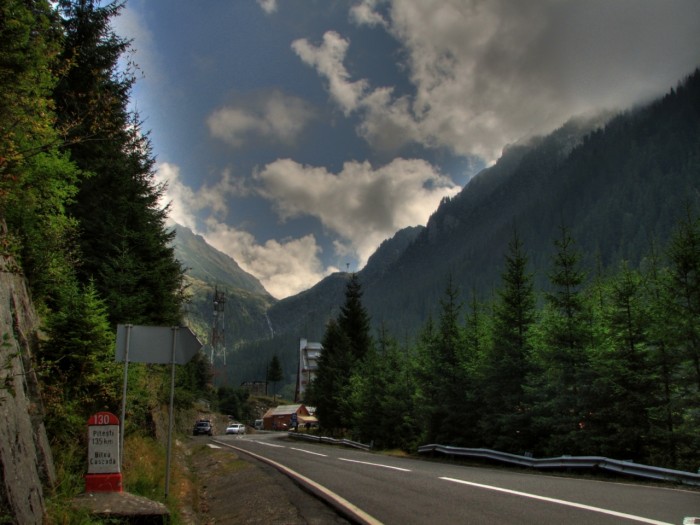
Sibiu, Sibiu County
Bâlea Lake Resort
Situata in aria comunei Cartisoara din masivul Fagaras; se intinde pana la altitudinea de 2.500 m; include relieful alpin, lacul, flora si fauna din circul...
42.7 km

10.8 km

Brașov, Brașov County
Black Church of Brașov (Evangelical Fortified Church Ensemble)
Heritage site in Braşov County, Romania
41.8 km
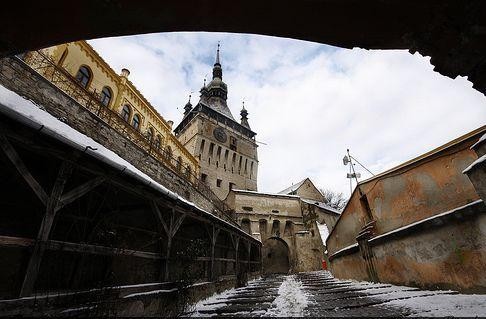
Danes, Mureș County
Sighișoara Clock Tower
Situat in partea de est a platoului inferior al Cetatii Sighisoara; construit in preajma secolului al XIV-lea, pentru a proteja poarta principala a orasului si...
33.7 km
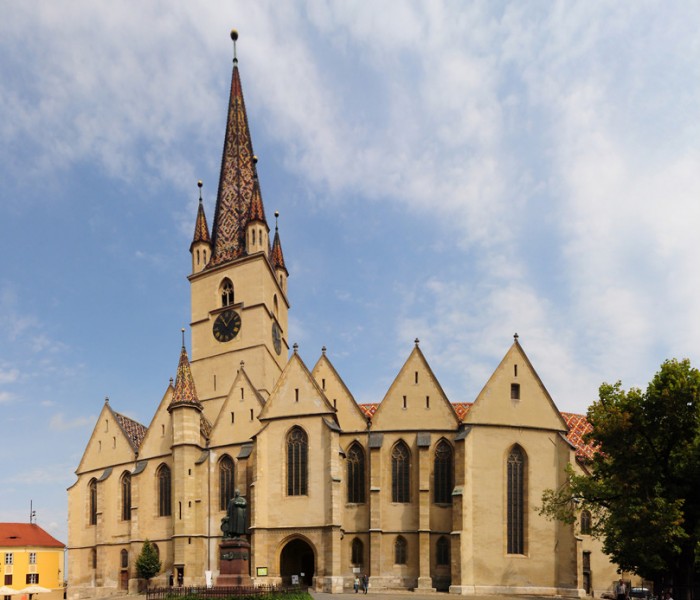
Sibiu, Sibiu County
St. Mary's Evangelical Church
Situata in Piata Huet, localitatea Sibiu; a fost ridicata in secolul al-XIV-lea, pe locul unde exista o veche biserica inca din secolul al-XII-lea; cladirea...
37.8 km

Sibiu, Sibiu County
Brukenthal National Museum
Situat in Piata Mare nr.4-5; colectiile baronului von Brukenthal au luat nastere in principal intre anii 1759-1774, perioada pe care acesta a petrecut-o la...
37.9 km
Sibiu, Sibiu County
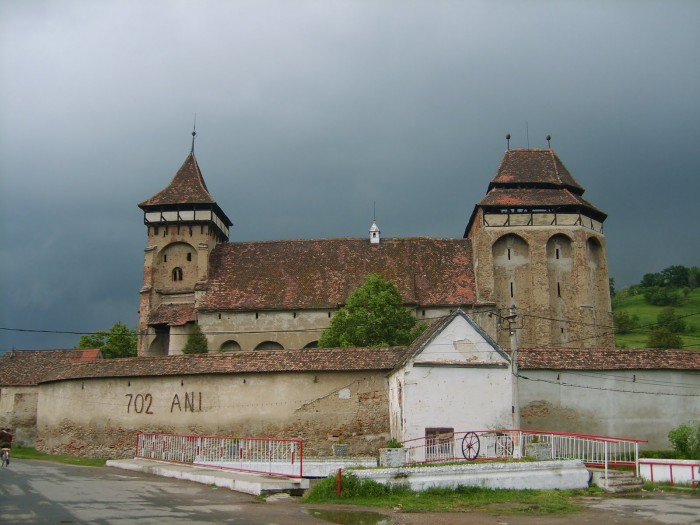
Valea Viilor Fortified Church
Situata in localitatea Valea Viilor; a fost construita in secolul al XII-lea, urmand sa fie fortificata in secolul al XV-lea si al XVI-lea; inconjurata de o...
9.0 km
Sibiu, Sibiu County
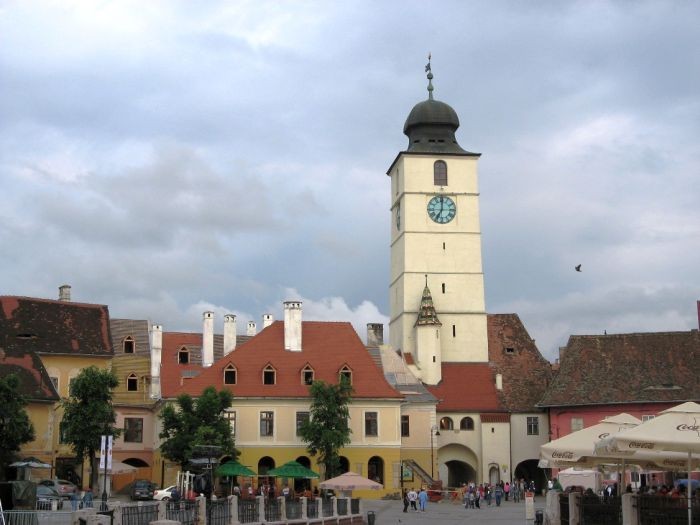
The Council Tower
Situat in Piata Mica nr.1, localitatea Sibiu; construit deodata cu cea de-a doua incinta fortificata, intre anii 1224 si 1241; este considerat simbol al...
37.7 km
Sibiu, Sibiu County
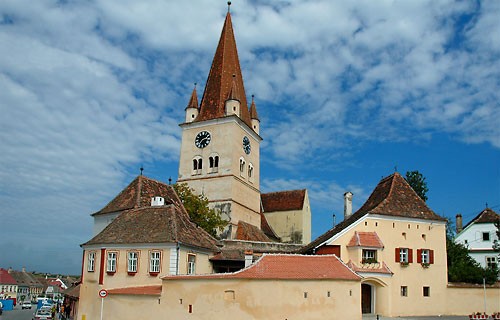
The Fortified Evangelical Church of Cisnădie.
Situata pe strada Cetatii nr.1-3, localitatea Cisnadie; construita in secolul al XIII-lea; fortificata dupa atacul turcesc din 1493: turnul central a fost...
46.1 km
Cultural life and traditions
Events in the Moșna Fortified Church area
Medieval festivals, traditional fairs, concerts and local activities recommended in Transylvania.

Heritage and History

Moșna, County of Moșna
The Festival of Medieval Fortresses and the Open Doors Days
Guided night tours, traditional crafts workshops and historical re-enactments featuring knights and ladies.
WHEN
May 15-17, 2026


Traditions and Cuisine
Moșna, County of Moșna
The Fair of Saxon Traditions and Local Cuisine
Discover local producers, traditional Saxon pastries baked in a wood-fired oven, artisanal syrups, and rhubarb jam.
WHEN
Every weekend (May - October)

Ecotourism and Nature
The hills of Transylvania, County of Moșna
Guided Hikes on the Transylvanian Hills Trail
Take excursions along unmarked trails through ancient meadows, centuries-old oak trees, and villages with fortified churches that are UNESCO World Heritage sites.
WHEN
Friday – Sunday (Season 2026)
On foot, exploration gains depth
Discover the surroundings and local geography
Explore the trails, terrain, and natural landmarks around Moșna Fortified Church.

Guides and practical tips
Useful travel articles
Travel guides, practical recommendations and tourist itineraries for Transylvania.

Tourist guide
Top 5 Atracții Turistice și Trasee Montane în Zona Moieciu - Bran
Descoperă cele mai spectaculoase peisaje carstice, chei adânci și cetăți medievale din imediata apropiere a stațiunii Moieciu.

Tourist guide
Ghid de Drumeție: Traseul Moieciu de Sus spre Platoul Bucegi
Un itinerariu montan de o frumusețe rară ce urcă din Valea Băngăleasa spre Poiana Guțanu și crestele maiestuoase ale Bucegilor.

Tourist guide
Castelul Bran: Istorie, Legende și Secrete Medievale
Află adevărata poveste a fortăreței medievale din Pasul Bran, reședința de suflet a Reginei Maria a României.
THE JOURNEY STARTS WITH AN IDEA
The next story is on the way.
From the first stop to the last stay, make room for a new Romania.
