


MONUMENT · DOBRUJA
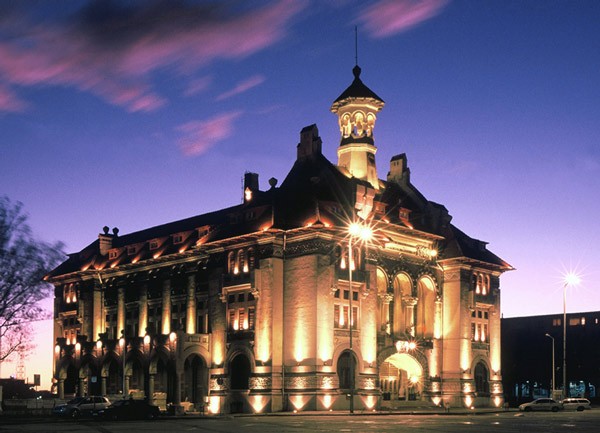
The casino in Constanta.

Constanta, Constanța County
Add location to your trip planner.
Practical access information

VISITING HOURS
Check the local visiting schedule

TICKET PRICE
Information available at the cashier's desk

RECOMMENDED VISIT DURATION
1-2 hours
Sources and external references
Wikipedia Encyclopedia (EN)
Visitor information and guide
 Navigate with Google Maps

ABOUT THE CASINO IN CONSTANTA.
The Casino in Constanța: The Art Nouveau Jewel of the Black Sea and the Story of a European Renaissance
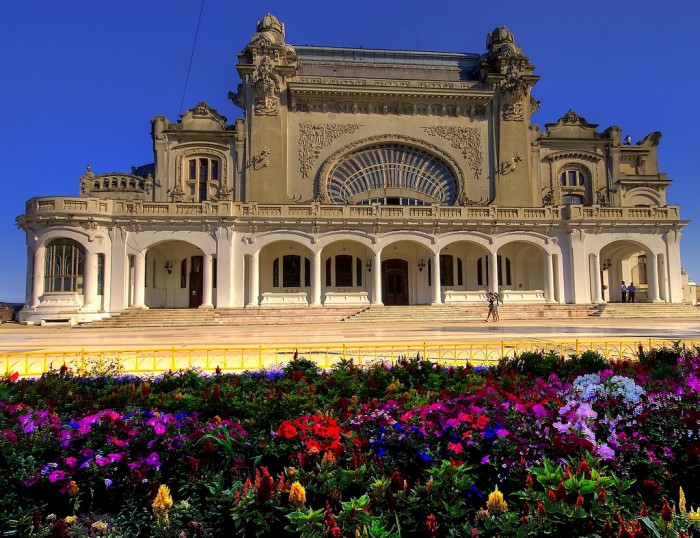
On the promenade that stretches above the dark waters of the Black Sea, where waves crash against millennia-old rocks and the Pontic breeze mingles the scents of salt with those of history, stands a building that seems to have been taken from the most brilliant pages of the European Belle Époque. The Casino in Constanța is not just a historical building or a simple architectural monument; it is a complex symbol of the ambition of a young nation to find its place among the great civilizations of Europe, a subtle architectural bridge between the Western avant-garde and the Eastern spirituality of the Pontus Euxinus, a silent witness to the political metamorphoses that have shaken the continent from the end of the 19th century to the present day. Once proudly nicknamed "Monte Carlo of the Black Sea," this casino represents one of the most moving and dramatic stories of cultural resilience in all of Southeastern Europe, a living and profound testament to the fact that true heritage, that which is imbued with soul and human aspirations, never disappears into oblivion, but simply waits, patiently and with dignity, for the historical moment of its renaissance in its original splendor.
Historical Roots: From Ancient Tomis to Constanța of the Belle Époque
A 2,600-Year Legacy on the Shores of the Pontus Euxinus
Before the fine stone, wrought iron, and colored glass of Art Nouveau rose majestically along the waterfront, this sacred place bore the imprint of one of the oldest and most continuous urban settlements in all of Europe. In the 6th century BC, Greek colonists from Miletus, that illustrious commercial center of Ionia, founded the city of Tomis here, a strategic emporium that formed a vital link between the luxurious Mediterranean world and the mysteries of the northern Pontic steppes, between the gold of the Scythians and the silk of the Orient. Tomis witnessed the passage through history of colossal empires that definitively shaped the cultural and political destiny of Europe: the Roman Empire, which conquered it militarily in 29 BC and transformed it into an important provincial capital of Scythia Minor, an outpost of Latin civilization on the edge of the known world; the Byzantine Empire, which carefully preserved it as a Christian Orthodox outpost for centuries, against the Islamic expansion; and finally the Ottoman Empire, which named it Kustendje and ruled it with a firm hand for almost five hundred years, until 1878, leaving behind a multicultural imprint that persists today in the architecture and spirit of the city.
When, in AD 8, Emperor Augustus, the absolute ruler of the Roman world, exiled the great Latin poet Ovid to Tomis, on "the most remote shores of the empire," the city entered forever into the deep cultural consciousness of Europe. Ovid, that singer of love and metamorphoses, died in exile here in AD 17, leaving in his immortal poems "Tristia" and "Epistulae ex Ponto" moving descriptions of a world at the subtle boundary between civilization and barbarism, between eternal Rome and the Pontic mysteries. Today, the imposing statue of the poet watches over Ovid Square, just a few steps from the Casino, reminding us that this place has always been a fertile meeting point between cultures, between East and West, between antiquity and modernity, between the Latin dream and the Balkan reality.
The Treaty of Berlin and the Birth of a Modern Nation
The decisive moment, the true act of birth for the modern destiny of Constanța and all of Dobruja, came with the Russo-Romanian War of Independence in 1877-1878, that conflict which united the Romanian people around the dream of national freedom. After the decisive victory against the Ottoman Empire, the Treaty of Berlin of July 13, 1878, signed under the diplomatic auspices of German Chancellor Otto von Bismarck, officially recognized the full independence of Romania and, as a diplomatic reward for the loss of southern Bessarabia in favor of the Russian Empire, assigned Northern Dobruja to the new state, including the strategic city of Constanța and the Danube Delta. This treaty, meticulously negotiated by the great European powers – Germany, Russia, Great Britain, France, Austria-Hungary, Italy, and the Ottoman Empire – represented Romania's entry onto the international stage as a sovereign state and paved the way for the transformation of Constanța into one of the most important and modern ports in Southeastern Europe.
Under the reign of King Carol I, born Karl von Hohenzollern-Sigmaringen and a direct cousin of German Emperor Wilhelm I,
At the beginning of the 20th century, all of Europe was living under the fascinating spell of the Belle Époque, that era of boundless confidence in scientific progress, aristocratic elegance, and cultural refinement, which gave rise to immortal architectural masterpieces such as the Casino de Monte-Carlo, inaugurated in 1863 as a masterpiece by Charles Garnier, the architect of the Paris Opera; the Kursaal in San Sebastián; the casino in Baden-Baden, a temple of German luxury; or the one in Venice, the jewel of the Italian lagoon. In this vibrant European context, Romania, led by a German king with a deep French culture and an intellectual elite educated in Paris and Vienna, ardently desired its own symbol of modernity, progress, and refined luxury.
Constanța, with its unique strategic location on the Black Sea coast, its port undergoing rapid technological development, and its cosmopolitan population composed of Romanians, Greeks, Turks, Tatars, Sephardic and Ashkenazi Jews, Germans from Transylvania and Dobruja, Armenians, and Italians, was the ideal and inevitable place for such an ambitious and visionary project. The city council, under the energetic leadership of Mayor Alexandru Belcic, decided in April 1902 to build a building “with functions similar to those of major European casinos,” a Kursaal that would become the social, cultural, and fashionable center of the new seaside resort. The ambitious works began in 1904, and on August 15, 1910, in the magnificent presence of Crown Prince Ferdinand, the future King Ferdinand I, the beloved grandson of Carol I, the Constanța Casino was officially inaugurated, immediately entering into legend as “the pearl of the Romanian Riviera” and “the jewel of the Black Sea.”
Architectural Masterpiece: Between the Neoromanian Dream and the Art Nouveau Avant-Garde
Daniel Renard: A Swiss-Romanian Architect Trained in Paris
The architectural story of the Casino is as fascinating, complex, and dramatic as its historical one, marked by a succession of contradictory artistic visions and the political upheavals of the time. Initially, in 1903, the ambitious project was entrusted to the Romanian architect Petre Antonescu, an undisputed master of the Neoromanian style who had designed numerous monumental buildings throughout the country, from the Romanian Athenaeum to the History Museum of Bucharest. Antonescu envisioned a Casino deeply inspired by the traditions of Romanian folk art, a solid structure that would proudly reflect the national identity of the new Romanian state, similar to a theater with two symmetrical towers at its ends, laden with ethnographic symbols and references to monastic architecture.
However, the project's fate changed radically with the change in power of political parties. In 1905, when the conservatives took over the government, they abruptly removed Antonescu from the project and enlisted the services of an architect with a truly international and cosmopolitan background: Daniel Renard. Born in 1871 in Dragomirești, Dâmbovița County, to a Romanian mother, Petra Ionescu, and a Swiss father, Prosper Renard, Daniel Renard was a true citizen of Europe, a man of the world. A native French speaker and raised in a deeply cosmopolitan atmosphere, he studied architecture at the prestigious École nationale supérieure des beaux-arts in Paris, in the workshop of Julien Guadet – one of the most influential Beaux-Arts theorists and professors of the era, who had collaborated closely with Charles Garnier on the magnificent construction of the Paris Opera. Renard graduated with honors in 1900 and actively contributed to the creation of the Romanian Pavilion at the Universal Exhibition in Paris that same year, being officially decorated by the French government for this remarkable achievement.
When he was recalled to Constanța in 1907, after the liberals returned to power and the conservatives were removed, Renard definitively abandoned the rigid specificities of the Neoromanian style in favor of Art Nouveau, that revolutionary "New Art" which, at the beginning of the 20th century, radically transformed European architecture from Brussels to Vienna, from Paris to Glasgow, from Barcelona to Riga. Under the strong influence of the casinos of the era and the cosmopolitan, liberal, and avant-garde spirit of European resort towns, Renard designed a building that harmoniously combined the fluid, organic, and sinuous lines of Art Nouveau with sophisticated eclectic elements, dominated by an innovative and spectacular central motif: a demi-rosette in the shape of a Saint James shell, a monumental stained glass window in the shape of a fan that dominated the main facade facing the sea.
Art Nouveau and Secession: A Solid Bridge Between Constanța and Europe
The style chosen by Renard placed the Casino of Constanța
On December 21, 1909, a prestigious committee composed of renowned European engineers and architects – Elie Radu, Ion Mincu, and Dimitrie Maimarolu, prominent figures in Romanian architecture with international training – inspected the construction site and made essential "additions" to the project: a large hall for the restaurant with a modern kitchen and ancillary facilities, an impressive and monumental staircase leading through a spectacular archway, additional entrances for public access, and modern changing rooms and restrooms. These modifications, suggested by figures in Romanian architecture with a European vision, contributed to the completion of a masterpiece that was, at its core, a fascinating dialogue between Romanian tradition and Western avant-garde.
Anghel Saligny's Engineering: A Bridge Between Science and Art
One of the most fascinating and moving aspects of the Casino's construction is its profound and structural connection to world-class Romanian engineering. In the basement of the building, massive riveted metal beams made by the brilliant engineer Anghel Saligny are preserved in exceptional technical condition after more than a century of existence – the same types of innovative beams that Saligny used in the impressive construction of the Cernavodă Bridge, inaugurated between 1890 and 1895, which at the time was the longest metal bridge in Europe and a marvel of world engineering. Saligny, the son of a French pedagogue from Alsace who settled in Romania, studied engineering at the Technical University of Charlottenburg, Germany, under the guidance of illustrious professors such as Schwedler and Franzius, and is rightly considered one of the pioneers of metal and reinforced concrete construction, technologies that were revolutionary for the time.
Saligny was also directly responsible for the ambitious development of the Port of Constanța between 1896 and 1916, and from the massive earth excavated for the construction of the port basins, he created the artificial embankment on which the Casino proudly stands. Thus, the entire area – the modern port, the sculpted embankment, the Art Nouveau Casino, and the Cernavodă Bridge – represents a coherent, visionary, and unique work of modernizing Romania under the reign of King Carol I, a compelling demonstration of the ability of a young and ambitious nation to rapidly assimilate and produce at the level of the most advanced European technologies and concepts of the time.
The Interior: Stained Glass, Paintings, and Luxurious Decorations
The interior of the Casino was as impressive, refined, and luxurious as its monumental exterior. The walls were lined with noble wood panels painted in oil, in warm and elegant shades, the vast ballroom was decorated with silk drapes and crystal chandeliers, and the two generous reading rooms allowed visitors to read local, national, and international newspapers – a compelling demonstration of the institution's profound cosmopolitan and European character. The Art Nouveau stained glass windows in the main staircase area, with an impressive surface area of 50 square meters, created by artist Ioan Cadar during the meticulous restoration from 1986-1988, represented an absolute masterpiece of European decorative art. Baroque-fresco style paintings, sophisticated polychrome stuccoes, and elaborate artistic ironwork completed an interior ensemble that strikingly resembled the salons of the great European casinos in Monte Carlo, Baden-Baden, or Venice.
The outdoor terrace on the seafront, with a spectacular panoramic view of the Black Sea, the bustling port, and the Genoese Lighthouse, was perhaps the most sought-after, desired, and photographed place in the entire complex, a privileged space where European aristocracy, diplomats, business people, and Romanian intellectual elites met to enjoy the salty Pontic breeze, play roulette, baccarat, or blackjack, and attend concerts and charity balls organized by the municipality.
Legends, personalities, and pivotal historical moments
The years of glory: 1910-1916 and the European elite
The lavish inauguration on August 15, 1910, in the solemn presence of Prince Ferdinand, the future King Ferdinand I, grandson of Carol I, was a truly European and cosmopolitan event. Prominent figures such as Prime Minister Ionel Brătianu and influential politician Vasile Morțun attended, and the international press, from Vienna to Paris and from London to Constantinople, reported with interest on the birth of a new center of luxury, culture, and entertainment on the shores of the Black Sea. In its early years of operation, before the Great War, the Casino quickly became the preferred, almost obligatory, venue for the Romanian and international elite: diplomats accredited to Bucharest, prosperous businessmen, famous artists, musicians, and aristocrats from all over Europe came here for the seaside season, for symphony concerts, for lavish charity balls organized by the municipality, and, of course, for gambling in an unprecedentedly luxurious setting.
However, the initial reception in the press of the time was not entirely positive or enthusiastic. The conservative newspaper "Conservatorul" described the building with biting irony as a "gaudy structure adorned with all sorts of trinkets" and "bizarre ornaments," criticizing its "complete asymmetry" and "Babylonian mixture of styles," dismissively calling it "a monument erected in honor of ineptitude and bad taste." These criticisms, coming from intellectuals who were rigidly attached to classical traditionalism and academic symmetry, did not prevent the Casino from quickly becoming, despite the controversies, a recognized international symbol of Constanța and Romania's modern, European ambitions.
World War I: Field hospital, martyrdom, and bombardments
When Romania entered World War I on the side of the Entente in August 1916, the Casino was rapidly transformed by the International Red Cross into a field hospital to care for the wounded brought from the front. On August 20, 1916, while the city of Constanța was heavily bombarded by Bulgarian and German troops of the Central Powers, the historic building was directly hit by artillery shrapnel, and ten innocent people lost their lives inside, including medical personnel. The Casino miraculously survived but remained seriously structurally damaged, and on November 19, 1917, after the city was occupied by the troops of the Central Powers, it partially resumed its functions under foreign military administration. In 1934, the already elderly architect Daniel Renard was called upon to carry out extensive restoration and modernization work, restoring the building to its former splendor and elegance
One of these messages, discovered in 2020 during the restoration and found on the shell-shaped window facing the sea, listed the names of 14 prisoners and the date December 31, 1951: “This Casino is being built by political prisoners from 1951, December 31. Supervised by Architect Jojea Constantin. The team of plasterers is led by Rusu A. Ioan, Botoș Dumitru from Arad County, Jercan Constantin, Ciscău Gheorghe, Coraș Ionel, Voicilă Nicolae, Sava Nicolae, Pop Ioan, Vlădescu Ilie, Hosu Petre, Hosu Gheorghe, Anastasiu Ștefan, Gorbovan Gh., Bamer Fidel and Morton Iuliu.” These poignant testimonies, discovered after seven decades of silence, represent a desperate cry of “Do not forget us!” addressed to future generations, embedded in the plaster of a building that would become the ultimate symbol of Romanian cultural and moral resistance against totalitarian barbarism.
The 1986-1988 Restoration and Cultural Renaissance
Between 1986 and 1988, during the late communist regime, the Casino underwent extensive and meticulous restoration by a team of internationally renowned visual artists: Sorin Dumitru, Gheorghe Firca, Ioan Miturca, Nae Mira, and Nicolae Moldoveanu. Complex restorations of Baroque-fresco painting, polychrome stucco, and artistic stained glass were carried out, bringing the original interior decorations back to life after they had been lost or degraded. This restoration represented a significant moment of cultural renaissance, a courageous attempt to restore the building’s lost artistic and historical dignity after decades of communism and oblivion.
After the anti-communist revolution in December 1989, the Casino was assigned to the Ministry of Culture, then led by the eminent intellectual Andrei Pleșu. At the suggestion of Professor and Academician Mihai C. Băcescu, inspired by the famous Oceanographic Museum in Monaco, an ambitious plan was proposed to transform the building into a “Romanian Oceanographic Institute,” in accordance with the scientific vision of Grigore Antipa, the founder of modern Romanian marine research. Unfortunately, the enormous costs of renovation, institutional divisions, and post-revolutionary political restructuring put an end to this ambitious scientific project, and after a few months of hope, the Casino returned to its function as a restaurant and commercial entertainment venue.
The Casino in Cinema: Francis Ford Coppola’s “Youth Without Youth”
In 2007, the Casino in Constanța became an international film set for several memorable scenes from the film “Youth Without Youth,” directed by legendary American filmmaker Francis Ford Coppola and based on the philosophical novella of the same name by Romanian writer Mircea Eliade, one of the greatest thinkers of the 20th century. The film, an ambitious co-production between the United States, Romania, France, Italy, and Germany, starring British actor Tim Roth in the lead role, brought the Casino back into the spotlight for international audiences and global media, presenting it as a mysterious space imbued with millennia of history, poetry, and metaphysics. This cinematic appearance represented a crucial moment in reconnecting the monument with global cultural memory and the universal literary world.
Neglect and Abandon: 2008-2019, a Period of European Mourning
Unfortunately, after 2008, the Casino was permanently closed to the public due to imminent and serious risks of structural collapse. For eleven long and painful years, access inside was strictly prohibited, and the iconic building, left in disrepair and unkempt, became a poignant symbol of the authorities' indifference, stifling bureaucracy, and the loss of European cultural heritage. The aggressive salinity of the sea air, massive water infiltration, violent winter storms, and vandalism wreaked havoc, and the Casino, once the undeniable pride of Southeastern Europe and the jewel of the Black Sea, had become a romantic but dangerous ruin, photographed by tourists from all over the world as a monument to decline and abandonment. In 2014, the structural situation had become so serious and critical that local authorities permanently prohibited access to the area in order to prevent fatal accidents and looting.
The Renaissance: Restoration 2020-2025 and Triumphant Reopening
The Restoration Project: A Major European Investment in Heritage
After years of unwarranted delays, absurd bureaucratic obstacles, and unfulfilled political promises, the official and effective work on the rehabilitation, structural consolidation, and artistic restoration of the Constanța Casino began in January 2020. The project, substantially funded by the Ministry of Development, Public Works and Administration through the National Investment Company, was carried out by the consortium of companies Aedificia Carpați S.A. and Remon Proiect S.R.L., with a total cost exceeding €37-40 million. The complex works lasted for five years and represented one of the most extensive, sophisticated, and costly restoration operations of a historical monument in Romania and throughout Southeastern Europe.
The builders and restorers meticulously restored 1,230 unique sculptural ornaments, over 1,500 square meters of Carrara marble and other noble varieties, murals covering a total area of over 2,222 square meters, and artistic stained glass covering an area of 154 square meters. Deteriorated metal structures with a total weight of over 25,000 kilograms were demolished and replaced, and the building's supporting structure was significantly reinforced with steel reinforcements mounted in massive foundations weighing nearly 60,000 kilograms. The theater stage inside the Casino was made from high-quality Siberian pine, and five precious kilograms of gold leaf were used for the gilded decorative elements. The historical beams of Anghel Saligny in the basement were found to be in exceptional technical condition and preserved with reverence as a living testament to Romanian and European engineering genius.
Moving Discoveries: Messages from Political Prisoners
During the restoration, the Casino revealed its deepest and most moving secrets. In addition to Saligny's historical beams, restorers discovered notes left by political prisoners from 1951 in the walls and plaster, written on cement sack paper. A second message, written in German and discovered in 2023, belongs to a political prisoner originally from Sibiu, from the German community of Transylvania. These precious historical documents, kept in the custody of the National History and Archaeology Museum in Constanța, are now displayed to the public and represent the most moving and poignant testimonies of human and moral resistance against communist totalitarianism. A solemn memorial plaque dedicated to political prisoners was unveiled on the Casino's promenade in May 2025.
The Reopening: May 21, 2025, a New European Beginning
On March 26, 2025, the Casino was officially and symbolically handed over to the Constanța City Hall, and on May 21, 2025, during the celebrations of the City of Constanța Days, it was triumphantly reopened to the public. In the first four days after the inauguration, approximately 10,000 enthusiastic visitors crossed the threshold of the historical building, and by February 2026, over 220,000 people had visited the reborn monument. The Casino no longer functions as a gambling hall, as this is prohibited by law in Romania for such monuments, but as a contemporary cultural center of truly European scale, hosting high-profile permanent and temporary exhibitions, symphony concerts, theater performances, international conferences, and prestigious cultural events.
A Practical Guide to Visiting and Experiencing Today's Tourist Attractions
How to Get There and When to Visit the Monument
The Constanța Casino is located on Regina Elisabeta Boulevard, numbers 2-4, in the city's old historical center, on the impressive waterfront of the peninsula, directly on the Black Sea coast. It is situated very close to Ovidiu Square with the poet's statue, the Genoese Lighthouse, the National History and Archaeology Museum, the Carol I Mosque, the "Saints Peter and Paul" Cathedral, and ancient ruins, forming a remarkable and unique cultural complex in the historical heart of Constanța.
The visiting hours are from Wednesday to Sunday, between 10:00 AM and 6:00 PM, with a break from 1:30 PM to 2:00 PM, and the last entry is allowed at 5:30 PM. During the summer season, July and August, the hours may be extended flexibly until 8:00 PM or 9:00 PM. The Casino is closed for visits on Mondays and Tuesdays. Tickets can be purchased online safely from the official website bilet.cazinoul.com or from the conveniently located Self Pay machines opposite the main entrance.
The visiting fees, updated for the year 2026, are as follows: 53 lei for adults (full price) and 26 lei for students, pupils, and pensioners (reduced price). Entry is free for people with mobility impairments or visual or hearing disabilities, for children under 7 years old, and for officially authorized tourist guides accompanying organized groups. Visiting the entire building with a specialized guide, for groups of 25-30 people, costs 100 lei per person. Professional photo and video sessions for weddings or events cost 1,000 lei for 30 minutes, and family sessions cost 500 lei for the same duration.
What You Will Discover Inside: A Journey Through Time
A visit to the Constanța Casino is a profound journey through time and space, across three distinct and well-defined levels, each offering a unique and memorable experience.
On the ground floor, the permanent exhibition "The History of the Casino" presents detailed historical information, precious archival documents, original architectural plans, and key moments from the monument's eventful life, from its conception in
The casino frequently and regularly hosts classical and contemporary music concerts, high-profile theatre performances, academic conferences, exhibitions of contemporary art, and various cultural events, transforming itself into a vibrant, dynamic, and pulsating space where the glorious past creatively and fruitfully dialogues with the present. An elegant café is due to open in the near future inside, offering visitors the opportunity to enjoy an aromatic coffee or tea with a direct view of the sea, just like in the glory days of the 1910s.
The European context: A destination of universal heritage
The casino in Constanța is an integral part of a unique and valuable European cultural circuit. For European and international tourists visiting other major historical casinos on the continent – Casino de Monte-Carlo in Monaco, Casino di Venezia in Italy, Kurhaus Casino in Baden-Baden, Germany, Casino de Biarritz in France, Kursaal in San Sebastián, Spain, or the casino in Ostend, Belgium – the casino in Constanța offers a unique, authentic, and profound perspective on how the spirit of the Belle Époque manifested itself and adapted to the eastern periphery of the continent, in a fascinating area of complex cultural interaction between the Latin, Slavic, Germanic, Ottoman, and Eastern worlds.
In the immediate vicinity, tourists can also visit and explore Ovidiu Square with the imposing statue of the exiled poet, the National History and Archaeology Museum, housed in the former historical seat of the City Hall, an architectural work by Petre Antonescu, the Roman Building with Mosaic, which houses an impressive Roman mosaic from the 4th century, one of the largest and best-preserved in all of Europe, the Genoese Lighthouse, built in 1860 in memory of the prosperous Genoese merchants of the 12th-14th centuries, the Carol I Mosque, inaugurated in 1913, the first building in Romania made entirely of reinforced concrete, the "Saints Peter and Paul" Cathedral, and the Port of Tomis, with its authentic maritime atmosphere.
Conclusion: A Monument to European Cultural Resilience
The Casino in Constanța is much more than just a historical building or an ordinary architectural monument. It is a living monument to European cultural resilience, an undeniable and moving testament to the fact that the authentic values of heritage, those imbued with soul, human aspirations, and history, cannot be definitively destroyed by barbarism or oblivion, but only temporarily dormant, awaiting with dignity the historic moment of their rebirth in splendor. From ancient and mysterious Tomis, through the tragic exile of Ovid, through the Byzantine and Ottoman eras, through King Carol I's visionary ambition to create a luxurious European Riviera on the shores of the Black Sea, through the international architectural vision of Daniel Renard, trained in Paris, and through the European engineering genius of Anghel Saligny, through the atrocious and dignified suffering of political prisoners who rebuilt it with their bare hands in 1951, and through the unworthy and painful oblivion of the 2000s, until its spectacular, triumphant, and moving rebirth in 2025, the Casino embodies and perfectly illustrates the entire complex, tumultuous, and fascinating history of a Europe in continuous and profound transformation.
For today's cultivated European visitor, the Casino in Constanța offers a unique, profound, and unforgettable experience: the opportunity to physically and spiritually step into a space that was once the indisputable center of social, aristocratic, and intellectual life in the Balkans, to admire an authentic masterpiece of Art Nouveau in fruitful and creative dialogue with the most illustrious and influential creations of European architectural avant-garde, to discover and feel the moving and poignant testimonies of human and moral resistance against the harshest totalitarianism, and to experience, in the living present, the magnificent rebirth of a cultural heritage that belongs not only to Romania but to all of Europe and humanity. It is, ultimately and without any doubt, a brilliant jewel of the Black Sea that shines again, with all its dignity and historical splendor, as it always deserved to shine.
Media gallery
Discover The casino in Constanta. in pictures

24 photos · Architecture, courtyards and captivating details


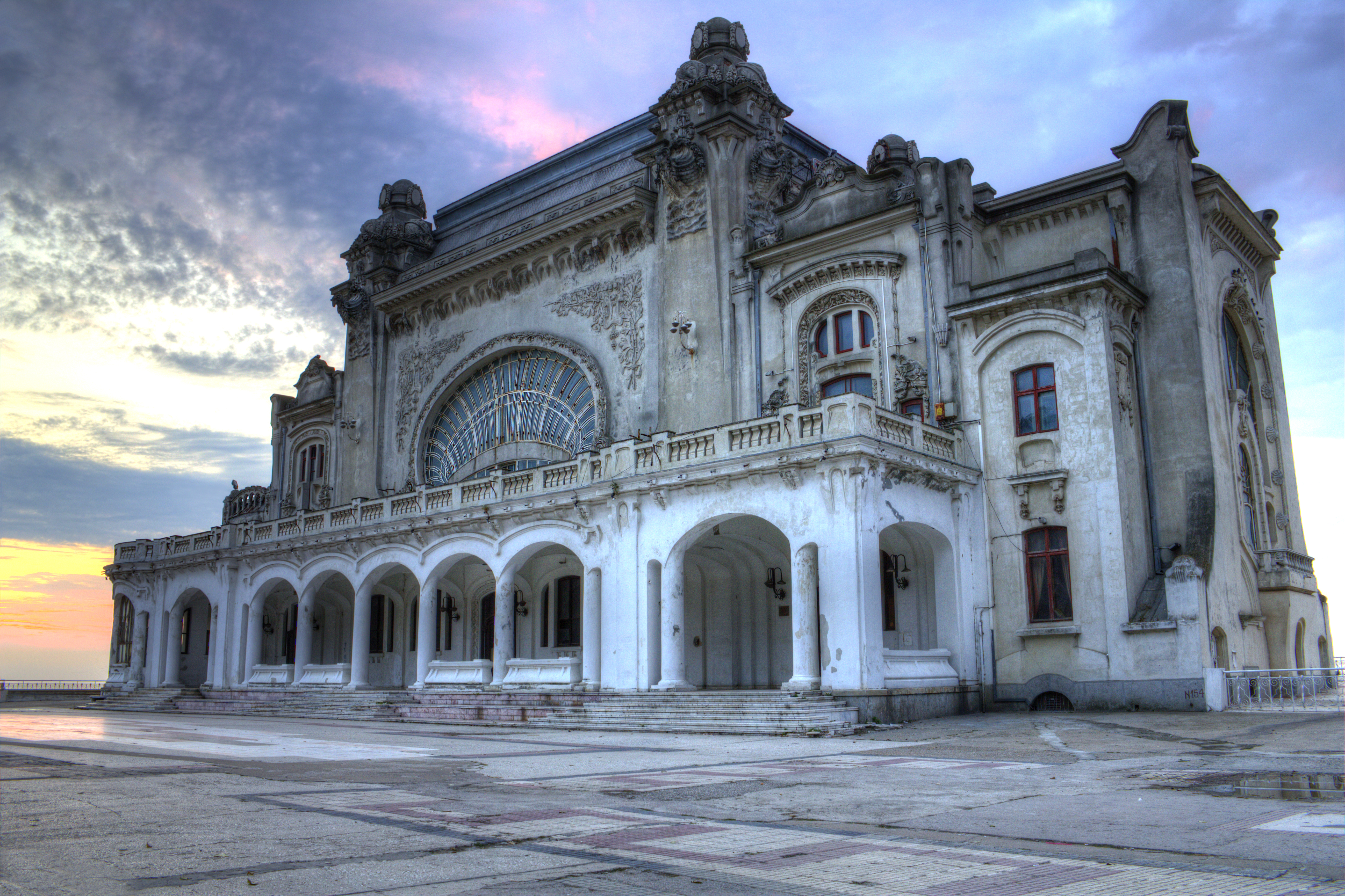


Image source: Wikimedia Commons · Public domain photos · Free license
STAY A FEW DAYS, DISCOVER THE MAGIC
Accommodation in the The casino in Constanta. area

Apartment · 3 stars

Constanța, Constanța County · 0.6 km
VLH Apartments Constanța
Comfort, relaxation and stunning views, all just steps away from the main attractions.
FROM
230 lei per night

Hotel · 3 stars
Constanța, Constanța County · 0.6 km
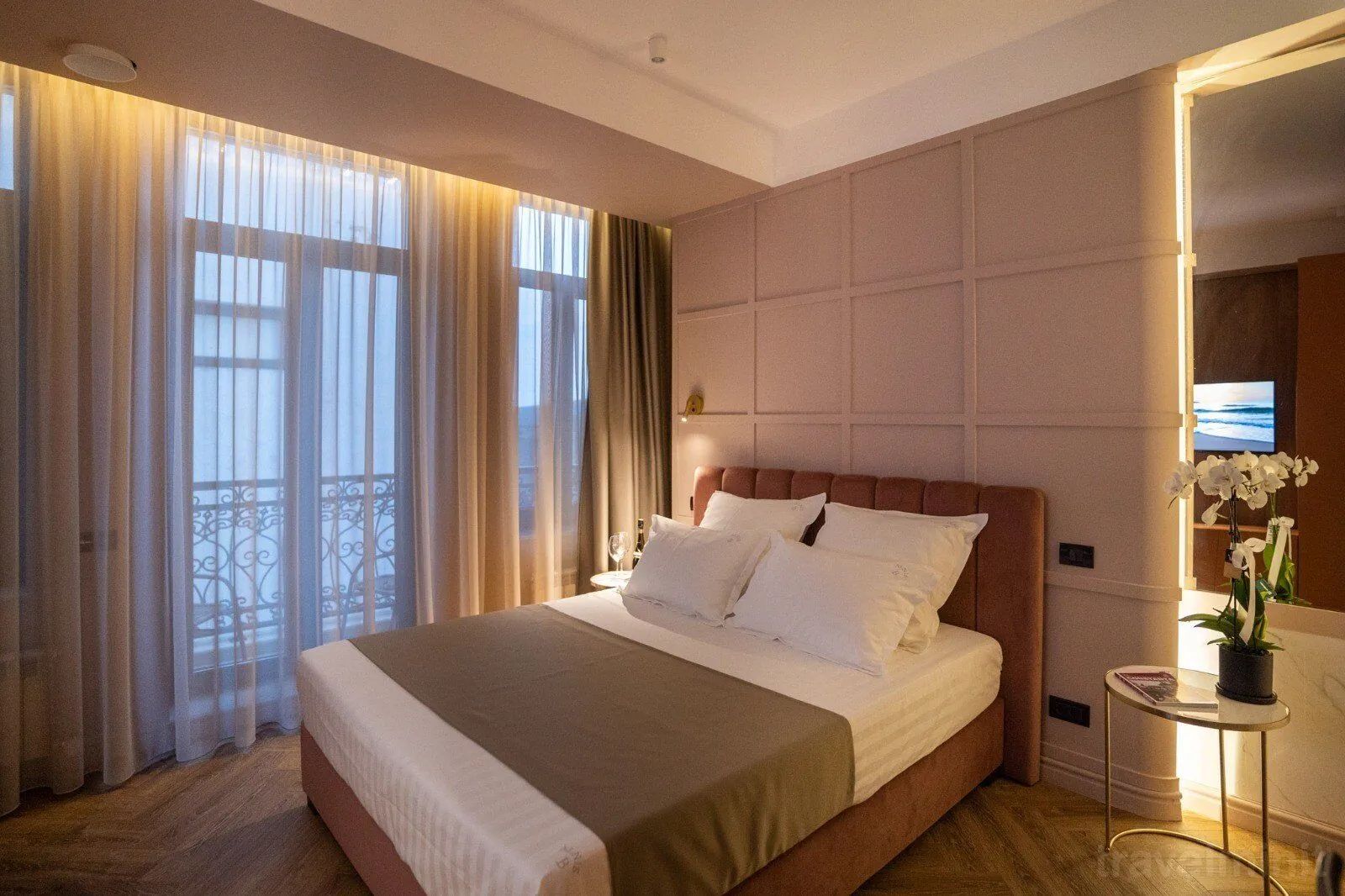
Casa Hrisicos Constanța
Pereții unei clădiri emblematice din Piața Ovidiu, rezistenți de peste o sută de ani, păstrează încă secretele unor vremuri în care deciziile politice se luau între aceste ziduri solide. Casa Hrisicos Constanța vă primește în centrul orașului Constanța, pe strada Traian numărul 1, într-un loc care a revenit în atenția turiștilor după o lungă perioadă de transformări. Ca hotel clasificat cu trei stele, unitatea vă oferă cazare confortabilă într-un cadru cu adevărat istoric. Beneficiați de Wi-Fi gratuit în întreaga proprietate, aer condiționat în toate camerele, depozit pentru bagaje pe toată perioada șederii dumneavoastră și parcare privată gratuită pentru vehiculul personal. Poziția centrală vă permite să descoperiți cu ușurință cele mai importante obiective turistice din apropiere. Puteți vizita Cazinoul din Constanța, Muzeul de Istorie Națională și Arheologie din Constanța, Marea Moschee, Muzeul Edificiul Roman cu mozaic sau puteți ajunge rapid în Stațiunea Mamaia pentru o zi la plajă. Parcare privată gratuită este disponibilă direct în incinta unității, astfel încât sosirea și plecarea dumneavoastră se vor desfășura fără nicio grijă legată de locul unde vă lăsați mașina.
FROM
290 lei per night
Holiday villa · 4 stars
Constanța, Constanța County · 0.7 km
Alnis Boutique Villa Constanța
Alnis Boutique Villa din Constanța vă pune la dispoziție parcare privată gratuită, astfel încât călătoria dumneavoastră să înceapă fără griji încă de la sosire. Această vilă turistică de 4 stele, situată pe strada Orient numărul 12, oferă un cadru elegant și confortabil pentru întreaga ședere, într-un apartament situat la etajele 1 și 2. Pe lângă parcare, beneficiați de Wi-Fi gratuit disponibil în întreaga vilă, iar camerele sunt prevăzute cu aer condiționat pentru a vă asigura un sejur plăcut indiferent de anotimp. Plățile se pot efectua prin mai multe modalități, inclusiv numerar, card bancar, transfer bancar sau voucher, iar personalul vorbește atât română, cât și engleză pentru a vă ajuta cu orice solicitare. În imediata apropiere puteți descoperi Cazinoul din Constanța, Muzeul de Istorie Națională și Arheologie din Constanța, Marea Moschee, Stațiunea Mamaia și Muzeul Edificiul Roman cu mozaic, oferindu-vă ocazia de a explora cele mai importante puncte de interes ale orașului. Check-in-ul se realizează începând cu ora 00:00, iar check-out-ul până la ora 11:30, astfel încât să aveți flexibilitate deplină în organizarea sosirii și plecării.
FROM
390 lei per night
Holiday villa · 3 stars
Constanța, Constanța County · 0.7 km
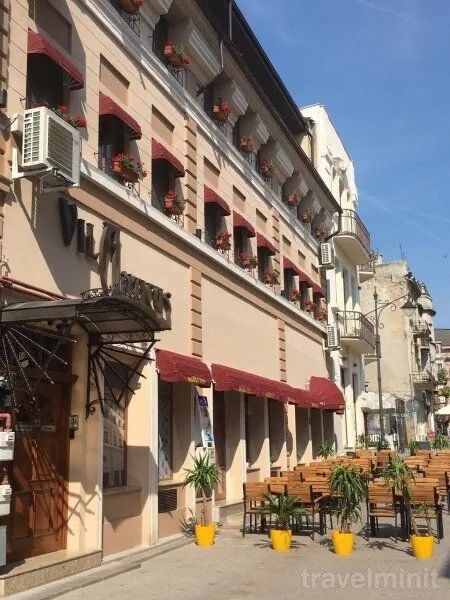
Vila Anticus Constanța
De la Vila Anticus Constanța puteți porni într-o plimbare spre Cazinoul din Constanța, un reper arhitectural emblematic situat în apropiere. Vila turistică de trei stele din Constanța reprezintă un punct de plecare potrivit pentru a descoperi atracțiile orașului și ale împrejurimilor sale, oferind un cadru liniștit pentru odihnă. Unitatea pune la dispoziție șapte camere amenajate cu grijă, dintre care unele sunt dotate cu aer condiționat pentru un confort sporit în zilele călduroase de vară. Fiecare cameră este pregătită pentru a vă oferi o ședere plăcută în orașul de la malul mării, într-un ambient primitor. Pentru nevoile dumneavoastră zilnice, vila oferă acces la Wi-Fi gratuit în întreaga proprietate, fier de călcat și un spațiu special pentru depozitarea bagajelor. Astfel, vă puteți organiza călătoria fără griji suplimentare și vă puteți bucura de fiecare moment petrecut în Constanța. Programul de primire începe la ora 15:00, iar eliberarea camerelor se realizează până la ora 12:00. La recepție puteți comunica în limba română sau în limba engleză, astfel încât șederea dumneavoastră să fie cât mai plăcută. Vă așteptăm să vă bucurați de șederea dumneavoastră la Vila Anticus și să porniți apoi într-o vizită la Muzeul de Istorie Națională și Arheologie din Constanța, pentru a descoperi istoria fascinantă a acestei regiuni.
FROM
280 lei per night
Guesthouse · 3 stars
Constanța, Constanța County · 0.8 km
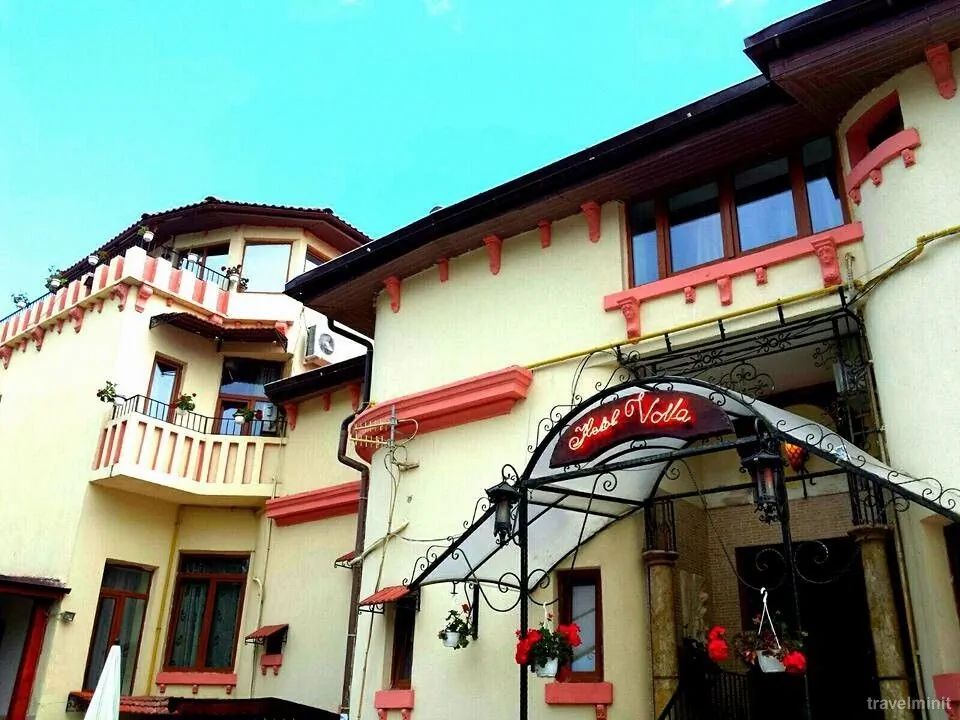
Camere de închiriat Voila Constanța
O zi petrecută în curtea mare și grădina amenajată, cu aer condiționat în cameră, reprezintă modul perfect de a începe o ședere plăcută și relaxantă la Camere de închiriat Voila din Constanța. Aceste facilități vă permit să vă bucurați pe deplin de confortul dorit după o zi petrecută în explorarea orașului și a împrejurimilor sale. Pensiunea turistică de trei stele vă pune la dispoziție parcare privată gratuită, Wi-Fi gratuit și acces facil pentru persoanele cu dizabilități, astfel încât sosirea dumneavoastră să fie cât mai comodă și lipsită de orice griji. Spațiile exterioare oferă un cadru plăcut pentru relaxare, iar toate serviciile disponibile contribuie la un sejur bine organizat și confortabil. În apropiere puteți descoperi Cazinoul din Constanța, Muzeul de Istorie Națională și Arheologie din Constanța, Marea Moschee din Constanța, Stațiunea Mamaia și Muzeul Edificiul Roman cu mozaic. Aceste obiective turistice vă oferă numeroase opțiuni de explorare culturală și momente de relaxare în zona centrală a orașului. Vă așteptăm la adresa din strada Callatis 22, unde parcare privată gratuită și accesul pentru persoane cu dizabilități fac șederea dumneavoastră cât mai practică și confortabilă.
FROM
240 lei per night
Apartment · 3 stars
Constanța, Constanța County · 0.8 km
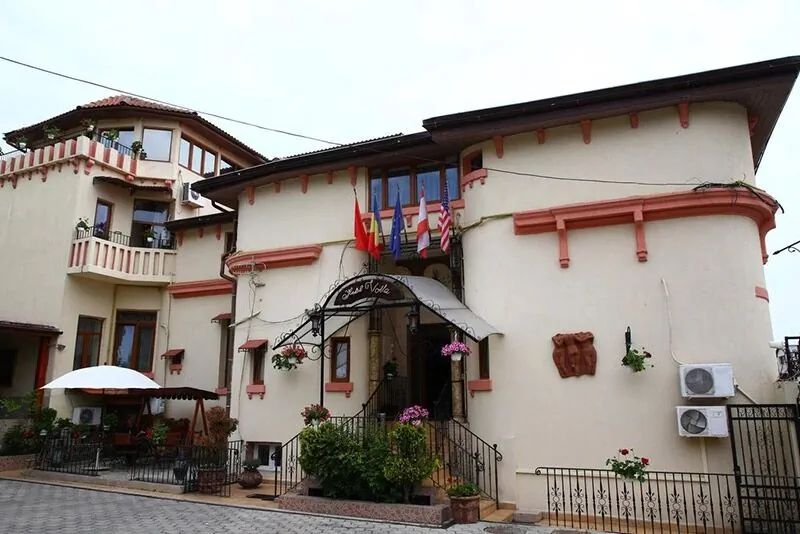
Camere De Inchiriat Voila Inn Constanta - Litoral
În apropiere puteți vizita Cazinoul din Constanța, un reper arhitectural impresionant al orașului. De aici puteți porni să descoperiți și alte puncte de interes. Camere De Inchiriat Voila Inn Constanta - Litoral, un apartament de închiriat în Constanța, reprezintă baza dumneavoastră pentru explorarea întregii zone. Unitatea dispune de lift pentru un acces facil la etaje. Spațiile de cazare sunt dotate cu aer condiționat, internet wireless, minibar, televizor cu cablu, seif, telefon și baie cu cadă sau duș. Încălzirea centrală asigură confortul pe tot parcursul anului, iar parcarea gratuită este disponibilă în limita locurilor existente. Mic dejunul se servește într-un salon situat la ultimul etaj, care include și o terasă acoperită decorată cu plante. De aici puteți admira priveliștea spre mare, la fel ca și din restaurant. În curte există o terasă cu grădină destinată relaxării oaspeților după o zi de vizitat. În vecinătate se află Muzeul de Istorie Națională și Arheologie din Constanța, Marea Moschee din Constanța, Stațiunea Mamaia și Muzeul Edificiul Roman cu mozaic, oferind numeroase opțiuni pentru timpul dumneavoastră liber. Vă așteptăm la Camere De Inchiriat Voila Inn Constanta - Litoral.
FROM
230 lei per night
BEFORE YOU HIT THE ROAD
Weather conditions in Constanta
Local forecast for The casino in Constanta., Constanta, Constanța

Real-time updated weather data
Much more to explore in this area
Nearby tourist attractions


Constanta, Constanța County
Mamaia resort.
Situata la nord de municipiul Constanta, intre Marea Neagra si Lacul Siutghiol; cartier al municipiului Constanta, are foarte putini locuitori, dar este...
4.8 km

Constanta, Constanța County
Histria Fortress
Situata pe teritoriul satului Istria, malul lacului Sinoe, teritoriul administrativ al comunei Istria; construita in anul 657 i.Hr., este cea mai veche dintre...
42.9 km
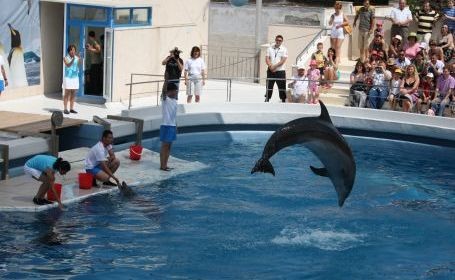
Constanta, Constanța County
Natural Sciences Museum Complex in Constanța
Situat pe bulevardul Mamaia, nr.255, municipiul Constanta; la inceputul existentei a fost format din sectii individuale, unite sub denumirea "Complexul muzeal...
4.4 km

Constanța, Constanța County
Mamaia
Localitate componentă a municipiului Constanța, județul Constanța, România
9.0 km
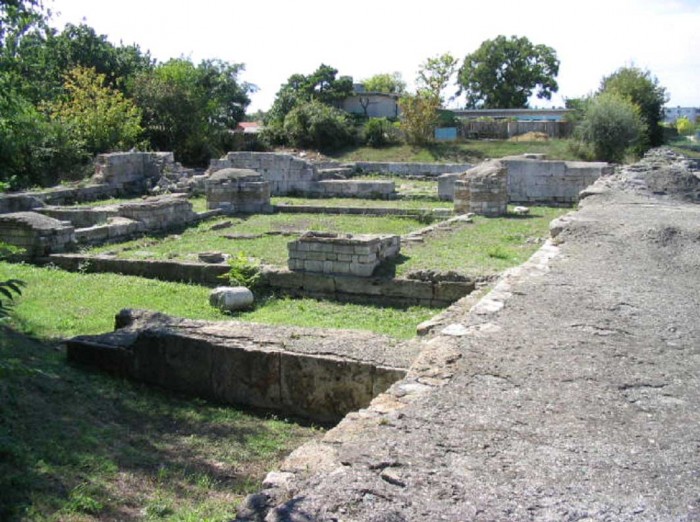
Constanta, Constanța County
Callatis Fortress in Mangalia
Situata pe teritoriul municipiului Mangalia, intre Sanatoriul balnear, Casa de Cultura, strada Constantei, Geamie si intrarea in portul comercial; intemeiata...
40.6 km
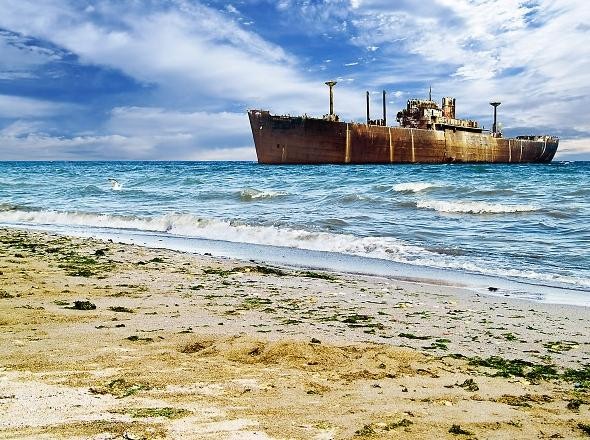
Constanta, Constanța County
Costinești Resort
Este situata in prelungirea satului Costinesti, la 31 km sud de municipiul Constanta, invecinandu-se la nord cu comuna Tuzla si la sud cu Statiunea Olimp;...
24.6 km
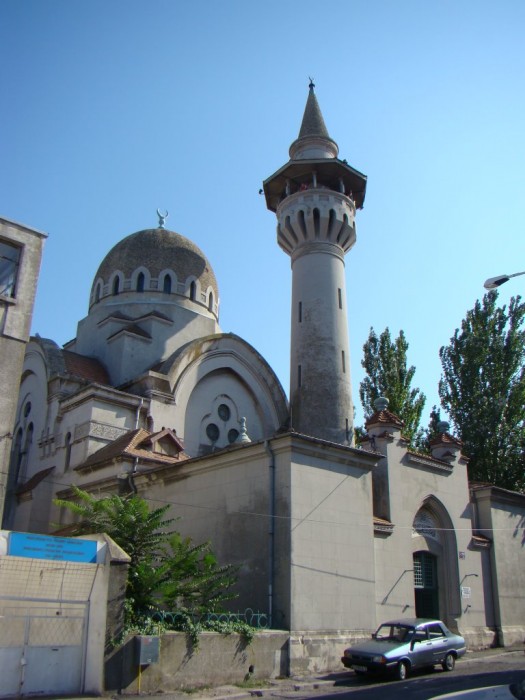
Constanta, Constanța County
Great Mosque of Constanța (Carol I Mosque)
Situata pe strada Arhieoiscopiei nr. 5 din municipiul Constanta; construita intre anii 1910 - 1912, mai poarta denumirea de "Moscheea Carol I"; planurile au...
0.4 km
Constanta, Constanța County
National Museum of History and Archaeology in Constanța
Situat in Piata Ovidiu, nr. 12, municipiul Constanta; infiintat in anul 1878, cu ajutorul lui Remus Opreanu; la inceput a functionat in cladirea prefecturii si...
0.5 km

Mangalia, Transylvania
Olimp Resort
Localitate componentă a municipiului Mangalia, județul Constanța, România
32.2 km

Mangalia, Transylvania
Neptun Resort
Localitate componentă a municipiului Mangalia, județul Constanța, România
34.2 km

47.1 km

Eforie, Constanța County
Eforie Nord
Situata in orasul Eforie, la 14 km de municipiul Constanta; amplasata la altitudinea de 6 - 20 m peste nivelul marii; statiune cu caracter permanent, are...
12.1 km
Cultural life and traditions
Events in the The casino in Constanta. area
Medieval festivals, traditional fairs, concerts and local activities recommended in Dobruja.

Traditions and Crafts

Constanta, County of Constanța
Days of Local Culture and Traditional Tourism
Open workshops featuring pottery, wood carving, and authentic folklore demonstrations by local artisans.
WHEN
May 15-17, 2026


Traditional Cuisine
Constanta, County of Constanța
The Fair of Traditional Products and Local Cuisine
Traditional products, aged cheeses, mountain honey and local delicacies prepared according to ancient recipes.
WHEN
Every weekend

Culture and Photography
Constanta, County of Constanța
Themed and Photographic Guided Tour of Cultural Heritage
A guided tour designed for history buffs, nature lovers, and photography enthusiasts, showcasing the most spectacular views in the area.
WHEN
Daily schedule available upon request
On foot, exploration gains depth
Discover the surroundings and local geography
Explore the trails, terrain, and natural landmarks around The casino in Constanta..

Guides and practical tips
Useful travel articles
Travel guides, practical recommendations and tourist itineraries for Dobruja.

Tourist guide
Top 5 Atracții Turistice și Trasee Montane în Zona Moieciu - Bran
Descoperă cele mai spectaculoase peisaje carstice, chei adânci și cetăți medievale din imediata apropiere a stațiunii Moieciu.

Tourist guide
Ghid de Drumeție: Traseul Moieciu de Sus spre Platoul Bucegi
Un itinerariu montan de o frumusețe rară ce urcă din Valea Băngăleasa spre Poiana Guțanu și crestele maiestuoase ale Bucegilor.

Tourist guide
Castelul Bran: Istorie, Legende și Secrete Medievale
Află adevărata poveste a fortăreței medievale din Pasul Bran, reședința de suflet a Reginei Maria a României.
THE JOURNEY STARTS WITH AN IDEA
The next story is on the way.
From the first stop to the last stay, make room for a new Romania.
