


TOURIST RESORT · TRANSYLVANIA
Venus Resort

Mangalia, Transylvania
Add location to your trip planner.

Practical access information

VISITING HOURS
Monday: 12:00 PM – 5:00 PM · Tuesday–Sunday: 9:00 AM – 5:00 PM (in summer until 8:00 PM)

TICKET PRICE
Adults: 45 RON · Students: 11 RON · Seniors: 23 RON · Guided tour included

RECOMMENDED VISIT DURATION
30-60 minutes
Sources and external references
Wikipedia Encyclopedia (EN)
Visitor information and guide
 Navigate with Google Maps

ABOUT VENUS RESORT
A Pearl of the Pontic Littoral in Dialogue with Millennia of History
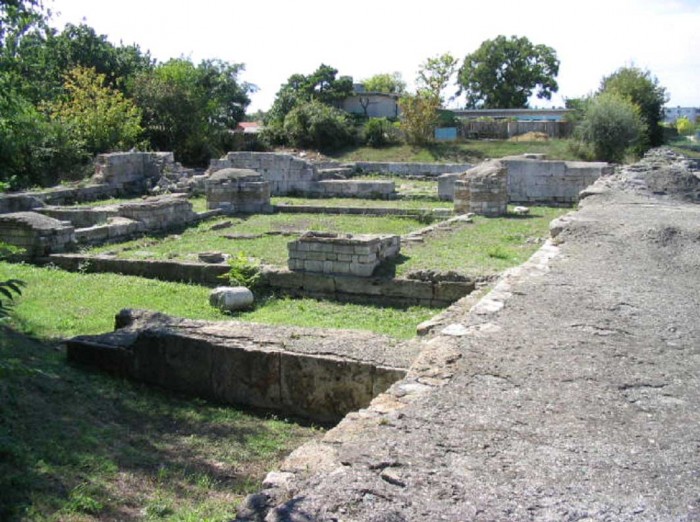
Venus Resort presents itself to the contemporary traveler as a fascinating palimpsest, where layers of civilizations overlap in an almost surreal manner. Here, on the cliffs of the Black Sea in the municipality of Mangalia, Constanța County, in the historic heart of Dobruja, modern relaxation meets the ancient ruins of the city of Callatis, founded by Greek colonists from Heraclea Pontica in the 6th century BCE. The resort’s name, borrowed from the Roman goddess of beauty and love, is not merely a poetic metaphor but a profound cultural declaration of intent: it evokes the Roman heritage of these lands, an integral part of the province of Moesia Inferior and later Scythia Minor, and places the entire tourist development within a deep, millennia-old Mediterranean and Pontic context. Venus is thus more than a simple seaside holiday resort; it is a symbol of civilizational continuity, a unique place where Roman temples and ancient baths coexist with the functionalist architecture of the 20th century, creating a cultural landscape unmatched in Southeastern Europe. This juxtaposition of classical mythology and socialist modernity transforms the resort into a theater of memory, where every walk along the cliff becomes a journey through time, from ancient Greek ships to 21st-century European tourists.
Historical Roots and Major European Connections
From a historical perspective, the territory on which Venus Resort now stands belongs to one of the oldest urbanized areas in Romania, the ancient city of Callatis, whose history spans over two and a half millennia without interruption. Founded around 657 BCE by colonists from Heraclea Pontica, Callatis was part of the Hellenic world of the Black Sea, alongside other colonies such as Tomis (today’s Constanța) and Histria, forming a chain of settlements that facilitated trade with the Mediterranean world. During the Roman period, the city became an important center of the province of Moesia Inferior, benefiting from the protection of Roman legions and the infrastructure of imperial roads, while temples dedicated to Apollo and the goddess Venus attest to the presence of the imperial cult in the area. After the fall of the Western Roman Empire, Callatis came under the influence of the Byzantine Empire, becoming a strategic fortress on the trade route between Constantinople and the northern Pontic ports. It was later conquered by the Ottomans in the 15th century, when Mangalia became an important military and commercial port of the Ottoman Empire.
The development of Venus Resort in the 1960s and 1970s, however, fits into a broader European trend of mass tourism expansion along coastlines, parallel to similar developments on the French Riviera, the Dalmatian coast of Yugoslavia, Bulgarian Black Sea resorts like Golden Sands or Sunny Beach, and Soviet resorts such as Sochi or Yalta. The concept of thalassotherapy, developed in France at the beginning of the 20th century by biologist and physiologist René Quinton, who studied the therapeutic properties of seawater and marine plasma, was adapted and popularized in Eastern European seaside resorts, including Romania. This scientific approach to the benefits of the marine environment places Venus within a European tradition of preventive medicine and health through nature, comparable to historic resorts like Vichy in France, Baden-Baden in Germany, or Karlovy Vary in the Czech Republic, though with the distinct character of the Black Sea. Today, the resort hosts tourists from across Europe, benefiting from its strategic position near the Bulgarian border and rail connections to major European urban centers.
Architecture of the Era and Urban Specifics
The urban ensemble of Venus Resort faithfully illustrates the architectural aesthetic specific to the socialist period, representing an expression of functionalist modernism adapted to the Eastern European context. The hotel complexes built in the 1970s are characterized by clear geometric lines, imposing parallelepiped volumes, and the intensive use of reinforced concrete as the dominant material, a technology that reflected the era’s ambition to build quickly and efficiently for the masses. Generous balconies, strategically oriented toward the sea, and panoramic windows suggest a vision of the marine landscape reminiscent of hotel architecture on the Côte d'Azur or the Italian coast, though the formal language is specific to Eastern Bloc architecture, influenced by Brutalism and the principles of CIAM (International Congresses of Modern Architecture).
These constructions, which include hotels with accommodation capacities for hundreds of tourists and integrated balneotherapy centers, represent a distinct chapter in Romania’s urban heritage, reflecting the state’s ambition to democratize access to rest and treatment by creating affordable balneoclimatic resorts. Unlike the sumptuous villas of the aristocracy on the French Riviera or the Amalfi Coast, the architecture of Venus speaks of egalitarianism and functionality, designed to provide decent accommodation and treatment for as many people as possible. The resort integrates into a continuous string of tourist localities, forming together with Saturn and Jupiter a three-kilometer-long balneary corridor along the Black Sea coast, with shady pedestrian alleys planted with linden and chestnut trees, and green spaces designed in the spirit of the socialist urbanism of the time, inspired by Soviet and Czechoslovak models of resort planning.
Therapeutic Resources and Natural Heritage
The exceptional therapeutic value of Venus Resort derives primarily from its proximity to Lake Techirghiol, renowned since antiquity for its sapropelic mud with remarkable curative properties. This mud, formed through the anaerobic decomposition of organic matter in the hypersaline waters of the lake, contains humic substances, minerals, and trace elements that have been systematically used in peloidotherapy treatments for rheumatic, dermatological, gynecological, and neurological conditions. The therapeutic history of the lake stretches from the Greco-Roman era, when its water and mud were already prized for their curative properties, to the modern period, when the area’s balneary resorts developed specialized medical centers that attract patients from across Europe.
The maritime climate specific to the region, with salty air rich in negative aerosols and iodine, moderate ultraviolet radiation, and milder temperatures than inland due to the influence of the Black Sea, complements the therapeutic offering, making Venus a sought-after destination for climatic therapy and heliotherapy. The waters of the Black Sea, with lower salinity than those of the Mediterranean, provide ideal conditions for sunbathing and therapeutic swimming, being more easily tolerated by those with sensitive skin. The fine sandy beaches and high cliffs, with panoramic views of the marine horizon, allow for relaxing walks and breathing exercises in the iodized air, contributing to the overall beneficial effect on the body. This unique combination of therapeutic factors places Venus Resort in a category of its own within Europe’s health tourism landscape, alongside centers like Bad Kissingen in Germany or Băile Felix in Romania, but with the distinct advantage of its proximity to the sea.
Stories, Personalities, and Turning Points
The construction of Venus Resort in the 1960s marked a turning point in the history of Romania’s Black Sea coast, signaling the transition from the elite tourism of the interwar period, when only the aristocracy and intelligentsia could afford seaside vacations, to the era of state-organized mass tourism. The decision to build this resort was part of an ambitious plan to develop tourist infrastructure along the entire coastline, aimed at transforming Dobruja into a destination accessible to the working class from across the country and from friendly socialist bloc nations. The choice of the name Venus was a deliberate attempt to evoke the region’s Roman heritage, connecting the new resort to classical mythology and the ancient history of Callatis, in an effort to culturally legitimize the modernist project.
The resort’s golden age, the 1970s and 1980s, saw thousands of Romanian families and tourists from Poland, Czechoslovakia, Hungary, and the Soviet Union flocking to the beaches and hotels of Venus, creating a unique cosmopolitan atmosphere in the context of the Cold War. The personalities who passed through here range from anonymous architects and engineers who designed the hotel complexes to renowned balneologists who developed treatment protocols based on local resources. After the fall of communism in 1989, the resort went through a difficult transition period, with many hotels privatized and gradually modernized, though the urban structure and spirit of the era in which they were built have been preserved. Today, Venus represents an interesting case of survival and adaptation, offering an authentic experience of socialist-era tourism reinterpreted for contemporary generations, in an ongoing dialogue between the ancient past of Callatis and the European present of the resort.
Practical Guide for Visitors and Contemporary Experience
Venus Resort is accessible year-round, though the optimal balneary season runs from May to September, when the waters of the Black Sea allow for extended bathing and solar therapy. Visitors can reach the resort by train to Mangalia station, located about two kilometers from the resort center, from where there are regular bus and taxi connections, or by car via the European route E87, which crosses Dobruja from north to south, offering spectacular views of the Dobrujan steppes and the Black Sea. For those arriving by plane, Mihail Kogălniceanu International Airport in Constanța is approximately 45 kilometers away, with regular connections to Mangalia.
Accommodation is available in renovated two- and three-star hotels, as well as private guesthouses and tourist villas offering a more intimate atmosphere. Public dining establishments serve both Dobrujan specialties based on fresh Black Sea fish, such as carp brine or mackerel in tomato sauce, and Dobrujan pies with cheese and apples, reflecting the region’s multicultural culinary heritage, influenced by Greek, Turkish, and Romanian cuisine. To enrich the cultural experience, visitors can explore the Archaeology Museum in Mangalia, which houses impressive collections from Callatis, the ruins of the Greek citadel with its stone walls and well-preserved Roman baths, offering a foray into antiquity. Nearby are the Movile Cave Nature Reserve, unique in the world for its independent chemosynthesis-based ecosystem, and the fortress of Histria, the oldest urban attestation on Romanian territory, providing a complete journey through the historical layers of ancient, medieval, and modern Dobruja. A walk along the cliff connecting Venus to Saturn and Jupiter at sunset, when the golden light reflects on the waters of the Black Sea and the facades of the hotels, offers the most authentic experience of this destination where history and relaxation meet in an exceptional European setting.
Media gallery
Discover Venus Resort in pictures

1 photos · Architecture, courtyards and captivating details

Image source: Wikimedia Commons · Public domain photos · Free license
STAY A FEW DAYS, DISCOVER THE MAGIC
Accommodation in the Venus Resort area

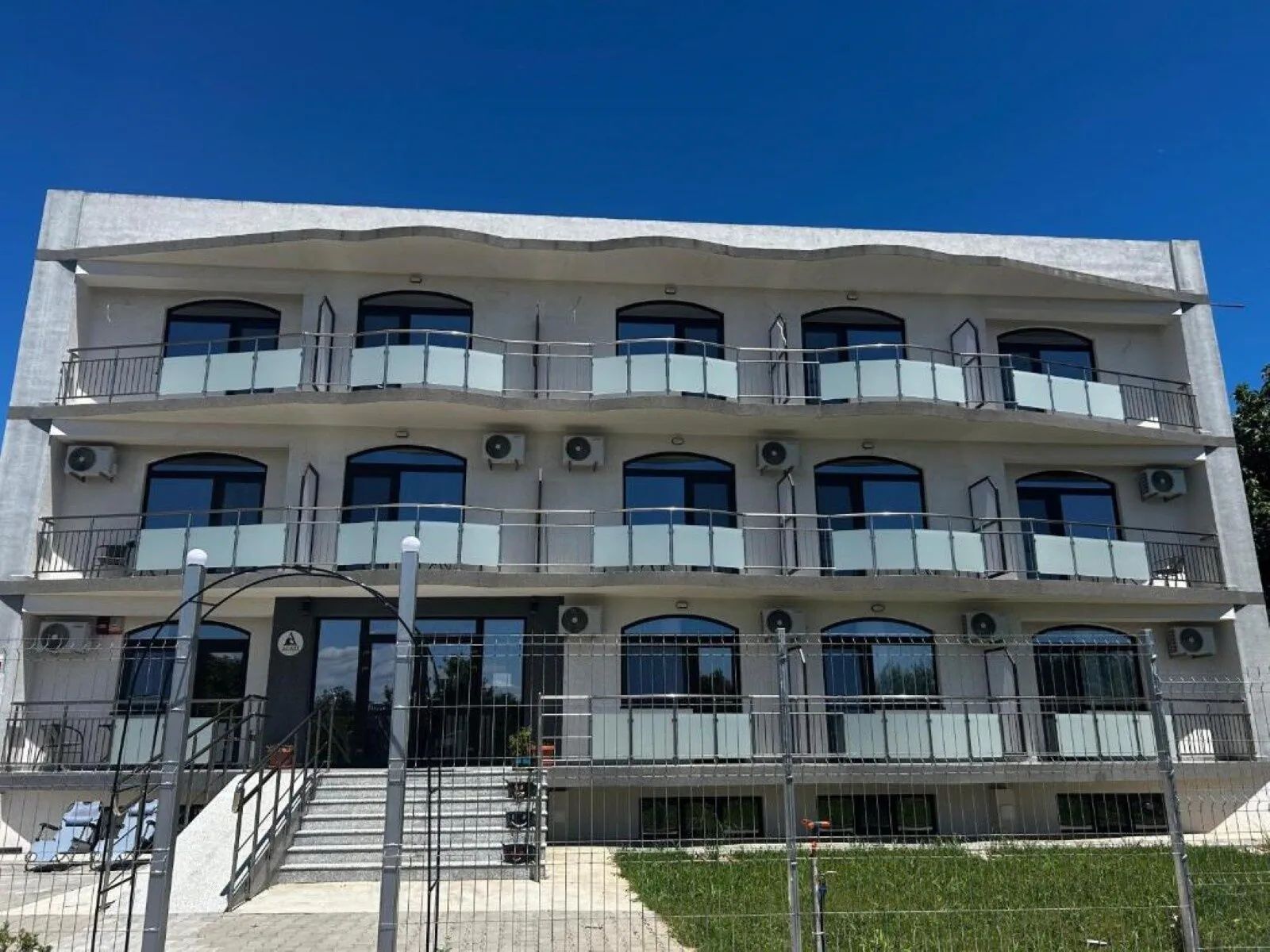
Holiday home · 3 stars

Venus, Constanța County · 0.1 km
Casa Acati Venus
Casa Acati Venus este o casă de închiriat integrală clasificată cu 3 stele, situată în localitatea Venus din județul Constanța, pe strada Gogu Constantinescu, într-o zonă liniștită. Unitatea oferă o curte mare și o grădină amenajată, un foișor în curte și o terasă la soare, toate amenajate pentru confortul dumneavoastră și relaxare în aer liber. Beneficiați de Wi-Fi gratuit, parcare privată gratuită și parcare pentru biciclete. Pentru momentele petrecute în aer liber aveți la dispoziție un grătar sau barbeque, iar pentru cei mici un loc de joacă pentru copii la exterior și un scaun înalt pentru copii. Astfel, întreaga familie se poate bucura pe deplin de timpul petrecut în această locație. În apropiere puteți vizita stațiunea Venus, stațiunea Neptun, Neptun și Cetatea Callatis din Mangalia. Aceste obiective oferă numeroase posibilități de explorare și relaxare în timpul vacanței dumneavoastră. Vă așteptăm cu drag și vă încurajăm să porniți apoi în descoperirea Cetății Callatis din Mangalia.
FROM
280 lei per night

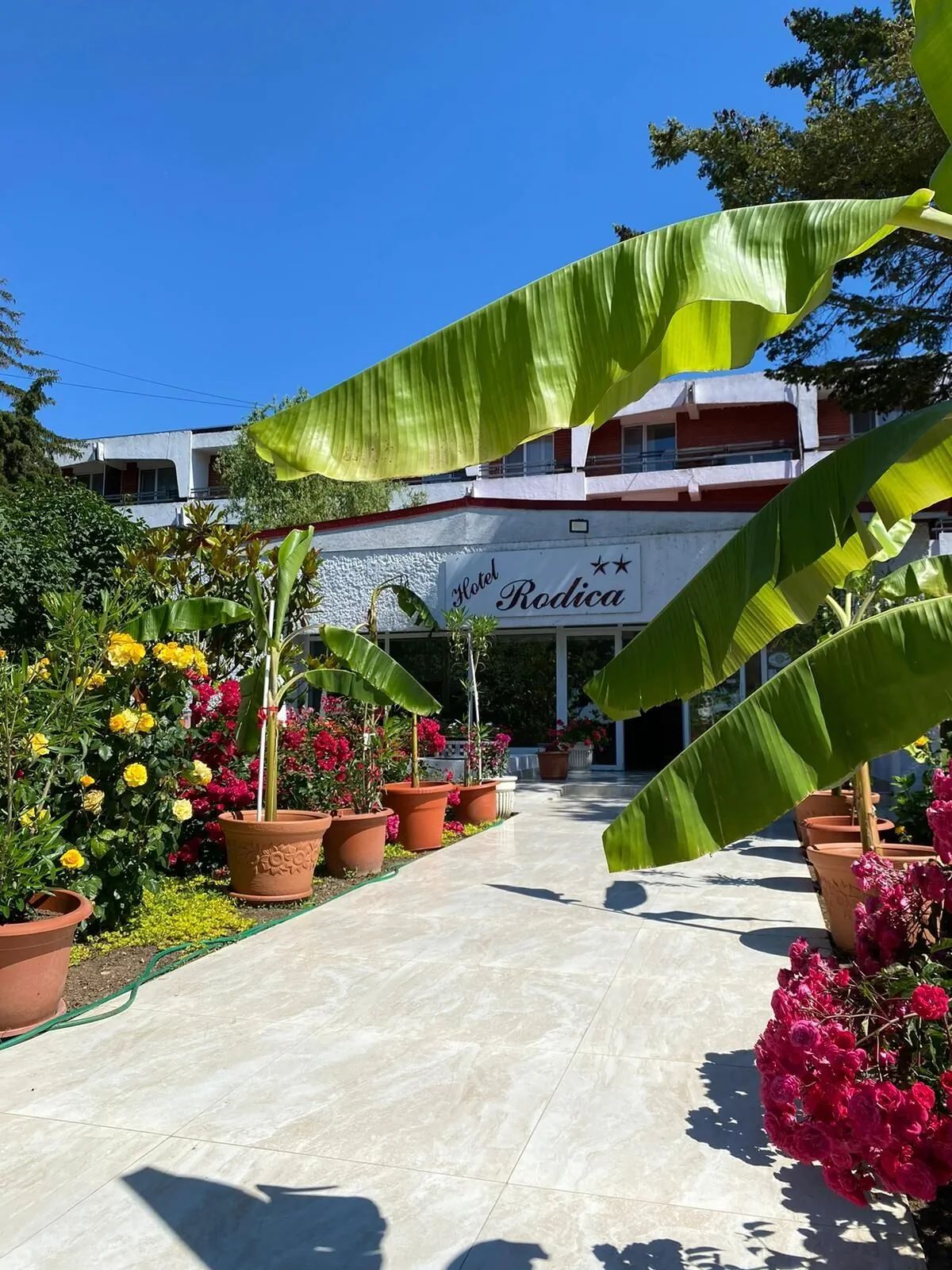
Hotel · 2 stars
Venus, Constanța County · 0.1 km
Hotel Rodica Venus
În nordul stațiunii Venus, într-o curte mare și îngrijită, se ridică Hotel Rodica Venus, o unitate de cazare la două stele care oferă o atmosferă liniștită departe de aglomerația din centru. Clădirea găzduiește camere amenajate pentru un sejur confortabil, iar terasa și barul din incintă creează un spațiu primitor pentru seri relaxante. Facilitățile includ Wi-Fi gratuit în întreaga proprietate, parcare privată gratuită și parcare pentru biciclete, alături de un seif în fiecare cameră și acces facilitat pentru persoanele cu dizabilități. În curtea mare veți găsi o grădină amenajată, un foișor și posibilitatea de a organiza un grătar sau barbeque, iar masa de biliard și barul din incintă sunt disponibile pentru momente de destindere după o zi la plajă. De asemenea, aveți la dispoziție depozit pentru bagaje pentru o ședere fără griji. Din punct de vedere al obiectivelor turistice din apropiere, puteți explora atât stațiunea Venus, cât și stațiunea Neptun, iar Cetatea Callatis din Mangalia reprezintă un punct de interes istoric pentru o excursie în zonă. Această unitate este potrivită pentru dumneavoastră dacă doriți o cazare practică și accesibilă într-un mediu liniștit, cu facilități esențiale și situată aproape de plajă și de principalele atracții turistice ale litoralului.
FROM
210 lei per night
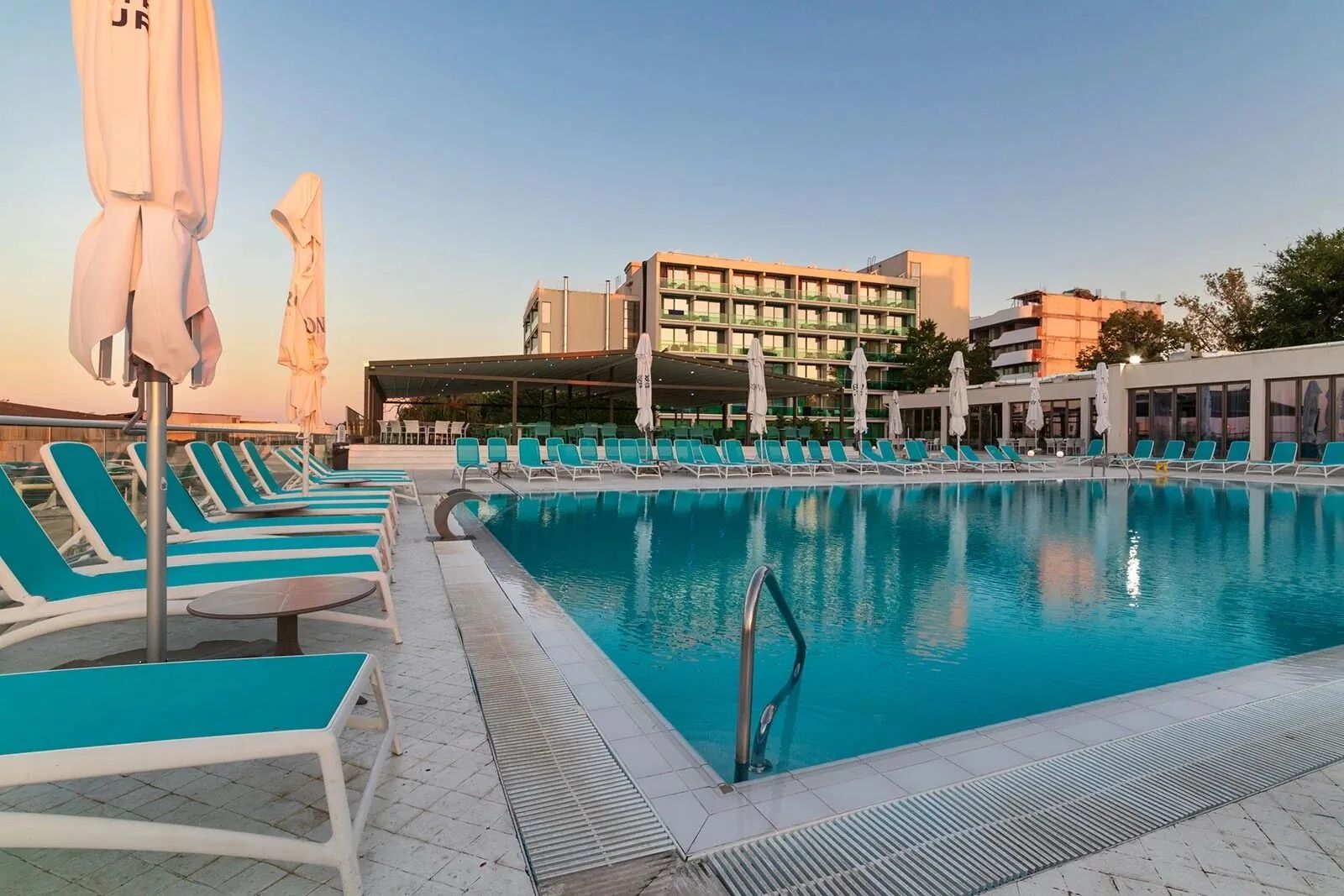
Hotel · 4 stars
Venus, Constanța County · 0.2 km
Hotel Turquoise Venus - Litoral
O zi petrecută aici poate include urcarea cu liftul spre etajele superioare ale clădirii și un moment de relaxare la barul din incintă, la Hotel Turquoise Venus din localitatea Venus, județul Constanța. Vă oferim camere moderne dotate cu aer condiționat, televizor LCD, balcon, minibar, uscător de păr, baie proprie, mochetă și tâmplărie de aluminiu, accesul realizându-se pe bază de card cu cip. De asemenea, vă punem la dispoziție un restaurant cu specific românesc și internațional, terasă generoasă, piscină exterioară, sală de conferințe cu echipamente moderne și parcare privată gratuită. Pentru momentele de relaxare, aveți la dispoziție plaja proprie cu acces gratuit la șezlonguri și umbrele, un loc de joacă pentru copii amenajat direct pe nisip și o grădină îngrijită. În imediata vecinătate se găsesc izvoare minerale sulfuroase hipotermale captate sub formă de dușuri, iar în partea de sud a stațiunii există zone special amenajate pentru tratamente cu nămol și apă sulfuroasă. În apropiere puteți vizita Stațiunea Venus, Cetatea Callatis din Mangalia, precum și stațiunile Neptun și Saturn. Seara puteți lua cina pe terasa restaurantului cu specific românesc și internațional.
FROM
420 lei per night
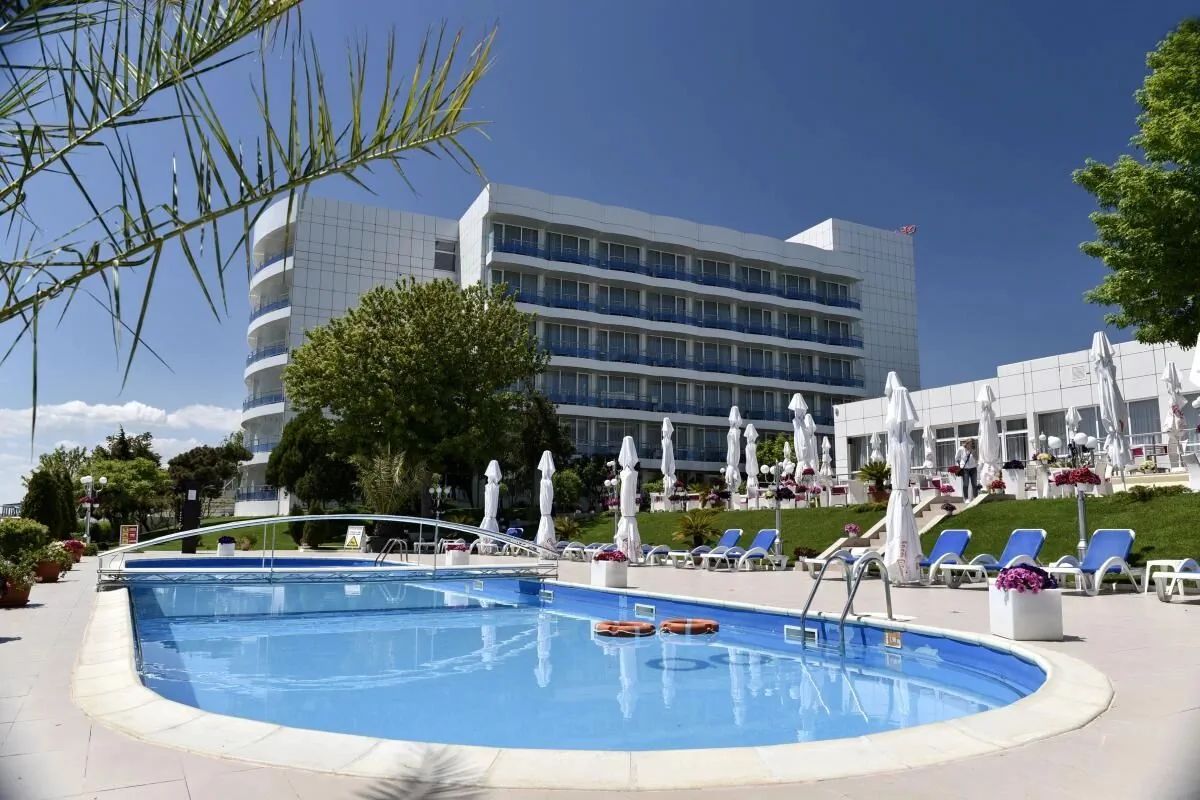
Hotel · 4 stars
Venus, Constanța County · 0.2 km
Hotel Afrodita Venus - Litoral
Pe strada Nicolae Iorga din stațiunea Venus, într-o zonă centrală a litoralului românesc, se află Hotel Afrodita Venus, o unitate de patru stele care oferă cazare confortabilă pentru turiști. Hotelul pune la dispoziția dumneavoastră 124 de spații de cazare moderne, dotate cu aer condiționat, minibar, televizor prin cablu, telefon cu acces internațional și internet wireless. Fiecare cameră este decorată în culori plăcute, creând un ambient odihnitor atât pentru o vacanță relaxantă, cât și pentru călătorii de afaceri. Pentru momente de relaxare, aveți la dispoziție o piscină exterioară amenajată cu umbrele și șezlonguri, iar barul din incintă vă invită la o băutură răcoritoare. Restaurantul hotelului servește preparate cu specific internațional și tradițional românesc, iar terasa exterioară completează experiența culinară. De asemenea, hotelul dispune de lift, iar parcarea supravegheată video este gratuită în limita disponibilității. În vecinătate puteți explora stațiunea Venus, stațiunea Neptun, Neptun, Saturn sau puteți vizita Cetatea Callatis din Mangalia. Vă așteptăm să porniți într-o excursie spre Cetatea Callatis din Mangalia pentru a descoperi istoria și atmosfera acestei zone de pe litoral.
FROM
420 lei per night
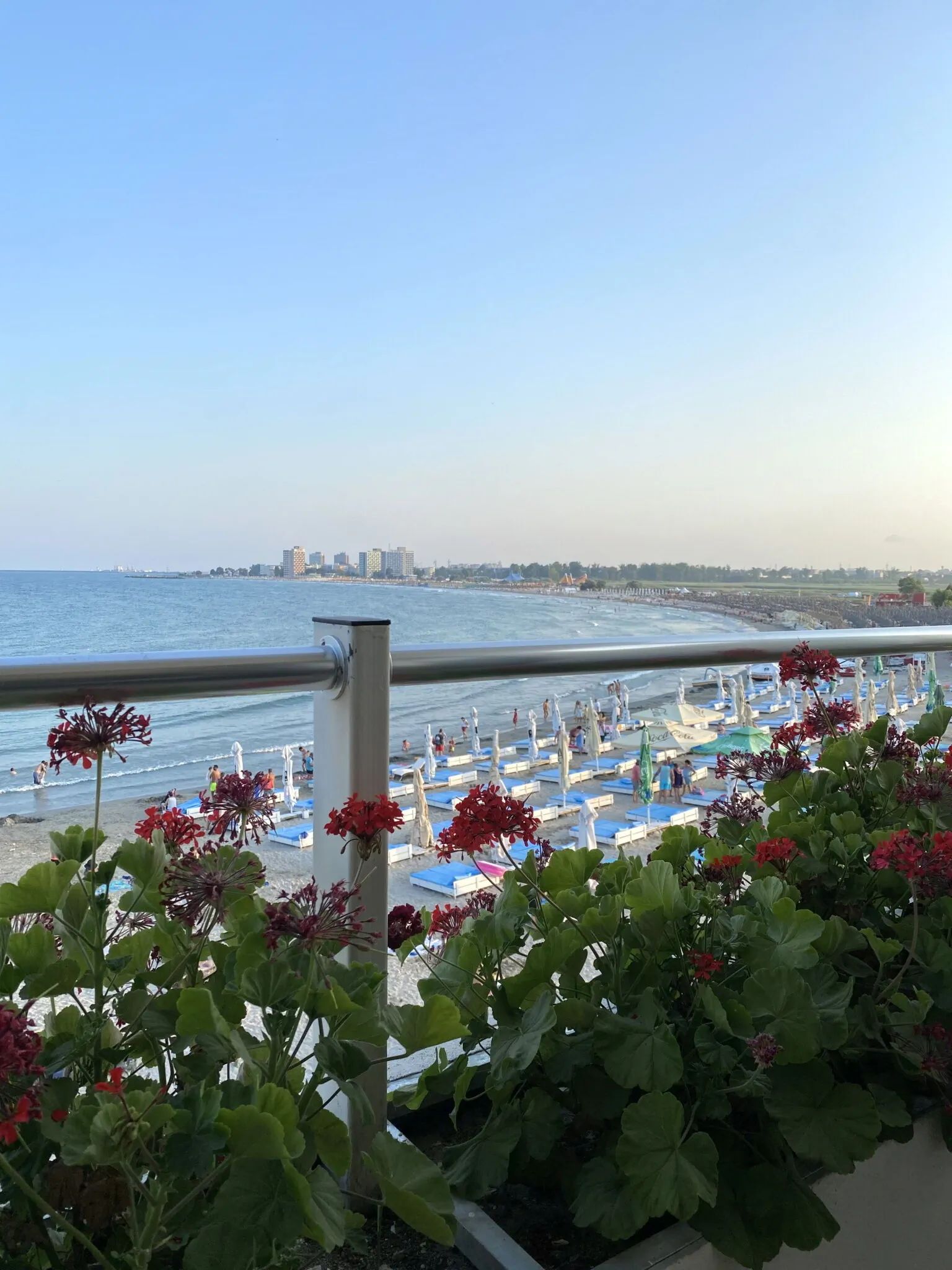
Holiday resort · 4 stars
Venus, Constanța County · 0.2 km
Palace Beach Resort Venus
Pornind de la Cetatea Callatis din Mangalia, puteți descoperi și alte stațiuni din apropiere precum Neptun sau Saturn, iar Palace Beach Resort Venus, un complex turistic de patru stele situat în stațiunea Venus, reprezintă baza dumneavoastră pentru aceste explorări pe litoral. În cadrul resortului vă așteaptă restaurant și bar în incintă, Wi-Fi gratuit în toate zonele, precum și parcare privată gratuită cu stație de încărcare pentru vehicule electrice. Pentru momente de relaxare, aveți la dispoziție saună, servicii de masaj, terasă la soare și o curte mare cu grădină amenajată unde vă puteți odihni. Pasionații de mișcare găsesc aici teren de tenis, teren de fotbal, tenis de masă și masă de biliard, alături de o sală de fitness bine echipată. Pentru familiile cu copii sunt disponibile pătuț pentru bebeluș și scaun înalt pentru copii, iar în zonă puteți practica pescuitul sau călăria. Fiecare cameră beneficiază de aer condiționat și fier de călcat, iar deposited pentru bagaje vă este pus la dispoziție. Dacă preferați să vă deplasați cu bicicleta, aveți la dispoziție și parcare pentru biciclete. Vă așteptăm să vă bucurați de sejur la Palace Beach Resort Venus.
FROM
490 lei per night
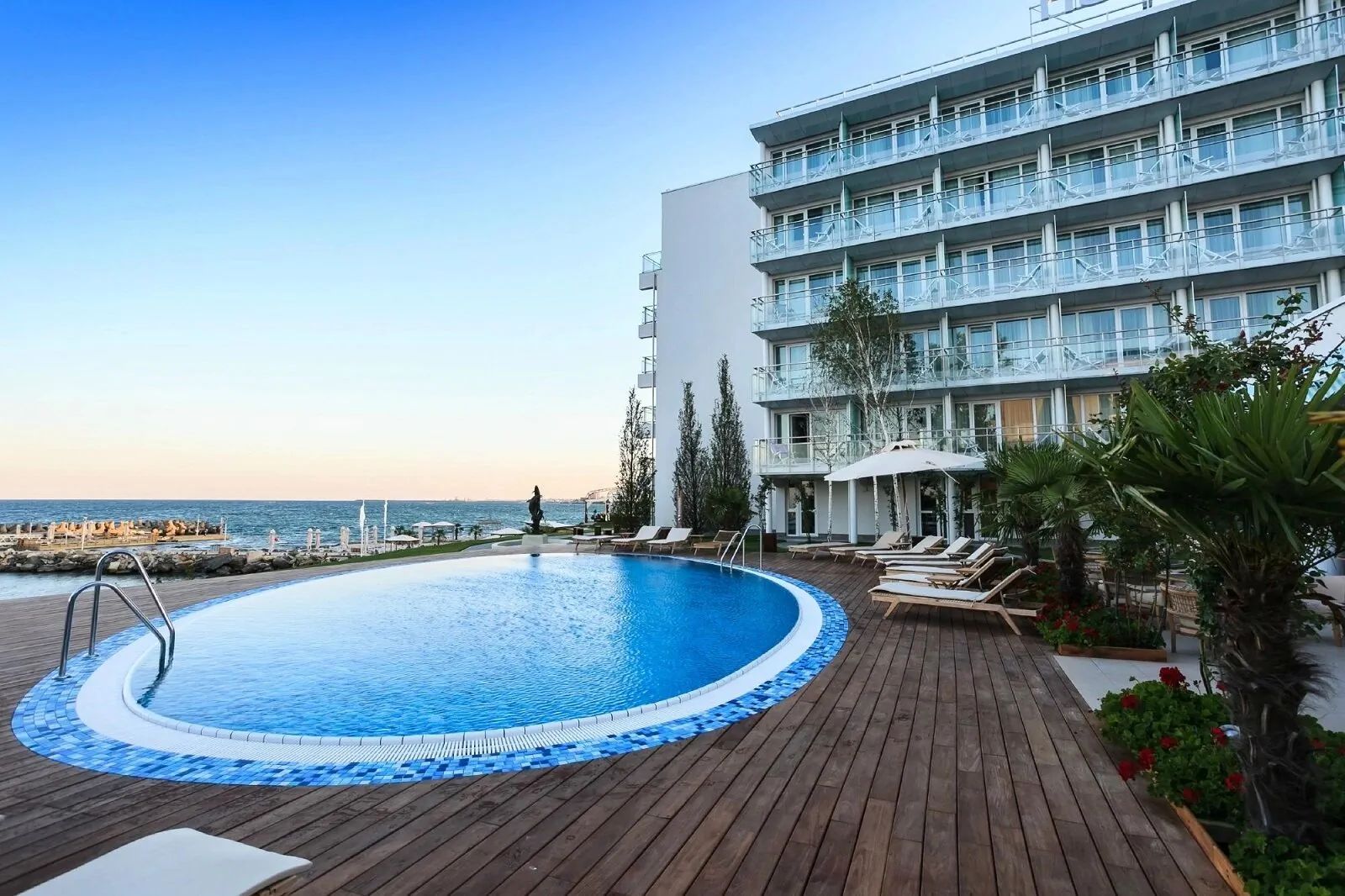
Hotel · 5 stars
Venus, Constanța County · 0.2 km
Hotel Carmen International Venus - Litoral
Hotel Carmen International Venus - Litoral este un hotel de cinci stele situat în stațiunea Venus din județul Constanța, pe strada Nicolae Iorga. Camerele și apartamentele sunt dotate cu balcon, aer condiționat, telefon, televizor, internet și minibar, iar majoritatea oferă vedere laterală spre mare. Clădirea se desfășoară pe cinci niveluri și beneficiază de două ascensoare moderne, iar în incintă funcționează un bar unde vă puteți relaxa. Pentru momente de odihnă, hotelul dispune de un centru spa cu sală de fitness, sală de masaj și saună, alături de o piscină exterioară cu apă de mare, funcțională în sezonul estival și înconjurată de șezlonguri și umbrele. Două restaurante servesc preparate din bucătăria internațională și regională, iar terasa lor exterioară oferă o priveliște largă spre mare. Accesul direct la plaja privată vă permite să vă bucurați de șezlonguri, umbrele, un beach bar și un foișor. În apropiere puteți vizita Venus, stațiunea Venus, Neptun, stațiunea Neptun și Cetatea Callatis din Mangalia. Seara, după o zi petrecută la plajă, puteți lua cina la restaurantul hotelului cu vedere spre mare.
FROM
580 lei per night
BEFORE YOU HIT THE ROAD
Weather conditions in Mangalia
Local forecast for Venus Resort, Mangalia, România

Real-time updated weather data
Much more to explore in this area
Nearby tourist attractions


Constanta, Constanța County
Mamaia resort.
Situata la nord de municipiul Constanta, intre Marea Neagra si Lacul Siutghiol; cartier al municipiului Constanta, are foarte putini locuitori, dar este...
41.0 km
Constanta, Constanța County
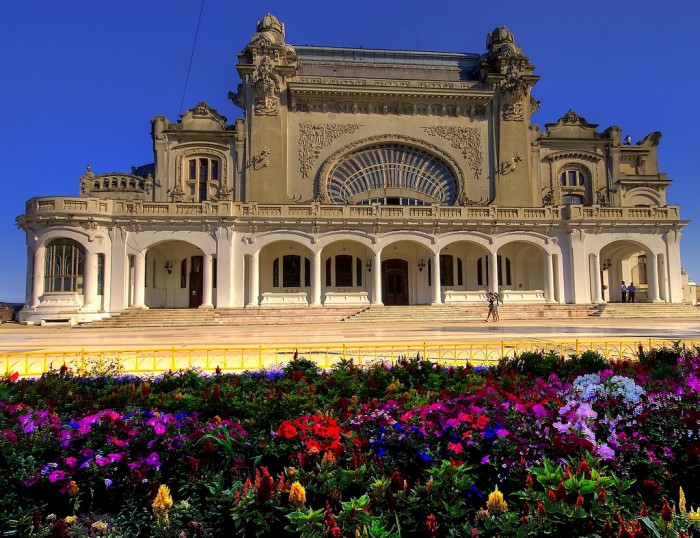
The casino in Constanta.
Situat pe bulevardul Elisabeta, nr. 2, municipiul Constanta; in trecut, in aceasi locatie era amplasata o "cazina" (1880 - 1902) - constructie din lemn unde se...
36.6 km
Constanta, Constanța County
Callatis Fortress in Mangalia
Situata pe teritoriul municipiului Mangalia, intre Sanatoriul balnear, Casa de Cultura, strada Constantei, Geamie si intrarea in portul comercial; intemeiata...
4.0 km
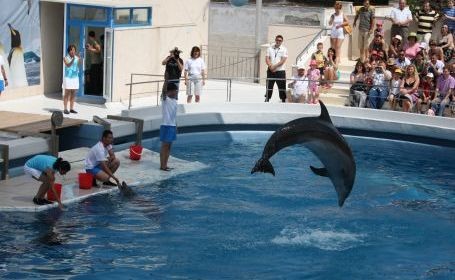
Constanta, Constanța County
Natural Sciences Museum Complex in Constanța
Situat pe bulevardul Mamaia, nr.255, municipiul Constanta; la inceputul existentei a fost format din sectii individuale, unite sub denumirea "Complexul muzeal...
40.4 km

Constanța, Constanța County
Mamaia
Localitate componentă a municipiului Constanța, județul Constanța, România
44.7 km
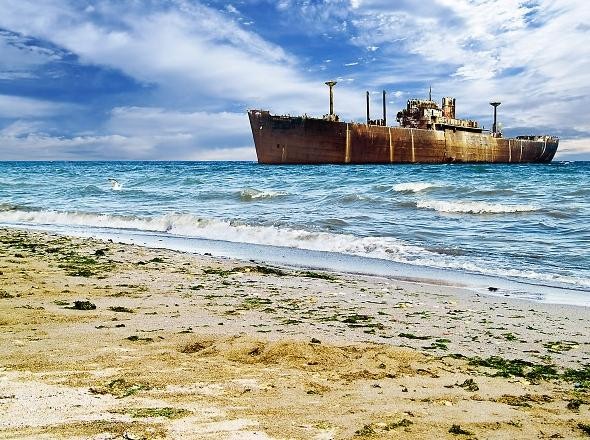
Constanta, Constanța County
Costinești Resort
Este situata in prelungirea satului Costinesti, la 31 km sud de municipiul Constanta, invecinandu-se la nord cu comuna Tuzla si la sud cu Statiunea Olimp;...
12.1 km

Mangalia, Transylvania
Neptun Resort
Localitate componentă a municipiului Mangalia, județul Constanța, România
2.5 km

Mangalia, Transylvania
Olimp Resort
Localitate componentă a municipiului Mangalia, județul Constanța, România
4.4 km

10.5 km
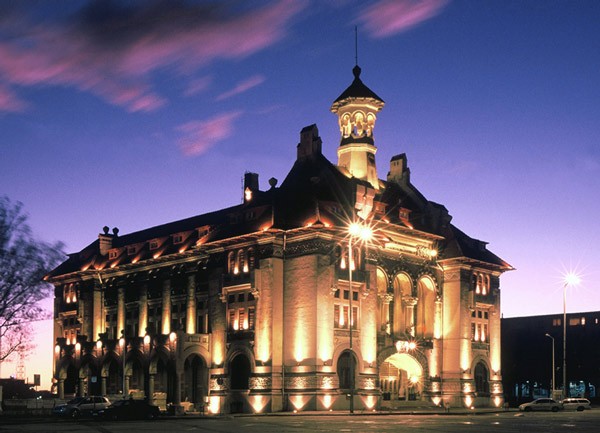
Constanta, Constanța County
National Museum of History and Archaeology in Constanța
Situat in Piata Ovidiu, nr. 12, municipiul Constanta; infiintat in anul 1878, cu ajutorul lui Remus Opreanu; la inceput a functionat in cladirea prefecturii si...
36.9 km
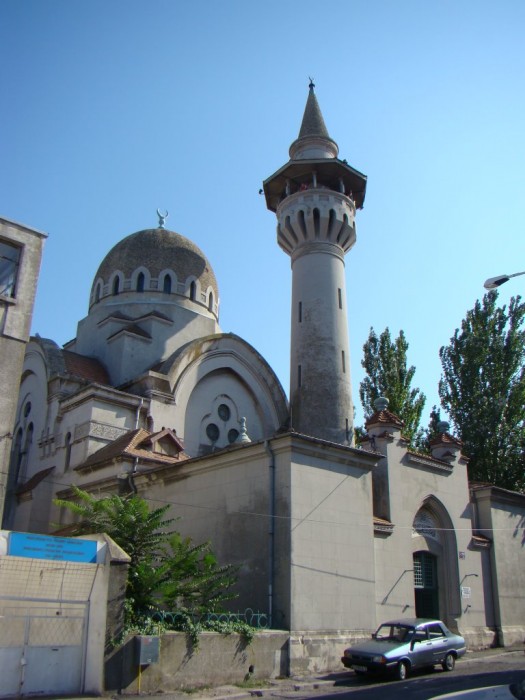
Constanta, Constanța County
Great Mosque of Constanța (Carol I Mosque)
Situata pe strada Arhieoiscopiei nr. 5 din municipiul Constanta; construita intre anii 1910 - 1912, mai poarta denumirea de "Moscheea Carol I"; planurile au...
36.9 km

Eforie, Constanța County
Eforie Nord
Situata in orasul Eforie, la 14 km de municipiul Constanta; amplasata la altitudinea de 6 - 20 m peste nivelul marii; statiune cu caracter permanent, are...
24.6 km
Cultural life and traditions
Events in the Venus Resort area
Medieval festivals, traditional fairs, concerts and local activities recommended in Transylvania.

Heritage and History

Mangalia, County of România
The Festival of Medieval Fortresses and the Open Doors Days
Guided night tours, traditional crafts workshops and historical re-enactments featuring knights and ladies.
WHEN
May 15-17, 2026


Traditions and Cuisine
Mangalia, County of România
The Fair of Saxon Traditions and Local Cuisine
Discover local producers, traditional Saxon pastries baked in a wood-fired oven, artisanal syrups, and rhubarb jam.
WHEN
Every weekend (May - October)

Ecotourism and Nature
The hills of Transylvania, County of România
Guided Hikes on the Transylvanian Hills Trail
Take excursions along unmarked trails through ancient meadows, centuries-old oak trees, and villages with fortified churches that are UNESCO World Heritage sites.
WHEN
Friday – Sunday (Season 2026)
On foot, exploration gains depth
Discover the surroundings and local geography
Explore the trails, terrain, and natural landmarks around Venus Resort.

Guides and practical tips
Useful travel articles
Travel guides, practical recommendations and tourist itineraries for Transylvania.

Tourist guide
Satul Peștera și Șirnea: Primele Sate Turistice din România
Dealuri vălurite, căsuțe răsfirate din lemn și garduri tradiționale de nuiele sub privirea stâncoasă a Pietrei Craiului.

Tourist guide
Top 5 Atracții Turistice și Trasee Montane în Zona Moieciu - Bran
Descoperă cele mai spectaculoase peisaje carstice, chei adânci și cetăți medievale din imediata apropiere a stațiunii Moieciu.

Tourist guide
Ghid de Drumeție: Traseul Moieciu de Sus spre Platoul Bucegi
Un itinerariu montan de o frumusețe rară ce urcă din Valea Băngăleasa spre Poiana Guțanu și crestele maiestuoase ale Bucegilor.
THE JOURNEY STARTS WITH AN IDEA
The next story is on the way.
From the first stop to the last stay, make room for a new Romania.
